Four Surnames, Three Christian Names, Three Birthplaces and a Varying Date of Birth

This convoluted but fascinating piece of research sent me head first down a veritable rabbit warren of tunnels and dead ends but it was a lesson in persistence and it uncovered a tragic story of extreme poverty, illegitimacy, disability and abuse.

Now I know the end it is, of course, difficult to relate the story from the beginning but here goes. It began when I gave a short talk, which included the case study of my very distant relative Elizabeth Ud(e)y, who spent time in what was then known by the politically incorrect title of The Exeter School for the Deaf and Dumb. Her story can be found here. By coincidence, the keynote presenter at the same conference, historian Julia Neville, had been researching someone of the same name, who also spent time in the Exeter school but at a later date. Was there, she wondered, a family connection suggesting a genetic condition? It isn’t a spoiler but the short answer is that any family connection will be too far distant for that to be the case. The research needed to come to that conclusion was far from being short but it was one of those stories that grips you.

The more recent Elizabeth Ann Udy was a nine year old pupil at the school in the 1891 census, with an alleged birthplace of St. Columb in Cornwall. Julia had found out plenty about her later life and had identified her in 1901 but was less certain of her birth. By 1901, Elizabeth was living in Smythen Street, in Exeter with Joseph P Hearn, a general dealer from Ireland, his wife Elizabeth, aged forty-four, born in Newlyn East in Cornwall and their two daughters, Sarah and Emily Jane, who had both been born in Exeter. Elizabeth Udy was described as a daughter, despite the different surname. Her birthplace was also given as Newlyn East, which is in the registration district of St. Columb, so was not inconsistent with the 1891 information. Given that Elizabeth was twelve years older than the eldest Hearn daughter and born in a different place the logical assumption that she was Joseph Hearn’s step daughter and had been born to Elizabeth Hearn either illegitimately, or as a result of a previous marriage. There was a birth registration for the younger of the two Hearn daughters, Emily Jane, in 1898, with the mother’s maiden name given as Udy, suggesting that Elizabeth was indeed illegitimate.

There was no birth registration for Elizabeth Ann as Udy or Hearn. There was no Hearn-Udy marriage prior to 1900, although there was a slight possibility that this might have taken place in Ireland. Joseph Patrick Hearn could not be identified in 1891, nor could Elizabeth senior, as Hearn or Udy. She wasn’t found as Udy in 1881 or earlier census either. Roll on to 1911, by which time Elizabeth junior had married and this not the point at which to describe her later life. It is significant to note that no father was named on her marriage certificate and that the witnesses were a George and Catherine Hearn. In 1911, her mother, now with the middle initial C, was living in 2 rooms in Cobley’s Court, Exeter, ostensibly married to a George Hearn, a fifty-four year old general labourer, born in Exeter. Apart from the surname, the details did not match Joseph P; were these two men one and the same? Elizabeth C’s birthplace is also given as Exeter. The two daughters, Sarah and Emily Jane, were with the family, although Sarah had gained fifteen years in age instead of ten since the previous census.

Investigating these daughters revealed a Sarah Hearn, born in 1888, to Joseph Patrick Hearn and Mary née Brown, who was baptised at Exeter Sacred Heart Catholic Church. Her birth registration also gave her mother’s maiden name as Brown. Was Sarah Joseph’s daughter by an earlier marriage? There were two other Catholic baptisms, one for Emily Jane in 1898, with the mother’s name given as Mary Catherine née Udy and one in 1895, with the same parents, for Lucy. Lucy’s death was registered in 1897. Her birth however gave her mother’s maiden name as Udy-Brown. Were Elizabeth Udy senior and Mary Catherine Brown the same person? There was also a burial in the Catholic church, in 1893, for a Catherine Elizabeth Hearn of Cricklepit Lane. She had been born in 1890, with the mother’s maiden surname Brown. No amount of creative searching could locate the family in the 1891 census. They were not in Cricklepit Lane. Further searches for Hearn-Brown or Hearn-Udy children also revealed another daughter Rosina Lily, born in 1892 and dying as Rose Annie in 1894.

Next, I looked for a Hearn Brown marriage and the first eureka moment of the search turned up a marriage, on 9 May 1887 in Plymouth, between Joseph Patrick Hearn and Mary Katherine Elizabeth Udy Brown. The witnesses did not seem to be relatives. Mary Katherine listed her father as James Brown, a builder and she claimed to be a twenty-nine year old spinster. There were no births or baptisms that corresponded. I discovered the death of Joseph Patrick Hearn in 1904 and the 1908 marriage between George Hearn and Mary Catherine E Udy.

Finding Mary Katherine/Elizabeth in 1921 was more difficult, as she had been very creative with her age, but she was there, as Catherine, aged ‘fifty-four’ born in ‘Newland’, Cornwall. With her was her husband, George and her daughter, Emily Jane, now married to Frederick Short and with a young baby, living in three rooms at 11 Preston Street in Exeter. I believe that a death registration for an Elizabeth C Hearn in 1933, is hers.

I spent a long time looking for possible baptisms for Mary/Elizabeth/Catherine Udy in or around 1855-8 and given the 1921 census age, extended my search later. I did find two that looked to be possibilities but these were eventually ruled out as both died as infants. I then tried the surname Brown, which was obviously more difficult but nothing was found in the right geographical area.

In the meantime, using newspapers and court records, I was turning up plenty of evidence of the Hearn’s irregular life style. John Patrick Hearn had an extensive charge sheet from 1870 onwards, mostly for drunk and disorderly offences but more alarmingly for assaulting his twelve-year-old step-daughter Elizabeth Ann Udy, injuring her arm. In 1901, he was convicted of uttering threats towards his wife, for which he was imprisoned for thirty-eight days. Catherine, and she does seem to be using the name Catherine at this time, was not blameless. In 1893, Catherine, described as the wife of a rag and bone dealer of Cricklepit Street, was accused of selling bedding in which her child, who was suffering from scarlet fever, had died. This was presumably baby Catherine Elizabeth. The following year, an inquest was held following the death of Joseph and Catherine’s daughter, fourteen-month-old Rose Annnie Lily. The verdict was natural causes but there was a suggestion of neglect. In 1901, Catherine was in court for assaulting a neighbour, although both were found to be culpable. In 1906, came a charge of working as a pedlar, selling old clothes, without the required licence.

Back to the main search. Who was Mary/Catherine/Elizabeth Hearn/Udy/Brown? Could I find Mary, with any of her names, in censuses before 1891? Hopefully she would be somewhere near Newlyn East, where her daughter was born about 1881. This turned up a Kate Brown, aged twenty-two, born in Newlyn, wife of a John Brown. I couldn’t find the births or baptisms of any children. There was however a marriage, just after the 1881 census was taken, for John Brown and Mary Catherine U Roberts at St. Columb. Brown is tricky to research but it does seem that John by 1891, was still alive and married to someone else and it is possible that he was in fact married to her before 1881 and was living a double life but I didn’t pursue this beyond checking the newspapers for bigamy cases. Was this why Mary referred to herself as a spinster when she married Joseph Hearn.

This though was the final breakthrough. I had a new surname to search and sure enough, I  found the baptism in 1859 of Mary Catherine Roberts, illegitimate daughter of Mary Roberts of Trevilson, in Newlyn East. I traced her forwards with her mother in Newlyn East in the 1861 and 1871 censuses. Mary Catherine was one of her mother’s three illegitimate daughters. I also found a birth registration in 1881 for Elizabeth Ann Roberts at St. Columb with the mother’s maiden name given as Roberts. I believe that this child grew up to be Elizabeth Ann Udy who spent time in the Exeter School for the Deaf and Dumb.

That’s not quite the end of the story, as I still hadn’t identified the Udy connection. One must assume that Elizabeth’s mother, Mary Catherine Roberts, was the daughter of a Mr Udy. I did check the marriage certificate of Mary Catherine’s sister or half-sister, who gave her father as Richard Roberts, presumably a figment of her imagination. The other daughter did not marry. There are several Mr Udys in the right place at the right time and it is not possible to be certain, which if any was Mary Catherine’s father. It could well be coincidence but in 1891, Mary Catherine’s sister/half-sister was a servant to a similar aged John Udy. Could this have been her half-brother? If this is the case, William Udy a local shopkeeper is in the frame.

Sadly life did not go well for Elizabeth Ann Udy aka Roberts or her children. She lived in Exeter in extreme poverty as the wife of a watercress seller. Three of their five children died in infancy and one, a daughter was paralysed. Elizabeth died at the age of thirty-one in 1912, possibly in childbirth. The only surviving son was convicted of housebreaking at the age of ten and the newspaper report said that ‘he suffered with his heart and was consumptive’. He was sent to an industrial school un Bath, where he can be found in the 1921 census.

Image – Peggy Marco via Pixabay, used under Creative Commons
Robin Hood Country Part 2

Day 5

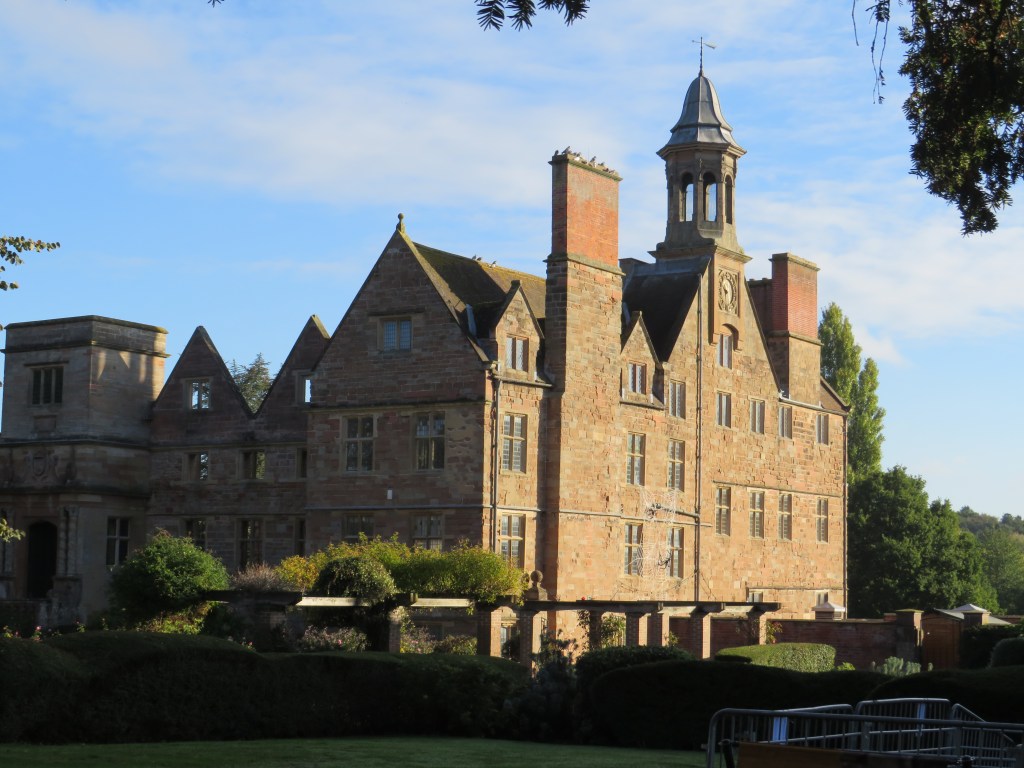
In order to further my aim to visit a National Trust and an English Heritage property in every English county, Rufford Abbey was our destination of choice. It is managed in co-operation with English Heritage, rather than being an English Heritage property per se but there aren’t any others in Nottinghamshire. The mid-twelfth century Cistercian monastery and its extensive lands were given to the 4th Earl of Shrewsbury, George Talbot after the dissolution of the monasteries and it was developed into a country house in later centuries. It is now a ruin and we saw this from a distance, rather than looking at it closely, as the weather was against us. In any case, it is only possible to view the ruins from outside for safety reasons. Activities relating to the run up to Halloween were in evidence in the surrounding country park. We did manage to investigate the adventure playground and play a round of crazy golf before it started raining. Apparently, there were two secret oil wells in Nottinghamshire, drilled during the Second World War; these produced three million barrels of oil for the war effort. A statue commemorating this is at Rufford.

Today’s lunch was at Maxey’s Garden Centre. Afternoon and evening activities followed a similar pattern with more Traitors game, House of Games and Banjo and Ro and then a hot tub, although it didn’t seem to bubble as it should.

Day 6

The youngest member of our party was keen to go to his football practice and as Lincoln isn’t that far away, back we went. I am not sure that standing on a touchline for an hour in chilly October weather is exactly my first choice of activity but it was a good opportunity to be able to watch him training. We then went to Darfoulds Garden Centre, where I foolishly decided that I could consume both quiche and chips and a large slice of Biscoff cake. More Traitors board game followed in the afternoon and watching the final episode of Banjo and Ro. We finally worked out how to get all the jets bubbling in the hot tub. Although the descendants are staying close by, there’s a gate between us that closes at night, making the accessible journey from one to the other much longer. This time, I left in time to get through the short way before the gates were locked and was also back in the van in time to watch Traitors. This was the night of a severe storm in the south-west, so we were wondering what we might be going home to.

Walking in the Dawn

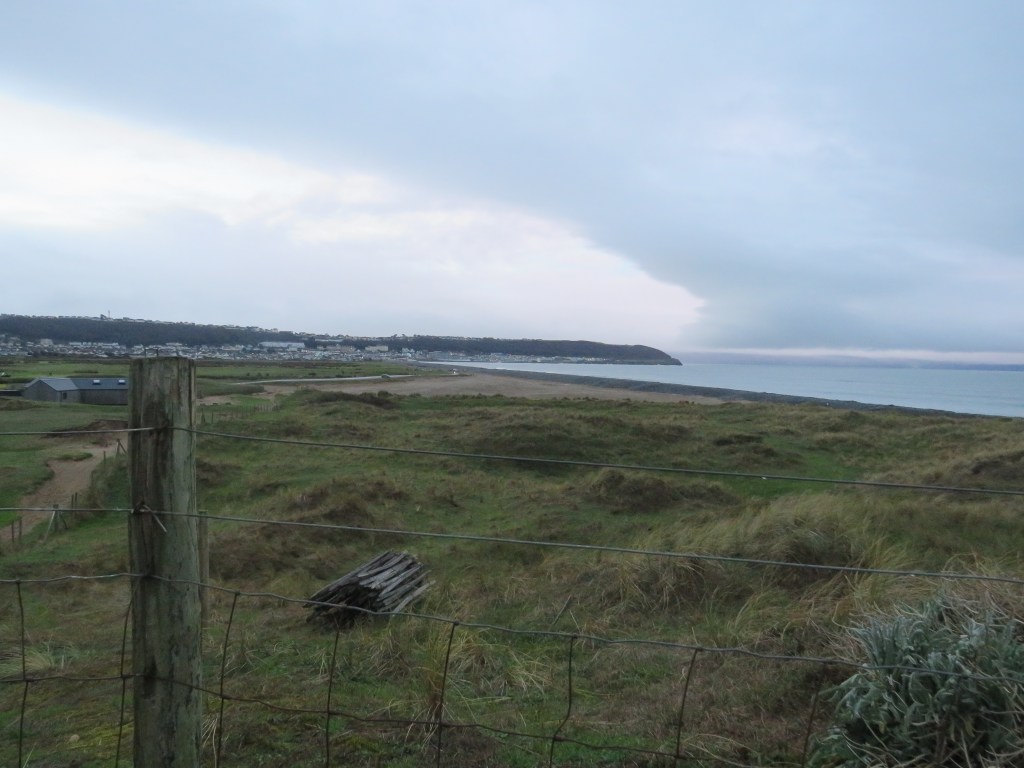
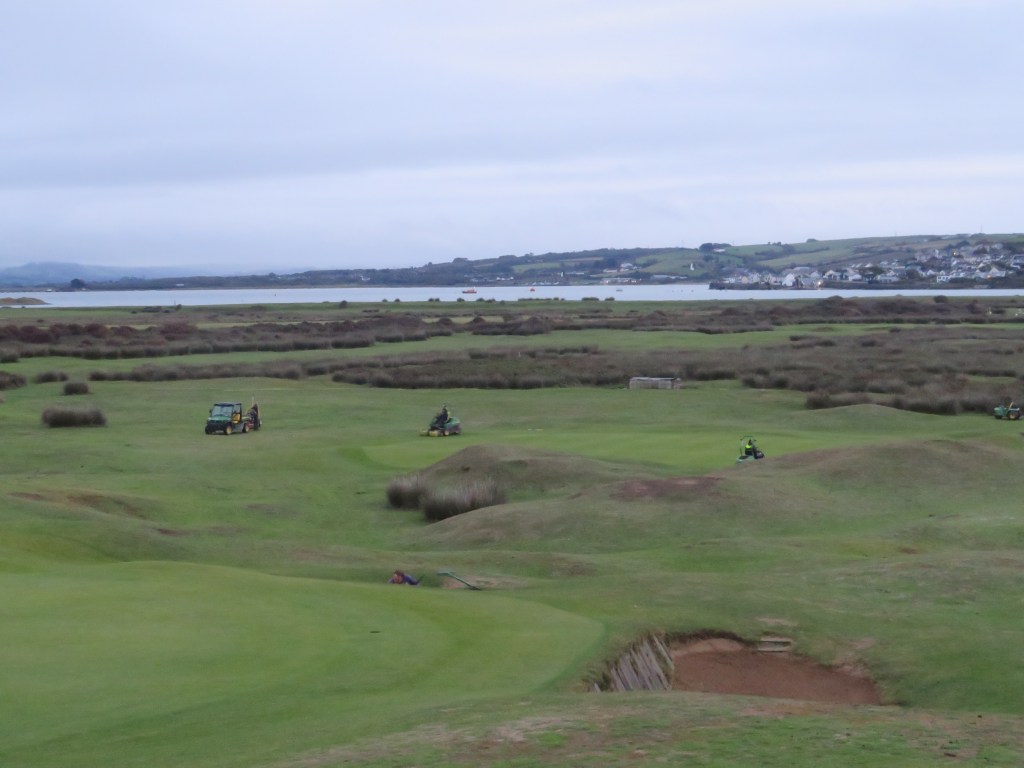
This morning (two days late) I completed my sponsored walk at dawn in aid of that brilliant cause, The Samaritans. I have to say doing this after the exhaustion of helping to run a weekend residential conference wasn’t ideal but I was determined to complete the walk. I would like to say a huge thank you to those who have sponsored me, helping me to exceed my initial target – that doesn’t mean it wouldn’t be lovely to raise a little more. Here is the link to the sponsorship page and some photos to prove it happened. So thankful that these wonderful views are just up the road. News about the conference will follow when I’ve recovered.

Extreme Decorating and Other Domestic Issues

Just before leaving for our recent trip, the oven decided not to work. The minimum call out repair charge wasn’t much less than a new oven, so, on our return, I was all set to invest in a replacement. I checked the website of the fairly nearby shop that had received several recommendations and ascertained how much they were charging for what I wanted. I was passing the even more local Bideford Appliance Store, so called in there first, quite prepared to buy a whole new oven, if they could offer me a better price. It turned out that they could but ten out of ten for Bideford Appliance Store, they talked themselves out of an oven sale by suggesting that I may just need new knobs and that turned out to be the case, a considerable saving. Not many stores would have done that. Now we don’t have to live on a diet of things that can be cooked on a hob, in a microwave or slow cooker. We do have use of an air fryer but it has to be used in the conservatory as it sets the smoke alarm into aggressive mode that no amount of tea towel flapping or open front door wafting will pacify.

That brings me on to the conservatory. Arriving home from a fortnight away, we have just over two weeks before 150 people descend for a residential conference and I am heading up the organising team. I am well aware of this as I have what my granddaughter calls the ‘posh end’ of the garage crammed full of conference stuff. I have two lots of visitors to my tiny home in the interim. What dear readers, possessed me to think that now was a good time to decorate the conservatory? Having ordered flooring and what is know as a ‘banquette’ with delivery dates, there was no turning back. Stage one, two people in their eighth decade, both with minor health issues, decide to dump a six foot long bed settee. Never fear we have a trailer in which to take this to the recycling centre aka the tip. Said trailer is errrr six foot long. First of all, why am I always going backwards when carrying things? We did manage to unscrew the metal bed part of the settee from the rest which made life easier and heaved it into the trailer. Heaving it out was slightly harder and tip staff are not allowed to help until you have items out of your vehicle/trailer but mission accomplished.

Decorating day was two days ago. First to empty two large pieces of furniture so that they could be moved away from the walls to paint behind. Given the volumes of conference stuff there was absolutely nowhere sensible to put the contents, so I then had a living room that you could barely walk across. General mank that was lurking behind the pieces of moved furniture removed, I then started painting. Let’s just say it was slightly harder work than anticipated considering that the room is mostly glass not wall. Hindsight, always a wonderful thing, says that I should probably have taken the shelves off the wall and not tried to paint round six brackets and I probably needed a paint pad that was younger than fifty years old. And no I shouldn’t have left painting under the radiator (which  involved lying on the floor) until last. To add insult to injury, mid paint my fitness watch (sadly the wearing of which does not make me fitter) claimed I’d been sitting still for an hour! Painting finished, I hadn’t looked at the time on said fitness watch but estimated it must be about 3.30pm – I was surprised to see it was only 12.30 – it just felt like I’d been painting for five hours not two. All that paint pad swirling and you’d think that my arms might ache but they aren’t too bad. I know I don’t have stairs anymore to practice going up and down but really there was very little getting up and down steps involved however inexplicably, my legs have ceased to work. Yesterday I had to go up and down flights of stairs when out and down was next to impossible.

Next step, we have to empty the furniture a second time and find room for not just the contents but the furniture itself in order for the new floor to be fitted, fortunately the conference and its associated stuff, which includes over 450 give away books, will be no more. As for the legs, I need to get them back in some semblance of working order ready for my dawn walk in aid of the Samaritans. Dawn is no problem – walk needs some work at the moment. Common sense says I should do this on Monday 12th October not Friday 9th (which is day one of the conference) but it will be that weekend. Many thanks to those who have very generously sponsored me. If anyone else can spare something for this good cause the link is https://dawnwalk.samaritans.org/fundraising/janets-dawn-walk

Now I am off to collect yet more conference stuff, oh and still more stuff is being delivered today – will my teeny tiny house for one ever reemerge?

South-eastern Sojourn Part 5

Day 10

It is moving on day again, this time to our final site for this trip, just outside Maidstone at Bearstead. This time, I manage to put the right destination in the satnav. It is a tricky one this; we have to be off our current site by 12 and can’t access the new one before 1pm but it is a journey of under an hour. We try to solve this issue by going via a supermarket near us to purchase bread and milk. The snag with going via a supermarket with a caravan on the back is of course parking and it only works if there is the option to drive through and occupy two spaces. There isn’t. We end up up a dead end in the car park, where there is only room to turn round by dint of high level towing skills and the lack of a barrier pole that had been flattened by another driver. I rush into the shop to make our purchases, whilst Chris circles the car park. Both shop and carpark are huge. I end up chasing after the retreating van to try to catch up with it as it circles past me. The site is almost full but we secure another corner site with a WiFi signal and an adequate television signal if you aren’t to fussy about what channel you watch.

Day 11

The day did not start well. The satnav insisted on adding twelve miles to our journey and taking us to our destination along the M20 and M25. There is a much shorter route along the A20, albeit admittedly one minute longer. No amount of persuasion would persuade the satnav to take us via this route. No problem, I have a map. The A20 runs very close to the site, we follow the signs to the A20. As we progress I am puzzled by the lack of settlements we should be passing according to the map. We have gone rather further than ideal before I realise the issue. A20 yes, right direction no. We turn around where possible and eventually arrive at our destination about forty minutes later and rather a lot of miles further than intended. In retrospect, we should have gone with the satnav, hindsight and all that. Then there was the issue of finding somewhere to park. The nearest car park to our destination was full of cars bringing young footballers in for a tournament. Luckily, someone was just leaving and we were able to acquire their space in the overflow car park. A bonus was that weekend parking was free.

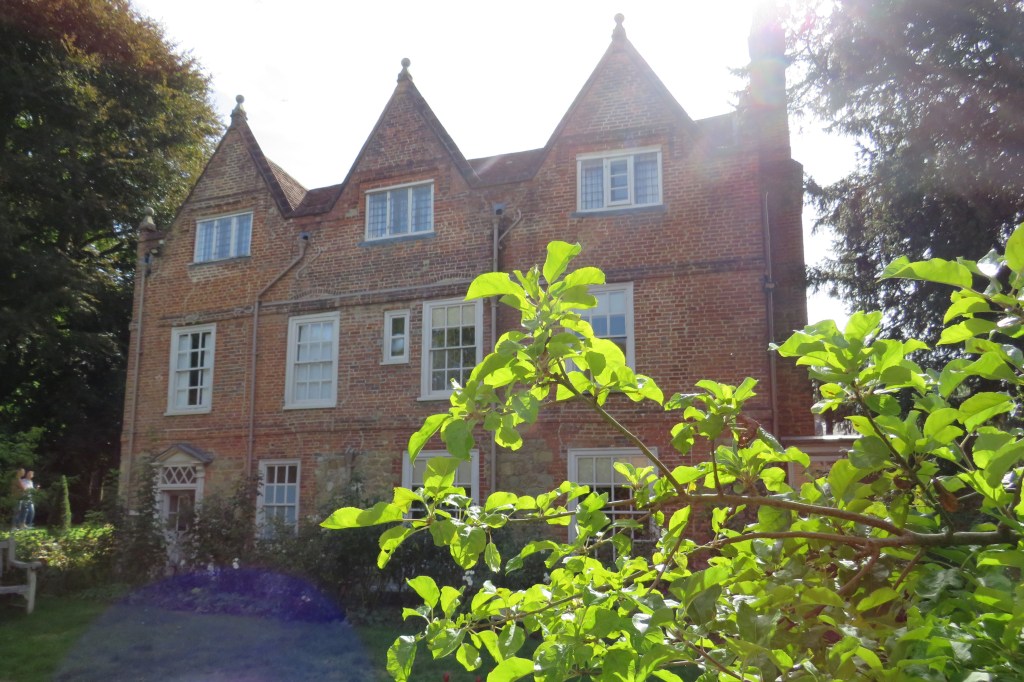
Today’s National Trust property of choice is Quebec House. When planning this itinerary, this was the only day when we were in the area that the house was open and fortuitously, there’s a special event on. I have brought my notebook but somehow have neglected to equip myself with a writing implement. I have to rely on memory and photographs of interpretation boards. Quebec House itself was the childhood home of Major General James Wolfe. Typically, the National Trust have to have a ‘hook’ for a property and here, much is made of the Wolfe connection, even though the family only rented the property for a few years from 1725 to 1738, leaving when Wolfe was eleven.  A successful career soldier, Wolfe helped to put down the 1745 Jacobite Rebellion and later enhanced his career during the Seven Years War 1756-1763 between Britain and her allies against France and hers. His role in the taking of Quebec, which facilitated the end of French rule in North America, made him a hero after he lost his life at the Battle of the Plains of Abraham. His body was brought back to England, By this time the corpse was not in a sufficient state for a death mask to be made, so a servant was used as a model for a bronze bust that was created. Chris uses his knowledge of musketry to explain the workings of a flintlock musket to a fellow visitor.

The special event and the other focus of the property really celebrates not Quebec House but nearby Chartwell. Although, in 1760, both properties were owned by Thomas Ellison; at this point Quebec House was called Spiers. After London Foundling Hospital was established by Thomas Coram in 1739, it soon became obvious that the number of children needing care exceeded the capacity of the London home. A satellite home was established in Westerham, at a house called Wellstreet, in 1760. This is the property now known as Chartwell. Detailed records survive and 469 children were cared for at Wellstreet. Present at Quebec House today is Mrs Wadham, the first Matron of the Westerham annexe when it opened in 1760. Mrs Wadham is full of ‘useful’ remedies to cure the children of all ills. Mistress Agnes would have enjoyed meeting her. When a child entered the hospital, their name was stripped from them and they were given a number. On display are representations of the tokens that were left with foundling children, so that they could be identified should their parents come back to claim them. Although receipts replaced tokens before the Westerham branch opened, some mothers still provided them. There is plenty of information available about life at Wellstreet, which functioned for nine years. There were twelve dormitories and three children shared each bed, which was four foot two inches wide and five feet six inches long.

There is also a FindmyPast demonstration on a large screen and a National Trust volunteer is attempting to help a visitor. I can’t stomach listening to the misinformation for more than a few minutes. I manage to acquire a pencil for future notes.

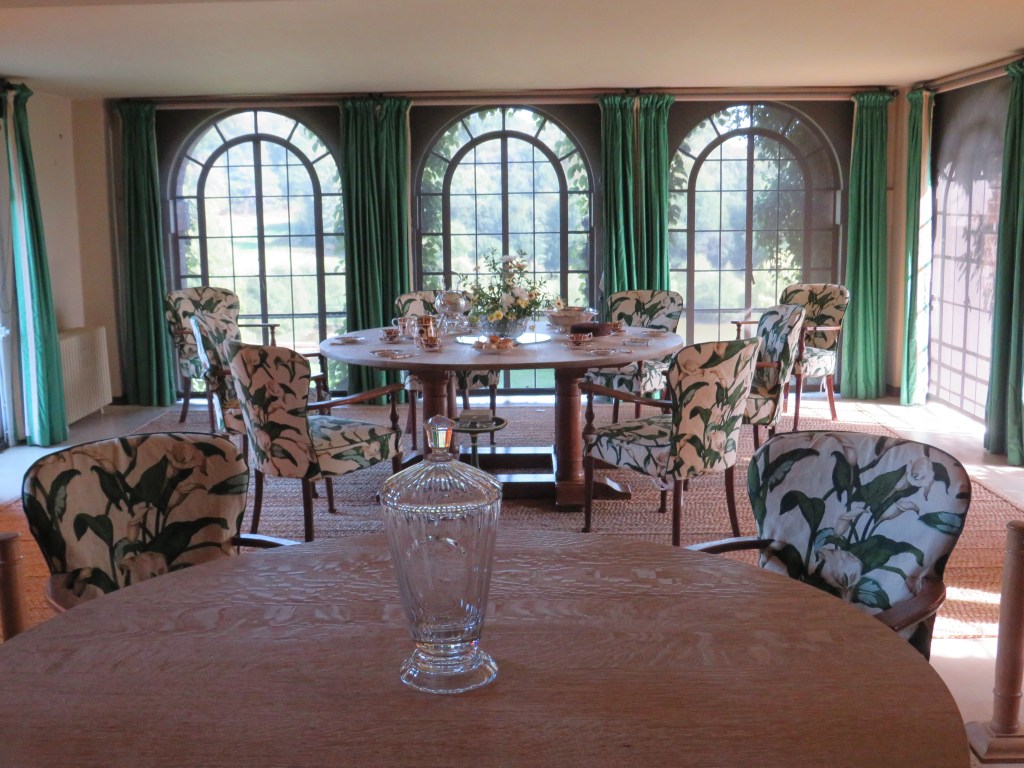
An off the cuff change to itinerary, which we had already adapted, took us to nearby Chartwell, formerly not just Wellstreet foundling hospital annexe but more famously the home of Winston Churchill. Again, parking spaces are in short supply. First stop the café, where today’s cake of choice is iced cherry cake. The property had been empty for a few years when the Churchill’s purchased it, in 1922, for £5000, having knocked £500 off the purchase price. It cost another £20,000 to refurbish it. We are aware of the connections between Clementine Churchill and Bucks Mills, as well as the links to the Mitford family and there were Mitford signatures in the visitors’ book that was on display. We are given a timed ‘invitation’ to visit the house. We have been allocated am persona of a genuine visitor. I am Churchill’s daughter, Sarah and Chris is Professor F A Lindemann, no me neither.  It seems he was a physicist and became Churchill’s scientific advisor. Some of the rooms were dressed as they would have been when the Churchills were in residence, I particularly liked the dining room and the library. Other rooms were exhibition spaces, which I found less appealing, They told the story of Churchill as an artist, an author and a wartime leader. The grounds were impressive and the views were glorious. We walked round the huge walled garden, so large that you couldn’t help wondering if the effect of being walled was largely lost.

For the homeward journey, we let the satnav take the strain and after forty minutes on the motorway, we were back. A much less stressful and less time consuming, if not very inspiring, journey.

Holidaying in Herefordshire Part 2

Still with an eye on the weather forecast, we decided to go to Goodrich Castle on what was predicted to be the least worst day we had left. As things turned out, after some light drizzle first thing, the day was hot and sunny. Possibly a little too hot to be ideal and certainly humid but we counted this as a win. My inspirational, lower high school history teacher was a Mrs Goodrich, so even the castle’s name had positive connotations. We began with a recce of the shop and were pleased to learn of new a English Heritage initiative, which gives members discounts in the shop and café. It was also good to see the child-friendly free activities on offer. I was vaguely amused by the placement of an advert for English Heritage membership outside the toilets that read ‘Members go Free’.

We availed ourselves of an audio guide, which wasn’t the greatest success. Firstly, it read two different explanations simultaneously and then, even on full volume, it was ridiculously quiet, even for those of our party (that would be me) with good hearing. So this is what I gleaned from interpretation boards, with the usual proviso that none of this is checked for accuracy.

Godric Mappeson, for whom Goodrich is named, built the first castle on this site in about 1100 but none of this early castle still stands. The keep, that is the earliest part of the existing castle, was built by Richard de Clare about 1150. In the early years of the thirteenth century, William Marshall owned Goodrich, amongst many other properties. By the end of that century, Henry III had granted the rights to the castle to his half-brother William de Valence. French nobleman, de Valence, who was thus uncle to Edward I, built much of what remains today. Regarded as a foreign upstart by his neighbours, he set out to build an impressive and intimidating edifice, yet Goodrich did not have to defend itself against enemies until the seventeenth century. Instead, the castle functioned as a domestic residence, although most of its owners had properties elsewhere, so were not permanent residents. Unusually, the castle has stained glass windows, which reflect its domestic function. By 1326, the castle had passed into the hands of the Talbot family who  were still in residence at the end of the sixteenth century. They were responsible for extending and improving the castle. Royalist, Sir Henry Lingen, held the castle during the English Civil War when the Parliamentarians held it under siege. The Parliamentarians had a special large mortar cast, ‘Roaring Meg’, which could fire 200lb shells and destroyed part of the castle, then the remainder was further demolished to ensure that it was beyond repair.

The approach to the castle is via two drawbridges; the first, at right angles to the moat, leads to the barbican. This was modelled on Edward I’s barbican at the Tower of London and is a D shape. The second drawbridge leads across the moat, which never had water in. As the latrines exited directly into the moat, the lack of water may have been an issue. Here at Goodrich, one of only a few portcullis mechanisms remains.

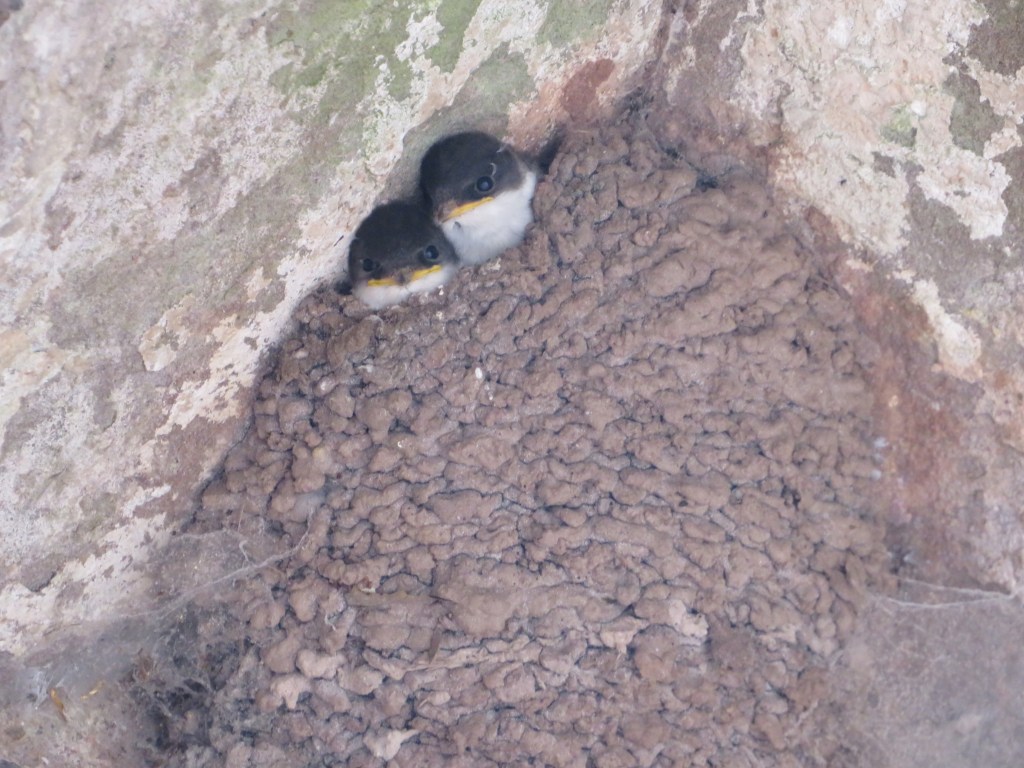
We stopped to admire the red stone castle and watch the many swallows and martins wheeling and diving, some still with young in their nests, constructed in out of the way nooks in the castle. Once inside, we found a way to reach the battlements that didn’t involve a perilous spiral staircase and were rewarded with lovely views across the Wye Valley.

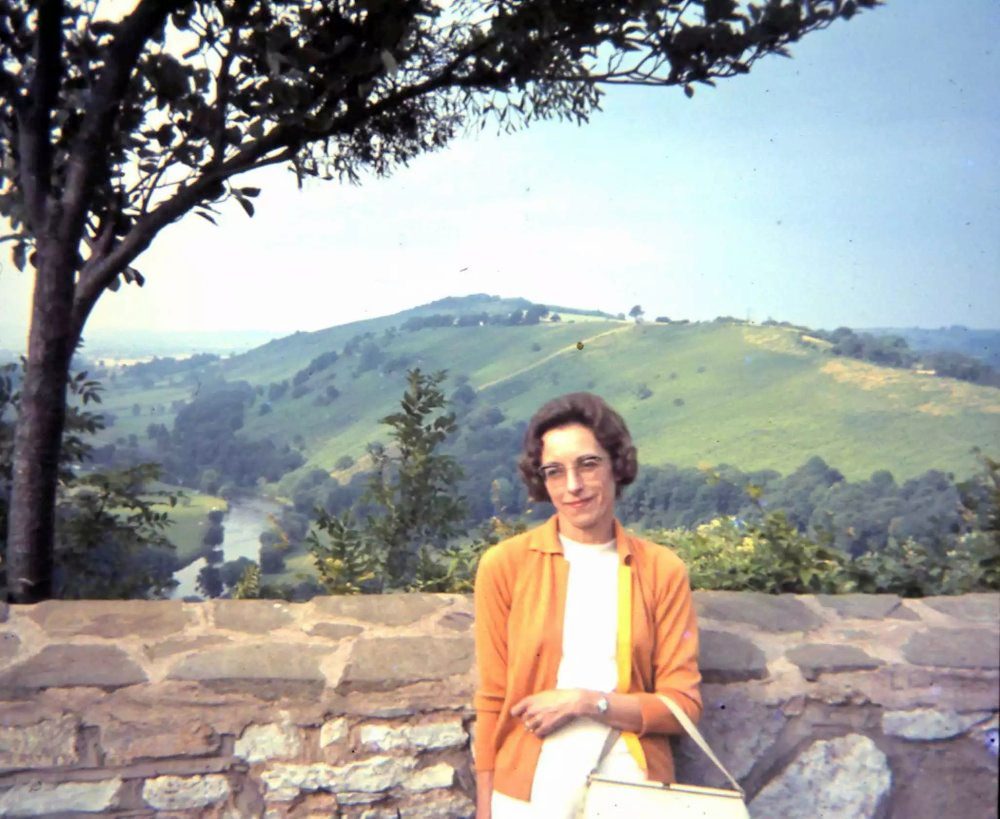
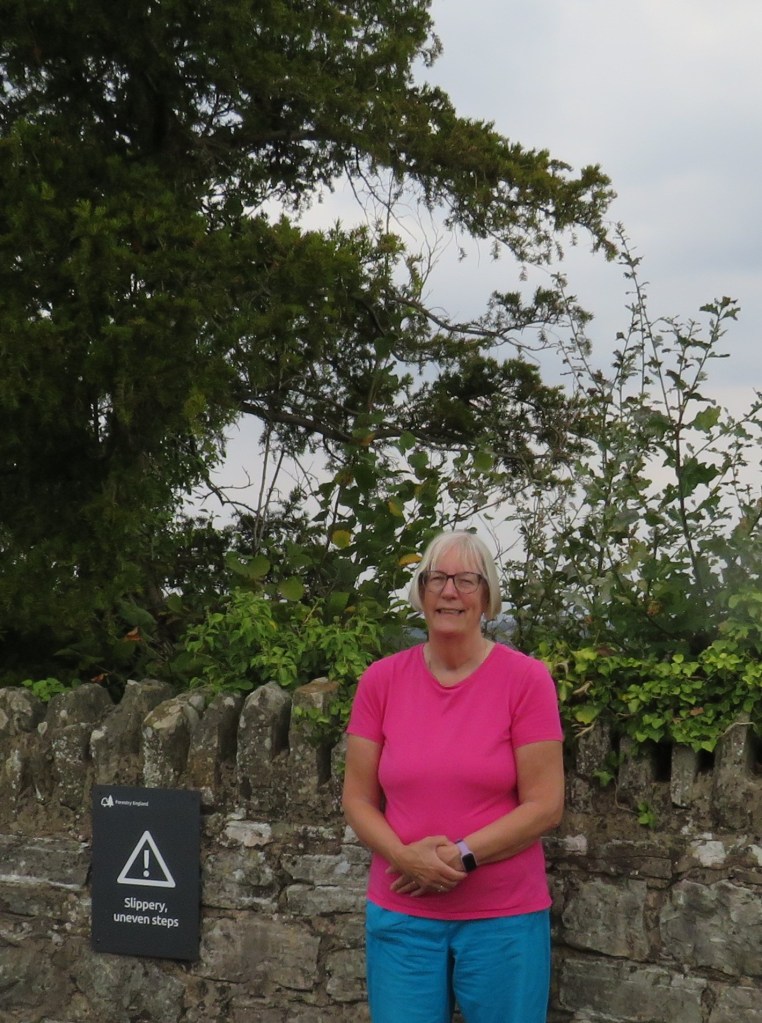
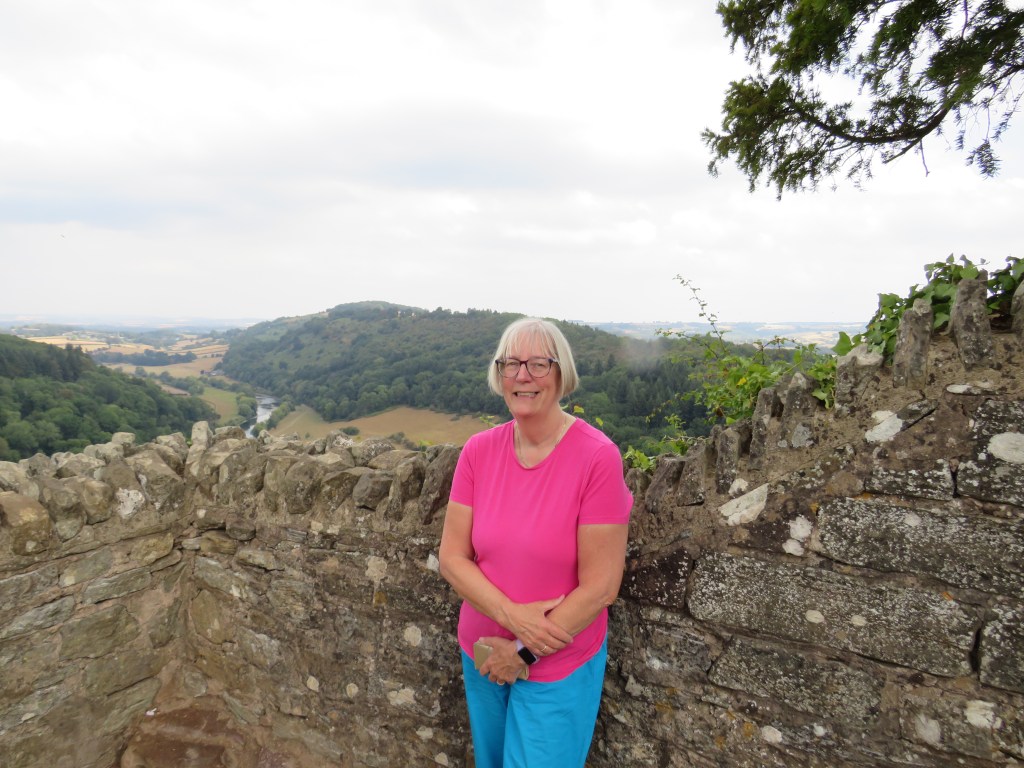
After some sustaining and very tasty passionfruit and lime cake we set off for nearby Symonds Yat. I had been here once before as a child, in 1968 and the only real memory was sparked by a photo of my mum taken at the time. I was hoping to be able to find the spot where it was taken. It seemed that the wall that she was standing by had been raised and vegetation growth meant that, what I think was the exact spot, no longer had a view but we took a photo anyway and also one a little further along, where you could see the view. Symonds Yat is the site of an Iron Age fort, built about 2500 years ago. It is thought to have fallen into disuse in the hundred years before the Roman invasion. It really was too hot to walk along any of the paths in the area, so we returned home via a supermarket stop.

There was a half hour delay through Hereford due to roadworks/volume of traffic and probably an accident, as three ambulances squeezed through the traffic to pass us. It got to 29 degrees in the car, which was less than pleasant. In the evening, we set off to meet a school friend at nearby Tillington. We went a fairly strange route as I had inadvertently put the wrong postcode in the sat nav but thanks to my map reading ‘skills’ we found the venue without much trouble. It is always lovely to catch up with people you haven’t seen for many years, in this case we think twenty-five and find we still have plenty to talk about.

Holidaying in Herefordshire Part 1

Day 1

Another month and another recent short trip away in the pursuit of our aim to stay in every English county. The county of choice this time was Herefordshire. In the hope of dodging the rush hour traffic, I left earlier than I needed to join Chris and the caravan. Dodge the traffic I did but instead I had to cope with blinding early morning sun for much of my journey. That accomplished, after a short wait so we didn’t arrive before check in time, we were on our way. Somehow along the way my phone screen went black. The phone was working as I could ring myself up using Chris’ phone but a blank screen. Apart from a few slow patches, the journey was uneventful and we arrived just as the site was open for new arrivals. We were staying about eight miles north west of Hereford. I had cunningly noted which pitches had the best wifi coverage but unfortunately these were not the sort of pitch that we had booked and I anticipated the need to stand on one leg under a tree to get reception.

Once on site there was good news. Once I was in the shade, I could just faintly see my phone well enough to increase the brightness and all was well. There was also one bar of wifi from the van so I was content. Not that I wanted to spend all day online but I did have the job I must not mention to do, as well as a conference to organise. Once set up, we sat in the sun and read (me) or fell asleep (Chris). I was determined to get to the end of Philippa Gregory’s Normal Women at the second attempt. It is excellent but huge and as an inveterate footnote reader, I am mildly irritated by the fact that the footnotes are only available online. I do appreciate that the book is on the cusp of too many pages without its fifty-four pages of footnotes but still.

Day 2

I was torn between wanting it to be dry, at least during the day, while we were away and wanting it to rain at home to keep my plants alive. Of course it could do both but that might be too much to hope for. As it was, the forecast for Hereford was decidedly wet for the rest of the week, so in a hurried rearrangement of our itinerary, we opted for the most outdoorsy option and headed to Bodenham Lakes nature reserve. As usual, I followed our route on my ordnance survey map. Predictably, the land was parched as it was at home and there were signs of autumn, with ripe blackberries, rosehips and falling leaves. This part of the county contains several orchards and there was soft fruit growing in evidence, as well as Hereford cattle and traditional timber-framed buildings. The precise location of the reserve is not marked, so we were relying on the sat nav, which can be notoriously unreliable with rural postcodes. Spying a blackberrying local, we asked for directions. It turned out we were almost there and said helpful local advised us to park by the church to avoid having to pay to park. Despite feeling that we should probably make a contribution via our car parking fee, we did park by the church, which means we could see the interesting remains of the market cross and the cross well.

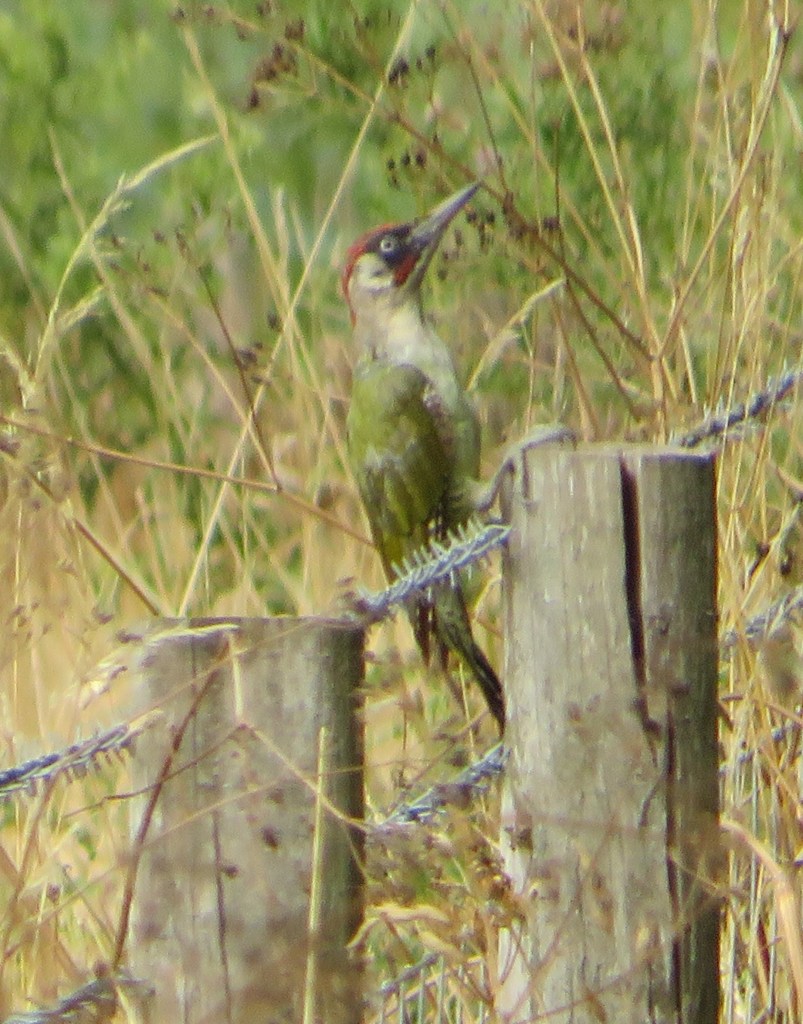
It is an interesting reserve and having been directed by another helpful local, we paused in a couple of hides. For those who are interested in birding, our observations were: Canada geese, Egyptian geese, Greylag geese, mute swans, coots, a wood duck, mallards, a moorhen, cormorants, grey herons, little egrets and a great-crested grebe.  Away from the lakes, we spotted woodpigeons, crows, a magpie and a green woodpecker who posed for a photo, although was a long way away, so I had to use full zoom. Thanks to the Merlin app, I also heard dunnock, robins, blue tits, great tits and long-tailed tits.

On the way back to the car, we did have a quick look inside the church. Judging by the fact that everything was draped in cloths, they have bats in residence. Back to the van to avail ourselves of the facilities, have lunch and a quick sit in the sun. Once it got a little cooler, we headed to nearby Staunton on Wye, planning a short stroll along the  Wye Valley Walk, which shares its course with the Three Rivers Ride. Normally, having already walked round the reserve, we’d have done this on a different day but mindful of the weather forecast, this was the day. Staunton on Wye is a bit of a misnomer as it is at least two miles away from the river. The Wye Valley Walk is also some way from the river bank. Having looked at the map, this wasn’t a surprise but I was hoping for more than one very brief glimpse of the river. We did hear a woodpecker, both on our outward and return walks but failed to spot this one.

We called in at Oakhurst Fam Shop, that was en-route, looking at ‘the taste of Herefordshire’ and other goodies that were on offer. I am sure this was all very good quality and there were some lovely non-food items but the prices were eye-watering. The wifi had deserted the site at lunchtime but the one bar returned by evening.

Green woodpecker taken on full Zoom from 200 yards away.

A Welsh Adventure

As caravan club frequent flyers, we are offered three night’s stay for the price of two. Always a sucker for a special offer, we look to see if, between the two of us, there is a gap in the diary. Fortuitously, there are a few days when we are both free, almost unheard of, especially at the time of the year but an opportunity not to be missed. A very short break in South Wales is planned. For once, this trip will have no family history connections at all. We are due to leave on what was the hottest day of the year, the hottest day ever in our part of the world and at our destination. Providence has it that we are delayed due to an urgent appointment, so our day of departure is due to be cooler, at least until the forecast changes and the view is that there will be another day of ridiculous hotness.

The job we must not mention firmly under control, thanks to a 4.45am start. By 8.30am, armed with plenty of water, we set off. This is as early as we can, given that the campsite has an earliest check in time of 1pm. I should say that a 4.45am start isn’t too far off normal for me, especially at this time of year and given that, after a stupidly hot night, I was not asleep anyway. As it was already 22 degrees, why not work? For my down-under friends who think our mid 30s temperatures are nothing to write home about, please remember that our houses rarely have air-con.

With the temperature in the car rising steadily, I enquire of the driver if the car has air con. I am reassured that it does but that he doesn’t know how it works. By this time, we are bowling along the M4 and it is 30 degrees. I consult the manual, handily stowed in the glove compartment. I fix the aircon, which now has the insurmountable task of cooling down what is a very hot car. We have a sat nav but it seems that while I was sorting air conditioning out I should have been navigating – who knew?  A slight detour ensues. After a while, the air con makes a dent in the temperature but then we are stuck in traffic and from Port Talbot onwards, are crawling along at about 10mph for the next hour. As the traffic starts flowing, the outside temperature drops to a blissful 19 degrees.

The site is lovely, on the edge of a country park, close to the beach and with swallows swooping and diving. I have already sussed out which pitches have the chance of a wifi signal and despite the traffic delay, we are early enough to secure one before the site fills up tonight. Next, coffee and what passes for lunch, eight hours after breakfast. A robin pops in the van to say hello.

Lured by a 40% off main meals offer (cheapskates again you see) the plan was to head to the not actually very nearby Harvester in Swansea for an evening meal. Initially, we were going to go in early and look round but a combination of the extended journey time to get here and us just wanting to chill means we leave early, being aware of rush hour traffic but not early enough to look round. This Harvester is situated in a huge retail park. We are well aware just how huge, as it takes half an hour of driving round and judicious use of Google maps to locate the Harvester, which is well hidden behind trees. The sat nav just took us to the retail park, which appears to all share the same postcode. I thought afterwards that I should have gone for What Three Words – hindsight and all that. Good job we left early. We eat far too much. It is free dessert Friday but sadly we can’t avail ourselves of that offer and the 40% off. I never thought that mini desserts would be on my radar but with your mini dessert you get coffee as well and bonus points for Harvester as it is served in a proper shaped mug, not one of those wide cups where the coffee loses heat and which is hard to balance, even though I have no trouble at all with my grip.

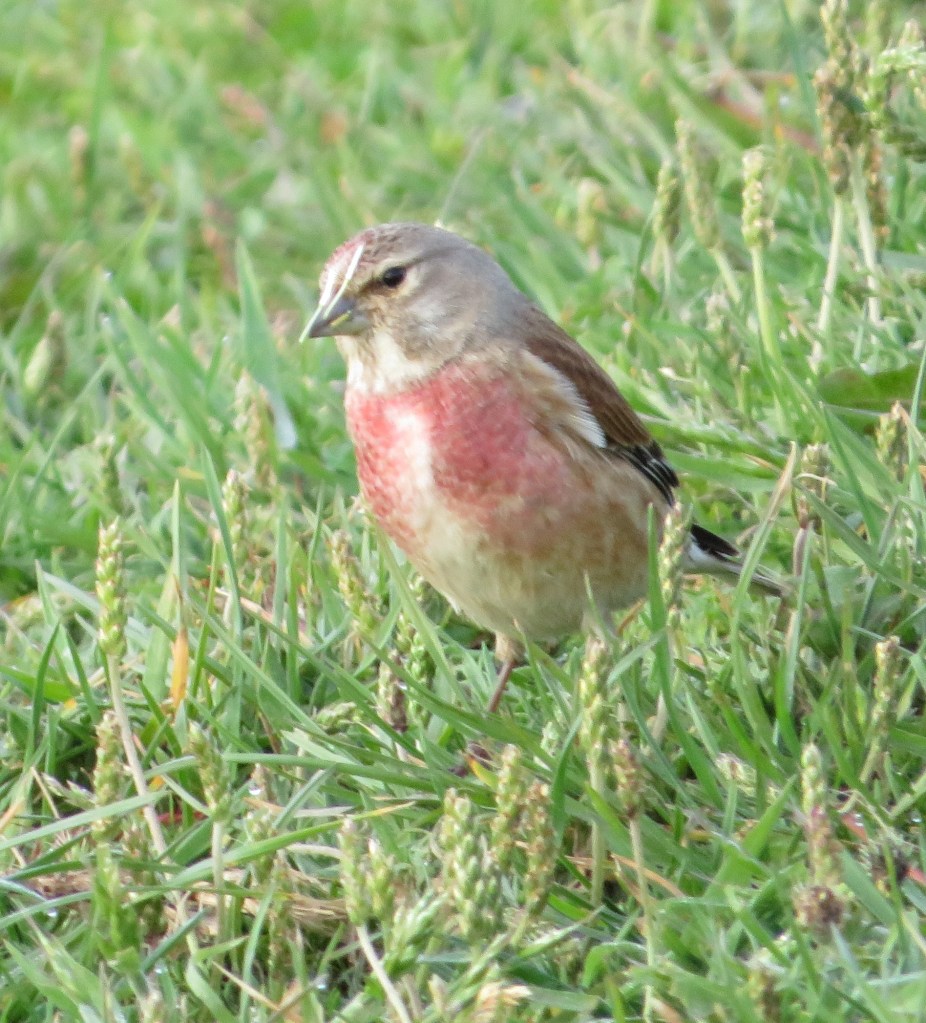
No pictures were taken on this day so here is a bonus bird picture taken 2 years ago.

#RootsTech Roundup Part 3

Ok so it was Saturday but I am still on Friday’s talks. I was relieved to reduce my watch list by three as I had put reshowing of talks that I’d already seen on my list. Wanda Wyporska’s excellent ‘Caribbean and African Enslaved People and their British Enslavers: A look at sources’, was a great  but sobering start to the day. As far as I know, I do not descend from the enslaved or enslavers but along with everyone with European heritage, I have no doubt that some of my ancestors benefitted from the trade in enslaved people.

Having swapped to Paralympic coverage for a while, I went back to Friday’s Rootstech presentations with Kelli Bergheimer’s ‘DNA Misconceptions’. I found the information about inferred matching very interesting. This was the DNA talk that was most relevant to me, that I had listened to so far, even though it extolled the undeniable benefits of sibling and first cousin matches, which I will never have. Then it was time for ‘FamilySearch Full-Text Search – Your Golden Path to Ancestral Discovery’, an amusing and informative session from David Ouimette. I have used this before but there were some suggestions to make searching more efficient. This is still not fully accurate or refined but it is definitely a game changer. ‘Avoiding Research Pitfalls’ with Jana K Greenhalgh and Mindy Taylor came next. Once again, lovely to find US speakers using UK examples. This was packed full of possible pitfalls and worked examples. Another must watch for those starting out.

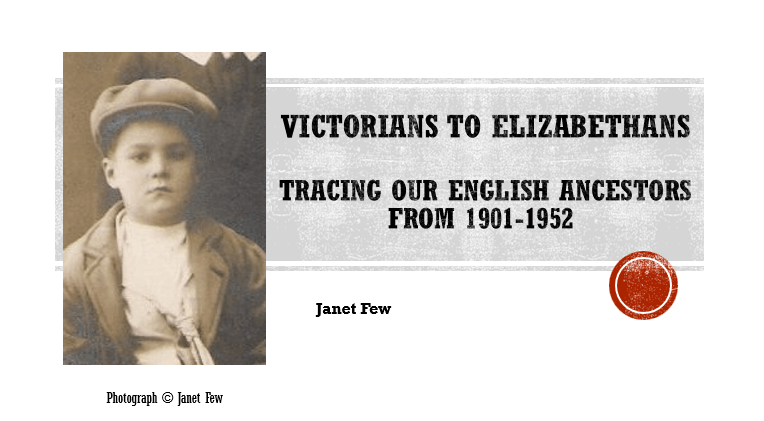
After that it was time for my own live presentation about researching English Family History 1900-1952. This is important even if you don’t have any British ancestry, as you may need to trace the trees of DNA matches in Britain. I was hugely relieved to find that the technology was working, it was fun to do and the feedback was positive. It was also great to find friends and online acquaintances in the live audience. If you missed it, or indeed any of the other talks, you can access the recordings.

There was still time for Diahan Southard’s ‘DNA Swim School – Part 2: Treading Water with Your Matches’, which built on part 1, with handy tips for working with groups of DNA matches.

Eighteen sessions down (including two of my own) fourteen to go.

#RootsTech Roundup Day 1

For those who don’t know (and if you don’t, you’ve not been reading my blog long enough) RootsTech is the largest genealogical event in the world, with thousands of people attending live in Salt Lake City and many more taking part virtually from all parts of the globe. Many of the sessions are recorded and you can access these for free here. These remain online after the event, so you can watch presentations from this year and previous years at your leisure. This is a brilliant opportunity to learn more about research methods, sources, genealogy related technology, DNA, social history and much more. There really is something for everyone. Including a few talks from me!

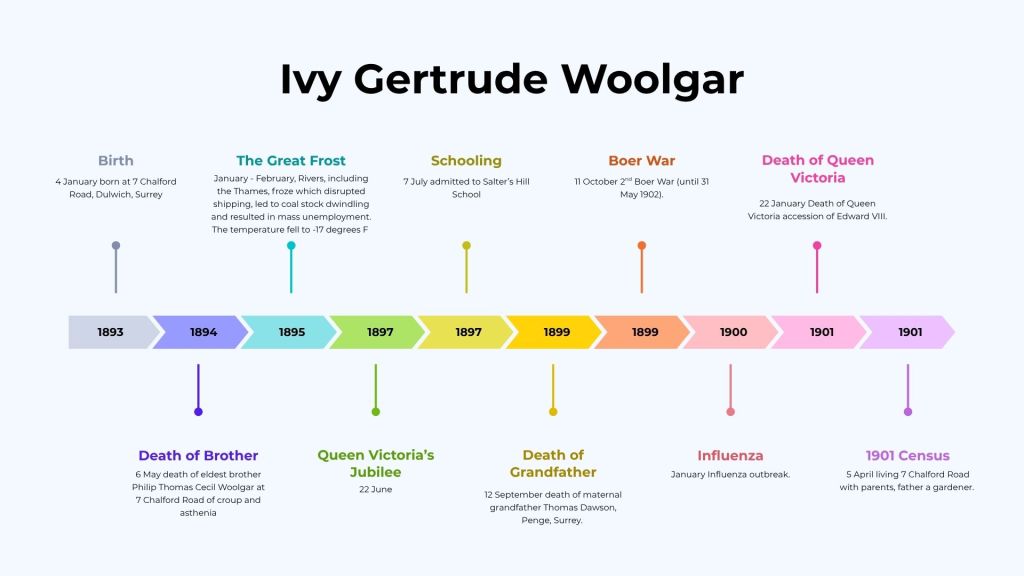
I started the day with a 5am talk from UK researcher Davina Wilcock ‘Considering Location When Researching Your Ancestors’, a great introduction to the importance of place and as a One-Place studier, who am I to argue. Then at 6.30am my own pre-recorded session ‘Timelines for Genealogy; a powerful research tool’ went live. Excruciating as it is to listen to oneself, I did, thinking that I could comment and answer any questions in the chat. I could see other people’s comments but my screen lacked the blue ‘join chat’ button that others had.

At 3pm I had a clash, so I started with ‘The GPS in Practice: Examples of Reasonably Exhaustive Research’ with Angela Packer McGhie. The speaker gave worked examples of verifying evidence and analysing the reliability of records, defining reasonably exhaustive research. I appreciated that an English example was included. A very minor niggle, the speaker did refer to Bolton le Moor as a county. British geographical jurisdictions are confusing, particularly for those overseas and getting confused about them is common. She needs my session from 2025 ‘Where am I?: Are You Searching in the Right Place?!

Then it was back to catch up with ‘Poor, Pauper, or Pragmatic? Victorian Burial and Identity: interments in Philips Park Cemetery in Manchester 1866-1900’ with Dr Micala Hulme and I finally solved the lack of a join chat button. It seemed it was because my Family Search profile lacked my date of birth. It would have been handy to have been warned of this somewhere obvious. Interestingly, my own talk is suggested as a related talk alongside Micala’s. It was an interesting overview of Victorian burial practices with Manchester as a case study.

The first part of Diahan Southard’s DNA Swim School was next on my list. The session was very well presented and interesting but not relevant to me as she was focussing on looking for a 2x great grandparent. I don’t have any missing 2x great grandparents and only have one missing 3x great grandparent. The use of ancestral journeys, which she talked us through, is also less helpful to someone with 100% English ancestry. Nontheless, Diahan is a very entertaining and knowledgeable speaker.

Then I listened to a panel discussing Guidelines for the Responsible Use of Artificial Intelligence (AI) in Genealogy in 2026. The panel members and others are part of a Coalition for Responsible AI in Genealogy, who advocate for accuracy, transparency and privacy. A very balanced discussion, with the take away ‘Don’t let AI make the final decision for you’. Definitely a must watch. There were six more evening sessions on my schedule for day 1 but I decided to swap for Crufts and watch those later, one of the great positives of RootsTech. More tomorrow!

Image created using Canva