Day 7
The descendants left for home and we went to Newark to explore the National Civil War Centre, which I had been wanting to visit since it opened. I was expecting this to be perhaps similar to the Bosworth or Culloden battle sites but this was all indoors and was very well done. A heads up to those planning a visit, there is a reduced entry fee for English Heritage members. We had to admit to the helpful volunteer, Ralph, that he was talking to people with somewhat more knowledge than the average visitor. There are plenty of interactive opportunities but sadly the option to take a stuffed puppy on a lead round with us, or appropriate a hobby horse, seemed to be limited to a rather younger audience.
There are simplistic explanations of the causes of the civil war but there is also the option to ‘dig deeper’ for those wanting more information. There are a plethora of touch screens telling the story of the war in general and Newark’s significant role in particular. Newark was a Royalist stronghold and it was here that Charles I repudiated his nephew Rupert for surrendering at Bristol. Rupert’s troops were thought to have brought plague from Bristol to Newark. This may have saved the town from destruction, as when Newark surrendered to the Parliamentarians in 1646, the Parliamentarians did not stay longer than necessary because of the danger of infection, so did not ransack Newark as they did other towns. A third of Newark’s population succumbed to plague or typhus. Part of the museum premises is the former Magnus School, founded in 1532. We watched some short films and also look at displays relating to later Newark history.
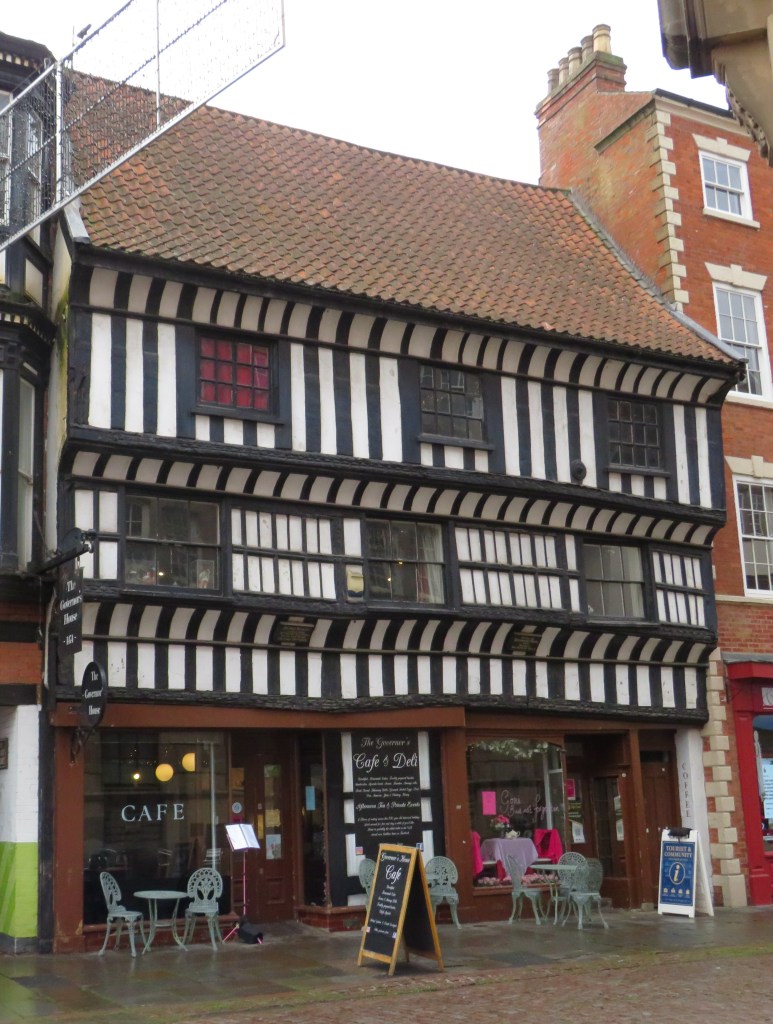
We strolled into the centre of town and saw the church with its spire that makes it the tallest in Nottinghamshire and one of the tallest in the UK. We also saw the Governor’s House in the market square, which is now a café. This grade 1 listed building dates from 1474. It was used as a royalist headquarters in the civil war and the king is said to have stayed there. Hampered once again by not feeing 100% and drizzly weather we didn’t explore further.
We had a lovely meal at the Millhouse in Worksop in the evening and a chance to catch up with friends.
Day 8
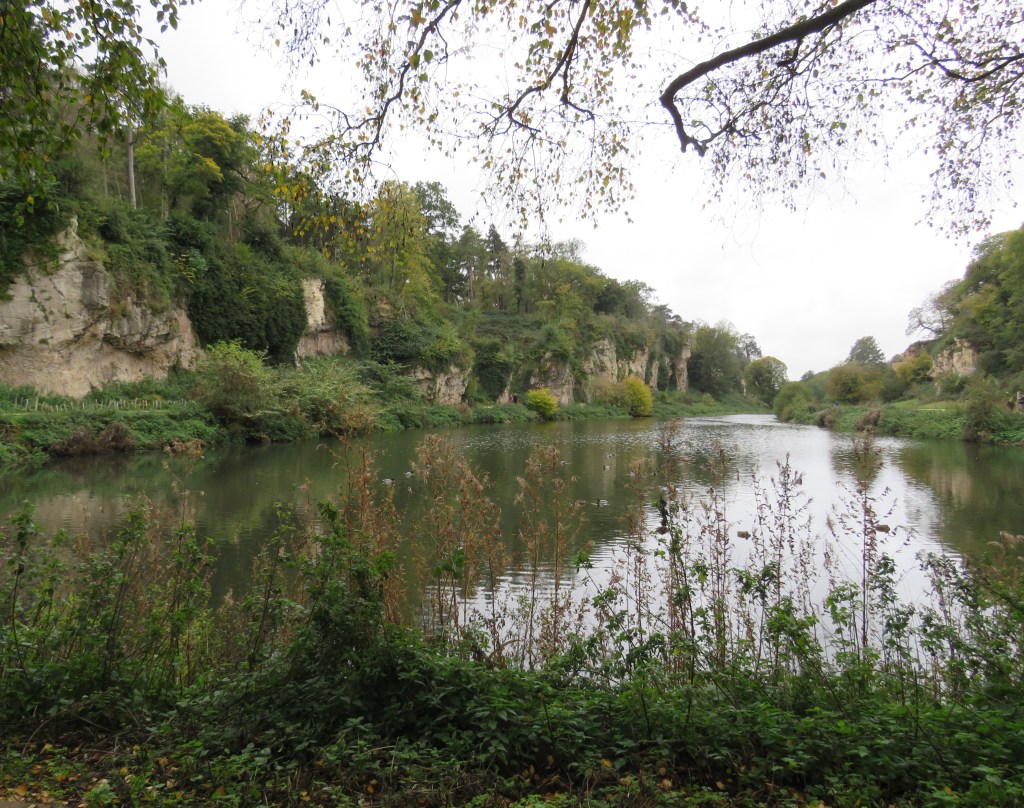
Nearby Creswell Crags limestone gorge was our final destination. Caves are not a favourite of one of our party but we hoped to see the museum. Unfortunately, the museum was closed for refurbishment, so we booked a tour instead. There are three caves that can be toured at this time of year and only one in winter due to bat roosts. We opted for the next tour, which still meant we had the best part of an hour and a half to wait. We were given a free guide book as compensation for the lack of the museum and whiled away the time in the café consuming ginger beer (me) and a bacon bap (not me).
Our guide was John who was both excellent and amusing. We were a party of fifteen, which he said was a little small for a neolithic tribe, who would have followed the food sources from central France, walking about thirty miles a day, to spend the late summer here, which was the most northerly area not covered by ice at the time. Although there would have been reindeer and other animals for us to hunt, there were also predators who may want to hunt us, including bears, mammoths, lions and to my surprise, hyenas. Evidence of all these have been found since extensive excavations began in the 1870s. Some of the remains are 100,000 years old. Neanderthals were at Creswell between 55,000 and 30,000 years ago. Evidence for modern human occupation dates back 29,000 years and consists of tools and cave art, rather than human remains. Climate change then made it too cold for human habitation and humans did not visit between 22,000 and 13,000 years ago but then, as temperatures began to rise, seasonal visitors started to return.
We were equipped with headache inducing helmets and torches. Our tour took us to Robin Hood’s Cave. It is a dry cave so lacks the impressive stalagmites and stalactites that are normally associated with caves. The tour involved crawling through a tunnel and we were probably nearing the limit of our ageing physical capabilities but we survived. There are twenty-five known caves in the complex, which is on a magnesian limestone ridge that runs between Nottinghamshire and Derbyshire and extends as far as County Durham. This is one of the rarest rock types in Britain. ‘Mother Grundy’ allegedly lived in the cave that now bears her name in the nineteenth century. I was tempted to rush for the census returns. We were shown replica flint and stone tools. A flint blade is twenty times sharper than modern surgical implements but has the disadvantage that it cannot be sharpened.
Creswell Crags is noted for the most northerly cave art in the world but this was not in the cave we were in. Looking at the guide book, it does seem that you need a fair bit of imagination to see various animals in the scratch marks on the cave walls. You also need a different tour to see the many witch marks that were discovered in 2018. More properly called Ritual Protective Marks or Apotropaic Marks, these were probably created in the sixteenth to nineteenth centuries and the numbers that have been found at Creswell are unprecedented. I would have liked to have viewed these, most of which have a religious significance. For example, the W like mark, is actually, it is thought, two interlocking Vs to denote the Virgin Mary.
As our tour ended it was very wet, windy and cold and another named storm was forecast. Our BBC television signal had deteriorated but we managed to just about watch a flickery Strictly and I conducted a Pharos typed chat amidst much refreshing of the internet connection.

