Llanelli Wetlands – so good we went there twice

There were plans for three out of the four days of our stay, so a decision had to be made about what to do with the spare day. We are aware that there are parts of the country we’ve never been, so places have to be particularly special for us to be thinking of a return visit. With that in mind, we are unlikely to stay in this area again, so I chose a return visit to the wetlands to see the section we didn’t have the energy for last time. Today we are exploring the Millenium Wetlands, totally different from what we have already seen. This section is almost devoid of people and we pop in and out of various hides to see what we can see. I am making full use of the Merlin app, which tells me what I can hear, so I am counting those on my list. Excited to have very nearly but sadly not quite, been quick enough to photograph a chiffchaff, of which, Merlin tells me there are a great many, chiffing and chaffing away. List below for bird fans as usual.

The café was an obligation of course and then a hunting for something even more elusive than a rare bird, the lesser spotted and endangered species that is a bank of a specific variety. We establish the address and ask Sally the sat nav to take us to the nearest car park. Just a shame this car park is no longer operational. We find on-street parking, for one hour only, the bank, says Google maps on my phone, which has very little battery due to all the bird identifying, is a seven minute walk away and we safely locate it. This branch of this bank is due to close in a couple of months due to ‘nobody using it in the afternoons’. It is afternoon. We spend 40 minutes there during which time two harassed staff try to cope with at least two dozen nobodies, all with less than straightforward queries. In the end we give up waiting and rush back to the car just as our allotted hour expires.

The afternoon is spent using the one bar of wifi to try to uncover the story of a bigamist. Yes I know I said this was, unusually, a no family history trip but I fell over this in the process of solving a totally different query that popped into my inbox.

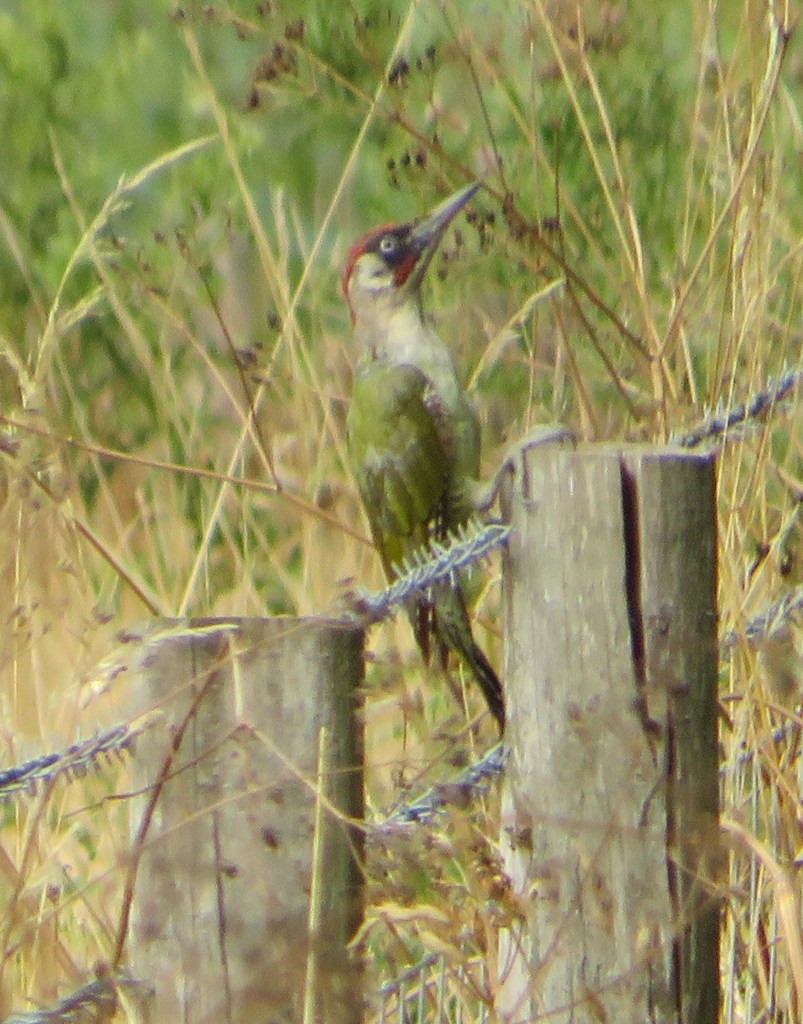
Birds seen: Goldfinch, Chiffchaff, Blackcap, Egret, Moorhen, Mallard, Blackbird, Jackdaw, Wood Pigeon, Great Tit, Black-backed Gull, Shelduck, Yellow-billed Duck, Re-breasted Goose, White-winged Wood Duck, Bufflehead, Snow Goose, a Puss Moth caterpillar and a Slow Worm (yes, I know the last two aren’t birds).

Llanelli Wetland Centre

A short drive along the northern shores of the River Lougher and we are at the Llanelli Wetland Centre. We have a lovely wander round, popping in and out of various hides and unlike many of our forays to see wildlife, we do see a wide variety of wildfowl. The list is below if anyone is interested. There is also a distinct and pervading smell of cannabis at one point, although no other people are in view; very strange. Although much cooler than of late, it is a little on the cosy side and we repair to the café – hurray, coffee in sensible shaped mugs again. I was a bit disappointed to realise that we had actually only seen half of what was on offer but it really was too hot to walk another three miles or so round the other paths. The only negative was that they no longer supply paper maps. I do understand the need to save trees but I really can’t be doing with following a map on my phone. If it is big enough to read then I can’t see enough of it to work out where to go next. It would have helped if there were more copies of the map in places around the site. Note to self to print the map in advance if we ever come again to do the other half.

Then it is back to the van for a lazy afternoon. The adjacent Country Park is hosting Armed Forces Day, so we can hear military bands and World War 2 songs in the distance.

In the evening, we stroll towards the Country Park. This was formerly the site of a munitions factory. In 1881, the Explosives Company, based in Stowmarket, Suffolk, dredged the harbour, which allowed ships to bring in necessary construction materials. There were several tragedies, including an explosion in 1882, that killed seven workers, the youngest being thirteen and a fire the following year. There were further fatal explosions in 1917, 1920 and 1922. In 1914, a Glasgow Company set up a TNT factory on the site. At its height, during the First World War, there were over 6000 employees in the two factories, the majority of whom were female. Although munitions production closed in 1935, with a convalescent home utilising the buildings and the land becoming a camp for the children of unemployed miners, as the Second World War dawned, production restarted and more fatalities ensued. The factory finally closed in 1963, with the Park opening in 1980.

Rook, Mallard, Mute Swan, Black-backed Gull, Black-headed Gull, Coscoroba Swan, Australian Wood Duck, Blackbird, Wood Pigeon. Shelduck, Crow, Barnacle Goose, Chestnut Teal, Graylag Goose, Canada Goose. Moorhen, Magpie, Red-breasted Goose, Scaup, Snow Goose, Black-necked Swan, Sedge Warbler. The last one was heard only and I’ll fess up I can’t tell a sedge warbler from any other kind of small brown bird and in this case, we only heard it. I’m hopeless at birdsong too but this identification came aid of an app.

Mostly about Wildlife

It was not a great night for our patient but once up there were signs of improvement. Light exercise is recommended and he was keen to embark on another drive. We had left behind the dramatic Northumbrian landscape but the countryside and far reaching views were beautiful nonetheless. This area seems more suitable to arable faming, with heavy red soil and red stone houses. This week seemed to have been designated as harvesting week and there were many tractors.

The church tour of the day met with some success and took us to places other holidays don’t reach. We ended up on the coast at St Abbs. The EbbCarrs Café provided us with a kipper roll and Biscoff cheesecake. Definitely a recommended location and the bonus of fishing boats for the convalescent to look at.

Then it was time to move on again, this time to Balbirnie Park at Glenrothes. We have left behind the area of my own ancestors and potential ancestors and are now moving through territory known to the ancestors of my children and grandchildren. Some traffic hold-ups on the Edinburgh by-pass but otherwise an uneventful journey. We were now on a wifi hotspot only site but the warden kindly allowed us on a pitch where you could get wifi in the van but which is normally reserved for the staff. This meant I could do some essential work while I was there.

So that we didn’t waste the day, we went for a short walk at Loch Leven RSPB reserve in the afternoon. In the 1830s the loch water was harnessed for use in linen bleaching and in the corn, wool and paper mills. This resulted in the loch’s water level dropping, adversely impacting the wetland habitat. Recent management and restoration has provided homes for a variety of wildlife. About a thousand pink-footed geese had just arrived. More will follow, as usually fifteen thousand over-winter there. I also spotted some green-winged teal. The reserve is the site of the country’s first bee reserve but we saw no bees.

Allegedly the weather was supposed to have improved. True, the bitter wind had gone but so had the sun. We decided to visit the nearby Scottish Deer Centre. Currently, this attraction is waving its admission prices in lieu of donations because of refurbishments but we felt it was fair to pay the normal admission price and it was certainly worth it. As the name suggests, there were deer, lots of deer of different types, some of whom you could feed. We walked round by ourselves and then again under the guidance of Owen, who provided us with deer facts, which I will pass on.

Unlike horns, antlers are pure bone and are surprisingly heavy. Reindeer are the only female deer to have horns and as males shed their horns in winter Santa’s reindeer, at least in the northern hemisphere, are all female. There’s also some weird thing about reindeer being able to ensure that the frozen blood supply below their knees doesn’t reach the rest of their bodies in severe weather. In the wild, reindeer form super herds of up to half a million. As it can be hard to see each other in the snow, the use their UV vision to follow urine trails. Fallow deer, the pretty spotty bambi-like ones, are not native but were introduced by the Romans as a food source. Though, as we discovered at Belton, not all fallow deer are dappled. Sika deer, brought from Japan by the Victorians, are an invasive species as they interbreed with native red deer, making it difficult to ensure the continuance of true red deer. Elk, aka moose, like to swim and are predated on by whales. Pere David deer became extinct in their native China but are now part of a successful captive breeding programme.

Our presence normally makes any self-respecting wildlife, including those in captivity, dive for cover but we were luckier than usual this time. Apart from the deer, we saw other species including a wolf, a brown bear and a Scottish wild cat. I was particularly pleased to see the otters. The are clearly ethical issues surrounding keeping animals in captivity but on balance, anything that can encourage people to take an interest in wildlife is important and captive breeding programmes are essential to the survival of some of species kept here. 

We stayed to watch the birds of prey display. You’d think ‘seen one seen them all’ but this was particularly good, with the Eagle Owl landing on the table of the picnic bench where we were sitting. For those visiting with younger family members there was plenty provided in the way of play equipment, so highly recommended as a destination. I did manage to keep the senior member of my party off the zip wire this time.

Hearse Houses, Herons and Hauberks

On a day ear-marked for treading in my ancestors’ footsteps we set off round numerous villages and hamlets across the wilds of Northumberland. Great great grandfather, John Hogg, led an itinerant life, so we had a long list of places to cover. Chollerton was first on the list. This small village is sited on the ‘Corn Road’ from Hexham to Alnmouth, which opened in 1753, enabling produce to be shipped to London. Outside the church was a ‘hearse house’ used, as the name suggests, to store the village hearse and to provide stabling for the vicar and others coming to church. It now contains a small, unmanned museum. Interestingly, the font at Chollerton church has been created from a former Roman altar.

Amongst other stops, we go to Thockrington, officially one of my favourite places in the world. Believe me, it is not a place you are likely to encounter unless you make a deliberate effort but the awe-inspiring landscape is worth the effort. We called at Great Bavington, Mitford and Netherwitton, with a supermarket stop in Morpeth in between. The main road north of Morpeth was closed due to an accident and fortunately we noticed this as we approached and whilst we still had time to take avoiding action. This sent the sat-nav into ‘turn around where possible’ mode, so it was back to the trusty map. I actually really enjoy tracking journeys on OS maps. It doesn’t seem to make me feel as unpleasantly unwell as it used to do. Unfortunately, this did mean we had to miss out three of our intended destinations.

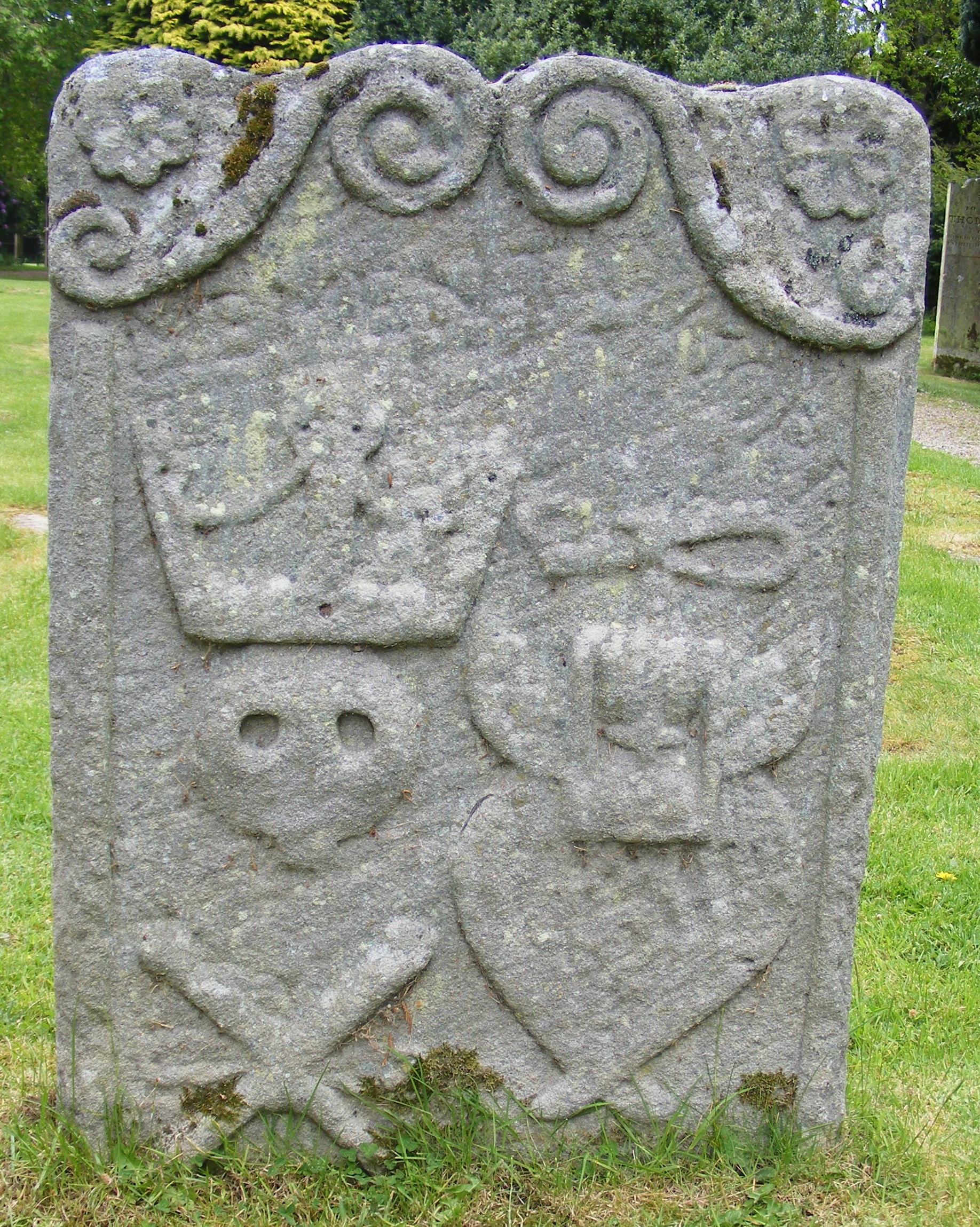
130 25 May 2019 Gravestone St. Mary Magdalene, Mitford

Not one of my ancestors! Reverse says John Pots (sic) d. 1724 age 30 Mitford, Northumberland

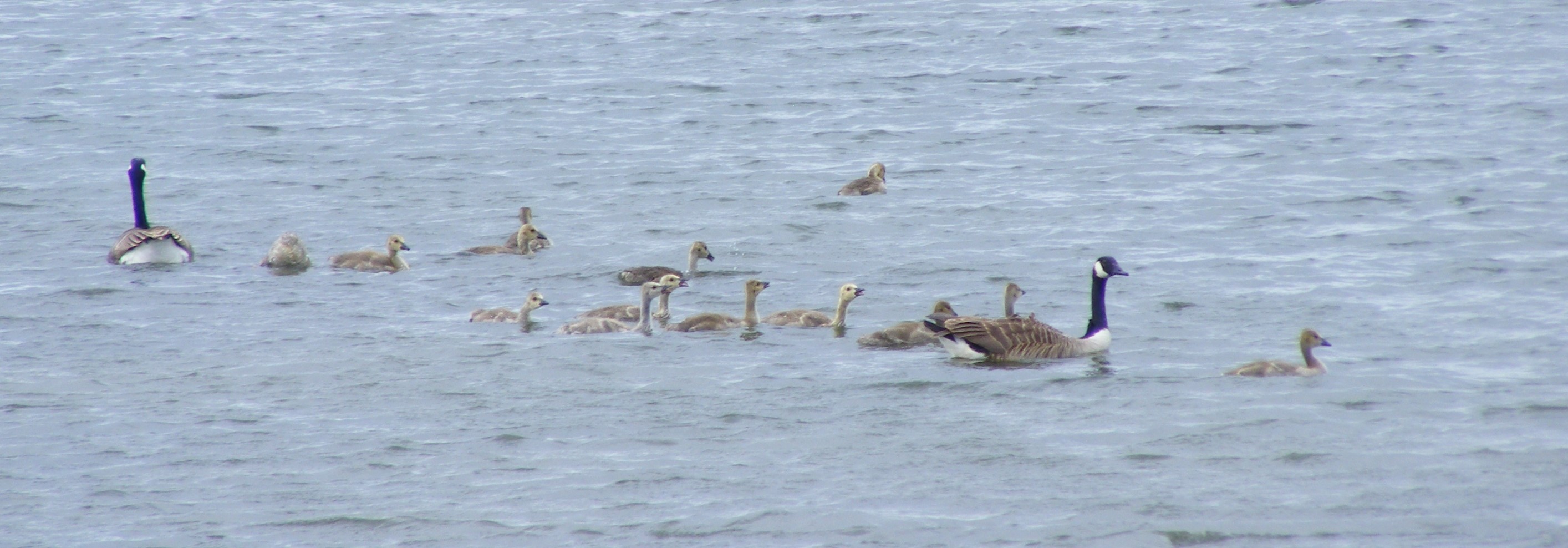
Ten out of ten for Hauxley Wildlife Discovery Centre today. The forecast was a little uncertain but indications were that the early rain would pass over, so we ventured out and were very glad that we did. This coastal nature reserve is run by the Northumberland Wildlife Trust and is excellent. The only charge is a donation towards the car parking. The 1km walk round the lake gave access to several bird hides and I don’t think I have ever seen so many different birds at one location. I believe the lake has been created from a landscape that was a legacy from open cast mining. To top it off, the café, with its views of the lake was lovely too. If you are interested in this sort of thing here are the birds and wild flowers that we encountered:- great tit, robin, black-headed gull, mallard and ducklings, magpie, Canada geese and goslings, grey heron, oyster catcher, house martin, barnacle geese, greylag geese, lapwing, mute swan, moorhen, goldfinch, crow, blackbird, jackdaw, shelduck, little grebe, cormorant, house sparrow, wood pigeon, blue tit, pheasant, tufted duck, gadwall, shoveler. Red campion, primroses, dandelion, buttercup, daisy, iris, bluebells, hawthorn, cleavers, gorse, cowslip, violet, stitchwort, white clover, speedwell, bird’s foot trefoil, red clover, stinging nettle, broom, dog rose.

132 26 May 2019 Hauxley Nature reserve Canada geese and goslings

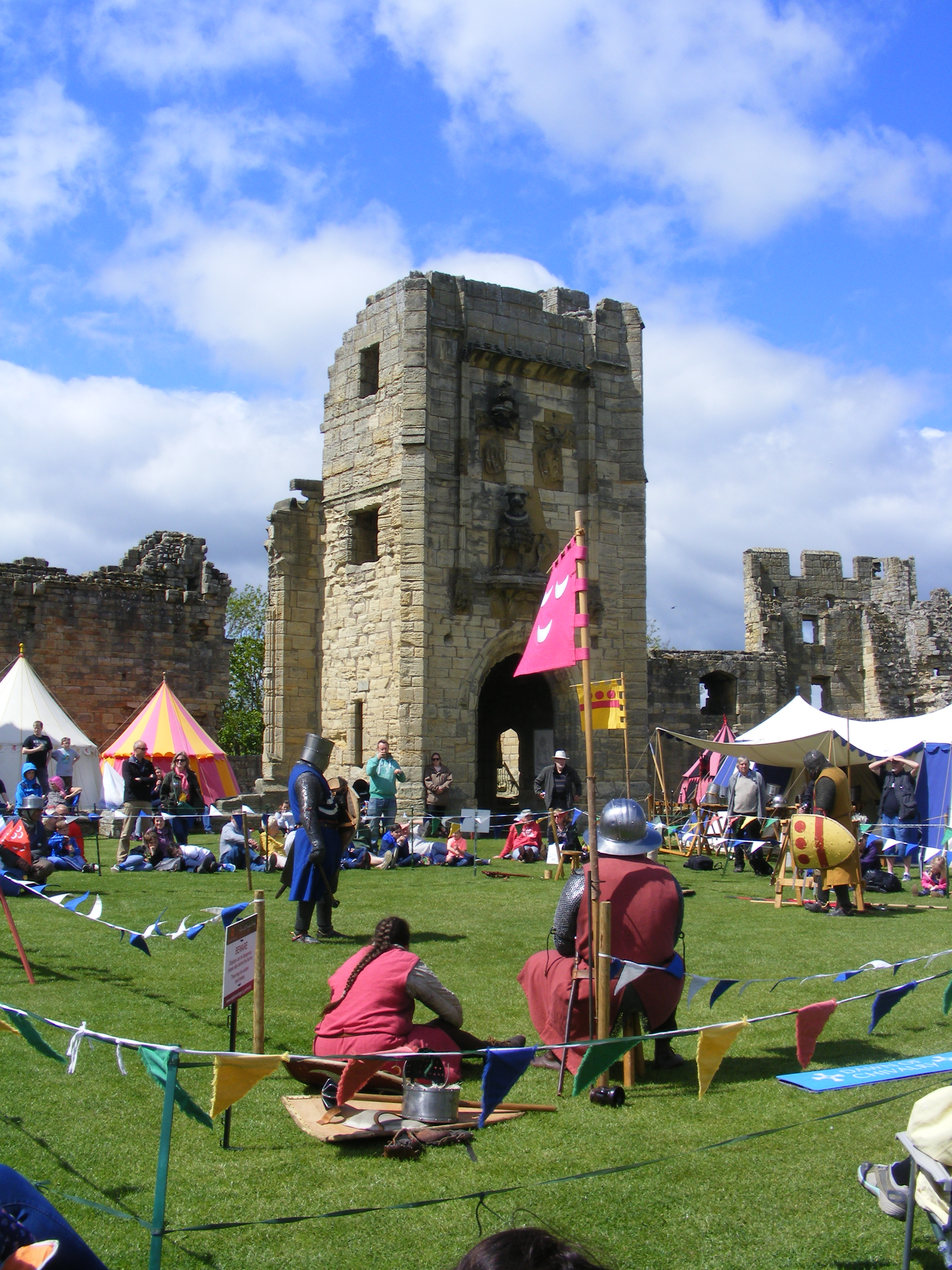
We debated whether to go straight back to the van but decide to call in at nearby Warkworth Castle on the way and again this was the good choice. We hadn’t realized there was going to be a fifteenth century living history event underway. This was a real bonus and we enjoyed chatting to armourers, bow-makers, shoemakers, stained glass artists, candlemakers, rope-makers and potters. We watched dancing and combat and listen to music. I was amused that the compere attempted to disguise his anachronistic microphone by covering it with hessian. All in all, two great destinations today.

133 26 May 2019 Warkworth Castle