Looming large, is the Devon Family History Society’s 50th birthday, sell-out, residential conference. My house is now crammed with goody bag items, raffle prizes and other paraphernalia. There is also the excitement of All About that Place, a ten-day, free, online event, when you can listen to nearly two hundred ten minute local and family history related talks. There’s one from me on Writing Women’s Stories, sponsored by Pharos Tutors. You can already here me chatting about researching women on the Journeys into Genealogy Podcast with Emma Cox. There is also one from Mistress Agnes, where she shares some of her medical advice from the seventeenth century. That one is sponsored by A Few Forgotten Women.
Then, because I am officially bonkers, at dawn on the day I am supposed to be starting to lead the team running the conference, I am doing a sponsored walk in aid of the Samaritans. Not bonkers to support such a great cause but the timing could have been better. If you can spare a few pennies in support of what is sadly a much needed service, you can Donate to Janet’s Dawn Walk here. Call 116123 if you are struggling.
Amidst all this there will be much welcome overseas visitors and more travel hither and yon. Watch this space.
Apart from the delights of the annual invasion of no longer so small folk, life continues to be hectic. Despite saying ‘never again’ numerous times, I find myself in the throes of residential conference organising once again. A sell-out event to commemorate Devon Family History Society’s 50th anniversary this one. Please can anyone explain why, when I am definitely ticking things off the to do list, it isn’t getting any shorter?
I am excited to be part of The Society of Genealogists’ ‘All About That Place’ event again this year. You can join in this free online event in October, details can be found here. Mistress Agnes is also taking part. She doesn’t speak quite as we do. Obviously she doesn’t speak in authentic seventeenth century language, or none of you modern folk would understand her but she likes to give a flavour of her time. After an unbelievable nearly twenty years of our acquaintance, I am fairly fluent in Mistress Agnes but I just wanted some advice on a couple of phrases. I accidently enquired of AI, rather than Mr Google and before I could paste in the actual phrases was amused to receive the following reply, “Hark, gentle traveler! Thou hast provided the stylistic guidelines, yet the core message or topic is missing. Please bestow upon me the text, idea, or query thou wishest to transform, and I shall gladly render it into the proper phrasing of the seventeenth century. If it pleaseth thee, share with me the subject matter or text thou wishest to translate. The intended audience (e.g., a royal court, a common peasant, a trusted friend).The desired tone (e.g., solemn, poetic, or comedic).I shall then pen thy words with the utmost historical care.”
Coincidentally, I’ve been part of two sessions on school records this week. The primary school local to where I used to live celebrates its 150th anniversary next year and we are all set to gather memories of the school in preparation. At the same time, I received a very exciting email offering me the school log book dating from 1900-1919 for the school relating to another of my one-place studies. This had been rescued from a skip many years ago when the school building was converted to a private dwelling. You can imaging how thrilling this was to receive and work has begun to transcribe this. It will then be made publicly available.
In another local history project, I’ve been tracing the story of a young midshipman who drowned in 1823 and at first seemed to leave very little trace in the obvious naval records. A muster roll for a single ship opened to door to a fascinating story, an involvement in the Napoleonic Wars and the 1812 war with America, as well as a spell as a prisoner of war and an act of bravery.
I’ll be off on another short visit soon, so expect more news from a caravan site near me. We are still trying to tick off the final few counties in my ‘every county in England’ quest. The plan is to stay, visit a National Trust property and an English Heritage property in each. There are four more on the list for this year, although, to be fair, three of them I have definitely stayed in before but just not as part of this project.
You can play the game of trying to spot me if you wish.
You would think that there would have been little time for family history with all this gadding about hither and yon in recent weeks. After all, I’ve been away every month for the last five months and there are at least three more trips planned for this year. Time away from family history? Not a bit of it. There have been a lot of historical goings on lately. I’ve been giving talks as usual. It was a little while ago now but what a privilege to be part of the Society of Genealogists’ Mental Health day. I managed to find some fascinating case studies of those who spent time in an asylum. I was able to listen to some of the other excellent presentations but I must single out Dai Davies’ Remembering ourAncestors who died by Suicide . Do try to catch this if you can. They are presenting it again for the Pharos Anniversary Webinar week and I will be up again then on the topic of marginalised ancestors. I don’t think I’ve mentioned that I’ve been chatting to Andrew Martin as part of his Family Histories Podcast, talking about by straw plaiting ancestress and an elusive 3x great grandmother. You can listen in; I am part of series 11 along with some other great guests.
I host Zooms for more than one organisation and if I’m honest, not all the presentations hold my interest but there have been some fascinating ones amongst those I’ve heard recently. I particularly enjoyed ‘At Home in History – reflections on writing the history of domestic life’ from Jane Hamlett and Pam Vass’ ‘Kernow to the Crystal Palace. The Remarkable Ramblings of a Cornish Fishwife: Mary Kelynack and the Great Exhibition’. There are also some more potentially excellent talks to listen to in the diary .
Currently, I am coming to the end of leading my Pharos course on researching female ancestors, whilst at the same time, feeding back on students’ family histories that they have written as part of my writing your family history course; we’ve had stories of Irish brickmakers, handloom weavers and much more. I’ve been putting the final touches to my own biography (it has only taken fourteen years) and am enjoying supporting my new cohort of autobiography writers in the Society of Genealogists’ write your Life Story Club.
I am very excited that both Mistress Agnes and I will be contributing to this year’s All About That Place event. Then I’ve been submitting my proposals for Rootstech 2027, personning a local history exhibition and uploading some more stories of fatherless girls for A Few Forgotten Women. It is my turn to write the sample story for the next Forgotten Women Friday communal research day. I chose someone with a family name and managed to weave an account out of very few documentary appearances. Watch this space for the call for volunteers for that one. And there’s more, as one of my friends would say. I’ve been helping to get a co-authored book ready for publication and continuing preparations for the Devon Family History Society 50th anniversary conference, which is now a scarily short three months away.
Add to this the job we must not mention and I’m living my best history/family history life. Not roses but I do still have time to smell the flowers.
This post is a few weeks overdue as life has been even more hectic than usual but a recent ‘big’ birthday was time for reflection. Having very nearly completed my memories of my life up until now, there has been a great deal of looking back. I’ve been working on this for twelve years, since I attempted to keep up alongside the lovely group of ladies who helped me to produce Remember Then: memories of 1946-1969 and how to write your own. Since then, I have helped several more groups, each time vowing and failing, to keep up but making a little more progress each time. My most recent attempt was with the Write your Life Story group that I lead for the Society of Genealogists. This time I so very nearly made it. I hoped to have it completed for my birthday but I am just half a chapter short. I am 410 pages and over 114,000 words in. I can’t imagine anyone will want to read it but it has been fun and important to do. Some of it, with redactions, is on my Granny’s Tales site. Having said that no one will read it, people clearly have nothing better to do, I have had positive feedback from those who grew up where I did, or who went to the same schools as me. Our personal history overlaps with the history of others, so our memories have a relevance for local and social historians, with the caveat that memory can be flawed. The series of monthly Monday afternoon online sessions with the Society of Genealogists starts again in June if you want to join the fun.
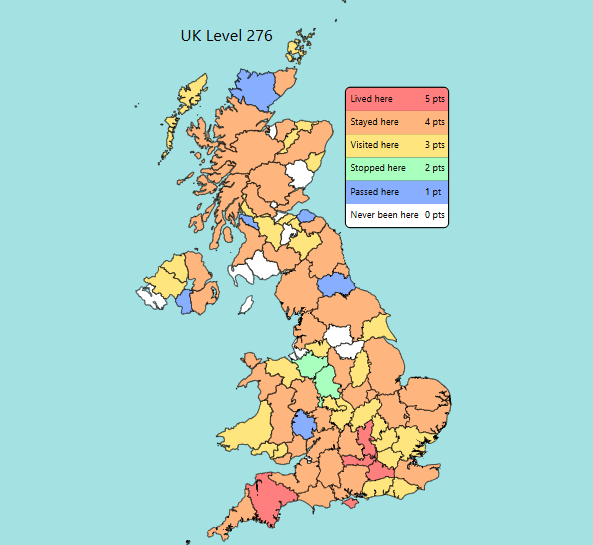
In the course of looking back I got diverted down a rabbit hole when my daughter alerted me to some free ‘Travel Visualiser’ software that allow you to map which British counties you’ve lived in, stayed in and visited. About twenty years ago, inspired by an American friend who was trying to spend a few days every US state, we decided we’d do the same for English counties. For the first few years, this was a concerted effort then it drifted into abeyance, although were continuing to add counties by default. This is my map so far. I have been very conservative about where I’ve stayed. If I’ve just stayed for a weekend conference and not looked at the surrounding area, I haven’t included it as stayed. Equally, I haven’t included a couple of counties where I stayed as a child but only went to the beach. It is also really hard to work out where you’ve passed through.
This then led to me wondering how many National Trust, English Heritage and other tourist attractions I’d visited. I refused to re-read 57 diaries again so this depended on photo albums and the holiday diaries I’ve kept in more recent years, as well as looking at my collection of guide books, which I no longer add to. I’ve probably missed a few. I use a total of 40 English Counties as I include the Isle of Wight separately. Counting just properties, rather including than countryside, my total so far is 74 National Trust properties in 29 counties and 47 English Heritage sites in 22 counties, with particularly good coverage of Cornwall, Devon, the Isle of Wight and Northumberland. I can also tick off a total of 43 Isle of Wight tourist attractions, quite a few of which are no longer open.
I am proud of what I have achieved in the last *0 years. There has been joy and sadness but I am very much a glass half full person. Yes I have regrets but I aim to have as few as possible going forward (there’s a song in that somewhere). Aware that I am now on borrowed time and my body will already no longer allow me to do quite as much as I used to, I am cramming in as much as I can, while I can. There definitely needs to be a sequel to the story of my first *0 years. Apart from the Norwegian cruise and the family visit to Centre Parcs, which were part of the birthday celebrations, recent weeks have included a whirlwind family history based week away and an extended family reunion weekend. No wonder this post is delayed.
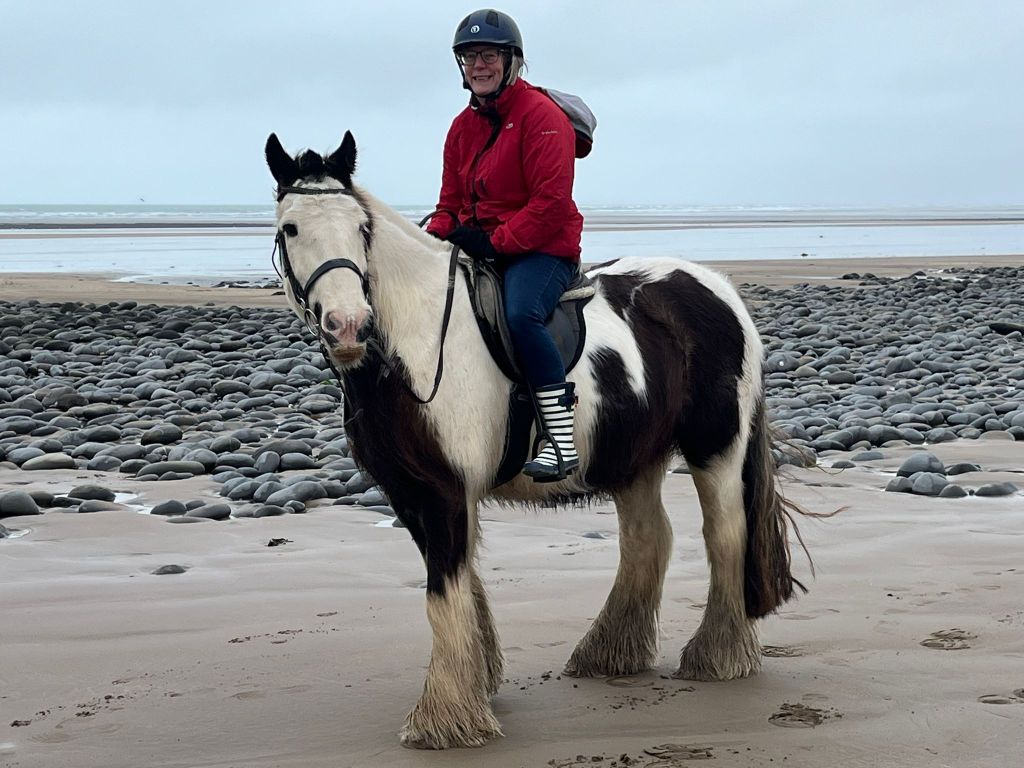
In the interest of bucket list ticking, I arranged to go riding on the beach up the road, as a birthday present to myself. The local stables do this regularly and I quite fancied having a go. Never mind the fact that I’ve only ridden once since I was seventeen. A friend said ‘did you canter?’ Canter? She jests; I was going as slowly as possible and clinging on for grim death like a tenacious limpet. As I didn’t want to go faster than very slowly I had to book a whole ride, which would usually be for several people, to myself. The weather was very windy and drizzly, which was a shame and horses seem to sway a lot more than they used to. I had a large but placid mount who belied the name Spirit. The staff at Follyfoot Stables were fantastic and took loads of photos which display varying degrees of me looking wet, cold and petrified. I was slightly concerned, as it was very expensive because I was paying for a solo session (which would have been good value per person for six people), that I might love it so much that I’d want to make this a regular thing. Fortunately, it was just that little bit too scary. I was very glad that I did it but once was enough and I am quite content to hang up my riding boots (I don’t actually have any riding boots) forever.
Reaching *0 is a privilege not granted to all and I am determined to ‘seize the day’ and make the most of the time I have left. Looking forward, there more to do while I still can. We are off to the Fisherman’s Friends Festival shortly. Festival-going is also something I’ve not done since my teens. Not looking forward to the 11pm finishes but hey. More caravanning in order to tick off a few more counties is in the diary for later this year. I’ve arranged to go to Iceland and there’s a couple more overseas places I’d like to visit. I’ve come to terms with the fact that I’ve probably left it too late for Madagascar. I want to see as much of my nearest and not so near dearest as I possibly can and I’ve been on a mission to catch up with as many old friends as possible. I send about eighty Christmas cards each year and some of the people I have not seen for decades. I am therefore on a quest to remedy this if possible and I am having my photo taken with them as I go, so that I can create an album.
I’ve taken on a small additional role for the job we must not mention, so hope to continue with that for a few more years. I am carrying on giving talks hither and yon, mostly online. In a way, I’d like more free evenings but then I think, yes I can do another one. I really must learn that when ‘no’ is in my head, ‘yes’ should not come out of my mouth. This applies to more than just talks. There are family history stories still to be told and I am toying with the idea of another postgraduate qualification. If successful, this would mean that I had one from universities in England, Ireland and Scotland. I am still determined to get back to spinning (the textile kind not the extreme gym activity). I definitely want to make more of living where I do and not suddenly realise that the summer is over and I’ve barely seen the sea. I am trying to cut down on some of my voluntary roles so that I have time to just relax, when I discover what that is.
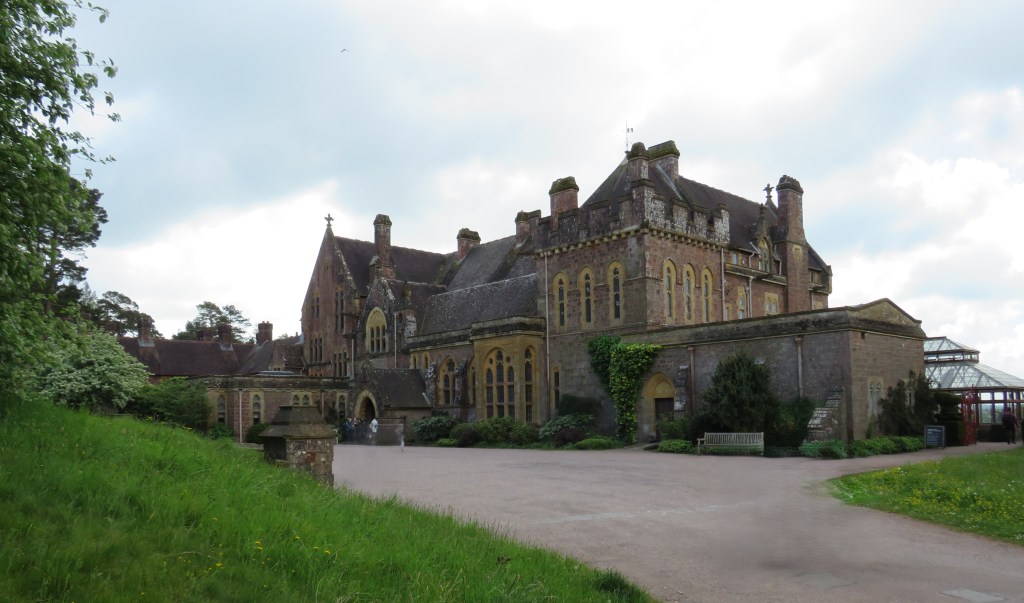
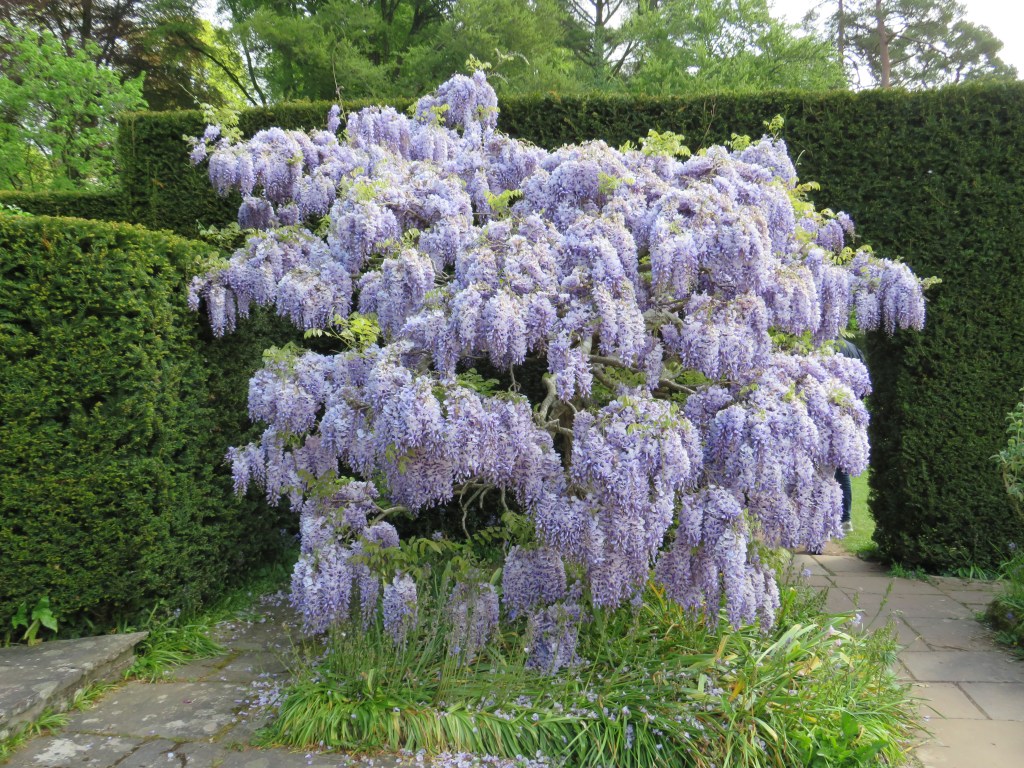
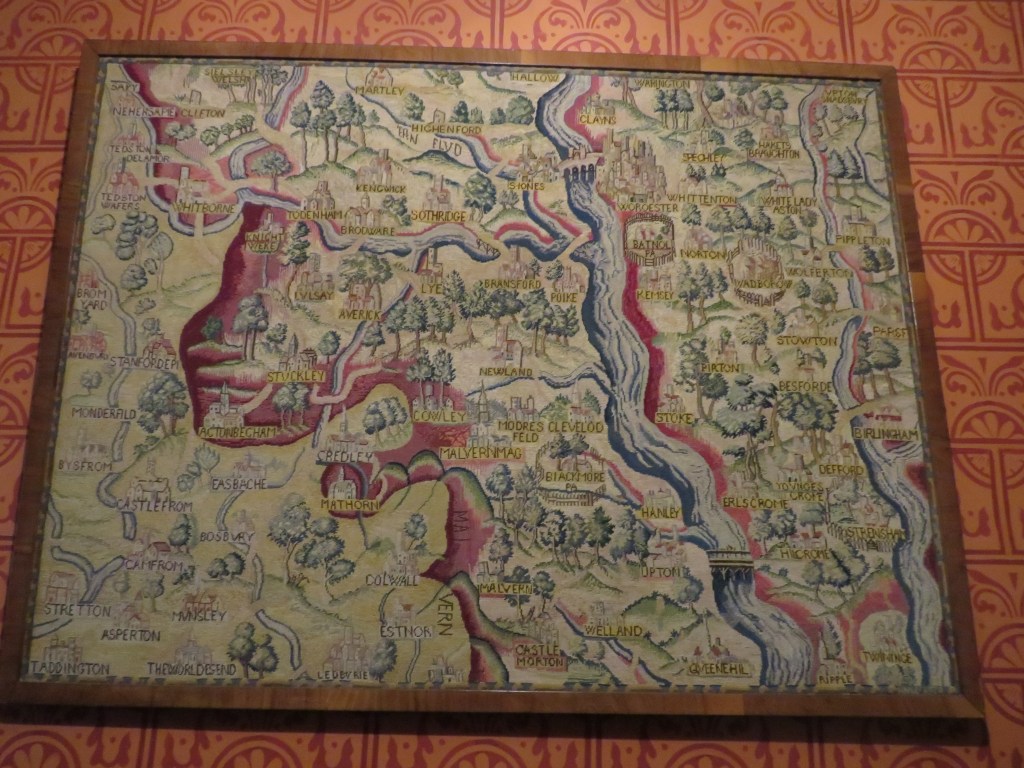
Each year since the 1980s, the first May Bank Holiday weekend has been the time for members of the extended Braund family to reunite in North Devon. This year we had visitors from Australian and New Zealand, as well as those joining in from the USA on zoom. This occasions are always an opportunity for eating far too much but we also try to see some of Devon’s historic sites. This year’s offerings included a guided walk round Bideford, which has a fascinating history and an outing to Knightshayes Court. Knightshayes was the home of the Heathcot-Amory family from 1872-1997. The family’s fortune was due to the bobinet lace making machine invented by John Heathcote. This made the process much quicker and therefore more profitable but was very unpopular as it required less labour, so put people out of work. Forced to move from his native Midlands, John Heathcote took over a disused woollen mill in Tiverton and located his lace-making factory there. The factory still exists but has passed into other ownership. It was his grandson, Sir John Heathcote-Amory, MP for Tiverton and later a baronet, who used his grandfather’s fortune to commission Knightshayes in order to demonstrate the family’s wealth and status. William Burges was appointed to be the architect of this Gothic Revival style stately home but when his ideas proved to be too extreme, he was replaced by John Dibblee Crace, whose designs were out of fashion before they were finished. Various features were dismantled and stored by the family and the National Trust have been able to restore some of this to reflect Crace’s vision. The house was requisitioned as a hospital for the wounded during both world wars.
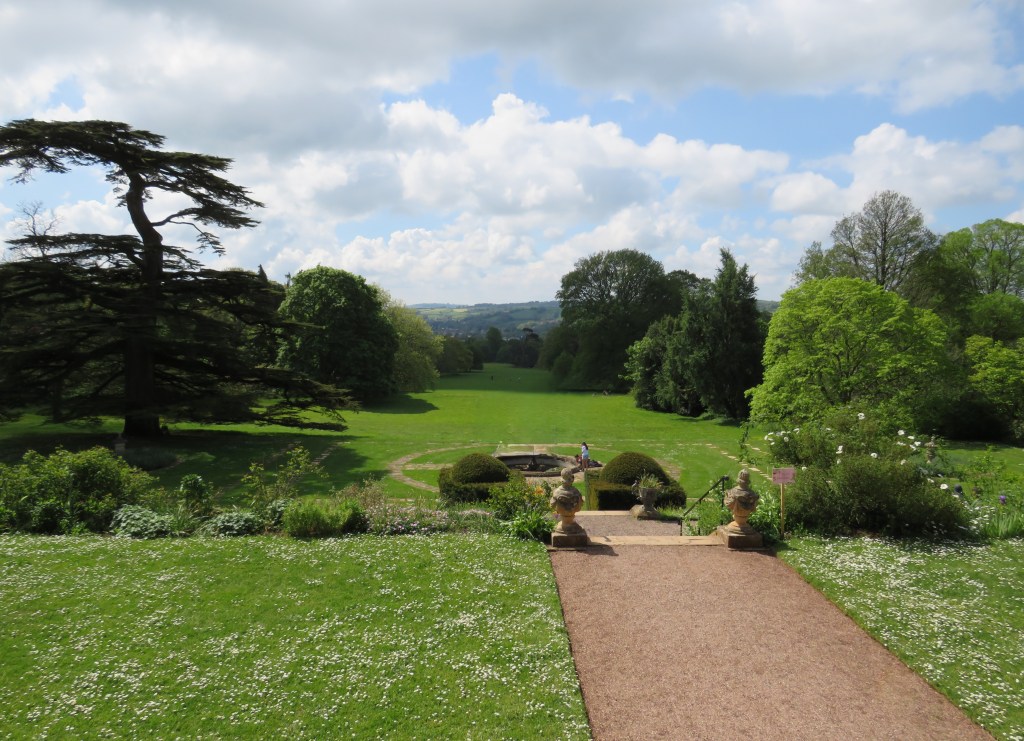
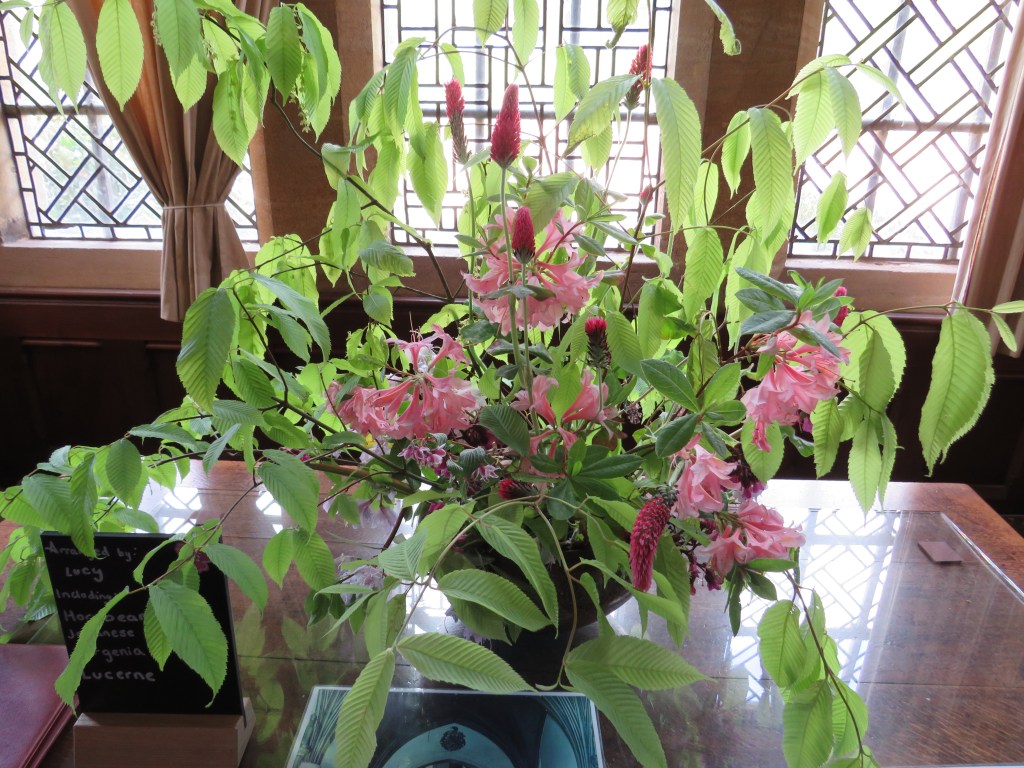
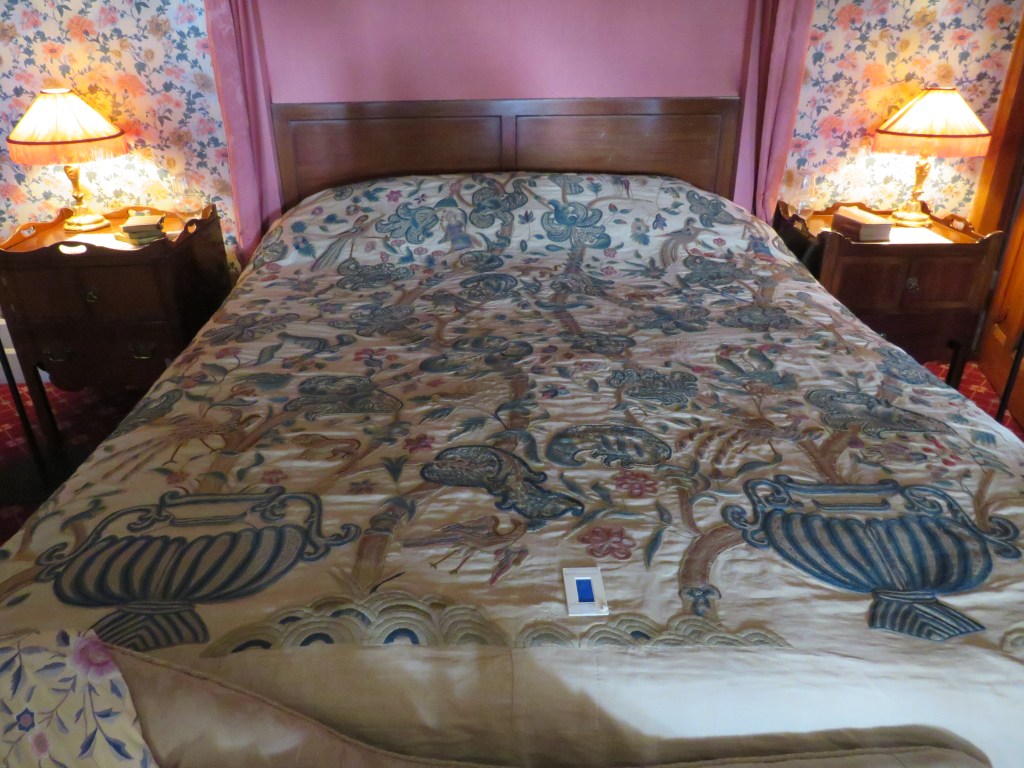
Flowers picked from the gardens and grounds appear in most of the rooms, together with details of the flowers that have been used and the name of the volunteer who arranged them. A beautiful crewelwork bedspread was worked on by Lady Heathcot-Amory, who invited her guests to add a few stitches. There was an exhibition dedicated to Joyce Heathcot-Amory née Wethered, who was a well-known championship golfer, renowned for her swing. She turned professional and was inducted into the World Golf Hall of Fame.
We will do it all again next year by which time I may have lost the weight that I put on this year.
A distinct downside of the Rookesbury Park caravan site is the one bar of wifi and zero phone signal. This meant that, on arrival at the Marriott Hotel, venue for the 47th Guild of One-Name Studies conference, I needed to upload two photobooks for printing before my pre-paid vouchers ran out. This had to be carefully timed so the resulting books didn’t arrive while I wasn’t at home, so I couldn’t do it earlier. This and the fact that I was ostensibly ‘helping’ meant that I missed Brian Swann’s opening presentation about resources for Portsmouth Shipping.
I was glad to be able to listed to Frances Hurd’s ‘Sex, Violence and Alcohol: after effects of the Great War’. I hadn’t realised that then a shell-shock diagnosis relied on physical, rather than psychological, symptoms. This was followed by a fascinating presentation from graphic designer Sarah Houghton, ‘Representing the People: envisioning the hidden history of the Portsmouth suffragist movement’. This was fascinating. Sarah has created wonderful animations about the march of the suffragists from Portsmouth to London and has also recreated some of the banners that they carried. Do check out her website.
I started day two with one of the fringe talks, Valerie Brenton on finding teachers’ records. This was a good summary and deserved a wider audience. Next up was Paul Carter with ‘Making your Research Manageable’, whose verdict on AI was that it was useful as a clerk but dangerous as a judge. Continuing the AI theme, was John Thew, who illustrated what might happen when someone tried to use AI to do their family history, particularly if that person wasn’t very skilled in providing suitable AI prompts. The take away was that humans are still significantly better at making genealogical connections than AI.
Nick Barrett held the after lunch spot, providing hints for Medieval and early modern resources. One of my favourite presentations was Sally Gardiner’s ‘Who was Ann Elizabeth Epitaux’. Sally had purchased a sampler at auction and her U3A group had worked collectively to trace the ancestry of the person who was named on it. Considering that Ann Elizabeth had ancestors who were Jones from Wales, they did remarkably well. I was then part of a panel fielding questions about the future of family history. There was plenty about AI, which is clearly the hot topic.
The Gala Dinner followed. By the time I had joined the drinks reception queue, they’d run out of orange juice. I asked the staff member, who looked about twelve, who said he would bring it to my table. This did not materialise so I asked another waiter – possibly thirteen this one, who asked if I wanted it in a glass. Well yes, not sure swigging out of bottles is the done thing at a gala dinner. He then produced a jug of orange juice for two of us but still no glasses. The after dinner speaker was Harry Rothery about the Mary Rose. I’ve heard talks about the Mary Rose before but probably so long ago that Harry wasn’t born. It is fascinating what has been done recently. I may put Portsmouth Dockyard down for a revisit.
Then it was Sunday. After an ecumenical service, it was my turn with a new presentation ‘Preserving the Past for the Future’. I was pleased with how it went and the resulting book sales. Then I listened to Daris Williams’ presentation, entitled ‘Is AI the new Snake Oil?’, with a very balanced view of the pros and cons. He said that the hope is that all the records on Family Search will be searchable via the full text option by the end of the year.
A break from the focus on technology was Howard Benbrook’s talk on the Hampshire Swing Riots, although, as he pointed out, there are parallels to be drawn between reactions to threshing machine’s and to AI. A useful website that he recommended is www.theenglishprojectcaptainswing.org. Back to technology for the afternoon with ‘Navigating Modern DNA techniques’ from Donna Rutherford and Sophie Kay describing the open source software Gephi. This enables you to visualise your DNA matches but could also be used for other kinds of networks.
Then it was all over. We said our goodbyes and look forward to reuniting next year, when the conference will once again be in Portsmouth.
Ok so it was Saturday but I am still on Friday’s talks. I was relieved to reduce my watch list by three as I had put reshowing of talks that I’d already seen on my list. Wanda Wyporska’s excellent ‘Caribbean and African Enslaved People and their British Enslavers: A look at sources’, was a great but sobering start to the day. As far as I know, I do not descend from the enslaved or enslavers but along with everyone with European heritage, I have no doubt that some of my ancestors benefitted from the trade in enslaved people.
Having swapped to Paralympic coverage for a while, I went back to Friday’s Rootstech presentations with Kelli Bergheimer’s ‘DNA Misconceptions’. I found the information about inferred matching very interesting. This was the DNA talk that was most relevant to me, that I had listened to so far, even though it extolled the undeniable benefits of sibling and first cousin matches, which I will never have. Then it was time for ‘FamilySearch Full-Text Search – Your Golden Path to Ancestral Discovery’, an amusing and informative session from David Ouimette. I have used this before but there were some suggestions to make searching more efficient. This is still not fully accurate or refined but it is definitely a game changer. ‘Avoiding Research Pitfalls’ with Jana K Greenhalgh and Mindy Taylor came next. Once again, lovely to find US speakers using UK examples. This was packed full of possible pitfalls and worked examples. Another must watch for those starting out.
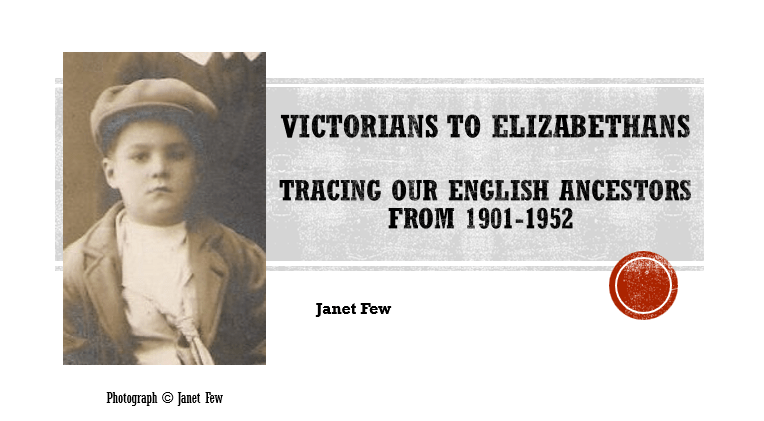
After that it was time for my own live presentation about researching English Family History 1900-1952. This is important even if you don’t have any British ancestry, as you may need to trace the trees of DNA matches in Britain. I was hugely relieved to find that the technology was working, it was fun to do and the feedback was positive. It was also great to find friends and online acquaintances in the live audience. If you missed it, or indeed any of the other talks, you can access the recordings.
There was still time for Diahan Southard’s ‘DNA Swim School – Part 2: Treading Water with Your Matches’, which built on part 1, with handy tips for working with groups of DNA matches.
Eighteen sessions down (including two of my own) fourteen to go.
News from yesterday. First the decision. Do I catch up on my unwatched sessions from yesterday or start today and fit in the missed ones as and when? Of course the ‘to watch’ schedule can only get longer as other people recommend things to watch. As eleven of the twelve on my list for today were 3pm or later, I decided to start with today’s 3am one and then try to fill in, although I did have other things to do today, not least do a final run through of my own RootsTech talk for tomorrow. This then is more part 2 than day 2 as most of these were Thursday sessions.
First then it was Kathryn Moore’s ‘Good Genealogists Don’t Guess: How to Evaluate a Record in 3 Simple Steps’. This was intended for newer genealogists but I wish it was fifteen minutes of essential listening before anyone was allowed to create an Ancestry or other online tree. Then it was back to catch up on some of Thursday evenings presentations, starting with ‘Tracing Transnational Lives: Bridging Records Between Countries’ from Allison DePrey Singleton. This covered a variety of lesser-known European and North American data sets and stressed the need to investigate the historical background when working with migratory ancestors.
Crista Cowan’s ‘What’s New at Ancestry’ was next on my list. She’s such an entertaining speaker. The innovations that are being rolled out include record and document transcription for documents that you upload, the ability to compare trees and censuses, the creation of AI stories and updates to the hints and person pages. There’s also a thing called Ancestry Preserve, whereby you can buy a box to send family treasures to Ancestry who will digitise the contents, be it audio tapes, 35mm slides and so on, for a price. This will then appear on your ancestry account. I can’t help wondering who then owns the copyright of these. 10 million records are being indexed by Ancestry each day. Do listen to Crista’s entertaining and informative talk to find out more.
‘When Nothing Found Means Something: Negative Search Results vs. Negative Evidence’ was next. With Diana Elder, taking us through a brick wall research process. This was a very interesting worked example. Having found out what was new and forthcoming (I don’t actually have any of the new features yet) at Ancestry, I moved to listen to Jen Baldwin telling us what was new at FindmyPast. This was more of an overview of what had been added over the past year, rather than what was to come, so I was aware of most of it. An incredible 100 million pages of newspapers are now available.
Still working my way through my Thursday watch list, next was ‘DNA’s FAN Club: Using Shared Matches To Solve Genealogical Mysteries’ by Paula Williams. Like most DNA talks the assumption is that people are working with numerous higher matches and have relatives closer than third cousins who have tested, so the advice wasn’t applicable to my situation but would certainly be helpful for others. Finally from yesterday, I listened to Heather Haunert’s, ‘Picture This: 50+ Image Ideas to Enrich Your Family History Story’, with plenty of ideas about things we could photograph to enhance our family stories. Some of the suggestions might have copyright implications, so would not be for publishing in a public forum. At that point I was RootsTeched out for the day and now I have to combine this with paralympic coverage, as well as Crufts but there will be another round up soon.
For those who don’t know (and if you don’t, you’ve not been reading my blog long enough) RootsTech is the largest genealogical event in the world, with thousands of people attending live in Salt Lake City and many more taking part virtually from all parts of the globe. Many of the sessions are recorded and you can access these for free here. These remain online after the event, so you can watch presentations from this year and previous years at your leisure. This is a brilliant opportunity to learn more about research methods, sources, genealogy related technology, DNA, social history and much more. There really is something for everyone. Including a few talks from me!
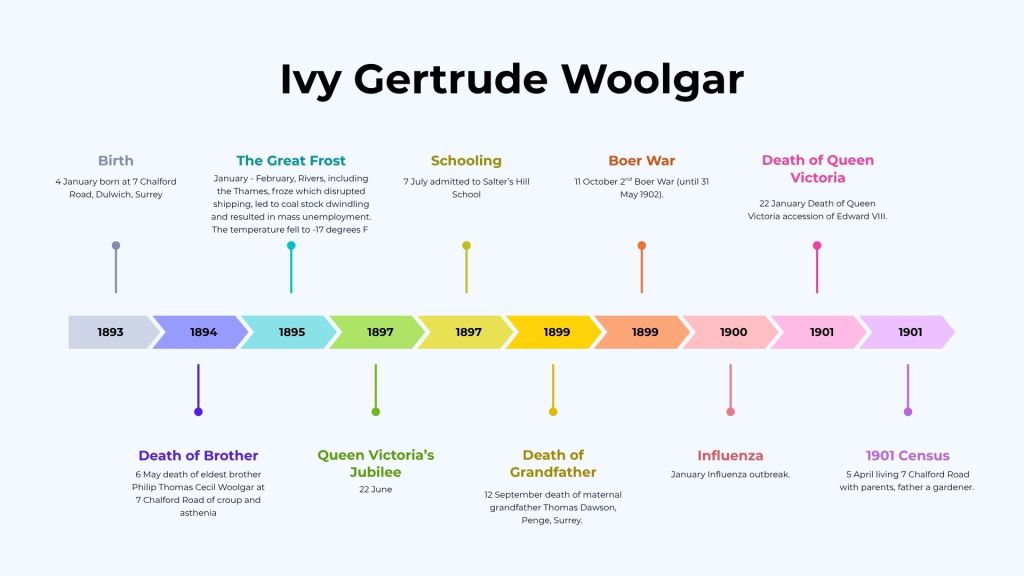
I started the day with a 5am talk from UK researcher Davina Wilcock ‘Considering Location When Researching Your Ancestors’, a great introduction to the importance of place and as a One-Place studier, who am I to argue. Then at 6.30am my own pre-recorded session ‘Timelines for Genealogy; a powerful research tool’ went live. Excruciating as it is to listen to oneself, I did, thinking that I could comment and answer any questions in the chat. I could see other people’s comments but my screen lacked the blue ‘join chat’ button that others had.
At 3pm I had a clash, so I started with ‘The GPS in Practice: Examples of Reasonably Exhaustive Research’ with Angela Packer McGhie. The speaker gave worked examples of verifying evidence and analysing the reliability of records, defining reasonably exhaustive research. I appreciated that an English example was included. A very minor niggle, the speaker did refer to Bolton le Moor as a county. British geographical jurisdictions are confusing, particularly for those overseas and getting confused about them is common. She needs my session from 2025 ‘Where am I?: Are You Searching in the Right Place?!
Then it was back to catch up with ‘Poor, Pauper, or Pragmatic? Victorian Burial and Identity: interments in Philips Park Cemetery in Manchester 1866-1900’ with Dr Micala Hulme and I finally solved the lack of a join chat button. It seemed it was because my Family Search profile lacked my date of birth. It would have been handy to have been warned of this somewhere obvious. Interestingly, my own talk is suggested as a related talk alongside Micala’s. It was an interesting overview of Victorian burial practices with Manchester as a case study.
The first part of Diahan Southard’s DNA Swim School was next on my list. The session was very well presented and interesting but not relevant to me as she was focussing on looking for a 2x great grandparent. I don’t have any missing 2x great grandparents and only have one missing 3x great grandparent. The use of ancestral journeys, which she talked us through, is also less helpful to someone with 100% English ancestry. Nontheless, Diahan is a very entertaining and knowledgeable speaker.
Then I listened to a panel discussing Guidelines for the Responsible Use of Artificial Intelligence (AI) in Genealogy in 2026. The panel members and others are part of a Coalition for Responsible AI in Genealogy, who advocate for accuracy, transparency and privacy. A very balanced discussion, with the take away ‘Don’t let AI make the final decision for you’. Definitely a must watch. There were six more evening sessions on my schedule for day 1 but I decided to swap for Crufts and watch those later, one of the great positives of RootsTech. More tomorrow!
I often write about what I’ve been up to in the previous few weeks and sometimes get the response ‘I wish I’d known you were doing x’, so I thought I’d look ahead for a change.
Today, yes, today, I am starting a new presentation of my ‘Putting your Female Ancestors into Context course. This is five weeks of online study, almost all of which can be done in your own time. You haven’t missed anything if you want to jump in and come along for the ride. Here where to find out more. There’s a similar course about writing up your family history, starting on 20 April too.
On 26 February, I’ll be running a workshop for the Society of Genealogists that is designed for those who are interested in rural communities, or who have ancestors who were rural dwellers. We have a whole two and a half hours so, after an introduction, participants are let loose in small groups to research a specific community and its inhabitants. The techniques can then be applied to your own ancestors. I’ve done a shortened version of this before and it was great fun but we didn’t have long enough, so this is an extended version, with different geographical areas to investigate. You can book for this here.
Early March brings the annual extravaganza that is Rootstech and the online version is free to attend with hundreds of speakers from across the world, speaking on a wide variety of topics. You’ll find me speaking live but remotely at 3pm on Saturday 7th about researching British ancestors in the Twentieth Century. I’ve also done a recorded short presentation about using Timelines for Genealogy, which should be available from 4pm on 5th March. Recordings of talks I’ve given in previous years are also available. Do register to attend, there’s so much to learn.
April is going to be busy with the Really Useful Show in St. Ives (the one near Peterborough) and the Guild of One Name Studies Conference in Portsmouth. Bookings for this are remaining open for a few more days. I have a new talk to give for this ‘Preserving the Past for the Future’, about memories, heirlooms, family stories and photographs.
Also available to book is the Society of Genealogists’ Mental Health and Family History Day on 11 May, when I am joining some very talented colleagues to explore different areas of family history and mental health. I will be sharing some case studies of those who spent time in an asylum. If you’ve heard me talk on similar subjects before, I have found some new stories to include for this one. This is how to book for that one.
Looking ahead to the end of the year, on 13 November, I’ll be giving a talk about researching in Devon for Legacy Family History Webinars. You’ll be able to join me live for free but you might like to take out a subscription and view other talks that are part of Legacy’s “Year of the Genealogy Deep Dive”, featuring over 220 talks. Check out the full 2026 schedule and register here:
I also have far too many other talks to give to various groups, both in person and online. In between all this I have two exciting trips away and a ‘big’ birthday to celebrate. Apropos of that, I just had to apply to renew my driving licence. Good grief, honestly, if you are ten years away from this milestone, start now. It took forever. I made the mistake of doing it online, as I thought this would be easier and quicker than filling in the form on paper. Don’t, just don’t. Four one time pass codes to negotiate. Mid-way through I had to swap to my phone and download an app. I hate trying to do things on my phone. Then I had to answer a load of questions I’d already answered. The grumpy old woman hat was very firmly on by this point. To top it all, my application failed as they didn’t like my photo and I had to encounter yet more one time passcodes.
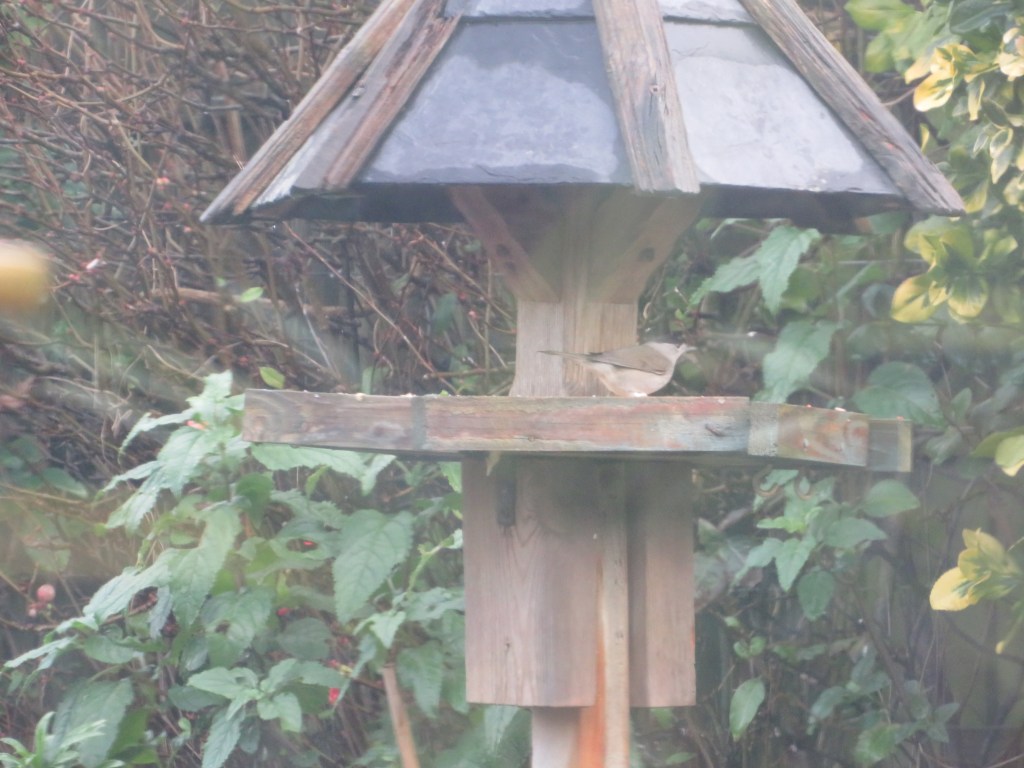
Because peace and mindfulness is needed to restore balance, I am excited to report that I have a pair of blackcaps, that have been seen several times in my tiny, concrete infested garden. Here’s a hurried, blurry photo, taken through two panes of double glazing, to prove it.