Family Reunions and Gothic Revival Houses

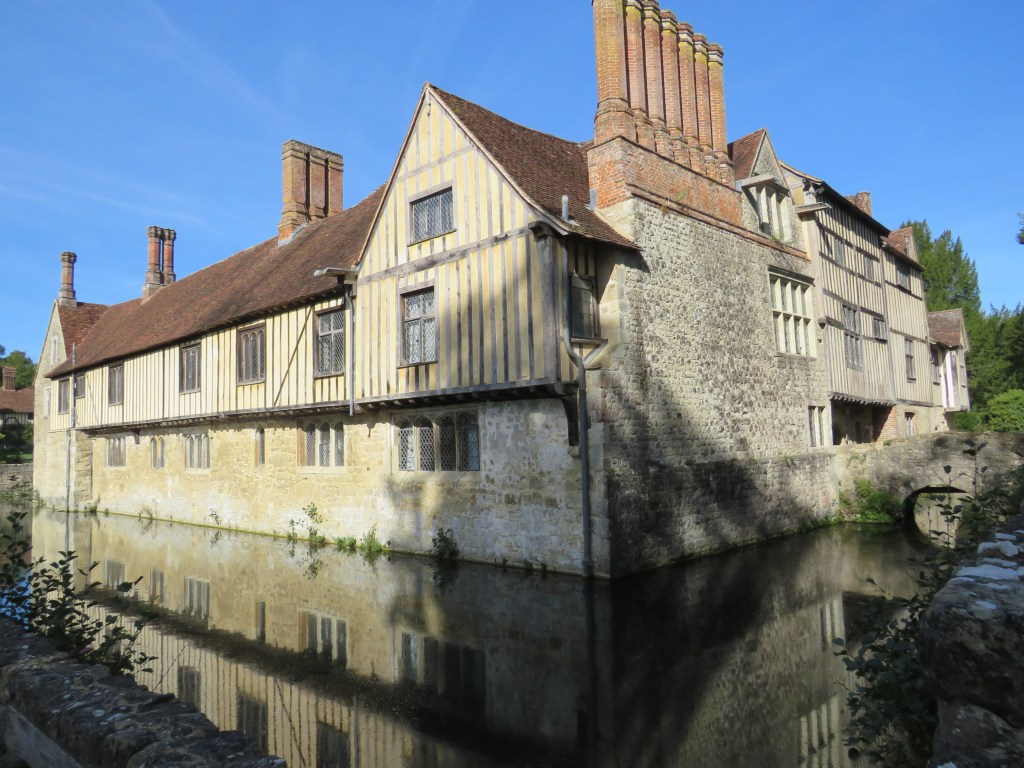
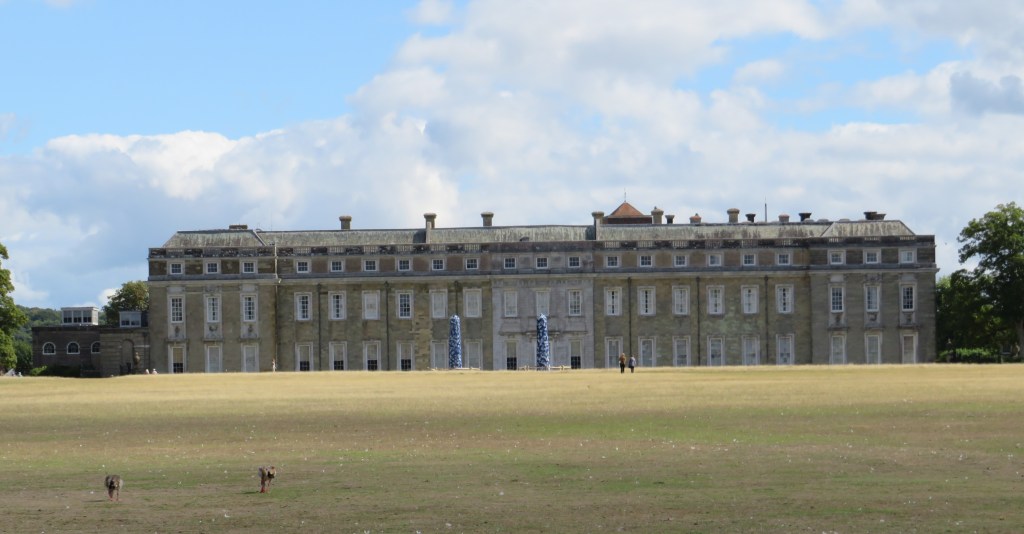
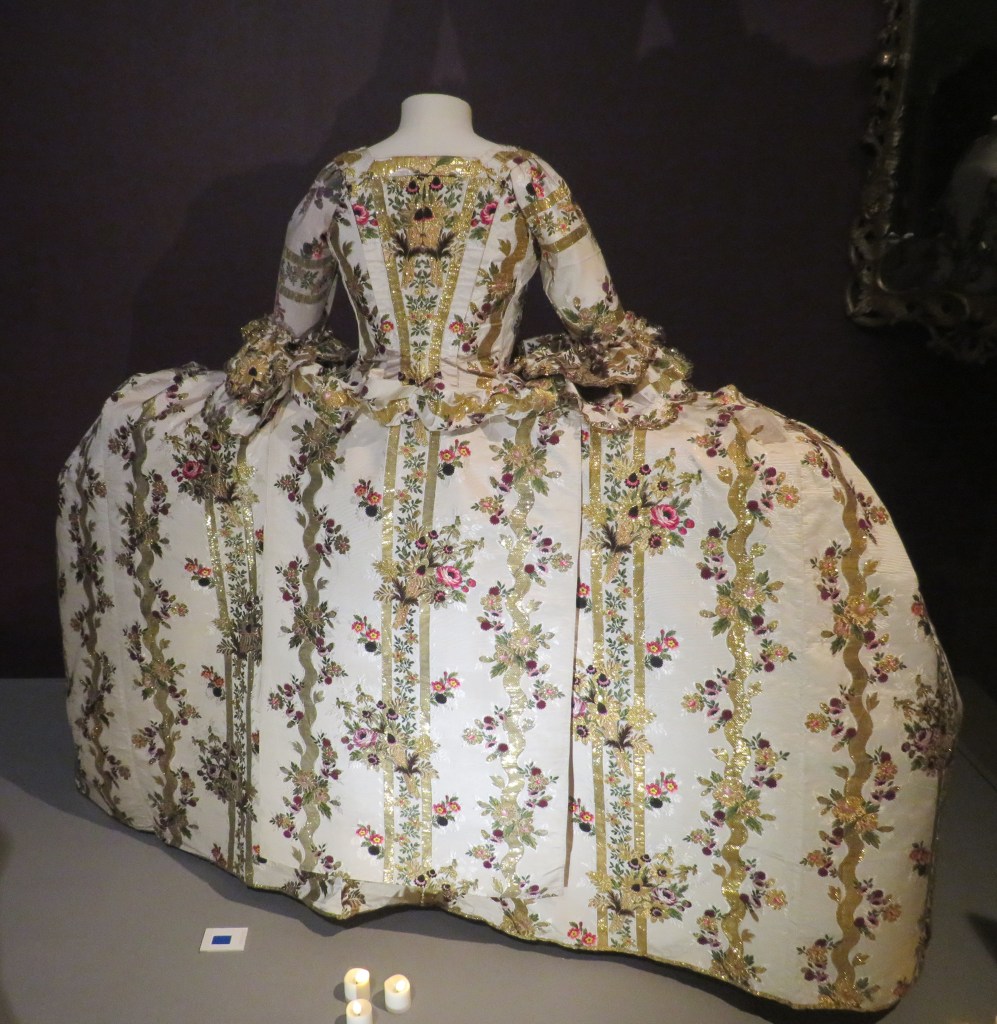
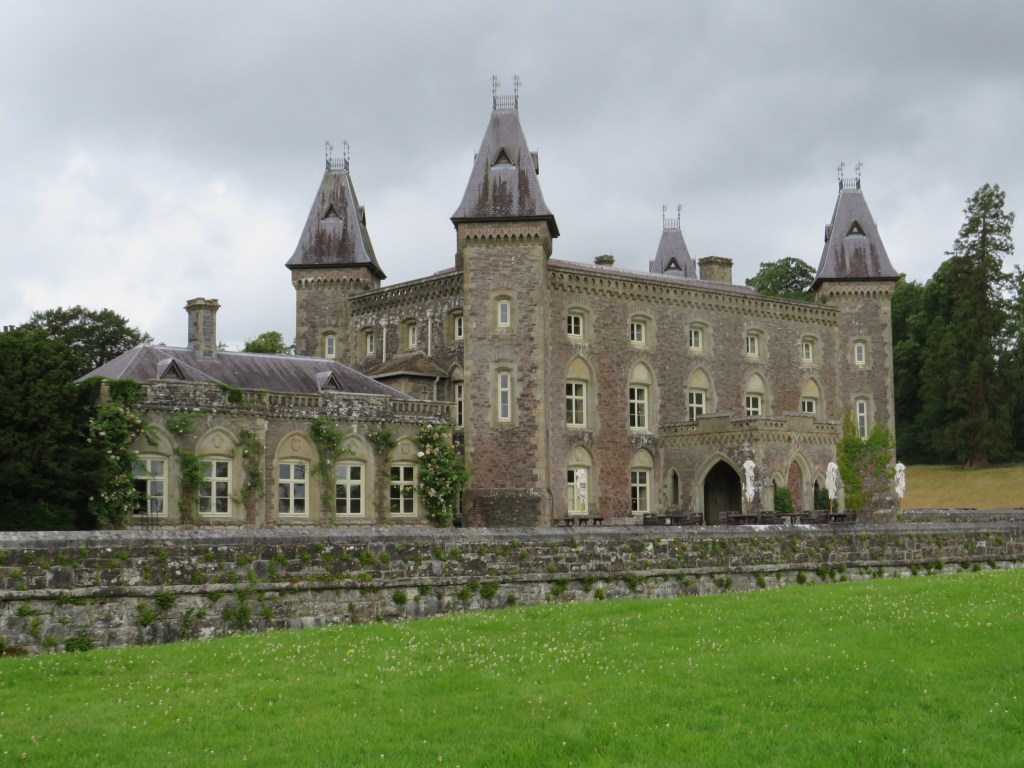
Each year since the 1980s, the first May Bank Holiday weekend has been the time for members of the extended Braund family to reunite in North Devon. This year we had visitors from Australian and New Zealand, as well as those joining in from the USA on zoom. This occasions are always an opportunity for eating far too much but we also try to see some of Devon’s historic sites. This year’s offerings included a guided walk round Bideford, which has a fascinating history and an outing to Knightshayes Court. Knightshayes was the home of the Heathcot-Amory family from 1872-1997. The family’s fortune was due to the bobinet lace making machine invented by John Heathcote. This made the process much quicker and therefore more profitable but was very unpopular as it required less labour, so put people out of work. Forced to move from his native Midlands, John Heathcote took over a disused woollen mill in Tiverton and located his lace-making factory there. The factory still exists but has passed into other ownership. It was his grandson, Sir John Heathcote-Amory, MP for Tiverton and later a baronet, who used his grandfather’s fortune to commission Knightshayes in order to demonstrate the family’s wealth and status. William Burges was appointed to be the architect of this Gothic Revival style stately home but when his ideas proved to be too extreme, he was replaced by John Dibblee Crace, whose designs were out of fashion before they were finished. Various features were dismantled and stored by the family and the National Trust have been able to restore some of this to reflect Crace’s vision. The house was requisitioned as a hospital for the wounded during both world wars.

Flowers picked from the gardens and grounds appear in most of the  rooms, together with details of the flowers that have been used and the name of the volunteer who arranged them. A beautiful crewelwork bedspread was worked on by Lady Heathcot-Amory, who invited her guests to add a few stitches. There was an exhibition dedicated to Joyce Heathcot-Amory née Wethered, who was a well-known championship golfer, renowned for her swing. She turned professional and was inducted into the World Golf Hall of Fame.

We will do it all again next year by which time I may have lost the weight that I put on this year.

Family History Wanderings Part 1

You must be wondering of I have a home to go to because, although I am safely home now, I’ve been away again, this time with a family history slant.

We set off through slowish traffic to take the caravan to Ferry Meadows site on the edge of Nene Valley Country Park, somewhere we’ve been several times before. Fortuitously, this was the day the fish and chip van visited the site. It would have been rude not to partake.

With our Devon Family History Society hats on, we personned a stand at the East Anglian Really Useful Family History Show. It seemed quite busy and it was good to chat to so many people that we knew. We collected items for the October conference goody bags and realised that this meant we would now have to drive round with a car full of heavy books for more than a week. There were some fears for the suspension.

The next day was meant to be a restful day, so I looked for something nearby to do, ideally something we hadn’t done before. I happened upon Longthorpe Tower. As it really was just over there. I was surprised we hadn’t been before, perhaps because it is only open at weekends. We booked a 12 o’clock tour. It says you have to pre-book but some people did turn up on spec. There is however a maximum capacity of twelve, so you’d risk being disappointed. As it looked so close, just the other side of the adjacent country park, we set out to walk. We called in at the park’s

visitors’ centre on the way to enquire about a route, which according to Google maps was a walkable 1.7 miles. The person we asked said that it was an unspecified ‘long way’ and advised us to take the car. To be fair there was open water and a motorway to negotiate but it did look as if there was a path and bridge. Maybe his advice was based on our decrepit looking appearance.

We returned for the car 3.7 miles by road, spotting a pair of red kites on the way. Of course this meant we were nearly an hour early. This didn’t seem to matter as the 11am tour was just starting, so we joined that. The tour was built in 1290 by lawyer Robert Thorpe as an extension to his adjacent fortified manor house, to showcase his wealth and status. Robert and his son, also Robert, were both stewards of Peterborough Abbey and it is thought that one or other of them commissioned the monks who were painting the abbey walls to also work on the tower. The Thorpes were to serve both Edward II and Edward III, Robert junior becoming Lord Chamberlain. The manor house is in private hands but the top two stories of the three that make up the tower itself are in the care of English Heritage. The solar, the lower of the two floors that can be viewed, boasts Medieval wall and ceiling paintings that are the best to survive, in a domestic setting, in the whole of Europe. Fashion and the style of the royal arms that are depicted, date the paintings to between 1320 and 1340. The fleurs de lys that Edward III added to the royal arms in 1340, when he was laying claim to France, are not shown.

Although Robert had two sons, the family line died out with his grandchildren, so the estate passed to a distant relative whose main residence was elsewhere and it gradually fell into disrepair. The paintings were whitewashed over, probably during the Reformation. It was used by the Home Guard during the war and it was only when an attempt was made to clean up the tower after they left, using labour from the nearby Italian prisoner of war camp, that the paintings were rediscovered. Clive Rouse was called in to preserve the paintings. He made paintings, rather than taking photographs, of what could then be seen, which was more than has survived the intervening seven decades. Unfortunately, he used beeswax to preserve the paintings, which was then then approved method but in the damp tower this did more harm than good and it had to be removed. Preservation is now in the hands of the Courtauld Institute but the decision has been taken to just attempt to halt further deterioration in a sustainable way and not to restore.

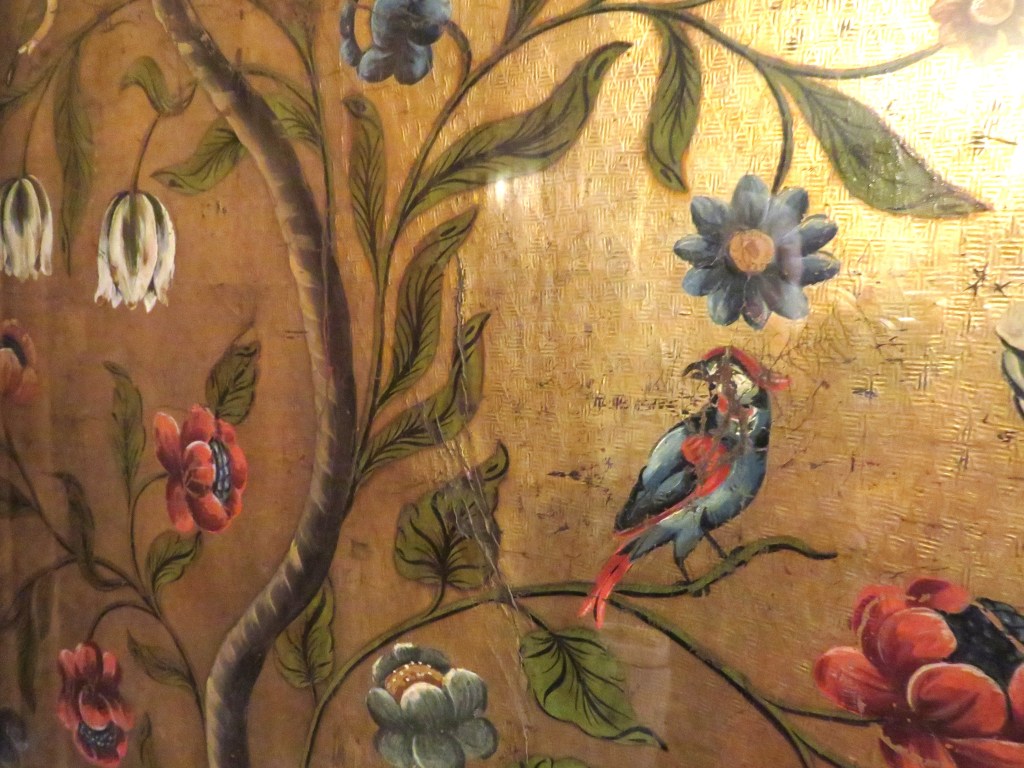
The paintings depict a variety of scenes. Two large figures are thought to be Aristotle and Alexander the Great, above them are depictions of farming tasks across the twelve months of the year. On another wall are the eleven apostles (minus Judas), a nativity scene and the seven ages of man. Opposite Aristotle is one of only three surviving depictions of the wheel of the five senses, the other two being in Italy and Germany. On the final wall is a king and a number of animals and birds, as well as a painted geometrical tapestry. The animals include the mythical Bonnacon, who attacks it’s enemies by expelling flame throwing poo.

The top floor was accessed by my favourite thing (not) a spiral staircase. Wondering if ascending was going to be one of those ‘seemed like a good idea at the time’ things, I cautiously began to  climb. There was a rope handrail, which meant that, as the person behind you pulled on the rail, the rope tightened and your hand was trapped between the rope on the stone wall. Nonetheless, apart from a few grazed knuckles, I made it up and down and was able to observe the fourteenth century toilet seat. The top floor was probably a bedroom; the Thorpes must have been jolly nimble to trip up and down those stairs every day.

In order to access the top two floors of the tower, whilst still allowing the ground floor to be used by the manor house, what was a window has been turned in to a door, accessed by outside steps.

After a pause for lunch we strolled round the lake at Nene Valley Country Park.

A tedious journey south to a new caravan site at Rookesbury Park near Fareham. Although we’ve definitely stayed here before, neither of us have any recollection of the site. Mind you, our most recent visit was probably twenty years ago. This should have been a three hour drive but road works and heavy traffic meant that it took nearly four. We discovered that the bungee cord that stops the caravan electric cable dragging on the ground when we travel, had come undone. This means we now have bald looking cable and are in need of insulating tape.

As part of my 70th birthday commemorations I am attempt to catch up with as many people on my Christmas card list as possible. I am then taking photos and plan to make it in to an album. I thought this may take more than a year, so I started last year and I suspect I will continue into next year before I get as many as I think I am likely to. As I travel about for other reasons, I am therefore checking the address book and seeing who is within striking distance.

Today was an opportunity for one such catch up and we had a lovely lunch in Chandlers Ford. Feeling very full, we retired to the van, via purchasing the required insulating cable. Having been directed along the M27 on our outward journey, it was very pleasant to find that the satnav decided to avoid the motorway take us through several pretty Hampshire villages, of which Wickham was one, on the way home.

We decided to exploit the English Heritage Life Membership again and take a look at Porchester Castle. On the way, we passed Fort Nelson and paused to photograph THE Nelson’s column. This is ninety-two foot ten and a half inches high and  was built in 1807-8, paid for by those who were involved in the battle of Trafalgar donating two day’s pay, as well as naval prize money. What can been seen now is largely an 1899 rebuild; with only the bust at the top being original.

In glorious sunshine but a biting wind, we moved on to Porchester Castle. We had pay to park, although I feel we might have avoided this if we’d approached from a different direction. The situation is strategically important, both for protection from a possible invasion and to use as a gathering point prior to attempting to invade France. I struggled with a barely audible audio guide and tried to avoid a somewhat garrulous volunteer who clearly wanted to chat.

The earliest fortification on the site was probably Roman and was erected in the third century to counteract the threat of a Saxon raiders. By the early tenth century, the threat was from the Vikings and the fort was given to the then king, Edward the elder, by the Bishop of Winchester. Portchester became a burh, a fortified settlement. As well as a wooden building, a stone tower was built.

After the Norman Conquest, Portchester was given to one of William’s followers, William Maudit, later passing to another Norman knight, William Pont de l’Arche who founded an Augustinian Priory that was housed within the fort in 1128. This later moved to nearby Southwick. In 1101, Robert Curthose, Duke of Normandy invaded at Portsmouth, intending to take England from his brother Henry I. Henry managed to persuade Robert to retreat and later Henry invaded Normandy and imprisoned Robert, blinding him first, nice lot the Normans.

The castle was rebuilt in stone in the early twelfth century, including the first of three stages of the keep. By 1154, Portchester was in royal hands and Henry II and later monarchs used it when they were on their way to France. In the 1390s, Richard II built an small palace next to the keep. It’s position overlooking the channel and the important harbour at Portsmouth, meant that Porchester was better maintained than some castles. It was Charles I who sold the castle to the Uvedale family, whose descendants still own it.

At various times in its history, Porchester has been used to house prisoners of war. In the 1660s, when England was fighting the Dutch, the government rented it to house Dutch prisoners. In the eighteenth and nineteenth centuries, French prisoners were held at Porchester, most notably during the Napoleonic Wars, when the prisoners had a theatre in one of the chambers. In 1819, the owners, by then called Thistlethwayte, took back the Castle, created a pleasure garden and used it to entertain guests. Unfortunately, the steps to the upper floors of the keep are not in use at the moment, so we couldn’t explore that part.

On returning to the van, I sampled a double gold caramel magnum. I may be forced to sample this delight again, just to check that it really was as delicious as I thought the first time.

Another day, another place to visit, this time via a caravan spares shop to get a vital part for the van that seems reluctant to provide us with water from the taps. Today’s tourist attraction of choice was the National Trust’s house and garden at Hinton Ampner. There was a Tudor manor house on this site, owned by the Stewekely family. In 1793, the Bilson-Legge’s demolished and rebuilt the house. This was inherited by a daughter who married into  the Dutton family. Ralph Dutton inherited in 1935 and was responsible for remodelling the house in keeping with a Georgian revivalist style. A fire that started in the library in 1960, meant that much of the remodelling had to be done twice and 2000 books had to be replaced. I always wonder, in libraries like these, how many of the books actually got read.

The house is home to one of the largest collections of hardstone inlaid furniture in the National Trust. As usual, I looked for quirky pieces that caught my eye, including a stunning Blue John vase and rather strange origami-like constructions that were used instead of holly or pine cones to deter visitors for sitting on the chairs. Pupils from Portsmouth High school were evacuated to Hinton Ampner House in the Second World War. Lacking any children, nieces or nephews, Ralph Dutton donated the estate to the National Trust. My only niggle about the property was that those requiring disabled access to the house were invited to ring the doorbell for assistance, yet said bell was up the entrance steps, which rather defeated the object.

It was a beautifully sunny spring day for exploring the gardens, with slightly less wind than at Porchester. There were far-reaching views across the South Downs and I was excited to spot but not very successfully photograph, a red kite. The Saxon, flint church in the grounds was also interesting and had some impressive 1970s stained glass.

Despite having sampled some National Trust cake, in holiday mode, I decided that I had to try another caramel magnum. I am wondering if I really need more before coming to a decision.

Hinton Ampner

More Adventuring

No sooner was one holiday over but another, slightly less restful, holiday began. The family spent the last week at Centre Parcs in Sherwood Forest aka how quickly can we wear Granny out. We travelled up the previous day in order to be ready for the first day, as we could use the park from 10am, even though the accommodation wasn’t available until later. Leaving after lunch, we ate in a Harvester. I had a two for the price of one main course offer and on the strength of that, was persuaded to have large chips. I have a big appetite but this was a bridge too far even for me. I retreated to the mini dessert afterwards. Then it was on to our Travel Lodge for the night. This was elusive and at one point we tried with both the sat nav and Google maps, neither of which was very successful. We made it in the end.

On day one, the plan was to walk round Sherwood Country Park, which is partnered with the RSPB, while we waited for the others to arrive. Firstly, we couldn’t find the car park and then a misleading arrow meant that we got lost yet again getting from the car park to the visitors’ centre. The resulting walk round Edwinstowe led us past the church where, allegedly, Robin Hood and Maid Marion got married. I guess you might as well milk every tourist appealing legend that you can. Although the Country Park, once we found it, was lovely and I would have been happy to spend longer there, it was of course a mistake, as we hadn’t anticipated the amount of walking still to come. The park was peppered with placards with corny Robin Hood related jokes, which seemed a bit unnecessary.

Continuing a theme, Centre Parcs also eluded the sat nav but we found our way eventually. Troops assembled, we had some lunch in Starbucks and looked round until we could get into our lodges. In my naiveite, I hadn’t realised that we could have paid extra to reserve specific lodges and one lodge was a mile away from the other two. We were in a studio lodge and it is impressive how secluded these seem, despite the vast numbers of lodges and people on site. Randomly though, there was not a single drawer in the accommodation, apart from in the kitchen. We resorted to keeping our undies in our bags. Once unpacked, we were supposed to park in the main car park but there was insufficient space, so we were told to remain parked by our lodges.

By 4.00pm it was time for curling for most of us. This was ‘fake’ curling as there was no ice, no mad brushing and the stones were on wheels, some of which kept falling off but it was great fun. All three children managed to get a stone ‘on the button’. Then it was time for our long walk to the Dozing Duck for a meal. Still full from the previous day, I managed to be allowed to have a child’s lasagne. We then repaired to a lodge for me to open slightly belated birthday presents and eat cake. The day’s step count was nearly 20,000, probably the most I’ve done since I started counting them and far more than was comfortable. I acquired some impressive looking blisters on my little toes in the process.

The following morning, having parked where we were told on day one, we woke to notices and text messages telling us to  move our cars. Hoping to save money by doing at least some self-catering, we made an early morning trip to Tesco, managing this time not to get lost. By the time we got back, we were parked in the furthermost car park. Just before lunch was an ‘electric boat’ trip on the lake, chosen as it was something that we could all do. We had two boats between us and enjoyed the beautiful weather. The wildlife on site is impressive and I was trying to keep track of all the different birds, These include Canada and Greylag geese who knock on the patio doors each morning, hoping to be fed. Given half a chance, the geese and the many squirrels will come inside the lodges.

After this, we hired a tennis court; my role appeared to be that of ball girl. We cooked our own tea, except that it took half an hour to realise that it wasn’t actually cooking, as we had failed the ‘how to  light the oven’ initiative test. We then went to watch the others cooking their meals on the barbeque and trying not to impale themselves with lethal-looking marshmallow forks.

Most of us went swimming on day three. This is a water park not a conventional swimming pool and there were whirlpools, slides and rapids. The changing rooms were enormous and given that, once changed and minus my glasses, I can’t see, it was another initiative test to work out how to find the pools. I made the mistake of blithely following some of our party down the rapids. Having been buffeted along, fortunately, I did spot an escape route before the final plunge. This meant that my family members who were ahead of me wondered if I had been drowned en route. Most of my time was spent being at one or other end of a slide to supervise those who were going down.

I discovered that the site shop sold delicious toffee and honeycomb cake. Some of the younger party members tried fencing while another had a go at Segway. The weather was really in our favour, with temperatures in the twenties. In between activities, board games were played. I was going to look at the nature trail but got diverted to game playing instead. I returned to my chalet after an evening of board games. Our spooky tracking app wasn’t working so there were concerns that I hadn’t made it home safely. More weirdly, according to the app, my travelling companion seemed to  be haunting the Astro Turf pitch at 10pm. Concerned members of our group sent out a search party but he was safe in the lodge where he should have been.

Our last full day was another day of lovely weather and plenty of walking. We began with board games and then most of us did laser tag. After a game of pool, we all ate at an onsite restaurant, where the service wasn’t exactly swift, although, to be fair, it was packed. The waitress claimed that she could remember our eight dessert choices. It turns out that she couldn’t but we were told that we could have the incorrect dessert that was delivered for free, meaning that the ninth person in our party could also have a dessert. They did try to charge us for this ‘free’ dessert but we managed to spot this in time.

While packing up was being done on the final morning, I decided that I would walk across to the other side of the site to try to see the nature park but it was closed. The last activity was climbing for the three youngest members of our group. We decided to take a photograph of us all together. Trying to get nine people in place was like juggling jelly and we had to negotiate who was going to sit on the dried bird poo. Finally in position, we realised that we had neglected to coerce an unsuspecting passer-by to take on the role of photographer. The holiday was great fun and lovely to all be together but I definitely need a holiday to get over the holiday. Stand by I will be off again soon.

The bird count was as follows: Canada Goose, Robin, Wren, Wood Pigeon, Blue Tit, Crow, Magpie, Mallard, Greylag Goose, Blackbird, Coot, Moorhen, Barnacle Goose, Pochard, Mute Swan, Great Tit, Swallow, Treecreeper (particularly excited by this one but too swift to photograph), Jay, Nuthatch, Magpie.

The Norwegian Saga Part 11 – The Last One

Day 15 At Sea Again

By morning, things have calmed down considerably and as usual, I join the regular early morning crafters. I can see myself doing more of this at home. Today, it is ribbon braiding, which, once you get the hang of it, is easier than some of our other projects. There’s another talk from the retired detective. This time, we are trying to solve a genuine unsolved murder from the 1930s. This has me wanting to utilise my family history skills to look up details of the main characters. Ron the detective says the name Qualtrough, which comes into the story, is common on the Isle of Wight. I doubt this at the time and it turns out is centred on the Liverpool area, so perhaps he meant Isle of Man.

There was hail on our balcony at lunchtime but we are all grateful for the calmer seas. Some of the lifts are playing up, so more exercise, rather than playing guess the lift, as we wonder which of the three in each bank of lifts will arrive first.

There was just time before craft to have a quick go at onboard curling. Winter Olympics this was not. It was not helped by the lurching boat as everyone’s ‘stone’ curved distinctly to the port. It was sad to attend my final craft session and say goodbye to my crafting buddies, Sandra and Barbara. We achieve our second ribbon braided card.

Day 16 Yes, Still At Sea

When we wake up, we are off the coast of Yorkshire, that would be quite a long way off but we see oil and gas rigs, as well as the occasional ship. When we go to breakfast, we can look to the east and see a large wind farm. I am my mother’s daughter, so I can pack efficiently in under ten minutes. I also travel light, so my single bag is under 13kg. I will admit though that I got the balance of thick and thin clothes wrong. We go to see the craft and art exhibition and our crafting efforts are getting a lot of positive attention; I think quite a few people now wish they’d joined us. I am still basking in and surprised by, Pam’s praise of my crafting skills and certainly, I seemed to get the hang of the various projects more quickly than most. Together with Sandra, I had been able to help others when the afternoon groups were a bit large for Pam and Paul.

We have plans to acquire enough for a packed lunch tomorrow and begin with bananas from the lunch offerings. I also have rather a large teabag stash, ready for teabag folding. We manage to squeeze in a talk about the wildlife of Norway from the Orca team and still have time for tea. This concentrates on birds. The fjords, which are 400-1300 metres deep, encourage wildlife that thrive in deep waters to come close to the coast in an area that is protected from the most severe storms. Phytoplankton, which are the bottom of the food chain, thrive. Phytoplankton produce 50% of our oxygen and absorb 40% of our carbon dioxide, so are critical to our survival. The over-fishing of herring in the 1960s had a devastating impact on seabirds. This can also allow jelly fish to bloom, which has a negative impact on the ecosystem.

We watch the sunset over the Essex coast, sad that our trip is over, although looking forward to a fully functioning shower and getting to grips with over 100 emails that I haven’t been able to just delete using my phone as they require some kind of action.

Day 17 Back Home

We have to vacate our cabin by 7.30. As we have opted to take our own luggage off in order not to miss our coach, we breakfast first. There are signs everywhere warning us that we can’t take our purloined sandwiches off the ship, so we have to abandon them in the cabin fridge. It turns out that you can wheel a one wheeled suitcase. We have travelled 3295 nautical miles and the 556 crew, predominantly from India and Indonesia, have looked after us very well.

Our lovely friends meet us once again and we are driven back past the sights of London to Victoria coach station. This looks very different to when we were here last time, in 2019. Our coach does not appear. It seems that, due to a different coach having a wheel issue, coaches are being swapped around. In the end a coach is found, a cheer goes up and we leave, half an hour after time. The drivers manage to make this up and after a 7½ hour journey we are back in Bideford on time. I can’t work out why the journey in this direction is an hour longer than the outgoing journey, even though the stops are slightly different. A taxi and then home to the piles of washing, a decent shower, a bed that doesn’t sway and a lot of work to catch up on.

The Norwegian Saga Part 10

Day 13 Not at Narvik

Today we should have been at Narvik looking at breathtaking nature. Instead, we are somewhere between Norway and Iceland, looking at a churning grey sea. The port we aren’t going to see was controlled by the Germans in 1940, as it enabled them to access Swedish iron ore. This strategically important location was the site of a sixty-two-day battle, the largest to take place on Norwegian soil. Allied British, French and Polish troops were victorious but there were 8500 casualties. We will get refunds for the cancelled excursion but those who opted to do their own thing will not. This is one advantage of going on the official trips, which are usually more expensive than making your own arrangements but the cruise-organised excursions have been quite reasonably priced on this cruise.

The weather overnight is truly awful, or possibly it feels worst because it is at night. I get very little sleep amongst the lurching, banging and crashing. I do take one of my emergency seasickness tablets ‘just in case’. People are ending up with porridge in their laps and Ambience’s crockery supply is rapidly diminishing. Chris retires to the cabin with a headache.

Today’s craft is frosted angels. There craft activities are very reasonably priced and great fun. I go back for more and I and another craft regular end up trying to help one of life’s moaners. We have already encountered this passenger on one of our excursions. She begins by reciting a long list of things that she is going to complain about. This craft is obviously going to be added to the list. She can’t see the beads properly but of course she doesn’t need glasses. It is making her headache, the whole thing is stressful. She’s intelligent she shouldn’t be so far behind but it seems that threading beads on to filament in a specific order is beyond her.

Although we are still encountering rough seas, things are calmer than they were last night, not that that is saying much. By this time most people have found their favourite positions in Borough Market, ours is near to the decaff coffee machine, as it is harder to get liquid safely from source to table than it is food. I consume vegetable curry.

Day 14 At Sea

After a much better night’s sleep, I am back for my 9.30am craft activity. Only the hardened crafters turn up for the early morning session, although afternoon sessions are usually full. Today, we are making bracelets to match the necklace that we made earlier in the cruise. After this, we listen to the retired detective, this time talking about his experiences as a hostage negotiator.

The captain is continually changing course to try to avoid the worst of the continuing storm but it is still pretty choppy. Whilst waiting at the reception desk, we encounter a passenger who is demanding that the captain be asked to stop the ship so that he can get off. He does look a bit rough but as he is dressed and out of his cabin and not in the medical facility, it doesn’t appear to be life threatening. We are currently somewhere between the Faeroes and Norway, I have no idea where he thinks the ship could stop.

Up in the casual dining at Borough Market, we have all become adept at catching crockery as it whizzes up and down tables, reminiscent of pints being flung along a bar in a Western. Today is something else, there’s an enormous lurch and heavy bar stools slide across the deck and tables crash over. A new on-board game of pick the cutlery off the floor multiple times is underway. A wheelchair user has tipped over and there’s an announcement for a stretcher party to attend the main restaurant. The weather is now worse than ever and Borough Market give up all attempts to safely provide meals and close early. The ship then has to slow right down an alter course slightly to allow two passengers to be helicoptered off. We are a long way from any coast, still equidistant between Norway, Iceland and the Faeroes, so this may be about the limit of a helicopter’s fuel capacity to get to us and then back to shore.

The Norwegian Saga Part 9

Day 11 Alta

Our excursion this morning is a cruise up the Altafjord, on the Sea Runner. Our guide is Valerie from Germany. We are quite a select group and the boat’s capacity is only forty-five. As we walk round to board, there are some white-beaked dolphin playing round the cruise ship. There are several sightings of them during our trip and I manage to get a photograph where they are recognisable as dolphin, along with plenty of pictures of the sea where they were a few seconds earlier. Again, it is not as cold as our multiple layers have prepared us for.

Valerie tells us of the access problems for some of the islands that only have a handful of inhabitants. Alta’s airport, which is right next to our ship, only has a short runway and cannot be extended. The harbour’s capacity is limited and ours is the largest ship that it can accommodate. Alta is expanding rapidly and there are issues getting construction materials to the city. It is popular with young families and the average age of the inhabitants is thirty. Valerie points out a reindeer boat. One of the Sami families uses this to take their reindeer herd to summer pasture. Previously, the reindeer would swim but they are often weak after the winter, so are now taken by boat. They are in much better condition after summer grazing and so can easily swim back.

We are back on board Ambience by lunchtime and have a lazy afternoon in the cabin, with occasional dolphin sightings. A leaflet is delivered to our cabin giving us our disembarkation time. We had based our coach booking on the time that the ship was due to dock. We should be ok but it would be a bit tight. We enquire about the options, thinking that we could perhaps book on the shuttle bus, which leaves earlier. This may or may not be possible. We then see that there is an option to leave the ship as soon as it is cleared by the port, if we carry our own luggage off. The first person we asked made no mention of this, thinking perhaps that no sane person would want to lift a case. We travel light and Chris’ heaviest item, his boots, will not be coming back with us as they’ve sprung a leak, so this should be easy. The weather is now what the captain calls ‘lively’ and free sea sickness tablets are being dispensed, which does not bode well. There are sick bags in strategic locations but it is unclear how these might be disposed of after use.

Day 12 At Sea

 It has indeed been lively overnight and only the hardy Few, that does of course include me, are in the restaurants for breakfast. Plates, cups and passengers are slipping and sliding and outside decks have been closed. I collect an emergency seasickness tablet and sick bag but don’t feel the need to use them. Chris heads off to the church service and I am back with Pam for more craft. This time, cool little pouches to hold a mirror and a clip thingy that will hold your bag on a table. I return to hear the astronomer in residence talk about the shipping forecast. This had the feel of ‘I need to cobble together another vaguely relevant talk, what can I find on Google?’. He tells us that the Gemini twins, Castor and Pollux, are thought to guide ships to safety. Admiral Fitzroy, of barometer fame, gets a mention as does the Marconi Station built at Poldhu in 1901, which blew down a month later. The first radio telegraph station was set up at Bolt Head, Kingsbridge in 1908. The code for an emergency was initially CQD (Come Quick Danger), before it was replaced by SOS. Some shipping areas have been discontinued or merged and there are now thirty-one. The regular broadcast has a 350-word limit; at 00.48, when Trafalgar is included, an additional thirty words are allowed. The areas are always reported in the same order.

At lunchtime, comes the announcement that we will not be making our scheduled stop tomorrow as we’ve had to go more slowly than normal and have taken a more westerly route to try to avoid the worst of the weather. I have some concerns that I told my nearest and dearest that I’d be in touch tomorrow and now I won’t but there’s nothing I can do.

I go back for the repeat craft session and manage to make two more pouches, so have some for gifts.

The weather is increasingly rough and staff members are heard to say that it is the worst they’ve ever known.

The Norwegian Saga Part 8

Day 10 Alta

We sail into Alta first thing in the morning. Here, we are 240 miles north of the Arctic Circle on the 69th parallel, similar to Alaska and Siberia. Alta was the location of Germany’s largest World War 2 naval base outside Germany. With the exception of one church, the Germans burned Alta to the ground in 1944 and the population were relocated. In 1973, prehistoric carvings were discovered, which are 2000-6200 years old. These are protected by the snow but can be damaged by ice. Arrow heads have been found that show that the area was settled 10,000 years ago, just after the last ice age. Alta is renowned for its salmon fishing and slate production, which began in the 1860s. The Alta river is one of the five best salmon fishing rivers in the world. You have to pay to enter a raffle for a fishing permit and then, if successful, are charged a hefty sum to be allowed to fish for just sixteen hours. Alta is a centre for Arctic research and the home of the longest dog sledding race, which lasts from five to eight days. Alta’s Northern Lights cathedral is the most northerly in Europe.

Possible outings included husky and reindeer sledding and Sami experiences, all of which we did in Finland, so we opted for alternatives. Alta is officially the City of the Northern Lights and this year and last are at the eleven-year peak for Aurora activity and the equinox, which is this weekend, should be a particularly good day for the Aurora but the weather forecast is for cloud. Our evening trip is in group 15A is with Virginie, who is from Belgium. This is a posher coach than others we have been on, with phone charging points. We learn more factoids. As I report these from our various tours, I always wonder how accurate they are. The coast of Norway, with all its fjords, covers a similar distance as going twice round the world. The foundation stone of the cathedral was laid on 1 January 2000, the day that Alta was officially declared a city. The cathedral wasn’t finished until 2013. We are travelling on the E45, a 5000km road that could take us to southern Italy.

The KP Index, which measures Aurora activity, is favourable and we are hopeful as we head to Pæskatun Slate Quarry, which is situated above the Alta Valley on Mount Pæska. Pæskatun is a family-run slate quarry and museum of slate mining. The mountain is full of Alta Quartzite Slate, known for its high quality and is arguably the best slate in the world. It is exported worldwide. Once at the quarry, we are able to look in various huts, which replicate those of the slate quarry workers. The Germans built an airport at Alta during the Second World War but it was destroyed by their scorched earth policy as they retreated. One cabin is built from timber from the old airport. The huts, with no electricity or running water, were home to the workers during the week. The outside temperature could drop to as low as minus 40, which meant that the huts were also used as workshops. Cutting the slate inside the cottages, rather than outside, caused harmful dust. There is also a Sami lavvu and an igloo with Northern Lights and reindeer carvings. Apart from the igloo, all the indoor spaces are very hot and we are ridiculously overdressed for what is an unusually mild March in Finnmark, the province where we currently are. It should be between minus 10 and minus 15 but we are in positive digits. Finnmark is Norway’s most northerly province and the most sparsely populated. There are about 76,000 people and twice as many reindeer.

The Northern Lights appear and are active for over an hour. Intellectually, we know that what you see with the naked eye is not what you see in amazing photographs but the actuality is maybe a little underwhelming. Most of our group are getting some fabulous photographs. We are equipped with two phones and what should be a half decent camera, none of which, it turns out, can take Aurora photographs. I end up with many black rectangles, some pictures of my thumb and one or two with a vaguely green blur. I resolve to pinch some that others have taken from the cruise Facebook page. There is a short Northern Lights presentation, emphasising just how frightening this phenomenon must have been in the past, with the lights looking like faces in the sky on occasions. The lights we are seeing are the result of sunspot activity but in two days more sightings are likely, this time due to a coronal hole. I am very glad that I can finally say that I’ve seen the Northern Lights, although disappointed that I wasn’t able to take stunning pictures for myself.

This is the best of mine, with what I think is Jupiter.

The Norwegian Saga Part 7

Day 9 Tromsǿ

I’ll admit that a late-night trip followed by an early start wasn’t great planning; this is exacerbated by the fact that I’ve had a really bad night, so have been awake since about 3am. It is raining as we set out at 8.30am for a trip billed as ‘Idyllic Sommarǿy’. This time we are in group one led by Lucia who is studying both history and marine biology at the university, which seems an unusual combination. Sommarǿy was an area that was used for summer cattle grazing, hence the name. It is also a busy fishing village, located on an island to the west of Tromsø.

We pass the large hospital, that is the biggest employer in the city; the next nearest hospital is a seventeen-hour drive away. We cross the Sandnessund Bridge that links the island of Troms to Kvaløy or Whale Island, heading for the Arctic island of Sommarøy. We are driving through some beautiful scenery, which is somewhat marred by mist and rain. Tromsǿ was a centre for the export of salt cod, which predominantly went to Catholic countries such as Spain, Portugal, Italy and France. We are excited to see three sea otters and later some reindeer. Reindeer are free range but are owned by Sami groups. There are 500 wild bears in Norway, all of which are recorded and protected. This contrasts with 5000 in neighbouring Finland. ‘Viking’ is now sometimes erroneously regarded as an ethnicity but it is really an activity carried out by the Norse or North men. It literally means to travel from bay to bay in order to trade. It is pointed out that, if we have bought souvenirs on our trip, we have been a-Viking.

There are fewer than 600 inhabitants on Sommarǿy. We arrive at the hotel and despite the rain, I fully intend to go on the forty-minute guided walk that is on offer. On getting out of the coach, I discover that the wind is so strong that I can barely keep on my feet, so I abandon this idea and after a quick look at the fishing fleet, we remain in the hotel and the coach. As we head back to port, a message comes through to say that we have left someone behind. To be fair to this person, we did leave slightly early, having been counted and deemed to all be present. We begin to retrace our steps. Fortunately though, a second trip has arrived at Sommarǿy and the missing passenger can return with them. I suspect that the Ambassador representative who counted us on our trip may be in trouble.

There is more to learn about the area. There is a significance to the traditional painted houses. Red is the predominant colour, dating from when the wood was preserved by coating it with fish blood. White was reserved for the most prestigious homes, as it was imported. The more of your home that was painted white, the higher your status. Historically, the traders were wealthier than the farmers and fishermen, now the money is in fishing. Present generations are likely to live in houses that are the same colour as those of their ancestors, even if they are now of a different social standing. Some houses in northern Norway are built with vertical planks and some with horizontal. This reflects the building style in the ports with which they traded. Bergen is very wet, so horizontal planks are used. This means that, when the bottom of the houses start to rot, one or two planks can be replaced. Vertical planks would mean that every plank would need to be renewed. Ports that regularly traded with Bergen copy this style. We also see duck houses, which are built to encourage eider ducks to nest, so that their feathers can be used. Like us, Norway’s royal family are under a bit of a cloud at the moment, with the step-son of the crown prince in court and Epstein links also tainting the Norwegian royals.

We make a photo stop to see some rock carvings that are between 4000 and 6000 years old. When they were discovered in the 1950s and 1960s, the outlines were coloured in to make them easier to see, this impacts on their authenticity and the paint is not now renewed. We are already running a little late due to starting to return for the missing passenger and there are further delays when we are pulled over for a spot check by the police. It seems that there have been instances of, for example, drivers not having the equivalent of the PSV licence and of coaches being sub-standard.

After lunch, I catch up on some sleep in the cabin. Evening meal today was salad for me and roast turkey for Chris.

The Norwegian Saga Part 6

We are more than half way now – stick with it!

Day 7 At Sea

We cross the Arctic Circle without knowing it at 6am. It is cloudy, raining and forecast to be the same for the next four days; so much for the Northern Lights. We begin the day by watching a video about what to expect in Alta. Then another talk from the retired detective, talking about murder and forensics. This was followed by a video about Narvik, our final destination. There is a Blue Nose ‘crossing the Arctic Circle’ ceremony on the programme and we do consider this but it is eight hours after we’d actually crossed the Arctic Circle, it is held on a very breezy open deck, it is pouring with rain and we vaguely remember doing something similar when we were in Alaska, so we decide to give it a miss.

In the afternoon, Chris heads off to an Orca talk and I opt for more crafting with Pam. Today was tea-bag folding. Not actual tea-bags of course that would be silly. Not even tea bag sachets but ‘tiles’ of paper instead. This was basically origami and very effective. I am hoping that I can remember how to do it so that I can replicate it at home.

Day 8 Tromsǿ

We arrive at Tromsǿ at breakfast time. It looks larger than other ports that we’ve visited and it is the largest Norwegian township above the Arctic Circle. Tromsǿ was founded in 1794, when it had a population of just eighty and by the 1850s, was a centre for seal and walrus hunting. There is continual sunlight from May to July and from late November to late January, apart from a twilight between 10am and 2pm, Tromsǿ is in darkness. The ‘Arctic Cathedral’, opened in 1965, is not actually a cathedral but a church. Tromsǿ is home to the northernmost university, the northernmost professional football team, Burger King and bat colony. 

Our trip is not until the evening and there are not many onboard activities today, none of which appeal. We decide to spend the day in the cabin, conserving our energy for four consecutive days of excursions. This involves proofreading my biography, for me and watching BBC Earth or BBC Lifestyle on the cabin’s television. As our trip is due to leave too early for us to have an evening meal, we opt to have a main meal at lunchtime and a snack when the restaurant opens for afternoon tea. Having filled ourselves with roast chicken, we return to the cabin to find a note telling us that the restaurant will be opening early for evening meals and that late night nibbles will be provided when we get back at 11pm. I’m not sure I can envisage eating at 11pm, even supposing I could possibly squeeze in any more food. Fresh from tea bag folding yesterday, I now need tea-bag sachets, which we don’t have at home. Cue acquiring as many as we can whilst on board.

The first challenge is to find the gangplank, as arrows send us down to deck four, back up to deck five and back down to four again. There is some jeopardy tonight, as it is the first trip where our meeting point is off the ship but we have no difficulty in joining group 11. The prediction is that we only stand a 5-10% chance of seeing the Aurora and it is drizzling as we drive through Tromsǿ, which seems to be pronounced Tromsah. Apart from one chap, who left the ship in a t-shirt, others in the coach are well wrapped up in thick coats and hats. We have these with us but are not wearing them in the coach as otherwise, as our mothers would have said, we ‘won’t feel in benefit’. In any case, we’ve overdone the thermal layers as it is 6-7 degrees and we are sweltering.

Our guide on the hour’s drive to Breivikeidet and the Aurora Alps basecamp, is Alesini. He tells us about conditions during Tromsǿ’s five-and-a-half-month winter, when they have a minimum of two-and-a-half-metres of snow. When the roads are cleared, there might be piles of snow at the sides of the road that are more than three metres high. Tromsǿ is an island and the word means ‘stream island’. It was a Sami trading post. The bear is sacred to the Sami and although they hunted it, they buried the bones out of respect. An annual festival, that takes place in February, is reindeer skiing day, when tame and trained reindeer pull along someone on skis, a little like water skiing. This takes place along a 250-metre track on one of Tromsǿ’s streets and the record is fourteen seconds. 17 May is Constitution Day, commemorating Norway’s independence from Denmark. The population is now 80,000, a large number of whom are university students or staff.

On arrival, at Brevikeidet, I temporarily lose Chris, who has taken it upon himself to help everyone down the steep steps of the coach and on to the ice. We are treated to coffee or tea and cake while Gigi tells us about the 115 huskies who are trained and kept on site. This includes impersonations of the distinctive barks of some of the dogs. The breeding programme looks ahead to which dogs are likely to be retiring in two-year’s time and where the gaps in the team will be then. A combination of muscle and intelligence is required. Any dog that doesn’t take to sledding, or who is retired, is put up for adoption. The first six months’ training is about socialisation, then there is six months getting used to the harness, before they are put in the middle of a team to pull a sled. No more than two novices will be in an eight to ten dog team. Each dog is trained to run in at least two different positions.

We then move to a lavvu, a traditional Sami tent, where Hannah from New Zealand tells us about the Northern Lights. Ten percent of the Sami population are still nomadic. Following a period of attempted forced integration, Sami culture is now undergoing a revival. Here the beverage is Glogg, a lightly spiced mulled wine. One of the legends associated with the aurora is that it is the rainbow bridge to the afterlife. Then we go out to meet the huskies. Allegedly, people can see the Aurora. This is all a bit king’s new clothes. I can see nothing and neither my phone nor my camera reveals anything either, although some people’s phones are picking up a hazy light. It seems that my phone is too old and it lacks a night mode. I am obviously doing something wrong.

On returning to the ship at 11pm, one of us avails themselves of the nighttime nibbles; it wasn’t me. 

The Norwegian Saga Part 5

Day 6 Monday Trondheim

We arrive in Trondheim about 7.00am. This was Norway’s first capital and is its third largest city. It was founded in 997 by King Olaf Haraldson who was later sanctified. It was an ideal situation for a capital and trading station, as it is equidistant between the north and south of the country but also accessible to Sweden and Britain. The settlement was initially named Nidaros but became Trondheim during the four hundred years of Danish occupation. After independence, in 1814, the inhabitants were given the choice of which name they wanted to adopt and Trondheim narrowly won, on the understanding that signage would be in Norwegian and not Danish. Much of Trondheim was rebuilt after a fire in 1842 and tiled roofs replaced turf and planks. Trondheim was fortunate to escape World War 2 bombing.

More coffee machine struggles at breakfast and I indulge in my first cooked breakfast of the cruise. A slightly later start for us today but at 10.30am, we join Jonathan in group 4A. Jonathan is one of 45,000 students at Trondheim university, Norway’s largest, studying pure maths. He moved to Norway from the Congo some years ago. One of the marine conservationists on board is accompanying our tour as the representative of Ambassador. It turns out that she was born in Croydon, as was I.

We are guided around Trondheim on a two hour walk and learn of its history. I was concerned that this might be chilly, so have donned my thermal leggings and fluffy boots. All I can say is that it is a good job I didn’t opt for the thermal top and thick trousers as well. I am saving those for when we get above the arctic circle. For the first part of our walk, the sun was shining and I was slowly melting. At no point did I feel the need for my hat or gloves.

As parts of Norway are very inaccessible, several dialects are spoken. Now there are two main languages and ‘New Norwegian’ was developed after research into the various dialects. We pass the Stiftsgården royal residence, built in the 1770s in a baroque style. Although this is not designated as a palace, it does contain a throne room, as, traditionally, coronations take place in Nidaros Cathedral in Trondheim, after which the new monarch has to sit on a throne. With 140 rooms, it is Europe’s largest wooden royal residence. At the end of Danish occupation, Norway had no surviving royal family, so Denmark gave them their ‘spare’ who became king.

Our walk takes us along Munkegata, which leads to Munkholmen Island, the site of a former monastery that became a prison after the Reformation. The road was a direct route from the island to the cathedral. I am fascinated by the elaborate manhole covers. There is a statue of Olaf Tryggvason, the city’s founder, in the large market square; this is actually a sundial. There are spectacular carvings on the outside of Nidaros Cathedral, which was begun in 1070 and was built over King Olaf’s grave. It became a place of pilgrimage. Our arrival coincides with the lengthy chiming for midday, which holds up Jonathan’s spiel somewhat. Some of the cathedral’s builders were British and French, which accounts for the cathedral’s style. The building was deliberately never completed as legend says that the world will end when it is finished.

We cross the Red Bridge, known as the ‘portal of happiness’. You are supposed to kiss in the centre to ensure a lengthy relationship; we neglect to do this. We also see the world’s only bicycle elevator, designed to take bicycles up a very steep hill, with the rider still in the saddle; this is only operational in summer.

We the board an open, wooden boat, Freya, built in 1994 and piloted by Siri, for a trip along the River Nidelva, passing the colourful wharves, some of which date from the eighteenth century. These are now mostly luxury apartments or restaurants and survived the fire by virtue of being on the far side of the river, in an area known as Bakklandet. There are open spaces between the wharves where non-citizens were allowed to trade. The cruise ends at Ravnkloa, which is the site of an historic fish market, unfortunately there is no sign of this now.

We arrive back onboard in time for a lateish lunch and I was looking forward to another siesta. It was not to be. As I am still in port, I have email access on my phone. I am being invited to apply for an additional role in connection with the job that we must not mention. The closing date is before I return home. This means that I have to make the application, including a 500 word personal statement, using my phone. I have fat fingers and avoid typing on my phone if I can, so this is a nightmare. Added pressure is that the ship has sailed and unless I can finish this before we exit the fjord, I will lose signal and have to start again. There is no way to save a half-started application. I find this out the hard way and have already had three false starts, necessitating repeatedly answering questions about nationality, sexuality and disability. By the time I’ve composed the statement on my laptop and laboriously and one fingeredly copied it into my phone, I feel in need of a stiff gin; just a shame that I almost never drink.

I am not very inspired by the evening meal options and have ham and chips, while Chris has roast pork. We have decided to try out some evening entertainment for once. This takes place in the Purple Turtle bar, which I keep referring to as the Purple Penguin or the Purple Parrot. None of those creatures are purple anyway. First is a trivia quiz. We come joint second with 12/15, which they like to call 120/150 for some reason. I was helped by two hints from the people sharing our table and the fact that a third of the quiz was on the specialist subject of board games. One question was where did chess originate? Thanks to Edward, I am able to put India, rather than China, which is what most people have said. My failures were the name of the actor who played Ken in the Barbie movies, nope, no clue and the most popular Dickens book. I, along with most people, put A Christmas Carol but it was A Tale of Two Cities.

Next, was what was billed as a murder mystery and in the spirit of throwing myself into things, I volunteered to be a suspect. This basically meant trying to remember what various witnesses had said, until I was voted out by the murderer. This was all very much end of the pier, slapstick type stuff and although the young actors did their best, it wasn’t really our thing, especially as there was a long gap between the quiz and the murder and we’d probably both rather have been asleep. I suspect this may be our last attempt at an evening activity.