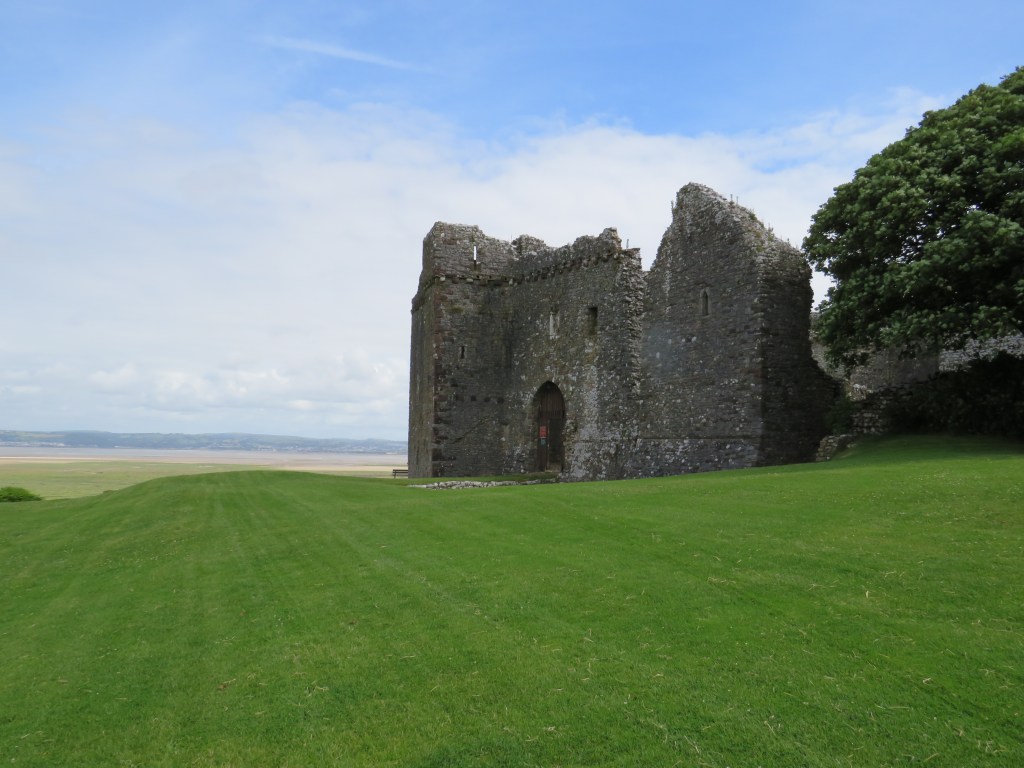
The weather forecast insists it will be 19 degrees and cloudy. We dress accordingly and set off for Weobley Castle. Oddly the sat nav thinks this is in two different places about half a mile apart and although I am enjoying following along on my OS map, it is hard to see where the entrance might be. Inevitably, we have opted for the wrong sat nav possibility and here we are in a farm. Destination recalculated and we arrive. There are some lovely views but to be frank, the possibilities for exploration here are a little limited. My travelling companion is fascinated by the remote lawn mower and is blocking it’s path with abandoned short scaffolding poles to confuse it. It would be harsh to say that this was the most interesting part of the visit and there is some historical information imparted, which I share with you now, with the usual proviso that this is what I gleaned and I can’t vouch for its accuracy. Regarded as a fortified manor, part of a series of Norman castles on the Gower peninsula, Weobley was described as ‘new’ castle in 1306, when it was held by the del la Bere family. A century later during a revolt on the Gower as a result of Owain Glyndŵr’s activities, Weobley suffered damage; the Welsh claimed to have ‘destroyed’ it. By the late fifteenth century, it was in the hands of Sir Rhys ap Thomas, who had been granted the overlordship of several castle as a result of his support for Henry VII during Henry’s efforts to claim the English throne. He instituted many improvements but the castle reverted to the crown when Rhys’ grandson was executed for treason under Henry VIII. It was then leased out as a farmhouse. In 1666, it was bought by Sir Edward Mansel and then passed to the Talbot family, being given into state ownership in 1911.
Weobley Castle’s possibilities exhausted, we decide to explore the south coast of the Gower and wonder if we can also take in Oxwich Castle. We can’t, it is shut. By this time the temperature has risen to the mid-twenties, the sun is beating down, we are ‘cosy’ and fairly in need of a drink and more urgently some ‘facilities’. Oxwich itself is heaving, with queues to get in the car park. We decide to try nearby Horton. All the coastal villages round here are approached via twisty, single-track roads, with occasional passing places. We are used to this. Not so other road users who clearly think their Nissan Micra is the width of a pantechnicon and has no reverse gear. Horton is equally lacking in options. Plan c is Porth Eynon. Car park located and himself heads off to pay for the parking ticket. This is always a technological challenge, involving reading things without the aid of reading glasses and potentially downloading apps. Ah no! This machine takes real money. The snag is that it doesn’t provide the necessary ticket in exchange. Never fear it takes cards. Having thus paid twice to park and ‘facilities’ availed of, we eat an ice cream and look at the beach. Our verdict on both – all very lovely but not a patch on what is 400 yards from my home. The drive back to the van is scenic, especially the road through Reynoldston. On the way, we pass a Harvester restaurant that would have been considerably more convenient than our Friday choice. Annoying that that eluded me when I asked Google for the nearest one to Llanelli. This is followed by another restful afternoon back on site, watching the swallows feeding their babies on the wing.
A short drive along the northern shores of the River Lougher and we are at the Llanelli Wetland Centre. We have a lovely wander round, popping in and out of various hides and unlike many of our forays to see wildlife, we do see a wide variety of wildfowl. The list is below if anyone is interested. There is also a distinct and pervading smell of cannabis at one point, although no other people are in view; very strange. Although much cooler than of late, it is a little on the cosy side and we repair to the café – hurray, coffee in sensible shaped mugs again. I was a bit disappointed to realise that we had actually only seen half of what was on offer but it really was too hot to walk another three miles or so round the other paths. The only negative was that they no longer supply paper maps. I do understand the need to save trees but I really can’t be doing with following a map on my phone. If it is big enough to read then I can’t see enough of it to work out where to go next. It would have helped if there were more copies of the map in places around the site. Note to self to print the map in advance if we ever come again to do the other half.
Then it is back to the van for a lazy afternoon. The adjacent Country Park is hosting Armed Forces Day, so we can hear military bands and World War 2 songs in the distance.
In the evening, we stroll towards the Country Park. This was formerly the site of a munitions factory. In 1881, the Explosives Company, based in Stowmarket, Suffolk, dredged the harbour, which allowed ships to bring in necessary construction materials. There were several tragedies, including an explosion in 1882, that killed seven workers, the youngest being thirteen and a fire the following year. There were further fatal explosions in 1917, 1920 and 1922. In 1914, a Glasgow Company set up a TNT factory on the site. At its height, during the First World War, there were over 6000 employees in the two factories, the majority of whom were female. Although munitions production closed in 1935, with a convalescent home utilising the buildings and the land becoming a camp for the children of unemployed miners, as the Second World War dawned, production restarted and more fatalities ensued. The factory finally closed in 1963, with the Park opening in 1980.
Rook, Mallard, Mute Swan, Black-backed Gull, Black-headed Gull, Coscoroba Swan, Australian Wood Duck, Blackbird, Wood Pigeon. Shelduck, Crow, Barnacle Goose, Chestnut Teal, Graylag Goose, Canada Goose. Moorhen, Magpie, Red-breasted Goose, Scaup, Snow Goose, Black-necked Swan, Sedge Warbler. The last one was heard only and I’ll fess up I can’t tell a sedge warbler from any other kind of small brown bird and in this case, we only heard it. I’m hopeless at birdsong too but this identification came aid of an app.
As caravan club frequent flyers, we are offered three night’s stay for the price of two. Always a sucker for a special offer, we look to see if, between the two of us, there is a gap in the diary. Fortuitously, there are a few days when we are both free, almost unheard of, especially at the time of the year but an opportunity not to be missed. A very short break in South Wales is planned. For once, this trip will have no family history connections at all. We are due to leave on what was the hottest day of the year, the hottest day ever in our part of the world and at our destination. Providence has it that we are delayed due to an urgent appointment, so our day of departure is due to be cooler, at least until the forecast changes and the view is that there will be another day of ridiculous hotness.
The job we must not mention firmly under control, thanks to a 4.45am start. By 8.30am, armed with plenty of water, we set off. This is as early as we can, given that the campsite has an earliest check in time of 1pm. I should say that a 4.45am start isn’t too far off normal for me, especially at this time of year and given that, after a stupidly hot night, I was not asleep anyway. As it was already 22 degrees, why not work? For my down-under friends who think our mid 30s temperatures are nothing to write home about, please remember that our houses rarely have air-con.
With the temperature in the car rising steadily, I enquire of the driver if the car has air con. I am reassured that it does but that he doesn’t know how it works. By this time, we are bowling along the M4 and it is 30 degrees. I consult the manual, handily stowed in the glove compartment. I fix the aircon, which now has the insurmountable task of cooling down what is a very hot car. We have a sat nav but it seems that while I was sorting air conditioning out I should have been navigating – who knew? A slight detour ensues. After a while, the air con makes a dent in the temperature but then we are stuck in traffic and from Port Talbot onwards, are crawling along at about 10mph for the next hour. As the traffic starts flowing, the outside temperature drops to a blissful 19 degrees.
The site is lovely, on the edge of a country park, close to the beach and with swallows swooping and diving. I have already sussed out which pitches have the chance of a wifi signal and despite the traffic delay, we are early enough to secure one before the site fills up tonight. Next, coffee and what passes for lunch, eight hours after breakfast. A robin pops in the van to say hello.
Lured by a 40% off main meals offer (cheapskates again you see) the plan was to head to the not actually very nearby Harvester in Swansea for an evening meal. Initially, we were going to go in early and look round but a combination of the extended journey time to get here and us just wanting to chill means we leave early, being aware of rush hour traffic but not early enough to look round. This Harvester is situated in a huge retail park. We are well aware just how huge, as it takes half an hour of driving round and judicious use of Google maps to locate the Harvester, which is well hidden behind trees. The sat nav just took us to the retail park, which appears to all share the same postcode. I thought afterwards that I should have gone for What Three Words – hindsight and all that. Good job we left early. We eat far too much. It is free dessert Friday but sadly we can’t avail ourselves of that offer and the 40% off. I never thought that mini desserts would be on my radar but with your mini dessert you get coffee as well and bonus points for Harvester as it is served in a proper shaped mug, not one of those wide cups where the coffee loses heat and which is hard to balance, even though I have no trouble at all with my grip.
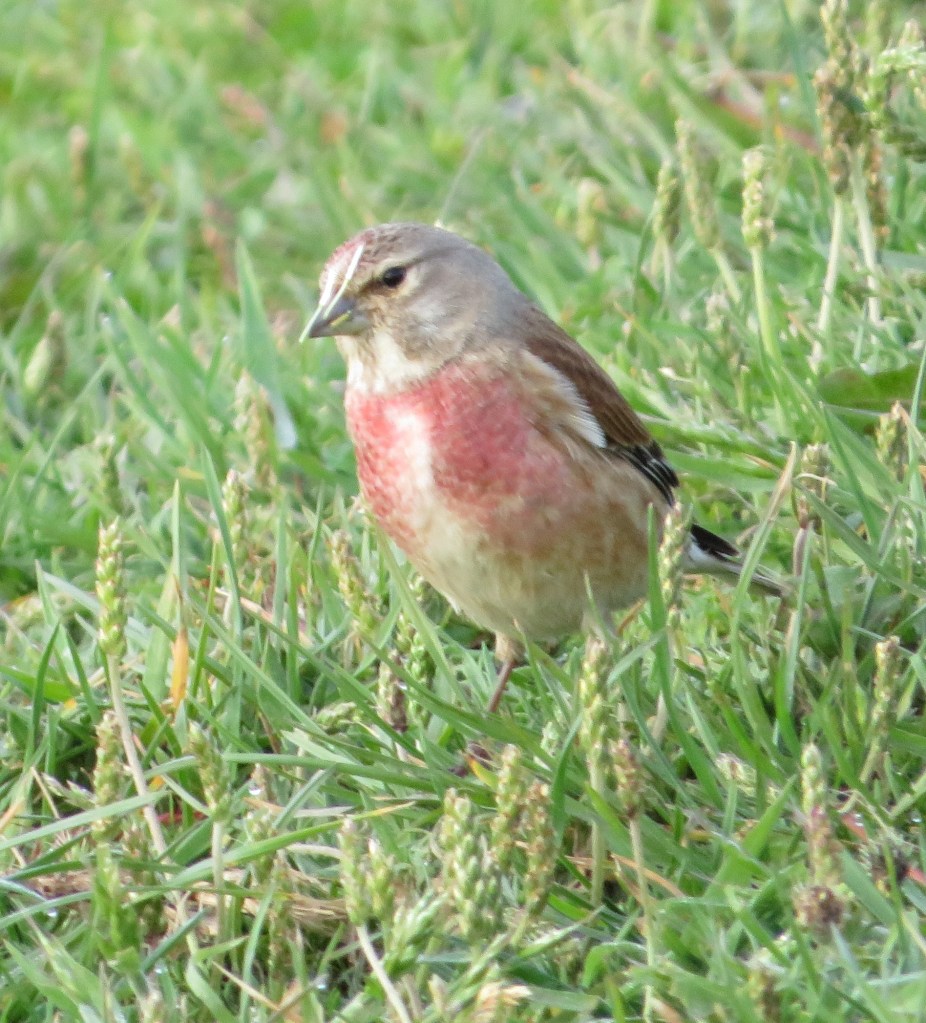
No pictures were taken on this day so here is a bonus bird picture taken 2 years ago.
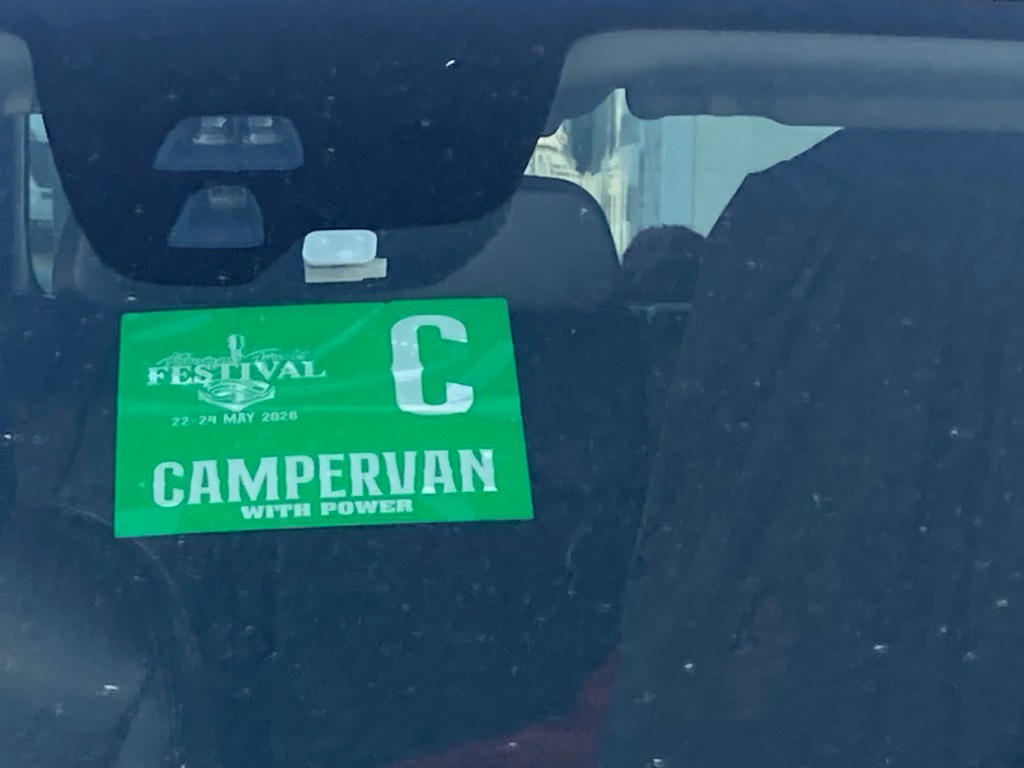
It hadn’t been the greatest of weeks. I’d been looking forward to the Fisherman’s Friends Festival for best part of a year. When I looked at our tickets, to my horror, I realised I’d somehow booked a campervan ticket and not a caravan space. The pitches are the same size and the same price but clearly I do not have the right ticket. My frantic ‘help’ emails were not answered. I feel physically sick. We can’t think of anyone with a handy campervan we could borrow. I run through the possibilities, which include sleeping in the car. We can’t park the van elsewhere and come in for the day as we don’t have a carparking ticket and once on the campervan site received wisdom was that you wouldn’t be able to leave. We’d booked a few days in Cornwall beforehand but instead of enjoying this, I anticipate more sleepless nights.
We move to our caravan site. Thinks aren’t getting any better. This is not the caravan site I thought it was, nor the one I probably should have booked. So not the one nearest to the festival site, nor the one with the lovely view of the sea, whose only downside was that you had to have the pitch next to the laundry to get wifi. This one has wifi but zero television signal. That’s ok, I have my computer (not enough wifi for TV streaming) and my companion can just sleep instead of sleep in front of rubbish TV. Once pitched, we drive to the showground where the festival is being held to see if my fears can be allayed. Someone, whose decision it won’t be, says she’s sure it will be fine. I am not reassured. She also says she will contacted the ticketing folk, whose base seems to be in Switzerland and they will let me know if there’s a problem. I am still not reassured.
Tuesday 19 May 2026
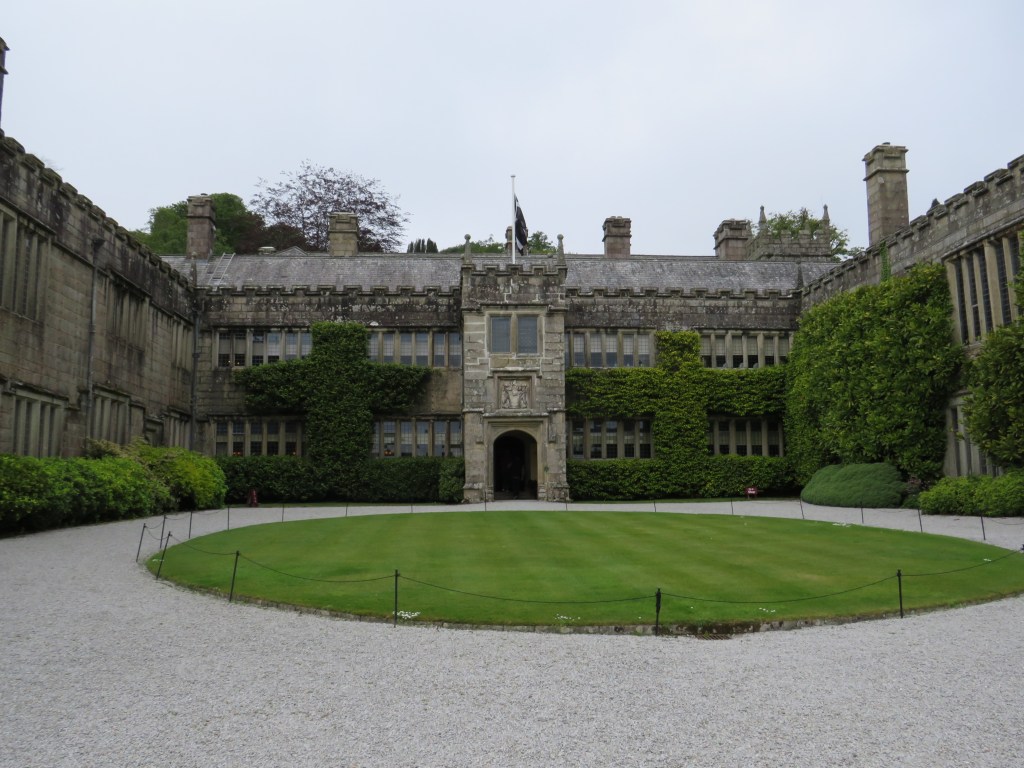
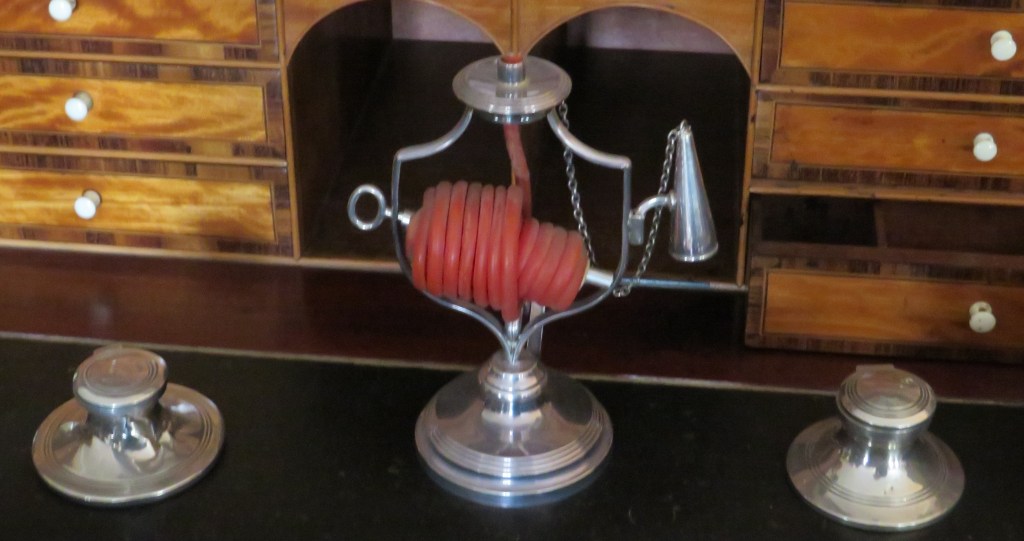
Despite unseasonably cold weather and threatening showers we decide to make the most of our time in Cornwall. It is definitely the sort of day to go somewhere with some indoors, so no strolling along the coastal footpath. We opt for a return trip to Trerice, where we’ve been a couple of times before, so here is not the place to write about it in much detail. My eye was caught by the knot garden, a nifty sealing wax dispenser (no home should be without one) and a late sixteenth century set of oak Kales, which are similar to skittles and the cheese (ball). The game was first recorded in 1509, when there were ten pins, although this set has nine and were arranged 1,2,3,2,1. Due to the gambling that became associated with the game in Tudor times, laws had to be passed ensuring that bowling greens were licensed and it became an expensive and therefore high-status, game.
We listened to a talk by a volunteer, braving wind and showers that eventually drove the talk indoors. There was a farmhouse on the site in 1230, when John Treise was in occupation. By the fourteenth century, it belonged to the Arundell family and we heard about a confusing succession of John Arundells. By the time we got to John Arundell Vth, I was feeling a bit dizzy and had rather lost the thread. I think it is a combination of a stressful few days, not just because of the ticket issue, a high pollen count and very humid weather. I went for a restorative slice of cake and then we decided to cut our visit short so that I could lie down in a darkened room (well a caravan at least), stopping only for supplies at a supermarket near us. I did note that the current Trerice was built in 1572 by John Arundell Vth, that the family supported the king in the English Civil War and that the window of the Great Chamber contains 576 panes of glass that date from the sixteenth century, as does the plaster ceiling in the upstairs room. From 1760 the house was in the hands of tenant farmers and fell into disrepair.
Wednesday 20 May 2026
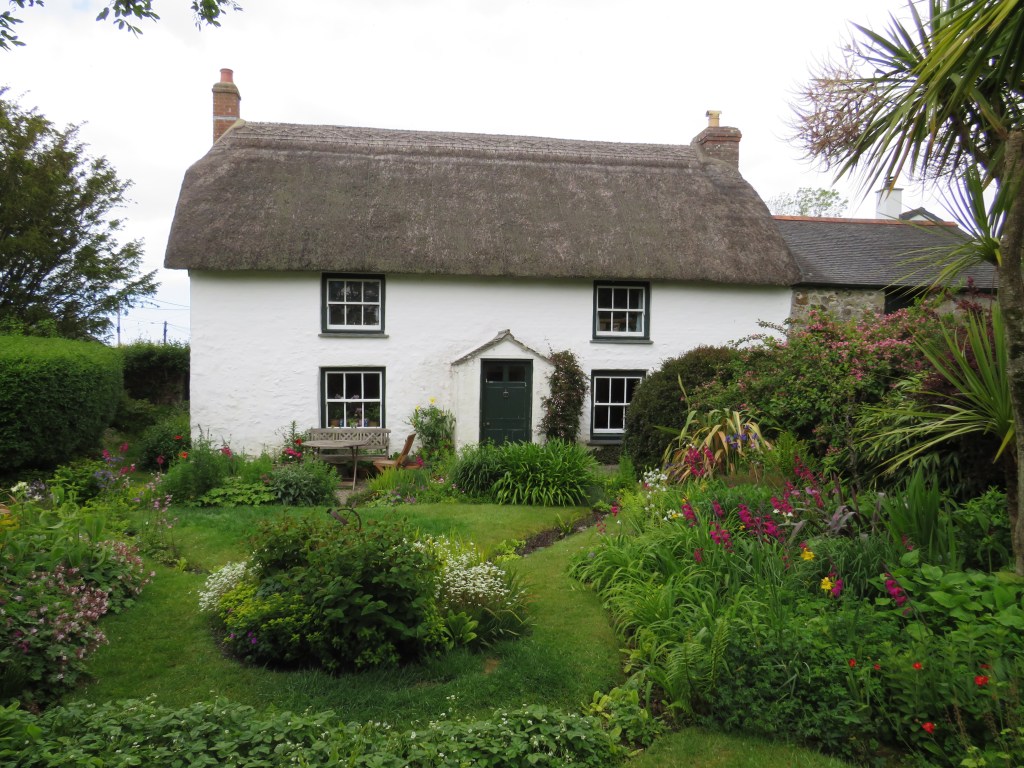
Having recently spent some time listing all the different National Trust properties I’d been to (74), I was keen to see if there were any Cornish ones close enough that I had not ticked off the list. East Pool Mine was one but that is closed for repairs, however, I was alerted to Trevithick Cottage, open by appointment only. I’ve had a fascination with the mining engineer Richard Trevithick (1771-1833) since reading the Poldark books in the 1980s, so was keen to go and booked without incident. We found it without too much trouble, aided by asking a local and after a bit of a fiddle trying to park so as not to upset the neighbours, we were shown round by the current tenant. The granite and cob cottage dates from about 1700 and has a grade 2* listing which applies to the cottage and associated outbuildings. The thatch is traditional long-straw thatch, which I know from my straw-plaiting endeavours is very hard to acquire. The cottage was Trevithick’s family home from the age of two until his marriage; his father was a mine captain at the nearby Dolcoath mine.
Thursday 21 May 2026
Another day another National Trust property, this time Lanhydrock. This too was a return visit. We were last here four years ago but my travelling companion has no recollection of it at all. I had forgotten quite how far it was from the car park to the house but it seems I am not as feeble as I was on Tuesday as I make it there and back without coming over all unnecessary. Lanhydrock was the home of the Robartes family, purchased by Richard Robartes in 1620, using money he’d made supplying both fuel and credit to the nearby tin mines. There was a disastrous fire in the 1800s and Thomas Charles Agar-Robartes spent the equivalent of 8∙7 million pounds restoring it. At the same time, he built a new modern kitchen block, where twenty five people worked, there weres a further fifteen indoor staff and forty estate workers. The displays name some of the staff and tell us a little about them. The kitchen designs were based on a book by Robert Kerr, The Gentleman’s House. I continue my research into caramel magnum quality, I fear I will need a few more before passing judgement.
Friday 22 May 2026
We are now in the position of needing to leave this caravan site before the incoming vans arrive at 1pm, yet not arrive at our destination half an hour away before 2pm. Even given that we are not the fastest driver in the west this is a logistical problem. Normally we’d ask to stay late on the site and that’s usually not a problem but the road to the site is single track for much of the way and we really don’t want to meet something larger than a car coming the other way as new holidaymakers arrive. I try to stem my ‘will we be allowed on site?’ stress as much as I can, as well as running through plans b to z in my head. Inevitably, we arrive two hours too early and understandably, are told to go and hide until the appointed time; two more hours before I know our fate. We find a road wide enough to park and still let the bus pass (just) and feel just a tad conspicuous doing so.
The witching hour arrives and we approach with trepidation. I haven’t obeyed the instruction to display our sticker from five miles out, as it clearly says campervan and with the best will in the world, a campervan we are not. We join a short queue and are waved in through the gate. I flourish our not yet stuck sticker and say ‘we aren’t actually a campervan’. 10 out of 10 for observation me. ‘Doesn’t matter’ says the guy in hi viz. Well what a shame someone didn’t reply to my frantic emails ten days ago to that effect and allow me to enjoy the anticipation and excitement in the run up to the weekend. Through the gate then, that’s the first hurdle but we still aren’t on a pitch. We are guided to another queue, which turns out to be the queue for accessible camping. We haven’t quite reached that stage yet so our driver needs to perform a neat manoeuvre to get us on to the field and we are in! Finally, I can start to enjoy myself.
We wander round to exchange our tickets for wristbands, so now I don’t have to worry about losing the tickets. Next, a recce of the site to see what’s what, investigating the craft tent and deciding that there’s a lot of lovely things we can do without and then listening to some folk musicians on the bandstand stage. We return to the van for sustenance and then head back to the bandstand for some of the fringe acts. ‘We don’t need the ponchos’, I declare. We listen to The Port Isaac Gulls, a female acapella group. It turns out we do need ponchos and I send my stalwart companion back for them while I chair save and hope that the few drops of rain don’t materialise into much more. Next up is a female duo Sound of the Sirens. We stay for the opening numbers from 1940s band Company B before bowing to the descending fog, falling temperatures and drizzle and call it a day, returning to the van to warm up. The rest of the country is in the midst of a heatwave, not so here, which may be just as well. We have new neighbours as the previous ones hadn’t paid for electricity, so were moved to where they wouldn’t be tempted to just plug in. We are not the only caravan masquerading as a campervan.
Saturday 23 May 2026
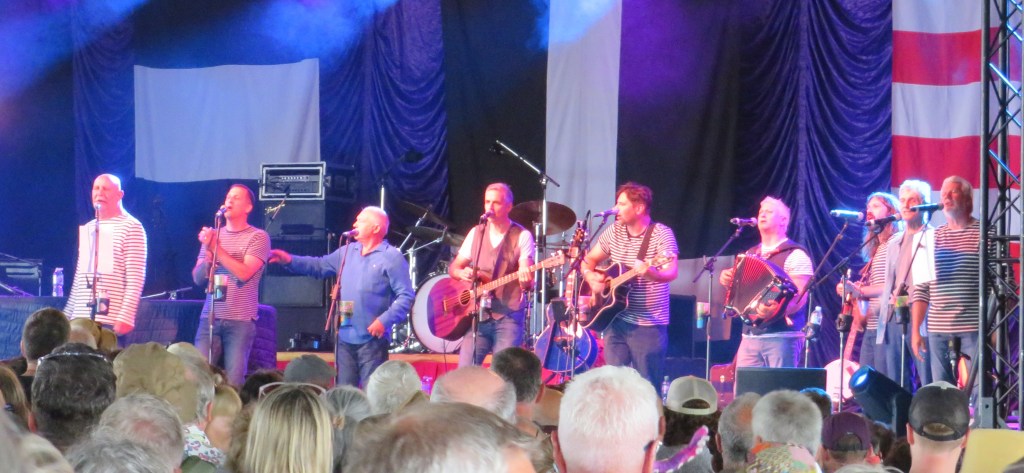
The site was surprisingly quiet last night and the gentle hum of the nearby generator wasn’t a problem. We listen to the ‘Ahoy Rise and Shine’ session, intended for children. This was led by Rob Punder of Entertainingly Different and was actually a good example of what it was. It brought back memories of summers on the beach when my children were small and being entertained by United Beach Missions. This is the first festival that I’ve been to since I was seventeen. I channel my inner flower power generation self and relive my youth by buying clothes that I would have worn then – 70 is the new 17 right? I do (just) resist the temptation of a felt pixie hat complete with toadstool and oak leaf decorations. The acts begin in the main marquee at midday with a set from the Fisherman’s Friends. Mindful of our senior status, we take chairs. This does mean that we are behind those with the stamina to stand, so it is a case of hearing the acts rather than seeing them.
Porthleven Town Band bring back more memories of summer weekends, this time watching the girls playing in a brass band. The band also has some excellent singers and their rendition of Cornwall my Home, with a male voice choir vibe, was incredibly powerful and moved many people to tears. You can listen online but it doesn’t fully convey the highly charged atmosphere in the tent. Definitely one of the stand out performances of the weekend for me. Bear in mind they are a band not a choir. Next up, The Longest Johns of the viral weatherman song fame, Irish singer Sharon Shannon and then Seth Lakeman. We returned to the van to eat, finding the Fisherman’s Friends film was on television. Then it was back to the marquee for headliner Jules Holland. We didn’t stay too long, just enough to say we’d seen him. Thick fog had descended with the darkness again.
Sunday 14 May 2026
We went to support the children’s entertainment again. This put us in the right place to see Fisherman’s Friends member Marcus Bonfanti, with a blues set; he was accompanied by his daughter Isabella for a couple of numbers. We were in time for the second half of the Splann ceilidh band in the main arena and managed a Gay Gordons and a mammoth set of Strip the Willow without too many ill effects. They were followed by the Cornish choir the Oggymen, who were up there with our favourite acts. Peat and Diesel followed, excellent musicians but a bit too heavy metal for us. Another highlight was Skippinish and I splashed out on a CD, which I got signed. The evening was Kate Rusby from Barnsley and then an hour to wait for Fisherman’s Friends. We’d decided that we would stand, so that we could at least see the band. The crowds formed straight after Kate finished and we found ourselves four rows from the front. This worked well in the beginning. Unlike a theatre, you could sing along at full volume and not be heard and jig about a bit. It was certainly a great atmosphere. This was however the day that the heatwave finally reached Cornwall and half way through I’d already been standing for two hours. I had to bail out to the side of the arena where I could sit down and fell some fresh air. Nonetheless, it was a great weekend. The following day, we left early to avoid the Bank Holiday traffic and heat and were home by 10am. Would we do it again, on balance, yes I think we would if we could.
This post is a few weeks overdue as life has been even more hectic than usual but a recent ‘big’ birthday was time for reflection. Having very nearly completed my memories of my life up until now, there has been a great deal of looking back. I’ve been working on this for twelve years, since I attempted to keep up alongside the lovely group of ladies who helped me to produce Remember Then: memories of 1946-1969 and how to write your own. Since then, I have helped several more groups, each time vowing and failing, to keep up but making a little more progress each time. My most recent attempt was with the Write your Life Story group that I lead for the Society of Genealogists. This time I so very nearly made it. I hoped to have it completed for my birthday but I am just half a chapter short. I am 410 pages and over 114,000 words in. I can’t imagine anyone will want to read it but it has been fun and important to do. Some of it, with redactions, is on my Granny’s Tales site. Having said that no one will read it, people clearly have nothing better to do, I have had positive feedback from those who grew up where I did, or who went to the same schools as me. Our personal history overlaps with the history of others, so our memories have a relevance for local and social historians, with the caveat that memory can be flawed. The series of monthly Monday afternoon online sessions with the Society of Genealogists starts again in June if you want to join the fun.
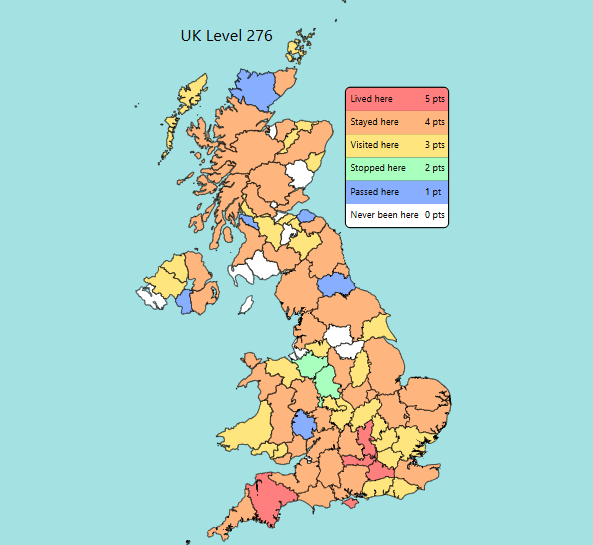
In the course of looking back I got diverted down a rabbit hole when my daughter alerted me to some free ‘Travel Visualiser’ software that allow you to map which British counties you’ve lived in, stayed in and visited. About twenty years ago, inspired by an American friend who was trying to spend a few days every US state, we decided we’d do the same for English counties. For the first few years, this was a concerted effort then it drifted into abeyance, although were continuing to add counties by default. This is my map so far. I have been very conservative about where I’ve stayed. If I’ve just stayed for a weekend conference and not looked at the surrounding area, I haven’t included it as stayed. Equally, I haven’t included a couple of counties where I stayed as a child but only went to the beach. It is also really hard to work out where you’ve passed through.
This then led to me wondering how many National Trust, English Heritage and other tourist attractions I’d visited. I refused to re-read 57 diaries again so this depended on photo albums and the holiday diaries I’ve kept in more recent years, as well as looking at my collection of guide books, which I no longer add to. I’ve probably missed a few. I use a total of 40 English Counties as I include the Isle of Wight separately. Counting just properties, rather including than countryside, my total so far is 74 National Trust properties in 29 counties and 47 English Heritage sites in 22 counties, with particularly good coverage of Cornwall, Devon, the Isle of Wight and Northumberland. I can also tick off a total of 43 Isle of Wight tourist attractions, quite a few of which are no longer open.
I am proud of what I have achieved in the last *0 years. There has been joy and sadness but I am very much a glass half full person. Yes I have regrets but I aim to have as few as possible going forward (there’s a song in that somewhere). Aware that I am now on borrowed time and my body will already no longer allow me to do quite as much as I used to, I am cramming in as much as I can, while I can. There definitely needs to be a sequel to the story of my first *0 years. Apart from the Norwegian cruise and the family visit to Centre Parcs, which were part of the birthday celebrations, recent weeks have included a whirlwind family history based week away and an extended family reunion weekend. No wonder this post is delayed.
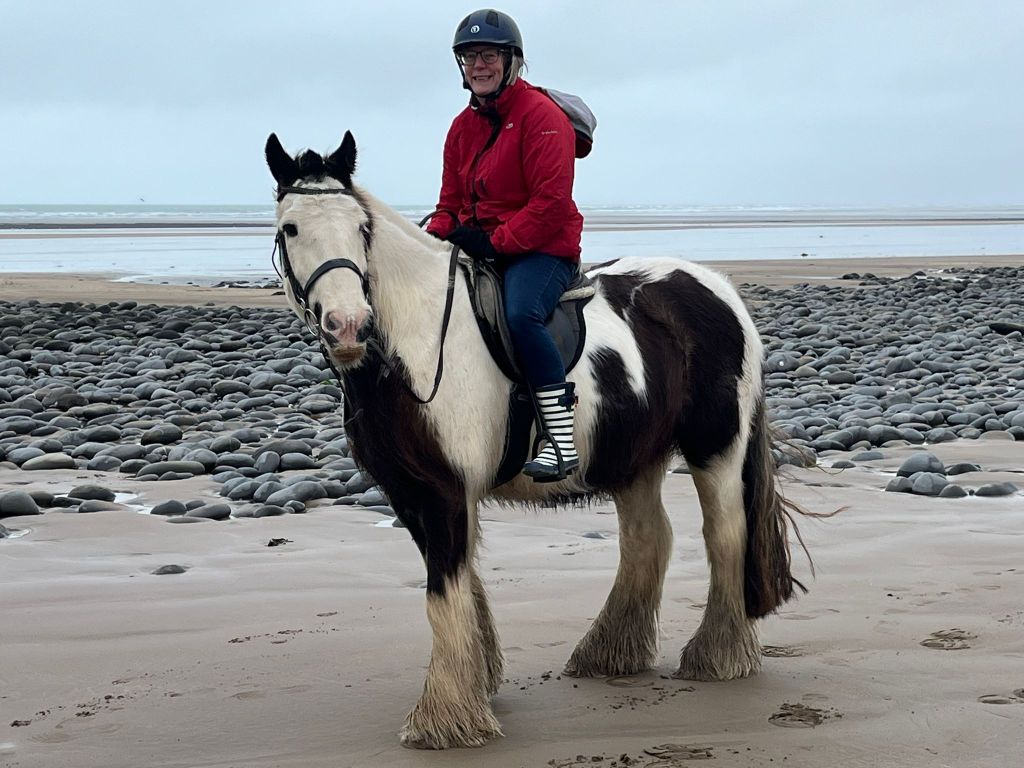
In the interest of bucket list ticking, I arranged to go riding on the beach up the road, as a birthday present to myself. The local stables do this regularly and I quite fancied having a go. Never mind the fact that I’ve only ridden once since I was seventeen. A friend said ‘did you canter?’ Canter? She jests; I was going as slowly as possible and clinging on for grim death like a tenacious limpet. As I didn’t want to go faster than very slowly I had to book a whole ride, which would usually be for several people, to myself. The weather was very windy and drizzly, which was a shame and horses seem to sway a lot more than they used to. I had a large but placid mount who belied the name Spirit. The staff at Follyfoot Stables were fantastic and took loads of photos which display varying degrees of me looking wet, cold and petrified. I was slightly concerned, as it was very expensive because I was paying for a solo session (which would have been good value per person for six people), that I might love it so much that I’d want to make this a regular thing. Fortunately, it was just that little bit too scary. I was very glad that I did it but once was enough and I am quite content to hang up my riding boots (I don’t actually have any riding boots) forever.
Reaching *0 is a privilege not granted to all and I am determined to ‘seize the day’ and make the most of the time I have left. Looking forward, there more to do while I still can. We are off to the Fisherman’s Friends Festival shortly. Festival-going is also something I’ve not done since my teens. Not looking forward to the 11pm finishes but hey. More caravanning in order to tick off a few more counties is in the diary for later this year. I’ve arranged to go to Iceland and there’s a couple more overseas places I’d like to visit. I’ve come to terms with the fact that I’ve probably left it too late for Madagascar. I want to see as much of my nearest and not so near dearest as I possibly can and I’ve been on a mission to catch up with as many old friends as possible. I send about eighty Christmas cards each year and some of the people I have not seen for decades. I am therefore on a quest to remedy this if possible and I am having my photo taken with them as I go, so that I can create an album.
I’ve taken on a small additional role for the job we must not mention, so hope to continue with that for a few more years. I am carrying on giving talks hither and yon, mostly online. In a way, I’d like more free evenings but then I think, yes I can do another one. I really must learn that when ‘no’ is in my head, ‘yes’ should not come out of my mouth. This applies to more than just talks. There are family history stories still to be told and I am toying with the idea of another postgraduate qualification. If successful, this would mean that I had one from universities in England, Ireland and Scotland. I am still determined to get back to spinning (the textile kind not the extreme gym activity). I definitely want to make more of living where I do and not suddenly realise that the summer is over and I’ve barely seen the sea. I am trying to cut down on some of my voluntary roles so that I have time to just relax, when I discover what that is.
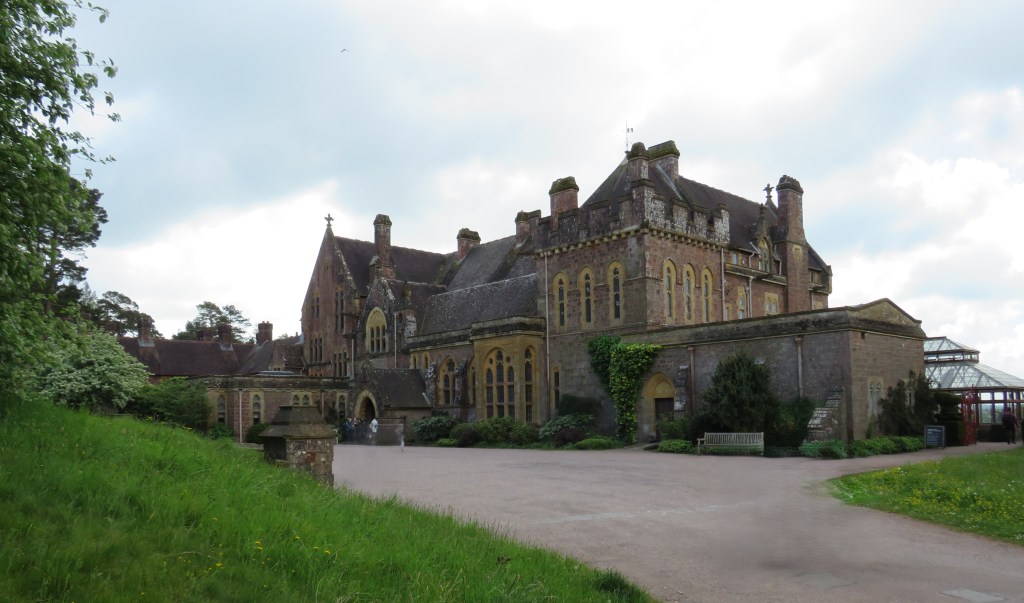
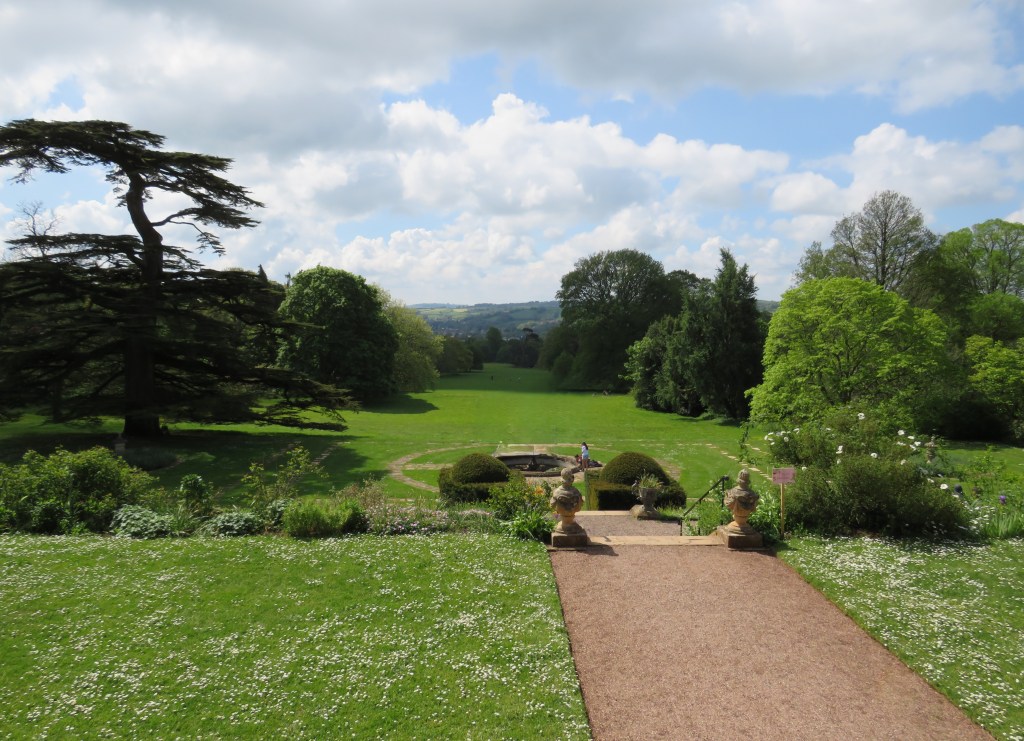
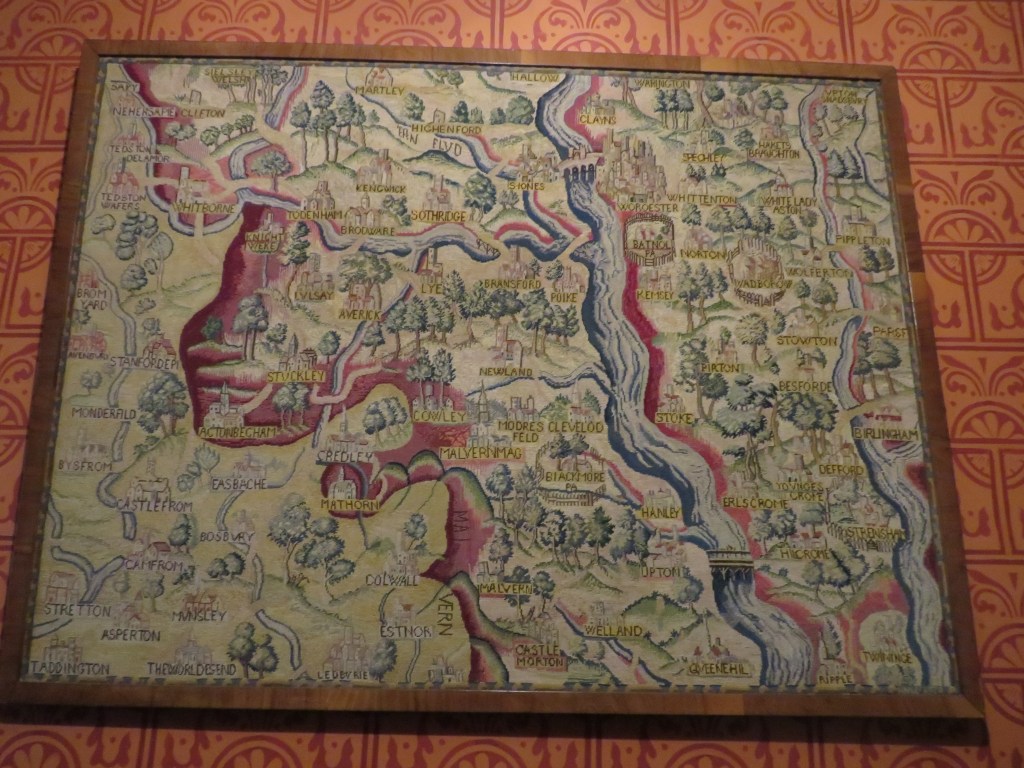
Each year since the 1980s, the first May Bank Holiday weekend has been the time for members of the extended Braund family to reunite in North Devon. This year we had visitors from Australian and New Zealand, as well as those joining in from the USA on zoom. This occasions are always an opportunity for eating far too much but we also try to see some of Devon’s historic sites. This year’s offerings included a guided walk round Bideford, which has a fascinating history and an outing to Knightshayes Court. Knightshayes was the home of the Heathcot-Amory family from 1872-1997. The family’s fortune was due to the bobinet lace making machine invented by John Heathcote. This made the process much quicker and therefore more profitable but was very unpopular as it required less labour, so put people out of work. Forced to move from his native Midlands, John Heathcote took over a disused woollen mill in Tiverton and located his lace-making factory there. The factory still exists but has passed into other ownership. It was his grandson, Sir John Heathcote-Amory, MP for Tiverton and later a baronet, who used his grandfather’s fortune to commission Knightshayes in order to demonstrate the family’s wealth and status. William Burges was appointed to be the architect of this Gothic Revival style stately home but when his ideas proved to be too extreme, he was replaced by John Dibblee Crace, whose designs were out of fashion before they were finished. Various features were dismantled and stored by the family and the National Trust have been able to restore some of this to reflect Crace’s vision. The house was requisitioned as a hospital for the wounded during both world wars.
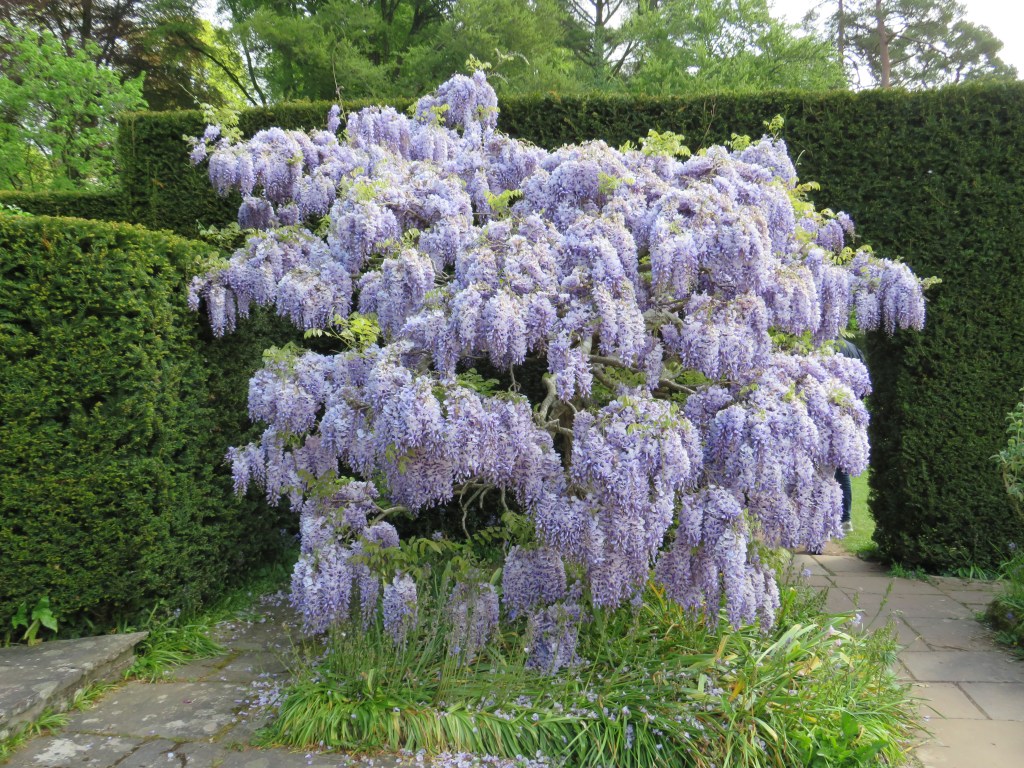
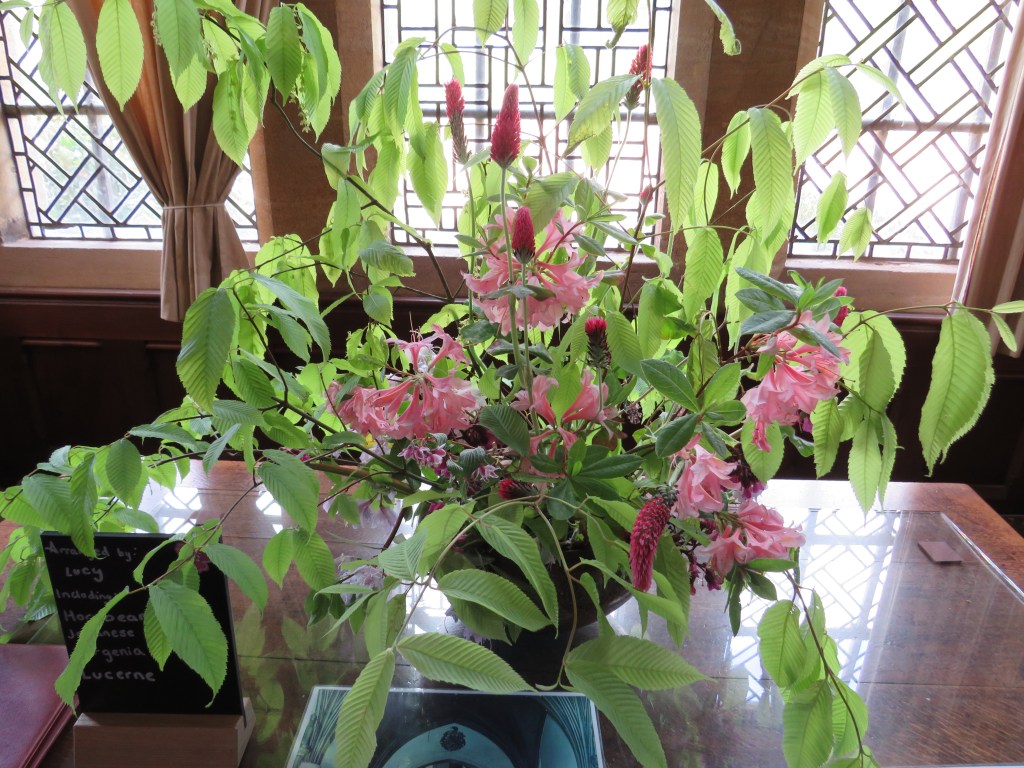
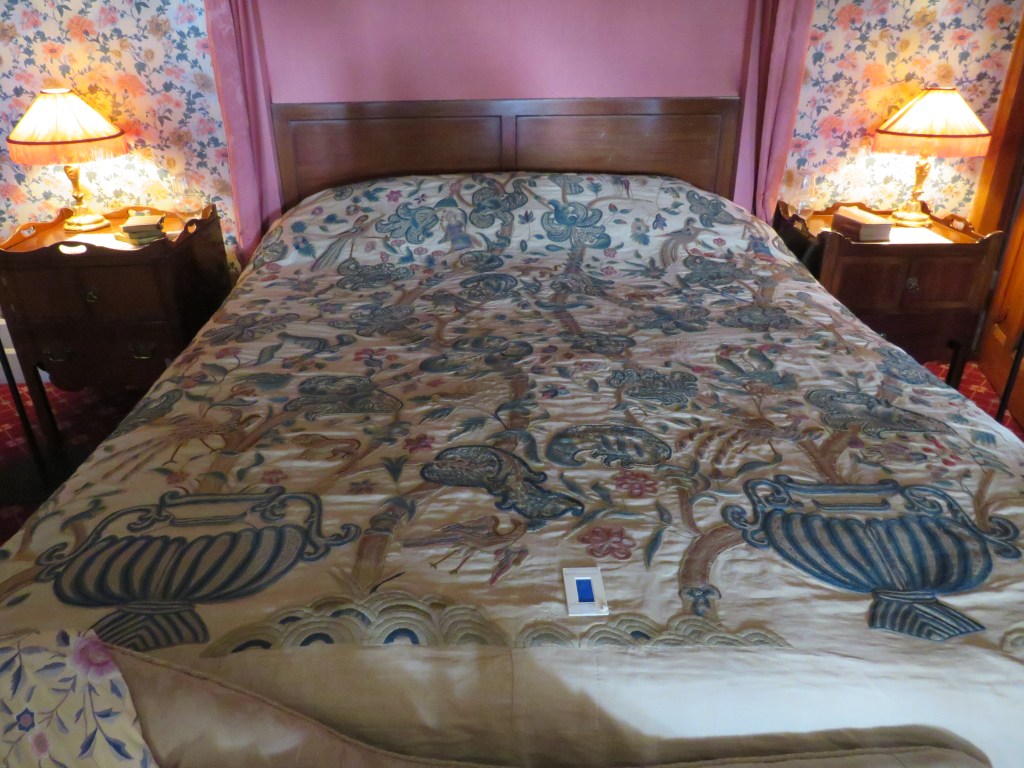
Flowers picked from the gardens and grounds appear in most of the rooms, together with details of the flowers that have been used and the name of the volunteer who arranged them. A beautiful crewelwork bedspread was worked on by Lady Heathcot-Amory, who invited her guests to add a few stitches. There was an exhibition dedicated to Joyce Heathcot-Amory née Wethered, who was a well-known championship golfer, renowned for her swing. She turned professional and was inducted into the World Golf Hall of Fame.
We will do it all again next year by which time I may have lost the weight that I put on this year.
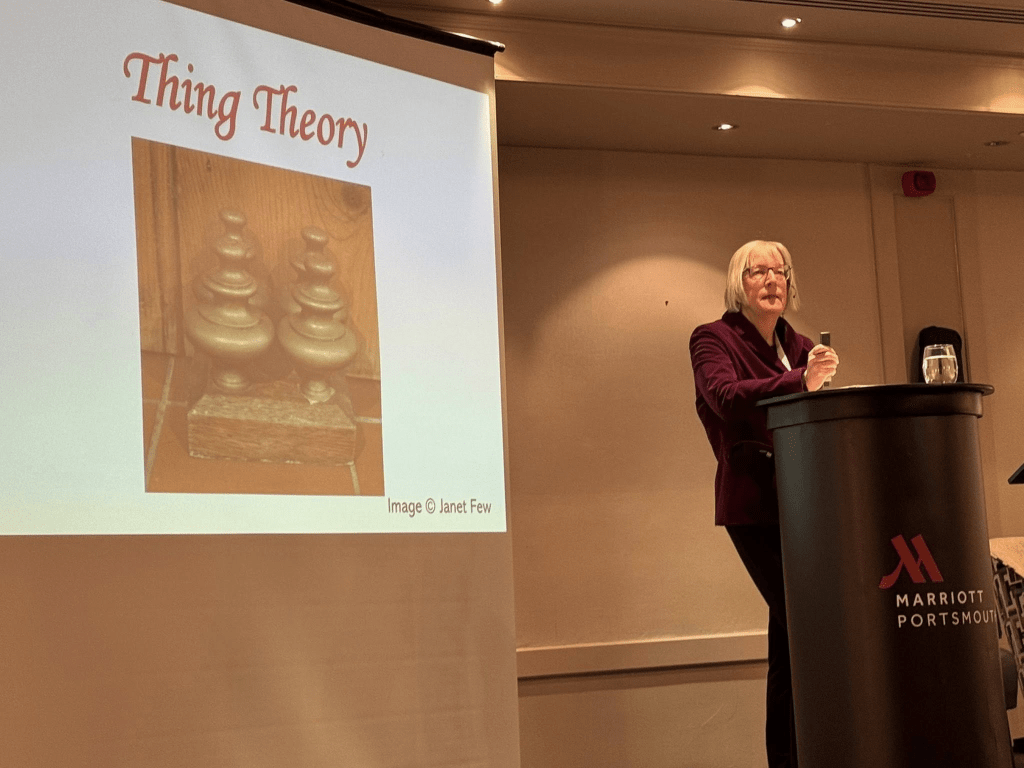
A distinct downside of the Rookesbury Park caravan site is the one bar of wifi and zero phone signal. This meant that, on arrival at the Marriott Hotel, venue for the 47th Guild of One-Name Studies conference, I needed to upload two photobooks for printing before my pre-paid vouchers ran out. This had to be carefully timed so the resulting books didn’t arrive while I wasn’t at home, so I couldn’t do it earlier. This and the fact that I was ostensibly ‘helping’ meant that I missed Brian Swann’s opening presentation about resources for Portsmouth Shipping.
I was glad to be able to listed to Frances Hurd’s ‘Sex, Violence and Alcohol: after effects of the Great War’. I hadn’t realised that then a shell-shock diagnosis relied on physical, rather than psychological, symptoms. This was followed by a fascinating presentation from graphic designer Sarah Houghton, ‘Representing the People: envisioning the hidden history of the Portsmouth suffragist movement’. This was fascinating. Sarah has created wonderful animations about the march of the suffragists from Portsmouth to London and has also recreated some of the banners that they carried. Do check out her website.
I started day two with one of the fringe talks, Valerie Brenton on finding teachers’ records. This was a good summary and deserved a wider audience. Next up was Paul Carter with ‘Making your Research Manageable’, whose verdict on AI was that it was useful as a clerk but dangerous as a judge. Continuing the AI theme, was John Thew, who illustrated what might happen when someone tried to use AI to do their family history, particularly if that person wasn’t very skilled in providing suitable AI prompts. The take away was that humans are still significantly better at making genealogical connections than AI.
Nick Barrett held the after lunch spot, providing hints for Medieval and early modern resources. One of my favourite presentations was Sally Gardiner’s ‘Who was Ann Elizabeth Epitaux’. Sally had purchased a sampler at auction and her U3A group had worked collectively to trace the ancestry of the person who was named on it. Considering that Ann Elizabeth had ancestors who were Jones from Wales, they did remarkably well. I was then part of a panel fielding questions about the future of family history. There was plenty about AI, which is clearly the hot topic.
The Gala Dinner followed. By the time I had joined the drinks reception queue, they’d run out of orange juice. I asked the staff member, who looked about twelve, who said he would bring it to my table. This did not materialise so I asked another waiter – possibly thirteen this one, who asked if I wanted it in a glass. Well yes, not sure swigging out of bottles is the done thing at a gala dinner. He then produced a jug of orange juice for two of us but still no glasses. The after dinner speaker was Harry Rothery about the Mary Rose. I’ve heard talks about the Mary Rose before but probably so long ago that Harry wasn’t born. It is fascinating what has been done recently. I may put Portsmouth Dockyard down for a revisit.
Then it was Sunday. After an ecumenical service, it was my turn with a new presentation ‘Preserving the Past for the Future’. I was pleased with how it went and the resulting book sales. Then I listened to Daris Williams’ presentation, entitled ‘Is AI the new Snake Oil?’, with a very balanced view of the pros and cons. He said that the hope is that all the records on Family Search will be searchable via the full text option by the end of the year.
A break from the focus on technology was Howard Benbrook’s talk on the Hampshire Swing Riots, although, as he pointed out, there are parallels to be drawn between reactions to threshing machine’s and to AI. A useful website that he recommended is www.theenglishprojectcaptainswing.org. Back to technology for the afternoon with ‘Navigating Modern DNA techniques’ from Donna Rutherford and Sophie Kay describing the open source software Gephi. This enables you to visualise your DNA matches but could also be used for other kinds of networks.
Then it was all over. We said our goodbyes and look forward to reuniting next year, when the conference will once again be in Portsmouth.
You must be wondering of I have a home to go to because, although I am safely home now, I’ve been away again, this time with a family history slant.
We set off through slowish traffic to take the caravan to Ferry Meadows site on the edge of Nene Valley Country Park, somewhere we’ve been several times before. Fortuitously, this was the day the fish and chip van visited the site. It would have been rude not to partake.
With our Devon Family History Society hats on, we personned a stand at the East Anglian Really Useful Family History Show. It seemed quite busy and it was good to chat to so many people that we knew. We collected items for the October conference goody bags and realised that this meant we would now have to drive round with a car full of heavy books for more than a week. There were some fears for the suspension.
The next day was meant to be a restful day, so I looked for something nearby to do, ideally something we hadn’t done before. I happened upon Longthorpe Tower. As it really was just over there. I was surprised we hadn’t been before, perhaps because it is only open at weekends. We booked a 12 o’clock tour. It says you have to pre-book but some people did turn up on spec. There is however a maximum capacity of twelve, so you’d risk being disappointed. As it looked so close, just the other side of the adjacent country park, we set out to walk. We called in at the park’s
visitors’ centre on the way to enquire about a route, which according to Google maps was a walkable 1.7 miles. The person we asked said that it was an unspecified ‘long way’ and advised us to take the car. To be fair there was open water and a motorway to negotiate but it did look as if there was a path and bridge. Maybe his advice was based on our decrepit looking appearance.
We returned for the car 3.7 miles by road, spotting a pair of red kites on the way. Of course this meant we were nearly an hour early. This didn’t seem to matter as the 11am tour was just starting, so we joined that. The tour was built in 1290 by lawyer Robert Thorpe as an extension to his adjacent fortified manor house, to showcase his wealth and status. Robert and his son, also Robert, were both stewards of Peterborough Abbey and it is thought that one or other of them commissioned the monks who were painting the abbey walls to also work on the tower. The Thorpes were to serve both Edward II and Edward III, Robert junior becoming Lord Chamberlain. The manor house is in private hands but the top two stories of the three that make up the tower itself are in the care of English Heritage. The solar, the lower of the two floors that can be viewed, boasts Medieval wall and ceiling paintings that are the best to survive, in a domestic setting, in the whole of Europe. Fashion and the style of the royal arms that are depicted, date the paintings to between 1320 and 1340. The fleurs de lys that Edward III added to the royal arms in 1340, when he was laying claim to France, are not shown.
Although Robert had two sons, the family line died out with his grandchildren, so the estate passed to a distant relative whose main residence was elsewhere and it gradually fell into disrepair. The paintings were whitewashed over, probably during the Reformation. It was used by the Home Guard during the war and it was only when an attempt was made to clean up the tower after they left, using labour from the nearby Italian prisoner of war camp, that the paintings were rediscovered. Clive Rouse was called in to preserve the paintings. He made paintings, rather than taking photographs, of what could then be seen, which was more than has survived the intervening seven decades. Unfortunately, he used beeswax to preserve the paintings, which was then then approved method but in the damp tower this did more harm than good and it had to be removed. Preservation is now in the hands of the Courtauld Institute but the decision has been taken to just attempt to halt further deterioration in a sustainable way and not to restore.
The paintings depict a variety of scenes. Two large figures are thought to be Aristotle and Alexander the Great, above them are depictions of farming tasks across the twelve months of the year. On another wall are the eleven apostles (minus Judas), a nativity scene and the seven ages of man. Opposite Aristotle is one of only three surviving depictions of the wheel of the five senses, the other two being in Italy and Germany. On the final wall is a king and a number of animals and birds, as well as a painted geometrical tapestry. The animals include the mythical Bonnacon, who attacks it’s enemies by expelling flame throwing poo.
The top floor was accessed by my favourite thing (not) a spiral staircase. Wondering if ascending was going to be one of those ‘seemed like a good idea at the time’ things, I cautiously began to climb. There was a rope handrail, which meant that, as the person behind you pulled on the rail, the rope tightened and your hand was trapped between the rope on the stone wall. Nonetheless, apart from a few grazed knuckles, I made it up and down and was able to observe the fourteenth century toilet seat. The top floor was probably a bedroom; the Thorpes must have been jolly nimble to trip up and down those stairs every day.
In order to access the top two floors of the tower, whilst still allowing the ground floor to be used by the manor house, what was a window has been turned in to a door, accessed by outside steps.
After a pause for lunch we strolled round the lake at Nene Valley Country Park.
A tedious journey south to a new caravan site at Rookesbury Park near Fareham. Although we’ve definitely stayed here before, neither of us have any recollection of the site. Mind you, our most recent visit was probably twenty years ago. This should have been a three hour drive but road works and heavy traffic meant that it took nearly four. We discovered that the bungee cord that stops the caravan electric cable dragging on the ground when we travel, had come undone. This means we now have bald looking cable and are in need of insulating tape.
As part of my 70th birthday commemorations I am attempt to catch up with as many people on my Christmas card list as possible. I am then taking photos and plan to make it in to an album. I thought this may take more than a year, so I started last year and I suspect I will continue into next year before I get as many as I think I am likely to. As I travel about for other reasons, I am therefore checking the address book and seeing who is within striking distance.
Today was an opportunity for one such catch up and we had a lovely lunch in Chandlers Ford. Feeling very full, we retired to the van, via purchasing the required insulating cable. Having been directed along the M27 on our outward journey, it was very pleasant to find that the satnav decided to avoid the motorway take us through several pretty Hampshire villages, of which Wickham was one, on the way home.
We decided to exploit the English Heritage Life Membership again and take a look at Porchester Castle. On the way, we passed Fort Nelson and paused to photograph THE Nelson’s column. This is ninety-two foot ten and a half inches high and was built in 1807-8, paid for by those who were involved in the battle of Trafalgar donating two day’s pay, as well as naval prize money. What can been seen now is largely an 1899 rebuild; with only the bust at the top being original.
In glorious sunshine but a biting wind, we moved on to Porchester Castle. We had pay to park, although I feel we might have avoided this if we’d approached from a different direction. The situation is strategically important, both for protection from a possible invasion and to use as a gathering point prior to attempting to invade France. I struggled with a barely audible audio guide and tried to avoid a somewhat garrulous volunteer who clearly wanted to chat.
The earliest fortification on the site was probably Roman and was erected in the third century to counteract the threat of a Saxon raiders. By the early tenth century, the threat was from the Vikings and the fort was given to the then king, Edward the elder, by the Bishop of Winchester. Portchester became a burh, a fortified settlement. As well as a wooden building, a stone tower was built.
After the Norman Conquest, Portchester was given to one of William’s followers, William Maudit, later passing to another Norman knight, William Pont de l’Arche who founded an Augustinian Priory that was housed within the fort in 1128. This later moved to nearby Southwick. In 1101, Robert Curthose, Duke of Normandy invaded at Portsmouth, intending to take England from his brother Henry I. Henry managed to persuade Robert to retreat and later Henry invaded Normandy and imprisoned Robert, blinding him first, nice lot the Normans.
The castle was rebuilt in stone in the early twelfth century, including the first of three stages of the keep. By 1154, Portchester was in royal hands and Henry II and later monarchs used it when they were on their way to France. In the 1390s, Richard II built an small palace next to the keep. It’s position overlooking the channel and the important harbour at Portsmouth, meant that Porchester was better maintained than some castles. It was Charles I who sold the castle to the Uvedale family, whose descendants still own it.
At various times in its history, Porchester has been used to house prisoners of war. In the 1660s, when England was fighting the Dutch, the government rented it to house Dutch prisoners. In the eighteenth and nineteenth centuries, French prisoners were held at Porchester, most notably during the Napoleonic Wars, when the prisoners had a theatre in one of the chambers. In 1819, the owners, by then called Thistlethwayte, took back the Castle, created a pleasure garden and used it to entertain guests. Unfortunately, the steps to the upper floors of the keep are not in use at the moment, so we couldn’t explore that part.
On returning to the van, I sampled a double gold caramel magnum. I may be forced to sample this delight again, just to check that it really was as delicious as I thought the first time.
Another day, another place to visit, this time via a caravan spares shop to get a vital part for the van that seems reluctant to provide us with water from the taps. Today’s tourist attraction of choice was the National Trust’s house and garden at Hinton Ampner. There was a Tudor manor house on this site, owned by the Stewekely family. In 1793, the Bilson-Legge’s demolished and rebuilt the house. This was inherited by a daughter who married into the Dutton family. Ralph Dutton inherited in 1935 and was responsible for remodelling the house in keeping with a Georgian revivalist style. A fire that started in the library in 1960, meant that much of the remodelling had to be done twice and 2000 books had to be replaced. I always wonder, in libraries like these, how many of the books actually got read.
The house is home to one of the largest collections of hardstone inlaid furniture in the National Trust. As usual, I looked for quirky pieces that caught my eye, including a stunning Blue John vase and rather strange origami-like constructions that were used instead of holly or pine cones to deter visitors for sitting on the chairs. Pupils from Portsmouth High school were evacuated to Hinton Ampner House in the Second World War. Lacking any children, nieces or nephews, Ralph Dutton donated the estate to the National Trust. My only niggle about the property was that those requiring disabled access to the house were invited to ring the doorbell for assistance, yet said bell was up the entrance steps, which rather defeated the object.
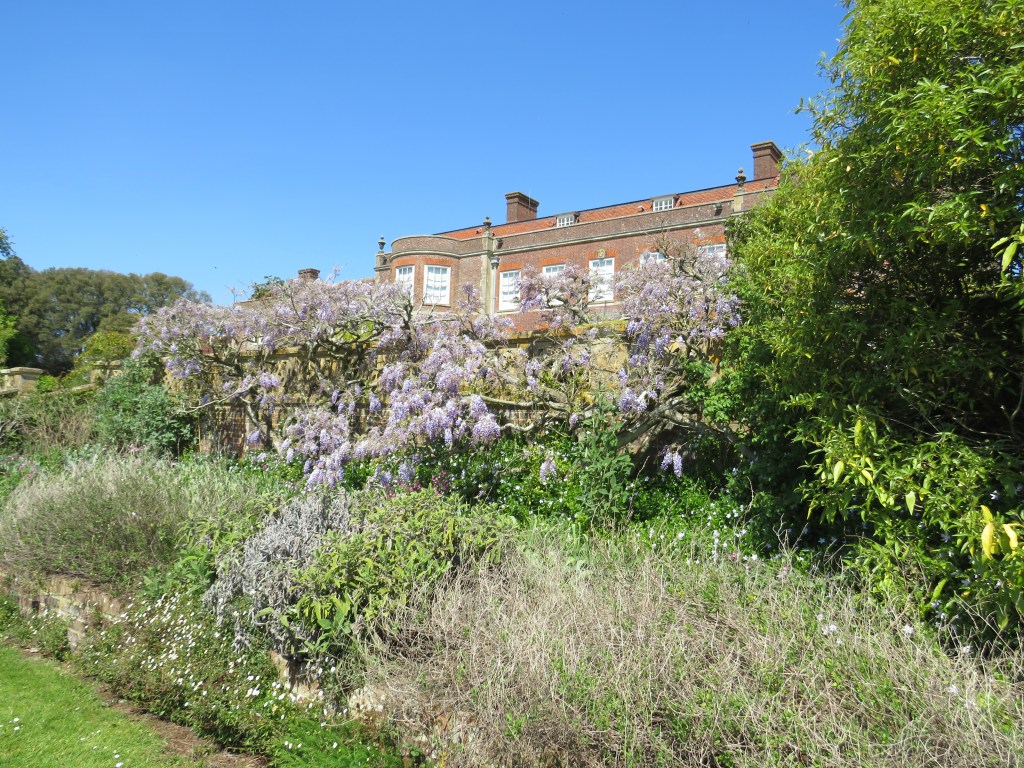
It was a beautifully sunny spring day for exploring the gardens, with slightly less wind than at Porchester. There were far-reaching views across the South Downs and I was excited to spot but not very successfully photograph, a red kite. The Saxon, flint church in the grounds was also interesting and had some impressive 1970s stained glass.
Despite having sampled some National Trust cake, in holiday mode, I decided that I had to try another caramel magnum. I am wondering if I really need more before coming to a decision.
No sooner was one holiday over but another, slightly less restful, holiday began. The family spent the last week at Centre Parcs in Sherwood Forest aka how quickly can we wear Granny out. We travelled up the previous day in order to be ready for the first day, as we could use the park from 10am, even though the accommodation wasn’t available until later. Leaving after lunch, we ate in a Harvester. I had a two for the price of one main course offer and on the strength of that, was persuaded to have large chips. I have a big appetite but this was a bridge too far even for me. I retreated to the mini dessert afterwards. Then it was on to our Travel Lodge for the night. This was elusive and at one point we tried with both the sat nav and Google maps, neither of which was very successful. We made it in the end.
On day one, the plan was to walk round Sherwood Country Park, which is partnered with the RSPB, while we waited for the others to arrive. Firstly, we couldn’t find the car park and then a misleading arrow meant that we got lost yet again getting from the car park to the visitors’ centre. The resulting walk round Edwinstowe led us past the church where, allegedly, Robin Hood and Maid Marion got married. I guess you might as well milk every tourist appealing legend that you can. Although the Country Park, once we found it, was lovely and I would have been happy to spend longer there, it was of course a mistake, as we hadn’t anticipated the amount of walking still to come. The park was peppered with placards with corny Robin Hood related jokes, which seemed a bit unnecessary.
Continuing a theme, Centre Parcs also eluded the sat nav but we found our way eventually. Troops assembled, we had some lunch in Starbucks and looked round until we could get into our lodges. In my naiveite, I hadn’t realised that we could have paid extra to reserve specific lodges and one lodge was a mile away from the other two. We were in a studio lodge and it is impressive how secluded these seem, despite the vast numbers of lodges and people on site. Randomly though, there was not a single drawer in the accommodation, apart from in the kitchen. We resorted to keeping our undies in our bags. Once unpacked, we were supposed to park in the main car park but there was insufficient space, so we were told to remain parked by our lodges.
By 4.00pm it was time for curling for most of us. This was ‘fake’ curling as there was no ice, no mad brushing and the stones were on wheels, some of which kept falling off but it was great fun. All three children managed to get a stone ‘on the button’. Then it was time for our long walk to the Dozing Duck for a meal. Still full from the previous day, I managed to be allowed to have a child’s lasagne. We then repaired to a lodge for me to open slightly belated birthday presents and eat cake. The day’s step count was nearly 20,000, probably the most I’ve done since I started counting them and far more than was comfortable. I acquired some impressive looking blisters on my little toes in the process.
The following morning, having parked where we were told on day one, we woke to notices and text messages telling us to move our cars. Hoping to save money by doing at least some self-catering, we made an early morning trip to Tesco, managing this time not to get lost. By the time we got back, we were parked in the furthermost car park. Just before lunch was an ‘electric boat’ trip on the lake, chosen as it was something that we could all do. We had two boats between us and enjoyed the beautiful weather. The wildlife on site is impressive and I was trying to keep track of all the different birds, These include Canada and Greylag geese who knock on the patio doors each morning, hoping to be fed. Given half a chance, the geese and the many squirrels will come inside the lodges.
After this, we hired a tennis court; my role appeared to be that of ball girl. We cooked our own tea, except that it took half an hour to realise that it wasn’t actually cooking, as we had failed the ‘how to light the oven’ initiative test. We then went to watch the others cooking their meals on the barbeque and trying not to impale themselves with lethal-looking marshmallow forks.
Most of us went swimming on day three. This is a water park not a conventional swimming pool and there were whirlpools, slides and rapids. The changing rooms were enormous and given that, once changed and minus my glasses, I can’t see, it was another initiative test to work out how to find the pools. I made the mistake of blithely following some of our party down the rapids. Having been buffeted along, fortunately, I did spot an escape route before the final plunge. This meant that my family members who were ahead of me wondered if I had been drowned en route. Most of my time was spent being at one or other end of a slide to supervise those who were going down.
I discovered that the site shop sold delicious toffee and honeycomb cake. Some of the younger party members tried fencing while another had a go at Segway. The weather was really in our favour, with temperatures in the twenties. In between activities, board games were played. I was going to look at the nature trail but got diverted to game playing instead. I returned to my chalet after an evening of board games. Our spooky tracking app wasn’t working so there were concerns that I hadn’t made it home safely. More weirdly, according to the app, my travelling companion seemed to be haunting the Astro Turf pitch at 10pm. Concerned members of our group sent out a search party but he was safe in the lodge where he should have been.
Our last full day was another day of lovely weather and plenty of walking. We began with board games and then most of us did laser tag. After a game of pool, we all ate at an onsite restaurant, where the service wasn’t exactly swift, although, to be fair, it was packed. The waitress claimed that she could remember our eight dessert choices. It turns out that she couldn’t but we were told that we could have the incorrect dessert that was delivered for free, meaning that the ninth person in our party could also have a dessert. They did try to charge us for this ‘free’ dessert but we managed to spot this in time.
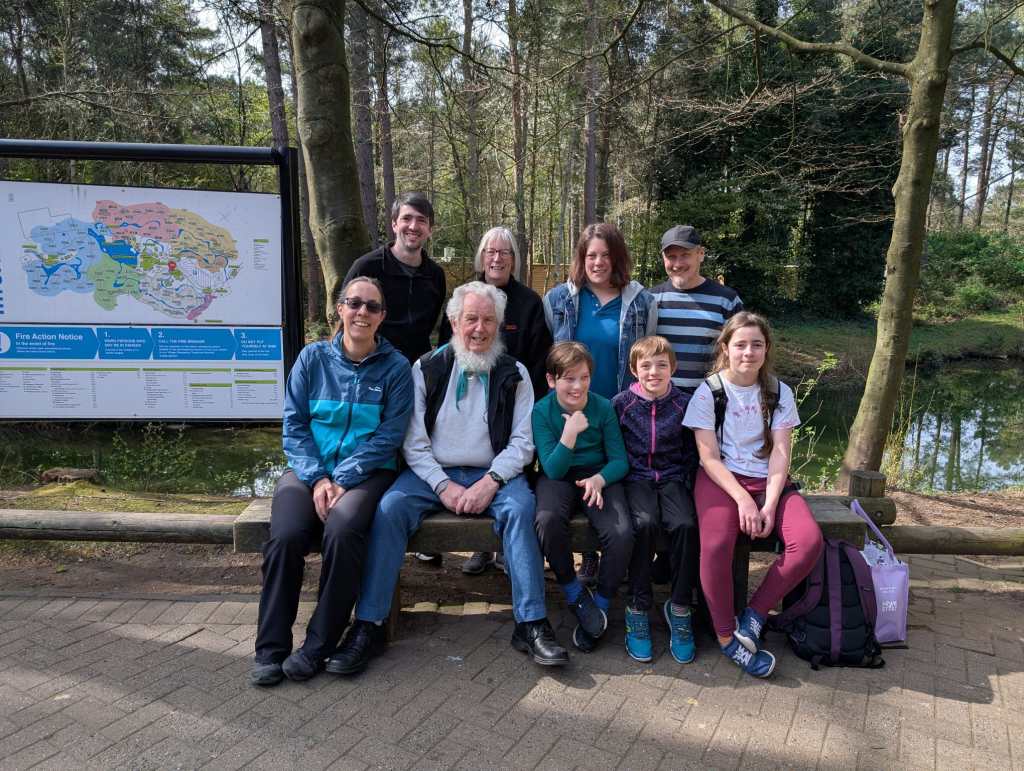
While packing up was being done on the final morning, I decided that I would walk across to the other side of the site to try to see the nature park but it was closed. The last activity was climbing for the three youngest members of our group. We decided to take a photograph of us all together. Trying to get nine people in place was like juggling jelly and we had to negotiate who was going to sit on the dried bird poo. Finally in position, we realised that we had neglected to coerce an unsuspecting passer-by to take on the role of photographer. The holiday was great fun and lovely to all be together but I definitely need a holiday to get over the holiday. Stand by I will be off again soon.
The bird count was as follows: Canada Goose, Robin, Wren, Wood Pigeon, Blue Tit, Crow, Magpie, Mallard, Greylag Goose, Blackbird, Coot, Moorhen, Barnacle Goose, Pochard, Mute Swan, Great Tit, Swallow, Treecreeper (particularly excited by this one but too swift to photograph), Jay, Nuthatch, Magpie.
By morning, things have calmed down considerably and as usual, I join the regular early morning crafters. I can see myself doing more of this at home. Today, it is ribbon braiding, which, once you get the hang of it, is easier than some of our other projects. There’s another talk from the retired detective. This time, we are trying to solve a genuine unsolved murder from the 1930s. This has me wanting to utilise my family history skills to look up details of the main characters. Ron the detective says the name Qualtrough, which comes into the story, is common on the Isle of Wight. I doubt this at the time and it turns out is centred on the Liverpool area, so perhaps he meant Isle of Man.
There was hail on our balcony at lunchtime but we are all grateful for the calmer seas. Some of the lifts are playing up, so more exercise, rather than playing guess the lift, as we wonder which of the three in each bank of lifts will arrive first.
There was just time before craft to have a quick go at onboard curling. Winter Olympics this was not. It was not helped by the lurching boat as everyone’s ‘stone’ curved distinctly to the port. It was sad to attend my final craft session and say goodbye to my crafting buddies, Sandra and Barbara. We achieve our second ribbon braided card.
Day 16 Yes, Still At Sea
When we wake up, we are off the coast of Yorkshire, that would be quite a long way off but we see oil and gas rigs, as well as the occasional ship. When we go to breakfast, we can look to the east and see a large wind farm. I am my mother’s daughter, so I can pack efficiently in under ten minutes. I also travel light, so my single bag is under 13kg. I will admit though that I got the balance of thick and thin clothes wrong. We go to see the craft and art exhibition and our crafting efforts are getting a lot of positive attention; I think quite a few people now wish they’d joined us. I am still basking in and surprised by, Pam’s praise of my crafting skills and certainly, I seemed to get the hang of the various projects more quickly than most. Together with Sandra, I had been able to help others when the afternoon groups were a bit large for Pam and Paul.
We have plans to acquire enough for a packed lunch tomorrow and begin with bananas from the lunch offerings. I also have rather a large teabag stash, ready for teabag folding. We manage to squeeze in a talk about the wildlife of Norway from the Orca team and still have time for tea. This concentrates on birds. The fjords, which are 400-1300 metres deep, encourage wildlife that thrive in deep waters to come close to the coast in an area that is protected from the most severe storms. Phytoplankton, which are the bottom of the food chain, thrive. Phytoplankton produce 50% of our oxygen and absorb 40% of our carbon dioxide, so are critical to our survival. The over-fishing of herring in the 1960s had a devastating impact on seabirds. This can also allow jelly fish to bloom, which has a negative impact on the ecosystem.
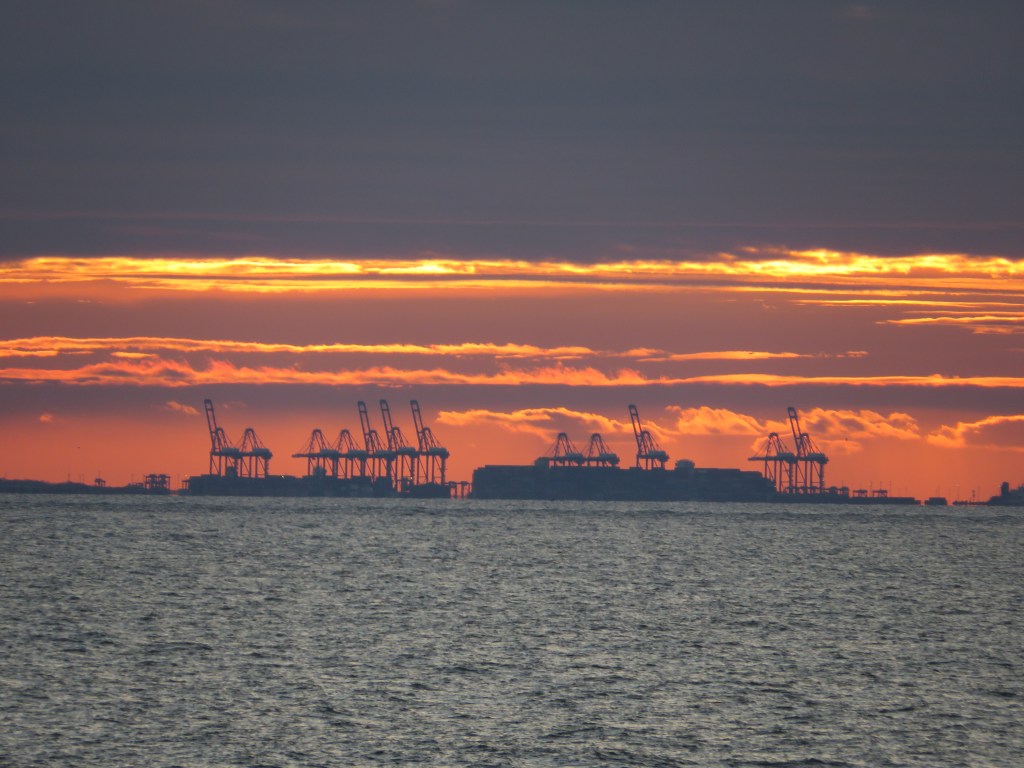
We watch the sunset over the Essex coast, sad that our trip is over, although looking forward to a fully functioning shower and getting to grips with over 100 emails that I haven’t been able to just delete using my phone as they require some kind of action.
Day 17 Back Home
We have to vacate our cabin by 7.30. As we have opted to take our own luggage off in order not to miss our coach, we breakfast first. There are signs everywhere warning us that we can’t take our purloined sandwiches off the ship, so we have to abandon them in the cabin fridge. It turns out that you can wheel a one wheeled suitcase. We have travelled 3295 nautical miles and the 556 crew, predominantly from India and Indonesia, have looked after us very well.
Our lovely friends meet us once again and we are driven back past the sights of London to Victoria coach station. This looks very different to when we were here last time, in 2019. Our coach does not appear. It seems that, due to a different coach having a wheel issue, coaches are being swapped around. In the end a coach is found, a cheer goes up and we leave, half an hour after time. The drivers manage to make this up and after a 7½ hour journey we are back in Bideford on time. I can’t work out why the journey in this direction is an hour longer than the outgoing journey, even though the stops are slightly different. A taxi and then home to the piles of washing, a decent shower, a bed that doesn’t sway and a lot of work to catch up on.