Day 3
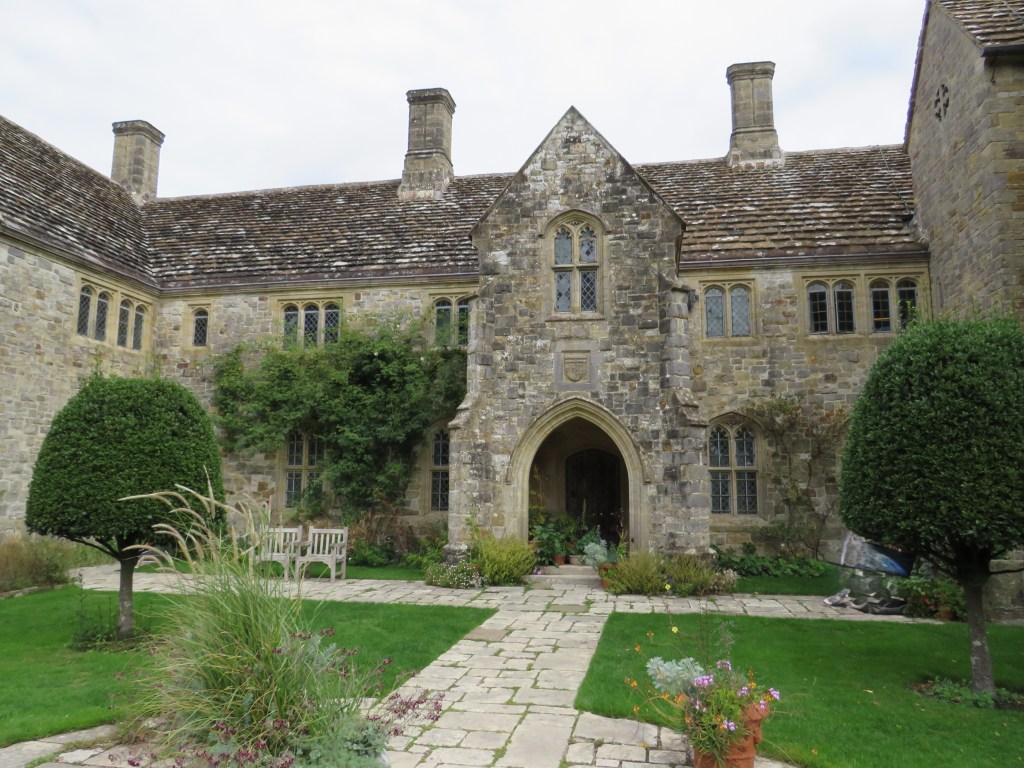
We arrive at Nymans in time for a tour by garden guide Rob. We’ve learned that tours are a good thing if you want additional information. Rob does not disappoint, although the tour does eat into rather more of our time available than was ideal. The estate itself dates back to at least the fourteenth century and the attraction of the area was probably the iron mining potential. Early owner, Philip Nynian, gave his name to the estate. For three centuries it was owned by the Gatland family and then several nineteenth century owners added to the estate, extensively adapting the medieval house in 1839. The major changes came under the ownership of German-born Ludwig Messel, who paid £20,000 for Nymans in the 1870s. He remodelled the house using plans drawn up by his brother, who was an architect and the finished house had a Germanic style. Ludwig was a collector of exotic plants and exploited the good growing soil at Nymans to house many rare plants and trees from across the world. James Comber served as head gardener for fifty eight years from 1895.
Ludwig’s son, Leonard, inherited in 1915 and his wife, Maud, prompted a remodelling of the house, so that the Germanic influences, unpopular in the wake of the First World War, were eradicated. The work was carried out in the 1920s and at Maud’s request, the result resembled a medieval manor house, with ecclesiastical influences.
The Pinetum is impressive and despite losing 400 trees in the 1987 storm, the estate has approaching 100 ‘Champion Trees’, those that are the tallest, or have the greatest girth for their species. As we tour round the grounds near the house itself, a blackcap is singing loudly (thanks again Merlin).
Nymans ranks eighth for footfall amongst National Trust properties; the numbers are swelled today as entrance is free for Heritage Weekend. I am surprised to find that the house itself is quite small and is partly in ruins. It was destroyed by fire in the big freeze of 1947 when they tried to unfreeze the pipes in the roof using a blow torch. A stray spark caused the fire, exacerbated by the oil that had been put on the timbers to deter woodworm. Leonard’s children included Oliver Messel, a notable costume designer; his work is celebrated at Nymans. Leonard’s daughter. Ann, was mother of Lord Snowdon and she lived in the partly restored Nymans until 1992. As we have a guide with us, we are able to view the ruins, which have been repurposed as an outdoor garden.
There is just time for a refreshment break before we head to Lewes to collect a friend from my college days; we haven’t met for about twenty five years. Together, we tour Monk’s House, the country retreat of Virginia and Leonard Woolf, who bought Monk’s House in 1919 for £700. The seventeenth century property was once three separate workers’ cottages, home at various times to the Cleere, Glazebrook and Verrall families. When the Woolf’s London property was bombed, they made Monk’s House their permanent home. It became a centre for the Bloomesbury Set and there were several paintings by Virginia’s sister, Vanessa Bell. We viewed the extension, built so that Virginia could have her own space and we see her writing lodge in the attractive gardens.
Day 4
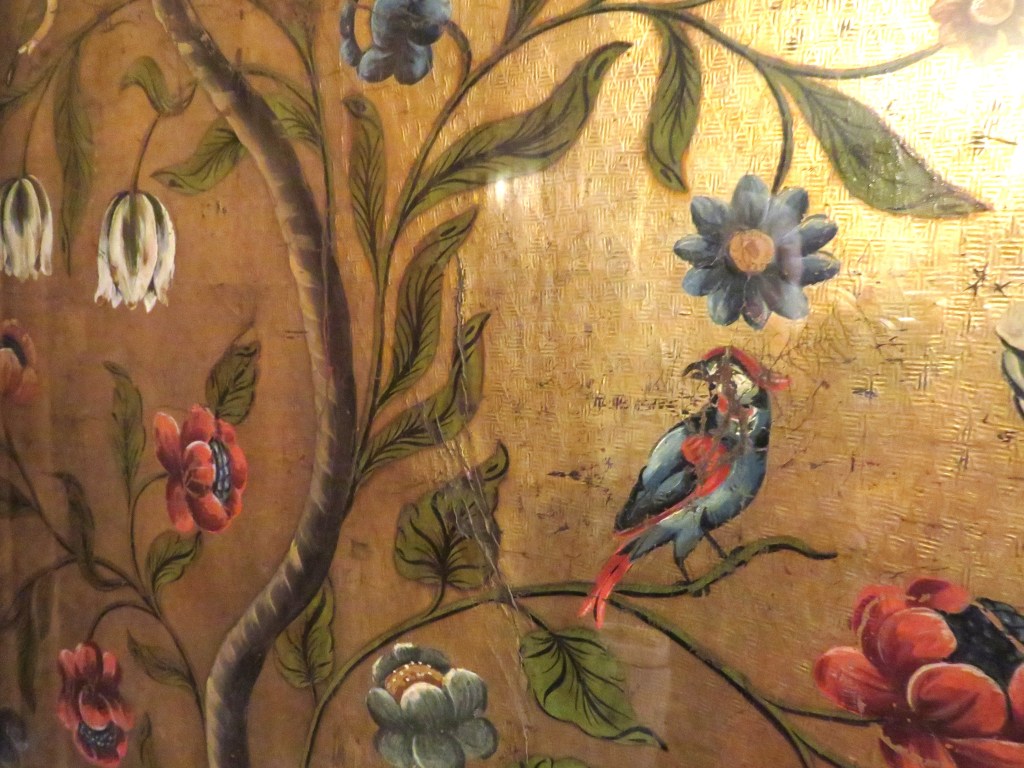
Another day and yes, another National Trust property, this time Batemans, the former home of Rudyard Kipling and his American wife, Caroline. Like Nymans, the attraction of the area was the iron mining, which was centred in Sussex before the industrial revolution. The property itself dates from 1634 and the Kiplings aimed to enhance its seventeenth century heritage after they purchased it and thirty surrounding acres in 1902, for £9200. Items of note include wall coverings made from calves’ leather, which was made in the early eighteenth century and purchased by the Kiplings for 100 guineas. There was also a clock dating from the 1630s, an Eddison cylinder phonograph, whose volume control is the origin of the phrase ‘put a sock in it’. Also on display were some modern Jungle Book illustrations by Gruffalo illustrator Axel Scheffler. Other things that caught my eye were a Tiffany inkwell, a botanical crockery set, some tiles, miniature globes made in 1756, a paper model of Batemans, created out of pages covered in Kipling’s tiny handwriting and an alphabet necklace, based on Kipling’s Just So Story How the Alphabet was Made.
We look round the gardens and the overshot water mill, Park Mill, built in 1750; although there has been milling here since the thirteenth century. This visit was enhanced by meeting my friend and also my second cousin, who by a chain of co-incidence know each other and we spend ages chatting in the café.
 The History Interpreter - Janet Few