Warning – this post contains something resembling maths but does include jewellery if you persevere. As regular readers will know, I have recently been following the documentary evidence and seeking out my third cousins, in the wake of receiving my autosomal DNA results. This was thrown into particular focus last week when I met with my full complement of second cousins (6) for the first time in seventeen years. Although, inevitably, we were meeting for a sad occasion, a funeral, this was exciting for me as these are my only relatives in my own generation. But back to the third cousins (people with whom you share a great great grandparent).
I was surprised to find that 7 of my 8 sets of great great grandparents married within a thirteen year window 1852-1864; the final set married a little earlier in 1841. Ok, I’ll be honest, one set don’t seem to have married at all but I can estimate a ‘marriage’ date as falling between gg granny having a child by someone else and having a child by gg grandad. What I therefore wanted to know was how many, on average, great great grandchildren might a couple who married in the UK in the mid nineteenth century be expected to have.
I had already found that wiser folk than I estimate that the ‘average’ person has 175 third cousins (people with whom you share a great great grandparent) but nowhere amongst my Googling (other search engines are available) can I find data about the likely numbers of great great grandchildren. We are obviously dealing in averages here and clearly there will be wide deviations from the average; different cultures will have very different experiences. Maybe this is why this is a discussion that does not seem to have been aired very often in family history circles but it is interesting nonetheless. Yes, our families will not be ‘average’ but you would think that, if we look at all eight sets of our great great grandparents, prolific families would be counterbalanced by those with few children and things would even themselves out.
If I am expected to have 175 third cousins, on average, each pair of great great grandparents will have produced roughly 22 of them and me of course. If you have complete data for descendants of any of your great great grandparents I would be really interested to know how many people there are in your own generation, alive and dead, (not the total number of descendants) who are the great great grandchildren of one couple, especially if they married in the mid-nineteenth century. How close is it to 22? Do we have a vaguely accurate figure for first world countries here? How much difference does it make if you are a different generation to me, so your great great grandparents married in the 1820s or the 1890s?
I am confident that I have identified all the descendants of three of my eight sets of great great grandparents. My results for the number of people in my own generation (remembering to include myself in each case) are 5, 7 and 10, far short of the figure I have come up with of 22. So, how do you compare?
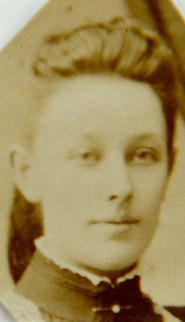
Caroline Jessie Leighton 1874-1965
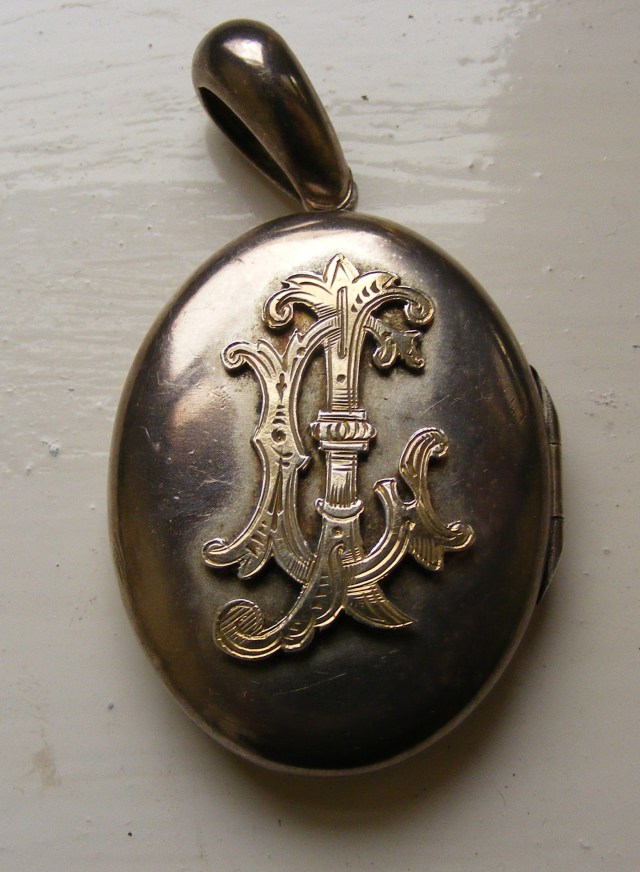
Now the pretty jewellery bit, which also involves cousins. My grandmother had five cousins on her father’s side, sisters whose father was a silversmith. Each girl was given a heavy silver locket that their father made, which was inscribed with their initials. Only one of the girls married and she had no children. The family story was that the five lockets passed to the five girls in the next generation (my mother and her four cousins). The tale of who was given which locket has proved to be incorrect but as a result of last week’s funeral, we are currently investigating where the lockets are now. Two down, three to go! This is important to me. The original recipients have all been dead for fifty years or so. They have no one but us to keep their memories alive. So here is Caroline Jessie and here is her locket. Now you can get back to counting cousins.

 A copy of Karen Bali’s
 Family history has led to fun tracing
 I started at the beginning of December with twenty four authors in the historical novelists’ ‘hat’. I drew one out each day to determine the order in which I have introduced them to you. Today’s entry is south Devonian
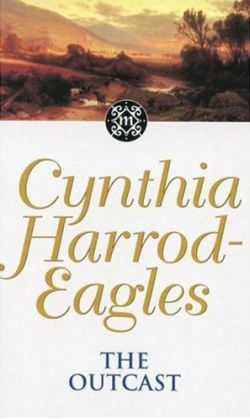 Another great historical series for today’s novelist: the Morland saga by
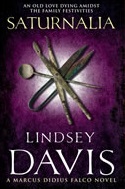 More Roman sleuths today in the shape of
 Another North Devon author is pulled from today’s advent box; there is so much talent in this county.
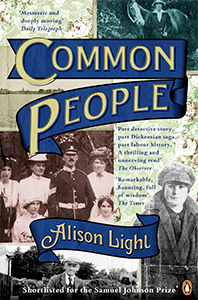 Now for the advent calendar. This is a book I haven’t actually read yet but it looks so good that I am going to include it – shamelessly relying heavily on the blurb and other people’s reviews. It isn’t actually a novel either but the story of a family. The author has done exceptionally well to find a publisher for her family’s story in the days of the hobby’s boom. I remember when I first started, reading Marjorie Reeves Sheepbell and Plougshare – don’t read that unless you want to be seriously envious about the amount of family documents and memorabilia that she inherited. Others from that era were John Peters’ A Family from Flanders. Must also mention John Titford’s Come Wind, Come Weather but all these date from the 1970s and 1980s. Now the world and his wife are writing up their family stories getting one commercially published is next to impossible, which is why I think

