Day 21 #bfotc sources

Day twenty-one of the ‘advent calendar’ focusing on some of the historical/genealogical sources that I used in the writing of Barefoot on the Cobbles.

CaptureI would like to mention another local archive today: The Bideford and District Community Archive. The Bideford Archive was established in 1983 and has premises in Northam, where its holdings can be consulted. There is also an excellent website, which can be searched by place, personal name or topic. I used the archive principally in order to consult original copies of the local newspaper, the Gazette, which I could not access online. The archive is a treasure trove of local information, some of which is not available elsewhere. If you want to delve into the history of Bideford and the surrounding rural hinterland do pay them a virtual or actual visit.

More information about Barefoot on the Cobbles can be found here. Copies are available at various events and at all my presentations. You can order from Blue Poppy Publishing or directly from me. Kindle editions are available for those in the UK, USA, Australasia and Canada.
Day 20 #bfotc sources

Day twenty of the ‘advent calendar’ focusing on some of the historical/genealogical sources that I used in the writing of Barefoot on the Cobbles.

Capture

I am an inveterate reader of historical novels but one of the things that is likely to make me abandon a book halfway through is the use of inappropriate language. By this I don’t mean a text that is peppered with swear words; I am referring to novels that include words, phrases, metaphors or idioms that were not in use at the time. Novels I have rejected include a book set in 1800 that mentioned cardigans and suitcases and an early 1900s saga where the characters greeted each other with ‘Hiya’.

The historical novelist has to tread a fine line between accuracy and unintelligibility. A Medieval saga written in Chaucerian language, or a Tudor tale that faithfully reproduces every aspect of Shakespearean dialogue, would be incomprehensible to the majority of readers. Yet getting the language right is an important part of evoking an era. Reading novels, newspaper reports, diaries and letters that were written in the appropriate period can help when an author is trying to get a feeling for the vocabulary and turns of phrase of a time. It is important to remember though, that ordinary people did not speak in the way a novelist would write, in the same way as we do not sound the same when we are chatting to our friends as we would delivering a eulogy or being interviewed for a job.

Avoiding linguistic anachronisms is a vital part of giving an historical novel the right ambience. I use an idiom dictionary and you can also put the phrase and ‘idiom first used’ into the search engine of your choice. These are not infallible but will often quote early uses of the phrase in literature, so that you know you are safe to use it in books set after that point. You can’t ‘paper over the cracks’ until after the 1860s, or play with a ‘doll’ until the eighteenth century (before that it would be a poppet or puppet), yet a ‘millstone round the neck’ is biblical so can be used in all but the earliest historical novels. I had great fun trying to ‘iron out’ (fourteenth century) any inconsistencies in the language that I used.

More information about Barefoot on the Cobbles can be found here. Copies are available at various events and at all my presentations. You can order from Blue Poppy Publishing or directly from me. Kindle editions are available for those in the UK, USA, Australasia and Canada.

Day 19 #bfotc sources

Day nineteen of the ‘advent calendar’ focusing on some of the historical/genealogical sources that I used in the writing of Barefoot on the Cobbles.

CapturePrevious advent posts have mentioned the importance of local archives, local history books and relevant websites, when an author is trying to recreate the geographical context for a novel that is set in the past. When my character, Polly, moved to East-the-Water, Bideford, to take up her position with the Powell family, I needed information about the area. An excellent summary of life on the eastern bank of the Torridge appears on the Human History pages of the East-the-Water website. Page 8 was the most relevant to my story but the other pages also provided interesting background.
More information about Barefoot on the Cobbles can be found here. Copies are available at various events and at all my presentations. You can order from Blue Poppy Publishing or directly from me. Kindle editions are available for those in the UK, USA, Australasia and Canada.

Day 18 #bfotc sources

Day eighteen of the ‘advent calendar’ focusing on some of the historical/genealogical sources that I used in the writing of Barefoot on the Cobbles.

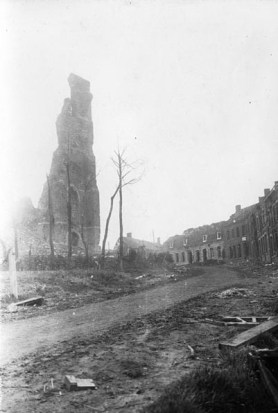
Fromelles German Federal Archives This file is licensed under the Creative Commons Attribution-Share Alike 3.0 Germany license.The chapter that I was most concerned about was the one set on the Western Front. It was the only location that I was unable to visit and I have no experience of being a young man, or of being in a combat zone. I read fifty or so pages of the regiment’s official War Diaries that outlined the campaign in which Abraham was involved. These were useful but I was not writing a military history; I needed emotions and feelings, not just facts. I turned to private diaries, letters and memoirs of the war in general and the battle in particular. I really wish I could have written this passage, describing the Battle of Fromelles, which comes from the memoirs of Private Jimmy Dowling. ‘Stammering scores of German machine-guns spluttered violently, drowning the noise of the cannonade. The air was thick with bullets, swishing in a flat, criss-crossed lattice of death … Hundreds were mown down in the flicker of an eyelid, like great rows of teeth knocked from a comb … Men were cut in two by streams of bullets [that] swept like whirling knives … It was the Charge of the Light Brigade once more, but more terrible, more hopeless – magnificent, but not war – a valley of death filled by somebody’s blunder.’ I tried to imbue my narrative with similar feeling. When a lovely reviewer described my chapter as ‘one of the most poignant and empathic commentaries of WW1 that I have ever read’, not only was I incredulous, overwhelmed and tearful but I knew that all the research had been worthwhile.

More information about Barefoot on the Cobbles can be found here. Copies are available at various events and at all my presentations. You can order from Blue Poppy Publishing or directly from me. Kindle editions are available for those in the UK, USA, Australasia and Canada.

Day 17 #bfotc sources

Day seventeen of the ‘advent calendar’ focusing on some of the historical/genealogical sources that I used in the writing of Barefoot on the Cobbles.

CaptureWhen writing of real events in the more recent past, newspapers are invaluable. I used hundreds of local and national newspaper articles during my research. The court and inquest scenes were heavily reported in many papers. In the absence of actual court records, these were vital. The huge advantage of these was that they provided me with verbatim statements spoken by the accusers, the witnesses and the accused. As someone who was more used to writing non-fiction, I was concerned about my ability to write dialogue. By  the time I had used the words reported in the newspapers, I had a real feel for how many of my characters would have spoken. Newspapers were also useful when I was researching the historical background of my minor characters. For example, it was from the local newspaper that I learned that Dr Crew was about to lead a scout camp; yes, that tiny little throw-away line was based on fact!
Inevitably, then as now, newspaper evidence can be contradictory. There are two slightly different versions of the names of those who were in the lifeboat during the search for the Annie Salome. There are conflicting accounts of the incident with the suffragettes, perhaps reflecting the political stance of the respective editors. I went with what I believed to be plausible versions.

Most of the newspapers were available to me thanks to the British Newspaper Archive, which I choose to access via FindmyPast. One prominent local paper was not available in this way and for this I consulted original archive copies.

More information about Barefoot on the Cobbles can be found here. Copies are available at various events and at all my presentations. You can order from Blue Poppy Publishing or directly from me. Kindle editions are available for those in the UK, USA, Australasia and Canada.

Day 16 #bfotc sources

Day sixteen of the ‘advent calendar’ focusing on some of the historical/genealogical sources that I used in the writing of Barefoot on the Cobbles.

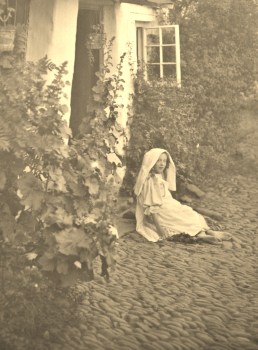
Option 2 - CopyWhen a novel is firmly set in a recognisable geographical location, it is important to exploit the resources of the experts. By using Clovelly as the backdrop for much of the book, I was placing my characters in an iconic village that, is well-known far beyond the immediate area. I was fortunate to be able to have access to the expertise and archive material of Clovelly Archive and History Group. Their Facebook group answered an eclectic range of queries from me. It was a real benefit to be able to ask such things as ‘Who was in charge of the post office?’ and get an almost instant response. I was able to see one of the paper discs, with its political slogan, that had been left on the lawns of Clovelly Court by the militant suffragettes. I was granted permission to use one of the archive’s evocative photographs of Daisy, barefoot on the cobbles, on my cover.
I would encourage all those who are trying to recreate a real place in a past era to approach local history groups and archives. They will be your harshest critics if you get it wrong but will be generous with their time and knowledge in order to help you to get it right.

More information about Barefoot on the Cobbles can be found here. Copies are available at various events and at all my presentations. You can order from Blue Poppy Publishing or directly from me. Kindle editions are available for those in the UK, USA, Australasia and Canada.

Day 15 #bfotc sources

Day fifteen of the ‘advent calendar’ focusing on some of the historical/genealogical sources that I used in the writing of Barefoot on the Cobbles.

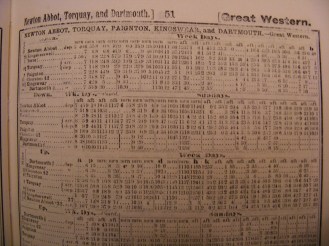
DSCF1035On day three I mentioned one of the ways in which I researched the railway journeys taken by my characters when traveling between Clovelly and Torquay. Not only did I need to investigate likely routes but also the timetable that might have applied at the time. Fortunately, my library includes facsimile copies of Bradshaw’s Railway Guides. My copies are for 1922, 1923 and 1938 and I suspect that there may have been an adapted timetable during the war but I felt that these were close enough and at least this gave me an indication of how long each leg of the journey may have taken. My copies were reprinted in 1985 by Guild Publishing and there are some available on the second-hand market.
More information about Barefoot on the Cobbles can be found here. Copies are available at various events and at all my presentations. You can order from Blue Poppy Publishing or directly from me. Kindle editions are available for those in the UK, USA, Australasia and Canada.

Day 14 #bfotc sources

Day fourteen of the ‘advent calendar’ focusing on some of the historical/genealogical sources that I used in the writing of Barefoot on the Cobbles.

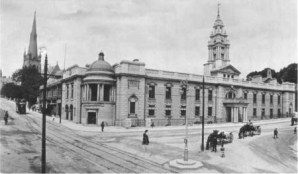
Torquay Town Hall HospitalTwo of the longest chapters in the novel are set in war-time Torquay. Torquay was the home-town of the crime writer Agatha Christie. She does make an appearance in the book, although you might not recognise her. Like my character, Winnie, Agatha worked at the Town Hospital in Torquay, nursing convalescent servicemen. The BBC website includes a recording, in which Agatha reminisces about Torquay during the First World War. There are additional links that give further information about life in Torquay at the time.
More information about Barefoot on the Cobbles can be found here. Copies are available at various events and at all my presentations. You can order from Blue Poppy Publishing or directly from me. Kindle editions are available for those in the UK, USA, Australasia and Canada.

Day 13 #bfotc sources

Day thirteen of the ‘advent calendar’ focusing on some of the historical/genealogical sources that I used in the writing of Barefoot on the Cobbles.

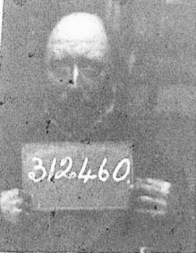
William HardingA novel about a coastal community is bound to include characters who were in the merchant service and Barefoot is no exception. I was fortunate to have access to the seaman’s log, that had been handed down in the family, for one of the characters. This gave personal details, a description, a photograph and details of the various ships on which he served. In this way, I knew exactly which ship he was on at the end of the war, where he had been, where and when he docked and the name of the captain. I also used the seaman’s records on FindmyPast. These include transcriptions of the crew lists for 1861-1913 and the images of the records held in class BT350 at the National Archives, for the period 1918-1941.
More information about Barefoot on the Cobbles can be found here. Copies are available at various events and at all my presentations. You can order from Blue Poppy Publishing or directly from me. Kindle editions are available for those in the UK, USA, Australasia and Canada.

Day 12 #bfotc sources

Day twelve of the ‘advent calendar’ focusing on some of the historical/genealogical sources that I used in the writing of Barefoot on the Cobbles.

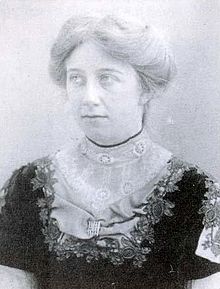
Elsie_Howey

Elsie Howey

No novel set in the early years of the twentieth century should ignore the campaign for women’s suffrage. The incident that took place in Clovelly was a gift and I sought to find out more about the three women who were involved in this militant action. In another one of those co-incidences that peppered my research for this book, it turned out that one of the three, Elsie Howey, was, at the time, leader of the suffragettes in Torquay and Paignton. In reality, I don’t know what led my character, Daisy, to take a job up in Torquay. I toyed with using the suffragettes as the mechanism that accounted for Daisy’s move. In the end, I devised another plausible scenario but I still wonder if she knew and remembered that one of these women had links to Torquay. There is useful online information about Elsie and the Torquay suffragettes that I was able to use.

More information about Barefoot on the Cobbles can be found here. Copies are available at various events and at all my presentations. You can order from Blue Poppy Publishing or directly from me. Kindle editions are available for those in the UK, USA, Australasia and Canada.
