Day 11 #bfotc sources

Day eleven of the ‘advent calendar’ focusing on some of the historical/genealogical sources that I used in the writing of Barefoot on the Cobbles.

1Getting the timing correct is important when writing an historical novel. Firstly, I needed to make sure I knew the day of the week when certain events took place. There a number of perpetual calendars online but my favourite is Time and Date. Not only can you create calendars for any year of your choice but you can also check the dates of movable feasts such as Easter. In the early twentieth century, traditional Bank Holidays were not all at the times of year that we now recognise. Particularly as I was writing about a tourist area, it was crucial that I acknowledged this. This site also gives phases of the moon. I was not looking for the chance to re-create romantic walks by the light of a full moon but the moon governs the tides, which was important to my story. Family historians can have fun with this site, working out what day of the week great-granny was born.

More information about Barefoot on the Cobbles can be found here. Copies are available at various events and at all my presentations. You can order from Blue Poppy Publishing or directly from me. Kindle editions are available for those in the UK, USA, Australasia and Canada.

Day 10 #bfotc sources

Day ten of the ‘advent calendar’ focusing on some of the historical/genealogical sources that I used in the writing of Barefoot on the Cobbles.

CaptureWhen I decided that Daisy and Winnie would pay a visit to the ‘picture palace’, I was aiming to reflect the increasing popularity of the cinema at the time. Having chosen the appropriate main feature and ‘B’ film, that might have been shown, I decided to add a newsreel. These three elements would have been the norm in the early twentieth century and indeed for several decades afterwards. In order to pick the correct newsreel for the date, I turned to the Pathé News website. Here you can search the British Pathé and Reuters historical collection for clips from 1910-1970. You are able to search by place name, by personal name or by topic but I was concerned with a date. The site allows you to preview the clips, so I sat, as Daisy and Winnie would have done, to watch the news for mid-1918, trying to imagine myself in the plush cinema of the 1910s. In a ‘hairs stand up on the back of the neck’ moment, I discovered that Daisy would have viewed a newsreel relevant to her Clovelly home. Readers will think that is too much of a contrivance and I made it up. I didn’t.

More information about Barefoot on the Cobbles can be found here. Copies are available at various events and at all my presentations. You can order from Blue Poppy Publishing or directly from me. Kindle editions are available for those in the UK, USA, Australasia and Canada.

Day 9 #bfotc sources

Day nine of the ‘advent calendar’ focusing on some of the historical/genealogical sources that I used in the writing of Barefoot on the Cobbles.

Monthly Weather ReportMany of the characters in Barefoot in the Cobbles living in the countryside or earn their living from the sea. The impact of the weather was immense. I was determined to reflect the actual weather conditions of the time. Fortunately, thanks to the Met Office, monthly weather reports are online for the period between January 1884 and December 1993. Thus, they were available for the time in which the novel is set. The rainfall, temperature, wind and hours of sunshine are all mentioned and there are indications of regional variations. If I describe heatwaves, stormy weather or heavy rain, then these conditions really did prevail in the west country at the time.

More information about Barefoot on the Cobbles can be found here. Copies are available at various events and at all my presentations. You can order from Blue Poppy Publishing or directly from me. Kindle editions are available for those in the UK, USA, Australasia and Canada.

Day 8 #bfotc sources

Day eight of the ‘advent calendar’ focusing on some of the historical/genealogical sources that I used in the writing of Barefoot on the Cobbles.

CaptureTo gain a better understanding of life as a Voluntary Aid Detachment (VAD) nurse, I re-read Vera Brittain’s Chronicle of Youth and Testament of Youth. Of course Vera is very much middle-class and Daisy and Winnie’s childhoods would have been very different. In addition, much of Vera’s service was overseas and my nurses were in Torquay but it was still useful to gain and insight into the training and duties. Unexpectedly, I was also able to make use of these books, to immerse myself in language and turns of phrase of the early twentieth century. This threw up the issue of whether or not Daisy and Winnie would have addressed each other by their christian names. In Vera Brittain’s world, the ladies waited for permission before abandoning Miss ……. . I decided that this might be different for young, working-class women, so it was ‘Daisy’ and ‘Winnie’ from the outset.

More information about Barefoot on the Cobbles can be found here. Copies are available at various events and at all my presentations. You can order from Blue Poppy Publishing or directly from me. Kindle editions are available for those in the UK, USA, Australasia and Canada.

Day 7 #bfotc sources

Day seven of the ‘advent calendar’ focusing on some of the historical/genealogical sources that I used in the writing of Barefoot on the Cobbles.

Fromelles 1916 by [Cobb, Paul]I had chosen the character who was to be my vehicle for portraying the battlefields of the Great War. It turned out the the campaign in which he was involved was not one of the more famous ones, unless you are Australian. The Battles of Fromelles features prominently in the Australian narrative because there were huge numbers of ANZAC casualties. Most of the books are written from the Australian point of view and for a secondary account, I relied most heavily on Paul Cobb’s Fromelles 1916. I am not a miiltary historian; I was after impressions, not a minute by minute, accurate narration of the events. Nonetheless, I did need to have an overall impression of what occurred and this book provided me with that.

More information about Barefoot on the Cobbles can be found here. Copies are available at various events and at all my presentations. You can order from Blue Poppy Publishing or directly from me. Kindle editions are available for those in the UK, USA, Australasia and Canada.

Day 6 #bfotc sources

Day six of the ‘advent calendar’ focusing on some of the historical/genealogical sources that I used in the writing of Barefoot on the Cobbles.

PictureWriting a novel that is set in the early twentieth century means that there are a number of fascinating issues that can be explored; the fight for women’s suffrage is just one of these. By chance, suffragette activity in the area presented me with the opportunity to weave the campaign seamlessly into the novel.  The excellent Breaking the Mould, by Pamela Vass, describes the actions of the suffragettes in North Devon and kindly, Pam allowed me access to her appropriate chapter, which was still in draft at that point. This helped to make sense of the conflicting newspaper accounts of what happened in Clovelly in 1909. In the end, my interpretation is one that I felt best fitted the evidence but equally valid versions were possible.

More information about Barefoot on the Cobbles can be found here. Copies are available at various events and at all my presentations. You can order from Blue Poppy Publishing or directly from me. Kindle editions are available for those in the UK, USA, Australasia and Canada.

Day 5 #bfotc sources

Day five of the ‘advent calendar’ focusing on some of the historical/genealogical sources that I used in the writing of Barefoot on the Cobbles.

Capture

Dr Toye Western Times 28 January 1938

Several medical men grace the pages of the novel and in my quest to learn more about them, I came across Plarr’s Lives of the Fellows of the Royal College of Surgeons. Using their database, it is possible to search for RCS members and find details of their lives and careers. Plarr’s Lives started life as printed volumes, published between 1930 and 2005, the first of which were compiled by the then College librarian Victor Plarr. More recent obituaries have been added since. Entries vary in the amount of detail that is given and many are based on family contributions.

More information about Barefoot on the Cobbles can be found here. Copies are available at various events and at all my presentations. You can order from Blue Poppy Publishing or directly from me. Kindle editions are available for those in the UK, USA, Australasia and Canada.

Day 4 #bfotc sources

Day four of the ‘advent calendar’ focusing on some of the historical/genealogical sources that I used in the writing of Barefoot on the Cobbles.

Bideford Bridge

View from the Wharves

Two chapters of the novel are set in Bideford. The resources of the Way of the Wharves project were very useful. I was able to see one of their exhibitions, go on a guided walk and access their website, in order to learn more about the history of East-the-Water, where Polly was in service. The volunteers, who have been working with the help of Heritage Lottery Funding, have amassed a significant amount of material about the history of this part of Bideford. If you are local, I recommend joining one of their tours.

More information about Barefoot on the Cobbles can be found here. Copies are available at various events and at all my presentations. You can order from Blue Poppy Publishing or directly from me. Kindle editions are available for those in the UK, USA, Australasia and Canada.

Day 3 #bfotc sources

Day three of the ‘advent calendar’ focusing on some of the historical/genealogical sources that I used in the writing of Barefoot on the Cobbles.

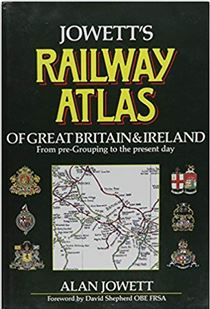
CaptureIn the novel, my characters take a railway journey. In order to make that section of the book realistic, I needed to research the routes that would have been available at the time. For this, I turned to the invaluable Jowett’s Railway Atlas. It seems that this is now out of print, which is a great shame but there are some second hand copies available online.

The book consists of beautiful, hand-drawn maps, illustrating when each particular railway line was open. By using this I was able to track the tortuous journey that Polly needed to make from Clovelly, via Bideford, Barnstaple, Exeter and Newton Abbott, to Torre Station in Torquay.

More information about Barefoot on the Cobbles can be found here. Copies are available at various events and at all my presentations. You can order from Blue Poppy Publishing or directly from me. Kindle editions are available for those in the UK, USA, Australasia and Canada.

Day 2 #bfotc sources and how not to write trip advisor reviews

Torquay Town Hall Hospital

Torquay Town Hospital

Day two of the ‘advent calendar’ focusing on some of the historical/genealogical sources that I used in the writing of Barefoot on the Cobbles. When it came to the chapters set in Torquay, I needed a Voluntary Aid Detachment (VAD) nurse to befriend one of my main characters. I was able to use the excellent Red Cross website in order to choose my named character who nursed at the hospital in Torquay. This database contains details of 90,000 individuals who volunteered with the Red Cross during World War I. Normally, searches would be by name but it is also possible to search by location or hospital, which is what I needed to do in order to find those who were working in Torquay. In addition, the site provided me with valuable background information about the role of VADs. The index is also available on FindMyPast but as the Red Cross site is free to search and leads to images of the record cards, it seems sensible to start there.

And trip advisor? I hear you ask (mild gory details alert). What I was trying to write was ‘Our party of eight had six menu choices ……’. Inadvertently, one of the vowels changed, giving my post a very different meaning. I am still trying to live this down, although I am predicting that the venue will now be packed! I am blaming auto-correct. That and the fact that there was a contact lens related incident last week. On Monday, I removed a lens to find that only half had come away. I was in the car in the dark at the time and judicious poking about in my eye failed to reveal the other half of the lens. My house doesn’t do bright lights but in marginally better light and with the aid of a mirror, once home, I tried again, to no avail. The next day, with a fair amount of gunk emanating from my eye and the distinct impression that I had at least half a barrel of grit in it, it was off to minor injuries clinic. Yellow stuff was squirted in my eye and I was examined under special lights. Cotton bud-like implements rolled back my eyelids. The verdict was that there was no half lens in there but that I may have scratched my eye in an attempt to find it. Five days of ointment squirting pass with no discernible improvement. I write said trip advisor review one-eyed and shortly afterwards notice a ridge across my pupil – ah ha there is the rolled up lens that had officially been proclaimed to be no longer in my eye. I successfully remove it and instant relief!

More information about Barefoot on the Cobbles can be found here. Copies are available at various events and at all my presentations. You can order from Blue Poppy Publishing or directly from me. Kindle editions are available for those in the UK, USA, Australasia and Canada.