I have, rather belatedly, managed to access the photos from my camera, thanks to being reunited with the ‘big’ laptop. The feet still ache, the back is a little dodgy but I have recovered sufficiently from the two brilliant days at Family Tree Live and am now just about fit to post about our adventures.
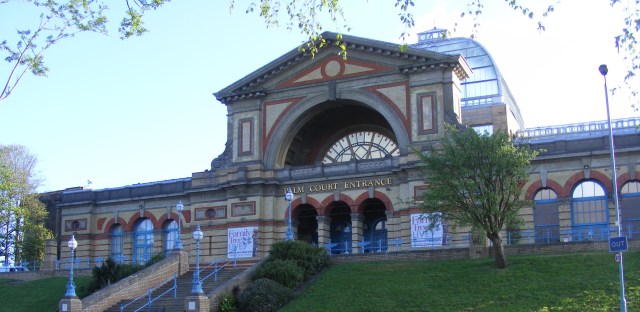
The first issue was to leave our caravan site at a sufficiently early hour. We have no problem with getting up early but a 2.2 metre high barrier is in place on the site from 10pm to 8am, to prevent people being disturbed by moving caravans. Despite knowing that our car will easily fit under this barrier, I am still worried that it will somehow have grown overnight and we will not be able to escape. Needless to say, we exit unscathed and with car roof intact. We have left early to avoid the worst of the rush hour traffic so arrive just a tad early. We are the first to park in the exhibitors’ dedicated car park. The free parking is a real plus at this show. Alexandra Palace is looking beautiful in the early morning spring sunshine.
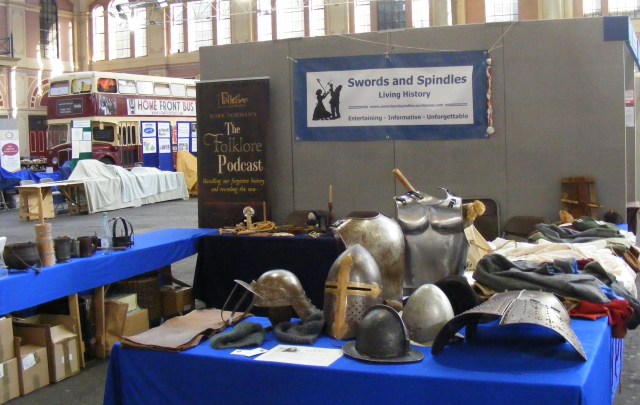
We remove the covers from our stand and are pleased with the way it is looking. This is our first time with a stand and we are excited to share seventeenth century life with show-goers.
I manage to sell a book before the show even starts! Then the doors open and there is a steady stream of visitors stopping to chat. The Ally Pally security team are amongst those who are enjoying trying on armour. The morning passes swiftly. I take time to circulate the stands and it seems that every other person is an old friend. I make sure I buy a copy of Nathan Dylan Goodwin’s latest novel. I have all his others on Kindle but have deliberately waited to buy this in hard copy and in person, so I can get it signed. There are also newcomers on the block. I am particularly impressed with Twiggli Trees’ attractive charts.
There are plenty of networking opportunities and our supply of business cards is seriously depleted. It was great to see that every stand was family history/history related and that local societies outnumbered the commercial giants. Family Tree Magazine organised several admirable add-ons, such as their ‘Crack the Code’ activities’ stand, the goody bags containing vouchers that allowed show-goers who purchased a magazine package to get discounts on certain stalls and the children’s packs. Obviously, most children were in school on Friday but it was sad that there were not more in attendance on the Saturday. Encouraging the next generation (or the generation after next) is one of my hot topics, that I speak on regularly. Although many family historians moan that their younger relatives do not take an interest in family history, I wonder how many of these actually take the trouble to make the hobby appealing. A case in point. Our stand was particularly popular with the young people who did attend. Mother, grandmother and grandson stop by. Grandson clearly wants to try on the armour. Grandmother misses this opportunity and heads off determinedly in another direction! It is a chicken and egg situation. If there is nothing provided for young people, young people won’t attend but it must be dispiriting to make provision and then have so few children there. Please show-organisers, do keep trying to encourage young people to take an interest in family history by providing child-friendly activities at shows.
Next, it is time for me to time travel to the twenty-first century, to deliver my workshop on reading Victorian handwriting. This workshop element is a new offering for this type of show in the UK and worked very well. Our stand was next to the workshop area, so we could see how engaged the visitors were throughout the show. This was followed by my presentation on twentieth century research, which was sold-out and well received. Next, I was interviewed by the Family Tree Live team and then it was back to the seventeenth century.
Day two could be spent wholly in costume, although I did miss the opportunity to sit down that the workshop had given me. Ally Pally does have rather unforgiving concrete floors and we were unsure if our feet or legs were hurting most. Nonetheless we were sad when the event drew to a close and then there was the logistical nightmare of trying to fit all the kit back in the car. At this point, I am wishing that it had expanded overnight! Even having fewer books to take home than we arrived with it is not easy. Our team had a great time. Would we do it again? In a heartbeat. If you are amongst those who enjoyed our contribution, please tell the organisers, as we would love to do this all again but probably not until our feet have recovered.Now to tackle the 68 things on the ‘to do before the end of May’ list. This sounds do-able until you know that I only have five free days in that time!
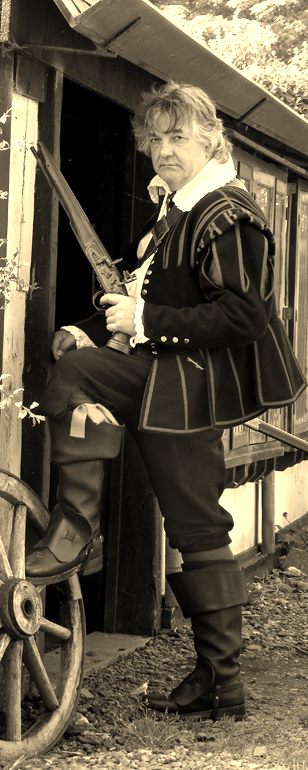 Set up day dawns. We wend our way to the iconic Alexandra Palace. We have strict instructions to check in for our vehicle passes, no problem. Other instructions stress that hi-viz jackets MUST be worn at all times whilst setting up. Some of our fellow stallholders seem to have failed to grasp this. Apart from a few issues with hanging our brand new, super publicity banner and more than one change of plan, regarding our table arrangement, we arrange our seventeenth century artefacts to our satisfaction, wondering how on earth it all fitted in the car. We exchange greetings with friends and manage to escape before the worst of the London rush hour sets in.
 There is a limit to what you can get in a Landrover (there really is – I was surprised too), so what with armour, instruments of torture, costumes of various sizes, toys and a multitude of household items, I will not have an infinite number of every book title – so if you were hoping to relieve me of one of my publications, let me know and I will save you a copy. I would advertise my workshop and presentation but I am afraid (well, afraid for you, glad for me) that they are fully booked.
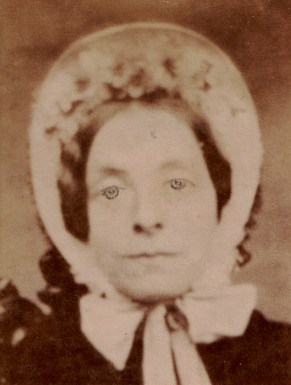
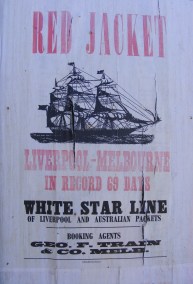 The next session was Dr Simon Wills, speaking on ‘Your Ancestors’ Travels by Sea’. This was packed with interesting information. Simon began by looking at the evolution of passenger-carrying ships from the 100 foot long Mayflower to the Queen Mary II, at over 1200 foot long. In 1620, the Mayflower took 66 days to cross the Atlantic, passengers were each allocated a five foot square space. In 1936, the Queen Mary I made the same journey in just four days. The game-changer was the advent of steam. In 1838 The Great Western’s journey time was two weeks. He even mentioned the Red Jacket, which was a ship that carried members of the Braund family to Australia. I wish I knew more about my great grandfather’s trip to Asia in the late nineteenth century. Simon outlined some useful sources for tracing passengers. He said that the ages on the Passenger Lists (BT26 & BT27 at The National Archives) were often merely the purser’s estimate, particularly for women, as you wouldn’t ask her age.
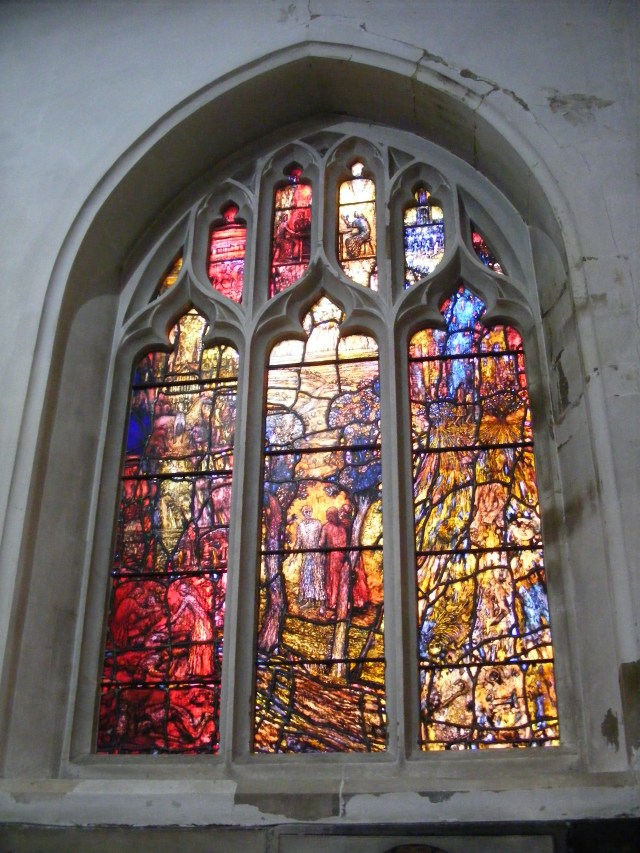
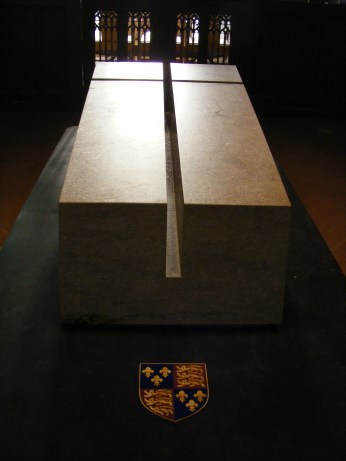 We then had an excellent tour of the cathedral, dedicated St. Martin of Tours, which is very small and largely a Victorian restoration. The main focus is, inevitably, Richard’s tomb and the beautifully embroidered pall; I failed to photograph the latter. There was also some lovely modern stained glass.
 This seems to suggest that Mary (or at least whoever provided the information to the enumerator) was convinced that she was born in Highgate, Middlesex. Ignoring the 1841 census evidence, when ages should have been rounded down in any case, the suggested dates of birth from the other sources are consistent. If all ages are correct, then Mary was born on 4 or 5 April 1817. It seems probable that she was born between 1816 and 1818.
 This week came the news that I have been accepted as an Ambassador for the first London version of the genealogical extravaganza that is

