Cornish Meanderings

As always, you aren’t getting these posts in real time so apologies if I am saying it is glorious sunshine and it has been pouring with rain with you. May was supposed to be a quietish month so we booked a trip to Cornwall for some R & R. So much for quietish! I have four meetings to attend this week and a heap of writing to do. Nonetheless it makes a change to be somewhere different. As Cornwall is next door and earliest entry to caravan sites is 1pm, we had a leisurely start. I did have a slight panic when, despite what the website implied, on checking the site handbook for directions, I discovered that the wifi was hot spot only. All was well however as by choosing our pitch judiciously, I could avoid standing on one leg under a tree whilst attending my meetings. At least I hope I can. Internet and emails are slow but working, so fingers crossed that Zoom works too. As a bonus, we have one of the best views on site, looking out across the spectacular north Cornish coast.

Arriving at lunchtime provided opportunities for exploration in the afternoon so we set off for a gentle stroll along the south-west coast path, close to the caravan site, heading for Porthtowan, which, on the map, looked about that close (when ‘that’ is not very far). I really should know better. The clue is in the name. We are staying at St, Agnes Beacon. Beacon = high up. Porth = port = sea level. In between there was a lot more upping and downing. We really are too old/too out of practice for six or seven strenuous miles of sliding up and down cliff paths with plenty of loose shingle as an added hazard. The bonus was our encounter with the iconic Cornish coastal landscape, compete with granite cliffs, abundant wild flowers and abandoned tin mines. Limping and panting back to the van, we decided we should have settled for the mid-point at Chapel Porth instead. We survived but resolved not to try that again.

Looking for something somewhat gentler on day two, we drove to the south coast seeking  Pendennis Castle, which after a slight detour, we located. It is nearly forty years since my last visit. Pendennis is one of forty Henrician forts, erected in the sixteenth century, as Henry VIII fell out with many European neighbours. The impressive wooden portcullis was constructed from oaks felled in 1541 but it did seem that wood might not have been the greatest idea if the enemy arrived with fire-power. Guide David took us on a tour of the Tudor part of the fortifications. The castle was built on land owned by the Killigrew family, who provided the first three captains of the castle. The site was subject to continued development, with the large garrison block dating from the early twentieth century and this was still in military use until 1956. There were more incredible views across Falmouth Roads to the companion castle at St Mawes.

After some refreshment, we completed the ‘moat walk’ amidst more spring wild flowers and climbed down to see ‘Little Dennis’ another bastion on the shoreline. Then time to return to the van, via a short walk at Wheal Coates, close to the van. There are records of mining here that go back to the seventeenth century but the buildings that remain are nineteenth century. The tin mine finally closed in 1914.
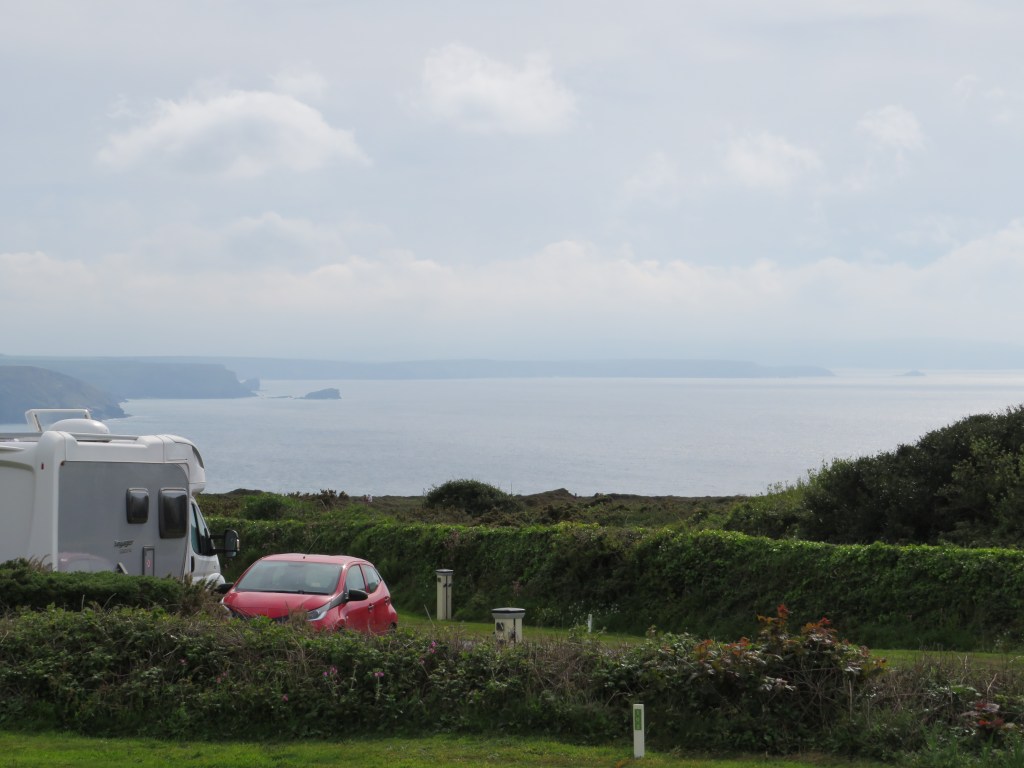

The view from the temporary office window

Reflections on the Young Genealogists’ Conference

Now that the dust is settling after the Young Genealogists’ conference, it is time for some reflections. What hasn’t settled is the buzz on social media, where #GenieYouthCon comments are still coming in. Firstly, a huge thank you to all who contributed in any way. The Society of Genealogists and the Family History Federation, who came together to get this off the ground, the hosts, everyone, of all ages, who came along to listen, those who responded so readily when I asked for door prizes: Pharos Tutoring and Teaching, the Society for One-Place Studies and Devon Family History Society, My Heritage and the Society of Genealogists who offered membership discounts, I will be casting my net wider next time! Those who spread the word on social media, the list goes on. Most of all, thank you to the ten speakers, who came from across the English-speaking world to enthuse, inspire and educate us.

The day exceeded my expectations; I must admit to a couple of sleepless nights with three weeks to go, when bookings were coming in very slowly. Obviously, I could be said to be biased, so here are some comments from other people (these were taken at random – I haven’t cherry-picked the 5* reviews): ‘It was a wonderful day of talks, and note taking of new ideas. Thank you jointly, for getting this conversation going.’ ‘It was a great event! Thank you to everyone involved. I missed a couple of speakers but hoping they crop up again in some other events. I didn’t apply to talk this year as the anxiety was just too real!! But..maybe next year?!’ ‘Echoing those calling for the #GenieYouthCon to be a fixture in the Genie calendar. I was there to share the benefits of @AGRAGenealogy membership but came away with my whole perspective change. It was a real education and left me excited for the future of the profession.’

We didn’t ask the attendees their age but I estimate that perhaps 40% of those who took part were under forty. The majority of the audience were from the UK, understandable in view of the time zones but there were attendees from Australia, New Zealand, Canada, Ireland and the USA. I was expecting people to drop in for one or two sessions and depart. A few did do that but a hard core stayed all day, even a couple for whom ‘all day’ was 2am-2pm.

To me, the most positive parts of the event were the discussions; not just those that took place in the time-tabled discussion slots but also the conversations that were had during what were meant to be breaks but when people couldn’t bear to tear themselves away.

Was it perfect in every way? Of course not. It was an inaugural event and there are inevitably things that would be tweaked another time. In any case, one person’s ‘perfect’ is another person’s ‘falling short’. In retrospect, maybe it was a shame that it wasn’t set up to make it possible for at least some of the presentations to be available for people to watch later. That decision was taken from a safeguarding standpoint; we were mindful that we were encouraging young people to take part, including those under the age of 18. In fact, some of the presenters are now putting their own presentations in a public forum and others are repeating their sessions elsewhere. I do feel that the conference succeeded in showcasing some exciting young presenters and I am sure many of them have already been booked to talk elsewhere. We’ve had discussions about what younger family historians want from the wider genealogy community and I really feel that we have moved the debate forward in a positive way. Roll on next time.

What will Family History look like in the Future?

As someone who is now in their forty sixth year of serious family history research, I have watched the family history movement grow and change (not always for the better) over many years. That growth and development will continue and so it should. We should not be content with doing things the way that they have always been done. Neither, of course, should we look to make changes just for change’s sake. The pandemic has forced changes on many aspects of our lives and the way that genealogical societies function is no exception. The past few years has, finally, seen the door to the family history community open a little wider. There is still a long way to go along the road to inclusivity but those first small steps are being taken, even if the difference may seem imperceptible.

Genealogy has, with some justification, long been perceived as a pursuit for middle-aged (ok let’s be honest here – old), middle-class, white people. This needs to change. There are ways of enabling all to engage in the hobby/obsession that many of us enjoy but it is not up to those who currently feel excluded to break down the barriers. There are things that we should all do to be more welcoming and to make the family history world more accessible and inclusive. Everyone has a heritage and no one should feel excluded from exploring their own story. It is clear that one group who have felt that the some aspects of the genealogy community have not been welcoming or accessible, are younger family historians. I know they are not the only group who have felt this but for now, let us focus on the young because without them, before long, there will be no genealogy community.

Understandably, as part of the evolutionary process of the family history movement, many young people want to pursue the search for their heritage in a different way to those of us whose journey began in the 1970s, or 1990s, or 2010s. There is an increasing focus on identity, in its many forms, on story-telling and on understanding the past as a vehicle towards well-being in the present. The genealogical world is evolving and there is the prospect of a fascinating future emerging. It won’t look like the family history world that some of us older genealogists have become comfortable with but there is room for all. Please, don’t think I am suggesting that everything needs to change. I know many were quite content with the status quo. New ways of approaching research, of running genealogical societies, of opening up the community, can sit alongside what is already in place, not necessarily replace provision that is already there.

I hope that everyone who takes family history seriously will be interested in this intriguing ‘what next?’. Your chance to glimpse the future is here. You can attend the online youth conference, organised jointly by the Society of Genealogists and the Family History Federation, on 7 May. This event showcases young presenters. There are some interesting new perspectives on family history being shared by some extremely knowledgeable speakers. The presenters are young but the conference is for everyone. There are more than twelve hours of presentations for the token amount of £1.50. It would be unbearably patronising of me to suggest that attendance was about supporting the next generation of family historians, although they would welcome that support. You will enjoy what is on offer and learn from those who are making their mark in the genealogy community. Come to hear one presentation, come to hear them all but please do register for the day. These are real-time only presentations, so no recordings but even if you can only pop in to listen to one or two, it is a bargain. I know that we will be hearing more from these young people in the future. The day is also an opportunity for programme organisers to find new speakers for meetings and conferences. There are ten presenters, all under the age of thirty, from five countries and everyone, of all ages, is encouraged to come along. It is going to be a great day. The programme is here and bookings can be made here.

More Warwickshire Wanderings

Another day out in Warwickshire. First stop was Baddesley Clinton, just a few miles from our caravan site. This is a fifteenth century, moated manor house, built on the site of a Saxon settlement. We began with a walk round the grounds and were treated with the view of a dozen newly hatched ducklings, hiding in the grass by the side of the lake. Baddesley was the home of the Catholic Ferrers family for twelve generations. In the late sixteenth century it was let to the Vaux sisters and became a centre for secret Jesuit meetings. It boasts a priests’ hole where nine Jesuits managed to escape detection. Said priests’ hole basically doubles as the toilet but anything to avoid being caught, I guess. The house is a joy for fans of heraldry with almost every room boasting coats of arms. We also saw a tapestry in the process of being cleaned and a particularly ornate, nineteenth century chapel.  As an added attraction, the house is the home to the National Trust’s largest collection of children’s books. In a rather more gruesome vein, in the 1480s, Baddesley was the scene of a murder, when Nicholas Brome came home to find the local priest ‘chocking his wife under her chin’ and consequently ran him through. After parting with a considerable amount of money and agreeing to repair two local churches, Nicholas was granted pardons from the king and the pope.

Next was the consumption of chocolate cake. I am not a fan of the regulation requiring the number of calories to be displayed. I am sure it is not a deterrent to those who need to be careful about calorie intake. It only means that we end up overweight and burdened with guilt, rather than just overweight.

In order to walk off just a few of the whopping 534 calories in what was actually quite a modest-sized slice of cake, we went on to Kenilworth Castle. We arrived just in time for ‘Knight School’, sadly we were observers only, being of rather more mature years than the target age for participants. Valuable lessons were nonetheless learned. The first rule of knight school is, ‘don’t get dead’. Kenilworth was established by royal chamberlain Geoffrey de Clinton in the 1120s. He also founded the nearby Augustinian priory of St Mary the Virgin. In 1447, the pope granted the priory abbey status. Kenilworth became a royal residence and was added to by King John, John of Gaunt and Henry V. Much of the twelfth century part is built of sandstone, which is eroding in interesting patterns. Kenilworth is famous for the siege of 1266, when Simon de Montfort held the castle against Henry III for 172 days, the longest Medieval siege. Elizabeth I granted Kenilworth to her favourite, Robert Dudley, Earl of Leicester, who entertained the queen at the castle, creating a pleasure garden in honour of her visit. Dudley was responsible for additional building on the site. He accomplished this largely by using pillaged stone from the nearby abbey, that had been surrendered to Henry VIII during the dissolution of the monasteries. The abbey’s remains were excavated in 1922 but are now protected by soil.

A royalist stronghold during the Civil War, Kenilworth was acquired by Parliamentarian Colonel Joseph Hawkesworth after the war. Retaining the gatehouse as a private residence, Hawkesworth began dismantling much of the castle and selling off the building materials. Kenilworth was saved by Sir John Siddeley, of Armstrong-Siddeley motors fame, who bought it for the nation, giving it to the forerunner of English Heritage in 1937, as well as funding repairs.

Bardic Adventures

Whilst visiting Warwickshire for a lovely family wedding, we decided that we’d look around a little, before heading home. Having never been, we picked yesterday to visit Stratford on Avon and only afterwards realised that we had timed our visit to coincide with Shakespeare’s birthday. We didn’t let the small fact that we hadn’t bought him a card deter us and off we set. We had a timed entry slot at Shakespeare’s birthplace and didn’t want to miss it. As we arrived, it was clear that something was going on as roads were closed and crowds lined the streets. It seemed that Shakespeare’s birthday was to be accompanied by a parade. We listened to a band for a bit and watched some men appear with a bust of Shakespeare, which they proceeded to screw to a plinth (health and safety rules). The band stopped and no one seemed sure what was going to happen next. We needed to be on time for our birthplace visit but it seemed a shame not to see whatever was due to happen too. My intrepid companion approached a man with a clip-board – always a good strategy when in doubt. Said clipboard-toting gentleman suggested that we went for our visit straight away, as then we would be back in time for the planned procession. We complied.

Being seventeenth century types, the birthplace was very interesting, with lovely gardens. Without rushing, we managed to return to the ever-thickening crowds in time to watch the parade of costumed characters, school children, local dignitaries and morris dancers go past and walk to the church where Shakespeare is buried. Only the great and good, most of whom were clutching posies of yellow and purple flowers to lay, were allowed in the church, so that was us out. Instead, we watched the morris dancers and looked at several old buildings clad in wisteria, which is in full flower here; mine at home has barely begun to shoot. Next, a visit to The New Place, Shakespeare’s home in later life. Again, there were lovely gardens, as well as the exhibition itself. There were some Shakespearean themed sculptures in the gardens as well.

A short drive and we were at Anne Hathaway’s cottage, dating from the fifteenth century. More beautiful gardens, an orchard and more sculptures. Here it was the cowslips that were at their best. I invested in a few herbs to take home.

Definitely a recommended visit, even without the bonus of the birthday celebrations. A joint ticket to all three properties is a considerable saving and you don’t have to visit all three on the same day.

Sunday Sunrise and other Adventures

Every Easter Sunday in non-COVID times, there is a church service on the clifftop not too far from me. Whatever your religious belief, or lack of the same, this is always an awe-inspiring experience. We’ve been on several occasions in previous years and decided we’d go again this year. Getting up in time to travel fifteen miles and then walk up to the top of the downs before sunrise is not so much of a challenge when Easter is earlier in the year and therefore sunrise later in the day. This year we needed to be there for 5.45am, which meant leaving home almost an hour before that. It seems I am still able to get up, washed, dressed and breakfasted in quarter of an hour, so the alarm was set for 4.30am. I never use an alarm and had we been leaving at 5.15am I wouldn’t have done so this time but being awake for 4.30am naturally was a step too far, even for me. The fisherman of my acquaintance was already at my house in preparation, so agreed to set an alarm on his phone – not something we normally do. This worked well and I was awake at the first bleep. What we hadn’t factored in was that working out how to set the alarm was only part of the process. We also needed to know how to turn it off. This finally accomplished, we could get ready and be on our way.

As it was still pre-sunrise and we were walking across a headland, miles from the nearest light source bar the moon, we needed a torch. I found one that combines a torch with a panic alarm; I think I acquired it because it was free with something. Let’s just say that it turns out that there is a very fine movement of a dial between turning the torch off and setting the panic alarm going. I am not prepared to say how I know this. Those organising the event had permission to light a small fire but even so, it wasn’t exactly warm. We surprised some wild campers who had chosen to pitch their tent right next to where the service was to be held. Not sure they were expecting to be woken up at 5,30am. For the benefit of those of you overseas, I should point out that wild camping is not allowed in England, so they were somewhat disconcerted to see a couple of dozen people congregating nearby, to say nothing of the sparks from the fire floating towards the tent.

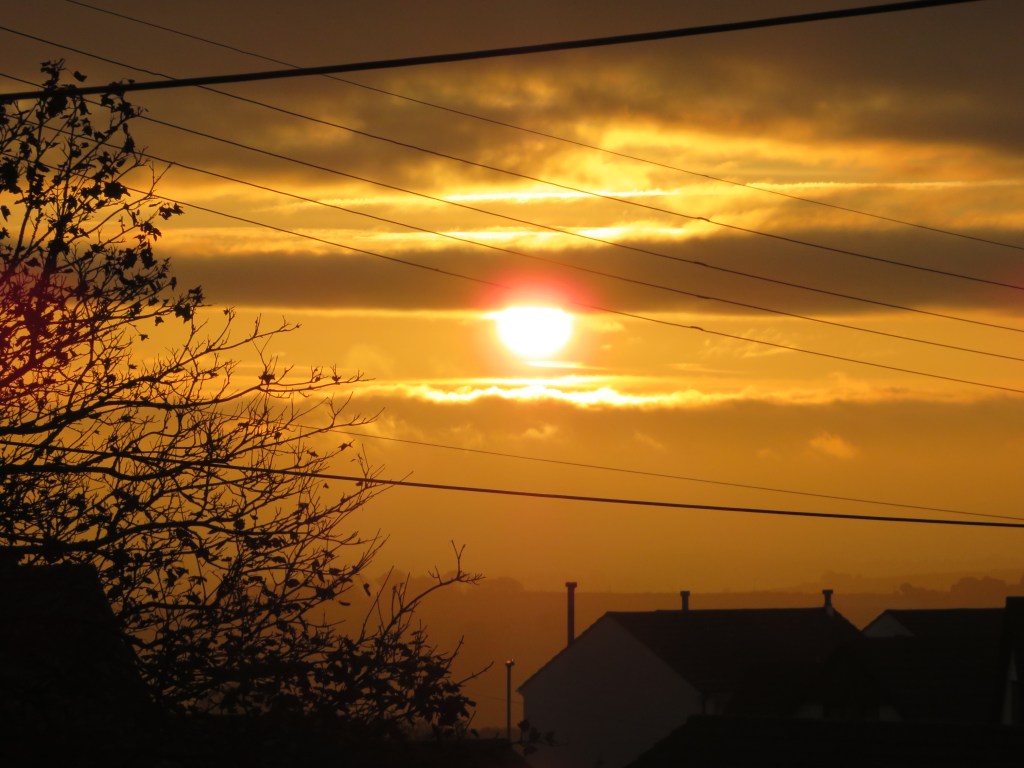
The sunrise was spectacular as always.

In other news, I have a new phone. I don’t know why I am so late to the mobile phone use party, when I spend my life on a computer but I’ve never been a fan. With this new-to-me phone, I may almost be being converted into a phone user. My grandchildren were scathing about the old phone’s Pokémon Go-ing ability and this was an unused upgrade phone that the fisherman of my acquaintance couldn’t get on with, so was happy to pass to me. It is an iphone (not that that means much to me) that outdoes the AR Pokémon features that the grandchildren have (I keep quiet about that). I’ve even managed to use it for things like replying to emails. I’ve still not actually made or received a phone call and please don’t ask me what my number is, I’d have to look it up but that’s for another day.

As promised, here is the booking link for the family history Youth Conference. There are ten speakers, all under the age of thirty, from five countries and everyone, of all ages, is encouraged to come along. This is not just a box-ticking, showing your support, exercise. There are some interesting new perspectives on family history being shared by some extremely knowledgeable speakers. It is going to be a great day.

The Experimental Archaeology Adventure Part 9: from a thing to things

I am now, sadly, halfway through this course. It really does come highly recommended if you are interested in the objects of the past. It is wonderful that it has been made available as an option for distance learning. You have until 3 June to apply for a place on next year’s course. Ideal if you are a traditional craftsperson, historical interpreter or family historian. Although ‘archaeology’ conjures up visions of ancient artefacts and there is, understandably, a good dollop of input about fascinating older ‘stuff’ the flexibility of the course has meant that I can concentrate on a much more recent era. I was sad to miss the opportunity to be in-person at the amazing Centre for Experimental Archaeology and Material Culture (CEAMAC) but it wasn’t to be for me – maybe another time.

The assignment about Jessie’s Locket has been and gone. I created a wonderful powerpoint plus soundtrack before realising that the time limit was ten minutes. I decided that I might not get away with sixteen minutes, so editing was needed. I was in a better position than some of my colleagues whose efforts topped forty minutes but still an issue. I reluctantly axed some of the material and then gabbled away in an unprofessionally speedy fashion to cram what was left into ten minutes and fourteen seconds. I now await the results with trepidation.

Attention has turned to a lengthier assignment, focussing on bringing an archaeological perspective to the examination of a collection of objects. Again, it was difficult to choose but I have decided on the collection of family photographs that pre-date my birth. These photographs are currently housed in a single album. Part one of the assignment is to describe the collection, so I have begun by categorising the images, which are almost all of people, rather than places or events. Having counted them, I was surprised to find that there are 554! They will take a while to catalogue and yes, I do know that I have many still to scan but that is not part of the assignment. The next and most interesting, stage is to write about their significance, their meaning and to think about how I react to these images. I have a horrible feeling that this may become uncharacteristically sentimental if I am not careful. Finally, I have to consider the ongoing future of the collection and look at comparative studies. That’s going to be the difficult bit. If anyone can point me in the direction of papers about the curation and conservation of specific photographic collections, I’d be grateful. So far, I’ve found a book for £198.02 that I might have to give a miss.

I have free rein regarding how I present this assignment and I have decided that one can have too much of chatting to your computer, so this will be an extended, illustrated essay, with plans to put the results on this, or possibly another, website. Watch this (or another) space.

I sometimes think that I have learned as much about social media on this course as I have about Experimental Archaeology. I have scaled the learning curves that are WhatsApp, Discord and now it seems I have found myself on ‘Insta’ (see I am learning the lingo). I did accidentally follow Adele by mistake but I think I am getting the hang. Not yet decided how I might use it but if you want to follow me feel free JanetFewHistory.

Old photograph of a mother and child with a doll's pram
A favourite from my collection 1926

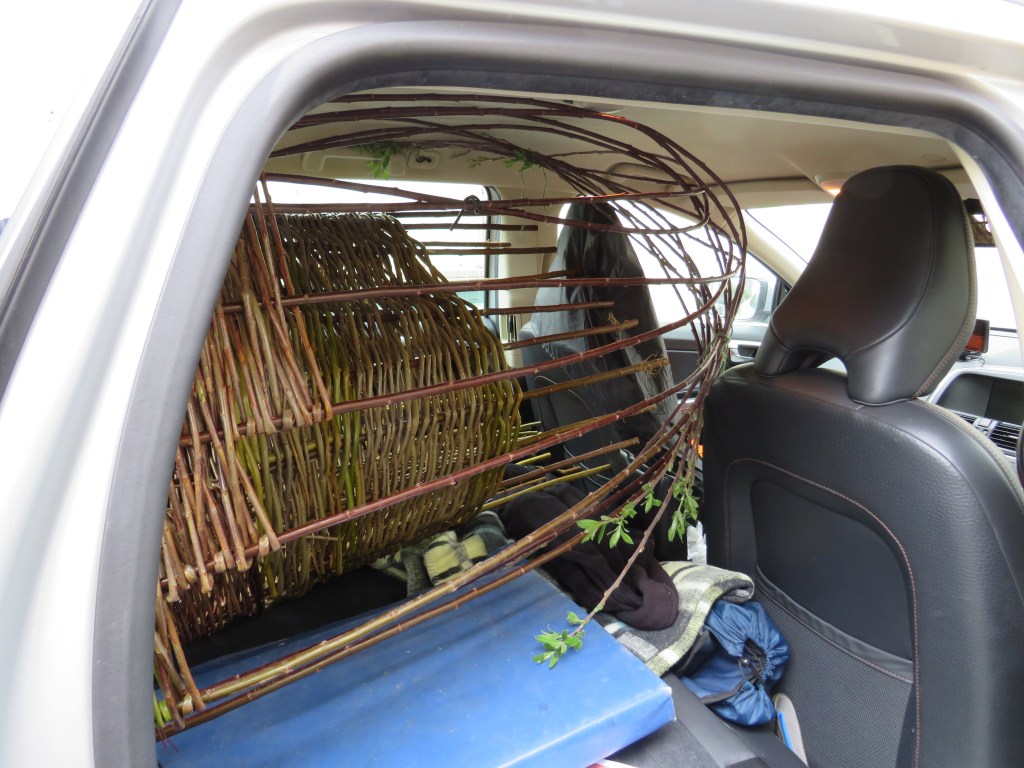
Stripping the Willow – or How Much can you Fit in the Boot of a Volvo?

I am not sure if this should have been one of my experimental archaeology posts. It certainly qualified as an experiment! We headed round the many roundabouts to the Weald and Downland Museum (home of the Repair Shop) for a living willow chair making workshop. There was some confusion over the start time, with the tickets saying 9.30am and the email sent earlier in the week saying 10am ‘but please arrive fifteen minutes early’. We went for arriving at 9.25am – late by my standards. It turned out that it was supposed to be 9.30am but we were the only ones who didn’t think it was 10am, so there was a bit of a delay. We helped with the setting up and I got the initiative test that was assembling the stand to be used as a base to assemble the chair. That achieved, we waited for the others to arrive. A word about the toilet, which randomly had a floor length window. Ok, so it was frosted glass but still a bit disconcerting.

Lead by Ganesh Kings of Creative Willow, eight of us began our weaving. This was physically a little less demanding than the boat riveting of last December but still quite hard on the thumbs and arms. Apparently, there are a whopping 328 species of willow grown in Britain and we had several to choose from of different thicknesses and colours. There is a folkloric aspect to how some of the varieties acquired their names, such as Dicky Meadows Green and. We wove away. I instinctively worked lefthandedly. It seems not all my natural left-handedness has been eroded by a combination of an infants’ school who thought it was a sign of moral weakness and a badly broken left wrist in my teens. My brain still thinks I am lefthanded.

My chair wasn’t the neatest in the world but I was proud of it. I was concerned that spending all day inside would make it difficult to keep up my step count but no. I clocked up six miles walking round and round my chair, weaving as I went. Next came the challenge of getting not one but two completed chairs in the car. It is a Volvo XC60. If like me, your knowledge of makes of car is limited to ‘it has four wheels’, that’s a pretty big car. Back seats down, a bit of pushing and shoving and by agreeing to sit with our knees under our chins, the chairs were in. Sort of. We chopped a bit off a few legs (the chairs’ legs, not our own). In many cars this would have been sufficient. You’d slam the boot lid and the contents would have squished up satisfactorily. Unfortunately, the fisherman of my acquaintance has a relatively posh car with a self-close boot that you can’t override. The boot lid descends automatically. It senses a minute particle in the way and it rises again. Mission eventually accomplished, we realised that it would not be practical to drive round sightseeing with a car full of chairs the following day, so we decided to return home a day early.

The ordeal was not yet over. The chairs had to be planted. Each one has nineteen ‘legs’, fourteen of which will hopefully grow. Not a lot of choice of planting position in my teeny tiny garden and the soil is rock hard. The emphasis is on rock, as much of the garden is a spoil tip from when the chapel next door was rebuilt. Add to that substantial cherry tree roots and creating the required ‘donut’ shapes for two sets of chair legs was a challenge. We had to cut more off the legs than was probably wise but the chairs were finally in situ. Let’s just say, no murderers could dispose of a dead body in my garden without considerable effort.

There was a bit of an elephant in the room as we wove our chairs. Chairs, by definition, are for sitting on. These chairs are hollow structure and have no seats. It seems that the solution is to fill the space with earth and grow a grassy seat. This requires more spare earth than I have, so no sitting on the chairs yet but they look impressive. I also have to decide how I want to arrange the living trees, which can be tied to form a bower if I wish. It will be interesting to see how they grow.

The downside of the workshop was that I was only able to catch up with a few of the amazing History for Ukraine talks, contributed by many of my friends and colleagues over the weekend. What an incredible event organised by Natalie and her team; congratulations to all involved and to all those who helped to raise such a stupendous total. I really hope I get the chance to participate in some satellite events in the future.

Sunny Sussex

I am spending a few days in Sussex, which is indeed sunny. Yesterday, we arrived in time to take a look at the RSPB reserve at Pagham Harbour. This was a pleasant walk with views out towards the sea. The website warned us that the visitors’ centre and toilets would be closed due to staff sickness. Fortunately, only half of this was true.

Today, we headed off to the seventeenth century National Trust property Uppark, the home of the Meade-Featherstonehaugh family. This part of Sussex seems to be overburdened with roundabouts and Sally the Sat-nav was feeling sluggish today, which made exiting said roundabouts in the correct place somewhat tricky but we arrived without too much of a diversion. More Covid related staff shortages meant that only the ground floor of the house was open but there was plenty to see including some incredibly finely worked tapestries, with the tiniest stitches imaginable. Uppark suffered a serious fire in 1989 and had to be extensively restored but there still seemed to be original furniture on view.. We wandered round the grounds and were in time to enjoy the daffodils. Historic plans are being used to restore the garden’s pathways to the original designs by Humphry Repton.

In the afternoon, we explored Bersted Brook Nature Reserve, next to the caravan site. It was a tad underwhelming but it was an opportunity to walk away from the road and the blackthorn blossom was spectacular. We even managed to acquire something for tea from a nearby supermarket, which save us from the decidedly dubious ‘pleasure’ of resorting to one of the numerous local take-away chains.

Family History in Springtime and a Decorating Debacle

It is Women’s History month. I really should be getting on with granny’s biography but that seems to have slipped to the bottom of the very long to do list. I was chuffed to see that The National Archives were recommending my book Remember Then for Women’s History week. There are still copies hiding under the spare bed of a fisherman of my acquaintance, if you’d like you cross my palm with silver. I have no idea why it is on sale on Amazon for £19.90. You can get it from me for the proper price of £12.95, just get in touch. In anticipation of a visit to the area where they originated, I have taken a look at granny’s deeper ancestry. I even managed to find a couple of new 5th and 6th x great grandparents but the mystery of which of two Johns is my 4x great grandfather remains. Fortunately, the Johns are first cousins, so, after what I call a wiring diagram, indicating the either/or, the line can be continued back to the sixteenth century.

Having decided, reluctantly, not to go to Ireland this month, in theory my diary should have been clear. Explain to me then how I have had something on, on thirteen evenings out of the last fifteen. It would have been fourteen but one was cancelled. On the strength of a nominally ‘free’ month. I decided it was time to decorate the hall and landing. The above-mentioned fisherman offered to do the death-defying balancing ladders on the stairs stuff. I was a bit reluctant to agree to this but was persuaded. Fortunately, that part was accomplished without incident. I couldn’t watch. The idea was that I would do most of the rest but in the end my role was limited to affixing miles of masking tape round door frames. This wasn’t as easy as it sounds as the reel of tape had been lying around for a while and peeled off the roll in three inch lengths. After a couple of hours I had completed the task. Halls and landing have so many doors. I sat down to some computer work, smugly content that the job was done. Leaving the room shortly afterwards, I was dismayed to see streamers of masking tape dangling from every point. A new reel of tape was purchased and I did it all again. I should say that my hall and landing could not be smaller. The hall is three foot square and the landing is a narrow corridor. There is nothing in the space. How then, has this decorating endeavour meant that there is evidence of its undertaking in every other room?

I still have a mile long playlist of Rootstech sessions to watch. In the meantime, on the horizon, there are three other key events to highlight. In chronological order:- Do check out the Historians for Ukraine event on 26 and 27 March.  I had hoped to be involved in this but I will be in a field and I don’t know how reliable my internet will be, so I will be cheering from the sidelines and hope to take part in a spin off event. An event that I am actively involved in is a Free 24 Hour Genealogy Marathon, run by Legacy on 7 and 8 April. You can register for that here.

Then on 7 May is the Youth Genealogy Conference. I get a sneak peak at the speakers’ submissions and I’ve been excited by the response. This is going to be a great day, with some thought provoking and interesting talks from some knowledgeable younger presenters. Don’t worry, I will make sure everyone knows how to attend. There is no age limit on the audience!

The website creation for the Braund family continues. I was advised that there were accessibility issues. For example, not all of the many images had alternative text, which is necessary to enable those with a screen reader to know what is in them. A bit of poking about in the bowels of Wix and I discovered a button to press to identify accessibility problems on the site. Button duly pressed, the whole site ground to a halt. After this had happened several times, I started going through the images individually and checking that they had alternate text. I tried the button again and 99 issues remained. It seems that we had had so many issues that we’d broken the system. All sorted now on the accessibility front, so it is back to the exciting job of continuing to add content.

To accentuate the positive, in my hemisphere there are wonderful signs of spring in the air. I am writing this at 5.30 am, watching the sky lighten and it is warm enough to open the window and listen to the symphony that is the birds’ wake up call.

Sunrise