Mills, Castles and Elusive Gravestones

Having arrived in COVID central, on another lovely sunny day, we set off in search of the many local mills once worked by the Eadington family. We wander round Lesbury and then on to Alnmouth, which is very pleasant. We have reasonable success in locating the sites on our list and most are away from the crowds anxious to enjoy the last day of summer. We get stuck behind a flock of sheep, some of which have gone rogue and broken away in the opposite direction. One man and his dog, or in this case quad-bike, it is not. ‘Hunt the mill’ does take us to places other itineraries do not reach.

The next day and the temperature has dropped by ten degrees. Undaunted we venture north in the footsteps of my great great grandparents who travelled across the border to Lamberton Toll for a Scottish irregular marriage. I am pretty sure they would have taken the coach that ran up what is now the A1, from close to their home right to the Toll. I know that the toll house no longer exists but allegedly there is a plaque marking the spot. Fail on that one. It must be a very well-hidden plaque. Heading westwards, we call in at Norham Castle, built in the C12th for the Bishops of Durham as an entertaining space. It was here, in 1291, that Edward I and his advisors chose John Baliol, from thirteen contenders, to be the Scottish king. There was significant re-building following damage in the 1510s when the Scots got a bit troublesome. It had been subject to many sieges over the centuries. My ancestors lived close to this castle and would have known it when it was a little less ruined than it is now. Until it came under state ownership in 1929, it had not been maintained since the Union of the Crowns reduced the threat from the North.

Then it is off to Norham church to search for some gravestones. This will be fine, we have plot numbers and a plan. We know where row one is, what we don’t know is which end of the row is number one, nor is it quite clear what constitutes a row amongst the randomly scattered stones. More by luck than plan, we locate two of the four. What I have neglected to do, is note the names on stones surrounding the ones I am interested in, which might be more legible. We have phones, in theory we should be able to find the website and look at the transcription. In practice, neither of us has mastered using the phone for internet searches so that is not an option. In any case the stones I am missing are 1720s and the transcription was probably done in the 1980s so it is likely that they are no longer standing or legible.

Home via a couple of Scottish churches which involves a gate-related incident. Mindful that we are in a COVID hotspot, I attempt to hook the gate open with my foot. I achieve this and my companion exits the church yard. As he does so, he pushes the gate open further. Sadly, my foot is still wedged in it at the time. As I am wearing wellies in order to scour wet churchyards, I fail to hop backwards sufficiently swiftly and end up sinking to the ground grabbing the gate that I had been at pains not to touch in the process. It really is easier to stay at home. Fortunately, we have plenty of hand sanitiser. The car is making a bit of a weird noise. It is going and there are no warning messages but it looks like tomorrow will involve a trip to a garage. We do have form for getting stranded miles from home.

Sheep and Other Adventures

Another day of indifferent weather and we mop up (no pun intended) a few more ancestral locations, although sadly these churches are all locked. We also have a wander round Morpeth and manage to visit the destinations we abandoned due to the road closure two days ago. I am still working on these Northumbrian ancestors during our time back in the van and I am wondering if I should ‘ink in’ the next generation or not. At the moment I am erring on the side of caution and looking for additional evidence. They may make a blog post of their own when I am a bit more sorted.

In torrential rain we drive through floods, creating flume-like effects and make our way to Belsay. The site has been home to the Middleton family since at least 1270, when Richard de Middleton of ‘Belshou’ was Lord Chancellor to Henry III. The tour begins in the most recent home of the family on this site, Belsay Hall. This was built in 1817, using plans drawn up by the owner, Sir Charles Monck. He changed his name in order to inherit some other property; later generations reverted to Middleton. Sir Charles was obsessed with Greek architecture and the Hall reflects this. It was designed for effect, not practicality and contains some design flaws, including very steep steps to the entrance and a lack of guttering and downpipes. The latter has led to some serious water damage, which is having to be addressed by English Heritage. There are two high-ceilinged floors to the main house but the same height accommodates five floors on the north side, which were the servants’ quarters. Our tour has to omit the cellars due to flooding. Monck demolished the existing village and a chapel because he did not want the villagers too close to his home. In his defence, he did rebuild cottages further away and these too have signs of classical influences.

155 28 May 2019 Belsay Hall

The military took over the Hall in the Second World War and the building deteriorated rapidly afterwards, with the family leaving in the 1960s. It then stood empty for a further two years. Strangely, a condition of giving custodianship to English Heritage was that it would remain unfurnished. There are still remnants of William Morris wallpaper and a large library with 19 bookcases that might just accommodate my current book collection, which was culled by 50% when I left the Isle of Wight.

139 28 May 2019 Belsay Hall

149 28 May 2019 William Morris wallpaper Belsay Hall

The highlight of the Hall tour was observing a sheep-related incident. Whist admiring the rhododenrons, we notice that a sheep has got its head stuck through a fence that is protecting a sapling. Our guide radios for assistance. Simon the sheep rescuer comes to the aid of the stricken sheep. We watch from the window as he leaps into the rain-soaked ha-ha. As he approaches the sheep, which has been struggling for 10-15 minutes, miraculously, the sheep frees itself. Cue resounding applause for Simon.

153 28 May 2019 Rhododendrons Belsay Hall

The rain eased up sufficiently to allow us to paddle through the rhododenrons in the dramatic quarry garden and reach the castle. The castle is a traditional fortified peel house, designed to repel border raiders. A Jacobean manor was attached in 1614. This was abandoned two hundred years later, when the family moved into the hall. Sir Richard and his squire are bravely conducting some living history in the officially freezing castle. I feel quite sorry that the weather has kept visitors away but a few children are listening to the legend of the Lambton Worm and we discuss armour cleaning techniques.

Another ancestral location stop and then it is back to the van. And so the holiday draws to its close, leaving us with memories of bluebells and birdlife, the smell of guano and of wild garlic that shrouded each time we left the campsite and some ancestral adventures. I have somehow managed to successfully conduct three chat sessions for my Pharos Writing and Telling your Family History students, each one from a different field and now it is home for a week before we will be heading north again, this time for THE Genealogy Show.

Hearse Houses, Herons and Hauberks

On a day ear-marked for treading in my ancestors’ footsteps we set off round numerous villages and hamlets across the wilds of Northumberland. Great great grandfather, John Hogg, led an itinerant life, so we had a long list of places to cover. Chollerton was first on the list. This small village is sited on the ‘Corn Road’ from Hexham to Alnmouth, which opened in 1753, enabling produce to be shipped to London. Outside the church was a ‘hearse house’ used, as the name suggests, to store the village hearse and to provide stabling for the vicar and others coming to church. It now contains a small, unmanned museum. Interestingly, the font at Chollerton church has been created from a former Roman altar.

Amongst other stops, we go to Thockrington, officially one of my favourite places in the world. Believe me, it is not a place you are likely to encounter unless you make a deliberate effort but the awe-inspiring landscape is worth the effort. We called at Great Bavington, Mitford and Netherwitton, with a supermarket stop in Morpeth in between. The main road north of Morpeth was closed due to an accident and fortunately we noticed this as we approached and whilst we still had time to take avoiding action. This sent the sat-nav into ‘turn around where possible’ mode, so it was back to the trusty map. I actually really enjoy tracking journeys on OS maps. It doesn’t seem to make me feel as unpleasantly unwell as it used to do. Unfortunately, this did mean we had to miss out three of our intended destinations.

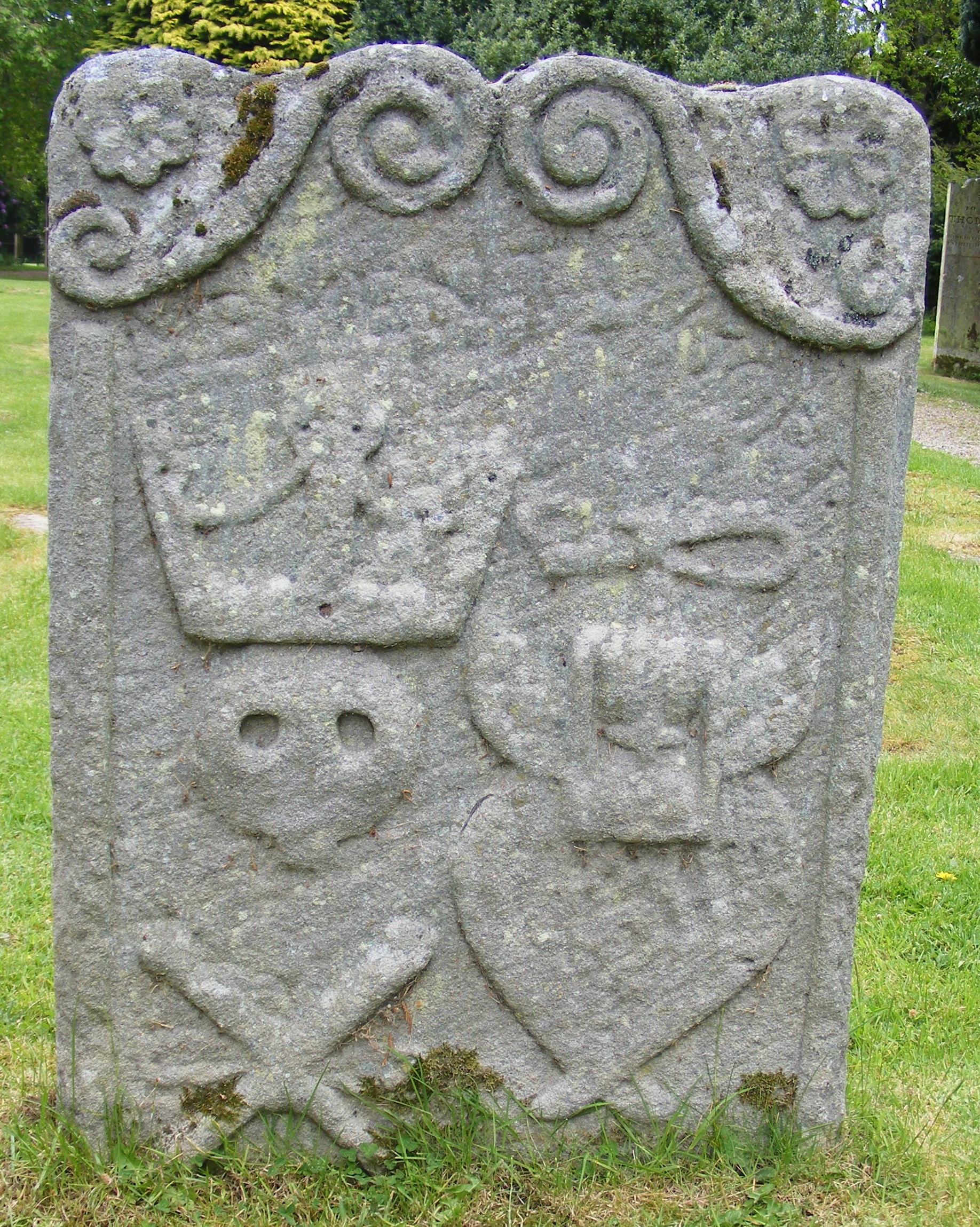
130 25 May 2019 Gravestone St. Mary Magdalene, Mitford

Not one of my ancestors! Reverse says John Pots (sic) d. 1724 age 30 Mitford, Northumberland

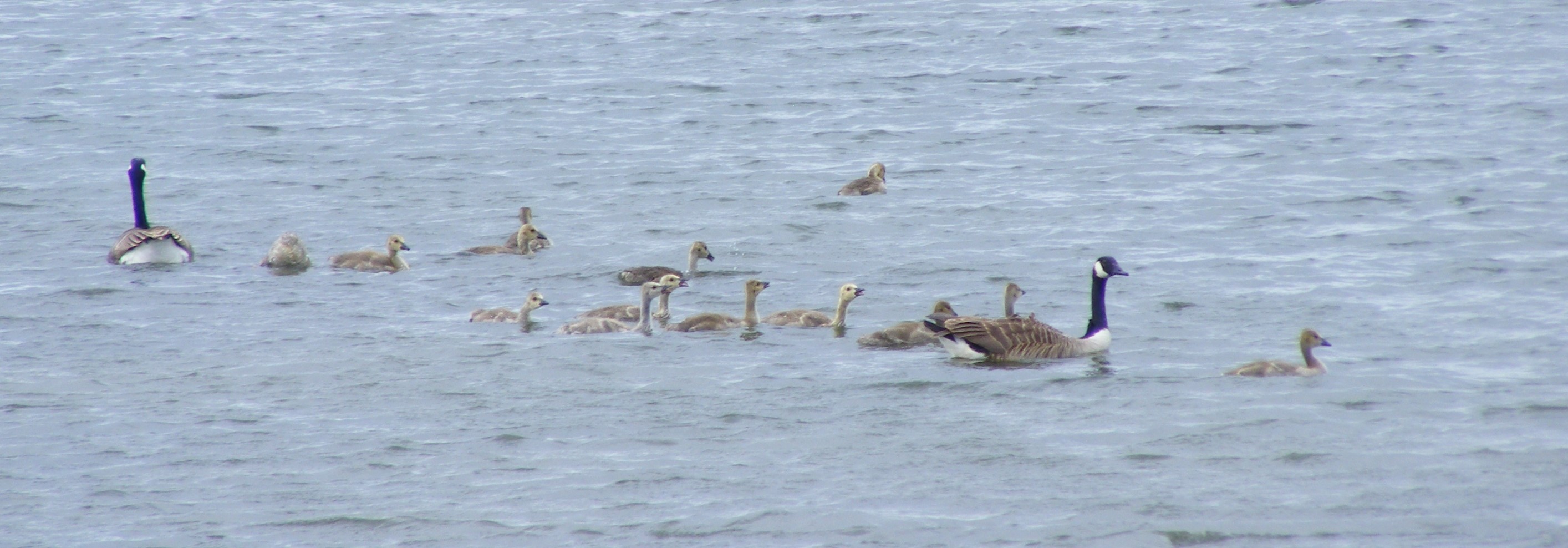
Ten out of ten for Hauxley Wildlife Discovery Centre today. The forecast was a little uncertain but indications were that the early rain would pass over, so we ventured out and were very glad that we did. This coastal nature reserve is run by the Northumberland Wildlife Trust and is excellent. The only charge is a donation towards the car parking. The 1km walk round the lake gave access to several bird hides and I don’t think I have ever seen so many different birds at one location. I believe the lake has been created from a landscape that was a legacy from open cast mining. To top it off, the café, with its views of the lake was lovely too. If you are interested in this sort of thing here are the birds and wild flowers that we encountered:- great tit, robin, black-headed gull, mallard and ducklings, magpie, Canada geese and goslings, grey heron, oyster catcher, house martin, barnacle geese, greylag geese, lapwing, mute swan, moorhen, goldfinch, crow, blackbird, jackdaw, shelduck, little grebe, cormorant, house sparrow, wood pigeon, blue tit, pheasant, tufted duck, gadwall, shoveler. Red campion, primroses, dandelion, buttercup, daisy, iris, bluebells, hawthorn, cleavers, gorse, cowslip, violet, stitchwort, white clover, speedwell, bird’s foot trefoil, red clover, stinging nettle, broom, dog rose.

132 26 May 2019 Hauxley Nature reserve Canada geese and goslings

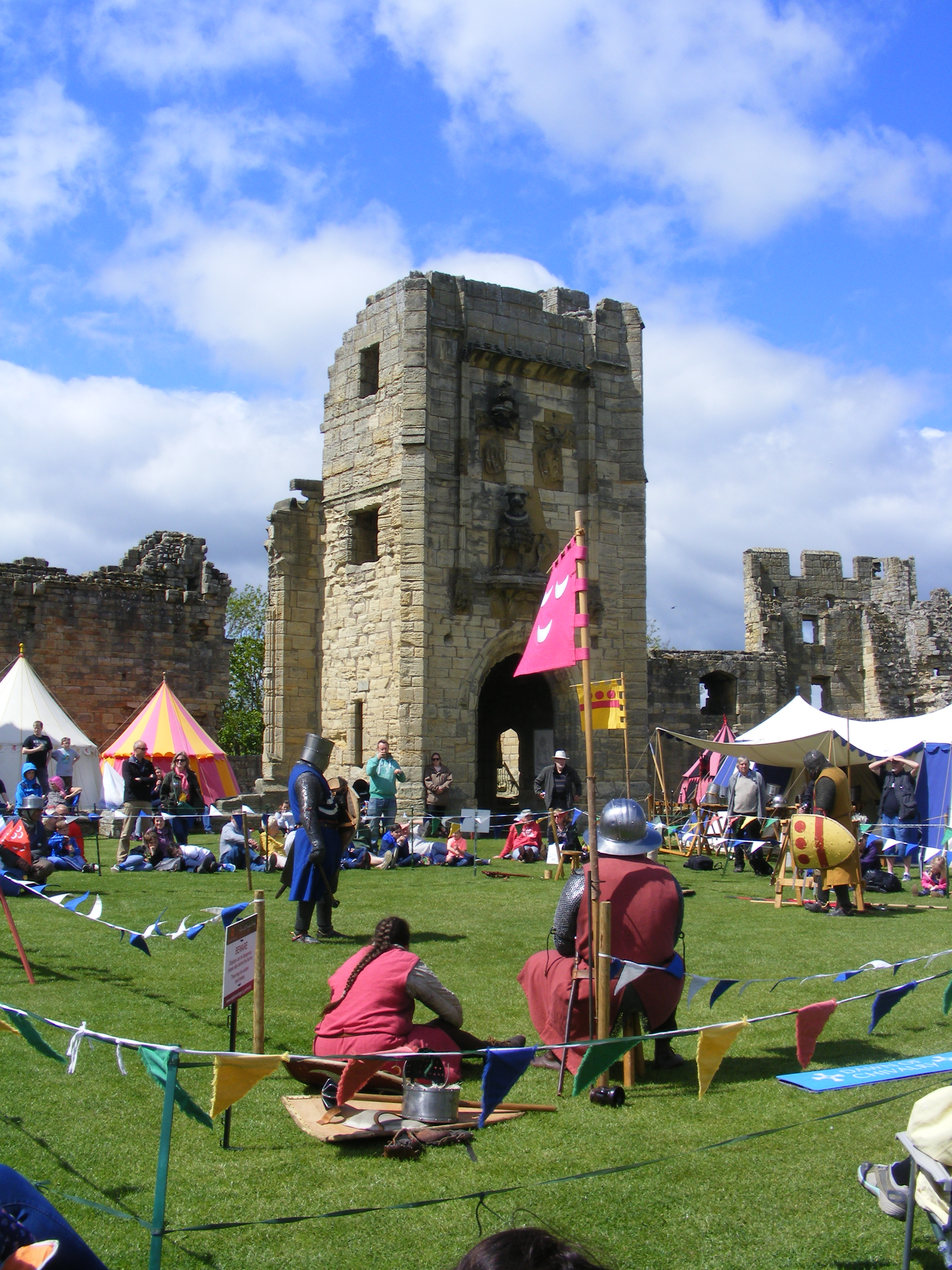
We debated whether to go straight back to the van but decide to call in at nearby Warkworth Castle on the way and again this was the good choice. We hadn’t realized there was going to be a fifteenth century living history event underway. This was a real bonus and we enjoyed chatting to armourers, bow-makers, shoemakers, stained glass artists, candlemakers, rope-makers and potters. We watched dancing and combat and listen to music. I was amused that the compere attempted to disguise his anachronistic microphone by covering it with hessian. All in all, two great destinations today.

133 26 May 2019 Warkworth Castle

Gardens, Books, Chips and a few other things

The day begins with a look at Longframlington Gardens. These are clearly a labour of love for the owner, who we chat to. There is a strong commitment to environmental principles and we wander through the arboretum and wild meadow. The gardens also boasts rope sculptures, including a swing, which I road test until Chris points out that one of the uprights looks decidedly unstable. We attempt the garden maze quiz, where correct answers to gardening questions lead you successfully out of the maze. We escaped but probably not solely due to our gardening knowledge. We also look at the attached garden centre, well it would be rude not to and I succumb to purchasing a mock orange (Philadephus). Now we are back to impersonating Burnham Wood.

We travel on to Alnwick (pronounced Annick), where we fail to find our supermarket of choice, despite having what was, allegedly, its exact address. We did find a substitute supermarket and also paid the obligatory visit to Barter Books. This is a second-hand book shop on steroids, set in a former station and complete with electric train running above the bookshelves. Refreshments and comfy chairs are available as well as a vast array of books. I purchase a map to help with locating ancestral villages, which are annoyingly and probably inevitably, centred on an area that is on the edges of four separate maps, of which I now possess two. Then it is back to the van to deposit the supermarket haul.

We decided to pay repeat visit to Cragside, rather than stay in the van for the afternoon. Cragside is an impressive Victorian edifice; the former home of Lord William Armstrong who was a notable engineer and pioneer in the field of electricity. Cragside was the first home in the world to be lit using hydroelectricity. Armstrong installed a lift, a water powered jack to turn the roasting spit and a Turkish bath. There is real cooking going on in the kitchen and we sample Earl Grey cake; fortunately, the Earl Grey is not discernible. There is also brass cleaning in progress. Here, pine cones discourage visitors from sitting on the chairs. I suppose that is one up on the holly at Seaton Delaval. The gardens are impressive and are famed for their rhododendrons. These are already beautiful but look set to be even more spectacular in a few weeks’ time. We drive along the five mile ‘carriage drive’ round the grounds. As we pass through Powburn, fortuitously, the mobile fish and chip van is in situ – no brainer.

122 24 May 2019 Cragside

Of Lighthouses and Space Hoppers

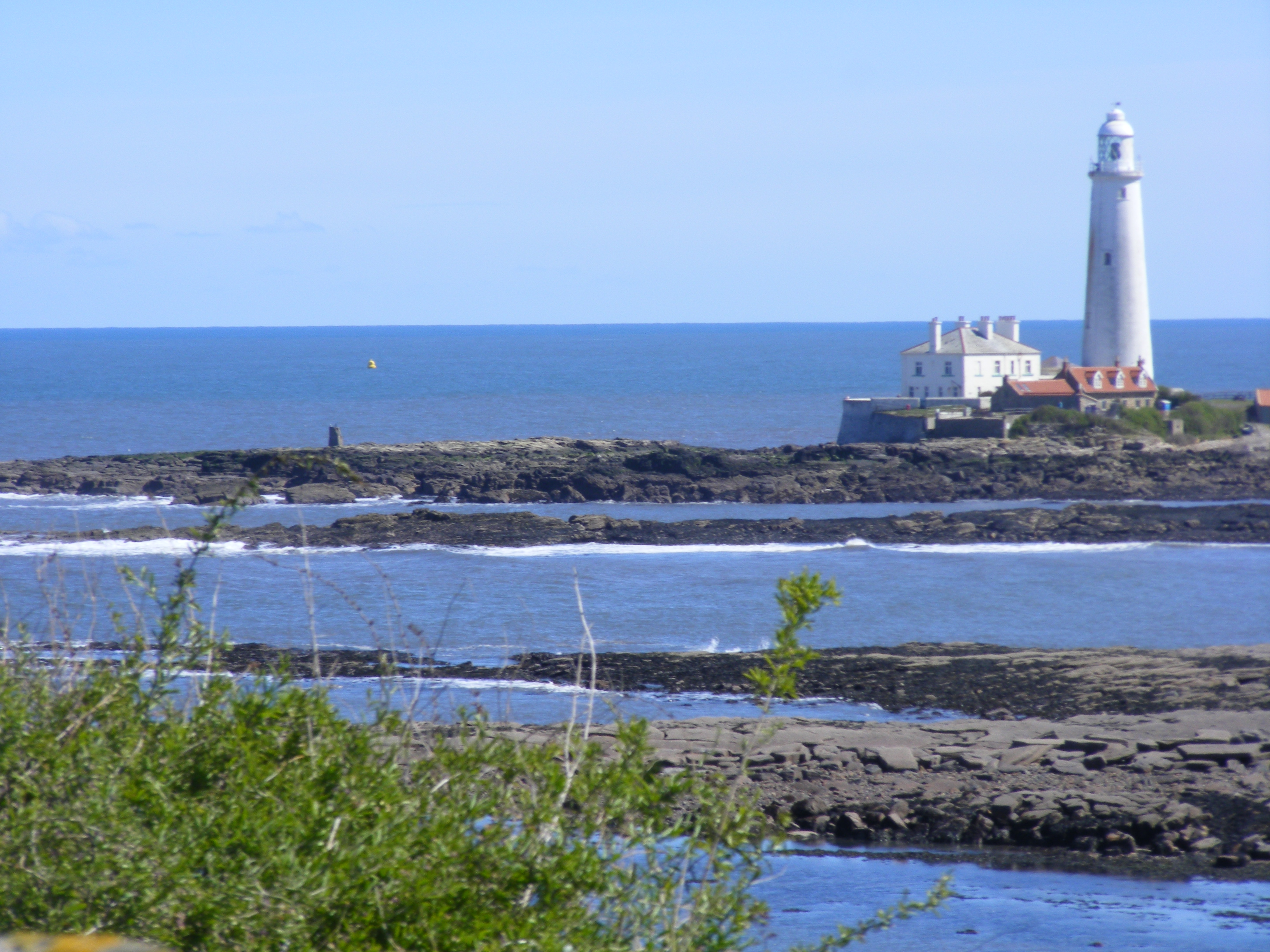
Apologies for not reporting on our holiday adventures in real time but here is the next instalment. We took a short walk along the coast to St Mary’s lighthouse, which is only accessible at low tide. Fortunately, low tide it was. The island on which the lighthouse was built was used as a burial ground by Tynemouth Priory in the C7th. From the C16th it was known as Bates Island after Thomas Bates, the surveyor for Northumberland under Elizabeth I. Interestingly, the island was used to quarantine Russian soldiers who were suffering from cholera in 1799. This was particularly significant as it was 32 years before the first outbreak of cholera in Britain. In 1898, the lighthouse was built on the island to replace one at Tynemouth, as fog meant visibility was poor there. I am sure this should be the cue for a song! The lighthouse is 40m high and was constructed using 750,000 bricks and 654 stone blocks, at a cost of £8000. There are 137 steps to the top. I begin the climb then realise that this is probably not a brilliant idea for someone who suffers from acrophobia – it is making me feel a bit weird just looking up from the ground. I descend to a safer level and send a representative from our party up to the top in my stead. It was still being lit by oil in 1977 and was the last Trinity House lighthouse to be electrified. The lighthouse ceased to be operational in 1984 and is now a nature reserve. Over 50 grey seals are basking on the rocks. The ranger tells us that this is unusual at this time of year. Seals are not a favourite with a fisherman of my acquaintance, so we focus on the eider ducks instead.

012 10 May 2019 View frm the camp site

The next day and it is off to Eureka Children’s Museum at Halifax to meet up with some of my descendants. Some wonderful staff made a small boy very happy by taking the time to talk to him and letting him have a go on the giant space hopper – even though they were about to pack it away for the day. He’d spotted it from an upstairs window and couldn’t get down fast enough but they kindly agreed he could have a turn. The day also involved handing over a very large shrub. Martha had spotted these in a local garden centre when she visited me but did not have room to get it home, so I was deputed to purchase one on her behalf and hand over in Halifax. Unfortunately, what had been qute compact shrubs had assumed triffid-like qualities and grown to the size of small trees in the interim, so our car had been impersonating Burnham Wood. Handover complete, we also hid two pandas ready for the Panda Explosion for PDA Awareness, of which more tomorrow.


Some Family History, Family Reunions and a visit to Seaton Delaval

Our first day in Northumberland and the weather really was a bit much for us soft southerners. We repaired to the archives at Woodhorn, a wonderful facility but in common with many archives, its opening hours have been drastically cut since our last visit. We struggled against the biting wind to cross the car park and began to look for evidence to confirm the parentage of my great great grandfather John Hogg. I am pretty sure I know who his parents are but a bit more evidence would be helpful. Great great grandfather John has done everything he can to be elusive. His censuses entries give different places of birth each time. The birth years calculated from these entries and his death certificate are inconsistent. Not only am I confused about where and when he was born, he even calls himself George in one census! In theory, he ‘marries’ twice. His second ‘marriage’ should be well within the era of civil registration. A marriage certificate could confirm (or refute) the putative father I have pencilled in but marriage certificate is there none. I know, at this point, the antennae of my family history friends will be twitching and they will be keen to see if they can succeed where I have failed. So, if you can find a marriage for a John Hogg and Elizabeth Pearson I would be very grateful. They were not married in 1851, when John was a widower living just outside Morpeth Northumberland. Their first child was registered in 1854 and the certificate implies they are, by then, married. Elizabeth too was born in Northumberland and was in Morpeth in 1851.

The evening was set for a reunion with my second cousin and her husband. We were due to meet in an Indian Restaurant. I have made a note of the address of the restaurant for sat-nav purposes. I have failed to make a note of the name. Surely there can’t be many Indian restaurants in that part of Whitley Bay. Oh! It turns out there can. I have the full address but none of the shops are displaying numbers. I think the restaurant probably begins with S. We hesitantly enter one of two adjacent Indian restaurants beginning with S. Relief; we are being waved at, so either we are all in the wrong place or we have picked the right one. The meal was lovely, it was even bargainous special menu day and the company was great too. We speculate what our mothers and grandmothers might have thought at us meeting up many years down the line and so far from where we grew up.

What a difference a day makes. The sun shines on the righteous and on us as well. We even cast our clouts (well our coats at least) until a sharp wind blows up in the afternoon. We decide to avoid Newcastle as apparently half of it has been cordoned off into a ‘fan zone’ for a rugby match tomorrow. Instead, we travel a couple of miles up the road to Seaton Delaval. This stately home is undergoing serious renovations and learning about these was part of the visitor experience.

Extensive estates and a Saxon church were gifted to Hubert De La Val by William I after the conquest and a member of the family married William’s niece. A fortified dwelling was constructed on the site. Family fortunes declined and in 1717, Admiral George Delaval bought out his impoverished cousin. He commissioned John Vanbrugh to build a home, on a much smaller scale than Castle Howard and Blenheim Palace, for which Vanbrugh is better known. Neither the owner nor architect lived to see the completion of the house. Admiral Delaval was killed falling from a horse in 1723. The work was finished under the ownership of Delaval’s nephew, Captain Francis. He too met an unfortunate end when he fell from a terrace, to be succeeded by his son Sir Francs Blake Delaval. The ‘Gay Delavals’ spent the best part of the eighteenth century hosting flamboyant parties on the estate. They were known to play practical jokes on their guests, including rigging rooms so that the walls disappeared, or the beds could be lowered into baths of cold water, when the unsuspecting guests were asleep.

The Delavals were able to establish successful businesses, exploiting the saltpans at Seaton, founding a bottle and glass manufactury and benefitting from mining interests. They created the sluice at Seaton to enable larger vessels to enter the harbour. By the end of the eighteenth century, their lavish lifestyle became unsustainable and in 1822, a fire gutted the property, destroying the south-east wind entirely. The estate passed through the female line to the Astley family, who held the title of Lord Hastings. Some attempts at restoration were attempted in the 1860s but the property remained largely a shell. The property was requisitioned in both world wars and this left its mark. Some improvements were made in the second half of the twentieth century and the west wing of the house was again lived in before the property was given to the National Trust.

We wander round the beautiful gardens and are guided by Hilary on a ‘Spotlight’ tour. I was particularly taken with the high-viz jackets sported by the cherubs on the roof. We learn about the repairs to the ‘muses’, statues that have been created by plastering over an iron framework. In order to stop the iron rusting, they have had an electric current passed through them using innovative cathodic protection technology.

007 10 May 2019 Repairs at Seaton Delaval

Enthusiastic guides show us round The Church of Our Lady, which was extended by the Delavals and consecrated in 1102. A record survives of the baptism of Henry de Laval in 1343.

A quick look at the sluice itself and then back to the van.