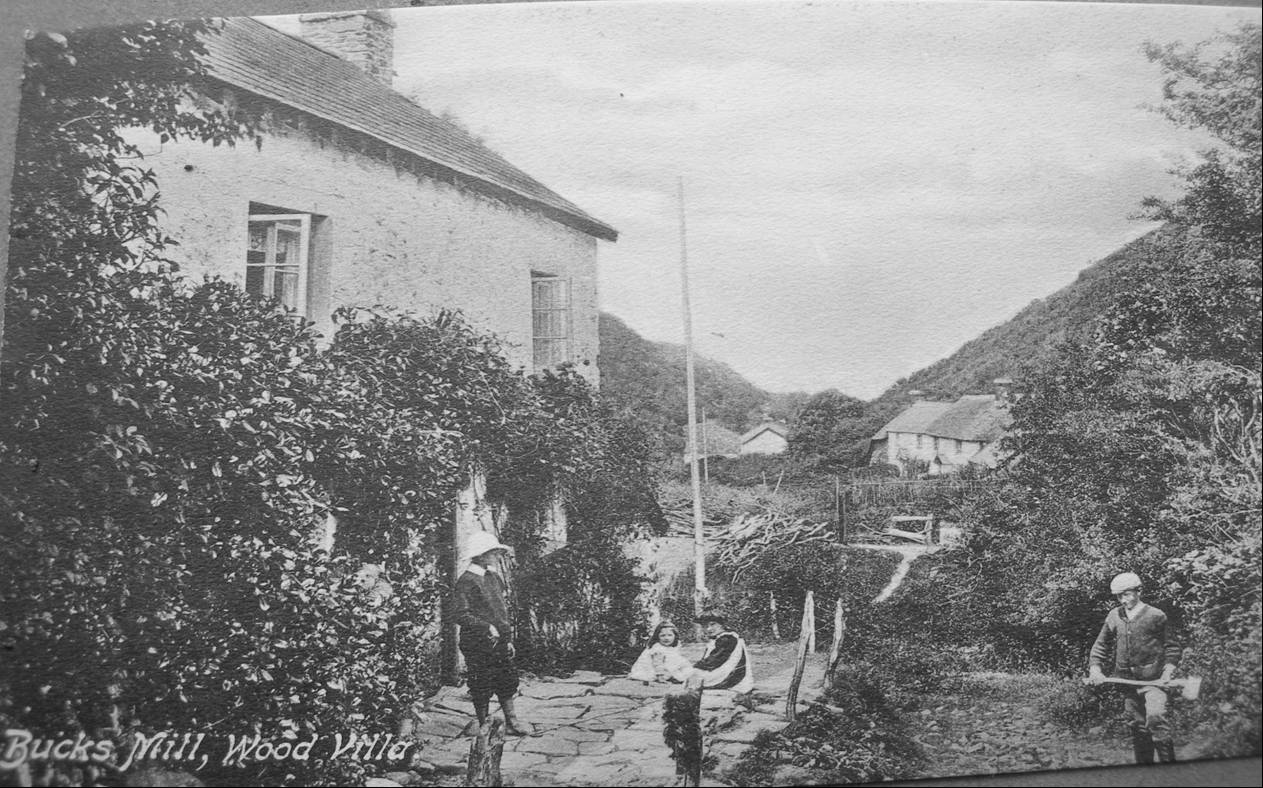
M is for Memories

Under this heading it is only natural that I should mention my current project, encouraging a lovely group of ladies to record their memories of the period. 1946-1969. The project is about life in Britain but my volunteers are currently as far apart as Australia, Greece, USA and the British Virgin Islands. Some ladies went to boarding schools, some to grammar schools and some to secondary moderns. Some are only children, some had large extended families and some grew up in care. Some experienced this era as teenagers and others as married women with families; my oldest participants are in their nineties. I have sisters taking part, mothers and daughters and groups of friends. About half my volunteers have joined a Facebook Group dedicated to the project and this has taken on a life of its own, as members share memories. The participants are hugely supportive of each other and are genuinely enjoying the experience.

4 April 1958

Write About the Clothes that you Wore in the Past

Although writing one’s memoirs could be seen as self-indulgence it can also be cathartic. Not only that, even people who think their lives are intrinsically boring have plenty to offer. I am greatly enjoying reading each and every one of the memoirs that I am sent. I am humbled by how grateful the participants are to be taking part. If you have ever thought about writing your life story, don’t hesitate, make a start. If possible, chat with someone else about the era. Even if they did not share your life at that point in time you will spark off memories. Don’t worry if you feel you are ‘no good’ at writing or if you think you have nothing to say. Look through old photographs to help the reminiscences flow. If you are not fortunate enough to have photographs, take a look at books that cover the time that you are writing about. There are some suggestions for 1946-1969 below. In any case make a start, your descendants will thank you for it.


Feeney, Paul A 1950s Childhood: From Tin Baths to Bread and Dripping The History Press (2009)

Feeney Paul, A 1960s Childhood: from Thunderbirds to Beatlemania The History Press (2010)

Opie Robert The 1960s Scrapbook Pi Global Publishing (1999)

Pressley, Alison The 50s and 60s The Best of Times: Growing up and Being Young in Britain Michael O’Mara Books (2003)

Those starting to write their memoirs may also be interested in The Book of Me
L is for Local History

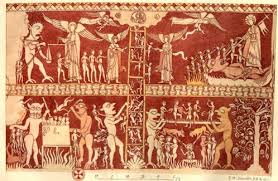
imagesHaving discussed Communities and Community History when I got to C, is there more I can say under L is for Local History? My introduction to local history was during ‘Liberal Studies’ in the sixth form. We had to spend a few hours a week doing different courses that were not examination related. This gave the staff a chance to share their expertise. Most of these courses have slipped from my memory but I know I did one about the origin of place names and another on local history. I don’t know how I arrived at the decision to study the history of a church that was two bus journeys away. I have no recollection of having visited before the advent of the course. Nonetheless I embarked upon compiling a history of St Peter and St Paul’s Church in Chaldon, Caterham. This church is famous for its twelfth century mural. On a recent visit to the haunts of my childhood I also renewed my acquaintance with Chaldon Church.

At this point my research never got me to a Record Office, I wasn’t aware of their existence at this stage. I did however spend time in a local studies library and from then I was hooked. I shall be discussing the importance of teachers when we get to T and there will be more about young people under Y but this does illustrate the benefits of the ‘catch ’em young’ policy.

When I started my local history career no one could have imagined the internet, or how our living rooms could become libraries or record repositories. Forty years on I am in a position to be able to share some of my favourite local history websites with people around the world, many of whom I shall never meet. I am deliberately not describing what these sites contain – that way you will look for yourselves!!

Society for One-Place Studies

The Family and Community History Research Society

British Association for Local History

Community Archives and Heritage Group

English Place Name Society

Local Population Studies Society

The Cambridge Group for the History of Population and Social Structure 

Scottish Local History Forum

Local History Online

Urban History Resources Hub

The Centre for English Local History

K is for Kinship #familyhistory #atozchallenge

Having dealt with journeys and migration yesterday ‘K’ gives me the opportunity to write about another of the themes underpinning my ‘emigrants’ research – kinship. What role does kinship play in migration choices? Certainly there is plenty of evidence for chains of migration, where one family member goes overseas and is followed by siblings, cousins or other relatives. This leads us on to wonder how strong family ties were for our predecessors. Particularly in a small rural community, where many inhabitants were related in some way, how aware would our ancestors have been of those relationships? Unless they are family historians, many people in today’s world would struggle to name all their first cousins, let alone be in contact with them. How much is this due to the fact that many families are now widely geographically dispersed, whereas a century ago they might still be living in close proximity? In the days when families were larger, did cousins become insignificant because siblings were numerous?

Many celebrity tree hunters are keen to link two disparate celebrities on the same pedigree. If we try hard enough and follow many ancestral lines we can probably link ourselves to someone famous, to royalty, or to a number of our friends and acquaintances. There was a dear family history friend whom I had known for many years. We had long since had the conversation ‘I am descended from the Smiths of London’. ‘So am I! Ha! We must be related!’ A considerable while later it turned out that we were indeed related (more of that story when we get to S).

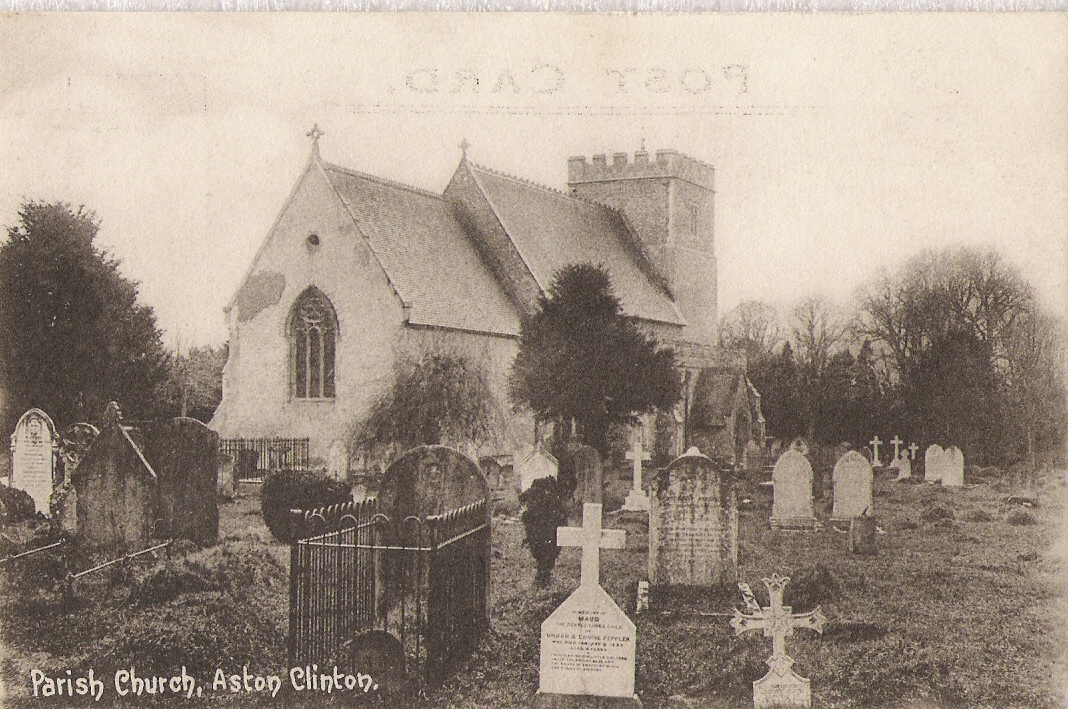
Aston Clinton Church

The Church where my great great grandmother and also my daughter were baptised

Equally we can probably connect ourselves to many places through our distant kin. So, for example, my four times great grandfather, William Braund, had a sister called Betty. Betty’s husband was Gamaliel Bartlett, whose father was, in 1735, baptised in the parish where I now live. Convoluted I know but the connection is there. More eerily, I moved to Buckinghamshire in 1982, believing myself to have no ancestral connections in the county. After I moved away I discovered that not only had my grandmother been born in Buckinghamshire, despite her family living in London but that my great great grandmother had lived in the same road in which I was make my home.


J is for Journeys

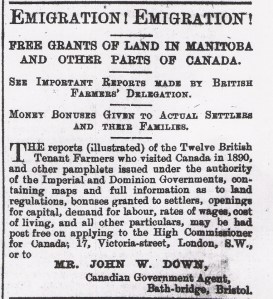
One of my research interests is migration, specifically emigration of the nineteenth century. I enjoy finding evidence of individuals relocating elsewhere, be it to a neighbouring parish or somewhere abroad. For the last ten years I have concentrated on those who left North Devon for overseas destinations. I want to know more about these people who were willing to make such drastic and to all practical intents and purposes irreversible, life choices.

According to Mark Brayshay (‘The Emigration Trade in Nineteenth-century Devon’, in Duffy, Michael; Fisher, Stephen; Greenhill, Basil; Starkey, David J. and Youings, Joyce (eds.) New Maritime History of Devon Volume 2: from the late eighteenth century to the present day, Conway Maritime Press (1994) p. 108), 434,806 people left Britain via a Devon port between 1840 and 1900. Some of those leaving, especially from Plymouth, may have been Cornish but equally, Devonians left from ports outside Devon. Some of the emigrants I have studied left from Liverpool, Bristol, Southampton and even Padstow. Nationally, 75% of Victorian emigrants went to America. In Devon however only 1·1% to America. Instead Devonians headed for Australasia and in the case of North Devon, predominantly for Canada. Nineteenth century emigrants from North Devon appear to have chosen routes and destinations that were familiar to them, if only through oral traditions which persisted from the eighteenth century, when there were regular transatlantic cod fishing expeditions. Whereas earlier travellers to North America had been motivated by economic pressures and were, in the main, not permanent emigrants, by the 1830s, individuals were influenced by other factors and were setting sail without intending to return.

What prompted these life changing journeys? When trying to ascertain the motive behind any movement, it is useful to consider the migrant’s life stage, their migration companions, if any, their occupation and what is happening in both the sending and receiving communities at the time of the move. As it turned out, in the case of my Devon emigrants, I also needed to look at religious belief. The religious climate of North Devon was far more akin to that of Cornwall than it was to that of South Devon. The 1851 religious census shows a very high number of attendances at Bible Christian Chapels in March 1851, notably in Devon’s north-westerly parishes. The Bible Christians were a Methodist offshoot, formed in 1815 by William O’Bryan. The first two circuits were at Shebbear and Kilkhampton. Emigration was a significant part of the Bible Christian way of life. In 1832, 1·1% of total membership left Britain. By the 1860s, the high emigration levels amongst the Bible Christian community were having a detrimental effect on their following in this country. Members of this church were attracted by the prospect of helping to establish circuits abroad. In addition, some were meeting with hostility at home. The emigrants to Canada, in particular the area round Port Hope, in what is now Ontario, formed part of an intricate network of kin who left North Devon during the nineteenth century. Research shows that virtually all of these emigrants belonged to the Bible Christian Church.


emigration advert 1892More information about the North Devon Exodus can be found here.

For those with little to do and the patience to wait for the file to download, Chapter 6 of my thesis deals with emigration.

You may also be interested in learning more about the Bible Christian Church.

The list of emigrants from North Devon, whose stories I am currently researching are listed here.

I is for Internet Genealogy – is this Progress?

Although I now have to be surgically removed from my laptop, I am someone who started my family history in the years B.C. (before computers). I thought therefore that I would just mention some of the pros and cons of the changes I have seen over 37 years of seriously pursuing my ancestors. By the way I did start very young (wait for Y for more on that topic).

In the old days, finding our family was a much slower process and involved travelling to various record repositories. You went to London, ordered a birth certificate, waited for it to arrive and then waited again for your next trip to London in order to search for the marriage certificate of the parents of that individual. This can now all be done from home and the turn around time is much quicker, so a big tick for the internet on this one.

In order to find someone in a census return a visit to London or the relevant county record office was required. Then you peered at reels of microfilm as you spent two hours winding your way through the whole of Hackney in pursuit of your ancestors. Alternatively you could hope that there was a paper index for the area and decade that you were searching. These indexes were carefully and accurately compiled by family historians whose motivation was to assist their fellow researchers, with no hint of financial benefits. Today’s countrywide indexes are a huge bonus, especially if searches can be made using fields such as occupation and birthplace, instead of by name, thus opening up these records for use by social and local historians. The quality of these indexes is however mixed. Many of them have been created by those with no interest in the work, by those who have no knowledge of British place or personal names and by those whose prime motivation is financial. In Peter Christian’s The Genealogists’ Internet, he looks at transcription errors in the 1891 census indexes that appear on the main subscription websites. In 2009, when the survey was done, 43.5% of the surnames in the Ancestry transcription were incorrect. Hopefully many of these have been corrected in the intervening five years but this is a very high error rate. Don’t get me wrong these indexes are valuable and I know that if their production was left to philanthropic family historians, with the skills and motivation to get it right, we would still be waiting but it is not all good news.

I applaud and welcome the opportunity to download digital images of original documents from my arm chair. Sadly most of these images are accessed via a transcript and many internet genealogists rely on those transcriptions, never progressing to the originals. At a conference last year, lecturer and author John Titford coined the phrase ‘genealogy for grown-ups’. By this he meant the sort of genealogy where original sources are consulted and referenced. He was referring to research that encompasses recreating the lives of our ancestors, not just collecting names and dates and the use of more than just the mainstream sources that are available on subscription websites. The internet helps ‘grown-up’ genealogists beyond measure but to come of age in the genealogical world you do still need to leave your keyboard behind on occasions.

Now family trees can be downloaded at the press of a button (the result may not be an accurate family tree but a family tree emerges none the less) there is the opportunity to acquire a pedigree without foundations. More people can open a computer file labelled ‘family tree’ but they lack basic knowledge about the lives of those individuals or the sources that have been used to create that pedigree. Does this actually matter? It is surely a good thing that more people are beginning to engage with their past, particularly as this has resulted in a dramatic lowering of the average age of the family historian. Am I concerned that these people are barely scratching the surface and are not doing things ‘properly’? At the risk if being labelled a genealogy snob, well yes I am. Surely the satisfaction comes from ensuring that your pedigree is as accurate as possible. Trying to recreate the context for our ancestors’ lives is truly paying them the respect they deserve. Yes, everyone should be able to pursue their ancestry in their own way and with a degree of rigor of their choosing but I still lament the trend towards ‘grab it quick’ pedigree hunting. Along with the internet has come instant access genealogy but have we compromised thoroughness in the pursuit of speed?

We are now in thrall to the large subscription websites. Yes, there is a choice but currently it is a frying pan – fire choice. In the last few weeks there has, rightly, been an avalanche of complaints about the ‘improvements’ made by more than one genealogical service provider. Suffice it to say that these changes appear to lack any single benefit for the serious researcher. The impression is that ‘improvements’ have been motivated by profit and carried out by those who have no idea what researchers require. At the moment the family history world is holding its breath, hoping fervently that the providers will actually listen to the needs of their customers. The provision of online resources is only progress if the system allows researchers to find the record that they need in a manner that is neither convoluted nor cumbersome.

The sad loss for the new generation of internet genealogists is the lack of interaction. True there are forums, chat rooms and opportunities for discussions via Hangouts on Air but are these really a substitute for a cosy chat over a genealogical brick wall with a group of fellow enthusiasts? I am not an unalleviated Luddite. I do appreciate that internet genealogy is not only here to stay but has a great deal to offer researchers. I am however aware that we maybe in danger of throwing out the proverbial baby with the bath water.

H is for Herbs #atozchallenge

In the past, our ancestors’ herb gardens were vital to their household. Obviously plants were grown to eat. Spices would be beyond the budget of many families and herbs could be used to make the diet less bland. A number of plants were used in the process of making clothes, for washing or carding fleeces or for dyeing wool. Other herbs had household uses. The bulbs of bluebells, for example, were boiled up and used as glue. Still others had superstitious associations. The bay was planted either side of the cottage door to, quite literally, keep the witches at bay. The fig tree was handy for tying mad bulls to, in order to calm them and the elder tree provided a home for witches.Culpeperr

The herb garden was also the family’s medicine cupboard. Instead of paying the apothecary for a herbal remedy, the thrifty housewife would make her own. It was necessary to know which plant to use and which part of the plant. Herbals, such as those by Gerard and Culpeper, provided this information but few housewives could read. Herbal lore had to be learned, remembered and passed on to the next generation. Medicinal herbs were best used fresh but when the required plant was not in season, women depended on those they had dried, distilled or otherwise preserved during the previous season.

Although many of the cures of the past now seem ridiculous, if it was not thought that they worked, the remedies would not have been tried more than once and no-one would have recorded them for posterity; there would be no point in passing on an ineffectual remedy. Whether they acted scientifically or psychologically is another matter. It is important to remember that there are herbal elements in modern mainstream medicines; digitalin, from the foxglove, in heart medicine, for example. In any case, our ancestors had to make use of what was available to them and this was, by and large, the herbal remedies.

To Make an Ointment

Bruise those herbs, flowers or roots, you will make an ointment of, and to two handfuls of your bruised herbs add a pound of hog’s grease dried or cleansed from the skins, beat them very well together in a stone mortar with a wooden pestle, then put it into a stone pot, (the herb and grease I mean, not the mortar,) cover it with a paper and set it in the sun or some other warm place; three, four or five days that it might melt. Then take it out and boil it a little. Then whilst it is hot, strain it out, pressing it out very hard in a press. To this grease add as many more herbs bruised as before. Let them stand in like manner as long, then boil them as you did the former. From Nicholas Culpeper’s Complete HerbalLords and Ladies

Of Sneezewort

The juice mixed with vinegar and holden in the mouth, easeth much the pain of the tooth-ache. The herb chewed and held in the mouth bringeth mightily from the brain slimie flegm. From John Gerard’s Herbal

A Remedy for the Plague

Steep one pound each of:- rue, rosemary, sage, sorrel, celandine, mugwort, the tops of red brambles, pimpernel, wild dragon, agrimony, balsm and angelica. Hannah Wooley

G is for Gardens – an historical perspective #AtoZchallenge

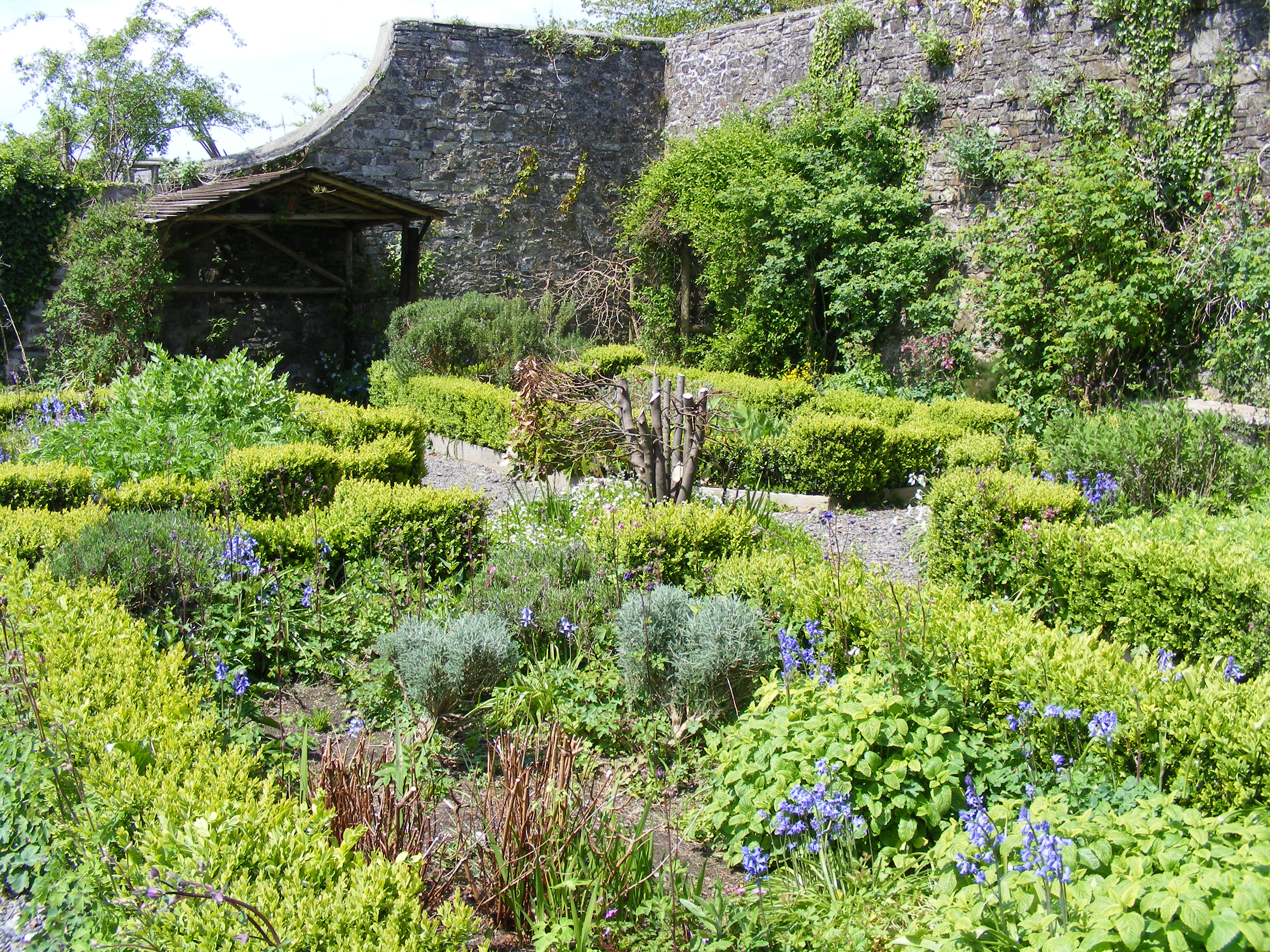
The history of gardens and the impact of gardens on the lives of our predecessors, is something that I have become increasingly aware of. Initially this was through my work as Mistress Agnes and her sojourns in the herb gardens of the seventeenth century. Then when I wrote Coffers, Clysters, Comfrey and Coifs, I looked at gardens of the rich and poor in Stuart England. This expanded into a more general study of gardening history and I now give talks on seventeenth century gardens and the historical use of healing herbs. You will have to wait until tomorrow, when ‘H is for Herbs’, for more on that topic.The knot garden’s low hedges divided the garden into geometric patterns

For ordinary folk, gardens have only become places of leisure and pleasure comparatively recently. The gardens of our ancestors were to provide necessary produce for the family. The wealthy however have embraced the role of gardens for ornament and relaxation for more than 500 years. I recently completed a course on healing gardens. Healing not only in the provision of medicinal plants but also healing in the therapeutic sense. Gardens, whether we spend time in them or work in them, assail all our senses and can promote a sense of well being. Their plants, their wildlife and even just the fresh air can all help to heal a troubled soul.

My ladies who are contributing their memories of 1946-1969 are currently writing about homes and gardens. How well do you remember the gardens in your life? Sometimes garden memories are more powerful than those of interior spaces. Specific plants can also evoke memories of people and of past events. Have you recorded your recollections of the gardens of your past?

Regular, pre A to Z Challenge readers, of this blog will recall that I have had extensive building work done to my home recently. This has given me the opportunity to think carefully about how my tiny garden will look now it no longer needs to impersonate a World War 1 trench. Yes, I shall pay homage to the seventeenth century origins of my cottage but I will not be a slave to this. There are many helpful books for those wanting to recreate gardens that reflect a certain historical period. I have listed a few below. I shall also be incorporating some family history into my garden.

3 June 1958September 1963Alongside more conventional ways of recording our family history, gardens can be used to do this. Can you include plants to represent members of your immediate family? For ancestors who had a flower name the choice is easy; my grandmother was called Ivy, no problems there. Alternatively, select a plant that they were fond of, or that you associate with them. Add flowers that featured in wedding bouquets. If no particular plant springs to mind, then what about a garden ornament? An anchor could denote an ancestral fisherman, a milk churn a dairyman forebear, or a pitch fork for a farm labourer. Those of us who find the past a pleasant place to live, can use our gardens to surround ourselves with representations of the past, creating a place of peace and serenity in the present.

Jennings Anne Tudor and Stuart Gardens 2005 English Heritage
Peachey, Stuart Farmhouse and Cottage Gardens 1580-1660 1996 Historical Management Associates Ltd.

F is for Family History or Genealogy? #atozchallenge #familyhistory

Are you a family historian or a genealogist? Personally I call myself a family historian, although I undertake genealogical research as part of my family history. I am aware that the meaning of ‘genealogy’ varies in different parts of the world.

Picture2

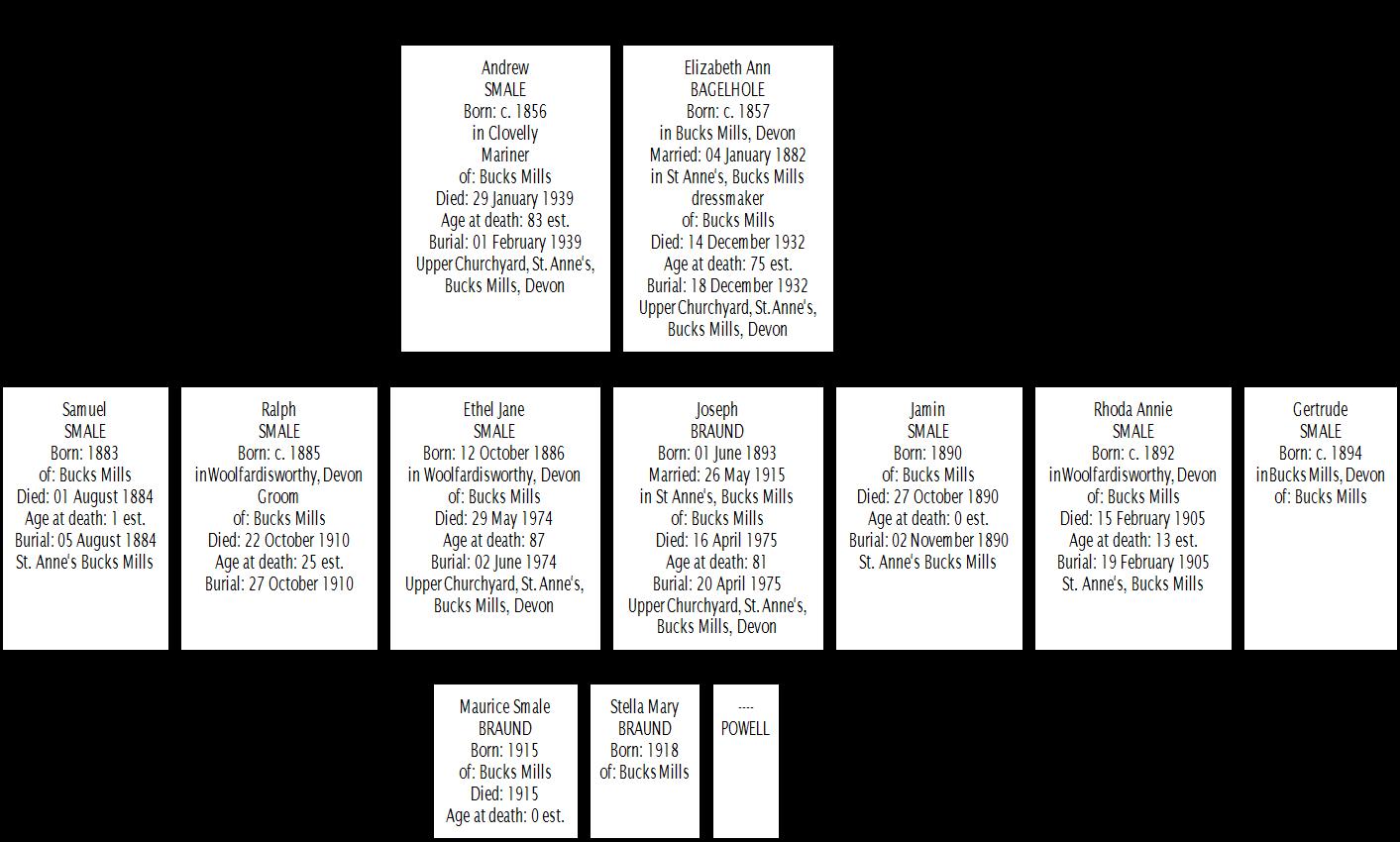
The genealogist constructs a pedigree

To me, genealogy is creating a pedigree, joining individuals together and establishing relationships between them. It is, quite literally ‘gene ology’. It is possible to do genealogy without being a family historian but a family historian must also be a genealogist.


A family historian creates the underlying pedigree but then looks beyond the names and relationships to study the national, local and social historical context that helps us to understand the lives of those individuals. A family historian wants to know what was happening in the town or village where their family lived. They aim to find out what their ancestor may have eaten or worn and what their home might have been like. They will study the occupations of their ancestors so they know what tools those ancestors would have used, what uniform they may have worn and what processes that form of employment could have involved. If individuals moved, then the family historian might look at possible route ways and motivations for that change of location. They will consider national events that those ancestors lived through and how these may have impacted on their lives. To me it is the family history, rather than the genealogy, that is the real appeal. What use is a list of names and dates when you have no conception of the lives that these people led?

Picture3

The family historian wants to know where the individuals lived


So which are you, family historian or genealogist? And which would you rather be?

E is for Evidence in Family History #atozchallenge

What is evidence? Is someone else’s online tree ‘evidence’? There are some accurate and well researched family trees online. Equally there are some that are beyond fanciful, with people having children five years after they have died, or at the age of three. Then there are the creative genealogists who subscribe to such theories as, ‘They got married in 1825 so they must have been born in 1800’, because of course everyone gets married at the age of 25. Or ‘I have someone of roughly the right name in roughly the right place, the age is a couple of years out but hey it must be him.’ Have you actually looked for alternatives? How complete are the indexes you are using? Could there be equally, or even more, suitable alternatives in records that have yet to be included in that index? How well do you actually understand the data set that you are asking your subscription website of choice to search? And then there is my pet hate, ‘He was baptised in 1750 so he must have been born in 1750’. Why? How do you know? Do you actually have any evidence beyond the knowledge that the majority of baptisms were of young infants? What you should be doing, if you must assign a date at all, is recording that birth as about 1750 and looking for corroborating evidence that this was indeed that individual’s date if birth. If that evidence is not forthcoming then the about remains.

There is also the question of how much proof do you require? How much evidence do you seek before adding an individual to your family tree? One piece of evidence? Two? Three? Clearly what is key here is the quality and likely reliability of that evidence. One person has recorded this on their online family tree, to my mind is next to worthless as evidence. Ah, you may say but five people have the same line on their online family tree. How do you know that researchers (and I use the term loosely) two to five have not just lifted researcher one’s information and grafted it on to their tree?

Forget online trees for a moment. What about ‘granny says…….’. This maybe ok, how is granny’s memory? Do great auntie and great uncle agree with her? Are there any official documents, birth certificates, newspaper reports, census returns, to back this up? The further back our family trees extend the harder it becomes to find one piece of reliable evidence, let alone anything that might be termed corroboration. This is the point at which you should stop scrambling backwards, pause until new evidence is unearthed and enjoy finding out more about the individuals that you already have whilst you wait.

FH Smith baptism

Researching the Smith family of London requires more corroborating evidence

The size of the population in the area and era that you are researching and the name of the individual may also effect how much evidence you feel you need before deciding that you have linked two records correctly. I am searching for a John Smith (yes really) in London in the late 1700s. If I find a baptism of a John Smith in London in 1799, even if the John Smith is in the parish where ‘my’ John Smith married do I make that connection? – probably not. Even if I have ‘my’ John Smith’s place and approximate date of birth from the 1851 census do I? If the place is a highly populated London parish maybe still no. If I know ’my’ John Smith’s father’s name (from his marriage certificate for example) and that agrees (especially if it is a more unusual christian name) then maybe I am getting somewhere. On the other hand, if I have a Crispin Pepperell in a small rural Devon parish (and I do) then I may be quicker to assume I have the correct person.

I appreciate that many people live thousands of miles from the focus of their research but this is not a reason to accept second hand ‘evidence’. As far as I am concerned an original source, or a digital image of that source is evidence, an index or transcription is not. Agreed, transcriptions and indexes are brilliant finding aids and providing they are done well, can lead us to original sources but they are not evidence in themselves. Ironically, it seems that the easier it becomes to access original records at a distance, the less people are seeking them out and the more content they are to rely on indirect data or non-evidence. I accept that there are many rigorous and diligent researchers out there but increasingly I see works of fiction family trees where the compiler appears to require no evidence at all.

If people get fun out of building the biggest family tree in the world by melding their data with that of others without checking it, without researching it, without even thinking about it, who am I to spoil their fun? Just don’t kid yourselves that this is family history or even genealogy (there is a difference – see my ‘F’ blog tomorrow). This is mere pedigree hunting and the pedigree you have snared is highly likely to be inaccurate or not your own. As Anthony Camp, former Director of the Society of Genealogists, once said, ‘With poor knowledge of the sources and little care, the person who comes out of the shadows may just be a skeleton or more often a botched up monster of a Frankenstein, two people rolled into one, or one cut down the middle and married off to someone he probably never knew in real life’.

D is for Death and its Causes in History

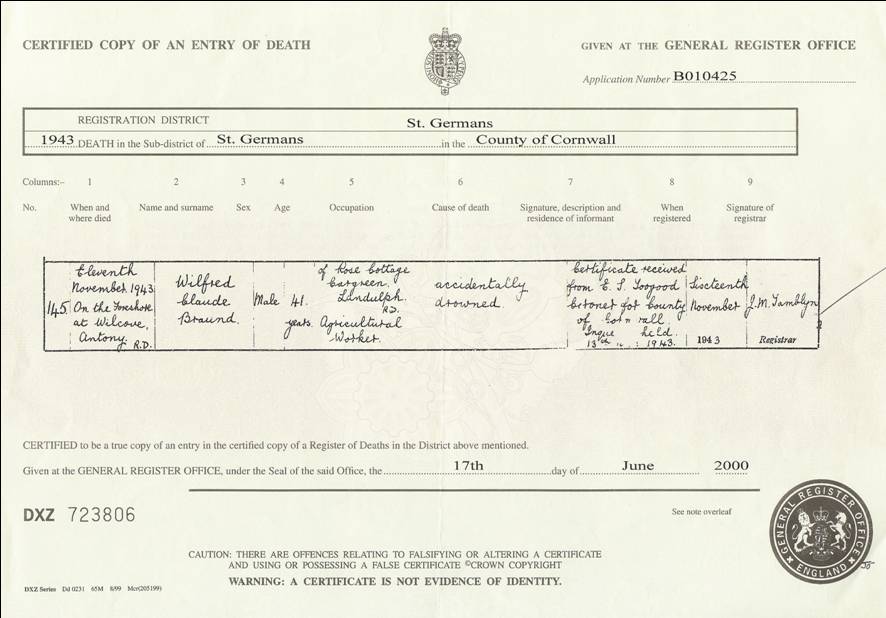
Death is something that has happened to all but our most recent ancestors however it is often a vital event that is ignored by family historians. Records of birth and marriage are avidly sought as they form the building blocks of the family tree. Death or burial records might only be resorted to when an age at death is needed as a clue to a date of birth. We really should kill off our ancestors (in the nicest possible way) not least because this helps to ensure that we have been tracing the correct person, not someone who died as an infant. In England and Wales we have, from 1837, death certificates. The current £9.25 cost from the General Register Office makes researchers think twice about their purchase but they can be a source of interesting detail about the individual concerned. Apart from the obvious date and place of death, age, address and occupation of the deceased, there is the name and address of the informant, together with their relationship, if any, to the person who has died. This may provide the first clue to the married surname of a daughter. If the informant is not a relative but an official from a workhouse or nursing home, for example, then the details they have provided may be less likely to be accurate. Of course if you are fortunate enough to have an ancestor who died in Australia, then their death certificates are even more informative.

Picture1Then there is the all important cause of death. If the individual died in an accident, as was frequently the case in the pre health and safety era, then there may be a coroner’s record or a newspaper report giving details. If your ancestor died of an illness then what were the symptoms and likely treatments at the time? Did they die as a result of surgery or in an outbreak of infectious disease? Prior to the advent of death certificates we are less likely to know how an individual died but we can still examine the common killers of the time. Consider not only illness and disease but those who might have died in wartime, of famine, in childbirth or as a result of suicide or murder.

One of the presentations that I give is about death and its causes. I range from cholera to chlorosis, small pox to syphilis, typhoid to TB, puerperal fever to plague. On the subject of the plague there has been a recent media splash suggesting that the fleas on rats were not responsible for the Black Death. To begin with it was not called the Black Death until centuries afterwards – rather The Great Pestilence. Secondly the idea that plague might be pneumonic (airborne) rather than bubonic (the fleas on rats scenario) is far from being new. Even the school text book that I was using to teach the history of medicine over a decade ago acknowledged that the 1348 outbreak was probably so severe that it must have been a combination of the pneumonic and bubonic strains.

Our ancestors’ deaths are part of our family history. We need to understand how they may have died, the course that their illness may have taken, even if it saddens us to realise that today this might not have been fatal.

For a list of epidemics in Britain see the website of Keighley and District Family History Society. Useful books include Tracing your Ancestors through Death Records by Celia Heritage (Pen and Sword 2013) and How Our Ancestors Died Simon Wills (Pen and Sword 2013).