Actually Northumberland this Time

It was time for the holiday proper to start as we headed north in the footsteps of the Romans on what is now the A1. Roadworks made the journey more protracted than we might have hoped but we arrived in Powburn in the early afternoon. Having spent five hours sat in a car, we went for a quick walk round neighbouring Branton lakes. ‘Lakes’ there certainly are but sadly, vegetation means that glimpses of said lakes are few and far between.

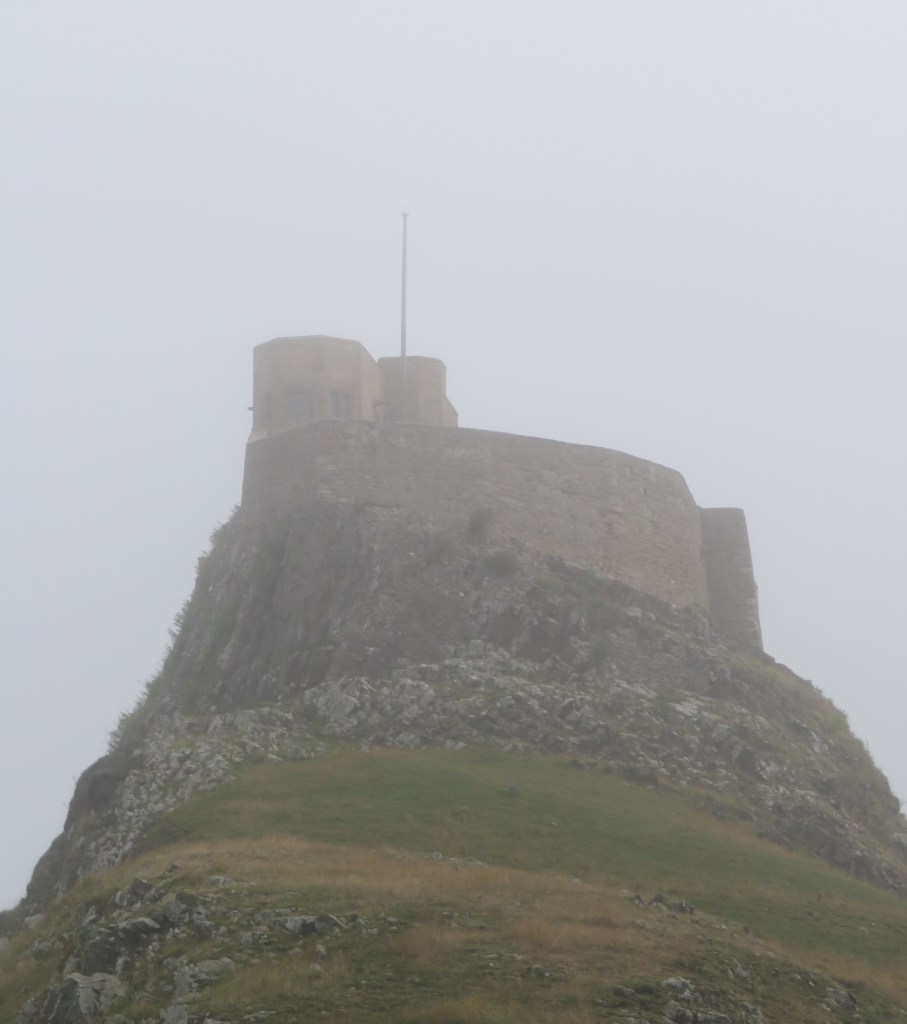
The next morning’s weather was not so much fog on the Tyne but fog across the whole of Northumberland. Undaunted, we set off to Lindisfarne admiring the hedges as we passed, which was about as far as we could see. We crossed the causeway to Holy Island just after it opened. We walked round the island past the old boats that have been upturned to use as sheds, then doubled back to walk toward the Castle. We had to get pretty close before you knew there was a castle and could see it looming through the mist. Built as a fort, the castle was converted into a holiday home by Edward Hudson, showcasing the work of Edward Lutyens as he did so. The garden was designed by Gertrude Jekyll. We had visited before and as one of our party was not in full health we decided to give climbing to the top to not see anything but fog a miss. We did look round the ruins of the priory and the accompanying exhibition.

Holy Island’s first monastery was found by  St Aiden from Iona in 635. In the 670s, Cuthbert became the prior and the island developed as a destination for pilgrims visiting Cuthbert’s shrine. It is perhaps best known as the place where the beautifully illustrated Lindisfarne Gospels were created about 1300 years ago. A Viking raid in 793 resulted in the monks leaving the island, together with Cuthbert’s remains and the monastery’s treasures. They settled, first in Chester-le-Street and finally in Durham. Lindisfarne was still revered as a holy site and was probably the burial place of Northumbrian nobles. It was reinforced by a community from Durham Cathedral, who built the priory that can be seen today in the style of Durham Cathedral. In medieval times cattle were farmed on Lindisfarne, perhaps so that their skins could be used as vellum. Holy Island remained as a centre for religion until the Dissolution of the Monasteries in the 1530s. Unlike many religious houses, the priory was not destroyed on the orders of Henry VIII because he wanted to use the building for defensive purposes. This was largely because of its proximity to the Scottish border. With the fog starting to lift, it was good to see some wading birds as we re-crossed the causeway.

A supermarket stop was next on the list, so we drove down the coast road to Alnwick, where I was pleased to remember exactly where the supermarket of choice might be found. In the absence of having coffee and cake out, I treated myself to a most acceptable Lidl’s tiramisu muffin.
More Travelling Adventures

I always write these holiday posts with a time lag, so I am home before you even know I’ve gone, which is why my comments about the weather don’t always tie up. So here is the first part of our most recent travels.

Having spent a morning in the seventeenth century, it was a rapid turn around and a quick change before setting off on our way to Lincoln. After an uneventful journey, it was time for a late meal and watching some Paralympics.

The opportunity for a day with the family and looking through multiple boxes of stuff in a garage, deciding what needed to be kept and what could be humanely disposed of. The miscellaneous items that have been designated for me will be collected on our way home and I fear for the suspension.

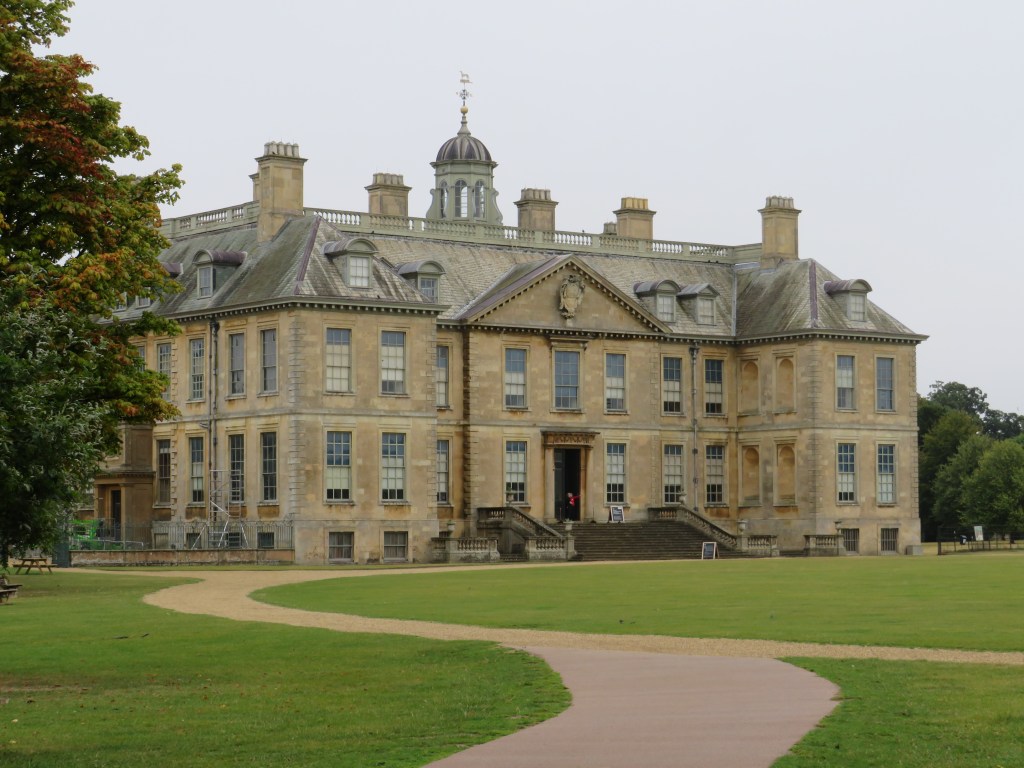
We set off in the drizzle for Belton House. Built in the reign of Charles II, this is a house that is very much influenced by the Baroque style, with plenty of decorative flourishes and impressively high ceilings. It was built for Sir John Brownlow and remained in the family for three hundred years but was predominantly used as a holiday home.

Grinling Gibbons carvings, mostly involving deceased game, provide a dusting nightmare. There is an interesting painted floor showing heraldic symbols and overall there is plenty of evidence of the family’s greyhound symbol. The house is home to 20,000 books, the earliest dating from 1493; one wonders how many remain on the TBR pile. Queen Adelaide, wife of William IV slept here, as did the future Charles III when a young Prince of Wales. It was good to see plenty of signs of ongoing conservation and preservation.

I have to say this is probably not the most inspiring National Trust property I’ve visited but I suspect the real gem is the fifty acres of garden and further 1300 acres of grounds. Unfortunately, it was not the weather for exploring the typically seventeenth century garden, perhaps that’s for another visit. The herd of fallow deer were much in evidence, although not easily captured on camera, with stags in full antler ready for the rut and including those with white, dark and dappled coats.

The younger members of the family joined us for the afternoon, by which time it was at least dry but more reminiscent of late October than early September. Autumn has certainly arrived early with falling leaves and autumnal fogs. The impressive adventure playground went down well but I have doubts about the advisability of the oldest member of our party testing the zip wire.

A Few Days in Malvern Part 3

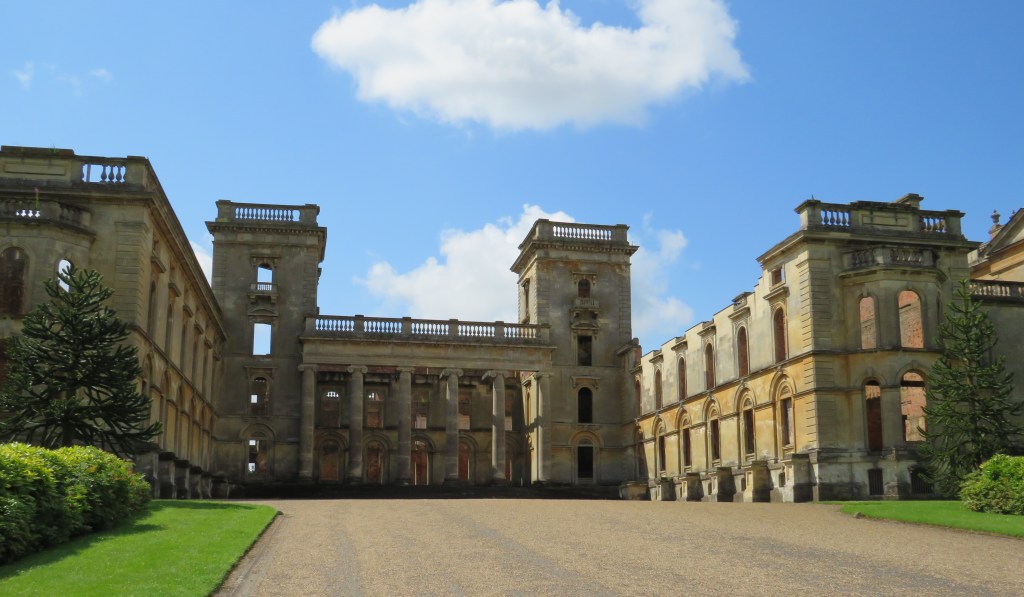
We ventured north again and after a minor satnav fail we arrived at Witley Court, this time exploiting our English Heritage life membership. After a walk up through the woods to the house we were just in time for a short talk about the history of the house by Stephen. Built on the site of a Medieval Manor owned by the Cooksey family, who married into the Russells, the current Witley Court began life in the 1630s as a redbrick Jacobean manor house. The Russells supported the king in the English Civil War and Witley was sold in 1655, probably to pay the price for being on the wrong side.

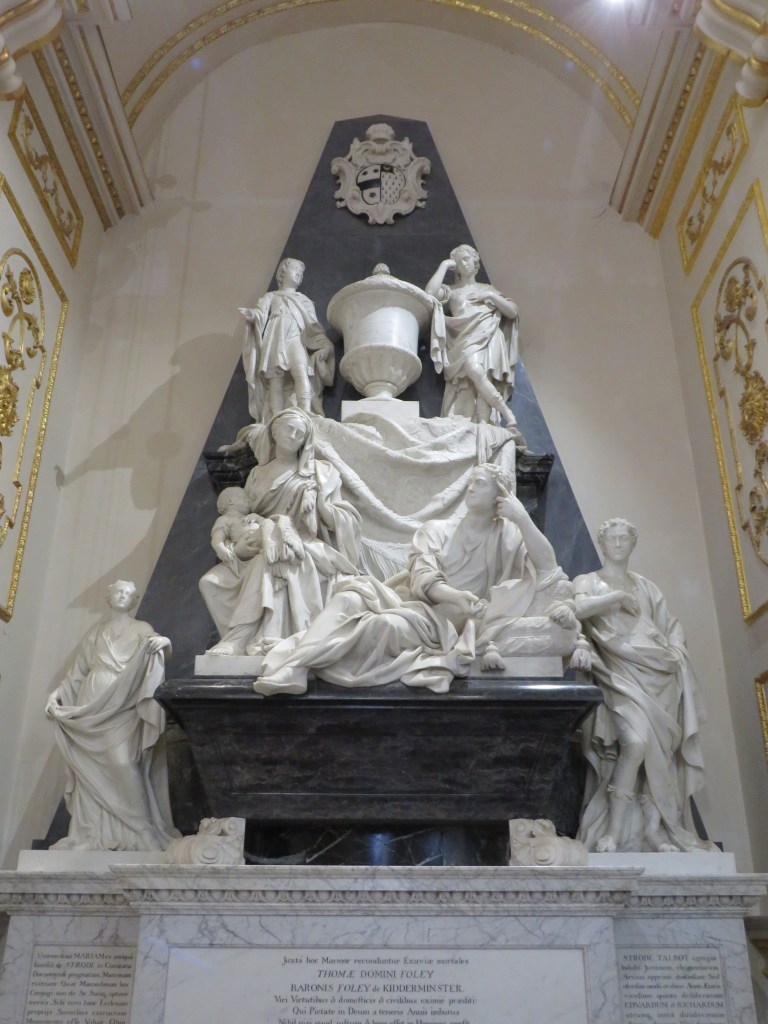
Eight generations of Thomas Foleys then owned the house. Their money came from iron works and as such they had to strive to become accepted as landed gentry. To this end, they purchased a great deal of land, as well as making substantial additions to the house. In order to be fashionable, the red brick was covered with stucco. In the early nineteenth century, an advantageous marriage provided funds to employ John Nash to design a huge portico and make other changes.

In 1833, the estate was sold to William Ward. The owner of more than 200 coal mines, William was one of the richest men in the country, due in part to the enslavement of others. He was knighted to become the 1st Earl of Dudley. In the 1850s, Ward employed the architect Samuel Daukes to make further alterations in the then popular Italianate  style. This include a new curved wing and a large conservatory. At the same time, the stucco was replaced by a facing of Bath stone. Lavish entertainments were held, with the Prince of Wales (later Edward VII) and his entourage visiting. Guests would stroll round the gardens between banquet courses and find that whilst they were eating one course, the gardeners had replanted the beds with different plants.

In 1920, Sir Herbert Smith a carpet manufacturer bought the court. He had been knighted for chairing the little known carpet rationing committee in World War One. The house was only partly used and a devasting fire in 1937 destroyed half the house. Lacking the funds to repair the building, the contents of the remaining half were sold off and some of the building materials, including the lead from the roofs, were sold for scrap. Neglect took a further toll and eventually, in 1972, the forerunner of English Heritage acquired the site and began a programme of preservation.

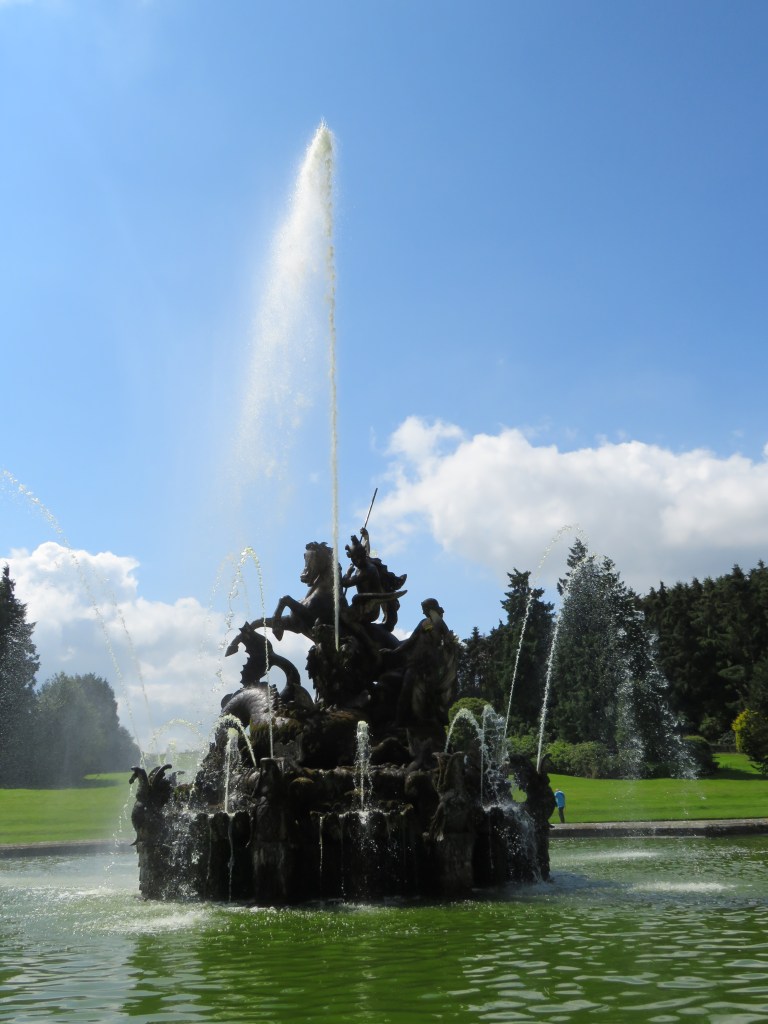
We had a long chat with the head gardener who told us that the elaborate formal garden is an exact copy of that designed in the 1850s by William Andrews Nesfield. This included replicating the mistakes in the elaborate swirling box hedges that were planted in the nineteenth century. Nesfield’s enormous Baroque fountain is quite a feature. The sculpture is based on the story of Perseus and Andromeda and on the hour each hour the fountain plays for about ten minutes. The main jet reaches more than thirty five metres high.  The pumps were originally steam driven but since restoration in 2002, they are electric. Witley village was in the area where the fountain now stands but not wanting to be too close to the villagers, the family had the occupants moved out and the cottages demolished.

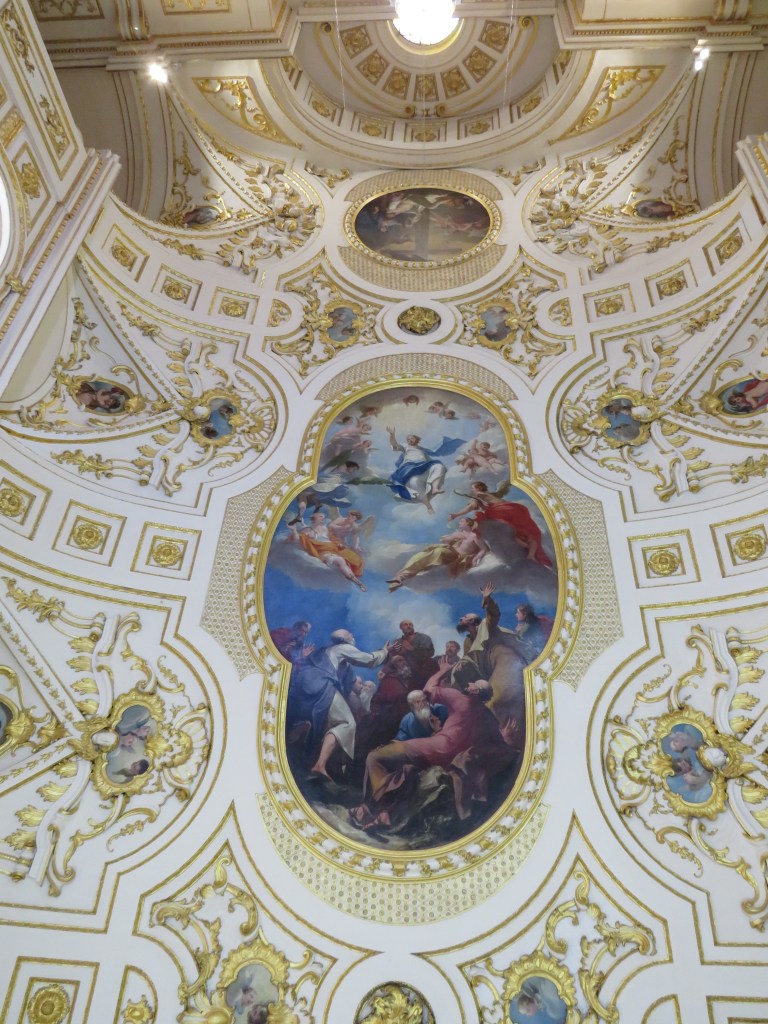
We were told that the neighbouring church, which is still a functioning parish church, was ‘not like other churches’ and Stephen was not wrong. Built by the Foleys in 1735, to replace the previous church, many of the fittings were purchased twelve years later from a private chapel at Cannons Park in London. Billed as ‘the finest Baroque church in the country’ this is probably not an extravagant claim. If we thought the church at Brockhampton was ornate, it had nothing on this. With painted ceilings by Antonio Bellucci, and copious amounts of gilding, it was to be seen to be believed. The church is now designated as a Major Church, one of the 320 most significant in the country.

Then the obligatory cake sampling trip to the tea rooms. Today’s toffee cake rated highly.

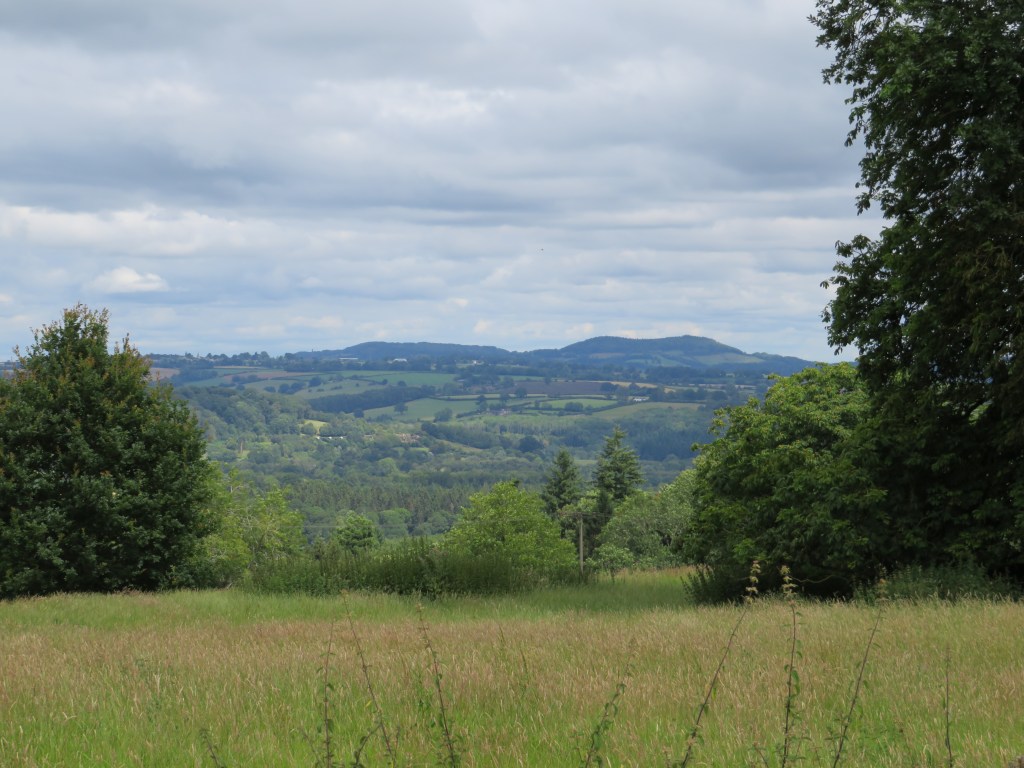
We started our last day by travelling westward to St Wulstan’s RSPB Reserve where we had a brief walk amidst a distinct lack of wildlife. We drove up to the base of the Malvern Hills and arrived a little early to  visit Picton Garden. We were allowed in anyway. This small garden is home to the national collection of Michaelmas Daisies. To me a Michaelmas Daisy is a Michaelmas Daisy but no. The nursery cultivates 430 different varieties. Michaelmas Daisy was on my plants wanted list so I chose one. A bit more of a drive through the Malvern Hills. The clue is in the name and we felt that hill walking might be a little strenuous for us. In addition, the weather was a bit uncertain, so it was off to visit a final family history related parish before returning to the van. Then home the following day.

A Few Days in Malvern Part 2

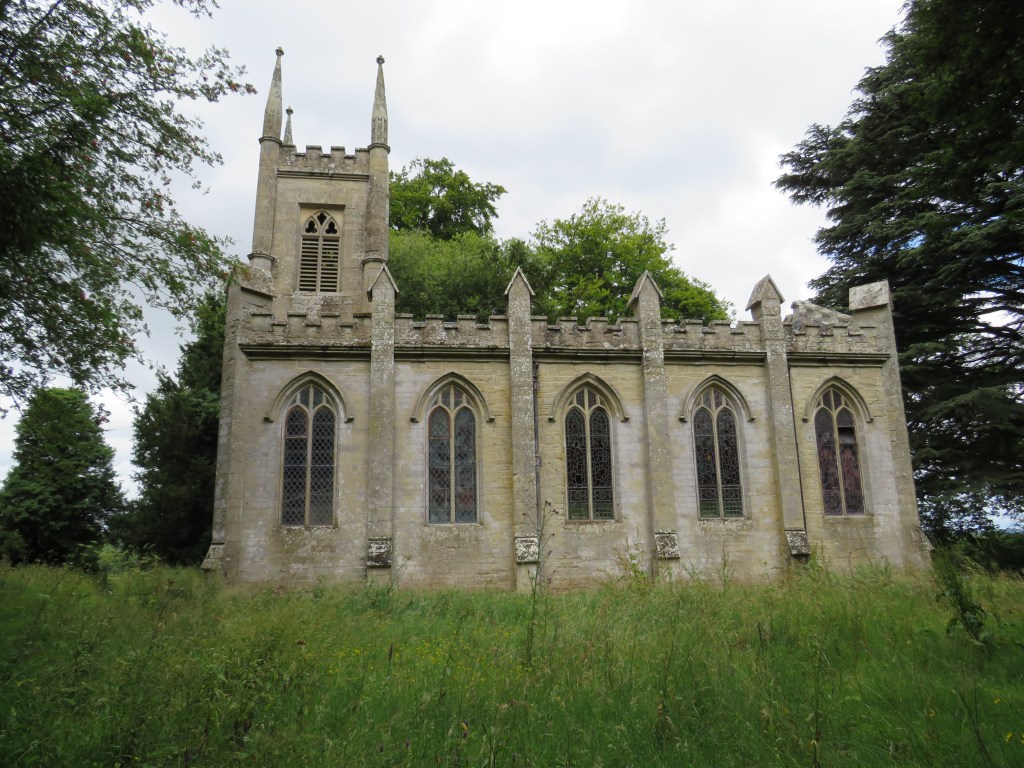
You’d think I would remember that it isn’t a great idea to tour churches on a Sunday but no. With my children’s family history in mind, we went for drive and walk round Hanley Swan and Hanley Castle. Sadly, most of the buildings are too late to have been family residences but we were able to get an overview of the area. We arrived at the church at 10.15am. Good news, the service wasn’t until 11am and the church allegedly was open from 10am daily, except that today it wasn’t. I was able to photograph the outside though.

On to Upton on Severn. This was Blues Festival weekend so roads were closed and the streets were crammed with street food vans, buskers, festival outlets and people. It made for a lively vibe but not ideal for photographing churches, one of which was a gig venue so I couldn’t even get near to it.

After an afternoon back in the van we headed to Llanthony Secunda Priory in Gloucester for an outdoor Fisherman’s Friends Concert. A very quick stop off to look at Ashleworth Tithe Barn on the way and we reached Gloucester. There was a slight issue accessing a car park that didn’t require us to do something complicated online on our phones but that overcome we took a short walk through the docks to the venue. The Augustinian Priory was established in 1136 as a second house to Llanthony Prima in Wales.

We were carrying our own chairs and I decided I could get away without encumbering myself with the umbrella or a coat in addition to my fleecy zip up top. As black clouds loomed I doubted this ‘wisdom’ but the umbrella was not needed. By the end, I did wish I had brought my coat but my noble companion sacrificed his. What is it about open air venues that makes people think it is ok to talk loudly throughout? We were probably the only audience members not to avail ourselves of the bar and food offerings at inflated prices. The concert was excellent of course but there was a teeny difficulty locating the car park for our homeward journey. We found a car park easily enough, just not the right one. It wasn’t helped by the fact that places looked familiar because we’d driven past them in the quest for a car park in the first place. I am sure we could have done something clever with our phones when we got out of the car but ‘clever with our phones’ is not us. After what I will describe as a ‘slight detour’ round Gloucester Docks thankfully the car hove into sight.

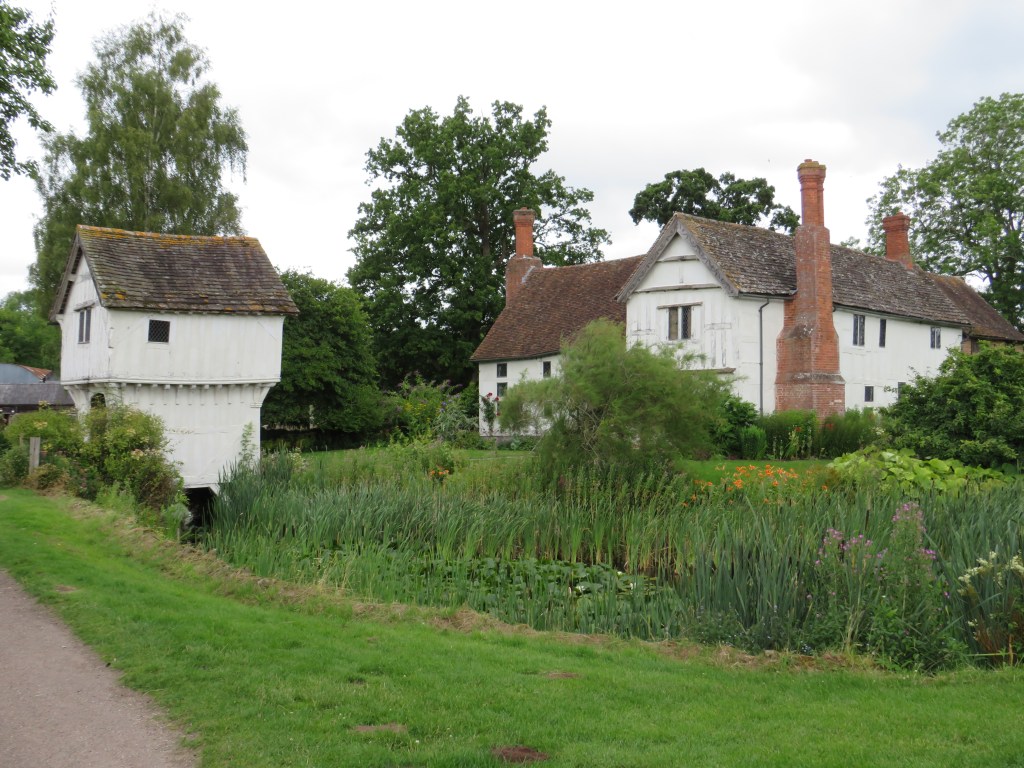
The next day, we headed north into Herefordshire to visit the Brockhampton Estate, definitely highly recommended. First up was the fifteenth century house with its sixteenth century gatehouse. The archetypal Tudor timber-framed home sports white wood and not the traditional black but apparently this is historically accurate, Black and white was not popularised until the Victorian era, when tar replaced limewash on the wood. Tar however was later found to trap moisture and cause rot. Brockhampton house’s wood has been limewashed and was therefore white. The original, cruck-framed building was constructed in the 1420s for John Domulton and his wife Emma Brockhampton. Later owners were the Barneby and then the related Lutley families. Renovations in the 1870s were overseen by John Chessell Buckler. Buckler was known for his work on Lincoln Cathedral. He was also the runner up for the design of the new Houses of Parliament when they were rebuilt after a fire in 1834. By the nineteenth century the house, was the home of estate workers. The whole estate was given to the National Trust in 1946.

The rooms in the house have been furnished to show different eras of occupation from the 1400s to the 1950s. The table in the main hall was set with square wooden trenchers. Each one contained a mini biography of a different inhabitant of the house from its earliest times until the twentieth century. There were plenty of interactive opportunities and items that could be handled. The house should be commended for its efforts to be disabled friendly, with captions in braille, and typed descriptions of each room, that are suitable for those who can turn text into audio. You could also borrow noise cancelling headphones and fidget toys.

Armed with a map of the estate, we decided to embark on the yellow route walk. To be fair, this was flagged as being ‘hard’ but we have cut our walking legs on ‘strenuous’ sections of the coastal footpath and we rashly decided that National Trust’s ‘hard’ might not be too bad. It was more difficult than we anticipated, mainly because it was uphill, at least on the way out. Once at the top of the hill, we swapped to the red route to see the advertised views. The views were good but perhaps not worth the mile and a half uphill walk to get there, especially as we could have driven up there and parked in an auxiliary car park.

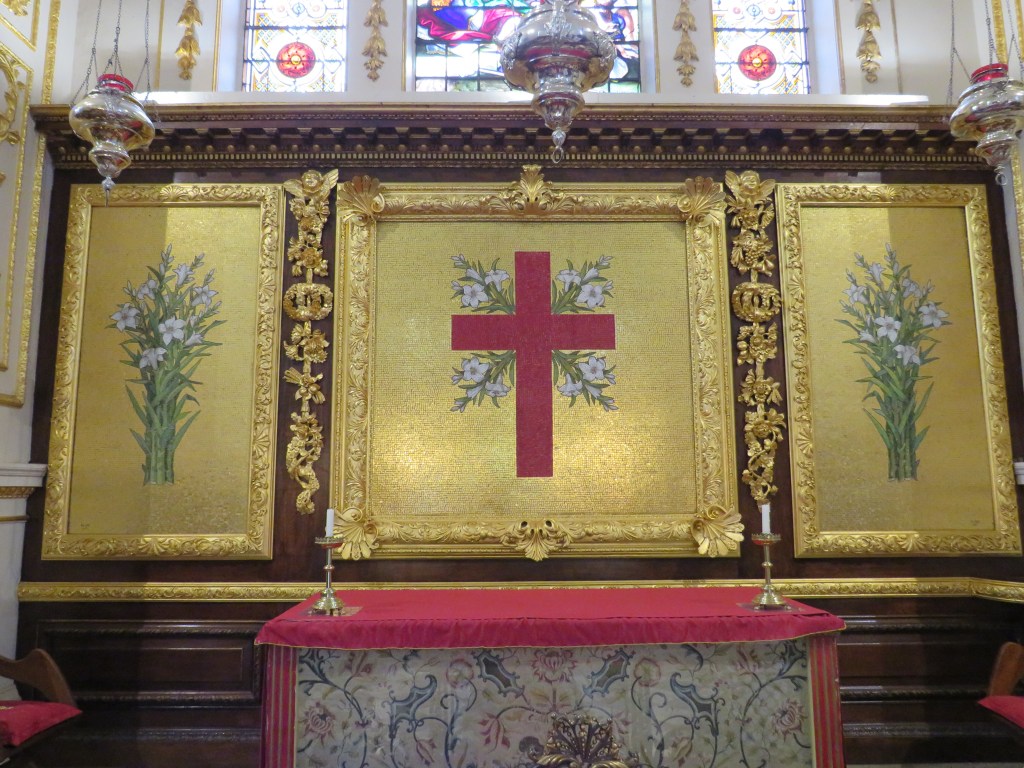
We looked round the chapel, built in the late eighteenth century in a very ornate in style, with perhaps a Russian influence in the panel behind the altar.

Next, to another parish church with family history connections before returning to the van via a supermarket shop.

A Few Days in Malvern

As the rigors of the job I must not mention were abating, last week, we embarked on a short trip to Worcestershire. Years ago, we began a campaign to spend a few days in every county and although this has somewhat fallen by the wayside, Worcestershire was not one we had ticked off, so this was an opportunity to remedy that.

After a slight pause, because we set off without the extending mirrors that allow the driver to see round the caravan, we were on our way to Malvern. The journey was smooth and uneventful but true to form, we found ourselves travelling on the hottest day of the year so far. This was designed to be an opportunity to relax and twenty eight degrees was too hot for us to want to do much beyond rest in the van, so apart from a wander round the site once it began to cool a little, that was it for the day.

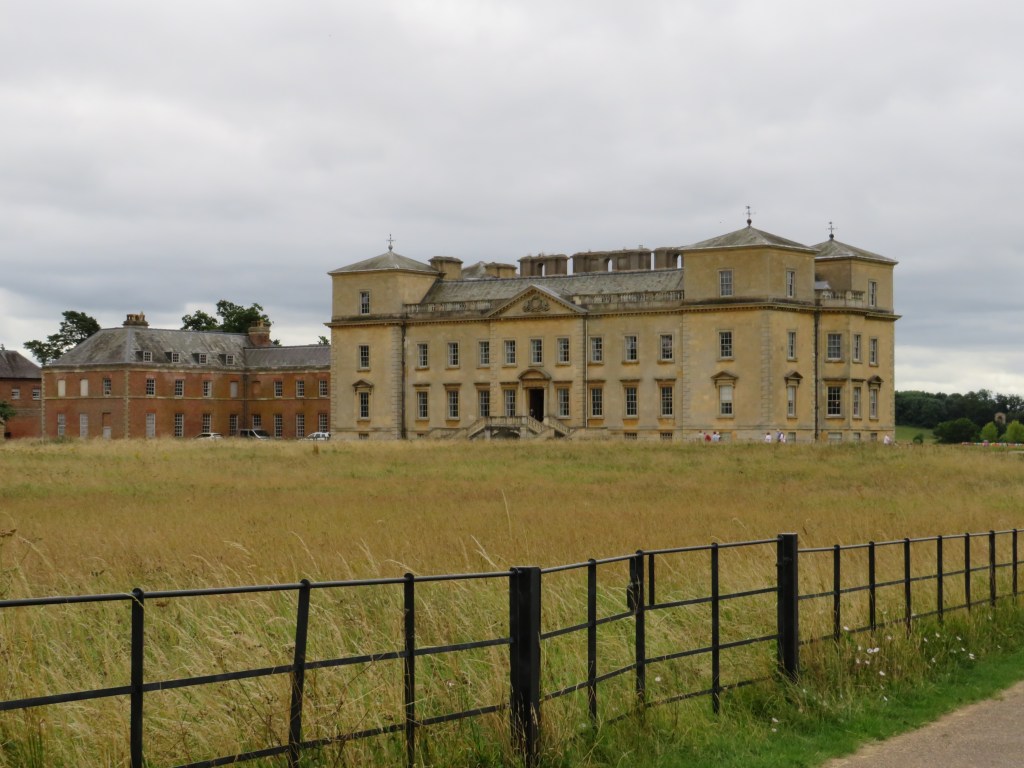
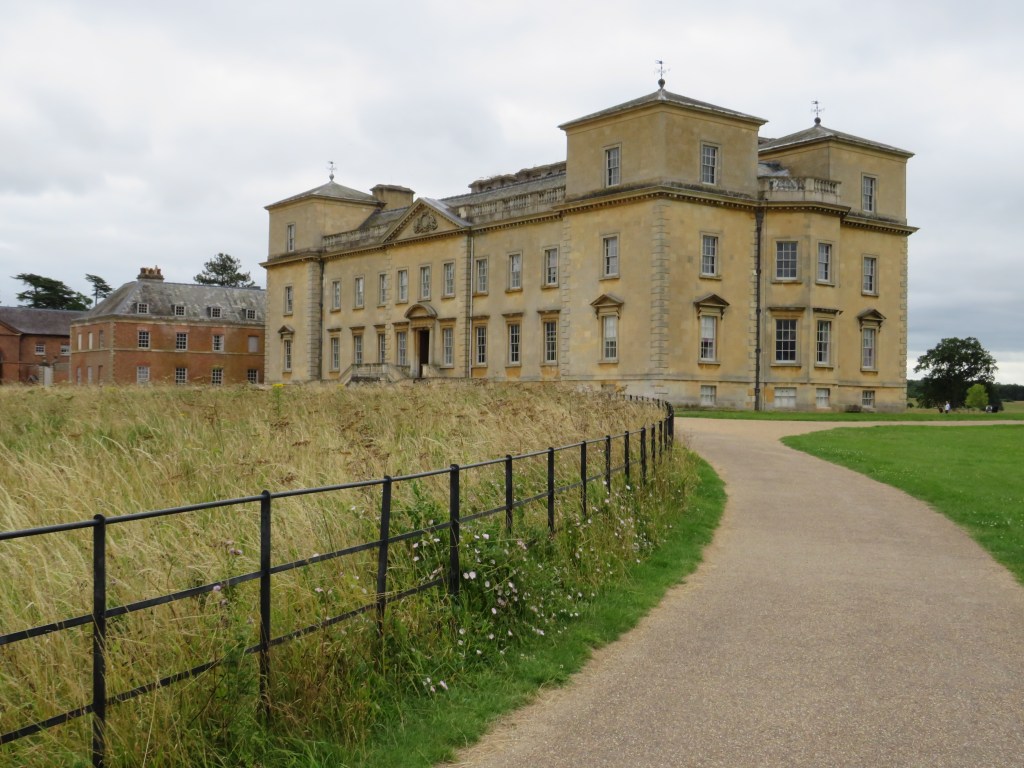
The next day was forecast to be the rainiest day of our trip, so we decide to visit somewhere with some indoor opportunities. Croome House was our destination of choice. It turned out that today Croome was the location for the start of a bike race so, although we arrived as it opened, the car park was almost full. It was a bit of a walk through the park to the house but the views were impressive. Guides were allegedly thin on the ground and Mike seemed to pop up in every room. We learned a little of the history from a rather whimsical video.

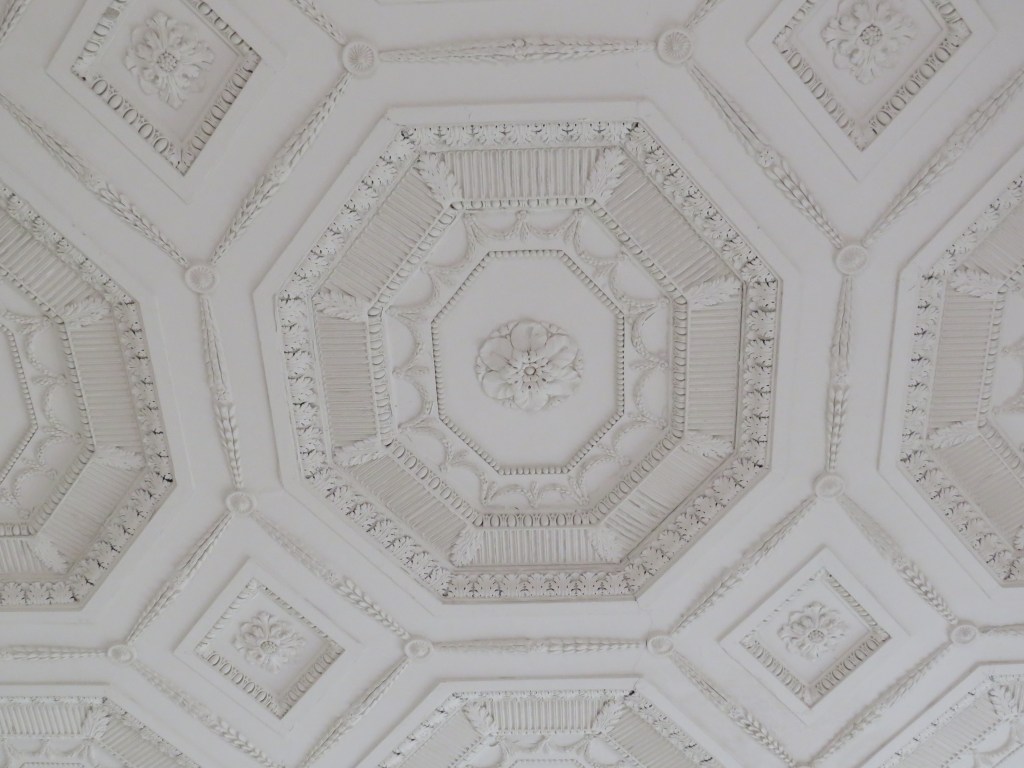
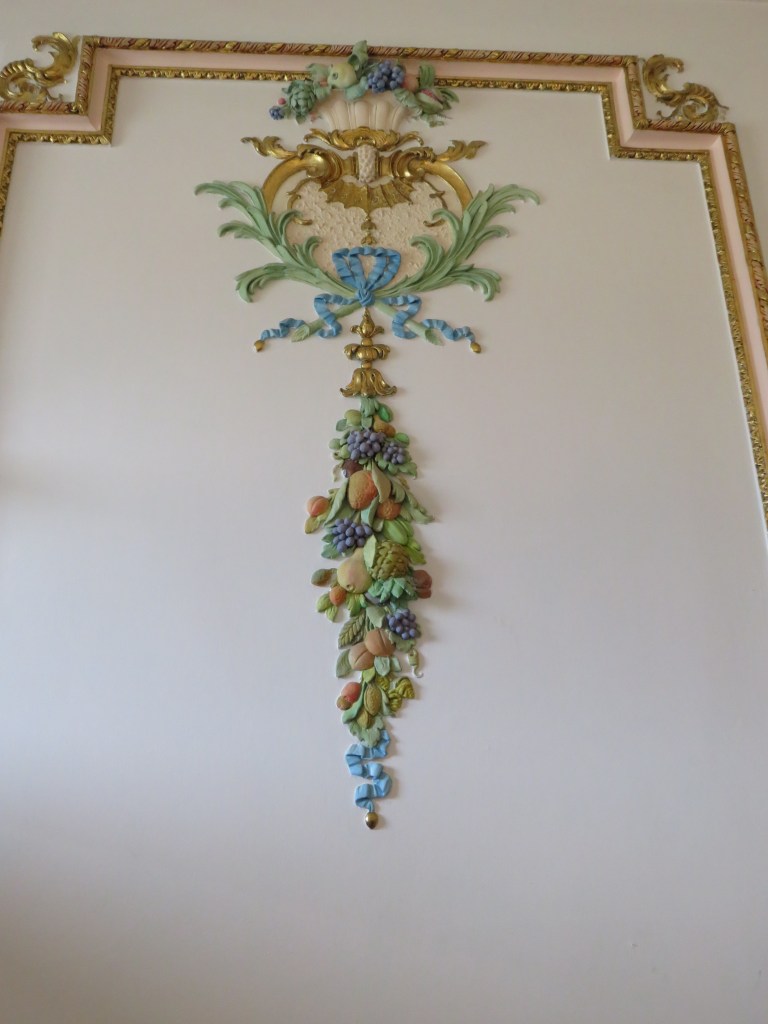
Originally the home of the Earls of Coventry, George William, the 6th Earl, inherited Croome on the death of his brother in 1744. He had a utopian vision to create the perfect home, in an idyllic setting. He gathered like-minded visionaries to bring his dream to fruition, including Robert Adam, James Wyatt and Lancelot (later ‘Capability’) Brown. The red brick house was transformed into a Bath stone-faced Palladian mansion set in parkland. The gardens contained imported plants from across the world. When the 8th Earl died, in 1843, many plants were sold off. The National Trust, who own Croome, are gradually replanting shrubberies and trees to Brown’s design but we seemed to miss the evidence of this.

The 9th Earl was noted for his racehorses and also for his herd of Herefordshire cattle, some of which were sold to Australia. Croome was requisitioned during the Second World War and RAF Defford was built in the parkland. After the war, Croome was used as a Catholic Boarding School, then a centre for Hari Krishna and finally a private home, before the National Trust took over in the early twenty-first century. The house has been stripped of almost all its furniture and artefacts and is now used more as a museum space, home to some art installations. One of these was an ‘archive’, a spiral bookcase full of box files, some of which contain information or artefacts relating to the house at various stages of its history.

We were fortunate to have visited on a day when Peter was on duty. Peter does fortnightly tours telling the story of the house’s time as a school. He kept us entertained for nearly two hours with his account of the punitive regime that he endured before he moved to the senior school at the age of thirteen.

We also looked at the RAF Defford museum, which is in the grounds. The airfield was the home of radar testing and the site of the world’s first fully automated aircraft landing. Most of the buildings were demolished, leaving just the runway and a handful of buildings beyond the wood as a reminder of the site’s time as an airfield.

We timed our visit well as the rain began just as we were leaving. We did make a very quick detour to photograph a church of potential family history interest at Pirton.

Irish Adventures Days 33-35 The End!

Yes, this really is the end of the adventure.

Day 33

The sun was back with us for our last full day so we set off for Kinsale and were only slightly fooled by the new road layout on the outskirts of Cork. Finally at Kinsale we were able to find some working fishing boats for a fisherman of my acquaintance to study. Ireland does seem to have a shortage of public toilets but we located one in Kinsale. It was one of those pod type ones and cost €1 for twenty minutes. We won’t go into why anyone could possibly want twenty minutes but I know some people take an inordinately long time; I am usually standing behind several of them in a queue. €1 did seem rather a lot and we only had one 1 euro coin between us. We hoped that if I went in first and came out again within the allotted twenty minutes the other member of our party could follow me in. Unfortunately, it didn’t work like that and you couldn’t reclose the door for a second person. I’ll just leave that there. Just outside Kinsale there were mud flats with some wading birds for me to take fuzzy photos off. In my defence I was about 100 metres away and the sun was in the wrong direction.

Day 34

We weren’t due at the ferry terminal until the evening but with a long drive ahead we didn’t want to go far, especially as it was raining again. We drove to nearby Ballycotton where there were more fishing boats to examine. One thing we have noticed is that gardens here are usually fairly plain but virtually every one has hydrangeas, if nothing else.

Packing up the van was quickly accomplished, we are dab hands at this and we set off for the ferry terminal. We were directed to lane 19. We joined the end of the queue in lane 19, which was full. An excitable terminal employee braved the driving rain to let us know we were about to head off to Dunkirk; we were in fact in lane 20. The final lane 20 car was across two lanes obscuring the numbers. Adjustments made, we ended up in lane 19 next to a convoy of jeeps taking aid to Ukraine. I attempted to access the limited (20 minutes) free wifi on the ferry. This proved impossible. After I had taken up four minutes of my allotted time complying with repeated requests to put in my details, without actually being connected, I gave up. The driver amongst us was supposed to be sleeping. He normally sleeps as soon as he sits down but because he needed to sleep this time he was remarkably wakeful.

Day 35

We arrived in Pembroke at 1.15am and headed for home, planning to stop at any sign of tiredness from the driver; there was none. Bless him, we arrived home at 6.48am having done 3630 miles since we left. There are thirty two historic counties in Ireland. We stayed in nine, visited another nine and travelled through four more, which isn’t a bad haul.

I promised you my top ten days out and it was a difficult choice but here they are:

Ulster American Folk Park 

Strokesdown Park House and Famine Museum

Ring of Kerry with Dunloe Gap (only this high because of Dunloe Gap)

Irish National Heritage Park

Dingle Peninsula 

Donegal

Connemara and National Museum of Rural Life

Newgrange 

Rock of Cashel 

Giant’s Causeway

And that’s the lot, thanks for coming along for the ride. Normal ramblings of an historical nature will resume shortly, if anything about my life can actually be called ‘normal’.

Irish Adventures Day 32

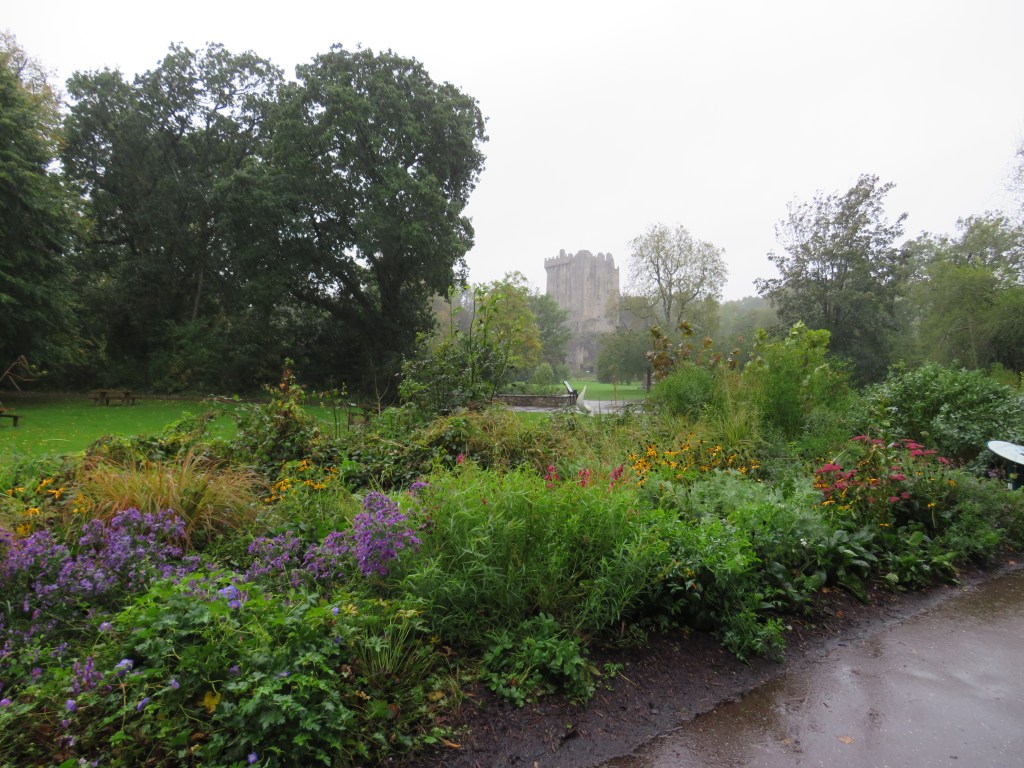
This was not really a great day for going anywhere weather wise. Undaunted, well may just a little bit daunted, we set off for Blarney Castle. In the early thirteenth century a stone structure replaced the tenth century wooden hunting lodge on the site. The stone building was demolished in the mid fifteenth century, so Dermot McCarthy could use the stone for the current tower house or castle. Like so many others, the castle fell to the Parliamentarians in the English Civil War. Although the castle  was restored to the McCarthys by Charles II, it was once again confiscated by William III, as the Catholic McCarthys supported James II. Caves beneath the tower are known as the Badger Caves and several legends are associated with them, with tales of prisoners being thrown into a pit in the caves and passages from the caves leading to Cork and Kerry. The inhabitants are supposed to have escaped with their valuables down these passages in Cromwell’s time, leaving little for his troops to loot.

We thought that the entrance fee was a bit on the steep side, especially as you would normally have to pay to  park as well. The machines were out of order so we escaped this. Of course the tourist honey pot here is the Blarney Stone, which has been kissed by tourists for over two hundred years, in order to be rewarded with the gift of the gab. Allegedly Queen Elizabeth I associated the word Blarney with smooth talking flattery because the then lord of the castle Cormac MacDiramada, tried to persuade the queen of his loyalty to prevent her from seizing Blarney for the crown. She shrewdly saw through his sycophancy.

There were signs warning visitors of the ‘arduous’ climb to the stone, which is at the top of the castle on the battlements. They aren’t wrong about this. Clambering up what I think was four floors worth of very narrow spiral steps that were slippery with rain was possibly not one of my better ideas. Be warned, this is an all or nothing climb, once you are on the path to the top there doesn’t seem to be any option to bail out half way. We passed on the kissing the stone thing, not least because I talk too much anyway, although I don’t think I am guilty of ‘smooth talking flattery’. Kissing the stone involves taking off glasses and emptying pockets in case anything falls out, false teeth weren’t mentioned but maybe those are in peril too. You then lie down on what was on the day of our visit a very soggy mat and bend backwards with your head considerably lower than your bottom, supporting yourself by gripping on to metal bars. The men who were disinfecting the stone between kisses and hanging on to people to stop them plunging head first to their doom had prominently displayed bowls for tips and then you could pay more for photos (I heard the sum of €10 mentioned) that were taken of you in a very strange position. It all seemed a bit like fleecing gullible tourists to me. To be fair, the gardens and grounds were extensive and we did explore a little. I was particularly keen on the poison garden. Blarney House, built in 1874, is on the site but is not open to the public. In half decent weather woodland and riverside walks would have given us better value for our entrance money.

Irish Adventures Day 31

As we were unable to go to Craggaunowen because it had shut for the season before we got near enough and we combined Rock of Cashel and Kilkenny in one day, we were left with two spare days. The original plan was to visit Waterford on the way to the ferry but now we were able to give it a day to itself and just as well as we could never have parked the car and caravan. We opted to avoid the toll road again and after a sunny drive, approached Waterford via an industrial estate. We found a car park but were only able to park for two hours, which was a shame as Medieval Waterford had a great deal to offer. Understandably, they make a great deal of their Viking heritage. There were also several building with murals.

We had a variety of museums to choose from; these were clustered together close to the cathedral. Should it be the Time Museum, The Irish Wake Museum or the Silver Museum? I was tempted by the virtual reality Viking experience but I am not sure how well virtual reality goggles go with glasses so we went for the tamer option of the Medieval Museum, which was very good. You are able to buy combined tickets for more than one museum, which seems like a good idea for those who want to go to more than one. We had already passed the Franciscan friary that Henry III agreed to the build in 1241. Richard II stayed here when he visited in 1394. After the dissolution, Henry VIII allowed a Catholic alms house to be built, where prayers were said for Henry VIII’s soul until the mid twentieth century. William III encouraged the Huguenots to settle in Ireland and there was a community in Waterford who used part of the friary as their church.

Inside the museum, photography was tricky as, understandably, light was low, no flash was allowed and there was reflection from the glass cases. We saw the cloisters and the wine cellar, which had a wattle and daub roof. There were many of the city’s charters on display and a list of mayors dating back to 1284; the first female mayor was not elected until 1991.

This part of Ireland was one of the first to be settled and it is believed that the Mesolithic settlers came from Wales c.7700 BCE. 10,000 artefacts were found in Bally Lough during a project in the 1980s and 1990s. The Medieval city was walled, with several towers, of different dates, along its length. Reginald’s Tower, which is mentioned as a stone structure in 1088, was where the city’s Viking leaders were taken during the Anglo-Norman invasion of 1170; two were executed there. The tower was rebuilt by King John and an additional two floors were added in the fifteenth century.

In the thirteenth century, Waterford was granted a monopoly for the importation of wine, so all wine imports in southern Ireland had to come through the port. This led to great rivalry with the neighbouring port of New Ross and smuggling took place. Initially, the wine came from France but during the Hundred Years’ War, Iberian wine predominated. The Great Charter Roll, which was on display, was put together to convince the king of the city’s long standing association with the crown and to ensure that it continued to be favoured over New Ross. The main exports were woollen rugs and cloaks. In 1566, woman were forbidden from being wine taverners or drawers (the equivalent of barmaids) because of their bad reputation in the taverns. ‘Naughty corrupt women’ were leading ‘honest damsels into folly’.

Apparently, Perkin Warbeck, a pretender to Henry VII’s throne, besieged the city in 1495, supported by the 9th Earl of Desmond, from Cork and foreign mercenaries. Cannon in Reginald’s tower fired on the invaders’ ships and two were sunk. This is the earliest record of cannon being used in Ireland. After eleven days the besiegers were defeated and Warbeck escaped; Desmond was pardoned. Although Waterford was the only town not to succumb to Cromwell himself, it was taken in 1650 by Cromwell’s son-in-law Henry Ireton, when the citizens were weakened by plague. The city was looted but incredibly, fifteenth century vestments survived because they had been hidden in a secret chamber under the cathedral’s floor. They were not rediscovered until 1773 when the medieval cathedral was demolished and the current one was built. These were on display in very dim light but were intricately and lavishly embroidered and must have been very heavy to wear. We saw the Great Parchment Book of Waterford, chronicling activities in the city from 1356-1649. The entry declaring Charles II to be king upon the execution of his father was erased when the city was taken by Cromwell’s New Model Army.

We travelled back along the small coastal roads in order to have some different scenery for part of the way. Our sojourn at the Victorian Farm is over, so we began to work our way through the first series of Coast in the evenings.

Irish Adventures Day 30

We seemed to have survived Storm Agnes unscathed so headed off for Cobh, which I was pronouncing Cob but is apparently pronounced Cobe, to rhyme with robe. The railway station at Cobh aka Queenstown has been converted into a heritage centre that commemorates Irish emigration; over three million people left from Queenstown between 1815 and 1970. We were attracted by the signs to a free car park, which looked like it was going to be a fair way from the centre but turned out to loop back so as not to be, so we were glad that we resisted the lure of paid for on street parking.

There is a statue outside the centre that commemorates Annie Moore, a fifteen year old girl from Cork who was the first person to go through the immigration centre at Ellis Island, where there is also a statue of her. You can book a hour’s consultation with a genealogist at the centre for an eye watering €80. I need to put my prices up! We’d barely got through the door when Chris somehow got into conversation with someone who had been at the same school as he had and knew people he knew. I am used to this happening at home but this did seem to be quite a coincidence.

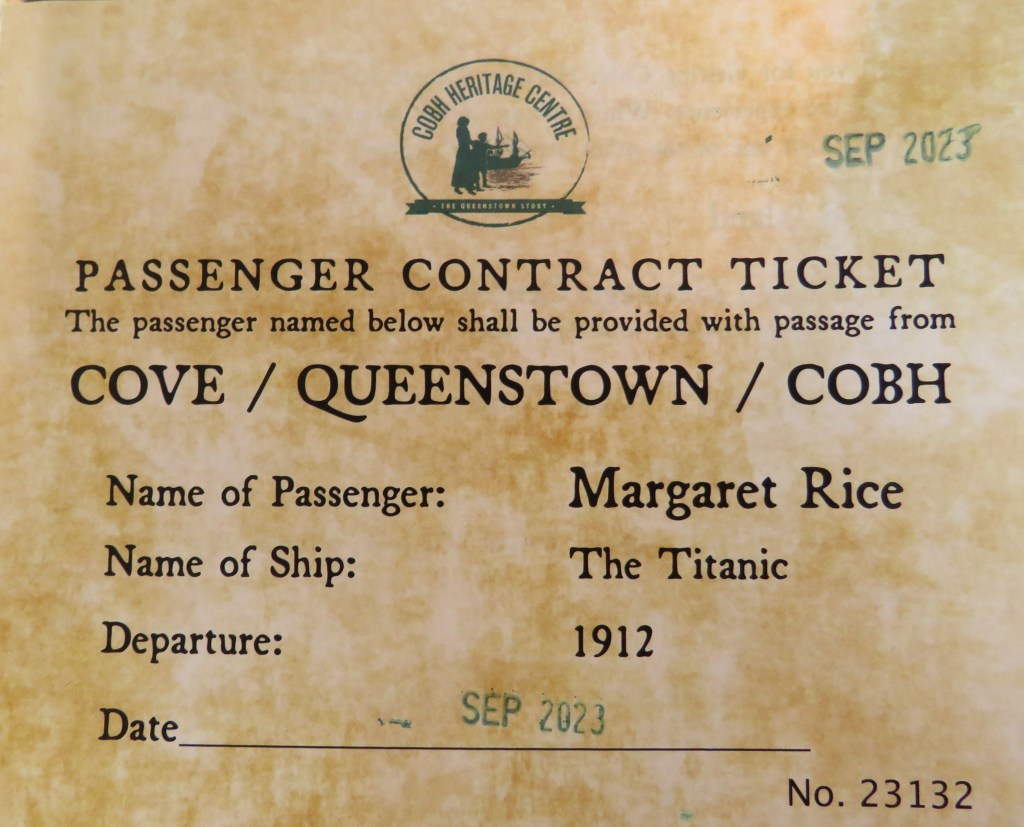
On admission to the centre we were given tickets bearing the name of a real emigrant and the actual ship on which they sailed. These emigrants left Ireland and different times in history and we were told that we would find out their fate as we went round the museum. We were both given tickets for the Titanic, so realised that this probably wasn’t going to end happily. Chris’ character was a twenty year old who eloped with a young eighteen year old to avoid being shot by her disapproving family. It is allegedly their story that inspired the film Titanic. I on the other hand was a widowed mother of five, Margaret Rice, who had been back to Ireland on a visit following the death of her husband with whom she had emigrated in 1899.

The exhibition was very well done and the personal stories were an effective touch. Several waves of emigration and emigrant ships were highlighted. Two hundred political prisoners were sentenced to transportation to Virginia in 1620. They had marched to Dublin to protest at being dispossessed of their land when Sir Arthur Chichester ‘planted’ Protestants in Wexford. From the mid-seventeenth century, Spike Island was used as a holding centre for those awaiting transportation. Many were also leaving as indentured servants. Cromwell was responsible for sending huge numbers of men, women and children to America and the West Indies, many of whose only crime was to be Irish. Kidnappers were offered substantial rewards for everyone they delivered for transportation. With around 50,000 people sent overseas in this way and sold to plantations between 1652 and 1659, in total it is estimated that Cromwell removed half a million Irish people through transportation, murder and starvation, in what was effectively an ethnic cleansing measure. In 1798, over six hundred United Irishmen were transported to Australia following an uprising. I was aware of the Roses from the Heart project to commemorate female convicts to Australia by embroidering bonnets in their name. 25,566 bonnets have been made and some were on display.

The emigrants who left from Cobh in the 1820s, many of whom went to Canada, were also part of the story. Cobh was, of course, the last port of call for the Titanic before she sailed and there was a memorial to all those from Ireland who embarked, the vast majority of whom perished, including our characters. I was pleased to see a photograph of my Margaret and her five sons. I wonder how that survived as the whole family were lost. Only Margaret’s body was recovered; she is buried in Halifax, Nova Scotia. The Lusitania, torpedoed off the Cork coast during the second world war was another disaster that was commemorated in the exhibition. 1198 of the 1959 passengers died and survivors were cared for in Queenstown and Kinsale.

Next was a bit of a drive to the supermarket of our choice. Slightly more of a drive than we’d intended because the satnav was fooled by the new road layout. We did pass some mud flats, where I glimpsed birdlife, including egrets, snipe and oyster catchers, which has been sadly lacking on this trip. On this day we clocked up more than 3000 miles since leaving home.

Irish Adventures Days 28 & 29

Day 28

Fortunately, the predicted overnight storm wasn’t too bad so we could begin our day’s adventures. Another day, another ring, this time the Ring of Beara but first to travel south to reach it. We, ok I, decided to cross the Kerry peninsula, rather than going round the main road, which we had travelled on before. In order to do so I set the satnav to follow the shortest route instead of the fastest. Do we want it to warn us of unsuitable roads? Yes, probably. The satnav makes a bleeping sound. Turns out that was it warning us, who knew? We wound our way up into the mountains until the road gave out. In theory it was a road, both map and satnav were agreed on this but it was a very narrow, bumpy, unmade-up track. Allegedly it went on for at least three miles. Having not realised this was a mistake in time to reverse back out of our predicament, we persevered amidst mutterings about the impact on the suspension. It was a mile before there was space to do a many point turn without falling over a cliff or in a bog. We took a slightly less short route but one that had the advantage of tarmac. This led us past Lough Caragh and across what is allegedly Ireland’s highest mountain range. The sum total of traffic that we encountered in an hour’s driving was one tractor. A rough road (but a least it was a road) and a series of tunnels took us to the eastern edge of the Ring of Beara and into County Cork.

The Ring was another scenic drive, similarly devoid of suitable places for comfort stops as the Ring of Kerry. There were lovely views over Bantry Bay. Many houses were painted yellow, perhaps there was a job lot of paint going cheap. As we reached the north coast, there were large mussel farms. I had hoped that our route would take us along the small portion of the Ring of Kerry that we missed in order to go through the Dunloe gap but by this time the satnav was firmly set to fastest, so we ended up going a different way. In the absence of an alternative on the Ring of Beara, we returned to Muckross for refreshment and their irresistible cakes. Their gift shop’s winter sale had started, so I was able to pick up a couple of much reduced jumpers.

Day 29

It turned out that Storm Agnes, which we thought had been and gone was here right now. We were due to travel a hundred or so miles south to our final site. Should we go or should we stay? It was pretty windy. Once the wifi decided to wake up I found a decent weather tracking site. It looked like the worst of the storm was likely to be about 1pm and it would be more severe in Kerry, where we were, than in Cork, where we were going.

Should we wait until 5pm to travel, when it looked like things would calm down? It was by this time 9.45am, should we go and hope to get there before Agnes did her worst? We ummed and ahhed a bit. I left the decision firmly in the hands of the driver, on the understanding that whatever he decided would become our joint decision and there would be no recriminations! We lurched from one alternative to another and finally decided we would go for it, stopping if necessary. We are dab hands at packing the caravan up quickly and were on the road by 10am. Apart from fording a few flooded patches of road there were no real issues and it wasn’t even raining for the first hour. We did notice that Killorglin was in darkness as we passed through, with the shop and traffic lights out, so it seemed they had no power. We felt that the potentially dodgy bit of the journey might be the Derrynasaggart Mountains but we passed through these without incident. The satnav was a tad fooled by the new N22, which she didn’t recognise but which made our journey quicker, even though this was the most exposed part of the route.

At last we neared Youghal. Should this be pronounced You-gal or Yog-hal? I am not convinced by the satnav’s version of Your. Interestingly, occasionally, the satnav lapses into Irish, so we were heading for Corcaigh, rather than Cork; she did a similar thing for Limerick but Your doesn’t seem, by any stretch of the imagination, to be an approximation of the Irish for Youghal. We arrived at 1.10pm and the last ten minutes had seemed to be windier, so the 1pm predictions were about right.

Accessing the site was ‘interesting’. First, there was a van in the entrance, so we had to wait in the road whilst I paddled across a waterlogged site in a howling gale to find out what we should do. Once the van was out of the way, we were directed up a narrow drive in the hopes we could drive out of a different gate to get where we needed to be. It turned out that this was too narrow and we couldn’t fit the van round the corner. Cue reversing the caravan back round the corner and back up the narrow entrance way. One of the site owners/staff offered to do this for us. Much to my surprise Chris, who would have been capable of these manoeuvres, agreed. I guess then the driver would have been responsible for damaged walls or caravans. Fortunately there was none. In the end the van was turned through 180 degrees and manhandled into position by site staff.

Next to set up as the wind got a little fiercer. When there is a storm force gale going on one thing you need is for your caravan legs to go down for stability. These are electronic ‘automatic’ legs that do have their moments. This was one of those moments and they were on strike. Fortunately we were able to coax them into action and we were able to balance on four legs and two tyres to weather the storm.