Hearse Houses, Herons and Hauberks

On a day ear-marked for treading in my ancestors’ footsteps we set off round numerous villages and hamlets across the wilds of Northumberland. Great great grandfather, John Hogg, led an itinerant life, so we had a long list of places to cover. Chollerton was first on the list. This small village is sited on the ‘Corn Road’ from Hexham to Alnmouth, which opened in 1753, enabling produce to be shipped to London. Outside the church was a ‘hearse house’ used, as the name suggests, to store the village hearse and to provide stabling for the vicar and others coming to church. It now contains a small, unmanned museum. Interestingly, the font at Chollerton church has been created from a former Roman altar.

Amongst other stops, we go to Thockrington, officially one of my favourite places in the world. Believe me, it is not a place you are likely to encounter unless you make a deliberate effort but the awe-inspiring landscape is worth the effort. We called at Great Bavington, Mitford and Netherwitton, with a supermarket stop in Morpeth in between. The main road north of Morpeth was closed due to an accident and fortunately we noticed this as we approached and whilst we still had time to take avoiding action. This sent the sat-nav into ‘turn around where possible’ mode, so it was back to the trusty map. I actually really enjoy tracking journeys on OS maps. It doesn’t seem to make me feel as unpleasantly unwell as it used to do. Unfortunately, this did mean we had to miss out three of our intended destinations.

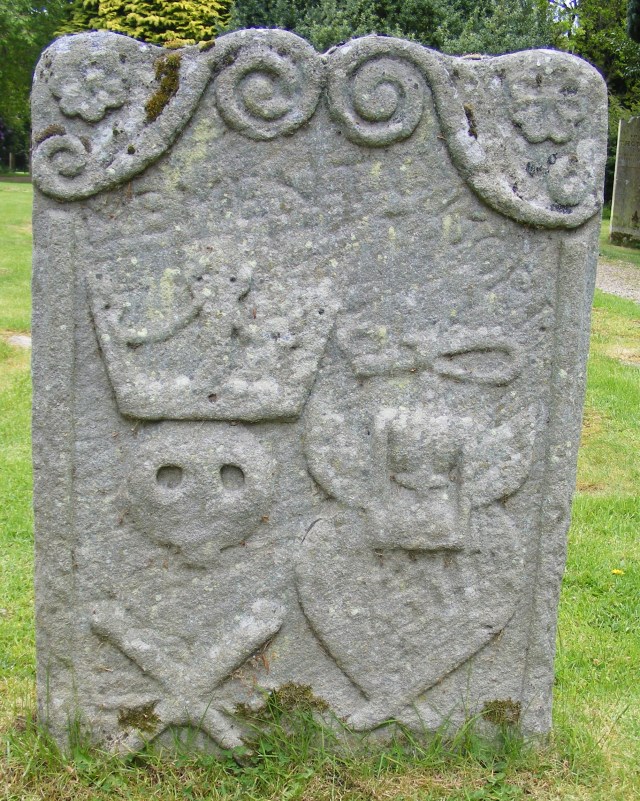
130 25 May 2019 Gravestone St. Mary Magdalene, Mitford

Not one of my ancestors! Reverse says John Pots (sic) d. 1724 age 30 Mitford, Northumberland

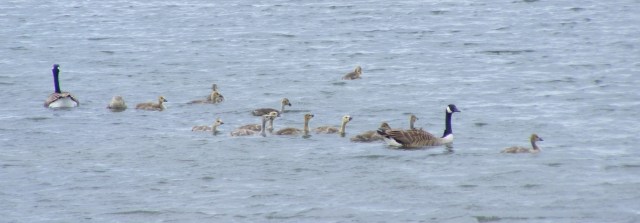
Ten out of ten for Hauxley Wildlife Discovery Centre today. The forecast was a little uncertain but indications were that the early rain would pass over, so we ventured out and were very glad that we did. This coastal nature reserve is run by the Northumberland Wildlife Trust and is excellent. The only charge is a donation towards the car parking. The 1km walk round the lake gave access to several bird hides and I don’t think I have ever seen so many different birds at one location. I believe the lake has been created from a landscape that was a legacy from open cast mining. To top it off, the café, with its views of the lake was lovely too. If you are interested in this sort of thing here are the birds and wild flowers that we encountered:- great tit, robin, black-headed gull, mallard and ducklings, magpie, Canada geese and goslings, grey heron, oyster catcher, house martin, barnacle geese, greylag geese, lapwing, mute swan, moorhen, goldfinch, crow, blackbird, jackdaw, shelduck, little grebe, cormorant, house sparrow, wood pigeon, blue tit, pheasant, tufted duck, gadwall, shoveler. Red campion, primroses, dandelion, buttercup, daisy, iris, bluebells, hawthorn, cleavers, gorse, cowslip, violet, stitchwort, white clover, speedwell, bird’s foot trefoil, red clover, stinging nettle, broom, dog rose.

132 26 May 2019 Hauxley Nature reserve Canada geese and goslings

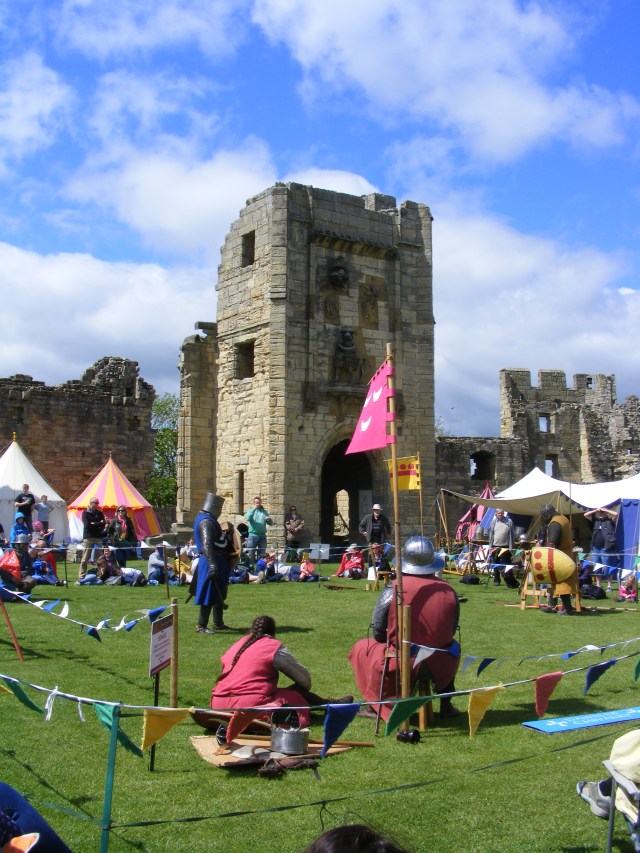
We debated whether to go straight back to the van but decide to call in at nearby Warkworth Castle on the way and again this was the good choice. We hadn’t realized there was going to be a fifteenth century living history event underway. This was a real bonus and we enjoyed chatting to armourers, bow-makers, shoemakers, stained glass artists, candlemakers, rope-makers and potters. We watched dancing and combat and listen to music. I was amused that the compere attempted to disguise his anachronistic microphone by covering it with hessian. All in all, two great destinations today.

133 26 May 2019 Warkworth Castle

#FamilyTreeLive Adventures

I have, rather belatedly, managed to access the photos from my camera, thanks to being reunited with the ‘big’ laptop. The feet still ache, the back is a little dodgy but I have recovered sufficiently from the two brilliant days at Family Tree Live and am now just about fit to post about our adventures.

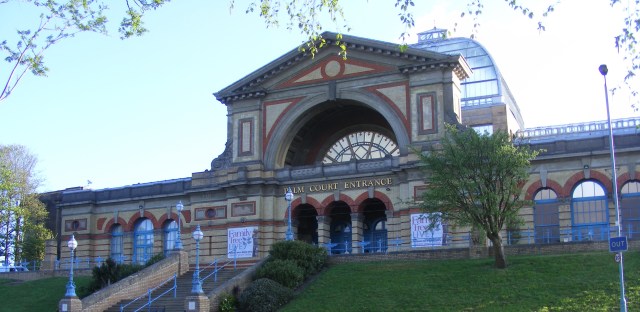
The first issue was to leave our caravan site at a sufficiently early hour. We have no problem with getting up early but a 2.2 metre high barrier is in place on the site from 10pm to 8am, to prevent people being disturbed by moving caravans. Despite knowing that our car will easily fit under this barrier, I am still worried that it will somehow have grown overnight and we will not be able to escape. Needless to say, we exit unscathed and with car roof intact. We have left early to avoid the worst of the rush hour traffic so arrive just a tad early. We are the first to park in the exhibitors’ dedicated car park. The free parking is a real plus at this show. Alexandra Palace is looking beautiful in the early morning spring sunshine.

Alexandra Palace.JPG

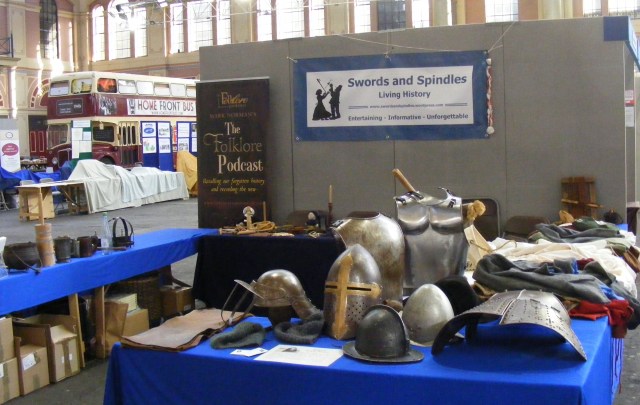
We remove the covers from our stand and are pleased with the way it is looking. This is our first time with a stand and we are excited to share seventeenth century life with show-goers.

Family Tree Live 2019 Open for business.JPG

I manage to sell a book before the show even starts! Then the doors open and there is a steady stream of visitors stopping to chat. The Ally Pally security team are amongst those who are enjoying trying on armour. The morning passes swiftly. I take time to circulate the stands and it seems that every other person is an old friend. I make sure I buy a copy of Nathan Dylan Goodwin’s latest novel. I have all his others on Kindle but have deliberately waited to buy this in hard copy and in person, so I can get it signed. There are also newcomers on the block. I am particularly impressed with Twiggli Trees’ attractive charts.

There are plenty of networking opportunities and our supply of business cards is seriously depleted. It was great to see that every stand was family history/history related and that local societies outnumbered the commercial giants. Family Tree Magazine organised several admirable add-ons, such as their ‘Crack the Code’ activities’ stand, the goody bags containing vouchers that allowed show-goers who purchased a magazine package to get discounts on certain stalls and the children’s packs. Obviously, most children were in school on Friday but it was sad that there were not more in attendance on the Saturday. Encouraging the next generation (or the generation after next) is one of my hot topics, that I speak on regularly. Although many family historians moan that their younger relatives do not take an interest in family history, I wonder how many of these actually take the trouble to make the hobby appealing. A case in point. Our stand was particularly popular with the young people who did attend. Mother, grandmother and grandson stop by. Grandson clearly wants to try on the armour. Grandmother misses this opportunity and heads off determinedly in another direction! It is a chicken and egg situation. If there is nothing provided for young people, young people won’t attend but it must be dispiriting to make provision and then have so few children there. Please show-organisers, do keep trying to encourage young people to take an interest in family history by providing child-friendly activities at shows.

Next, it is time for me to time travel to the twenty-first century, to deliver my workshop on reading Victorian handwriting. This workshop element is a new offering for this type of show in the UK and worked very well. Our stand was next to the workshop area, so we could see how engaged the visitors were throughout the show. This was followed by my presentation on twentieth century research, which was sold-out and well received. Next, I was interviewed by the Family Tree Live team and then it was back to the seventeenth century.

Day two could be spent wholly in costume, although I did miss the opportunity to sit down that the workshop had given me. Ally Pally does have rather unforgiving concrete floors and we were unsure if our feet or legs were hurting most. Nonetheless we were sad when the event drew to a close and then there was the logistical nightmare of trying to fit all the kit back in the car. At this point, I am wishing that it had expanded overnight! Even having fewer books to take home than we arrived with it is not easy. Our team had a great time. Would we do it again? In a heartbeat. If you are amongst those who enjoyed our contribution, please tell the organisers, as we would love to do this all again but probably not until our feet have recovered.Now to tackle the 68 things on the ‘to do before the end of May’ list. This sounds do-able until you know that I only have five free days in that time!

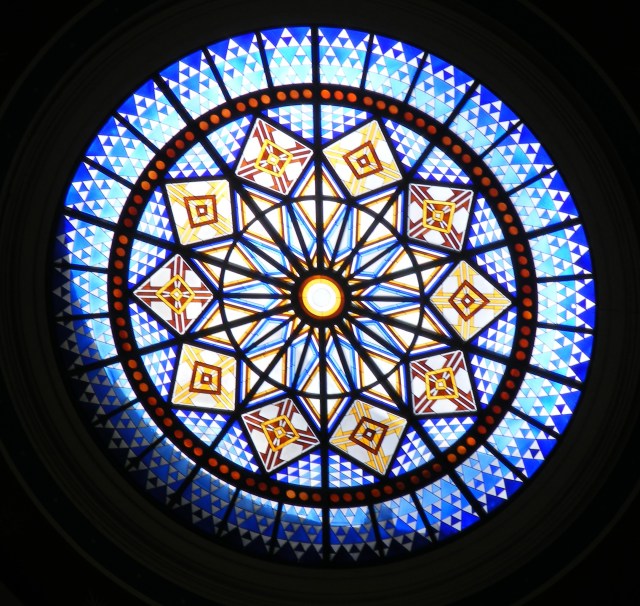
Rose Window Alexandra Palace.JPG

And We Are Off #FamilyTreeLive

This post is meant to be the first about our Family Tree Live adventures but before I launch into my account of the event, I want to share the ‘experience’ that was applying to renew our passports. No longer the trip to the Post Office’s photo booth, now we can download our own digital photos. We understand the need for a plain background. All my walls are plain, this should be a breeze. Unfortunately, finding a sufficiently large space on said plain walls was more tricky. We take two half decent (by passport photo standards) pictures of our heads, then read the bit that says they need half your body as well. We are advised to take picture from five feet away. Getting five feet away from the plain wall – trickier still. We have a series of photos that are either too dark, too light, too blurry, too shadowy (this is getting to be reminiscent of the Goldilocks story). The instructions insist that the photos cannot be edited IN ANY WAY. This means I can’t crop off window frames, furniture or other unwanted extraneous items. We have long since abandoned any idea of looking half presentable. Finally, photos are acquired. I upload one on behalf of the fisherman of my acquaintance. Up comes a warning notice ‘we cannot discern the outline of a head. Do you still wish to use this photo?’ Well I would hardly have uploaded a picture of a vase of flowers would I? I tick yes, I do wish to use this photo. I have to provide a reason why! Restraining the temptation to put ‘there’s no discernible head outline because he has a beard you muppet’, I put an edited version of that comment and we are waiting with trepidation to see if there are any issues with our applications.

Now to our adventures. With almost literally everything but the kitchen sink packed in the car (we are taking a kitchen sink but that’s in the caravan), I am due to drive to Bideford to commence our journey. Not a peep out of my car. Clearly the battery has breathed its last. I have to be fetched before our adventure can begin. Despite mist and rain, the journey is uneventful until we leave the M25, when an accident reduces our progress to a crawl and necessitates a diversion. Nonetheless we arrive at our campsite and set about conserving our energy ready to set up tomorrow.

sir-basil-sepia1Set up day dawns. We wend our way to the iconic Alexandra Palace. We have strict instructions to check in for our vehicle passes, no problem. Other instructions stress that hi-viz jackets MUST be worn at all times whilst setting up. Some of our fellow stallholders seem to have failed to grasp this. Apart from a few issues with hanging our brand new, super publicity banner and more than one change of plan, regarding our table arrangement, we arrange our seventeenth century artefacts to our satisfaction, wondering how on earth it all fitted in the car. We exchange greetings with friends and manage to escape before the worst of the London rush hour sets in.

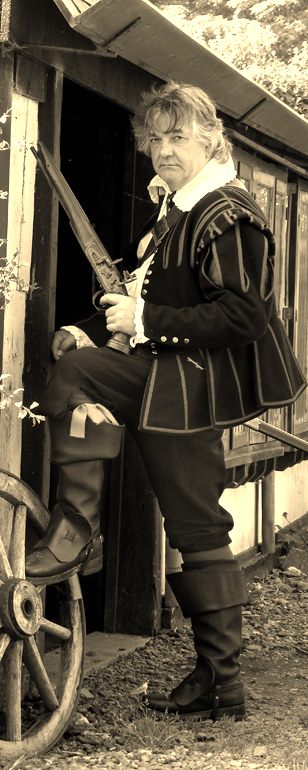
Annoyingly, although photographs were taken, I have neglected to bring the vital cable that is required to transfer said photographs from camera to computer, in order for me to upload it. This means you have a gratuitous photo of Sir Francis instead and you will have to wait to see the wonders of our stand.

Come and Meet Mistress Agnes at #FamilyTreeLive – a chance to buy my books at reduced prices on stand 167

Just to say that I will be on duty at Family Tree Live as Mistress Agnes, in company with various disreputable characters, on stand 167 – so do come and experience the lives of your C17th ancestors. See Swords and Spindles website for more details of what is in store. All my books will be on sale on that stand. I don’t want to fiddle with 1ps and 5ps so there will be an opportunity to save a few pennies. Coffers, Clysters, Comfrey and Coifs: the lives of your seventeenth century ancestors will be 15% off with the voucher that will be in your Goody Bag.

CCCC front coverThere is a limit to what you can get in a Landrover (there really is – I was surprised too), so what with armour, instruments of torture, costumes of various sizes, toys and a multitude of household items, I will not have an infinite number of every book title – so if you were hoping to relieve me of one of my publications, let me know and I will save you a copy. I would advertise my workshop and presentation but I am afraid (well, afraid for you, glad for me) that they are fully booked.

Looking forward to seeing you all.

Nearly my Ancestors: or how I almost climbed the wrong (very exciting) family tree

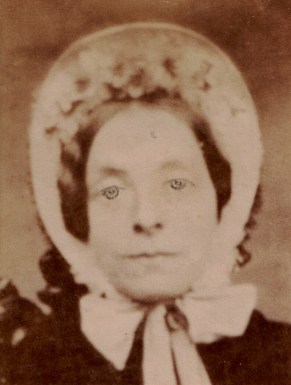
Mary Woolgar née Cardell 1817-1892

Mary Ann Cardell, born c. 1817 in Highgate but who were her parents?

Recently, I issued a challenge to help me find the parents of my great great grandmother, Mary Cardell. Thanks to helpful fellow family historians I confirmed that she had a sister, Catherine. The marriage records of these ladies revealed that their father was called James. Mary and Catherine consistently claimed to have been born in Highgate, Middlesex c. 1817 and c.1813 respectively. In Highgate, in 1813, a James Cadwell married a Mary Ann Gutteridge, who, despite the slight spelling variation, were prime suspects as the next generation. I was tempted to follow Mary Gutteridge further, in the hope that going back a little and then coming back forward might give me the confirmatory evidence I needed. Mary Ann Gutteridge’s ancestry proved fascinatiing. I have already mentioned the royal clockmaker, the vicar of the neighbouring parish, the one who was captured by pirates and the Huguenots. Add to this a poet and an inventor of an early form of shorthand and I was set to add the most fascinating branch ever to my family tree.

I was heard to say, rashly, ‘I am so sure that this is right I just need a little more evidence.’ I purchased four certificates I downloaded wills, I looked for and failed to find, DNA matches with the surnames of these putative ancestors. I wrote an eight page rationale considering the likelihood that these people were my ancestors. For days I followed this line when I should have been doing other things but still I hesitated. I reassessed the evidence again and again. Finally, I returned to the witnesses of the Cadwell marriage, who I had initially dismissed as not seeming to be relevant. One had the unusual name of Thomas Knackston (elsewhere Kneckston/Naxton et. al.). It turned out that he married an Ann Gutteridge. Surely she should be a relative, probably a sister, of Mary Ann Gutteridge? Via her second marriage, I traced Ann née Gutteridge. She had a sister Mary Ann. She was emphatically not the Mary Ann I had spent time and money tracing.

I sighed and returned to the proverbial drawing board. I very quickly discovered that, not only had I got the wrong Gutteridge family but that James Cadwell and Mary Ann Gutteridge were definitely not the parents of my great great grandmother.

I am now investigating a James Cardell and Maria Withinbury who married in Worcester in 1798 and then moved to London. I am not really convinced that these are going to be right either but I have no more likely candidates. What I really need is a baptism for Mary or Catherine, daughters of James Cardell, or even their probable sisters Eliza and Lucretia in the 1820s.

Thankfully, after 42 years of researching, I am by nature thorough and cautious. I was so close to claiming the wrong family as my ancestors. I wonder how many people would have grafted them on to their pedigrees without further thought? I’ll admit that I was very close to doing so. I don’t suppose I will ever find a family as exciting as those who were almost my ancestors. In the meantime, feel free to seek the right ones on my behalf as I have rather lost the motivation for this search. Oh and if anyone wants to know about the ancestry of a Mary Ann Gutteridge, daughter of George and Sarah Gutteridge née Mudge, born in Shoreditch in 1783 and probably married not to James Cadwell but to William Rhodes, you know where to come.

Still More Conference Musings

I woke up with an ‘interesting’ voice but we arrived at the conference venue in good time for the ecumenical church service. The first presentation of the day was Julie Goucher, looking at the benefits of Guild membership and challenging us not only to make full use of what was on offer but also to make a contribution to the various projects, or to the running of the Guild, ourselves.

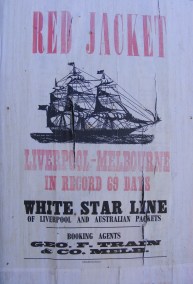
Red Jacket posterThe next session was Dr Simon Wills, speaking on ‘Your Ancestors’ Travels by Sea’. This was packed with interesting information. Simon began by looking at the evolution of passenger-carrying ships from the 100 foot long Mayflower to the Queen Mary II, at over 1200 foot long. In 1620, the Mayflower took 66 days to cross the Atlantic, passengers were each allocated a five foot square space. In 1936, the Queen Mary I made the same journey in just four days. The game-changer was the advent of steam. In 1838 The Great Western’s journey time was two weeks. He even mentioned the Red Jacket, which was a ship that carried members of the Braund family to Australia. I wish I knew more about my great grandfather’s trip to Asia in the late nineteenth century. Simon outlined some useful sources for tracing passengers. He said that the ages on the Passenger Lists (BT26 & BT27 at The National Archives) were often merely the purser’s estimate, particularly for women, as you wouldn’t ask her age.

A buffet lunch was followed by Debbie Kennett, who was discussing genetic genealogy, past, present and future. She ran through the history of the uses of DNA for genealogical purposes and highlighted the early involvement of Guild members in this field. Debbie considered the ethical issues; for example sperm donors, who were promised anonymity in the past may now be discoverable through DNA. She also pointed out the problems that might arise when DNA results were not what the testee might expect. Debbie made several predictions for the future. She believes that there is really nowhere further to go with mitrochondrial DNA however we will probably see a drastic reduction in the costs of tests such as BigY700. She believes that the tests will become more precise, making it easier to identify common ancestors. This too may apply to autosomal tests and we can expect to see fewer false positive matches. There are also likely to be opportunities for genealogists to make use of tests that extract DNA from objects, such as licked postage stamps, or from hair. Indeed, some companies are already offering this but Debbie recommended patience, as this is an inexact science at the moment and in the future, more accurate tests may be developed. Debbie spoke about moves to create a single composite family tree, so that we can see how we relate to any other person. Given the wild assertions on online trees, the mind boggles. I can’t help thinking that this will be some kind of Frankenstein’s monster! In the more distant future, we may see universal DNA testing and we will all be able to confirm precisely how we relate to another person; then genealogy as a hobby might be redundant!

The conference finished with Paul Howes outlining the Ruby project, which is a collaborative one-name study that 35 people have been working on for over a year, in order to celebrate the Guild’s 40th birthday (I’ve been a member for 38 of them!). It is certainly a good advertisement for what can be achieved by working together. Then all was over, until next year.

More Conference Musings

A full day at the conference today. Typically, a road between the site and the conference venue had been close but fortunately the detour was fairly straightforward. We made a mercy dash to Sainsbury’s for Strepsils on the way. I give Sainsbury’s full marks for retaining its apostrophe in much of its signage.

After a non-controversial AGM, Nick Barrett opened the conference with a session on the future of family history. I had heard this presentation before but this was a revised version, focusing on different issues. Nick spoke about the move from archive-based research to methods that rely largely on digital content and highlighted the impact that financial cutbacks have had on archives. The other major game changer is the rise of DNA-inspired research. He then touched on data ownership; all that information we (or you, as it happens, as I have deliberately not done this) upload to the likes of Ancestry, is now owned by them. Upload if you like but be aware of the implications. Nick went on to talk about initiatives to involve young people in non-traditional research and mentioned the Making History initiative. He encouraged us to promote links with academia and other institutions. A new #historianscollaborate movement is seeking to do this. One of Nick’s case-studies was Ryde Social Heritage Group’s cemetery project; it was good to hear the Isle of Wight getting an honourable mention. Finally, he considered family history as a vehicle for well-being, mentioning the benefits of social interaction with like-minded people.

Next was lunch. Seats were in short supply, so we nobly opted to sit on the high bar-stools, on the grounds that we were slightly less incapable of climbing on and off these than some of our fellow conference-goers. I am pleased to report that we are not still stuck in the restaurant with our feet dangling half a metre above the ground. Again, some slightly weird food combinations, or rather lack of obvious accompaniments – roast chicken but no hot potatoes for example, although to be fair, there were sweet potatoes. I can vouch for the high quality of the Eton Mess, once you worked out how to get it to fall off the serving spoon into your bowl. (Not as an accompaniment to roast chicken of course.)

Next, Dr Penny Walters gave a thought-provoking session entitled ‘The Psychology of Searching and Ethical Dilemmas in Genealogy’. She invited us to consider why we research and outlined the potential minefields that adoptees researching birth families might create, as well as the implications of unexpected DNA results. Penny was followed by Shirley Jones, head of conservation at West Yorkshire Archive Services, talking about her work. Finally, Paul Smith spoke on the Thomas Cook Archives. He outlined the history of the business, which sprung from Cook’s desire to further the Temperance cause. His first organised excursion, in 1841, was to a Temperance rally. Paul then described the contents of the archive, which is now held in Peterborough. I would swear that I had heard this presentation at a previous Guild conference but no one else seemed to remember it, so maybe it was at a different conference, or perhaps it was just a case of déjà vu.

By the end of the afternoon, I was feeling less than wonderful, so I was quite glad that we had decided not to attend the evening’s banquet. Time to return to the van and recharge the batteries.

DSCF1136

Leicester Cathedral

Of Kings, Elizabethans and Things

After a few lovely days with my descendants I headed to Leicester for the annual conference of the Guild of One-name Studies. This is always a great opportunity to meet old friends and make new ones, as well as to enjoy a range of presentations.

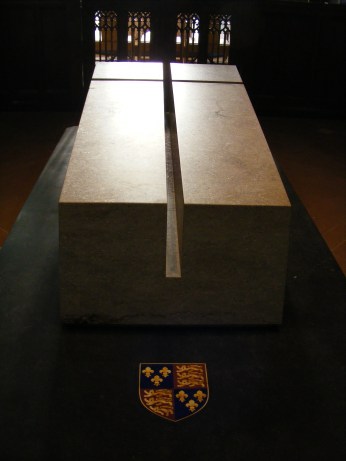
We found our way to the Leicester Marriott Hotel, where the early arrivals were gathering. There were some lovely compliments from people who had been reading Barefoot on the Cobbles. I was booked on to a visit to the Richard III centre. Shortly after the ‘king in the car park’ was discovered, I managed to get a photograph of the car park but now the area has been turned into an impressive visitors’ centre. It seems that there has been plenty of regeneration in Leicester as a result of the discovery of Richard III’s body. There was plenty of information to absorb and we had time to relax in the sunny courtyard, where I consumed honeycomb ice-cream and coffee.

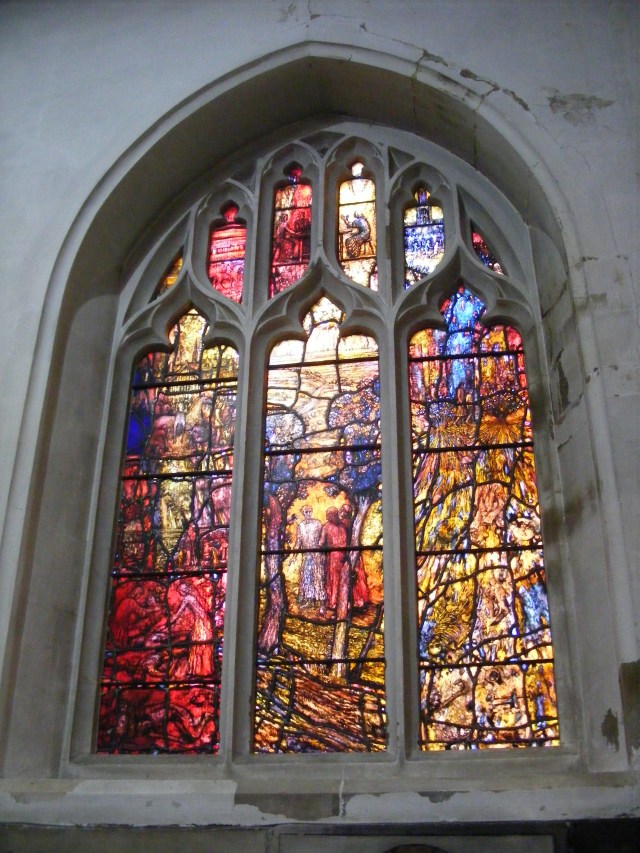
DSCF1134We then had an excellent tour of the cathedral, dedicated St. Martin of Tours, which is very small and largely a Victorian restoration. The main focus is, inevitably, Richard’s tomb and the beautifully embroidered pall; I failed to photograph the latter. There was also some lovely modern stained glass.

Back to the hotel for a swift buffet meal. The food was good but it seemed strange to serve curry without rice, naan or any other suitable accompaniment. I am quite glad that I don’t drink as the bar prices are a bit steep. Even a canned soft drink is £3; I avoided purchasing one of those too. I am currently recouping my funds following my recent certificate buying fest and yes, for the benefit of regular readers, I have ordered three more in an attempt to crack the Mary Cardell impasse – fingers crossed.

Mistress Agnes was on duty in the evening, in order to introduce Maureen Taylor of Talking History, who entertained us with an account of the appropriate garb of an Elizabethan aristocrat. Mistress Agnes was pressed into service as a dresser and is very thankful that she is a mere peasant as the attire of the more affluent is significantly more restrictive and considerably heavier, one of Maureen’s outfits weighs four stone.

Inevitably, my descendants have been generous with their lurgies once again and my throat is resembling something that has had a rigorous going over with heavy-grade sandpaper, so, despite liking a good quiz, we retired to the van. It seems that the van’s supply of Strepsils has been depleted (there weren’t any). I should have realised that agreeing to do seven talks in nine days was bound to result in me contracting some sort of ailment that would affect my voice.

Clock-makers, Vicars, Huguenots and Pirates: some family history excitements

Thank you to the wonderful family history friends who took up the challenge I outlined in my last post, to help me find the parents of my great great grandmother, Mary Cardell. As a result, I have had one of the most exciting weeks in over forty years of tracing my family. Although I have not yet ‘inked-in’ another generation, the people I believe to be Mary’s parents remain the most likely suspects. I have found out more about her sister, who led an ‘interesting’ life, apparently taking a man’s surname, living with him and his wife and eventually having a child by this man before posing as a widow and marrying a man with a criminal record. This pales into insignificance compared to my discoveries about Mary’s putative mother, Mary Ann Gutteridge (other spellings are also available). I must stress that there is still work to do to verify that these people are my relatives but it certainly looks likely. I do know the golden rule – prove each generation in turn before rushing backwards. Let’s just say, do as I say, not as I do. It started as an exercise to see if going backwards a little might confirm the more recent links and then I got carried away.

220px-Thomas_Mudge_-_Uhrmacher

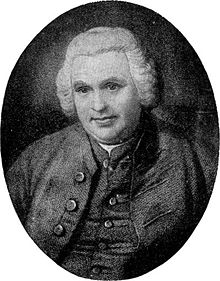
Thomas Mudge wikimedia Commons

Not only is there a connection to Huguenot silk weavers from Spitalfields, exciting enough in itself but I am taken back from London to Devon. It seems I may have Devon ancestry on both sides of my family. I MAY be related to one Thomas Mudge, who was the Royal clockmaker to George III, has a lengthy entry in the Dictionary of National Biography and had his portrait painted by Sir Joshua Reynolds. This is rather different fare from my usual diet of agricultural labourers. There is a book about Thomas, his father and brothers, who had illustrious careers in various fields. Thomas’ father, Zachariah Mudge, was vicar of Abbotsham, just a few miles from where I live and headmaster of Bideford grammar school. Two generations earlier, we find details of a ransom being raised for one Hercules (aka Archelaus) Mudge, who had been captured by pirates in 1666. Wow! Wouldn’t it be wonderful if Hercules could be shown to be my 8x great grandfather.

The morals of this story are, never give up. Revisit your genealogical brick walls often. Seek fresh pairs of eyes to re-examine the evidence. So far, I have ordered one death certificate for the wrong Mary Ann Cardale (spellings are many and varied), who I hoped might be Mary’s mother. I am wondering how many more wrong certificates I can afford.  I have contacted DNA matches who have Mudge in their ancestry but their Mudge connections are too far distant to account for the match – we must be related through a different family. I have accessed wills that could have helpfully mentioned married daughters by name, thus confirming the pedigree but no, not a mention of a daughter married to my ancestor or indeed to anyone else. It would have been helpful if gg grandma or her sisters had been baptised but again no, that would just make it too easy. If anyone feels like undertaking a mission of mercy at London Metropolitan Archives, it might put me out of my misery.

My Problem Female Ancestor #internationalwomensday

Firstly, I must share just how distressing I found typing that hashtag without the apostrophe. Regrettably, it seems that hashtags and apostrophes are not compatible.

On International Women’s Day, I thought I’d introduce my genealogy obsessed friends to my problem female ancestor. I do have information about many of my ancestresses. I wrote about my direct maternal line here and you can find out more about some of these women by clicking on the appropriate surname links on my family history page. There you will find details of what I know about them and their families.

My great great grandmother, Mary Cardell, is proving more of a problem. If anyone feels like a challenge over the weekend, please see if you can confirm who Mary’s parents were (PS I‘d also be pleased to find her in the 1851 census, when she would have been Mary Woolgar). I am afraid there are no prizes but I promise a warm fuzzy feeling and the satisfaction of having succeeded where, so far, I have failed.

Mary Cardell is my great great grandmother. I know quite a bit about her married life; you can read it in my file on the Woolgar family. On her marriage certificate and the birth registrations for her four children, her birth surname is consistently spelt CARDELL. The marriage certificate suggests that she signed her own name. Earlier generations may not have been literate, so the name might be rendered differently and my searches have included all phoenetically likely variants of the name.

I have used a range of documents to calculate Mary’s probable date and place of birth:-
Her burial has not been located
13 January 1892 death certificate age 74 – born 13 January 1817- 12 January 1818
1891 census age 74 born Highgate, Middlesex – born 6 April 1816-5 April 1817
1881 census age 63 born Middlesex – born 4 April 1817- 3 April 1818
1871 census age 53 born Highgate, Middlesex – born 3 April 1817- 2 April 1818
1861 census age 44 born Highgate, Middlesex – born 8 April 1816-7 April 1817
1851 census not located
1841 census age 25 born Middlesex – born 7 June 1811- 6 June 1816
1 May 1841 (when she married Philip Woolgar) marriage certificate ‘of full age’ – born before May 1820

Mary Woolgar née Cardell 1817-1892This seems to suggest that Mary (or at least whoever provided the information to the enumerator) was convinced that she was born in Highgate, Middlesex. Ignoring the 1841 census evidence, when ages should have been rounded down in any case, the suggested dates of birth from the other sources are consistent. If all ages are correct, then Mary was born on 4 or 5 April 1817. It seems probable that she was born between 1816 and 1818.

Other clues are provided by her marriage certificate. This was obtained from the General Register Office in 1983 and is handwritten, so there is scope for transcription errors. Ideally, I would check with the local register office (Edmonton) or, even better, access the registers for St. Mary’s Hornsey where the marriage took place; these are held by London Metropolitan Archives ref. DRO/020/A/01/011. Assuming that the certificate I have is accurate, Mary’s father was James Cardell, a gardener and one of the witnesses was a Catharine Cardell who is likely to be Mary’s mother or sister. There is no indication that either of the fathers were deceased. I know the groom’s father was still alive at the time but it may be that whoever filled in the register didn’t not make a habit of noting if the fathers were deceased

The obvious first search was in the parish registers for Highgate and this was carried out on my behalf by a reputable researcher some years ago. He was however using a transcript of the Highgate baptism registers. I would like to recheck this and use the original baptism register. These are in London Metropolitan Archives P90/MIC1/004 (003 for 1791-1812). He also checked the birth and baptism register of the Highgate Salem Chapel, although the entries in the chapelry registers are sparse. These records are at The National Archives RG4 1131 and I have rechecked this using the online images of the registers at FindmyPast; there is no mention of the Cardell family.

Mary claims to have been born in Highgate and she married in Horsey, giving her address as Fortis Green, which lies between Finchley and Muswell Hill, so Middlesex seems a likely county in which to begin to seek the Cardell family.

NB subsequent research, after this post was written, has established that Mary Ann Guteridge was definitely not my 3 x great grandmother. So most of what follows can be ignored!

A marriage between a James Cadwell and a Mary Ann Guteridge took place in Highgate in 1813 and these are very strong possibilities as Mary’s parents. Mary Ann was the daughter of George and Sarah Guteridge born 14 August and baptised 7 September 1783 at St Leonard’s, Shoreditch. She is likely to be the Mary Ann Cardale who was buried 10 April 1841 at St Andrew’s, Holborn, ‘of Regent’s Park’, just a month after Mary Cardell’s marriage to Philip Woolgar. I could check the original entry for more information and purchasing this death certificate is on the list when the family history budget has recovered from my certificate ordering fest prior to the recent price increase. The burial register records Mary Ann Cardale’s age as 58. The corresponding GRO death indexes can be searched on their website and give age at death. Here, Mary Ann Cardale was said to be 57, which ties in exactly with the Shoreditch baptism of Mary Ann Guteridge.

There is also a Maria Cardell in St. Pancras workhouse in the 1841 and 1851 censuses. (1841 census for St. Pancras workhouse, Marylebone, Middlesex HO107 681/9 folio 9; 1851 census for St. Pancras workhouse, Marylebone, Middlesex HO107 1497 folio 599.) This workhouse would have covered Highgate. Maria Cardell was born in Dudley, Worcestershire and is almost certainly the Maria Withenbury, baptised in 1780, who married James Cardall at St. Alban, Worcester, Worcestershire on the 12th February 1798. These too could be Mary’s parents. A Samuel Cardel was baptised in 1802 in Worcester, son of James and Maria. Samuel cannot be found in the census returns.

A James Cardall aged 49 of ‘Mermaid Court’ was buried 17 November 1824 at St George’s, Southwark, this is probably the James who married Mary Guteridge but is he my 3x great grandfather?

Mary Cardell’s marriage took place only a month before the 1841 census, there is no trace of a likely Catharine Cardell (the witness) in that census and no death or marriage for her in that quarter, using variants of both her names. There is a Catherine CAWDLE aged 27 bur Hoxton 24 Sept 1841 possibly wife of Henry Cawdle and living in Shoreditch in 1841, neither were born in county. So could Catherine have been Mary’s sister-in-law? I don’t find this very convincing.

What this case study does illustrate is that, even after over forty years’ research, it is possible to have that pesky family line that is stuck in the more recent past. It also underlines that it important to periodically revisit sections of our family history that have been in abeyance. With luck, new sources will have become available, or a fresh pair of eyes with bear fruit. My own eyes are feeling far from fresh at present and cost me a significant sum yesterday when I , unexpectedly, had to buy new glasses. So, over to you friends and good luck!