Mostly about Writing

I thought that it was about time I wrote something, so that people didn’t start enquiring after my welfare. It’s been the season for the descendants to descend; typically, they were here during the few days of less good weather. Plenty of board game opportunities, with Taverns of Tiefenthal being the current favourite, alongside the obligatory visits to the pick and mix sweet shop, the ice-cream shop, the rock pools and the playground. We also watched people attempting to paddle cardboard boats across the river and some of us acted like ninjas (best not to ask) and that was summer fun done for another year. There then followed what passes for a spring clean, as I removed buckets of sand from various corners of the house, washed a million sheets and towels and returned things to their rightful places. Though, to be fair, the visitors were pretty good and setting things to rights.

Now it is back to the computer, interspersed with occasional paddles and even a very quick swim. A quiet month for talks this month but I am gearing up for a hectic September. I’ve done some brick wall busting. Well more of a chipping away, as Devon FHS members have got too good at solving their own, so we tend to only get almost impossible ones sent in now. I have practiced my ag labs workshop for the end of the month and am very excited to launch that on the unsuspecting public at the end of a whole day of exploring agricultural labouring ancestors.

Biography club was concentrating on household tasks this month. This must be at least the eighth time I’ve run courses to help people write their life stories and this time (like all the other times) I am determined to keep up with the participants and finish mine. On the strength of having done quite a bit already, I am just about on schedule. The plan is to finish in time for next year’s ‘big’ birthday. No one will want to read it of course but it is fun to write, if an exercise in self-indulgence. Seriously though, everyone has a story to tell and everyone’s story is important. Of the planned fourteen chapters, eight are done, two are almost done and four are figments of my imagination. One of these will be about voluntary work and that’s going to take some time. I’ve got as far as making a list and have come up with twenty different things I’ve done over the past fifty-five years that come under this category. Some were short-lived, most were fun and almost all are chocked full of memories. The trouble is that voluntary work and hobbies, another chapter that is as yet a blank page, overlap so I am going to need to distinguish between then somehow. The first three chapters alone are 40,000 words and run to 145 pages including illustrations. I told you it was self-indulgent – I may not be printing this out! The expurgated versions of some of the chapters are over on Granny’s Tales, just in case anyone is curious.

Related to all this looking back, I’ve been preparing a talk for the 40th anniversary of Isle of Wight Family History Society, which is one of three big live performances scheduled for next month. As well as what I hope will be some thought-provoking comments on the family history community’s past and future, there’s plenty more self-indulgence in the shape of ‘do you remember?’s. Family history has been and still is an enormous part of 70% of my life. Most of my friends are those I’ve made through family history. It has been a blast and it isn’t over yet.

In between all this, I am still plugging away at my seafarers and shoemakers in Southampton – see I didn’t even have to try to create the alliteration. This too is growing like topsy. What I should be doing is more to the next book. It is on the, rather dauntingly long, to do list! By way of encouragement, reviews have been coming in for Women’s Work. I am particularly chuffed with Julia Packman’s review in this month’s, Who Do You Think You Are? Magazine ‘a creation to be reckoned with’. Oh and it is currently on offer at 30% off from Pen & Sword, that’s a hardback at paperback price (ebooks also available). So if you want a creation to be reckoned with you know where to go.

Blind, Book and Stone – with a Side of Family History

Forget Bell, Book and Candle, this week has been more about Blind, Book and Stone. First of all though, there were more utilities to deal with, as my internet provider sent an engineer to try to work out why my once stable internet had become decidedly flaky. A new router was installed and not wishing to tempt fate, I won’t say much but fingers crossed. This of course meant that all my devices that were connected to the wifi had to be reconnected using the excessively long and totally unmemorable password. I long for the days when the password was ‘hop-think-lazy’ and not a garbled string of two dozen letters and numbers. At least two people in my family will have memorised it after being told it once but as for me, no chance.

Next, having lived here a year, I treated myself to a new kitchen blind to replace the slightly manky and unattractive one that came with the house. Then came the learning curve known as ‘how to  install a blind’. To make life more difficult, the kitchen window is over the sink so there wasn’t even easy access. The fisherman of my acquaintance personfully attempted to install said blind. This was accomplished and I didn’t even hear any swearing, ok so I was six miles away at the time but hey. The process did involve the complete disappearance of a dropped screw, which I suspect probably ended up down the plughole. Despite the liberal use of a spirit level, said blind did look just a tad on the wonk. I was just grateful that it was on the wall and not thrown in the bin in frustration, so was going to let this pass. I treated the harassed workman to celebratory cake in the best café in the world, which meant I got to eat cake too – win! Bless him, he arrived next day, determined to correct the list to starboard. To be honest, I was all for letting sleeping blinds lie but no, it was removed from the wall and after a certain degree of exasperation, it is now parallel to the ceiling. I did wonder if he was angling for another portion of cake.

Stones then. This should probably be a garden make-over post but I will write about their installation there. I decided, as it seemed to be the week for spending ridiculous amounts of money (I’d also booked three expensive holidays), I would buy some chippings to cover some unsightly tarmac. I ordered the chippings, carefully calculating that their ‘delivery in 3-5 working days’ would fall on a day when I was home. Day 5 has come and gone and I am still waiting and according to the tracking, they will now arrive on a day when I am out. I just hope that they don’t deposit them in front of the outward opening back gate. Watch this space for the next episode.

Family history has not be forgotten. I am enjoying leading my Pharos Female Ancestors course.  It is quite an intensive course but the students are lovely and seem to be enjoying it. I had visions of working alongside them to get on with a biography of my mother but I am also trying, for the sixth time, to finish my biography with my Society of Genealogists’ biography club members and it just isn’t going to happen. Still, female ancestors runs again in September so maybe I will have better luck then. On the subject of women’s history, my blog for women’s history month has appeared on the Pen and Sword website. In more book news, my publisher has now brought out the second and much revised edition of Putting your Ancestors in their Place in paperback. This weekend will see more family history fun as I multi task at the Really Useful Family History Show in Kinson, near Poole. I am speaking, personning an advice desk and dividing my time between Devon Family History Society and A Few Forgotten Women stands. 

Another of this week’s adventures involved a nighttime (well, it was after 9pm) drive out to some nearby countryside in order to look for a forecast aurora, where there wasn’t much light pollution. The only other cars in sight probably contained courting couples – I didn’t look too closely and I spent the time worrying that the gate to the area would be shut early and we, or at least the car, would be stuck until morning. I am not convinced that the vague light in the sky that my phone picked up was anything remotely aurora-like but we tried.

It is (not quite) all About the Books – Isolation Day 79

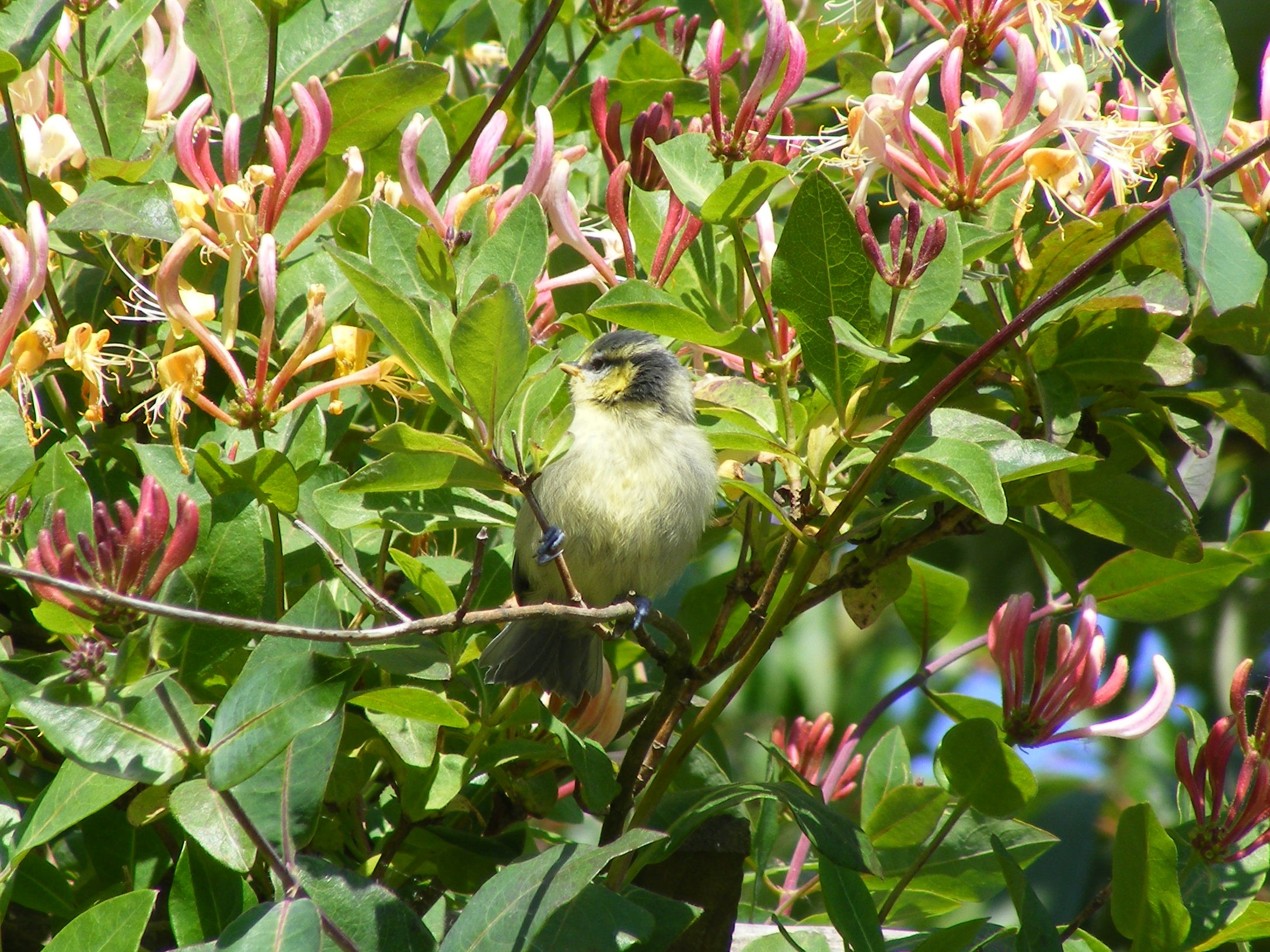
Isolation continues for me. I was just thinking that I might feel like going for a socially distanced walk when the idiocy factor ramped up and folk flocked westward in their droves. I’ll sit tight as the second wave tsunamis in; unfortunately I think it is inevitable. I do know that I am lucky to have this option. I am pleased for those who can now meet family in parks and gardens. It does make it hit harder that the gardens I’d want to socially distance in are 300 miles away though. So, I’ll continue to #staysafe, grit my teeth and enjoy my own garden. Suddenly, the facts that the single baby blue tit has fledged and the poppies are blooming seem hugely significant.

DSCF0656

This latest update is mostly about books though. I am gearing up for the cover/title reveal for novel #2. It is now in the hands of the publishers. There really are only so many times you can delete a comma and then put it back again on the eleventy billionth read through. I am looking at today’s appalling worldwide news stories and sadly, the book’s theme of intolerance is all too relevant. I am excited to report that the talented Dan Britton has written a companion song for this book too. Recording it under lockdown conditions was challenging but the end result is perfect. The plan is that it will be available, along with two other tracks on a similar theme, on 29 August, along with the book. Ninety days to go! Don’t forget that I am gradually leaking hints about its contents.

In other writing news, I’ve been commissioned to write a school textbook and that is finally making progress. My online One-Place Studies course for Pharos is ready for presentation in September (bookings are already coming in and more than a third of the places are filled). I am looking forward to speaking about writing your memories for Crediton Literary Festival on 6 June. There are some excellent talks, you can attend from anywhere in the world and better still it is free. All you have to do is apply for the link to join the audience.

Poster

I am getting some exciting invitations for online presentations so watch this space. Thoughts are turning to ‘what next?’ I am playing with an idea that is set in the seventeenth century again but not Devon related. I am wondering if I can write ‘at a distance’, as I normally work by immersing myself in the locations. I am also thinking of reviving my collection of North Devon emigrant stories and I may work these two alongside each other. Then again, I might just sit and do nothing!

I have been working on ‘writing-up’ the accounts of a few more branches of the family that have been neglected over the years. These are not beautifully crafted stories crammed with context, that’s just what I advise my students to produce! At least if I can get the broad outline done, I can add the flavouring later. Some of these offerings do appear on my website. Woolgar, Bulley, Dawson and Hogg are amongst the more substantial accounts, if you are thinking of taking a look. Currently, I am working on the sorry tale of a shipwreck that took place during the Napoleonic Wars, when the vessel went aground off the Dutch Coast but the crew thought they were in the Humber Estuary.

By the way, if anyone is wondering abut the fate of the parcels mentioned in my previous post, they arrived relatively unscathed.

News from the Cobbles for fans of Barefoot

I hope no one is reading this expecting Coronation Street spoilers. There have been some lovely communications regarding Barefoot on the Cobbles lately. Firstly, two lovely readers, without internet access, took the trouble to write me letters saying how much they had enjoyed it. I also had an email from a reader from New Zealand who not only praised the book but said I had inspired her to write the story of her own family history tragedy. I have also been contacted by two relatives of the minor characters in the novel. One leading to ongoing research into the family, which may turn out to be intriguing.

This has been interspersed with precious time spent with my descendants; there may be more about that later. I have also started another run of my In Sickness and in Death course and the students are wonderfully active, sharing stories of the ailments of their ancestors. One of the best parts about Pharos courses is the interactions between the students. This has all taken my mind off a few recent technical hitches. Yesterday a very forbearing audience sat through a presentation that really did need the accompanying slides, when my laptop (and a backup laptop) failed to communicate with the projector. I am also juggling external hard drives, in an attempt to recover files that have been damaged due to a corrupted memory stick. Fortunately they were backed up and I realised before I overwrote the complete files for another back up. A salutary lesson not to rely on memory sticks/data sticks/flash drives, call them what you will.

In the course of checking files to see if they were damaged, I came across I passage that I wrote for part of Chapter 1 of Barefoot but which was left on the cutting-room floor. I thought you might like to read a little about Polly as a young girl.

1884

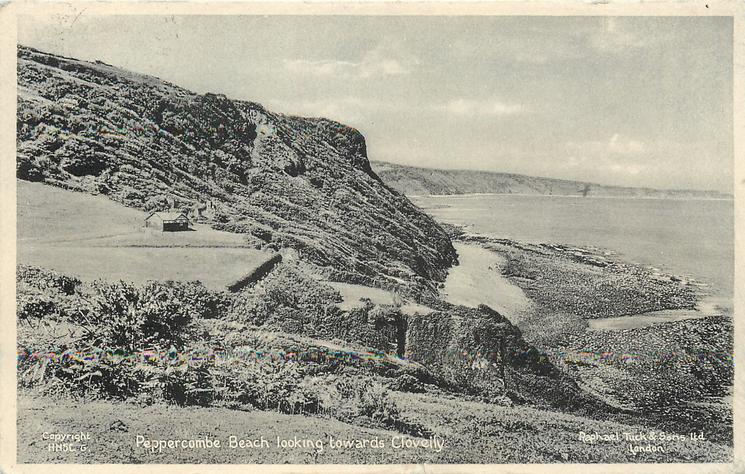
Polly Wakely leaned back on the Devon bank that edged the lane leading from Horns Cross to Peppercombe. Her two younger sisters, tired of gathering bluebells, sat beside her. All had severely plaited hair and identical rough, linen smocks. Polly, on the brink of womanhood, had abandoned her bonnet in an act of defiance. She was meant to be shepherding her sisters home from school but the temptation to linger in the spring sunshine, to stretch the time between the agonies of the classroom and the drudgery of chores at home, had got the better of her. Polly did not begrudge having to mind Ada and Ethel, in fact she quite enjoyed it. She hoped that she might have children of her own one day, in an unfathomable future that seemed impossibly far ahead. The role of chaperone to the younger members of the family had, until recently, been the task of her older sister, Jane. Jane, shy and retiring had found it difficult to discipline the two youngest girls but Polly was firmer. Despite their very different personalities, the Wakely sisters had always been self-sufficient, content with each other’s company and united against the taunts of their classmates.

            A small group of children turned the corner and spotted the Wakelys. Here was an easy target.

            ‘Yer ma tellin’ fortunes today then?’

            Polly was not as feisty as her eldest sister, Lydia, now working away in service but she had had years of practice standing up to bullies and defending her own. She knew that the comment was intended to provoke a reaction, perhaps to initiate a fight. She had succumbed to this when she was younger, arrived home with hair pulled, face scratched and pinafore torn. She considered herself too old for such scraps now and she had learned that there was nothing the tormentors hated more than to be ignored. She turned her back and pretended that she had not heard, putting a warning hand on Ada’s arm, to indicate that she should do the same.

            The oldest boy picked up Ethel’s discarded bouquet.

            ‘What’s these ole flowers for then?’ he mocked, tossing the drooping blooms over the hedge. ‘Going to pop them in the pot and make a spell?’

            Polly groaned inwardly, would this stupid tale never cease to dog their lives. Ethel was less resilient than her sisters and was distressed at the loss of her flowers but she knew that she must not give this big boy the satisfaction of seeing her cry.

            One of the girls in the group was regarding them with sympathy but her companions quelled any attempts at compassion.

            ‘Them’s nought better than gypos, don’t you go frettin’ over them. Turn you into a toad as soon as, they would.’

            Polly knew she had to be brave, that her ma would be cross if Ada or Ethel went home in tears and told tales of what was responsible for their distress. As each of her children left toddlerhood behind, Eliza Wakely had urged them to ignore such taunts. She understood their pain, she had suffered the same in her turn. In fact, thought Polly, although there had been no school to endure in those days, it had been worse for ma and her sisters. Their very surname, Found, had marked the family as out of the ordinary. It had all been ages ago, before even ma’s grafer’s time but still the rumours swirled. Going back some, the original Found had been just that, found in the church porch over Morwenstow way and Polly and her sisters were suffering for it still.

Peppercombe

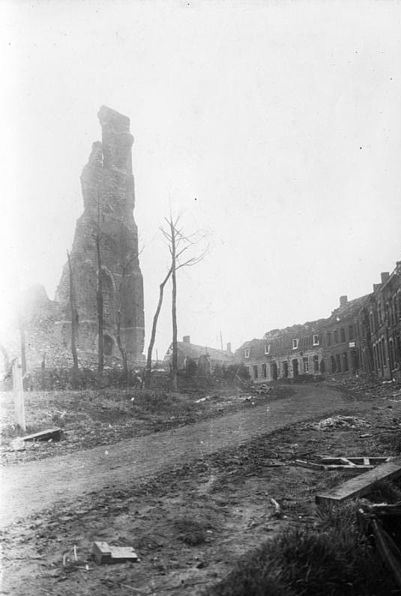
#100daysofbfotc Day 35: The Western Front

Fromelles German Federal Archives This file is licensed under the Creative Commons Attribution-Share Alike 3.0 Germany license.

German Federal Archive Used under Creative Commons Attribution-Share Alike 3.0 Germany license

As a significant proportion of Barefoot on the Cobbles is set during the First World War, it needed to contain a scene from the Western Front. This was a challenge. I write by researching my characters’ geographical and emotional backgrounds, not in a vacuum. For the rest of the book, which all takes place in Devon, understanding the physical landscape, albeit with a twenty first century slant, was straightforward. Many of Barefoot’s main characters are female and although I am not a young female, I was once, so I can get inside their heads. I have never visited the battlefields, I have no experience of being on active service and I am not a young male. The thought of composing the battle scene was daunting.

I had already chosen the character, Abraham, that I would use for this part of the book and was interested to discover that he lost his life in one of the lesser known battles, a least from a British perspective (this particular battle has much higher prominence in Australian history). I had already formed an impression of Abraham’s personality but how would he respond to a war zone? I was unable to go to France while I was writing this novel but I read diaries, letters and memoirs written by those who took part in the battle. This gave me a much greater understanding of the landscape and help me to empathise with Abraham. I hope that I have created a believable character and a realistic environment. Despite having serious misgivings about my ability to think and therefore write, from the point of view of a First World War soldier, this is the chapter that I am most pleased with.

There are so many, oft used, words and phrases to describe the Western Front: horrific, damaged, muddy, bloody, terrifying, boring, a tragedy, ravaged; all those things. I think I will leave you with some words from chapter 8. ‘Across the plain where the purple clover once bloomed and the swallows used to dive, men prepared for death in a blood-stained ditch. The lurking mist that accompanied the persistent drizzle obscured the view but the deathly crumps of falling shells resounded as the wire-cutting party were sent into the abyss. From the vantage point of the higher ground, the Germans were set to defend the salient without thought for the cost in human pain.’

Barefoot on the Cobbles will be published on 17 November 2018. More information about the novel can be found here. Copies will be available at various events in the weeks following the launch or can be pre-ordered from Blue Poppy Publishing or the author.

Hardback or not Hardback that is the Question? With Additional Travel Updates

With the end of Barefoot on the Cobbles almost within touching distance, I’ve been thrashing out details of print runs, prices and other such mundanities. I need to make a decision about a hardback edition. Now, personally, I am not a great fan of hardbacks. They are, after all, just that, hard. I read in bed, lying down. It is how I get to sleep. This means that, when I do doze off, whatever I am reading inevitably falls on my nose. This makes hardbacks somewhat of a health hazard. I am aware that there are those who read in a more conventional manner, sitting in chairs for example – how radical. Perhaps these folk would appreciate a hard back version? Can I canvas the opinion of one or two of you who are eagerly anticipating the publication of my magnum opus? Would you pay perhaps an additional £5 for a hardback version? There will be a ebook option for those who prefer reading on an electronic device. Publication and launch day is set for 17 November and the opportunity for pre-publication orders will be available shortly. I am not prepared to commit to how shortly but I am aiming for the end of March. Anyway, please let me know if you are a hardback lover, so I can judge if a hardback run is viable.

Some of you will know that this year is set to be a whirlwind of overseas travel. Planning these trips has been beset with irritations and anxieties and at one point I was heard to exclaim that I was going no further than Cornwall in 2019. So much for that idea. It looks possible that I will be working overseas twice next year as well. With all this trans-continental travel, you would think I could get myself to and from a rural village about fifteen miles away without incident wouldn’t you? You wouldn’t? – Ah, you know me so well. I set off in thick fog yesterday morning, fog that became ever thicker, to the extent of being impenetrable. By some quirk of fate the powers that be have got it wrong. They have inexplicably decided to shut the main holiday route at a time when tourists are not in evidence. This is a radical policy change but I digress. I was thus obliged to go ‘the back way’. ‘The back way’ gave me an opportunity to post a parcel. When our village post office was arbitrarily closed we were reassured that we could use the next nearest post office (in a village 6 miles away, which you wouldn’t want to go to for any other purpose – perfectly pleasant village and all that, just not much reason to go there). Inevitably that post office is now also shut. Never fear, we have a post van that visits our village daily, except when it doesn’t, due to there being a mechanical failure/operator illness/lack of internet access/two flakes of snow/an ‘R’ in the month. So the non-appearance of said van on Friday meant I had a parcel to post yesterday. I visit a fog bedecked post office, what can go wrong? I kid you not, the post office was closed for a computer upgrade. Onwards through the fog to my destination, parcel unposted. I arrive unscathed.

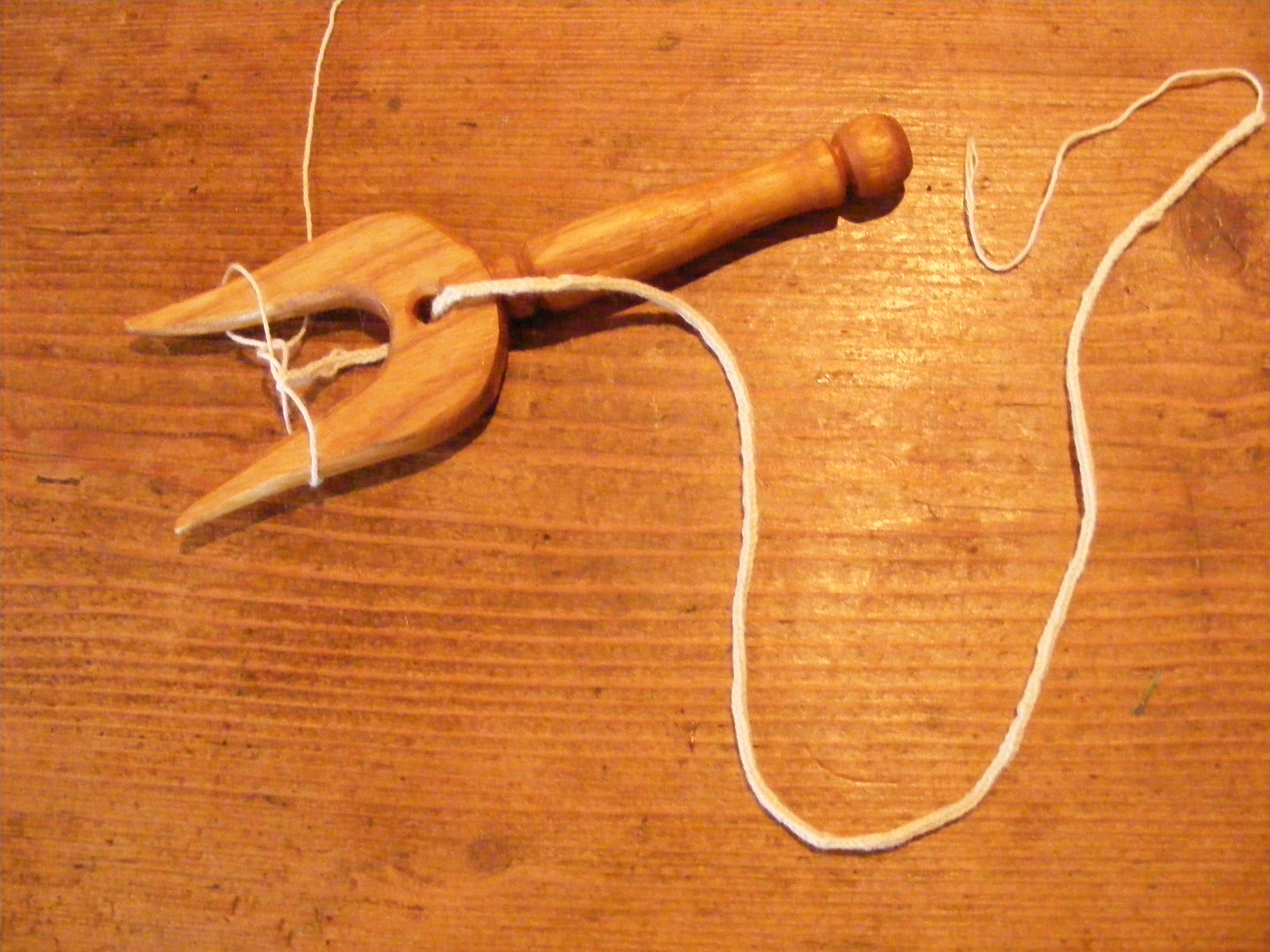
LucetteI spin away for a few hours. Well, actually I was plying and lucetting but I don’t want to get too technical. I set off home, deciding on a slightly different ‘back way’, in order to avoid having to execute a three point turn in a road barely wider than a car, at a time when several other cars are also manoeuvring. The fog had lifted, this should have been fine. Except that the other ‘back way’ was also closed for repair. The council are obviously using up their meagre road mending budget before the end of the financial year. I use a combination of common sense and sign posts before realising that I have no clue where I am, I haven’t seen another vehicle since I set off, the last building was two miles back and that was a barn. Do I have my ‘emergency’ phone? Well, no – how did I know there might be an emergency? I do however have a sat-nav. I unplug my cosy seat heater in favour of the sat-nav and follow the directions. Now I am more than comfortable with narrow, winding muddy road but I do like them to actually be roads. I bounce along muddy tracks that could not with any stretch of the imagination be described as roads, even by rural Devon, pothole laden, grass-in-the-middle-of-the-road terms. I idly wonder what would happen should I get a puncture. Even the emergency phone would be useless as I would be incapable of describing where to find me. Fortunately, I eventually arrive home. Forget going to Cornwall, I don’t even want to leave the house.
In a Spin with Adverbs, Idioms and Procrastinations

This week I have discovered that it is not only possible to waste time counting how many words you have, or perhaps that should be have not, written; there is a refinement to this. There are some nifty websites that will tell you how many unique words you have used. In other words (there’s a pun in there somewhere) how many of your words are different from any other. It also counts the number of times you have used a particular word. So, I have already used ‘words’ four times in this post, not that I needed a website to tell me that. So now I know that my 75,394 words contain 9273 different ones and that 7% of my book is ‘the’ – only 1563 ‘and’s though but I do have a weird writing style that tends to dispense with ‘and’.

I have also been doing some market research aka wasting time on writers’ forums (fora ?). This is encouraging and depressing in equal measure. Having spent my infant years in a decidedly antiquated educational establishment, the words ‘lots’, ‘nice’ and ‘got’ were frowned upon. Now it seems that ‘just’ and ‘seems’ are equally taboo. Cue a swift search through my manuscript to identify these gremlins and decide if they need an equally swift eradication. Then there are adverbs, the gratuitous use of which is high up there on the list of cardinal sins. Now, I am a great fan of the adverb; blame the antiquated educational establishment. Don’t get me wrong, I get the ‘lazy verb’ school of thought. Yes, it is preferable to write ‘he hurried’, rather than ‘he walked quickly’ but there are cases when the more descriptive verb is not enough. What is wrong with ‘he hurried anxiously’? (Not the best example perhaps but give me a break, it’s 6am). Again, I can see that the anxiety can and in many cases should, be conveyed by the context but I do believe adverbs have their role. If you don’t like adverbs please don’t read my work in progress, it won’t be for you.

As part of my one woman mission to eradicate anachronisms (now their use really is a cardinal sin) I have been checking on my use of idiom. Are the phrases I’ve used, often through the mouths of my characters, appropriate to the period I am writing about? It turns out they are and for example, I can tell you that the expression ‘good riddance’ was used in the late eighteenth century and to ‘lord it over’ someone is fine for the late sixteenth century onwards.

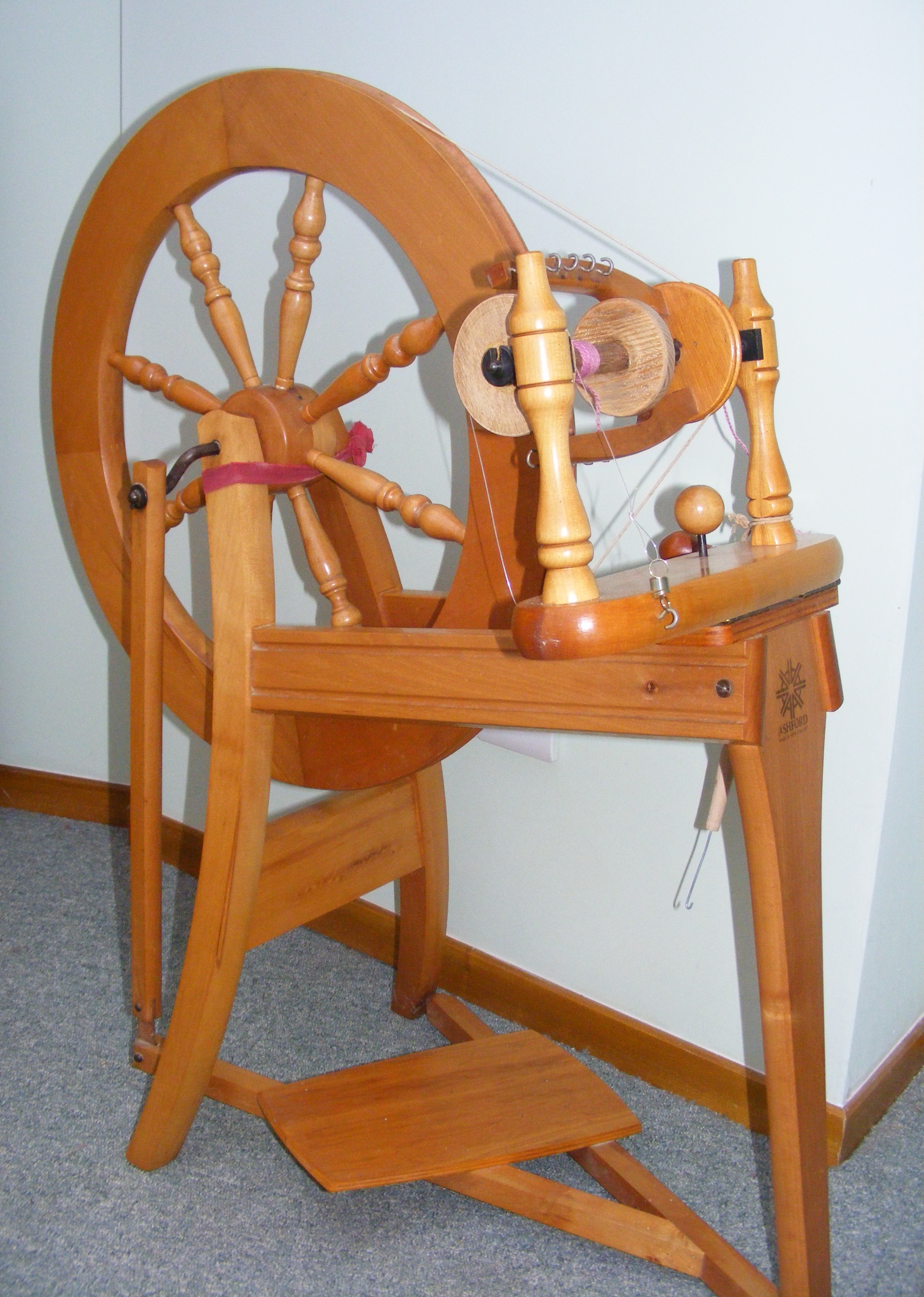
Spinning WheelJust as I thought my confidence in my own ability could not get any lower, I go spinning. This is not the extreme gym activity, that really would be depressing but the crafting variety. I manage a business called Swords and Spindles for heaven’s sake (sorry can’t find a date for that one). I live in the seventeenth century. I need to be able to spin. So, having been given a spinning wheel for Christmas, off I go to an unbelievably friendly and helpful local group to learn how to use it. I should at this point explain that the kind of co-ordination that spinning requires, is not really my thing. I can’t even control an electric sewing machine. Then there is the perennial problem with my feet, which are square. This means my shoes are at least two sizes larger than my foot. Add to this my double-jointed toes and the point at which I have any control over what I am pressing on, is relegated to half way down my shoe. This makes controlling the pedal difficult. If you’ve tried patting your head and rubbing your stomach, spinning is more complicated. You have two hands and one leg all doing different things at the same time. Well, I don’t but that’s the principle. My very patient instructor made minor adjustments to my wheel and coped admirably with my incompetence. Despite going too fast, serious over-spinning and trouble with my backward drawing, I did manage to complete a whole bobbin of what is kindly described as ‘designer’ single ply. For ‘designer’ read full of lumps. I even started a second bobbin and did seem to actually be sort of getting the hang of it (mid nineteenth century) a bit by that point. I was already suffering from wool carders’ arms in preparation for the spinning. It is incredibly hard work, now I have added ‘spinners’ back’. Appropriate then that I am off to deliver a talk on ‘occupational hazards’ tonight.

Coincidences, Conclusions and Car Parks

dscf3202This retreating writers thing seems to be a good idea. At 5am on day one I wrote a fair draft of the end of Barefoot. Although my slightly weird body clock does not regard 5am as being ridiculously early, I am not often in full writer’s flow at that hour. The words came, they needed to be captured before they evaporated. I began by scribbling on the margin of the handy TV paper until the pen ran out, then I upgraded to pencil and paper. Perhaps I should keep the TV paper; if only anyone could actually read what I wrote on the pale parts of the page, nestled between Coronation Street and the Jeremy Kyle Show, it could be worth a fortune when Barefoot turns out to be a best seller. I can but dream. This sleep inspired ending, is not the last part of the final chapter that I have been struggling with, that remains an ominous blank page but the epilogue is on its way to being done. Of course, it will still be pulled apart and put back together again, especially when I let it loose on readers but I am pleased with my initial efforts.
Before all this muse striking lark, having established ourselves on our caravan site, we decided to drive into Torquay in the hope of buying ancient persons’ coach cards from the Tourist Information Centre here, our local one having been closed. I suppose alarm bells should have rung when I could not find the opening times anywhere online. I did establish that they were closed at weekends, hence not waiting until the following day. We paid a small fortune to purchase a plastic disc that enabled us to park. We walked to the tourist information shop. It was closed, had we arrived too late in the day? It turns out we were several months too late and the office does not reopen until February! To be honest, having been there, I can understand why the powers that be subscribe to the theory that there will be few tourists in a freezing January Torquay but I resented the wasted couple of hours and the significant investment (well, £1.50) in unnecessary parking.

As we were in south Devon, we decided to take the opportunity to support the south Devon group of Devon Family History Society. Having looked at the online programme, we were expecting a talk on the territorial army. I was surprised and delighted to find that the talk was actually about Newton Abbot workhouse and I had been looking at last year’s programme by mistake. One of my reasons for visiting the south was to investigate Daisy’s time in this very workhouse; what a coincidence, or is it something more?

Now to type up my epilogue while I can still decipher it.

Madness, Mania and Melancholia: the mental health of our ancestors

The fact that I have begun the new year researching madness says it all really. One of my new presentations for 2018 is about the mental ill-health of our ancestors; it will have its first outing next month. By co-incidence I was invited recently to submit an article on the same topic for the journal of The International Society for British Genealogy and Family History. I have really enjoyed researching this important topic, if ‘enjoyed’ is the right word. I did touch on mental illness in my booklet ’Til Death Us Do Part: causes of death 1300-1948 and it also gets a mention in my Pharos online course In Sickness and in Death – researching the ill-health and death of your ancestors but preparing the talk and article has given me the scope to investigate in more detail. As usual, what interests me most is people’s behaviour, both the reactions at the time and how we view our mentally ill ancestors now.

So what else has been happening since the season of goodwill and family gatherings was relegated to the attic for another eleven months? Pretty much it has all been about Daisy and of course mental illness threads its way through the pages of her story too.  This week has seen me focus on endings and beginnings in respect of Barefoot. I have been struggling with the final chapter. Sadly this is not the final chapter in the sense that it will be the last I write but it will be the end of the book, which is probably why I am finding finishing it so difficult. I also sent the prologue out to my lovely writers’ group and a couple of other beta readers. Well there was some good news, overall the reaction was favourable and they felt that they wanted to read more. That’s a relief. The downside is that they all suggested different minor ‘tweaks’. In each case, I can see the points that they are being made but if I take them all on board, it will be unrecognisable as the passage that I originally wrote. I am putting this passage away for a while and will come back to deciding how to deal with it later.

Torquay Town Hall HospitalShortly, I am off for what I am laughingly calling a ‘writer’s retreat’ aka three days in a caravan in the soft south of the county. Part of Daisy’s story takes place in Torquay, which is not a town I know very well, hence the need for a field visit. I spent yesterday researching the back stories of some of the minor characters she encounters during this part of her life and needless to say, found others I would like to include. A newspaper article mentioned that Daisy shared a house with six others whilst in Torquay. The identity of three of these was obvious. I had the task of pinpointing plausible candidates for the other three. I am happy to report that I have positively identified one and have come up with two others who are consistent with the information I have. Google earth suggests that the house they lived in was a three bedroom Victorian terrace and I cannot work out who might realistically have shared a bedroom with whom but perhaps, when I see the property in reality, it may look larger. A servants’ attic would be handy! I’ve also immersed myself in stories of VAD nurses and located routes I need to retrace. Hopefully this visit will enable me to write two middle chapters of the book then I really am on the home straight – yippee!
PS – three book reviews posted so far this year – get reviewing folks – help an author.

Social History Book Advent Calendar Day 23 Tips for English Women and not the Booker Prize

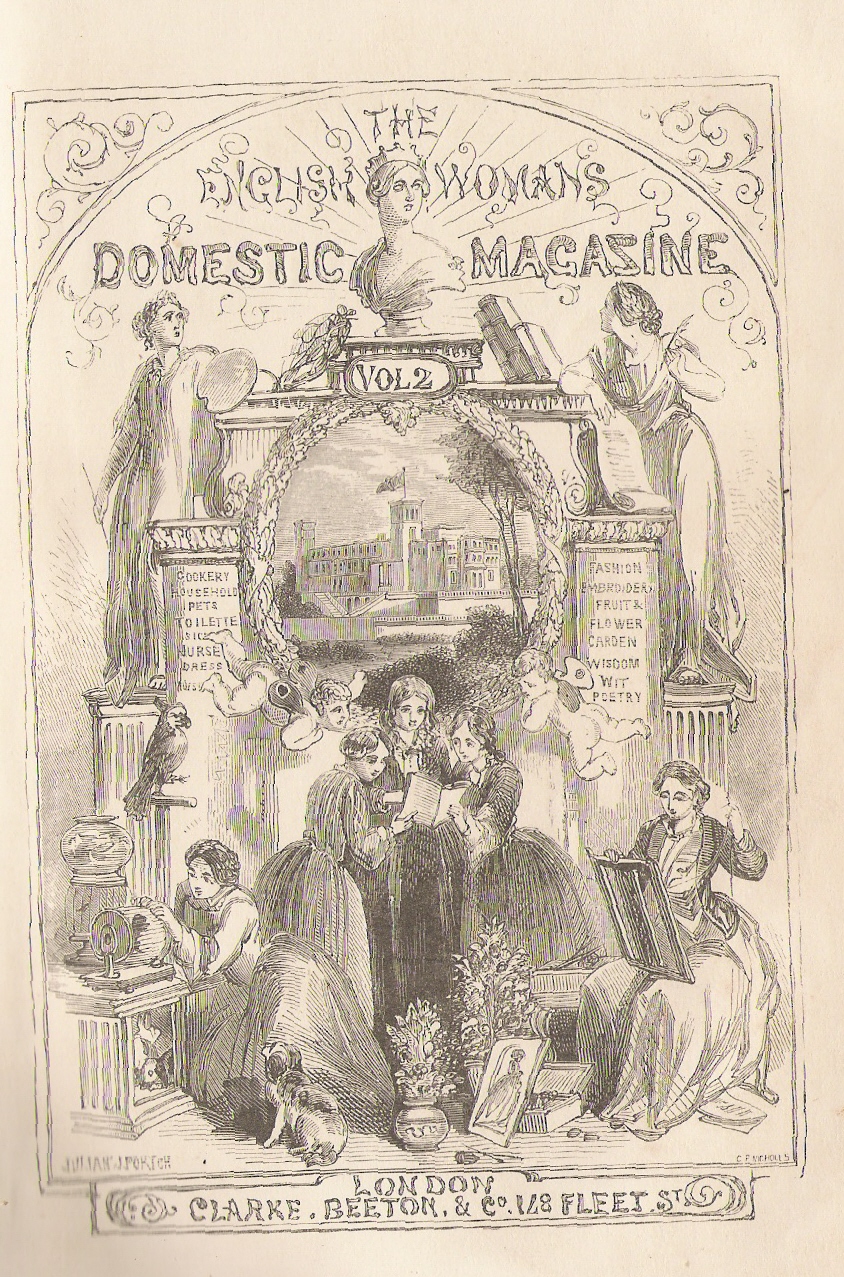
E W D M coverToday’s advent offering sits on my bookshelves but is not actually a book. If that sounds like a Christmas riddle, I will explain. It is a bound volume of the twelve issues of The English Woman’s Domestic Magazine from 1854. It was given to me many years ago by a family history friend (thank you Peggy) and is a real gem. There is no better way to investigate social history than through contemporary writing. There are some second hand copies being offered for sale and some issues are available online. It was published, from 1852-1879, by Mr Beeton. His wife’s famous book of Household Management developed out of the supplements that she wrote for the magazine. There is much that the reader of modern women’s magazines would recognise: short stories, recipes, fashion advice, household hints, book reviews, competitions, readers’ letters and the ubiquitous problem page. In the pages of the English Woman’s Domestic Magazine you can discover how to cook shank jelly, how to deal with rats (discharging a pistol near their holes), how to cure stammering (talk between clenched teeth for two to three hours a day) and how to deal with a man who wants to be ‘more than a friend’. The reply to the latter plea to ‘Cupid’s Post Bag’ recommends a different solution depending on the hair colour of the lady so troubled. This magazine was, of course, aimed at more comfortably off, literate ladies but it is nonetheless an interesting insight into life at the time.
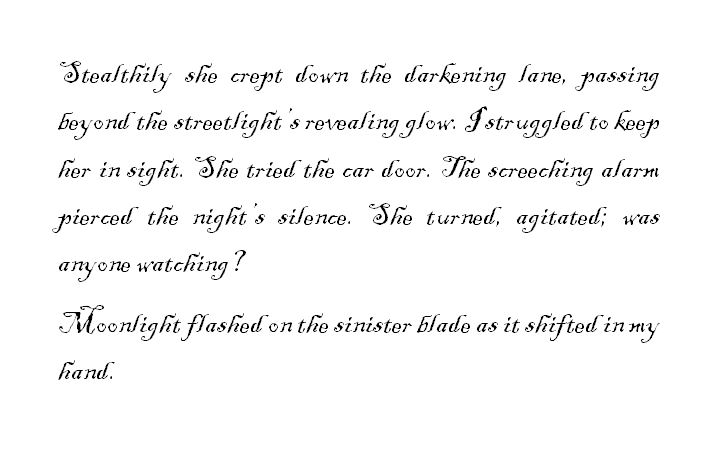
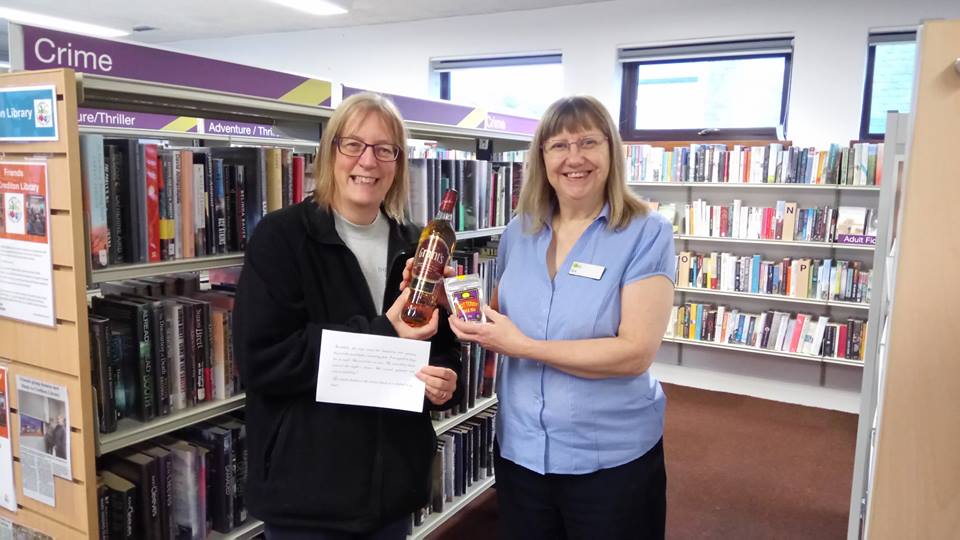
Capture25551880_1790284211264807_8636543761465579878_nA few weeks ago, I responded to the challenge, issued by a Devon library, to write a fifty word crime story. I am usually accused of using at least four words where one will do, so this was well out of my comfort zone. I do enjoy reading crime novels, primarily those that are set in the past but it is not something I would consider writing. Barefoot on the Cobbles does involve a crime but I refer to that as a why-done-it not a who-done-it. I summoned all my O level summary writing skills that have been lurking in my subconscious for forty five years. I wrote something. I left it for a few days and tweaked it a bit. I sent it to ace beta reader Martha. I emailed it to the library, in a suitably spooky font and then forgot about it. Yesterday came the news that I had won! Ok, so it isn’t exactly the Booker Prize but it is the first time I have consciously laid bare anything that I have written in a competitive arena. I did wonder if only I and the library cat had submitted entries but no, it turns out there were others. I was invited to collect my prize from library, which is thirty miles and a good hour’s drive away. I debated whether this was worth it and decided that it was. Though my shed-lifting damaged back did not agree. Nonetheless, I am now the proud owner (temporarily) of a bottle of whisky and hot toddy making kit and a warm glow – and that’s before we open the bottle. Thank you Crediton Library.