Welsh Adventures Part 3

The final instalment chronicling our adventures in Wales and beyond.

Day 7 Blaenavon Ironworks

We set off for our pre-booked entry at Blaenavon Ironworks. This time the sat-nav, not only gets us to the right place but takes us past some stunning scenery on the way. Blaenavon Ironworks is a fascinating site. We get in free because Cadw, who run the site, have a reciprocal arrangement with English Heritage. The ironworks were established here in the 1780s and the finished products were shipped out by canal. It was at Blaenavon that Sidney Gilchrist Thomas discovered a way to remove phosphorus from iron ore, which was significant for the steel industry. An impressive digital display gave some idea of the noise and heat that was part of the working environment. It was somehow more impactful because part of the commentary was in Welsh. I am drawn to ruined industrial landscapes and this is on par with the Cornish tin mining sites. Here the jackdaws and the feral pigeons have made their home.

A series of workers’ cottages on the site have been furnished to represent different eras from the 1780s to the 1960s, the life of the ironworks. Covid restrictions mean that we can only look in these cottages, rather than enter them but they are still a highlight of the site. Instinctively, I wanted to look them up in the census returns and mentally put real people in them. This is just the sort of site that anyone with ironworking ancestors should visit. An interesting fact that I gleaned was that, in 1851, there were more industrial workers in Wales than agricultural, allowing Wales to claim to be the first industrialised nation in the world.

We went for a short uninspiring walk from close to the car park then headed off home, planning to stop to take photographs of the view on the way. We hadn’t done so on our outward journey as we were keen not to miss our entry timeslot. Strangely, the sat-nav decided to return us to Brecon via a completely different route. Although a circular route has the advantage of exposing us to more of the country, we are disappointed to miss the views. Just as we are lamenting this, the landscape opens up and the vista is amazing. Squelchy bog prevents me getting a great camera angle and views always seem less impressive in photographs, so I will have to rely on memories. The mid-Welsh landscape seems to be darker green than many areas and fields tend to be small and hedged, despite the availability of stone for walls.

On the way home we are reminded that the Brecon Beacons have their fair share of ******* drivers. We reach a bridge that it not only described as weak but is barely wider than the car. This in itself is not a problem but like many Welsh roads, it is not straight and at the point at which you join the bridge you cannot see the end of it. An illuminated sign warns us that there is a vehicle on the bridge. A vehicle emerges the sign goes out and a green light comes on. We launch into the unknown, only to find, as we turn the corner, that someone is coming in the other direction, presumably having ignored the sign at his end. My gallant chauffeur had to reverse 100 yards round corners, with unforgiving walls no more than six inches from the wing mirrors on either side.

Day 8 Thursday Brecon Canal

Today it is sunny, so we decide to walk from the caravan site, down the canal towpath to Brecon. This involves taking our lives in our hands to cross two dual carriageways first but we survive. This is a pleasant walk and we are rewarded by a grey heron allowing us to get to within five yards before flying off. There are more signs of industrial heritage here, with the remains of the limekilns that were in operation in the early nineteenth century. The canal linked Brecon with the industrialised areas in south Wales.

After a short rest we decide to explore more byways of Wales by car. We drive out to Craig-y-nos Country Park but by the time we arrive, dark clouds are looming and as we have already had our walking ration for the day, we return to the van.

Day 9 Friday To Cheltenham (yes, I know this isn’t in Wales)

It is time to move nearer to home and take up residence at the caravan site on Cheltenham Racecourse. We have stayed on racecourses before and although we have views across what is probably the Malvern Hills, I have to say that it isn’t the most picturesque site we’ve been to. Cheltenham too is unexpected, much larger than I was anticipating. In my head I was thinking smallish, Georgian grandeur, maybe a bit like Buxton but it seems not, or not in the part we travelled through.

I hadn’t planned an activity for the afternoon so time to Google for an outside space. I lied when I said that the wifi on the previous site was the slowest in the world, that honour belongs to the Cheltenham Racecourse wifi, which is not the Caravan Club system, for which I have an annual subscription but free Jockey Club wifi. I guess there isn’t much call for surfing the internet when hurtling over jumps on the back of a horse. An additional issue is that we have the ‘delights’ of a ‘Fun Weekend’ event on the racecourse this weekend – deep joy. This appears to involve a fun fair. Peaceful it may not be.

We opt for Beckford Nature Reserve. This comes very close to being another addition to our ‘nature reserves we didn’t find’ list but no, here it is, unsigned until you get to a small gateway hidden in a hedge. A path winds round an algae covered lake. There’s not much sign of wildlife apart from some baby coots, which I am surprised to see have orangy-coloured heads. Despite two perambulations of the lake, I am still 1500 steps short of my target. Time for some jogging up and down on the spot outside the van. This is followed by the Wimbledon men’s singles semi-finals.

Day 10 Forest of Dean

It wouldn’t be a holiday without some family history, so today it is off to the Forest of Dean, the haunt of some of my children’s ancestors. This lot even rate some gravestones, though many were in poor condition. Trailing from churchyard to churchyard is often circumscribed by bladder capacity, because small villages rarely rate toilets but hurrah, today two of the churches on our itinerary had toilets, so we could happily spend hours peering at semi-legible gravestones.

One of our stops is at St. Briavels. St. Briavels Castle, now run as a Youth Hostel, is closed to the public. It was built as a royal hunting lodge in the twelfth century. It became an important centre for the making of cross bows, using iron from the Forest of Dean.

Having got suitably soggy feet from traipsing through grassy graveyards, we take a short walk along a forest path to keep the step count up. Then it is back to the van, where the wifi oscillates from intermittent to non-existent. I hurriedly identify today’s photographs. In the past, I have been known to end up with numerous church photos and not be quite sure which is which.

Day 11 Slimbridge

We have saved the best until last. Today is our pre-booked visit to the Wildfowl and Wetlands Trust centre at Slimbridge, established by Sir Peter Scott seventy five years ago. Last time I visited it was in the spring so there are different things to see today and the opportunity to feed birds is confined to a small area. My favourite part is the new estuary aviary with avocets, oystercatchers, black-tailed godwits, ringed plovers and spoonbills, amongst others. I manage to get a few half-decent photos, despite every bird assiduously going into a preening frenzy at my approach, so that their head are hidden from view.
Operation Toy Excavation

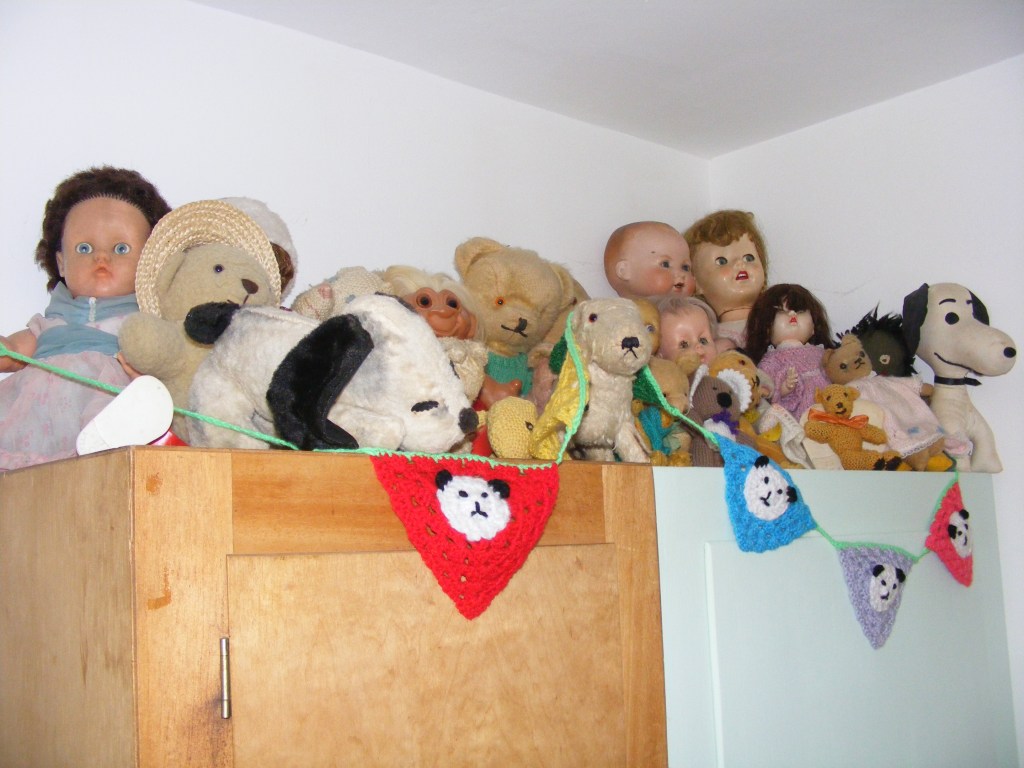
What else do you do on a summer Saturday but excavate the historic doll/stuffed toy collection from under the dust of ages and I do mean ages. I am not sure that the stuffed toys have had the dust bashed out of them for decades.

Meet the motley crew, some of who are almost centenarians.

They were removed from their cupboard-top home, stripped naked, apart from the two that my mother appeared to have sewn into their clothes and readied for the major operation.

Next, to wash the clothes, some of which needed hand washing. It might be a while since they were last washed but I know from bitter experience these are old fabrics that are far from colour fast. Sadly, since they were last laundered, it seemed that the moth had made a meal of some of the woollen items, lovingly knitted by three generations.

The shoes were scrubbed and left to drain.

Then bath time. I don’t have a real bath (I have what is officially the smallest bathroom in the world – seventeenth century cottages not being too hot on bathrooms, so I replaced the bath with a shower). No bath means no bubble bath, so I substituted washing up liquid. It turned out that I also had to use a rather rough washing up sponge to scrap the dust from grubby limbs and faces – sorry dollies.

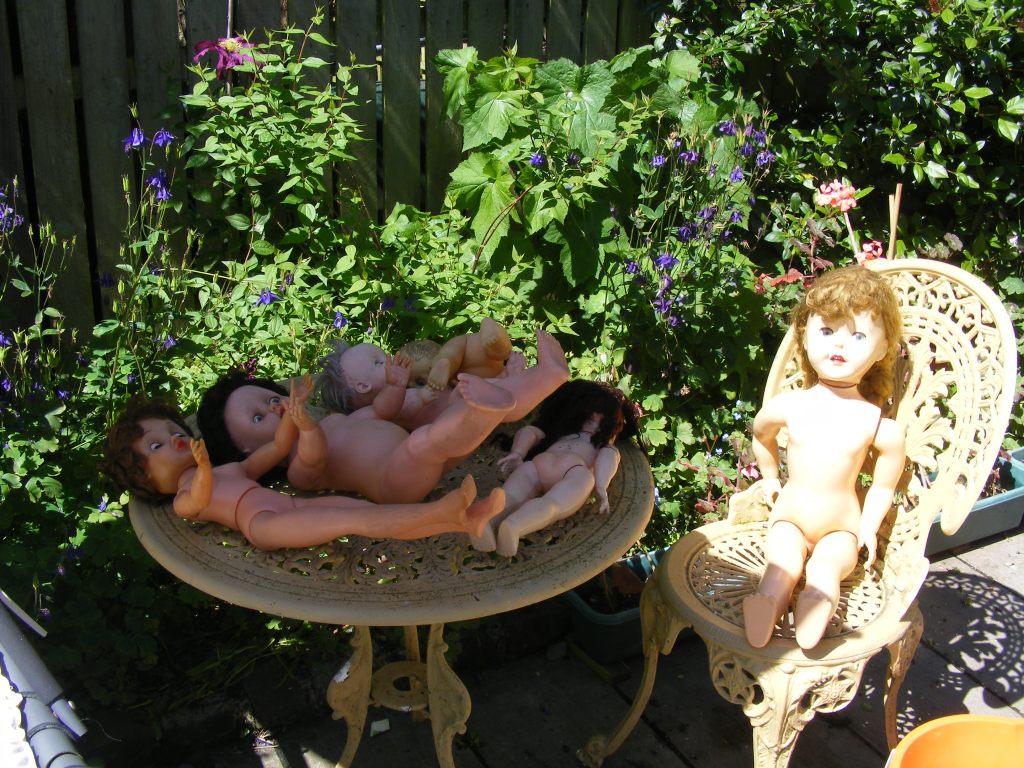
From the left: Christine, Jilly, Mary, Jane, Betty, Sally, Big Peter – you can pin point my generation just from the names.

As you will see, the baby bath has stood the test of time. I am wondering if this will be marked up as an inappropriate image.

Mary and Jilly

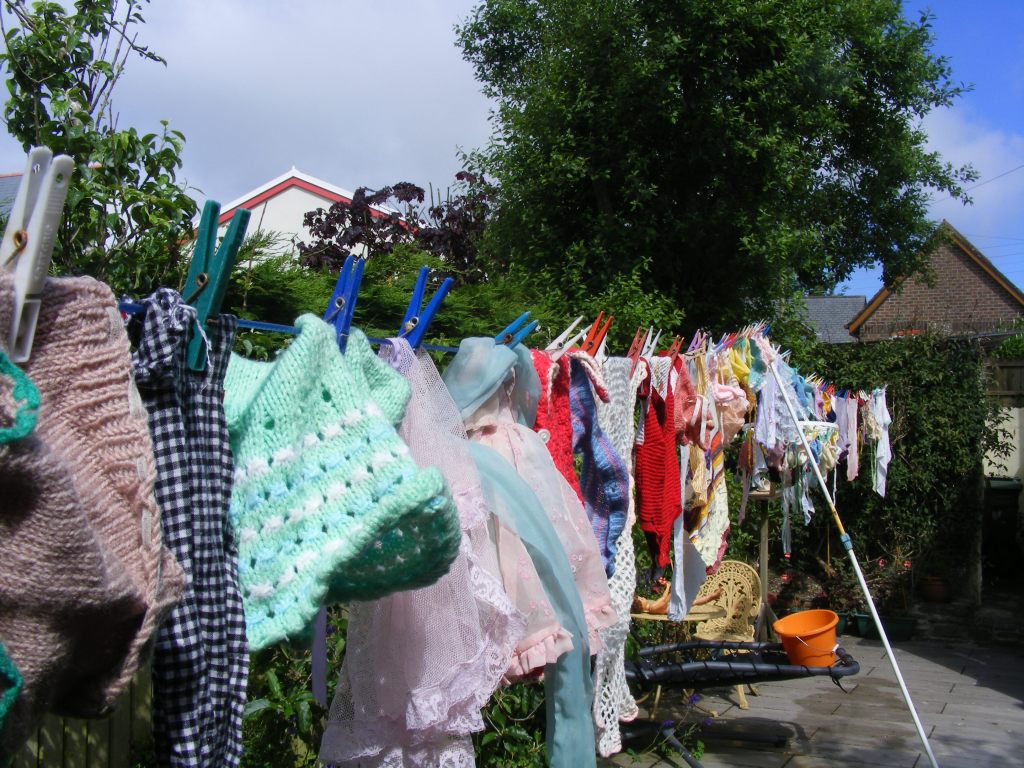
You have no idea how long it takes to peg umpteen small items on the washing line. Take it from me – a long time and it used up every inch of line and every peg I could find.

The dolls were left in the sun to dry. I did have to temporarily amputate a few limbs and even one head, in order to let the water drain out.

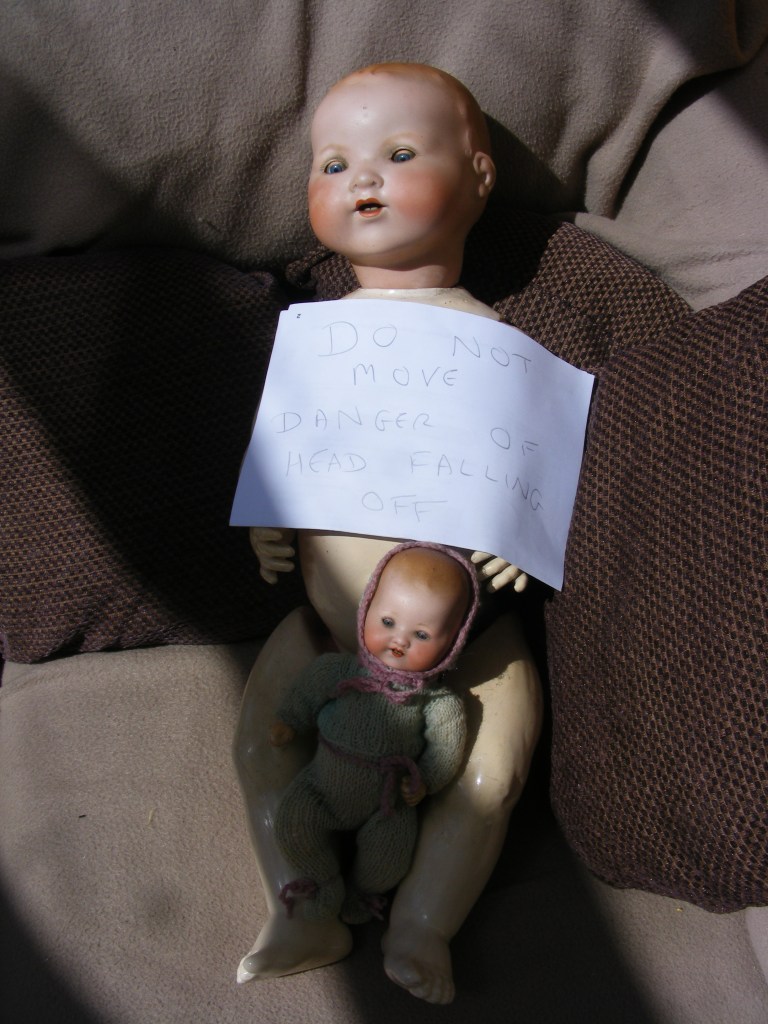
Big Peter and baby Peter (not a lot of imaginative naming on the part of my mother there), now in their late nineties, were spared total immersion, not least because baby Peter’s clothes don’t come off. In fact I fear for the stability of the wires attaching Big Peter’s limbs and heads, hence the warning notice.

Then it was time to bash the soft toys together and stand well back as the dust flew.

A quick bake in the sun followed. Today they will be redressed and replaced on top of the cupboard. It is a sobering thought that if they wait as long for their next washing as they did for this one, I may not be around to do it.

My lovely memories group ladies are writing about the toys and games of their childhood at the moment. I am fortunate to have many of mine still in my possession. The great loft sort has revealed a feast of goodies. They may just become the subject of a talk. In the meantime, whether you still have the contents of your toybox or not, I would encourage you to record the memories of your own particular treasures.

NB no dolls were permanently harmed in the creation of this blog – well, I am not sure I should have washed Jane’s hair (already her second lot of hair) but she will get over it.

This Time it is all About the Books (includes offers and free stuff)

So, the excitement is mounting as the publication date (29 August) for my latest novel creeps nearer. Well, let’s be honest here, I am excited; maybe one or two of you are too. As face-to-face marketing opportunities have now dwindled to zero, I am climbing some steep learning curves in order to do some online promotion. You will also see offers for some of my other books flitter across social media. I really do need to make some space.

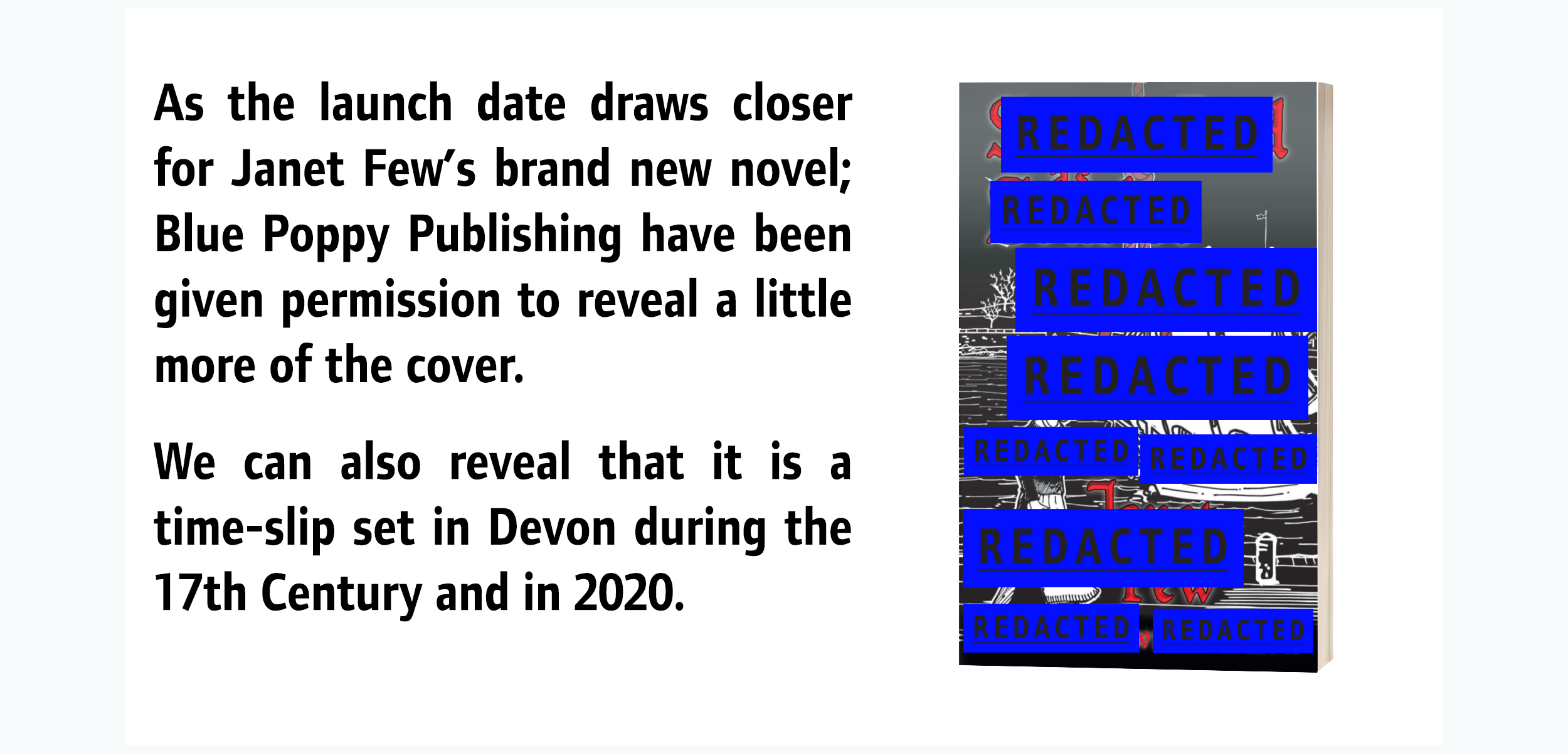
Firstly, the new book is all set for its cover/title reveal on 15 June. Watch this space and my Facebook and Twitter accounts to join in the fun. I shall also be guesting on some other blogs and will be sharing the links to these. If I can work out how to do it, there will be Facebook Live stuff on the day, so look out for that if you are one of my Facebook friends – and if you aren’t, why not? 😊. Hopefully, if I can work out how to turn myself into a social media influencer (whatever that is), I will be telling you about the book and I may even be reading some teeny tiny extracts. So far, the cover looks like this. And, no, the title is not ‘Redacted’, as one of my friends suggested, although it would have been a cool marketing ploy.

SinsAsRedAsScarlet-REDACTED-2

On the subject of the cover, it has been designed by the incredibly talented Robin Paul from The Branch Line. Robin created an amazing cover from my vague suggestions and scribbles that were the first ‘art’ I had produced since failing art O level not once but twice.

Hopefully, by 15 June, I will have set up a pre-ordering system (another learning curve), even if it only consists of ‘email me and I’ll send details of how to pre-order’. The first 200 people who pay for a copy of **** ** *** ** ******* (see there’s a clue) by midnight on 28 August 2020 (British Summer Time) will get a free copy of Coffers, Clysters, Comfrey and Coifs: the lives of our seventeenth century ancestors (RRP £12.95). These will be sent postage free to a UK address. Please note that this offer is only open to those who pre-order directly from me, or from my publishers Blue Poppy Publishing. Both books will be signed. I am sorry that it is difficult to provide an attractive offer for my overseas readers. In all honesty, I can’t pretend that it is financially sensible for you to order directly from me. If you are outside the UK and really want a signed copy from me I am happy to provide details of postage costs. All purchasers of **** ** *** ** ******* will be able to buy the CD of the same redacted name, at the reduced price of £3 (RRP £4), providing that the CD is pre-ordered at the same time as the book. The CD includes Dan Britton’s evocative companion song to the novel and two other tracks by Dan, on a similar theme. I am working on another goody for all pre-orderers but I need to make sure that what I have in mind is something that I can deliver first.

What else am I able to offer you? Well, if you are very quick, there is still time to register for the free talks at tomorrow’s (6 June) Crediton Literary Festival. See my previous blog post for details. During my talk, I will be revealing out a code, giving UK listeners an opportunity to obtain a discount on my book Remember Then; memories of 1946-1969 and how to write your own, the subject of my talk.

But wait, as my friend Michelle would say, there’s more. I now have my own supply of my new booklet 10 Steps to a One-Place Study. So, if you want a signed copy and to avoid putting money into the hands of the multi-nationals, you know where to come. £5.90 including UK postage.

And yet more. In honour of Mayflower400, whose commemorations are sadly but inevitably, having to be postponed, I have another offer available on Coffers, Clysters, Comfrey and Coifs: the lives of our seventeenth century ancestors. This book is a reflection of life in Britain at the time that the Mayflower left our shores. A copy of this book can be purchased for £2 plus postage and packing. That is a total of just £5 for this book to be sent to a UK address, please get in touch for estimates for postage elsewhere. Alternatively, if you order either Remember Then or Enquire Within directly from me at full price, you can order a copy of Coffers Clysters for just £1 more. These offers are open from 15 June up to and including 3 October 2020, or while stock last. I stress that these offers are only available to those ordering directly from me. Contact me for details of how to pay.

Sorry that this is a bit of an advert. Normal service will be resumed soon.


Christmas Memories

Until recently, I was a columnist for the In-depth Genealogist Magazine and also wrote for their blog. Now the magazine is sadly no more, contributors have been invited to re-post their blog material elsewhere, so that it is preserved. This is another post that I wrote for the magazine, which I have edited to bring it up to date.

This four years ago I was taking delivery of my latest creation; a whole pallet full of poorly wrapped books were deposited near my driveway in the rain. I say my creation but that wasn’t really true. Eighty ladies had spent the preceding eighteen months writing their memories of various aspects of their lives in the decades following the second world war. I then wove these together into what was to become the book Remember Then: women’s memories of 1946-1969 and how to write your own. These ladies wanted copies of the book to give as seasonal gifts and I had very few days in which to package and post numerous copies. So that is a memory of 2015 but what about earlier December memories?

The previous year, my ladies had been writing the section of the book that related to celebrations. We wrote about food, gifts, gatherings, religious ceremonies, decorations and family rituals and traditions. Along with them, I too recorded what I remembered of this special time of year. These memories appeared on a blog post at the time. Many of the traditions of my childhood have been perpetuated by my descendants, other have been lost over the decades, making it important for me to preserve them for posterity. Are your descendants aware of how the holiday season was spent in your youth? Do you have older relatives who you could question about the customs of past decades? These memories are part of your family’s history and should be recorded.

Remember Then cover

To give you a flavour, what follows are just a few of the memories that my ladies shared. I would encourage you to preserve similar recollections for your own family.

“There was one year when the roast potatoes found themselves on the floor. I don’t think the five second rule had been heard of then but the potatoes were eaten, we survived and none the wiser. Then there was catering for Uncle Percy, who emphatically didn’t eat turkey – except of course when we convinced him that it was chicken! Christmas mornings meant cheeselets and ginger ale, later replaced by Benedictine or Southern Comfort.”

“When we were young, we always tried to give my parents a hand-made gift, made and wrapped in great secrecy. I remember string pot cloths, drawn-thread tray cloths, embroidered hankies, frilled aprons, home produced bath salts in decorated bottles, knitted tea cosies, gloves and ties.”

Many of our decorations were hand-made and we spent hours cutting coloured paper into strips and gluing them into chains. We also bought home Chinese paper lanterns made at school and made crepe paper streamers to decorate the ceilings. In later years, I made Christmas bells out of Teacher’s whisky bottle tops, painting them white and dipping the bottom edges in silver or gold glitter, then drilling a hole in the top to hang a bead clapper and a loop to put them on the tree.”

““We always went to the pantomime shortly after Christmas. We usually had good seats at the front on the left as you faced the stage. I have no idea how early mum had to book, or how much she had to pay, to get these premium seats. Being at the front was very important as, at some point, children would be invited to go up on stage and it was whoever could get there quickest. I don’t remember being disappointed. The lucky children would then help with the audience participation song and I think, were given a small gift.”

Glimpses then of past celebrations. Now is the time to grasp your own memories and commit them to paper before they fade into oblivion. By the way should you want a copy of the book, please contact me for details (still on a mission to reduce the book stock 🙂 )


Family History and our Pets

Until recently, I was a columnist for the In-depth Genealogist Magazine and also wrote for their blog. Now the magazine is sadly no more, contributors have been invited to re-post their blog material elsewhere, so that it is preserved. This is another post that I wrote for the magazine.

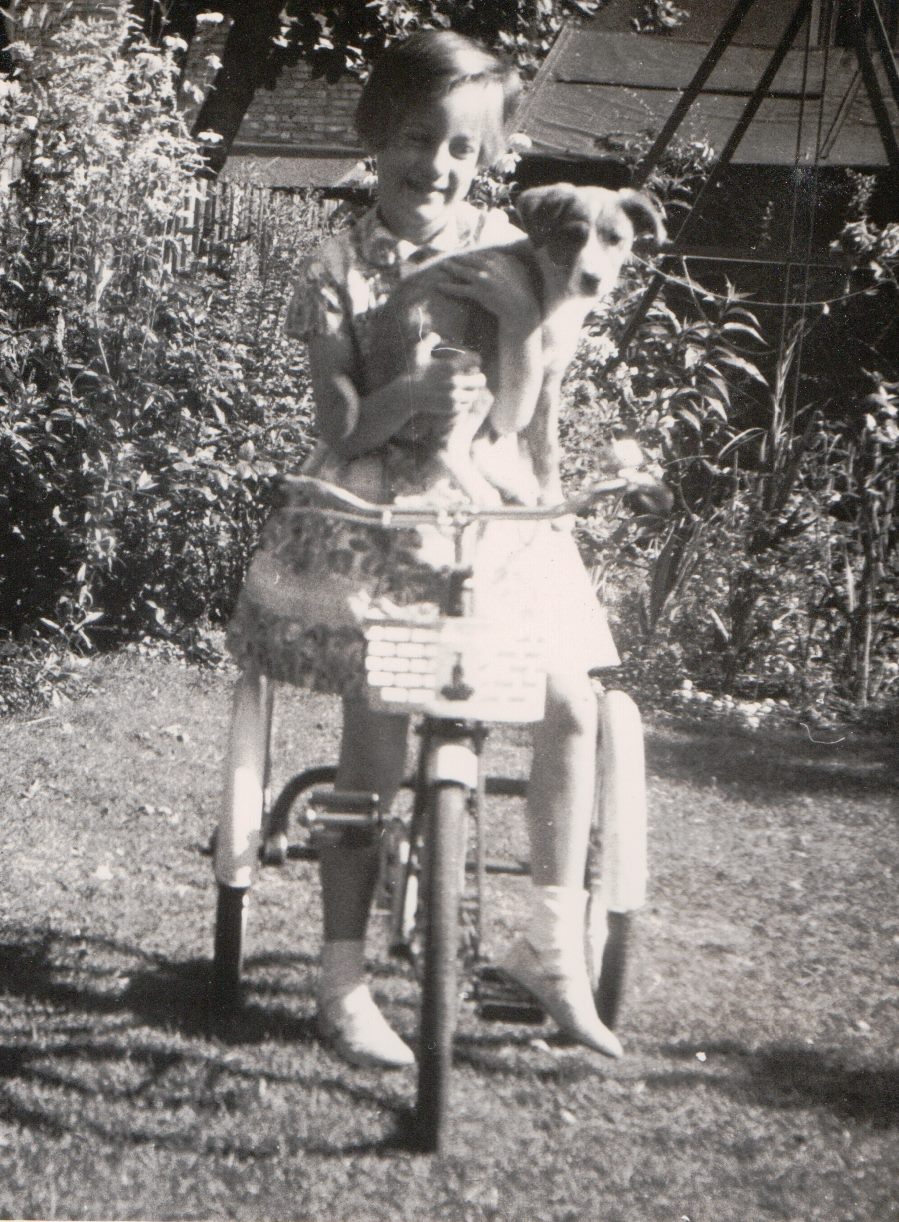
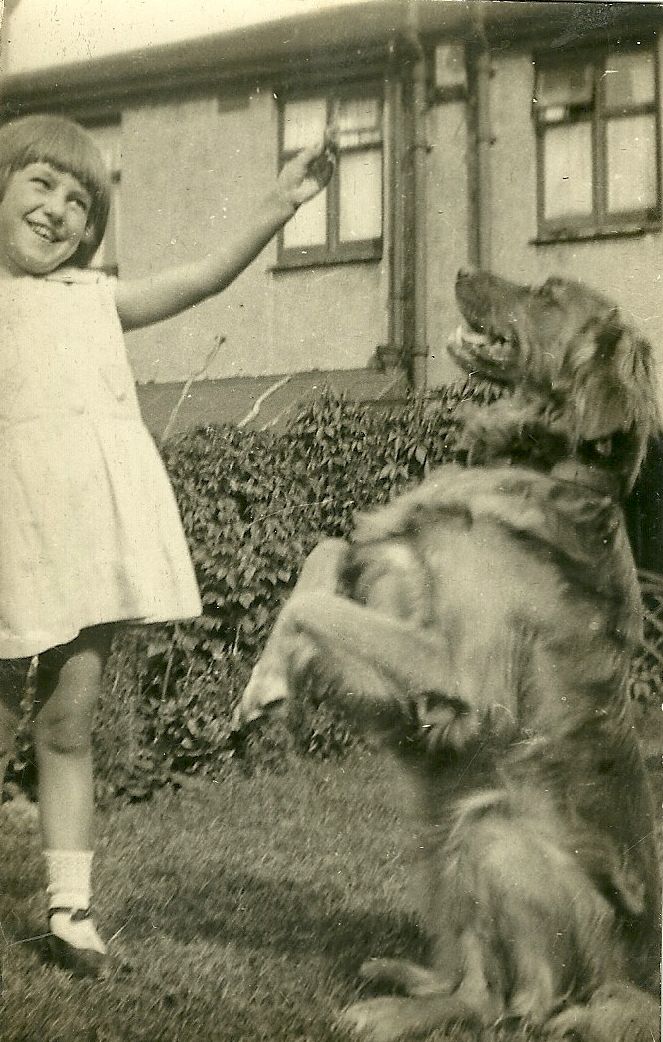
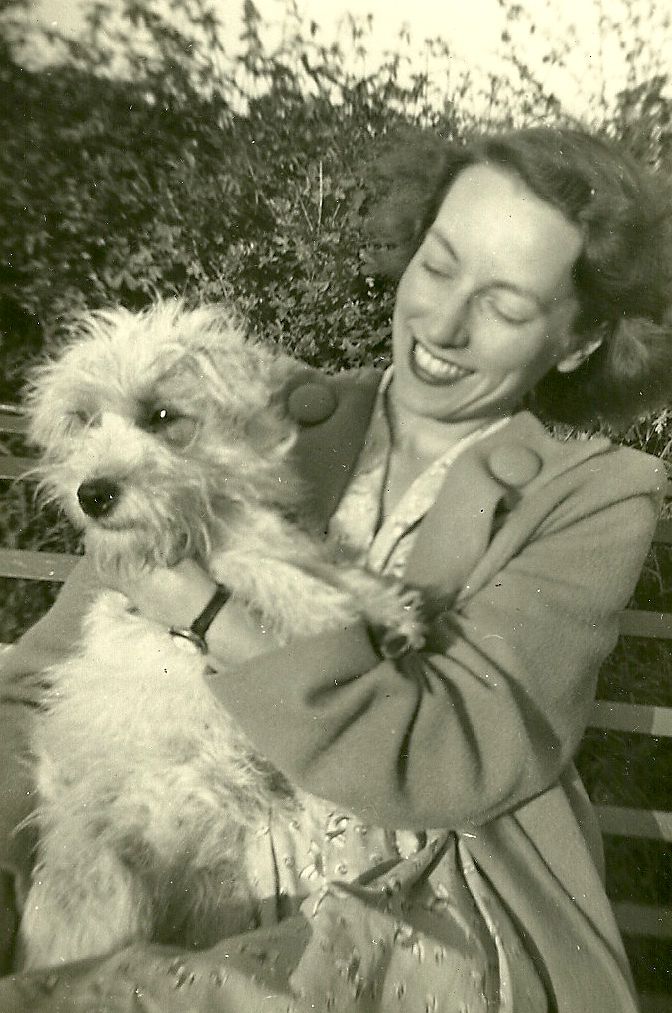
It started with a Tweet. Academics from Royal Holloway and the University of Manchester were investigating how we interacted with our pets between 1837 and 1939. As part of the project they were asking for pre-second world war photographs of family pets. I am fortunate to have a large number of photographs from my mother’s family and yes there were pets. Some of these animals I remember, although these were too recent for the purposes of the project but others lived on in family stories. Apart from the labels on the photographs, had I actually recorded the pet stories in any way? In some respects, pets are a little like those on our family tree who left no descendants, the maiden great-aunts whose stories will not be preserved unless we, the family historians, ensure that they are.

age 6.JPG

It occurred to me that we have a very special relationship with our animals but rarely do they feature in our family histories. We may have no idea about the animals that featured in the lives of our more distant family members but perhaps we should be acknowledging the existence of our own pets and those that belonged to our immediate ancestors.

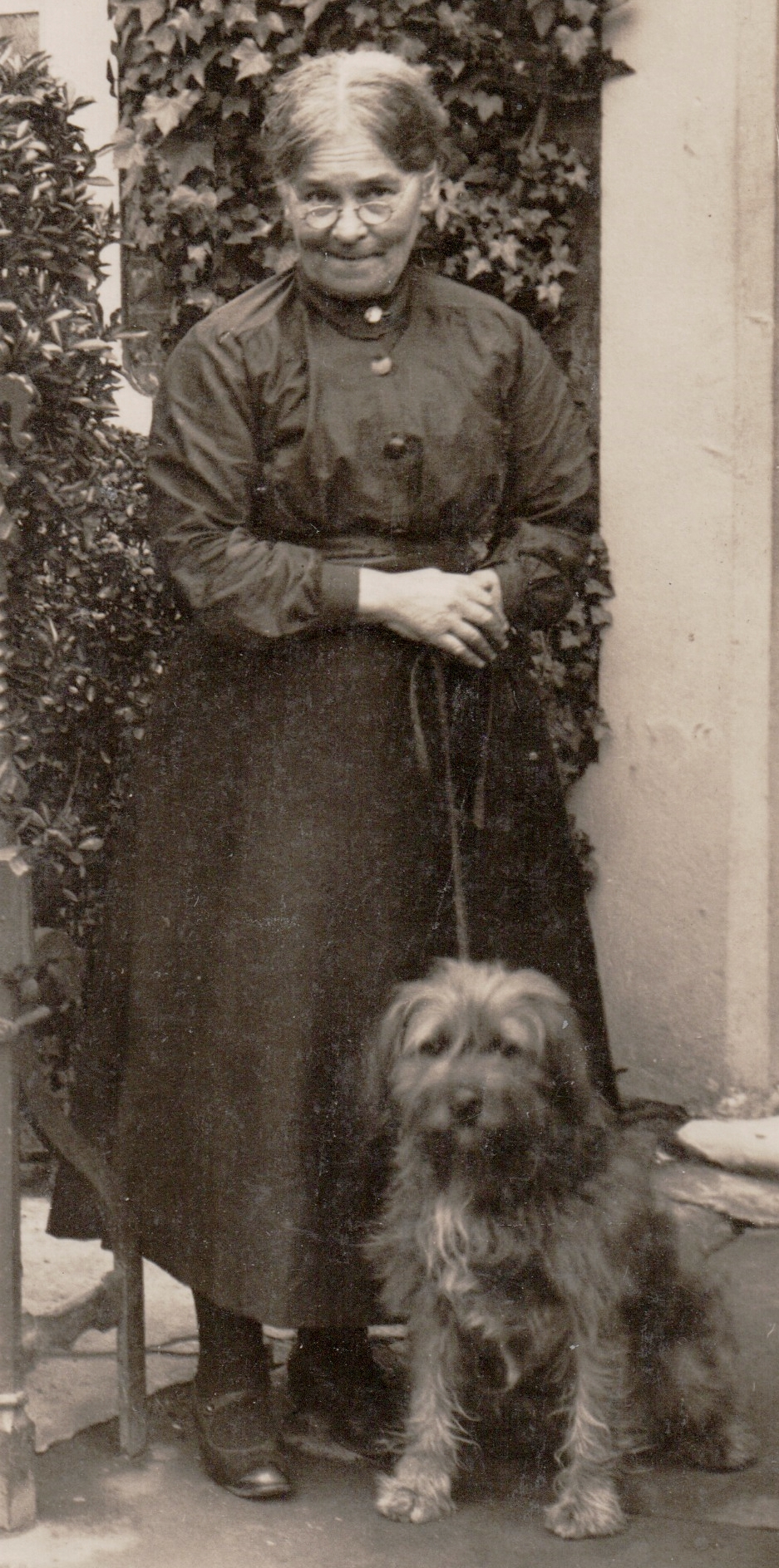
Clara Woolgar nee Dawson 1858-1949 with Mephistopholes 1927.JPG

My great uncle was a serial pet owner. I have photographs of his dog Mephistopheles, so called because my uncle was performing in a choral piece of the same name at the time the dog was acquired. Like family stories that relate to people, things had become garbled in my memory. I was convinced that ‘Mef’ (imagine shouting ‘Mephistopheles’ across a park) was an Irish Setter but pictures show that he was anything but. Sadly Mef died of a heart attack when the coalman’s horse reared up suddenly and broke the front windows of the house with his hooves. Mef was replaced by a Red Setter, Dep, so called because he deputised for Mef. As a late teenager my mother had Judy the Cairn and Squibs the West Highland White Terrier. Throughout my own childhood my constant companion was Sparky the mongrel. So many memories but here is just one, we would hide under the bed together when Christmas balloons were being blown up.

Gwen and Dep c. 1933.jpg

There were occasions when we had to transport budgerigars from granny’s to home. We may only have actually done this once but it seems as if it was several times. Nor can I be sure why we were doing this, as we holidayed together. Initially granny had two budgies, Comfy and Cosy, one blue and one green, although I cannot remember which was which. To these was added the plain yellow Romeo, so called I think, because he had been found ‘roaming’. We seemed to make a habit of catching lost budgies, sneaking up behind them and rescuing them from the dangers of the wild with judicious use of a net curtain. The bird cage was put on my, by then outgrown, pushchair and covered with a blanket. I stood on the push chair step and leant forward holding the handle to stop the cage sliding off in the event of any emergency stops.

scan0015.jpg

I could go on with stories of how Nora the hamster escaped and lived in the back of the sofa for three days before recapture, or how we had to take the side panel off the bath when my daughter’s hamster made a similar bid for freedom some thirty years later. By now you have the idea, add your pet stories to other family reminiscences; man’s best friends deserve to be remembered. If you do have any pre 1939 pet photographs then get in touch with Pet Histories.

Method Genealogy – standing in the footsteps of your ancestors

Until recently, I was a columnist for the In-depth Genealogist Magazine and also wrote for their blog. Now the magazine is sadly no more, contributors have been invited to re-post their blog material elsewhere so that it is preserved. This is a post that I wrote in October 2016. Comments in {} are new additions.

We are probably all familiar with the concept of Method Acting, where the actor attempts to fully identify with a part by living as their character lived, or sharing experiences but method genealogy? As diligent family historians, it is something that we should all be practising. We need our ancestors to be as fully rounded as possible, to lift them from the two-dimensional pedigree and to understand what their lives would have been like. When I wrote my book Coffers, Clysters, Comfrey and Coifs, about seventeenth century social history, I said, “Our seventeenth century ancestors may be people that we can identify, or they may be lurking, nameless, waiting to be discovered. In either case they existed, therefore we owe it to them to find out more about their way of life.” The same is true of more recent inhabitants of our family tree. {Incidentally, if you would like to contribute to the campaign to make room for me to publish more books – copies can be obtained from me}.

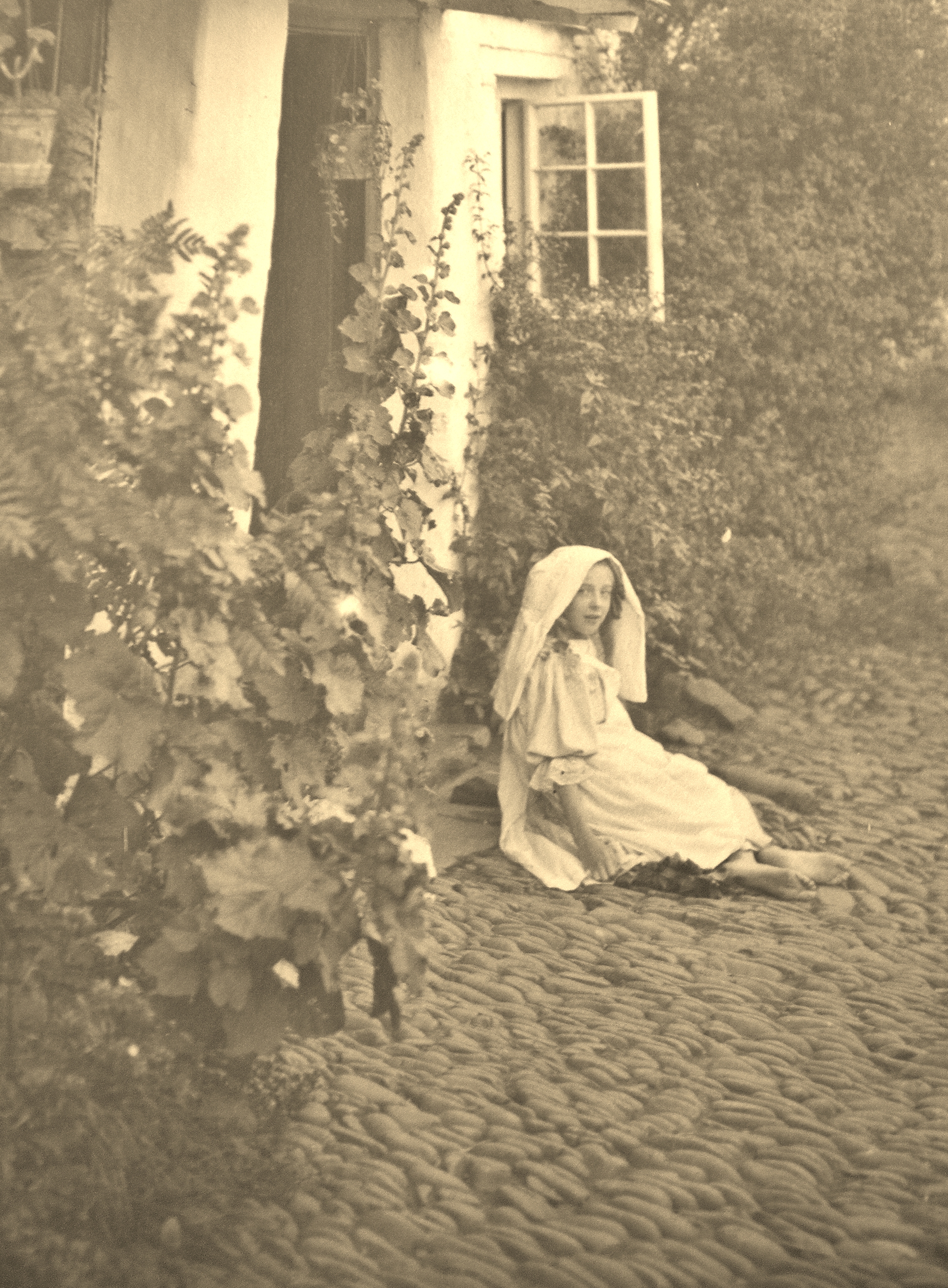
Option 2 - CopyI recently discovered this beautiful photograph of a member of a family that I am researching. It isn’t actually my own ancestry but she will one day I hope be part of a novel based on incidents in her family’s life, so this could be my cover photo. She has bare feet. She lived on a cobbled street. What is it like to walk that street barefoot? I don’t know but I need to. Ok, I’ll be honest, I’m probably going to wait for better weather but I will be trying this. {Yes I wrote the book and yes I tried it – but not for long. And yes – another opportunity to relieve me of book stock and increase the free space in my house}.

Part of my life is spent as an historical interpreter, so I do get to dress in period costume. Have you any idea how difficult it is to go upstairs in a full length skirt? What about household tasks? That bucket you need to fetch from the well could weigh four stone (30kg), oh and you probably need eight bucketfuls of water a day. What is a home like without electricity? I get to try this in my 400 year old cottage when our power fails.

Reality television has often attempted to get people to turn back time. In some cases they go back to their centrally heated homes and twenty-first century luxuries every night. Even if it is a more sustained experiment, the participants know it is only temporary but such experiences are the closest we may get to the lives of our ancestors. What is it like to carve a homestead from virgin forest, to clear, to plough, to plant and to hope for an eventual harvest? How does it feel to set off on a six week sea voyage, knowing  that you will never again see those you have left behind?

If we are physically capable, we need to enter the realms of experimental archaeology to find out what processes were involved in the occupations of an ancestor. If we know they walked a certain route to school, to work, or to migrate, then can we walk it too (if only virtually with the aid of Google Earth)? What was the terrain like? What marks on the natural or built landscape may they have passed?

Family History is not just about following shaky leaves {and believe me, ‘shaky’ is an appropriate description for many} and amassing the largest family tree in the world. It is about getting under the skin of those we have discovered and doing the best we can to gain an insight into their ways of life. {Oooh, opportunity for another advertisement – if you would like to add depth to the deaths of your ancestors, join me on my Pharos Tutors online course ‘In Sickness and in Death: researching the ill-health and deaths of our ancestors’ – starts on Tuesday folks!}.

Are your Ancestors Dead? – a family history post

One thing that all but our most recent ancestors have in common is that they are dead. Particularly when we first start out on our genealogical journey, we all have those ancestors hanging from our family tree who are 327 and we have not yet killed them off, in the nicest possible way. The temptation is to focus on births/baptisms and marriages, as they are more likely to progress our tree but it is vital to seek out deaths/burials as well. It is not unusual to find people constructing a tree based on someone who died at the age of two, so could not possibly have married great-granny. It is not just about when they died though; what about the how and the why. Do you know how your ancestors died, or what conditions were prevalent at the time of their deaths, or how their occupation might have impacted on their health? Do you know your byssinosis from your convulsive ergotism and which ancestor would be more likely to suffer from which?

The health problems and deaths of our ancestors are an integral part of our family’s history. Sickness was a very real fear for those who lived in past centuries, diagnosis was not straightforward and cures and preventatives could be ‘unusual’ at best and useless at worst. Illness and disease was such a fundamental part of our ancestors’ lives that we owe it to them to investigate this aspect further, if we want those ancestors to be more than just a two-dimensional name on a page. I do have a particular interest in this topic and several of my presentations cover aspects of the history of medicine. A number of you will have heard tales of my ancestors who habitually fell off (or into) things.

This is the time of year when I revisit this topic, as I am about to present my five-week online course for Pharos Teaching and Tutoring In Sickness and in Death researching the ill-health and death of your ancestors. If you think this post is some kind of convoluted advertisement, you’d be right but it is also because I feel that this is a very important but often neglected, topic. The course will help you to set your ancestors’ lives in context by looking at the illnesses, disabilities and diseases that brought about their deaths or had an effect on their well-being. It covers a variety of records that might provide information about ill-health, or causes of death for specific ancestors, or about prevalent threats to health in the past. The causes, symptoms and treatment of various illnesses are investigated in all their gory and fascinating detail and significant medical developments of the last 400 years are explored. If any of my writer friends have persevered this far, it could be great for historical novelists too. The first lesson begins on 13 August, so if you do want to fill one of the remaining spaces, don’t delay. It can all be done in your own time, from the comfort of your own keyboard, so there are no excuses. The only part that is time-prescribed is the weekly online ‘chat’. I should add that no webcams are used in this process, all you need to do is to type your comments, so you are free to join in wearing your pyjamas. The sources that are referred to are from English records, as they are what I have access to but the principals apply world-wide and you are encouraged to relate what you have learned to your own ancestors.

Advert over – normal service will resume shortly and yes, I know I have left you hanging in Cornwall – one more post to get us home soon, I promise.

Bill of Mortality

Madness, Mania and Melancholia: the mental health of our ancestors

The fact that I have begun the new year researching madness says it all really. One of my new presentations for 2018 is about the mental ill-health of our ancestors; it will have its first outing next month. By co-incidence I was invited recently to submit an article on the same topic for the journal of The International Society for British Genealogy and Family History. I have really enjoyed researching this important topic, if ‘enjoyed’ is the right word. I did touch on mental illness in my booklet ’Til Death Us Do Part: causes of death 1300-1948 and it also gets a mention in my Pharos online course In Sickness and in Death – researching the ill-health and death of your ancestors but preparing the talk and article has given me the scope to investigate in more detail. As usual, what interests me most is people’s behaviour, both the reactions at the time and how we view our mentally ill ancestors now.

So what else has been happening since the season of goodwill and family gatherings was relegated to the attic for another eleven months? Pretty much it has all been about Daisy and of course mental illness threads its way through the pages of her story too.  This week has seen me focus on endings and beginnings in respect of Barefoot. I have been struggling with the final chapter. Sadly this is not the final chapter in the sense that it will be the last I write but it will be the end of the book, which is probably why I am finding finishing it so difficult. I also sent the prologue out to my lovely writers’ group and a couple of other beta readers. Well there was some good news, overall the reaction was favourable and they felt that they wanted to read more. That’s a relief. The downside is that they all suggested different minor ‘tweaks’. In each case, I can see the points that they are being made but if I take them all on board, it will be unrecognisable as the passage that I originally wrote. I am putting this passage away for a while and will come back to deciding how to deal with it later.

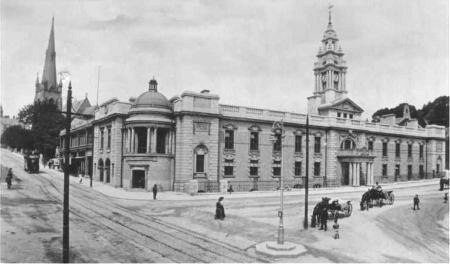
Torquay Town Hall HospitalShortly, I am off for what I am laughingly calling a ‘writer’s retreat’ aka three days in a caravan in the soft south of the county. Part of Daisy’s story takes place in Torquay, which is not a town I know very well, hence the need for a field visit. I spent yesterday researching the back stories of some of the minor characters she encounters during this part of her life and needless to say, found others I would like to include. A newspaper article mentioned that Daisy shared a house with six others whilst in Torquay. The identity of three of these was obvious. I had the task of pinpointing plausible candidates for the other three. I am happy to report that I have positively identified one and have come up with two others who are consistent with the information I have. Google earth suggests that the house they lived in was a three bedroom Victorian terrace and I cannot work out who might realistically have shared a bedroom with whom but perhaps, when I see the property in reality, it may look larger. A servants’ attic would be handy! I’ve also immersed myself in stories of VAD nurses and located routes I need to retrace. Hopefully this visit will enable me to write two middle chapters of the book then I really am on the home straight – yippee!
PS – three book reviews posted so far this year – get reviewing folks – help an author.

Social History Book Advent Calendar Day 24 Celebrations and Traditions

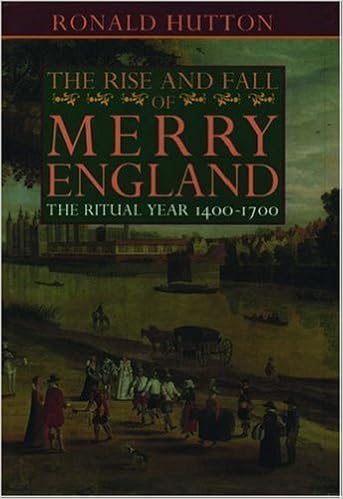
So we open the final ‘window’ in our social history book advent calendar. Given that this time of year is stuffed full of ritual and tradition, it seemed fitting to save Ronald Hutton’s The Rise and Fall of Merry England: the ritual year 1400-1700 for today. Professor Hutton looks at a range of customs and traditions, both religious and secular in origin. Highdays and Holydays (sic) marked the seasons for our ancestors, providing injections of excitement into routine lives. Some of these were national rituals, others more localised and Hutton has sought out references in contemporary documents that shed light on what was going on in particular towns. There is an appendix listing the churchwardens’ accounts that Hutton used in his research; the coverage is prodigious. In the pages of this book we find out about Maypoles and mummers, Candlemas and church ales and everything else in between. Hutton admits that, at times, the evidence is fragmentary but he has produced a comprehensive account of the celebrations of the early modern period. The time span covered by this book saw more than one major event that served to dislocate our ideas of celebration. The tumult of both the Reformation and the Civil War meant that our rituals in 1700 were very different from those of 1400.
As I come to the end of this year’s ‘calendar’, I would like to encourage you to review books that you read. It is the season of giving and it is the greatest gift you can give an author, well apart from buying their books in the first place. Obviously it is lovely if they are 4 or 5 star reviews but they do need to be genuine reactions. I personally don’t review at all unless I can award a ‘good’ rating. Reviews do not have to be lengthy. If you feel you can write something more than ‘great book’, it is helpful but all the authors I know would be grateful for two word reviews. I know I don’t write enough reviews and I really should. There’s a New Year’s Resolution in there somewhere! Can you commit to writing one a week, one a month or one for every book you finish in 2018? Use whatever medium suits you, Amazon, Goodreads, Twitter or a blog but make an author happy.

It just leaves me to wish everyone a Happy Christmas and a new year in which we celebrate friendship and are tolerant of difference.


Social History Book Advent Calendar Day 22 – The Blitz, Mass Observation and new Working Opportunities

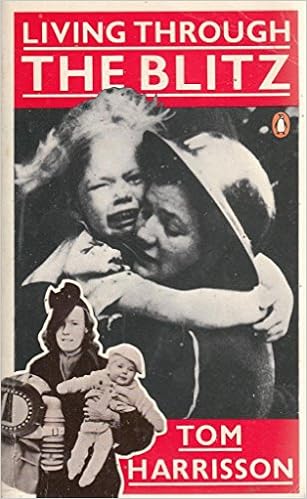
We are moving closer to the present day with Tom Harrisson’s Living through the Blitz. This book is based on the contemporary diaries and returns that formed part of the Mass Observation Survey and goes behind the ‘stiff upper lip’ media propaganda. Here you will find unvarnished, hard-hitting stories of fear and panic; accounts that are very different from nostalgic reminiscences, written long after the time. Inevitably, a significant proportion of the book concentrates on London but there are also chapters on the Southern ports and the industrial north. I particularly like the individual, personal experiences that shine out from the pages of this book. If the Blitz is history for you, rather than memory, you may well find that your preconceived ideas of keeping calm and carrying on are overturned by reading Harrisson’s work. More information about the Mass Observation can be found here. The original records are held by the University of Sussex.

I am still suffering from post-shed moving related injuries. Aided by adrenalin, yesterday I managed to steady sides of a shed as my companion devised a method of rolling the panels along on random bits of pipe. At least it is now ‘job done’ and I have a perfect excuse for not scrubbing floors (or indeed moving) for the next few days. I also have confirmation that the job I must not mention will see me take on a different role next year. I have a sparkly new job title and am now, in theory, less unimportant. As a result, I will be immersing myself in the world of Restoration Britain, slightly later in the seventeenth century than my usual stomping ground but I am relishing the challenge. Did someone mention ‘slowing down’?