We’ve just returned from a few days in Shrewsbury. We were staying on a very posh-for-us caravan site because the same complex also had ‘barns’ where caravan-less members of the family could stay. I was a fail at this kind of location from the start. We checked in and were given a card to access the site barrier, no problem, we were used to these. I was also given two ribbon like bracelets to indicate that we were paid up residents. For safe-keeping, I hurriedly put both on my wrist, one for me and one for the fisherman of my acquaintance. Caravan pitched I attempted to pass his to him. Ah. This was the problem. I had tightened the bracelets to ensure I didn’t lose them by sliding a plastic ring up each ribbon. It turned out that these were one way fastenings, a little like cable ties – hindsight and all that. I managed to wriggle my way out of one bracelet but the other was firmly affixed. Not wanting a bracelet on day and night for four days, I had to return to reception and ask to be cut out and have a new one, which I made sure was looser.
The barn, for younger members of the family, came with a firepit and hot tub, both of which had to be fully explored.
The weather was kinder to us than the forecast promised and we explored the delights of Blists Hill Victorian Village. Obtaining advance passes online was an intellectual challenge in itself but we managed it. The Ironbridge complex is due to be taken over by the National Trust, which caused a hiatus in the booking system at precisely the wrong time. It was interesting to chat to the various shopkeepers and tradespeople ad to spend the ‘old’ money that we had exchanged in the bank. Mind you, the existence of a bank seems to be something that is now consigned to history. The traditional fish and chips, fried using beef lard were probably not the best thing for our arteries but were delicious.
The next day was a Shrewsbury Trail, or at least part of it before it got too much for some of our party. The first challenge here was ensuring that both cars were parked in the same place (they weren’t) and then finding our way out of the shopping centre adjacent to the carpark we ended up in. We did manage a quick game of rockets and meteors (like snakes and ladders) in the shopping centre first.
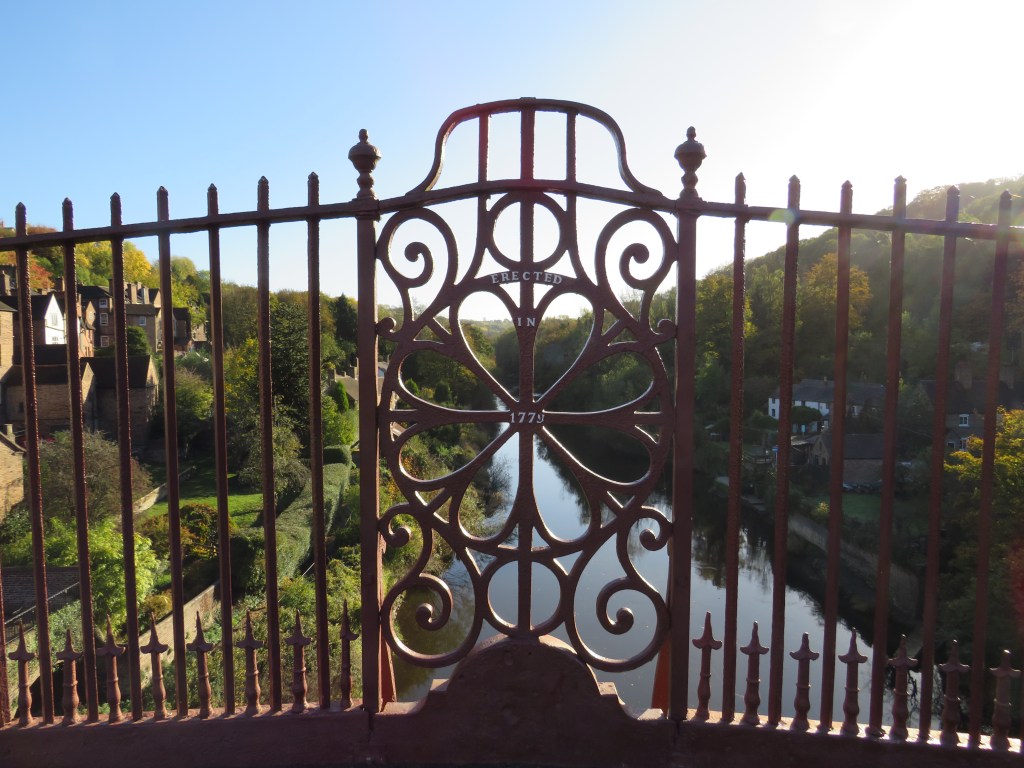
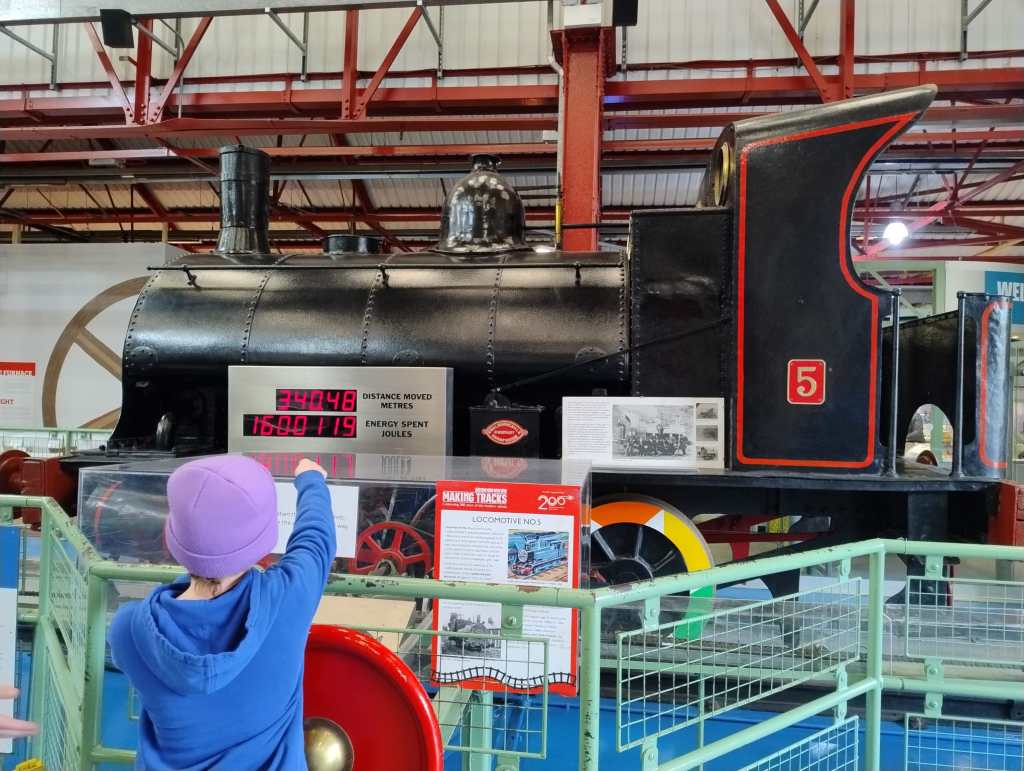
Then a visit to see the Ironbridge in glorious autumn sunshine; the first iron bridge to be constructed in the world, in 1779. This is now a world heritage site. We moved on to Enginuity Science Museum, where we virtually made pig iron, moved locomotives using levers, solved (or didn’t) puzzles and other excitements. There were plenty of other museums in the Ironbridge family for those with more stamina but we decided to quit while we were ahead,
Now we are back home for what might laughingly be called a rest.
I deliberately don’t post about politics because I don’t like confrontation but remaining completely silent makes me part of the problem. I don’t have allegiance to a particular political party, although there is currently one that I would never vote for. This is not a political post but it certainly touches on current affairs. When I was interviewed for college, part of the interview process was to write an essay on ‘why study history?’. I don’t really remember what I wrote; it was the 1970s, I know I mentioned the Irish troubles. We need to understand history because we need to learn from it. It is no coincidence that George Santayana’s quote, ‘Those who cannot remember the past are condemned to fulfil it’, is on my home page. History is getting increasingly squeezed from the school curriculum. It is seen as being more relevant in today’s world to study computing, business studies, robotics and other subjects that were unimaginable in my school days. Don’t get me wrong, that knowledge is important but so is having a world in which to utilise that knowledge.
The human race seems to be rapidly losing the critical thinking skills that come with studying history properly. We need to be able to seek out proper evidence, we need to understand the role of propaganda and the power and danger of the megalomaniac. We need to be able to sift the truth from the distortions of the truth and downright lies that abound. There has always been propaganda and misinformation but in today’s digital world, that spreads so much faster and so much further than ever before. People believe what they read in the biased popular press and on social media. They fail to realise that some news output is not balanced and impartial but is presenting a partisan and misleading view that suits a particular political purpose. Whereas, in a pre-digital age, people were only likely to pass this rhetoric on by word of mouth, now mis-information can be passed on to thousands at the click of a button.
There are unthinking family historians following the shaky green leaves and believing impossible relationships, which they graft on to their family trees. These family trees get copied and replicated and before long, the weight of ‘evidence’ is in favour of something nonsensical. This is non-evidence; where is the source of that information? In the great scheme of things, if someone gets their family tree wrong, that does not have serious consequences. Believing other kinds of mis-information is potentially much more serious and downright dangerous. Daily, I hear or read friends and acquaintances spout or write ‘facts’ that two minutes checking would prove to be false, even if their common sense has failed to ring warning bells. The keyboard warriors don’t bother to fact check, ten, a hundred, a thousand, ten thousand people believe this, so it must be so. At a time when information has never been more accessible, we are nonetheless drowning in a sea of ignorance.
The world is currently a terrifying place. I hate watching or reading the news because I, like many, am fearful, not just for myself but for my family, my friends and a world that seems to be rapidly slipping from our hands. We seem to be rapidly evolving into a society where humans are no longer humane. What has happened to that sane world, where the majority of people are kind, are caring, are empathetic. I am not a psychologist, although I did study psychology as part of my undergraduate degree. I have however spent more than fifty years studying the people of the past, trying to understand their behaviour, their motivations and why they made the life decisions that they did. One thing that studying history has taught me is that there have always been periods of crisis or near crisis. There have always been threats to democracy and to the status quo. There have always been individuals who have risen up to take advantage of people’s fears and who have the personality to gather followers around them, largely by latching on to one or two issues that chime with certain sections of that community in fear.
By studying history, I have observed how humans behave when they are under threat. That might be a threat of conflict from an ‘enemy’ (real or perceived), a threat of poverty at a time of dwindling resources, a threat of epidemic, of famine or of natural disaster. Humans find it difficult to cope with threats and the stress that it causes, particularly if it is unremitting, ongoing stress. Studies of those who, for example, have suffered from long term domestic abuse, or who have spent prolonged periods in a combat zone, have discovered how detrimental that stress can be both physically and mentally. As a species, we cope best with stress if we can identify the cause and lay the blame for that stress with an outsider. If the threat is perceived to come from someone not like us, it is easier to cope with than a threat from within. Who the people ‘not like us’ are has varied over the centuries. We blame the people not like us even if all logic suggests it cannot be so. In 1348, in England, Jews were blamed for the plague. It was obvious that these people not like us were poisoning the water. Except of course the Jews had been expelled from this country in 1290. We are still guilty of applying such warped ‘logic’ in order to blame people not like us for the things that we fear today.
This is not a political post because I am not brave enough. I have friends and acquaintances who do not think as I do and I am not robust enough to engage in acrimonious debate. I am selfishly wanting peace and quiet in a world where there is no peace and quiet. I am cheered by the knowledge that there are those who do sift the evidence and seek the truth and many of you reading this will be amongst them but we tend to be the quiet ones. I watch people being drawn in by bombast and rhetoric and ‘information’ that has no foundation. I see people following leaders because one aspect of what that leader spouts feeds into their fears. They do not look beyond the loud headlines and the single issues to wonder about the polices that might underline those particular political stances. They do not think of the practicalities involved, of how what is being spouted might be achieved, if indeed there is a coherent, workable plan. They do not consider how what results from these viewpoints might impact on other aspects of all our daily lives.
Many of my followers are family historians or authors who carefully research their books. Some of you are here because I occasionally post about travel, about gardening, or special needs. Whoever you are and whyever you are here, please, please for the sake of us all, try to persuade those around you to look beyond the bombast and the catch all headlines, to look beyond the appeal to their underlying fears and analyse what is being said. To look beyond the propaganda to seek the facts. Think about what some of these policies will mean, both for us and for the people not like us. If we are the strong, we need to stand up for the weak, for those who have no voice. Let us work towards returning to a world where empathy and compassion, for each other and for people not like us, are no longer derided but are seen as core human values to be sought after and lauded. If that makes me woke, or whatever the current derisory term is, then I am very proud to be so.
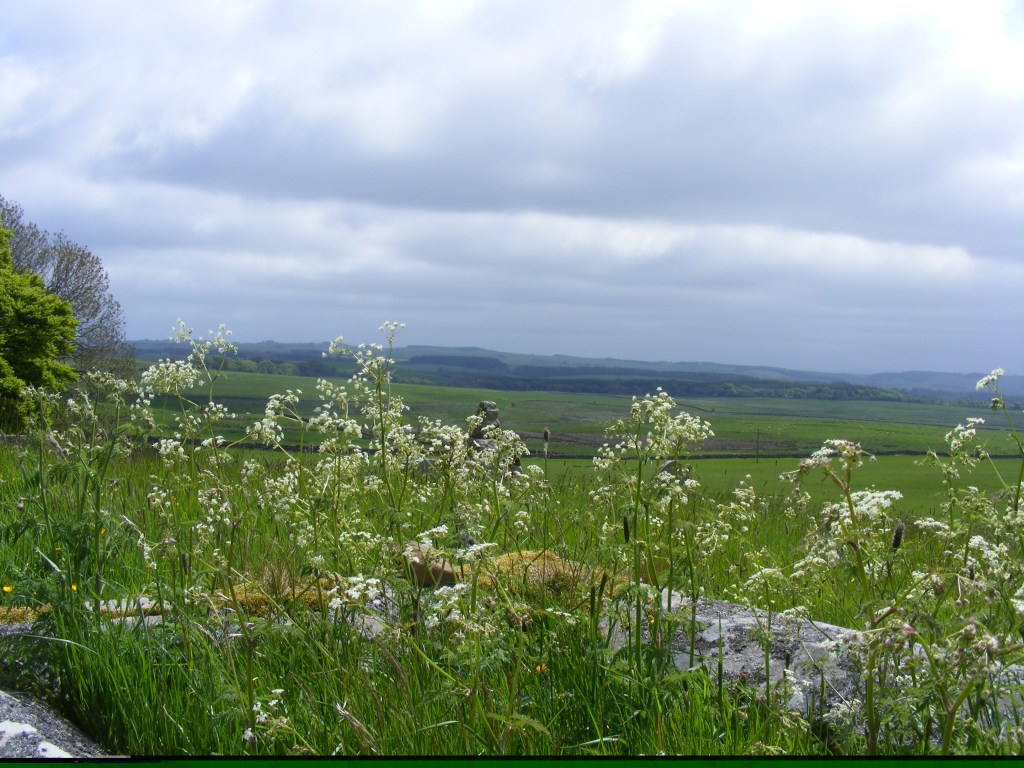
Normal service, with posts in a lighter vein, will resume shortly, as long as there’s a world that will continue to allow me to do so. I’ve included a picture to lighten your day.
The Malvern trip continued with Gloucester Family History Society’s open day at the Heritage Hub. It was lovely to be able to see people in real life and chat about family history. I listened to Simon from WeAre.xyz, talking about his software (quick resolution to do more with my site), then gave my A to Z talk. After that, it was out for a meal and a catch up with family history friends. This is the first of four in person family history weekends in four different counties this month. A bit like buses, you wait for ever, then they all come at once,
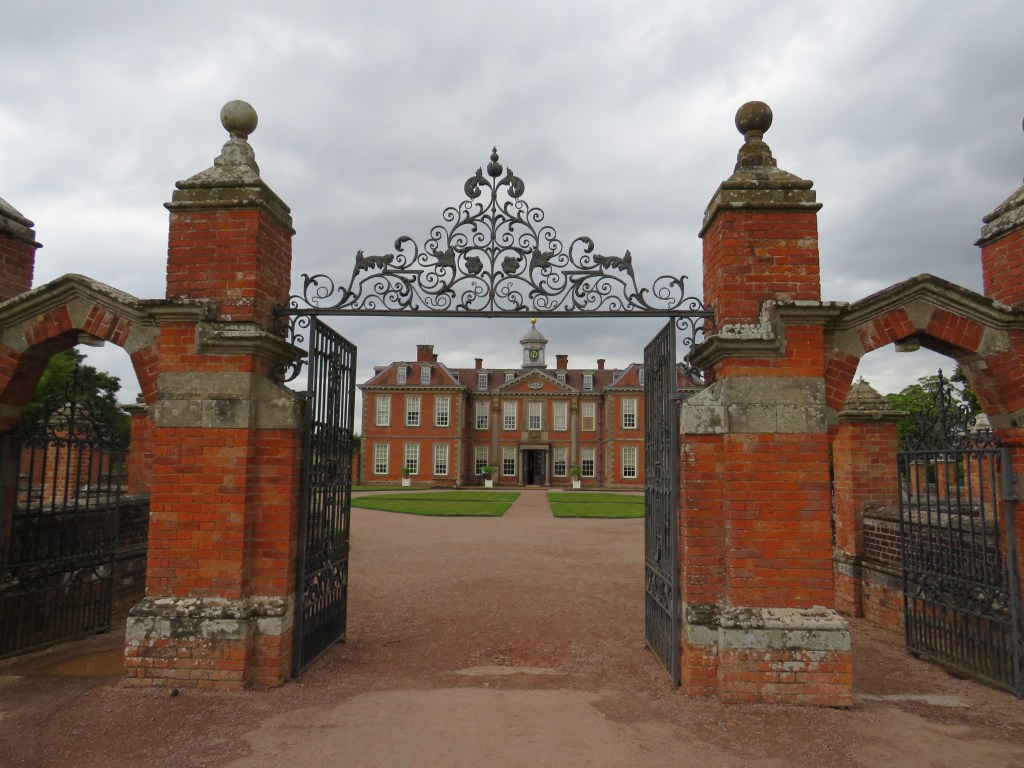
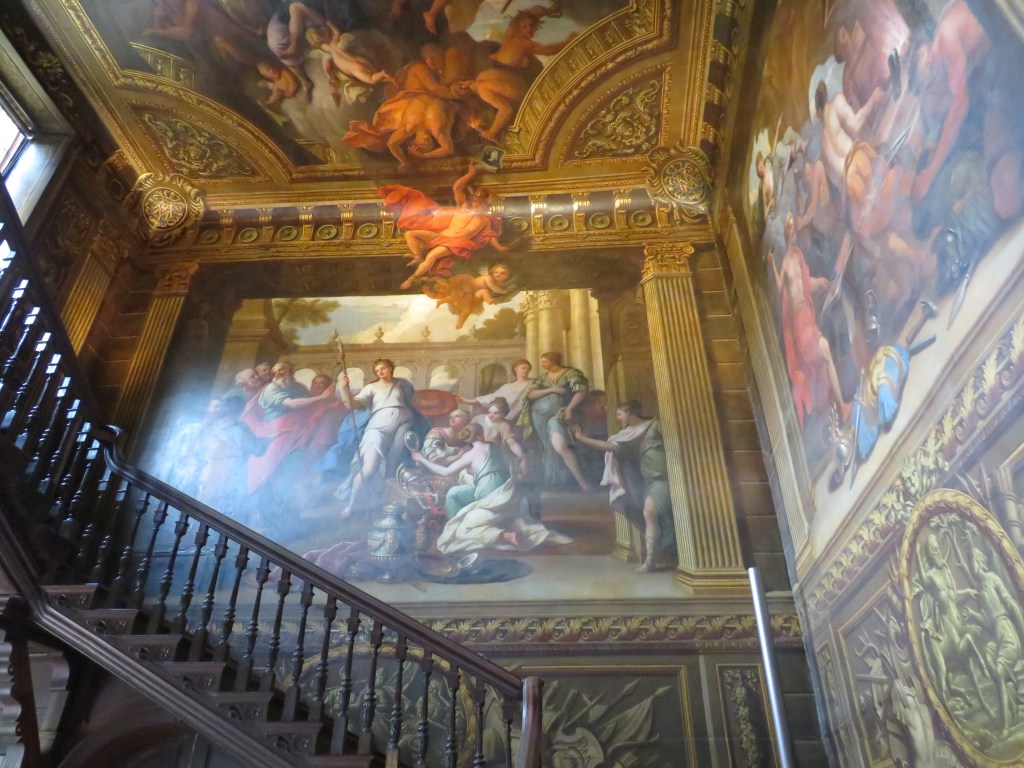
Sunday was rainy. I mean seriously rainy, so rather than head off early, as we prefer to do, we sat it out, while I looked at the Withenbury family goodies I’d found at the Worcestershire archives. Note, I did not look back at earlier notes, a big mistake. The rain cleared up eventually, giving us just time to visit Hanbury Hall, a nearish by National Trust property and former home of the Vernon family. The most outstanding features are the wall and ceiling paintings by James Thornhill, which, unusually, were painted on dry, not wet, plaster. There are also traditional, knot-garden style gardens, with plenty of topiary, which I photographed for use in my seventeenth century gardens talk. I was also quite taken with a 1715 election ‘poster’, when Thomas Vernon was standing for the Whig cause. This, I thought was about all Hanbury Hall had to offer, how wrong I was.
We returned home. This involved me driving through storm and tempest, with torrential rain meaning that I could barely see the road. Fortunately that was just the last couple of miles, as I am chauffeured most of the way. I then continued to look at the Withenburys. Something I had noted before, when I was trying to prove that they are actually my ancestors, rather than probably my ancestors, was that a James Withenbury was an architect and sculptor. This chap is likely to be my 6x great grandfather’s brother, or maybe a half-brother. ‘That close’, I hear you cry. He is at least on the family tree of the ‘almost my ancestors’. He also, said my notes, which I was viewing from 150 miles away from Hanbury Hall, designed the frontage of the hall in 1718. It is likely that I walked past his architectural sketch while we were at the Hall! Another trip is on the cards.
This post should have gone live on 1 June, the 217th anniversary of the death of Mary Hogg née Newlands. It has taken four solid days to put together (much longer than I anticipated), so it is late – sorry Mary but better late than never. For nearly five decades, the earliest ancestor in my grandmother’s Northumbrian paternal line has been great great grandfather John Hogg. For almost as long, I have been fairly sure that I know who John’s parents are but I have been waiting for an additional piece of evidence before ‘inking them in’. All brick walls are annoying but this is definitely in my top three that I really want to crack, not least because I love the area where I believe they came from; so much so that I embarked on a one-place study of the parish.
Here is a brief summary of the in-depth research that I have done to try to confirm John Hogg’s parentage. I should say at the outset, that this is the only branch of the family that come from anywhere near the north of England, next best are the Bulleys from Norfolk.
The story starts with my great grandfather, also John Hogg. I have his original 1885 marriage certificate, to Caroline Howe, naming his father as John Hogg, a gardener. The marriage took place in south London but census returns for my grandmother, Elizabeth Ann Hogg and her parents, confirm that great grandfather John junior was born in Morpeth, Northumberland. Family stories linked the Hoggs to Morpeth and to Russell ‘cousins’. I have a card that Elizabeth Ann wrote but never posted, addressed to Mr B. Russell, 3 Dacre Street, Morpeth. She referred to him as ‘Bertie’ and signed herself ‘Cousin Bessie’.
From census returns, we can deduce that John Hogg knew where he was born (Morpeth) but was a little vague as to when (April 1855 – March 1858). He was 28 when he married in 1885, so that fits within that date range. John’s death certificate shows that he died, in December 1926, at 3 Dacre Street and the informant was Bertie Russell ‘nephew’. John’s age was 71 (so born between December 1854 and December 1855). The births of four John Hoggs were registered in Morpeth registration district between 1853 and 1859 inclusive. There were no ‘male’ (i.e. no forename) Hoggs registered in Morpeth in this period. I followed up all four. Only one fitted the criteria of being born in Morpeth itself, having a father called John and not having a future that precluded him from being my ancestor. In addition, this family had a daughter who was the mother of Bertie Russell of Dacre Street.
Fully satisfied with my proof argument thus far, I turned to my great great grandfather John senior. He made life difficult by providing three different birthplaces in the census returns, being vague about his age and on one occasion, calling himself George instead of John. Over many years, I obtained copies of every document that I could and built up a detailed timeline of this man’s life, his two wives and nine children. It seemed clear that he was called John; there is just one census return where he is George. He was born somewhere between 1799 and 1809, probably in Bavington or adjacent Kirkheaton, which are about twenty miles west of Morpeth; although one census says Kirknewton, which is on the Scottish borders. He was an agricultural labourer, for the most part specifically a shepherd and he made many short-distance moves in the area during his life.
John’s first wife was buried in 1849, although no death certificate has been found. His first, apparently legitimate, child by his second wife Elizabeth Pearson, my great great grandmother, was in 1854. I could find no marriage either side of the English/Scottish border, within or outwith that date span, using every spelling variant of the names. This was particularly frustrating as a certificate would hopefully have included a father’s name. Comparatively recently, a newspaper announcement came to light, which revealed that they married, in 1853, at Lamberton Toll, a venue for clandestine marriages that is less well-known than Gretna Green. No records survive for this date.
I followed up all John and George Hoggs born 1797-1808 in Northumberland who appear in the 1851 census and looked for them in both the 1841 and succeeding censuses, to see which one could be the ‘George’ Hogg in Newgate Street, Morpeth in 1861 and John Hogg of Well Way, Morpeth in 1871. It was clear by the family members that these two were one and the same. After a great deal of careful research, I came to the conclusion that my great great grandfather John Hogg was almost certainly the son of Robert and Mary Hogg of Hallington, St. John’s Lee and that he was born in 1804 and baptised in Thockrington, which was adjacent to St. John’s Lee. This was the only baptism in the area around the birthplaces that John/George gave in the census and I could find no plausible alternative future for the John baptised at Thockrington, unless he became my great great grandfather.
I was so nearly there but still I hesitated to add Robert and Mary to my family tree. I was after that elusive ‘one more piece of evidence’. I investigated Robert and Mary’s families to see if this might support my hypothesis. Initially, the Hogg family were not very forthcoming. Robert and Mary only had three children and two died without issue, so there was no hope of tracing descendants for a possible DNA match. Going back yet one more generation, was a bit of a stretch but I tried anyway. This didn’t seem helpful. This family were rural agricultural labourers. They do not appear in the newspapers (as per the British Newspaper Library index). There are no surviving poor law records for the relevant parishes at the appropriate times. They do not appear to have owned land or left wills (Northumberland Archives, Prerogative Court of York and The National Archives indexes checked, as well as the excellent North East Inheritance Database). They do not feature in electoral rolls, nor did they serve in the army or navy. There is nothing in the catalogue at Northumberland Archives that relates to the family, leaving me with very little to go on.
I turned to the brides. Robert’s wife had been Mary Newlands; was she my 3x great grandmother?
The Newlands family, despite their reluctance to baptise children in churches or chapels whose records survive, had more potential. Robert Hogg died in 1805 and his wife Mary née Newlands, just three years later. This would have left John and his surviving sister, Mary, orphaned at a very young age, which might account for John’s later confusion regarding his place and date of birth. There is no age at burial for Robert or Mary Hogg ‘relict of Robt’. Mary and Robert were married in 1799, in Chollerton about five miles west of where their children were baptised. A family of Newlands emerged in Elsdon, some ten miles to the north. In 1773, a Mary Newlins had been baptised in Falstone, the daughter of John Newlins, or Newlands, whose wife was an Ann, or Nanny, née Corbitt. The Corbitts were a little more obliging, with a couple of useful wills and some gravestones. I began to build up a picture of the Corbett and Newlands families but were they my ancestors?
I was contacted by a descendant of Sarah Milburn née Newlands, believed to be Mary’s sister. I’ll call the contact SS. If our trees were right we would be fifth cousins once removed. I am used to playing with very small DNA matches. Yes, I know all the caveats but to put this in perspective, I only have a total of thirty matches that are 40cM or higher and anything over 20cM is ‘high’ by my standards. I do treat these with extreme caution but it is all I have. As fifth cousins once removed there was no certainty that SS and I would match and we don’t. This led me to look again at the matches that I do have. It turned out that, although we don’t match each other, SS and I had at least four shared, albeit very tiny, matches, all of whom descended from Sarah Milburn née Newlands. Two were my fifth cousins once removed, one a fifth cousin three times removed and I am unsure of the exact relationship of the fourth. The largest of these is a new match that arrived this week, leading to more delay in getting this posted.
Twenty year old Mary Hogg, almost certainly Robert and Mary’s daughter, died at Smiddywell Ridge, in the parish of Bellingham. in 1827. This was the home of SS’s ancestor, Sarah Milburn née Newlands. My John Hogg married in Netherwitton, the home of another Newlands sister. Were John and Mary each brought up by a different aunt?
In addition, I have an almost respectable 22cM match to a Corbitt descendant. She would be my sixth cousin once removed and yes I have checked that we don’t appear to share any other ancestry.
I am now going to claim Mary Newlands as my 3x great grandmother. To be clear, the weight of the evidence lies in my 48 years of exhaustive research. What I have outlined here barely scratches the surface. I am not basing this on DNA connections that all the DNA experts would tell me are too small to be significant. Every genealogist has to make decisions about how much evidence is enough. For me, I was 97% there with the documentary evidence, the DNA was just a final pieces of a very large jigsaw. If you want to read a fifteen page proof argument, describing in detail why I believe Mary Newlands is my three time great grandmother, you can access it through my Granny’s Tales page. All serious family historians should be setting out why x is the parent of y for all generations of their family tree (and no of course I haven’t done this for all lines yet but I can aim – how long do I have?).
Next step, who were the parents of John Newlands? This is particularly exciting as it will take my direct ancestry out of England for the first time and yes there is one of those tiny DNA matches to the Newlands of Kelso, who are almost certainly John’s family – the question is which John is which?
The view from the churchyard where Mary is buried and one of my favourite places in the world
Having been to the crannogless crannog centre it was time for the ospreyless Osprey Haven. This was not a surprise, as it is late in the year for osprey and there have been no young at the nest at Loch of the Lowes this year, following the death of the male in the spring. The regular female does seem to have formed a new bond and they have been protecting the nest so there is hope for next year.
This is not the sort of reserve where you go for a walk. There are two hides and there’s also a large window where you can watch a wide variety of small birds at the feeders. There are beaver at work on the loch but you only get to see them first thing in the morning and in the evening. There was no sign of the resident red squirrels either. Despite this, it was good to visit and the journey itself was scenic.
Next, we went in to Aberfeldy for a drink and some cake. The local cinema allows non-customers to use their toilets, which then has the desired effect, as we stayed to use their café. We also managed to stock up on food at the local Co-op. We were a little concerned about our booking at the next caravan site as we hadn’t received an acknowledgement or reminder. We telephoned to check, thinking that if something was awry it was easier to search for an alternative using a laptop and the, albeit very weak, site wifi than it would be on a phone when we got there. It turns out that they had no record of our booking but there was space so we booked by phone.
By this point we had been away for a while. Time for the feat of contortion that is changing a duvet cover in a caravan. You’ve probably tried this in a house but accomplishing the task in a 7 foot by 14 foot caravan takes it to a whole new level. Then there is the ‘getting the fitted sheet on the mattress when you can only reach one of the four sides’ challenge to add to the fun.
On a beautiful autumn morning, with sunshine, heavy dew and fog on the Tay, we took the high road (well the A827 followed by the A9 and A95) north. The first twenty-five miles or so of our journey was on a road full of twists and turns, with no duelling (as in road lanes, not the waving pistols or swords about sort). We were towing a caravan. We were not swift. This kind of journey is also known as how many drivers can you **** off in a very short space of time? Not many as it turns out. The road was quite quiet and we pull over to let speedier stuff pass whenever we can, despite very few acknowledging us. As we got to the A9 and A95 we were in whisky distilling country. There was a ‘whisky trail’ indicated on the road signs, illustrated by a symbol that looks a bit like a witch’s hat. I can’t work out what it is meant to represent that has any connection with whisky.
We arrived at Huntly Castle Caravan Site, not without issues as the satnav insists it is where it isn’t, down a dead end with little caravan turning potential. Fortunately, just in the nick of time, I recalled our being led astray in this fashion on our previous visit and we were able to avoid a repeat of the million point turn that following the satnav necessitates. Strangely it turns out, on arrival, we still didn’t have a booking, despite yesterday’s telephone conversation but that was soon remedied.
We have setting up the caravan off to a fine art, so were soon ready to explore the castle from which the site takes its name. Should we partake of refreshments before heading off to the castle? We decided to treat ourselves at the castle refreshment rooms when we get there. Mistake. The castle has no refreshment rooms; rookie error. Here we benefited from the reciprocal arrangement that Historic Environment Scotland has with English Heritage, so entrance was free. There has been a castle on the site since the 12th century. The earth motte is all that remains as evidence of the original timber castle, which belonged to Duncan Earl of Fife. In 1307, Robert the Bruce came to recuperate in the castle. By the 14th century the Gordon family were in residence and remained so until the 1640s. The palatial stone castle was begun in the mid-fifteenth century and then later remodelled with a nod to the influences of France.
Mary of Guise, widow of James V and mother of Mary Queen of Scots, was entertained at Huntly by Gordon, in 1556. She was treated so lavishly that she felt that he was becoming too powerful. Mary Queen of Scots later defeated the Earl in battle and confiscated goods for the crown. The fifth earl collapsed during a game of football and died in 1576. This would presumably have been the more aggressive form of football, known as campball, with an infinite number of players and goalposts that might be at opposite ends of the village.
For some reason, James VI had the castle blown up in 1594 but it is unclear how much damage this caused. In 1599, George Gordon became a marquis. In order to advertise his new elevated status, he commissioned an elaborate carving to be added to the front of the palace. Carved symbols advertised their Catholicism; these were defaced when Presbyterian Covenanters occupied the Castle in the 1640s. Seventeenth century tenants’ rents in kind provided the household with foodstuff including 167 cattle, 700 chickens, 40 barrels of salmon and 5284 eggs each year. As ardent Catholics, they suffered during the English Civil War, with George, the second Marquis, being executed in 1650 for his support of Charles I.
An inventory of 1648 gives an impression of how luxurious the furnishings were at the end of the Gordon’s ownership. Tapestries, paintings and a map of the world could be found and there was also an organ. The castle also houses the oldest wooden toilet seat in the country. The castle came into the care of the state in 1923.
Time to move sites again and head north-westward into the Trossachs for a few days in Killin. The weather began fine but in typical Scottish fashion, rapidly turned to rain, nonetheless it was a pleasant drive with lovely views. We wanted to arrive at Killin promptly when it opened for new arrivals at 1pm because we planned to visit Moirlanich Longhouse, which is close to the site and which has very restricted opening hours.
We’d passed the longhouse several times on previous visits but had never been able to go inside before. It is in the care of the Scottish National Trust, so we were able to take advantage of the reciprocal arrangements with the English version. The house is a great illustration of how people would have lived in the past. This particular house was built in 1809 for tenant farmers. It is a cruck-framed house, built in a style that had probably been used for centuries. This was the time when many labourers were turned off the land and moved away but the Robertson family were granted the tenancy of Moirlanich and farmed the surrounding thirty acres, trying cattle, then sheep, before changes to growing oats. The once thatched roof was covered with corrugated tin in the 1930s. The last member of the family left in 1968 and the house remained empty until 1992, when the trust took over.
Various items were found in the house, including ragged and probably discarded clothing, which appeared to have been used to insulate the chimney. There were multiple layers of paper on the walls. Considering there were only three rooms, plus the byre at the end, it is strange that one room was largely reserved for ‘best’, such as entertaining the minister. The room did contained two box beds that were in regular use.
The next day was beautifully sunny, just right for a drive along several miles of the banks of Loch Tay towards Aberfeldy, in the centre of Scotland. We were paying a return visit to the Crannog Centre, or in this case the Crannogless Centre. We visited the earlier version of this Iron Age living history experience on a previous trip to Scotland but a couple of years ago, a fire destroyed the crannog. A crannog is a dwelling that was constructed on stilts over the water and evidence of nearly six hundred have been found across Scotland, which is probably only a tiny fraction of the number that would have been built. Several of these were on the edge of Loch Tay. Building across water is much more difficult than building on land and was done to reserve the land for food production and possibly also as a sign of status and method of protection.
Following the fire and some serious fund raising, the centre moved to its current site, which they were able to purchase for just £1. They reopened in April and have built several roundhouses using different techniques. Erecting the crannog will be a more complex task and building was due to begin the day after our visit. We arrived just in time for a tour and John showed us the museum exhibits, as well as giving us some background history.
Our first presentation was about Iron Age food. Archaeological finds provide evidence of the ingredients but how they were used is largely speculation. We were treated to flat breads made from the ancient cereals, emma and spelt. These were topped with garlic and honey cheese and optional trout. I passed on the added trout but it was very tasty. Emma no longer grows in Scotland, as the climatic conditions have changed since the Iron Age. We saw a saddle quern and it was explained how arduous and time consuming grinding flour would have been.
Next was the blacksmithy and then the woodworking presentation, some of the turning on the pole lathe was highly skilled. The textile demonstration was particularly interesting, with information about dyes, weaving and spinning. I hadn’t realised that woad required soaking in warm urine for a couple of weeks before it was an effective dye. Who first realised that this was the thing to do? It takes 7,000 metres of spun wool to weave a long sleeved tunic. Lastly, we went in the final round house, which had a basket-like woven framework, covered by stone walls and thatch on the roof. Despite the sun, it was still a little chilly and the restaurant was full with a party so we had our carrot cake and drink outside, where it was perhaps a few degrees colder than ideal. Overall, it was a fascinating trip and highly recommended.
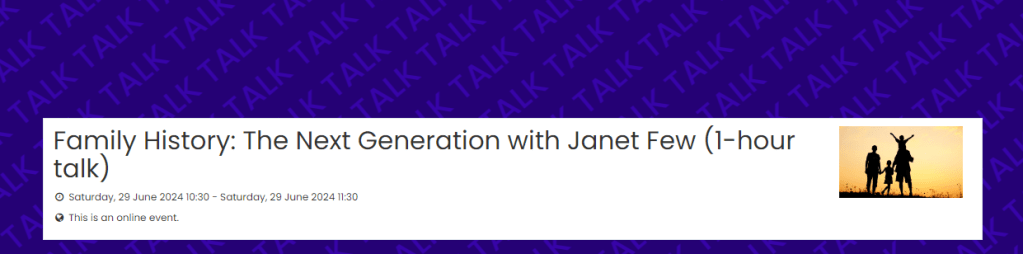
On Saturday, I am due to give an online talk to the Society of Genealogists. The brief was to provide family history related ideas, suggestions and activities for young people, with the rapidly approaching school holidays in mind. This is something that I always enjoy and it is vital if we want to encourage the next generation to engage with their history and heritage. ‘Young’ is a bit of a moveable feast in a family history context. If you look at the stereotypical demographic amongst genealogists, ‘young’ could mean anyone under retirement age. For the purposes of my talk, I am aiming slightly lower, at 0-16 year olds, though some of the activities will be fun for adults too. This might also be an opportunity for Family History Societies interested in involving younger people to gather a few ideas.
These days, history is hanging on to its place in the school curriculum by its fingernails. You only have to watch general knowledge quiz shows to realise how woeful the general public’s knowledge of history is and it seems that the reduction of time devoted to history in schools means that the younger people are the worse this gets. Don’t get me wrong, I am well aware how over-full school timetables are and that other subjects, some of which didn’t exist forty years ago, are equally important. It does mean however that history doesn’t get much of a look in and we can be starting with a pretty low knowledge base in some cases.
This has a knock-on effect for older family historians too. I loved history at school but many more senior family historians I talk to did not. In addition, the kind of school history that was taught in the 1950s, 1960s and 1970s was rarely the sort that was the most relevant for us as family historians seeking context for our ancestors’ lives. This means that the dedicated family historian who seeks to extend their genealogical education needs to acquire not just knowledge of research techniques and sources but broader history, most notably social history, as well.
So my talk will be about things that are fun, things that are, for the most part, nothing like school but activities that will encourage a curiosity about the past, remembering of course that, in this context, the past could be the 2010s! Having said ‘nothing like school’, I spent seven years teaching in a school that was not hampered by the National Curriculum and my lessons were often ‘nothing like school’ either!
There is still some space to book on the talk and it will be recorded for watching later if you aren’t free to join the live broadcast. You can book here.
If you are interested in books, videos and games for children relating to the sixteenth and seventeenth centuries (as well as resources for adults) you can find some lists on my Swords and Spindles site. There is also a list of Children’s Historical fiction, across all time periods and age ranges, on the Braund Society website.
I can’t leave the subject of young people without putting in a word for the Next GENeration online Family History Conference on 5 October. This showcases younger speakers and it would be great to show them some support, as well as being informed and entertained. This is a ‘pay what you can afford’ event, so please do just that. You can book here.










 The History Interpreter - Janet Few