Book Launches, Boats and a side dressing of Crime

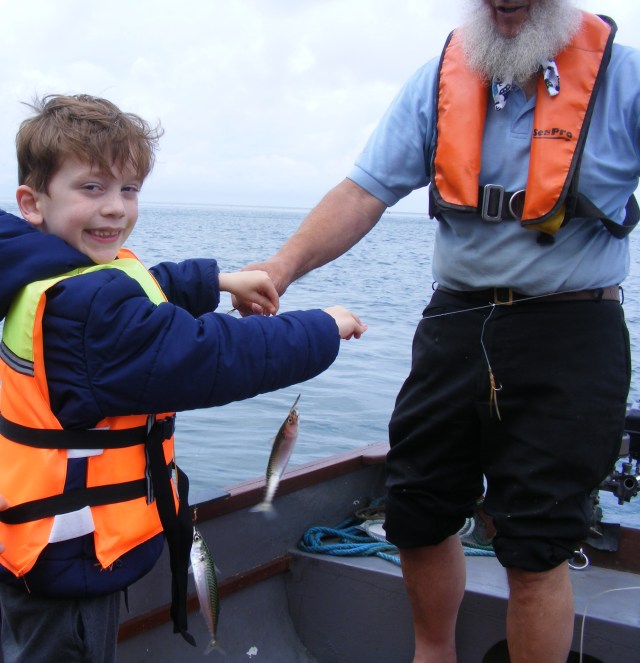
Busy, busy, busy. It has not all been work though. I spent a week going out with half my family; some weird activity that I’ve not done since March. This involved a spectacular face-plant (mine) on the football field, building sandcastles in the drizzle (effective for social distancing) and watching an excited boy catch his first fish. This particular expedition did involve running the gauntlet of a crowd of irresponsible idiots who clearly felt that being on holiday entitled them to abandon any concept of COVID awareness but we survived. Although it was lovely to see the sea, I am still much more comfortable staying at home and have no great longing for meals out, the pub or the hairdressers. I did get Martha to hack a bit off my hair while she was here but I could have managed without. It went like this – a little more off this side to even it up, oh now a some more off that side, oh and a bit off just here but she did a good job.
DSCF4414.JPG

This week it has been full on book marketing. Only three days until the big day and the excitement is mounting. Devon Family History Society have kindly offered to host my launch talk, when I will be describing how I researched the story of a seventeenth century town and its inhabitants, in order to write Sins as Red as Scarlet. This means spaces at the talk are available, so contact me now if you want the secret code to attend via Zoom. Those on the Devon Family History Society virtual talks mailing list will get the link automatically. Not only does Sins as Red as Scarlet greet an unsuspecting public on that day but an audio book version of Barefoot on the Cobbles becomes available too. Thanks to the lovely folk of Circle of Spears who have done a brilliant job. I seem to have cracked uploading to Amazon so Kindle versions of Sins as Red as Scarlet can be pre-ordered now and print-on-demand paperbacks for those outside the UK are in the pipeline. You will be able to order UK paperback versions but please don’t. Come to me instead, you’ll get a better quality, signed copy and I’ll pay the UK postage. Or go to a bookshop or my lovely publisher.

There are other exciting things on the horizon. On 5th and 6th of September, I am joining other local authors for two days of talks about various aspects of crime. My session will focus on the C17th but there are sessions that will appeal to lovers of history, folklore, literature, psychology, vampires, Agatha Christie and much more. At £5 for a ticket to listen to as many of the sessions as you choose, that can’t be bad.

I will also be giving two presentations for the Institute for Heraldic and Genealogical Studies in early September. The seventeenth century again and one-place studies in the C19th. Places are limited on these so book early etc. etc..

As for the autumn, wait and see!

This Time it is all About the Books (includes offers and free stuff)

So, the excitement is mounting as the publication date (29 August) for my latest novel creeps nearer. Well, let’s be honest here, I am excited; maybe one or two of you are too. As face-to-face marketing opportunities have now dwindled to zero, I am climbing some steep learning curves in order to do some online promotion. You will also see offers for some of my other books flitter across social media. I really do need to make some space.

Firstly, the new book is all set for its cover/title reveal on 15 June. Watch this space and my Facebook and Twitter accounts to join in the fun. I shall also be guesting on some other blogs and will be sharing the links to these. If I can work out how to do it, there will be Facebook Live stuff on the day, so look out for that if you are one of my Facebook friends – and if you aren’t, why not? 😊. Hopefully, if I can work out how to turn myself into a social media influencer (whatever that is), I will be telling you about the book and I may even be reading some teeny tiny extracts. So far, the cover looks like this. And, no, the title is not ‘Redacted’, as one of my friends suggested, although it would have been a cool marketing ploy.

SinsAsRedAsScarlet-REDACTED-2

On the subject of the cover, it has been designed by the incredibly talented Robin Paul from The Branch Line. Robin created an amazing cover from my vague suggestions and scribbles that were the first ‘art’ I had produced since failing art O level not once but twice.

Hopefully, by 15 June, I will have set up a pre-ordering system (another learning curve), even if it only consists of ‘email me and I’ll send details of how to pre-order’. The first 200 people who pay for a copy of **** ** *** ** ******* (see there’s a clue) by midnight on 28 August 2020 (British Summer Time) will get a free copy of Coffers, Clysters, Comfrey and Coifs: the lives of our seventeenth century ancestors (RRP £12.95). These will be sent postage free to a UK address. Please note that this offer is only open to those who pre-order directly from me, or from my publishers Blue Poppy Publishing. Both books will be signed. I am sorry that it is difficult to provide an attractive offer for my overseas readers. In all honesty, I can’t pretend that it is financially sensible for you to order directly from me. If you are outside the UK and really want a signed copy from me I am happy to provide details of postage costs. All purchasers of **** ** *** ** ******* will be able to buy the CD of the same redacted name, at the reduced price of £3 (RRP £4), providing that the CD is pre-ordered at the same time as the book. The CD includes Dan Britton’s evocative companion song to the novel and two other tracks by Dan, on a similar theme. I am working on another goody for all pre-orderers but I need to make sure that what I have in mind is something that I can deliver first.

What else am I able to offer you? Well, if you are very quick, there is still time to register for the free talks at tomorrow’s (6 June) Crediton Literary Festival. See my previous blog post for details. During my talk, I will be revealing out a code, giving UK listeners an opportunity to obtain a discount on my book Remember Then; memories of 1946-1969 and how to write your own, the subject of my talk.

But wait, as my friend Michelle would say, there’s more. I now have my own supply of my new booklet 10 Steps to a One-Place Study. So, if you want a signed copy and to avoid putting money into the hands of the multi-nationals, you know where to come. £5.90 including UK postage.

And yet more. In honour of Mayflower400, whose commemorations are sadly but inevitably, having to be postponed, I have another offer available on Coffers, Clysters, Comfrey and Coifs: the lives of our seventeenth century ancestors. This book is a reflection of life in Britain at the time that the Mayflower left our shores. A copy of this book can be purchased for £2 plus postage and packing. That is a total of just £5 for this book to be sent to a UK address, please get in touch for estimates for postage elsewhere. Alternatively, if you order either Remember Then or Enquire Within directly from me at full price, you can order a copy of Coffers Clysters for just £1 more. These offers are open from 15 June up to and including 3 October 2020, or while stock last. I stress that these offers are only available to those ordering directly from me. Contact me for details of how to pay.

Sorry that this is a bit of an advert. Normal service will be resumed soon.


It is (not quite) all About the Books – Isolation Day 79

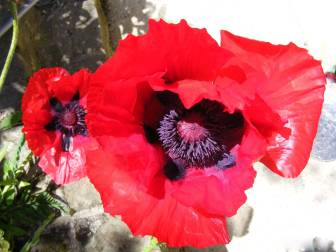
Isolation continues for me. I was just thinking that I might feel like going for a socially distanced walk when the idiocy factor ramped up and folk flocked westward in their droves. I’ll sit tight as the second wave tsunamis in; unfortunately I think it is inevitable. I do know that I am lucky to have this option. I am pleased for those who can now meet family in parks and gardens. It does make it hit harder that the gardens I’d want to socially distance in are 300 miles away though. So, I’ll continue to #staysafe, grit my teeth and enjoy my own garden. Suddenly, the facts that the single baby blue tit has fledged and the poppies are blooming seem hugely significant.

DSCF0656

This latest update is mostly about books though. I am gearing up for the cover/title reveal for novel #2. It is now in the hands of the publishers. There really are only so many times you can delete a comma and then put it back again on the eleventy billionth read through. I am looking at today’s appalling worldwide news stories and sadly, the book’s theme of intolerance is all too relevant. I am excited to report that the talented Dan Britton has written a companion song for this book too. Recording it under lockdown conditions was challenging but the end result is perfect. The plan is that it will be available, along with two other tracks on a similar theme, on 29 August, along with the book. Ninety days to go! Don’t forget that I am gradually leaking hints about its contents.

In other writing news, I’ve been commissioned to write a school textbook and that is finally making progress. My online One-Place Studies course for Pharos is ready for presentation in September (bookings are already coming in and more than a third of the places are filled). I am looking forward to speaking about writing your memories for Crediton Literary Festival on 6 June. There are some excellent talks, you can attend from anywhere in the world and better still it is free. All you have to do is apply for the link to join the audience.

Poster

I am getting some exciting invitations for online presentations so watch this space. Thoughts are turning to ‘what next?’ I am playing with an idea that is set in the seventeenth century again but not Devon related. I am wondering if I can write ‘at a distance’, as I normally work by immersing myself in the locations. I am also thinking of reviving my collection of North Devon emigrant stories and I may work these two alongside each other. Then again, I might just sit and do nothing!

I have been working on ‘writing-up’ the accounts of a few more branches of the family that have been neglected over the years. These are not beautifully crafted stories crammed with context, that’s just what I advise my students to produce! At least if I can get the broad outline done, I can add the flavouring later. Some of these offerings do appear on my website. Woolgar, Bulley, Dawson and Hogg are amongst the more substantial accounts, if you are thinking of taking a look. Currently, I am working on the sorry tale of a shipwreck that took place during the Napoleonic Wars, when the vessel went aground off the Dutch Coast but the crew thought they were in the Humber Estuary.

By the way, if anyone is wondering abut the fate of the parcels mentioned in my previous post, they arrived relatively unscathed.

Pruning the Family Tree and other adventures – Day 19

I, like many others in these strange times, am finding it difficult to concentrate, least of all on what I should be doing. After a couple of totally unproductive days. I revisited a branch of my family tree that has been virtually untouched for over forty years. Before you scoff, bear in mind how difficult research was then. No digital images, no indexes, just trawling through page after page of original parish registers in archives. In fact, much of this was done by another trusted researcher. It is only now that I have got around to going over the earlier generations and verifying the information. Or in this case not verifying it. I come from a long line of Bishops. Not actual bishops you understand but people with the surname Bishop. This included four successive generations of chaps called Christopher.

It seems that the original researcher was pretty hot on baptisms and marriages. She also spent ages doing in-depth research in churchwardens’ and overseers’ accounts in which they feature, all good stuff. What she failed to do was to attempt to kill these guys off. First, I discover that the lady who held the distinction of being 9x great granny, Annes (or Agnes) Maddick, died before alleged 8x great granddad was born. Cue the substitution of Jane Thorne, second wife of 9x great granddad Christopher Bishop I, in the role of 9x great granny. Oh hang on, here was a burial of a Christopher Bishop just two weeks after the supposed baptism of 8x great granddad Christopher Bishop II. Clearly ‘my’ Christopher Bishop, who married Mary Bowman and went on to have yet another Christopher (lacking in imagination these Bishops), was not only not the son of Christopher and Annes but not the son of Christopher and Jane either. In the absence of probate material for Devon, I doubt if I will ever be able to be conclusive about my 9x great-grandparents on this line but never mind, I’d rather have a shorter tree that was accurate.

I have also undertaken the biannual excavation of the flies’ graveyard that is the shelf round my conservatory where the ‘walls’ join the roof. This involves much precarious balancing on window sills and is not to be recommended. Said shelf contains many historic ornaments, all of which have to be taken down and wiped in order to remove the fly pooh. What is it about flies and conservatories? The warmth I suppose. I maintain that I leave the cobwebs there (and believe me there are plenty of those) for six months in order to catch the flies. Are you convinced?

After over a week of ‘block’, I have just written some more of novel number two. Still scheduled for launch in August, even if it can only be a virtual launch of a digital version at first. It is so nearly finished. Probably about 4000-5000 words left to write. Today’s clue. Although the characters in the modern strand inhabit a rather different version of 2020, there are references to COVID-19.

Oh and the Cornish? Still not got beyond dydh da I’m afraid but a helpful book arrived in the post today.

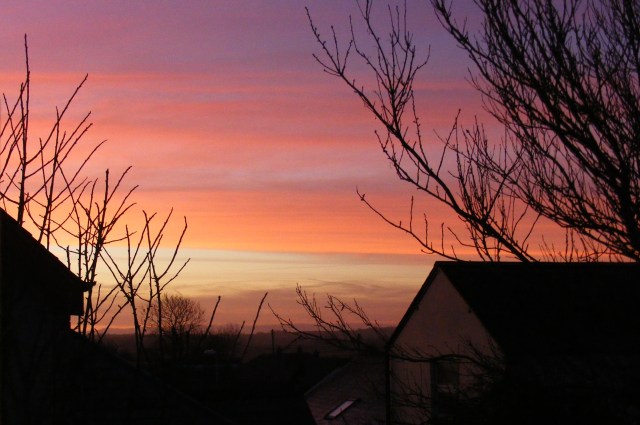
And a pretty sunrise from my bedroom window (December 2017), just because I can.

19 Dec 2017 1 (2)


Not actually a Family History Advent Calendar Part 5 Page 69 and the Ecclesiastical Census

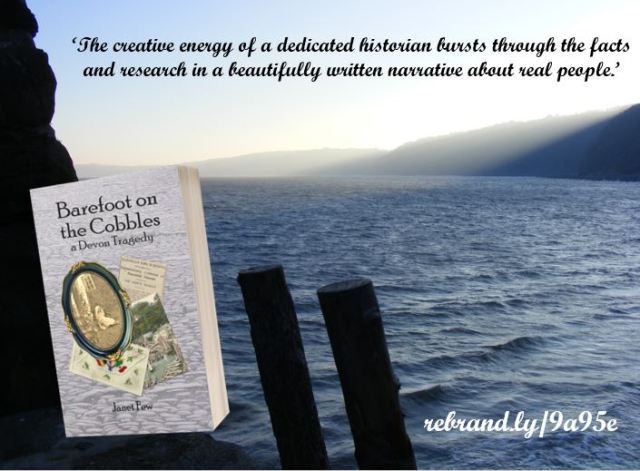
Nothing Christmassy to report today but a number of my writer friends are publishing page 69 of their novels and commenting whether they think it is typical of the book as a whole. So here is Barefoot page 69 for those who havent read it. Maybe those who have can decide if it is typical – it is probably cheerier than some parts! If you do want a paperback copy, I am on a mission to dispose of a least one more box before Christmas, so please contact me (post free in the UK). The pile behind the settee is currently distressingly uneven! Of course if you are a e-reader person you will need to go to the large online retailer I’m afraid. All the links on on the Barefoot on the Cobbles page.

Barefoot on the Cobbles page 69

Polly was always careful that they had sufficient money ready for rent day. Albert trusted her to ensure that they did not get in to debt, not an easy task when a fisherman’s income was so uncertain. He knew that she remembered Mrs Powell’s anguish and fretted when their savings ran low. The carefully harvested shillings in the brown jug were their nest-egg, something to fall back on in hard times.

‘’Twill not be for long Pol,’ he assured her. ‘The fishin’s been good of late, so I’ll soon earn enough to pay it back.’

Polly cut a thick, uneven slice from the loaf that she held close to her waist. She wielded the knife in a sideways motion, sawing the sharp blade back and forth towards her own body but Albert was not alarmed, this was her normal habit. She smeared a generous dab of dripping across the rough surface and handed it to her husband with a smile, thankful that Alb was such a good provider. She had chosen well.

By the time the message came to say that the boat was ready, Polly was able to give her husband a pile of florins and half crowns to take to Appledore. Albert left early to walk the fourteen miles to the ship-builders’ yard. Strapped to his back was a pair of oars, he would need those for the return journey. Polly’s father had worked for Philip Waters for years, this would be a sturdy boat that would suffice for as long as Albert was able to put out to sea. He had years left to him yet, his grandfather had hauled pots until he was in his eighties and was still hand lining until his death, a few years ago.

Book and Clovelly.JPG

And todays advent favourite family history website entry (actually it is three websites, so a bonus!) E is for Ecclesiastical Census.

In Britain, in 1851, an ecclesiastical census accompanied the regular census. A series of questions were sent to the leaders of all congregations, of whatever denomination. The returns describe, for each place of worship, the location, date of erection or foundation, the name of the minister and the size of the congregation on 30th March 1851. The originals are at The National Archives in Class HO129, arranged by county and Poor Law Union. These are available as free digital downloads. The Scottish returns are at the National Archives for Scotland. The returns have been published for some counties. For background, see here. The full report can also be downloaded. Some of those filling in the entries included fascinating comments, often excuses as to why attendance was lower than usual. Strangely, no one seemed to claim that they had more worshippers than average on 31 March!

Here is the entry for South Molton Chapel:

Independent Chapel, South Molton, Devon. Built about 1600, re erected and enlarged 1833 200 free sittings, 310 other sittings and standing room for 40. 258 attended on the morning of 30th March 1851 with 52 in the Sunday School. In the evening 200 attended. Comment –  ‘the afternoon is devoted to teaching in the Sabbath School when the number of children is much greater than in the morning, as many of the attendants live in the country and are seldom present in the evening.’ ’

Many of the entries in this year’s advent calendar are based on my book Family Historian’s Enquire Within. I would be very grateful if anyone in the UK wanting to buy a copy would get in touch with me directly (there will be no charge for UK postage). I am trying to free up book storage space ready for novel two arriving!


News from the Cobbles for fans of Barefoot

I hope no one is reading this expecting Coronation Street spoilers. There have been some lovely communications regarding Barefoot on the Cobbles lately. Firstly, two lovely readers, without internet access, took the trouble to write me letters saying how much they had enjoyed it. I also had an email from a reader from New Zealand who not only praised the book but said I had inspired her to write the story of her own family history tragedy. I have also been contacted by two relatives of the minor characters in the novel. One leading to ongoing research into the family, which may turn out to be intriguing.

This has been interspersed with precious time spent with my descendants; there may be more about that later. I have also started another run of my In Sickness and in Death course and the students are wonderfully active, sharing stories of the ailments of their ancestors. One of the best parts about Pharos courses is the interactions between the students. This has all taken my mind off a few recent technical hitches. Yesterday a very forbearing audience sat through a presentation that really did need the accompanying slides, when my laptop (and a backup laptop) failed to communicate with the projector. I am also juggling external hard drives, in an attempt to recover files that have been damaged due to a corrupted memory stick. Fortunately they were backed up and I realised before I overwrote the complete files for another back up. A salutary lesson not to rely on memory sticks/data sticks/flash drives, call them what you will.

In the course of checking files to see if they were damaged, I came across I passage that I wrote for part of Chapter 1 of Barefoot but which was left on the cutting-room floor. I thought you might like to read a little about Polly as a young girl.

1884

Polly Wakely leaned back on the Devon bank that edged the lane leading from Horns Cross to Peppercombe. Her two younger sisters, tired of gathering bluebells, sat beside her. All had severely plaited hair and identical rough, linen smocks. Polly, on the brink of womanhood, had abandoned her bonnet in an act of defiance. She was meant to be shepherding her sisters home from school but the temptation to linger in the spring sunshine, to stretch the time between the agonies of the classroom and the drudgery of chores at home, had got the better of her. Polly did not begrudge having to mind Ada and Ethel, in fact she quite enjoyed it. She hoped that she might have children of her own one day, in an unfathomable future that seemed impossibly far ahead. The role of chaperone to the younger members of the family had, until recently, been the task of her older sister, Jane. Jane, shy and retiring had found it difficult to discipline the two youngest girls but Polly was firmer. Despite their very different personalities, the Wakely sisters had always been self-sufficient, content with each other’s company and united against the taunts of their classmates.

            A small group of children turned the corner and spotted the Wakelys. Here was an easy target.

            ‘Yer ma tellin’ fortunes today then?’

            Polly was not as feisty as her eldest sister, Lydia, now working away in service but she had had years of practice standing up to bullies and defending her own. She knew that the comment was intended to provoke a reaction, perhaps to initiate a fight. She had succumbed to this when she was younger, arrived home with hair pulled, face scratched and pinafore torn. She considered herself too old for such scraps now and she had learned that there was nothing the tormentors hated more than to be ignored. She turned her back and pretended that she had not heard, putting a warning hand on Ada’s arm, to indicate that she should do the same.

            The oldest boy picked up Ethel’s discarded bouquet.

            ‘What’s these ole flowers for then?’ he mocked, tossing the drooping blooms over the hedge. ‘Going to pop them in the pot and make a spell?’

            Polly groaned inwardly, would this stupid tale never cease to dog their lives. Ethel was less resilient than her sisters and was distressed at the loss of her flowers but she knew that she must not give this big boy the satisfaction of seeing her cry.

            One of the girls in the group was regarding them with sympathy but her companions quelled any attempts at compassion.

            ‘Them’s nought better than gypos, don’t you go frettin’ over them. Turn you into a toad as soon as, they would.’

            Polly knew she had to be brave, that her ma would be cross if Ada or Ethel went home in tears and told tales of what was responsible for their distress. As each of her children left toddlerhood behind, Eliza Wakely had urged them to ignore such taunts. She understood their pain, she had suffered the same in her turn. In fact, thought Polly, although there had been no school to endure in those days, it had been worse for ma and her sisters. Their very surname, Found, had marked the family as out of the ordinary. It had all been ages ago, before even ma’s grafer’s time but still the rumours swirled. Going back some, the original Found had been just that, found in the church porch over Morwenstow way and Polly and her sisters were suffering for it still.

Peppercombe

#100daysofbfotc Day 100: Polly

02 Mary Elizabeth and Albert BraundThe final day has to belong to Polly, whose anguish reverberates throughout Barefoot on the Cobbles. She wasn’t intended to be the main character but I think most readers will identify her as such. It was meant to be Daisy’s story. In fact, before the novel got a title, I referred to it as ‘Daisy’. Daisy’s role however is reactive; it is Polly who plays a significant part in driving the narrative. Without doubt, Polly is the character with whom I found it easiest to identify. I understood her fears, her hopes and her despair. She is not a typical ‘heroine’; for most of the book she is elderly, prickly, diffident and not particularly sociable.  William Golding wrote, in Free Fall ‘‘My yesterdays walk with me. They keep step, they are gray faces that peer over my shoulder,’ and this sums up Polly. She is a victim of her life experiences, as indeed are we all. I am fascinated by human behaviour and what makes individuals act in a particular manner, especially if their actions are those that others find strange. Writing the novel gave me the opportunity to explore and attempt to explain, Polly’s motivations and those of the people she encountered.
Polly Wakely was born on 1 April 1872, in Peppercombe Valley, the daughter of a ship’s carpenter. The 1891 census shows that she was in service at Chudleigh Villas, East-the-Water, Bideford. In 1893, she married Albert and as the novel shows, they set up home in Clovelly and had eight children. Barefoot on the Cobbles is Polly’s story, I hope I have done her justice.

There is no quotation from the novel today because tomorrow you can read it in its entirity for yourselves. More information about the novel can be found here. Copies will be available at various events in the weeks following the launch or can be pre-ordered from Blue Poppy Publishing or the author. Kindle editions can be pre-ordered for the UK and also on Amazon.com.

#100daysofbfotc Day 95: Abraham Tuke

PoppiesOn the centenary of the armistice it is fitting that today’s post should belong to one of the fallen. Chapter 8 of Barefoot on the Cobbles is set on the western front. In order to reflect the early years of the twentieth century, the novel needed to include an episode that was devoted to the experiences of a combatant. The choice of Abraham, from amongst the men that Clovelly lost, was largely a random one and his life story was not typical. Incidentally, Abraham was not his first given name but in common with several other characters, his name needed to be changed to avoid confusion.
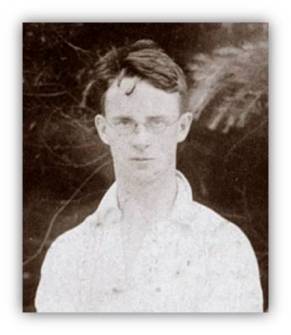
I anticipated that this would be the most difficult chapter for me to write, as I am not a young male, nor have I ever been in a combat zone. The western front was the only location in the novel that I was not able to explore in person. I immersed myself in the war diaries of Abraham’s battalion and read personal memoirs and dairies about the little-known battle in which he lost his life. I discovered that, although the Battle of Fromelles is not a household name in the UK, it is in Australia; the ANZAC troops experiences appalling losses in this campaign. I was also helped by the archivist at Abraham’s school, who responded swiftly and in detail to my enquiries, allowing me to build up a much fuller impression of Abraham’s character.

Although the chapter would not stand up to scrutiny by a military historian, I reasoned that one soldier would not have an impression of the overall tactics, so, if the account seems a little confused, that is probably an accurate reflection of a single soldier’s experiences. In the end, this is the chapter that pleases me the most.

W A B Tuke

From the Archive of King’s College, Taunton

Abraham Tuke was born in Clovelly in 1894 and was baptised in the church that stood adjacent to his home. His father, Harry, was the Court’s head gardener and the family lived at Gardener’s Cottage, on the edge of the walled garden. Abraham was an only child and his childhood was very different to that of most of his peers. Although he attended Clovelly School as a young boy, he won a scholarship to the prestigious King’s College in Taunton. It must have been difficult to cope with this dislocation and I suspect that Abraham may not have fitted well into either of his worlds. Whilst at King’s, Abraham became Senior Prefect and a Corporal in the Officers’ Training Corps. He was in the debating society and appeared in school productions. He did well academically, winning prizes for History, Religious Instruction and Latin. His ambition was to become a teacher and he qualified at St. Luke’s College, where he played rugby and became editor of the college magazine. The latter made me think that he would have written poetry, so I read volumes of World War 1 poetry, including the efforts of less-known and probably less accomplished poets. In this way, Abraham was able to write a poem, which appears in the book. I consoled myself, as I write it on his behalf, with the fact that he didn’t have to be a very good poet!

Following a role in the Territorials, Abraham joined the 2nd/4th (City of Bristol) Battalion of the Gloucestershire Regiment rising to the rank of Sergeant. He perished on 19 July 1916.

‘Barbed wire coiled across the long grass, self-seeded crops from happier years dared to grow and poppies painted the fields. Abandoned and broken, ploughs rusted where they lay. Then there were the agonising reminders of war. The wooden crosses, roughly hewn, inscribed only with a date; the names of the soldiers who fell on that spot forever forgotten.’

Barefoot on the Cobbles will be published on 17 November 2018. More information about the novel can be found here. Copies will be available at various events in the weeks following the launch or can be pre-ordered from Blue Poppy Publishing or the author. Kindle editions can be pre-ordered for the UK and also on Amazon.com.