 This retreating writers thing seems to be a good idea. At 5am on day one I wrote a fair draft of the end of Barefoot. Although my slightly weird body clock does not regard 5am as being ridiculously early, I am not often in full writer’s flow at that hour. The words came, they needed to be captured before they evaporated. I began by scribbling on the margin of the handy TV paper until the pen ran out, then I upgraded to pencil and paper. Perhaps I should keep the TV paper; if only anyone could actually read what I wrote on the pale parts of the page, nestled between Coronation Street and the Jeremy Kyle Show, it could be worth a fortune when Barefoot turns out to be a best seller. I can but dream. This sleep inspired ending, is not the last part of the final chapter that I have been struggling with, that remains an ominous blank page but the epilogue is on its way to being done. Of course, it will still be pulled apart and put back together again, especially when I let it loose on readers but I am pleased with my initial efforts.
Before all this muse striking lark, having established ourselves on our caravan site, we decided to drive into Torquay in the hope of buying ancient persons’ coach cards from the Tourist Information Centre here, our local one having been closed. I suppose alarm bells should have rung when I could not find the opening times anywhere online. I did establish that they were closed at weekends, hence not waiting until the following day. We paid a small fortune to purchase a plastic disc that enabled us to park. We walked to the tourist information shop. It was closed, had we arrived too late in the day? It turns out we were several months too late and the office does not reopen until February! To be honest, having been there, I can understand why the powers that be subscribe to the theory that there will be few tourists in a freezing January Torquay but I resented the wasted couple of hours and the significant investment (well, £1.50) in unnecessary parking.
As we were in south Devon, we decided to take the opportunity to support the south Devon group of Devon Family History Society. Having looked at the online programme, we were expecting a talk on the territorial army. I was surprised and delighted to find that the talk was actually about Newton Abbot workhouse and I had been looking at last year’s programme by mistake. One of my reasons for visiting the south was to investigate Daisy’s time in this very workhouse; what a coincidence, or is it something more?
Now to type up my epilogue while I can still decipher it.
 Shortly, I am off for what I am laughingly calling a ‘writer’s retreat’ aka three days in a caravan in the soft south of the county. Part of Daisy’s story takes place in Torquay, which is not a town I know very well, hence the need for a field visit. I spent yesterday researching the back stories of some of the minor characters she encounters during this part of her life and needless to say, found others I would like to include. A newspaper article mentioned that Daisy shared a house with six others whilst in Torquay. The identity of three of these was obvious. I had the task of pinpointing plausible candidates for the other three. I am happy to report that I have positively identified one and have come up with two others who are consistent with the information I have. Google earth suggests that the house they lived in was a three bedroom Victorian terrace and I cannot work out who might realistically have shared a bedroom with whom but perhaps, when I see the property in reality, it may look larger. A servants’ attic would be handy! I’ve also immersed myself in stories of VAD nurses and located routes I need to retrace. Hopefully this visit will enable me to write two middle chapters of the book then I really am on the home straight – yippee!
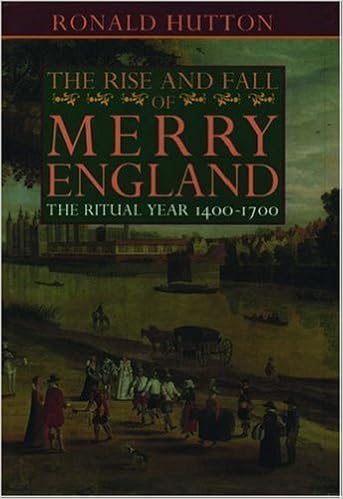 So we open the final ‘window’ in our social history book advent calendar. Given that this time of year is stuffed full of ritual and tradition, it seemed fitting to save Ronald Hutton’s
 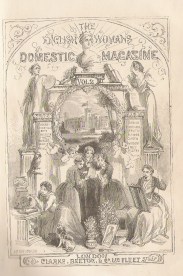 Today’s advent offering sits on my bookshelves but is not actually a book. If that sounds like a Christmas riddle, I will explain. It is a bound volume of the twelve issues of The English Woman’s Domestic Magazine from 1854. It was given to me many years ago by a family history friend (thank you Peggy) and is a real gem. There is no better way to investigate social history than through contemporary writing. There are some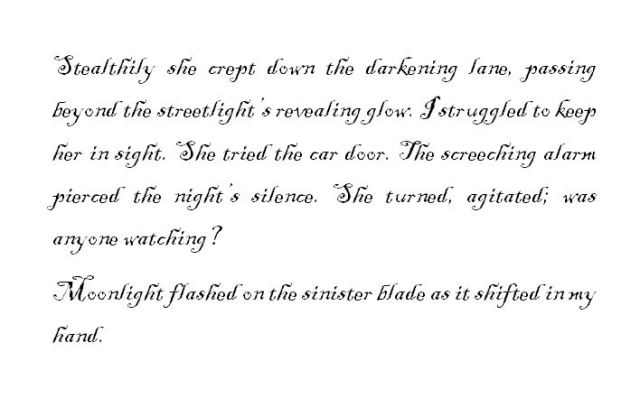
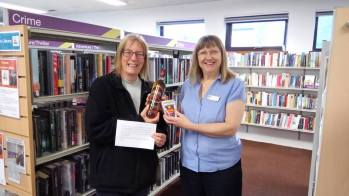 A few weeks ago, I responded to the challenge, issued by a Devon library, to write a fifty word crime story. I am usually accused of using at least four words where one will do, so this was well out of my comfort zone. I do enjoy reading crime novels, primarily those that are set in the past but it is not something I would consider writing.
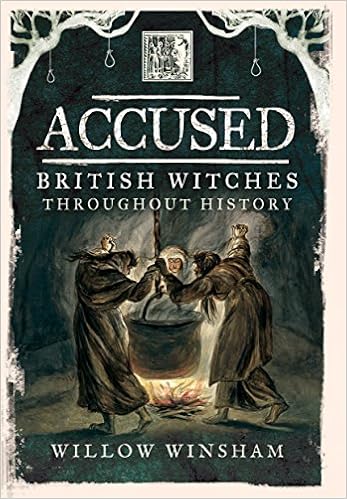 I’ll be honest, today’s offering has just arrived on my book shelf, so I have only had time to skim through it but it looks like a gem.
 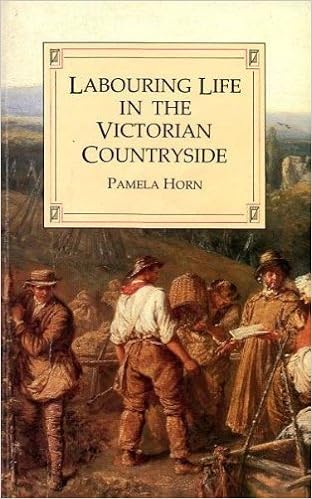 If anyone is still reading these, congratulations and I refuse to be responsible if you have succumbed to my suggestions and blown your book buying budget. Today I would like to introduce you to Pamela Horn’s
 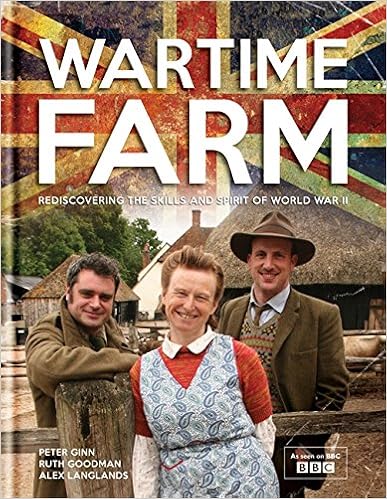 I could not compile a list of social history books and omit the ‘Farm’ series. They have already warranted a couple of passing references in other posts but today’s belongs solely to them. Many people, especially in Britain, are family with BBC TV’s living history series Victorian Farm/Edwardian Farm/Tudor Monastery Farm/Wartime Farm. All of these are now available on DVD and are a wonderful insight into rural life in the period specified. What is less well known is that each series also has an accompanying book; I have them all. These are ‘coffee table’ books: beautifully produced hardbacks with lavish coloured illustrations. There are contemporary illustrations as well as scenes from the programme. I have no idea how well this translates to the e-reader editions. The books are nonetheless well researched and the insight into the experimental archaeology carried out by the authors, Peter Ginn, Ruth Goodman and Alex Langlands, is invaluable. For those who are unfamiliar with the series, three historians/archaeologists spent a year recreating life in a farm of a particular period. The books describe the highs and lows of their experiences.
 The History Interpreter - Janet Few