Day 6 – At Sea

Another full day of lectures, although I miss the first one in order to prepare for my own. All in all I have attended all but two of the sessions on offer during the week. There have been some difficult choices, as for the most part, there have been two and sometimes three, streams of lectures. I begin the day with Helen Smith on ‘Begotten by Fornication’, an interesting look at illegitimacy. Then Jan Gow with ‘Remember the WWW. No, not the world wide web but the Who, Where and When’. It is over twenty years since I last heard Jan speak, when she was in the UK. This is really a talk about one-place studies so very interesting for me. I follow this with my session on the mental health of our ancestors, a talk I always enjoy presenting. A short break and then it is Pat Richley-Erickson aka Dear Myrtle with ‘Seven Habits of Highly Effective Genealogists’. I volunteer to represent one of the points although I am not sure I quite qualify as ‘highly effective’ as much of my information is still on index cards. Next, more DNA with Maurice again. This time his title is ‘Using Triangulation to Break Through Brick Walls’. The afternoon ends with my Facebook Generation talk, which was very well received and sparked many questions and comments.

An interesting incident in the toilets by the Windjammer. The doors to the cubicles open inwards and an injudiciously position toilet roll holder makes it quite difficult to exit, for even an average sized person. One of the cruise-goers has got herself in but is struggling to extricate herself. She attempts to sidle out facing the toilet roll holder. This fails, so she turns round and gives it a go facing the other way. I have to say she was a lovely lady and was laughing at her various ineffective attempts. We wonder if she will have to do a Winnie the Pooh and remain there until she is thinner but no, somehow she squeezes past the obstacles and is free.

DSCF0814.JPGThe evening sees the presentation of the prestigious Prince Michael of Kent Award to Cyndi Ingle for her decades of tireless work on Cyndi’s list. Mia has somehow managed to successfully bring this glass vase from the Society of Genealogists without mishap and there are a few tears as it is handed over. Very well deserved it is too, if you haven’t consulted Cyndi’s List then you can’t call yourself a family historian. Caroline Gurney follows with ‘Are you Related to Royalty?’. The answer is probably yes, so Maurice, who has been trading on his distant relationship to Princess Diana all week, now has to deal with competition from the rest of us.

Day 5 – Tracy Arm

066 11 September 2018 Tracy Arm.JPGIcebergs prevent us from getting right up Tracy Arm but we still have beautiful views to admire. It is too chilly to sit outside for long so we spend the morning in the Windjammer again, as breakfast blends in to coffee and then into lunch. Great to relax and chat as the scenery and icebergs flash by. I later realise that I spectacularly failed to get any close up iceberg photos. I seem to keep missing out on this trip.
An afternoon of lectures. A double dose of Michelle, firstly on getting the most out of our DNA matches and then a really brilliant talk, ‘The Facts, Fun and Fiction of Family History’. Maurice follows on Y DNA projects. We have certainly been well informed about various aspects of DNA. Having scoffed pizza and chips for lunch, I restrain myself with a small vegetable curry for tea. Allegedly, the average weight gain whilst cruising is a pound a day. The amount of food that is consumed and wasted on board is obscene, one of the aspects of cruising that makes me uncomfortable. Another is the servility of the lovely staff. I am not better than them but they clearly feel I am. I can’t quite define what gives me this impression but it definitely goes far deeper than a customer/employee relationship.

The evening is spent with Michelle, Maurice, Helen and Cyndi contributing to a DNA ethics panel, leading to some very interesting discussions. It seems that the northern lights were on display last night. No one warned us to look, so that is something else we have failed to experience. The problem with watching for the northern lights is that it involves the unappealing combination of being somewhere cold and staying up until way past my bedtime; we missed them when we were in Finland too. Bravely, we wrap up in multiple layers and join several other hardy souls to see if they will reappear tonight. It soon becomes obvious that it is far too cloudy so we give up.

We work out a cunning way of accessing the balance on our sea pass cards using our TV. Our refunds from the bear watching trip have arrived in our accounts. We have benefited from currency exchange rates, which have fluctuated heavily in our favour since booking the trip, so the dollars we have received back are worth significantly more than they were when we paid for the trip. This will be a good start for our Mediterranean excursions next year.

Day 2 – At Sea

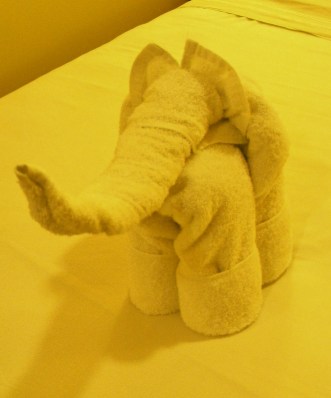
004 8 September 2018 Towel Art

Towel Art

It is 3.50am. My body thinks it is time to get up, so I bow to the inevitable. Today is a conference day so we settle down to some excellent lectures. Firstly it is Maurice Gleeson on ‘Commemorating the Missing’. I have heard this before but this was a slightly different version and my particular interest is because it centres on a battle that has Barefoot on the Cobbles connections. Next, is Caroline Gurney with a very informative presentation, ‘Lost in London’, followed by Susan Brook speaking on the English Poor Law. Cyndi Ingle is as entertaining as usual, this time on ‘Being your own Digital Archivist’.

I am feeling the ship’s motion rather more than I was expecting and have a throat that resembles rough grade sandpaper, add to that the lack of sleep and I am wondering how my session on the impact of non-conformity will go. Go it did, although I didn’t really feel as if I was on fire with it. After a short break to chat, it was time for Helen Smith’s DNA talk and then back to deck 11 to encounter ‘washy washy’. Today she has added ‘happy happy’ to her exhortations. It is Mongolian day in the restaurant. I opt for that well known Mongolian dish – pizza. There has been heavy rain all day so we haven’t missed an opportunity to sun ourselves on deck.

In the evening, Mike Murray gave a hilarious DNA presentation. With a great ‘punch line’ when he revealed that the relatives that he had been talking about were in the audience.

Introducing 100 Days of Barefoot on the Cobbles

0U9A3415On 9 August it will be 100 days until Barefoot on the Cobbles is launched. Each day, from 9 August onwards, I will be posting a short item about one of the characters you will meet in the novel, or one of the locations that is mentioned. This will give readers an opportunity to learn more about some of the people and places that grace its pages. These will be accompanied by lines from the book. I will continue to bore you with other elements of my rather eccentric existence but these posts will be separate. I hope you will enjoy getting to know the people who have been part of my life for the last couple of years.

More Writing – by me and by Others

My students on the Pharos Writing and Telling your Family History online course have begun submitting their assignments this week. The option to request feedback on a portion of their story is a new initiative and about half the students on the course took this up. It is a real pleasure to read these and to feel that I have had a very small part in their creation. Some of them are even signing up to do the course again, to motivate them for chapter two! It you want to join the party, there are one or two spaces left on the presentation of this course that starts in three weeks. Definite warm fuzzy feeling time and some great comments on the course to add to my testimonials page. Not that anyone ever reads my testimonials page and understandably so. After all, I could have made them all up. I haven’t, I hasten to add but I do wonder sometimes why I have that particular page lurking unread on my website. I suppose it does serve a purpose, in that I could look at it in moments of self-doubt and be reassured that people do enjoy and benefit from what I do. I don’t actually do this but the option is there!

EbeneezerOn the subject of self-doubt, as Barefoot on the Cobbles nears completion (it does, really), I am consumed with fears that everyone will hate it. I never had this crisis of confidence with my non-fiction books. Maybe it is because fiction is somehow much more personal and although none of the characters are based on me, I have invested myself in their emotions and shared their anguish for the last couple of years. It isn’t all anguish of course, although I have to say that their tragedies do outweigh their joys.

Today I have one fewer chapter left to complete than yesterday. This is not because I had some turbo burst of creativity and wrote 5000-6000 perfect words yesterday. Instead, I looked again at my planned structure and decided to axe the proposed chapter one, which weirdly I hadn’t yet written. If you’d asked me before I started this fiction journey, I would never have believed that I wouldn’t begin at the beginning and finish at the end. Anyway, the realisation that I had very little to say in the proposed first chapter, means the old chapter two is now chapter one – I hope you are following this. There is a prologue, which at one point was itself chapter one but ignore that added complication. The new arrangement means that I need to ensure that the old chapter two is robust enough to be the first full chapter. I think it is, I hope it is. I just need to run the principle by a few people. Poor Martha, who is reading it all, in the wrong order, has been sent three totally different chapter 11s during the course of her proof reading marathon. She is an ace proof reader, not just spotting errant semi-colons (oh yes, along with the plethora of adjectives and adverbs it does have that endangered piece of punctuation) but telling me that I have used a particular phrase before, often in a chapter she read six months previously; she is rarely wrong. She claims she is looking forward to starting at the prologue and reading through to the epilogue but I wouldn’t blame her if she never wanted to read any of it ever again.

So, now I have a choice of chapters 3, 4 and 12 left to work on, although by the time I’ve finished with them they could have different numbers altogether!

Coincidences, Conclusions and Car Parks

dscf3202This retreating writers thing seems to be a good idea. At 5am on day one I wrote a fair draft of the end of Barefoot. Although my slightly weird body clock does not regard 5am as being ridiculously early, I am not often in full writer’s flow at that hour. The words came, they needed to be captured before they evaporated. I began by scribbling on the margin of the handy TV paper until the pen ran out, then I upgraded to pencil and paper. Perhaps I should keep the TV paper; if only anyone could actually read what I wrote on the pale parts of the page, nestled between Coronation Street and the Jeremy Kyle Show, it could be worth a fortune when Barefoot turns out to be a best seller. I can but dream. This sleep inspired ending, is not the last part of the final chapter that I have been struggling with, that remains an ominous blank page but the epilogue is on its way to being done. Of course, it will still be pulled apart and put back together again, especially when I let it loose on readers but I am pleased with my initial efforts.

Before all this muse striking lark, having established ourselves on our caravan site, we decided to drive into Torquay in the hope of buying ancient persons’ coach cards from the Tourist Information Centre here, our local one having been closed. I suppose alarm bells should have rung when I could not find the opening times anywhere online. I did establish that they were closed at weekends, hence not waiting until the following day. We paid a small fortune to purchase a plastic disc that enabled us to park. We walked to the tourist information shop. It was closed, had we arrived too late in the day? It turns out we were several months too late and the office does not reopen until February! To be honest, having been there, I can understand why the powers that be subscribe to the theory that there will be few tourists in a freezing January Torquay but I resented the wasted couple of hours and the significant investment (well, £1.50) in unnecessary parking.

As we were in south Devon, we decided to take the opportunity to support the south Devon group of Devon Family History Society. Having looked at the online programme, we were expecting a talk on the territorial army. I was surprised and delighted to find that the talk was actually about Newton Abbot workhouse and I had been looking at last year’s programme by mistake. One of my reasons for visiting the south was to investigate Daisy’s time in this very workhouse; what a coincidence, or is it something more?

Now to type up my epilogue while I can still decipher it.

Madness, Mania and Melancholia: the mental health of our ancestors

The fact that I have begun the new year researching madness says it all really. One of my new presentations for 2018 is about the mental ill-health of our ancestors; it will have its first outing next month. By co-incidence I was invited recently to submit an article on the same topic for the journal of The International Society for British Genealogy and Family History. I have really enjoyed researching this important topic, if ‘enjoyed’ is the right word. I did touch on mental illness in my booklet ’Til Death Us Do Part: causes of death 1300-1948 and it also gets a mention in my Pharos online course In Sickness and in Death – researching the ill-health and death of your ancestors but preparing the talk and article has given me the scope to investigate in more detail. As usual, what interests me most is people’s behaviour, both the reactions at the time and how we view our mentally ill ancestors now.

So what else has been happening since the season of goodwill and family gatherings was relegated to the attic for another eleven months? Pretty much it has all been about Daisy and of course mental illness threads its way through the pages of her story too.  This week has seen me focus on endings and beginnings in respect of Barefoot. I have been struggling with the final chapter. Sadly this is not the final chapter in the sense that it will be the last I write but it will be the end of the book, which is probably why I am finding finishing it so difficult. I also sent the prologue out to my lovely writers’ group and a couple of other beta readers. Well there was some good news, overall the reaction was favourable and they felt that they wanted to read more. That’s a relief. The downside is that they all suggested different minor ‘tweaks’. In each case, I can see the points that they are being made but if I take them all on board, it will be unrecognisable as the passage that I originally wrote. I am putting this passage away for a while and will come back to deciding how to deal with it later.

Torquay Town Hall HospitalShortly, I am off for what I am laughingly calling a ‘writer’s retreat’ aka three days in a caravan in the soft south of the county. Part of Daisy’s story takes place in Torquay, which is not a town I know very well, hence the need for a field visit. I spent yesterday researching the back stories of some of the minor characters she encounters during this part of her life and needless to say, found others I would like to include. A newspaper article mentioned that Daisy shared a house with six others whilst in Torquay. The identity of three of these was obvious. I had the task of pinpointing plausible candidates for the other three. I am happy to report that I have positively identified one and have come up with two others who are consistent with the information I have. Google earth suggests that the house they lived in was a three bedroom Victorian terrace and I cannot work out who might realistically have shared a bedroom with whom but perhaps, when I see the property in reality, it may look larger. A servants’ attic would be handy! I’ve also immersed myself in stories of VAD nurses and located routes I need to retrace. Hopefully this visit will enable me to write two middle chapters of the book then I really am on the home straight – yippee!
PS – three book reviews posted so far this year – get reviewing folks – help an author.

Social History Book Advent Calendar Day 24 Celebrations and Traditions

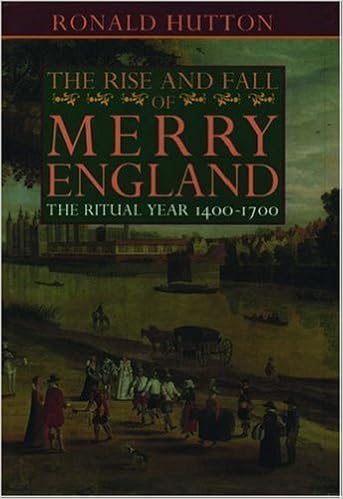
So we open the final ‘window’ in our social history book advent calendar. Given that this time of year is stuffed full of ritual and tradition, it seemed fitting to save Ronald Hutton’s The Rise and Fall of Merry England: the ritual year 1400-1700 for today. Professor Hutton looks at a range of customs and traditions, both religious and secular in origin. Highdays and Holydays (sic) marked the seasons for our ancestors, providing injections of excitement into routine lives. Some of these were national rituals, others more localised and Hutton has sought out references in contemporary documents that shed light on what was going on in particular towns. There is an appendix listing the churchwardens’ accounts that Hutton used in his research; the coverage is prodigious. In the pages of this book we find out about Maypoles and mummers, Candlemas and church ales and everything else in between. Hutton admits that, at times, the evidence is fragmentary but he has produced a comprehensive account of the celebrations of the early modern period. The time span covered by this book saw more than one major event that served to dislocate our ideas of celebration. The tumult of both the Reformation and the Civil War meant that our rituals in 1700 were very different from those of 1400.
As I come to the end of this year’s ‘calendar’, I would like to encourage you to review books that you read. It is the season of giving and it is the greatest gift you can give an author, well apart from buying their books in the first place. Obviously it is lovely if they are 4 or 5 star reviews but they do need to be genuine reactions. I personally don’t review at all unless I can award a ‘good’ rating. Reviews do not have to be lengthy. If you feel you can write something more than ‘great book’, it is helpful but all the authors I know would be grateful for two word reviews. I know I don’t write enough reviews and I really should. There’s a New Year’s Resolution in there somewhere! Can you commit to writing one a week, one a month or one for every book you finish in 2018? Use whatever medium suits you, Amazon, Goodreads, Twitter or a blog but make an author happy.

It just leaves me to wish everyone a Happy Christmas and a new year in which we celebrate friendship and are tolerant of difference.


Social History Book Advent Calendar Day 23 Tips for English Women and not the Booker Prize

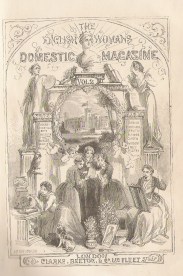
E W D M coverToday’s advent offering sits on my bookshelves but is not actually a book. If that sounds like a Christmas riddle, I will explain. It is a bound volume of the twelve issues of The English Woman’s Domestic Magazine from 1854. It was given to me many years ago by a family history friend (thank you Peggy) and is a real gem. There is no better way to investigate social history than through contemporary writing. There are some second hand copies being offered for sale and some issues are available online. It was published, from 1852-1879, by Mr Beeton. His wife’s famous book of Household Management developed out of the supplements that she wrote for the magazine. There is much that the reader of modern women’s magazines would recognise: short stories, recipes, fashion advice, household hints, book reviews, competitions, readers’ letters and the ubiquitous problem page. In the pages of the English Woman’s Domestic Magazine you can discover how to cook shank jelly, how to deal with rats (discharging a pistol near their holes), how to cure stammering (talk between clenched teeth for two to three hours a day) and how to deal with a man who wants to be ‘more than a friend’. The reply to the latter plea to ‘Cupid’s Post Bag’ recommends a different solution depending on the hair colour of the lady so troubled. This magazine was, of course, aimed at more comfortably off, literate ladies but it is nonetheless an interesting insight into life at the time.
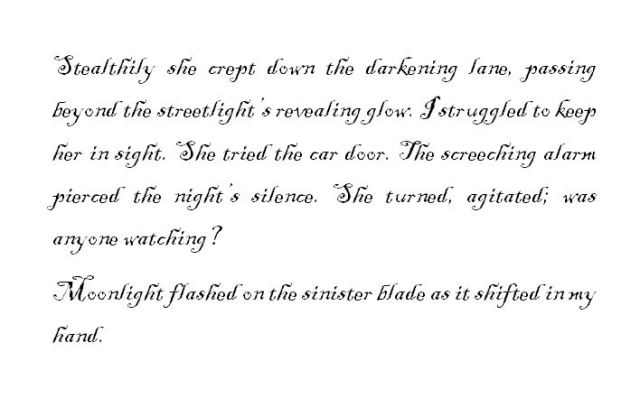
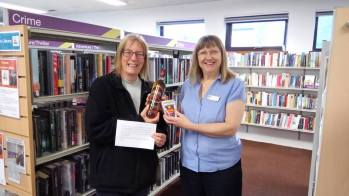
Capture25551880_1790284211264807_8636543761465579878_nA few weeks ago, I responded to the challenge, issued by a Devon library, to write a fifty word crime story. I am usually accused of using at least four words where one will do, so this was well out of my comfort zone. I do enjoy reading crime novels, primarily those that are set in the past but it is not something I would consider writing. Barefoot on the Cobbles does involve a crime but I refer to that as a why-done-it not a who-done-it. I summoned all my O level summary writing skills that have been lurking in my subconscious for forty five years. I wrote something. I left it for a few days and tweaked it a bit. I sent it to ace beta reader Martha. I emailed it to the library, in a suitably spooky font and then forgot about it. Yesterday came the news that I had won! Ok, so it isn’t exactly the Booker Prize but it is the first time I have consciously laid bare anything that I have written in a competitive arena. I did wonder if only I and the library cat had submitted entries but no, it turns out there were others. I was invited to collect my prize from library, which is thirty miles and a good hour’s drive away. I debated whether this was worth it and decided that it was. Though my shed-lifting damaged back did not agree. Nonetheless, I am now the proud owner (temporarily) of a bottle of whisky and hot toddy making kit and a warm glow – and that’s before we open the bottle. Thank you Crediton Library.
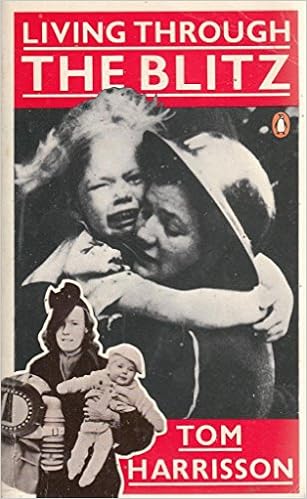
 

Social History Book Advent Calendar Day 22 – The Blitz, Mass Observation and new Working Opportunities

We are moving closer to the present day with Tom Harrisson’s Living through the Blitz. This book is based on the contemporary diaries and returns that formed part of the Mass Observation Survey and goes behind the ‘stiff upper lip’ media propaganda. Here you will find unvarnished, hard-hitting stories of fear and panic; accounts that are very different from nostalgic reminiscences, written long after the time. Inevitably, a significant proportion of the book concentrates on London but there are also chapters on the Southern ports and the industrial north. I particularly like the individual, personal experiences that shine out from the pages of this book. If the Blitz is history for you, rather than memory, you may well find that your preconceived ideas of keeping calm and carrying on are overturned by reading Harrisson’s work. More information about the Mass Observation can be found here. The original records are held by the University of Sussex.

I am still suffering from post-shed moving related injuries. Aided by adrenalin, yesterday I managed to steady sides of a shed as my companion devised a method of rolling the panels along on random bits of pipe. At least it is now ‘job done’ and I have a perfect excuse for not scrubbing floors (or indeed moving) for the next few days. I also have confirmation that the job I must not mention will see me take on a different role next year. I have a sparkly new job title and am now, in theory, less unimportant. As a result, I will be immersing myself in the world of Restoration Britain, slightly later in the seventeenth century than my usual stomping ground but I am relishing the challenge. Did someone mention ‘slowing down’?