Looking forward to speaking at Cleveland FHS’s open day and a week with @NeolithicHouses

The last instalment found us in Cambridge for a wedding. A certain amount of amusement was caused during a trip to a restaurant post wedding. I am not quite sure what cuisine it was – Turkish possibly – but the mixed grill was reassuringly familiar. Chris goes to pay by credit card. Having not brought his glasses he has no chance with the ‘check the amount’ bit. It seems the very small screen is asking him if he wishes to add a tip. He can’t see this either. It is a relief to find, when the receipt is printed, that he hasn’t parted with a six figure sum. More car problems on the return journey. This time the rear windscreen wiper won’t stop windscreen wipering – it isn’t raining. The only way to stop it is to open the rear window. Fortunately the single figure temperatures of last week have given way to something actually resembling spring.

Home for a few days in order to remind myself what my house looks like and to work. I am tasked with instructing a fifteen year old in the intricacies of armour wearing. This should be a breeze but said fifteen year old is six foot seven – mmm step ladder required. Also spent time with some lovely people researching their Buckland Brewer ancestors – there are however just too many people called William Squire for comfort.

3rd weekend in April, 3rd destination. This time we are off to Darlington where I am giving 2 talks at Cleveland FHS’s day conference. I am speaking twice so they get some sort of value for the expenses they will need to part with for my 720 mile round trip. Have talk will travel, that’s me. We are then planning to go straight to Old Sarum from Darlington for our Neolithic House Building project. Away we go. There was probably the brightest rainbow I have ever seen just as we turn off the M4; hope this is a good omen. We reach Tewkesbury, our normal breaking-a-long-journey site. Tewkesbury is one of the caravan sites where our antiquated television aerial fails to receive any sort of signal. I had forgotten this and am disappointed to miss ‘Pointless’. Chris had remembered about the lack of television signal. What he has however forgotten is his joining instructions as a volunteer Neolithic House Builder. Yes, that would be the instructions that say you MUST (capital letters, underlined) bring these with you. I can see me building alone although I intend exploiting the small print in the volunteer handbook that says English Heritage will help us solve any problems that may arise, in order to get him through the security cordon.

Some Birds, Absent Voters’ Lists, Ancestral Dancing and Extending the Family Tree

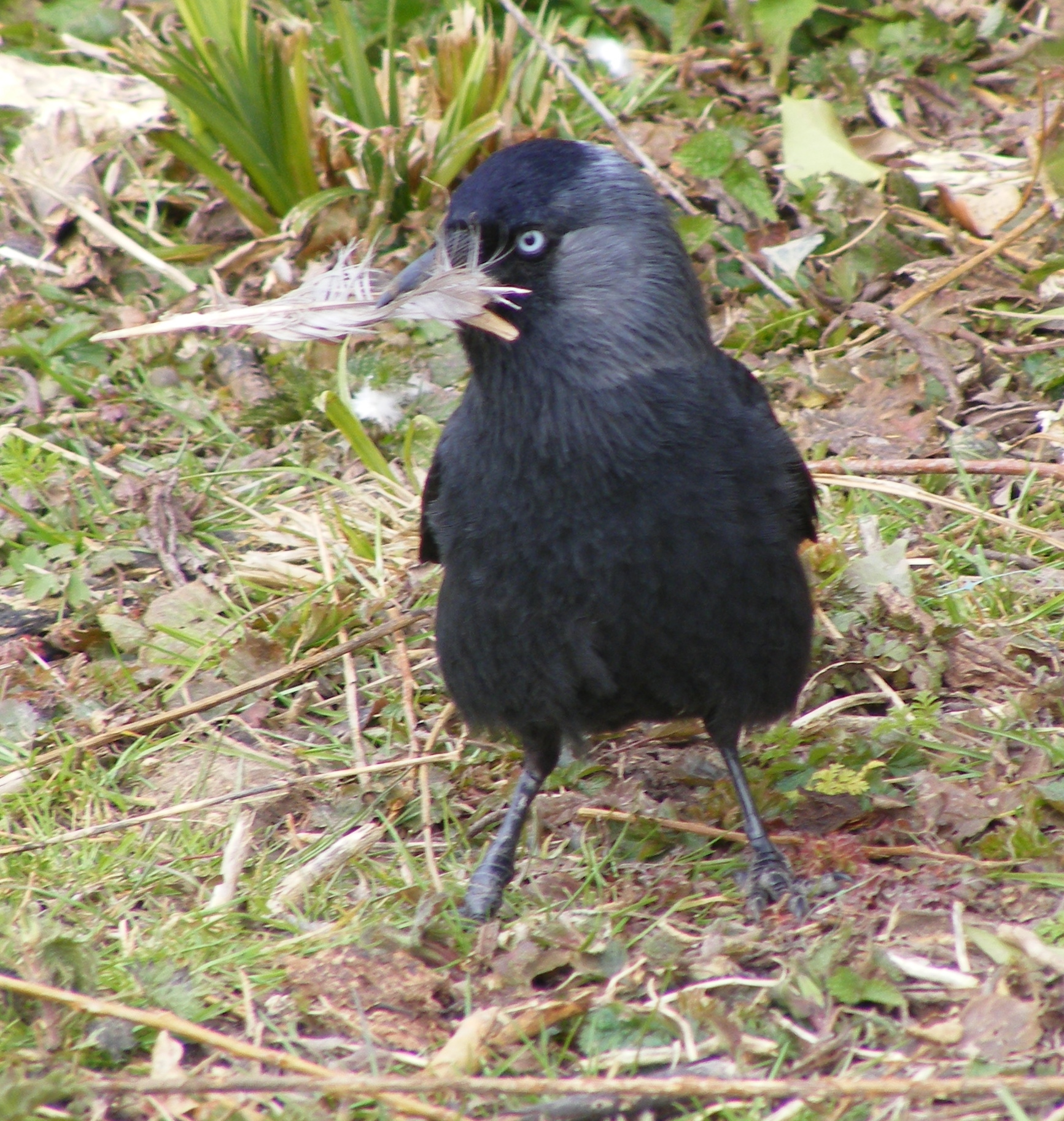
On our way back from the Guild of One Name Studies conference we stop off at Slimbridge Wildfowl and Wetlands Trust – hence the bird seed of an earlier post. Always a good place to visit even on quite a chilly day.

DSCF0831

Back home and one of my friends and fellow researchers has collected all the Absent Voters’ Lists for local parishes – these are now a candidate for one of my favourite sources for community history – all those names, addresses and regiments/ships.

Week 2 of our not being at home much month and this time we are off to Cambridge for a wedding. Always a lengthy journey, this is exacerbated by roadworks, Friday rush-hour delays, hail and other incidents. Trundling along the M5, our bonnet flies open. This is not as dramtic as it sounds as there is a safety catch so we can see where we are going until the next services, where we fix the problem. Next, an attempt to avoid the M25, which is advertised as experiencing severe delays on the very stretch we need. I rummage in the glove compartment to find a book with lines, dots, numbers and place names – racking our memories we realise this is an historical artefact, otherwise known as a map.  I spot a way to avoid the M25, we approach Beaconsfield from the south. We aren’t moving very fast so the M25 will need to have been very congested for this to have been a good idea. As navigator, I try to maintain an air of confidence whilst the Sat-Nav, which is determined that we should go along the M25, frantically tells us to ‘turn around where possible’. We approach Beaconsfield from the south. Those who have been paying attention will notice that we have already done this. Even I can’t claim that this is all in aid of the ‘pretty route’. In the end we give up and return to the M25 – at least this has allowed time for the congestion (if there ever was any) to subside. At least, we think it has subsided – we can’t actually see because of the hail.

As is our wont, we stop at a Harvester to eat. We are fans of Harvesters, largely on the grounds of the nominally ‘free’ salad. The place is heaving but the waiting staff rate as some of the friendliest ever and appear unflustered. We do observe however that we have probably never before seen quite so many obese people under one roof – not sure if this is a good advert for Harvester or not. We are in, eat and out within half an hour – just what was needed – so hats off to Harvester Bedford and our waitress Claire, who has had time to tell us her uncle lives in Holsworthy.

Wedding Day – not mine I hasten to add. Becca, as bridesmaid, has already left for the bride’s house – strange for her as this was the house that she left from when she married. We arrive at the church very early as Graeme has been allocated a task. It transpires however that this task has now been superceded so we try to make ourselves useful. I am assigned the role of holding open the back door so cakes can be brought in. Whilst waiting for cake bearers I let some dubious characters through – most of whom are the wedding party. Chris has managed to pour himself into his suit. I am taking bets on how far into the Ceilidh his buttons will last. Ever the rebel, he is wearing his ‘gone fishing’ socks. I am sorry that age means I do not qualify for the wedding colouring sheet and crayons.

DSCF0884DSCF0882

This is a lovely wedding although we doubt the wisdom or indeed possibility of getting the 200 strong congregation all on the stage at once for a photograph. We contemplate when the stage has last been weight tested. It appears it is possible and passes without incident. We are off to the reception in a double decker bus. This attracts a fair bit of attention in central Cambridge and we practice Queen-like waves.

You can tell that a significant number of the wedding party are engineers. We are provided with laser cut cogs and shapes on the table with which to build creations. One member of our table appears to be absent – we hope he is absent as we have just eaten his starter – oh dear he is just late – can we get away with this? There are some impressive special effects accompanying the wedding including a double bass for the first dance appearing up through the floor as the central section of the room rises – bit difficult to describe this but certainly striking.

DSCF0888DSCF0885

We ceilidh away like mad things – with no adverse effects on Chris’ suit. We ignore the fact that most of the other participants are 30 years younger. This is always good fun and shades of how our ancestors may have celebrated and danced. We finished with an incredible ‘strip the willow’ which we managed to keep going indefinitely by turning what should have been a long set into a circle – even the caller is impressed. We don’t know very many people here but those we’ve met before stop and chat and everyone is very friendly. I’m not sure if this is still a secret, put it this way, Facebook doesn’t know yet so maybe you will hear it here first but if all goes well, Becca and Graeme will be ensuring that my family  tree is extended come the autumn. Lots of people I don’t know are congratulating me about this – not quite sure how I have contributed but it is very exciting. So thank you Katie and Dom, it was a lovely day and all good wishes for your lives together.

Genealogical Snippets Around the UK – courtesy of the Goons Conference

We call in at the GOONS conference to help on the front desk; even though we aren’t officially here until tomorrow. It is good to see old friends again at what looks to be a very good venue – Copthorne Hotel, Cardiff. There does seem to be a tad of an issue when two sets of people appear to have been allocated the same room but this is soon sorted. There is complimentary fruit, tea and coffee on tap, free wi-fi and a very helpful staff. I download the 100 emails that have arrived in the last 48 hours. This brings the news that we are to transcribe the Clovelly gravestones, in the same way as we have for Buckland Brewer – now all I need is the volunteers.

We take part in the evening quiz. This sort of thing brings out my competitive side. We are fortunate in our team mates, do surprisingly well on ‘politics and power’ but as ever, are let down by our lack of knowledge of sport and popular culture. We misunderstand the Sat Nav on the way home so a one mile journey becomes eight.

After a late night, we wake to a frozen world. The freeze includes our caravan waste pipe, so nothing will go down our plug holes. We de-ice the car – yes it is still April – and set off back to the conference. I am sure I have forgotten something. I have forgotten something – washing things. Will we have to find time to go back to the van or can I manage without. Just how masculine smelling is Chris’ deodorant? As we arrive at the hotel someone is being unpleasantly and noisily unwell in the bushes. Is this the fall out from overindulgence at last night’s quiz? Or one of the smoking brigade reaping the consequences of a life time of Woodbines? On the contrary, it is a super fit Lycra clad cyclist.

Chris spent yesterday chatting up the reception staff and thus we are able to get in to our room straight away. In order to facilitate this our upgraded room has been further upgraded to a suite. This is almost as big as my house. The only downside is that the TV is in the living room part and we won’t be able to watch it in bed.

DSCF0782

The Upgraded Upgraded Room

 After the AGM, lectures begin. Andrew Millard talks about disappearing London ancestors as part of the England aspect of our UK ‘tour’ in store this weekend. We learn various interesting facts – e.g. 20% of all Scots in England in 1881 were in London – depending of course on which of the many definitions of London one uses! Next comes Gareth Davies, a very entertaining speaker from Companies House. Less direct genealogical relevance here (although we can search to see if our ancestors have been company directors since 1864) more than made up for by the delivery though.

DSCF0781

View from the Upgraded Upgraded room

A very good lunch is followed by the Ireland lectures.  An erudite presentation about Medieval Irish genealogies from Nollaig O Muraile – a pronunciation nightmare for the chairman that one. We learn that hereditary surnames, the majority of which are patronymics, appear about a century earlier in Ireland than they do in England. Contrary to popular opinion the prefix ‘O’ in an Irish surname is not ‘son of’ but ‘GRANDson’ of. Son of is ‘Mac’ – more usually associated with Scotland but equally prominent in Ireland. In the C17th there were over 6000 different Irish personal names. When the Irish wanted to insult the Cromwellian soldiers they called them men of no genealogy. This was followed by John Hamrock’s session on the origins of Irish surnames.

Time then to gather our thoughts before the banquet. A convivial session in good company and hopefully my Eau de Right Guard isn’t too overpowering. Bizarrely the waitress unfolds Chris’ napkin and puts it on his lap. Does he look more likely than the rest of us to wear his dinner? She does at least restrain herself from tucking it under his beard. The evening includes the apple tart challenge. I am not much of connoisseur of fine dining but if ever a dessert required a fork to aid its consumption this was it. It was to our credit that none of us ended with it on our laps – even Chris who was of course prepared!

We wake rather later than intended the following morning. Very good session by Debbie Kennett on the power of social networking. One seventh of the world’s population is on Facebook. Bearing in mind that Facebook is banned in China, this is quite a feat and our genealogical Facebook presence is justified. Not that I’m deluding myself that all of the 618 million people who use Facebook on a daily basis are going to visit my pages. Debbie says ‘You can’t do a One Name Study without Facebook’ and I’m not going to argue.

Scottish lectures next. It seems Sasines is pronounced Say-zines, rather than Sass-ines, as I’ve always pronounced it. We also learn the origin of Treasure Island’s ‘yo ho ho 15 men on a dead man’s chest’. As part of the Retours of Service of Heirs 15 men would meet to open the dead man’s chest to sort out his paperwork. Next a well presented session by Dee Williams from Scotland’s People. Some of the oddly named people that Dee had come across included Equator Thunderbolt and the great 1704 baptism entry for Something George Something, son of what do you call it. Interestingly, as there was no Scottish Registrar General until 1855, the 1841 and 1851 Scottish censuses were administered in England and the records were initially held there.

Time to depart and plan to meet again next year in Ashford. We return to the van and try to recoup our energies for the remainder of a very busy April.

Mistress Agnes goes Wild in Wales – of Castles and other History Bits

Well, our date with the photographer has come and gone. He wanted to photograph some Clovelly documents in my kitchen. Oh dear, if my kitchen is to be a ‘set’ I really ought to do the spring cleaning; that would be the spring cleaning for 2007. I enlist Chris’ help. One of his tasks was to polish up the outside of the hob kettle. Said kettle had already had a couple of unscheduled encounters with the quarry tiled floor to its detriment but it could at least be clean. Chris does such a good job that he polishes a hole in the kettle and it now leaks. Just hope the photographer doesn’t want a cup of tea. See the result here.

 Now we are heading Wales-ward in anticipation of the Guild of One Name Studies conference at the weekend. I seem to have picked up a cold, probably from one of the young people I have encountered in the C17th. I am sure Mistress Agnes would be getting out the hyssop but I am sticking to proprietary brands in the vain hope of appearing healthy. Across the Severn Bridge where we are told that the speed limit through the toll gate is 30 mph. Could be interesting if vehicles are passing through at 30 mph, hurling their tolls at the staff as they go. Newport, the sign tells us, was the host town of the 2010 Ryder Cup. Is this really the best it can do as a claim to fame?

We arrive at our caravan site. It is on the grounds of what purports to be an hotel. It doesn’t looks as if anyone has stayed there lately but we are told we can use the facilities in the evenings. Not this evening though, nor tomorrow when there’s a funeral, nor it turns out Friday either as it is still sporting a ‘closed today’ sign then. Not feeling fit to go out, or indeed do anything much, we stay in the caravan for the afternoon. Watching tea time TV, I am ridiculously excited to have come up with ‘gavilkind’ as a pointless answer to ‘words ending in ……ind’. There are advantages to being a history person.

The next day we meet Martha and Rob at St. Fagan’s National History Museum. This is a brilliant place to go but verges on being an out door activity and it is snowing. Quick calendar check – yes it’s April. The museum is fascinating, with reconstructions of many Welsh buildings, furnished to reflect different historical periods. The only slight disappointment was the absence of the advertised crafts persons at work and of course we would have preferred to see the staff in appropriate period costume. The leaflet advises that a visit takes two hours and we spend six without even trying. If it had been warmer we would have stayed longer still. There is a traditional red farmhouse, a slightly different hue from the pink Essex houses. The red ‘whitewash’ and the accompanying rowan tree were seen as protection from witchcraft. I am more familiar with keeping witches at bay with bay trees. ‘Keeping witches at rowan’ doesn’t have quite the same ring to it. We keep losing Chris but soon work out that he is usually to be found chatting by one of the many open fires in the cottages.

Some of the buildings have thatch that can be viewed from the inside. We take note in preparation for our forthcoming Neolithic house building experience. We see a round, stone pig sty – apparently pigs like to burrow in corners and the lack of corners in this structure solves the problem. There is even a gorse mill, designed to mill gorse – obvious really. The milled gorse was used for animal feed. The effort required to process the gorse was considered worthwhile because gorse is an all year round crop. The church has impressive wall paintings and an enormous parish chest.

Here we are on the site of the Battle of St. Fagans. I am sure I should have heard of this. It is billed as the most important Welsh battle of the Civil War – maybe they didn’t have many. Fought on the 8th May 1648, this counts as part of the 2nd Civil War. It was another defeat for the Royalists.

DSCF0750

We set off to find a food outlet that can cater for Martha’s dietary needs. She’s done some internet research and we negotiate a narrow alleyway to park behind Cayo. In we go and ask for the allergy menu. It seems they don’t have an allergy menu. ‘There’s one on the website’ we say. No, it seems their website caters for allergies but not the actual venue – helpful. There is a notice on the door offering special deals if we order before 5.00pm. It is before 5.00pm. So we can take advantage of this, Martha agrees to have a jacket potato. Ah, they don’t serve food before 5.00pm. We cut our losses and head for venue two. This time the single staff member looks less blank when we mention an allergy menu. He hunts high and low, rummaging through cupboards. He disappears and his queue grows ever longer. Martha gives up and checks the allergy menu on her phone. He does eventually return having printed off pages of allergy menu from the website. This menu seems to disagree with what Martha can see via her phone! This venue does have free wi-fi so we find something that is gluten free on both versions of the menu and order. I attempt to link to the wi-fi only to find that there is no internet access. When Martha’s cheese and bacon jacket potato turns out to be tuna we start to think we must be at Fawlty Towers. The waitress does do a quick potato swap and our day draws to a close.

On the way back to the site we divert for some diesel and to try to purchase some lip balm. Of course I have masses of lip balm at home but neglected to bring any and in a cold wind with a streaming cold some would be handy. We put some in our basket with the rest of our shopping. Chris is quite indignant to be asked to pay 5p for a carrier bag. When we get to the van I am anxious to apply lip balm and rummage through the hot cross buns and bird seed (yes bird seed – keep reading over the next few days and all will be revealed) – no lip balm. We check our receipt and it turns out we never took it out if the basket.

Day 2 in Wales. There is some sunshine but a biting cold wind sees us dressed in hats, gloves, scarves and thermals. We set off for Caerphilly Castle. Dilemma, do we follow the sat nav or the green CADW symbol? We decide to go with the sat nav and end up on what is described as a mountain. Strange that a castle is not sited on a hill top. We find a car park. We are on time – no sign of Martha. Martha, being Martha will have arrived half an hour ago so we ring her and find she is in another car park. We change car parks and struggle through the wind. To the largest castle in Wales. It is certainly very imposing, with a scary looking wall that leans out at 10 degrees – a greater angle than the leaning tower of Pisa. The castle was originally built by Gilbert de Clare, also known as Gilbert the Red, Marcher Lord of Glamorgan, who was also responsible for nearby Castle Coch (or the Red Castle). Although earlier than other concentric castles, it does follow this pattern and amazingly the bulk of it was built in just three years 1268-1271. It formed part of a defence against Llywelyn ap Gruffudd.

DSCF0764

Gilbert’s daughter Eleanor was married to Hugh Despenser the younger, favourite of Edward II and the Castle passed to them. The Castle had fallen into decay by the sixteenth century, when its stone was used for building projects elsewhere. This is an extensive castle with interesting features such as the ‘in the round’ AV display of events on the castle’s history – requiring 5 projectors and a projected portcullis that goes up and down. I did somehow feel that some opportunities were being missed however. There were some replica siege weapons and the inevitable spiral staircases, mostly going the correct was, giving defenders free use of their sword arms. Spiral staircases, as I have learnt to my cost, are not best accompanied by varifocals. Thus I struggle up and down these. The restoration of the castle took place in 1929, when Lord Bute commissioned repairs to give work to miners, unemployed due to the Great Depression. Now off to the conference – more news from there when I can get an internet connection.
Of Boatraces, Birthdays, Burials and Books

Today is the day that my ‘interview’ with Geneabloggers appears. This may mean that some of you are experiencing my particularly quirky brand of historical ramblings for the first time. This is a bit of a responsibility as I feel duty bound to be witty and inciteful. One can have too much of witty and inciteful though, so you may be disappointed. My whole life is somewhat akin to a protracted April Fool’s joke so this is an appropriate day for me. I mustn’t miss an advertising opportunity – so buy the book why don’t you! Actually sales of Coffers and Clysters, Comfrey and Coifs: the lives of our seventeenth century ancestors are going well, so much so that those under one side of the spare bed are now gone. I therefore need to sell those on the other side to stop said spare bed being on a slope.

Childhood memories sparked yesterday with my birthday and a convestaion with my ‘elderly relative’. I am of course fast becoming the elderly relative and am aware that I should be making more effort to record family stories. The boat race was bound up with this as inevitably, when I was small, it fell on the day of my birthday party. I can remember watching during these parties – well I suppose it made a good accompaniment to pass the parcel. Party games – another topic to record. This year’s race lacked the major incidents of last but one of the remarks by the commentator should go down in the annuals of stating the obvious. ‘Cambridge will be back to try again next year’. – What sort of race would it be if they weren’t? I was always an Oxford adherent, primarily on the strength of preferring dark to pale blue. Now I have a daughter in Cambridge and a Cambridge graduate for a son-in-law maybe I should change my allegiance but habits of a lifetime die hard. No birthday snow though. I think I can remember two snowy birthdays.

Putting the finishing touches to my talks for Cleveland Family History Society‘s open day. This is a ‘two for the price of one’ job. At the moment one session is too long and the other too short – maybe I can negotiate some redjustment of the timings. In the course of preparing the talk about the census I came across a table on the Find My Past website, you know in the explanation bits that sadly noone bothers to read (their ‘knowledge base’ contains some good stuff). The figures, taken from Peter Chrstian’s The Genealogists’ Internet, say that, in 2009, 43% of the surnames in the 1891 census indexes on Ancestry were incorrectly transcribed. Hopefully many of these will have been corrected by now but no wonder some of our ancestors go missing.

Buckland Brewer burials from 1783 are now ready to go online. I just need to check on copyright issues – always a nightmare. The earlier ones will follow post checking.

Now to await the local press photographer, who is coming to take pictures of me pointing at ancient Clovelly documents. Fortunately I do have some in my possession following our recent exhibition, so a map annotated with tenant’s names, a lease from the 1740s and a rent book of the 1890s may feature. First the local community Big Breakfast. Not that I actually plan on consuming any breakfast. It starts at 8.30, which as far as I’m concerned is almost lunch time. No way could I wait until 8.30am for breakfast and still be vertical. It is always good to be involved in the community goings on though. This year, I did pass on the Easter Sunday sunrise service, which is always awe inspiring, taking place as it does on the cliffs above Hartland.  Getting up at what (allowing for our clock change) would have been 4.30am was not the problem – more the standing outside, bonfire notwithstanding, in temperatures of minus 5 without the aid of my Levi thermal boiler suit. Finally, on the community front, our village has been infested with Naughty Gnomes – really not an April Fool. I wonder if our ancestors had time for fun and April Fool’s jokes?

The history interpreter works with children and animals

Ok, so I didn’t actually work with animals but they do come into my recent adventures. Palm Sunday and we attend church at Clovelly. This is a wonderful service when the village’s historic reliance on the donkey is celebrated. The donkey is blessed and we process down the cobbles following the donkey, waving what this year were rather recession hit palms. This was followed by a couple of hymns near the Methodist Church and St Peter’s Chapel in Clovelly (also near the New Inn!). This year, in temperatures that rivalled Lapland, we were accompanied by an accordionist. What possessed me to volunteer to hold the music? The wind meant that this was a two handed job. Bit difficult, I found, to get through seven verses in a cold wind without the ability to wipe ones nose.

From the historical viewpoint of course donkey transport was vital in Devon. The state of our roads (some would say nothing’s changed) made wheeled transport a rarity until the late C18th, so it was donkeys and panniers, sledges or horse (or donkey) drawn contraptions, a little like American Indian travois.

3849 Buckland Brewer burials now indexed. Some checking to do before these are unleashed on an unsuspecting public. Not sure the team can face going straight from this to baptisms or marriages so we are considering working on the IR58s. Regular readers will know that these 1910 Valuation documents are a great favourite of mine. The 1828 list of Clovelly poor is now indexed and more documents are being distributed  – volunteers welcome.

Some time in the C17th too – Great Fire of London with year 1. I’m trying to get over the lack of career choice for C17th women. ‘What do you want to be when you grow up?’ I ask the girls. No footballers’ wives – you need year 8 for that response but I thought ‘a cooker’ and ‘a princess’ were sweet.

A full day’s history yesterday with more discussions about how heritage can be used to enhance the experience of visitors to Clovelly Methodist Church, which has a high tourist footfall. Still at the brainstorming stage this one – unfortunately one of the brains involved is mine – not sure how much storming it can take. Also some possibilities for celebrating the bicentennial of the founding of the Bible Christian Church. Next a discussion with a journalist about Clovelly Community Archive.

In the evening, a return to the scene of my Who Do You Think You Are? experience at High Bickington Historical Group to talk about the day and the research behind Gregg Wallace’s Bible Christian story. We left early as we had to find the venue and daylight seemed preferable. We were not surprised to find the hall still locked but gradually more and more of my audience arrived and began queuing outside. Someone is sent for a key, by this time it is snowing. No way am I getting out of the car until the door is open. The key arrives, now the problem is using it to open the door. Chris has ‘handling keys’ high up on his CV so I send him to assist and we are in! This is a very impressive new hall for a small community and is part of a much wider housing development. It has been established by a trust on the site of Pincome’s Farm. I give an account of my Who Do You Think You Are? experience and it is well received. I have brought with me brief family trees of the Gill and Leythorne families. Coincidentally the Leythornes lived in a cottage on Pincome’s Farm. As this venue wasn’t completed when I was booked to do this talk and this is one of the first meetings the society has had in their new venue, this is somehow very fitting. Gregg’s great great grandmother has had her story told because she has a famous descendant but we should tell our ancestors’ stories too, not just collect their names and dates. It isn’t their fault their descendants aren’t famous!

Roasting a Cow’s Udder and other Excitements

I’ve been putting the finishing touches to some forthcoming presentations. Decided that Roast Cow’s Udder should form part of my slot on Seventeenth Century Food and Drink for Cleveland, North Yorkshire & South Durham Family History Society’s Family History Day in April. This really shouldn’t be missed so here it is for the benefit of those who can’t attend:- Take a cow’s udder and first boil it well, then stick it thick all over with cloves. Then when it is cold, spit it and lay it to the fire and apply it very well with basting of sweet butter and when it is sufficiently roasted and brown dredge it and draw if from the fire. Take vinegar and butter and put it on a chafing dish and coals and boil it with white bread crumbs, till it be thick. Then put to it a good store of sugar and cinnamon and putting it in a clean dish lay the cows udder therein. Trim the sides of the dish with sugar and so serve it up. Thanks to Gervase Markham for this. Horse pales into insignificance somewhat doesn’t it?

184 pages of an edited Family Historians Enquire Within are now with the publishers. I shall miss my daily stint with various letters of the alphabet. There will be a talk of the book!

97 excitable year 6 children with us in the seventeenth century, in a space that is better suited to 60. Fortunately it was a day when spring was almost here (sorry you must have missed it as it is winter again today) so we were able to get on with chopping off their limbs, shooting them etc..

I have delegated the research into the Clovelly Methodist Roll of Honour – yes, me, delegating – you did see the airborne porcine vision did you not? Some very interesting discoveries none the less. I have also contributed to Friends of Devon Archives Roll of Honour transcribing project, revealing more Clovelly men to research (Anglicans presumably!).

Exciting news on the Braund front, with additional evidence that two of our existing branches are probably linked and a new branch (also almost certainly connected) created. It is at that frustrating – this is the way these families are related but I just daren’t ink it in – stage. Will we, with missing early parishes registers and no probate material, ever prove this satisfactorily?

Mostly about Clovelly and other Community History

A real Clovelly fest this week. Saturday I went to the Methodist Church, with the intention of helping to clean it but actually spent most of the time discussing what can be done to enhance visits to the Church. We plan to investigate the stories of the thirty Clovelly men whose names appear on the First World War Roll of Honour in the Church. A meeting of Clovelly Community Archive Association yesterday, with attendees bringing in some fascinating material. Indexers welcome!

DSCF0736

The Proposed Archive Database is Explained

DSCF0739

One of the Pictures Brought in to Share – Clovelly Girls’ School

The Buried in Buckland team have now uploaded all the gravestone transcriptions – just those inside the church to do.

And Family Historians’ Enquire Within is complete – still needs proof reading and then it is on to the next project.

Along with all this, several days in the seventeenth century and Mistress Agnes features in the Wellington Weekly. A little concerned when I asked a pupil at another of the schools we visited to read the Lord’s Prayer from a horn book. ‘Do you recognise this?’ I ask. ‘Yes’, says the pupil – ‘it is Shakespeare’.

Halberds in the hall and other historical matters

Last night we transported all the seventeenth century gear back home ready for a school visit. Normally we don’t take pikes on these occassions – bit tricky fitting them in the car. A special request for pike drill meant we gave it a go, with shorter than authentic pikes. A little problematic this – every time we went down hill the pikes threatened to shoot through the windscreen. I now have a halberd in the hall – as you do of course. Good job we weren’t stopped and accused of carrying an offensive weapon. Most of our swords are blunted in the interests of health and safety but this halberd is the real macoy – I’m sure I can put it to good use.

Today my copy of Poxed and Scurvied: the story of sickness and health at sea that I ordered at Who Do You Think You Are? Live arrived – looking forward to reading that.

My work editing Family Historians’ Enquire Within is nearly done. Just struggling with the last few ‘R’s – rather a lot of Royal somethings. A couple of websites caught my eye – a list of royal warrant holders and those who have been awarded medals by the Royal Humane Society. Don’t you just love lists? Not begining with R of course but a good one for those with an interest in Maritime Heritage is Portcities. Finally, a couple of favourites from the English Heritage stable are Pastscape  and Images of England.

I always suspected that commercial television overdid the adverts. I can now reliably state that it is possible to index ten years’ worth of Buckland Brewer burials just using the advert breaks in one episode of Dancing on Ice.

The Neolithic House build is underway – can’t wait for my stint in April. My last attempt at cob was constructing a model medieval village with year 7s. We used PVA glue to hold it together – not exactly authentic!

Excited to hear that I am to interviewed on the Geneabloggers website sometime soon.

Escaping from London and the Aftermath

The Saturday and Sunday at Who Do You Think You Are? Live passed in a whirl. More chat with folk from the English Civil War Society and The Methodist Heritage stand. The latter could be very exciting. There are many activities planned for the 200th anniversary of the founding of the Bible Chrisitains in 2015. A very interesting and well delivered lecture on Richard III’s DNA test from Dr Turi King.

Then I felt morally obliged to spend money on books – rather a lot of books. These included Kirsty Gray’s new book from Pen and Sword on Tracing West Country Ancestors. From the same stable I purchased a book I should have written about how our ancestors died and I have on order another about illness on board ship.

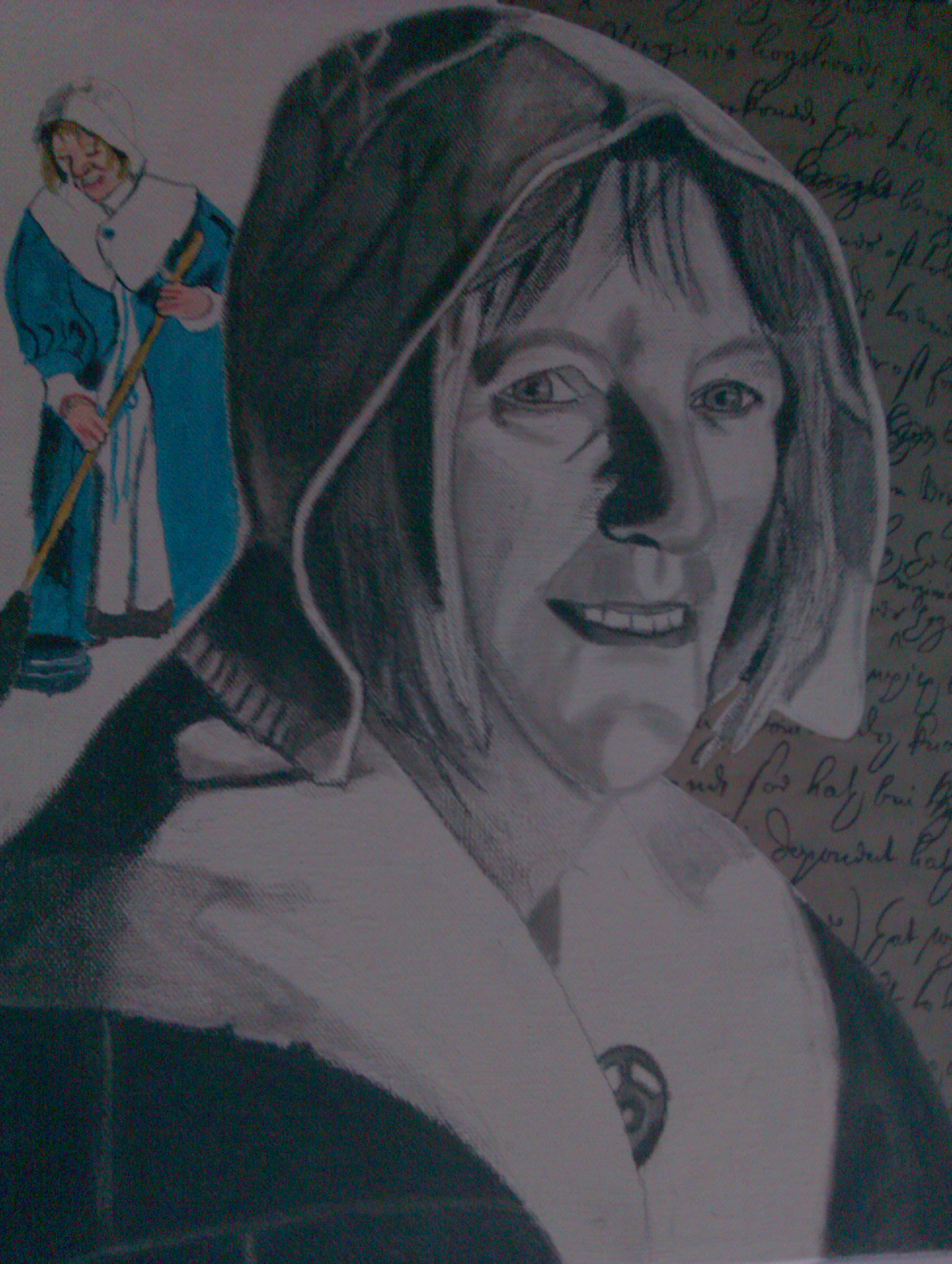
Just to prove that Chris really does get everywhere, friends from the Guild of One Name Studies appear with a magazine for RBS pensioners. They open it up and lo and behold, there he is, in fishing guise this time. His portrait has been commended in a photographic competition! On the subject of portraits, a young friend of mine has produced wonderful portraits of Master Christopher and myself for her school work.

IMAG0425IMAG0424

Tired after a busy weekend Master Christopher and I morph back in to our 21st century selves and prepare to leave the hall ten minutes before the end of day three. With a mind to the mile walk from station to camp site, our belongings are strapped to the trolley – that’s the trolley whose wheel is still secured by a nappy pin. We are stopped by a security man. We cannot leave because we have a trolley and it is not yet ‘break down’ time. We explain that our stall is still fully functioning, that we need to get a train and that the bag contains our clothes. Now an advantage to being ‘memorable’, the security guard remembers seeing Chris in costume. He wants to feel our bag to ensure it contains clothes. This he duly does and we are able to escape. Strangely he has no interest in the box of books under the bag……..

Home again and time to catch up. First absorbing the contents of the Chancery document acquired at the National Archives that so nearly extends one branch of the Braund family tree and links other branches to it. After a day’s work on this I reluctantly decide that there still isn’t quite enough proof.

More Buckland burial indexing and two lovely friends are busy checking  this. A meeting preparing the Devon Family History Society‘s Summer Special, which sadly the job I must not mention will prevent me attending.

Three talks to prepare – busy busy – so much history so little time.