A Few Welsh Days

Having left Sheffield we headed for Tredegar House caravan site, where we have stayed before. Turns out it isn’t in Tredegar, who knew? In my defence I wish to put it on record that it wasn’t me who left the book with the directions in at home. To add to the problem, we had accidentally pressed mute on the new satnav without realising it (this probably was me), so lacked verbal instructions. The Welsh detour was to see the Strictly Professionals Show (this time I was delivering a birthday present), so more angst about finding the venue. I was a little less concerned about accessing tickets via my phone this time, having cracked it in Sheffield. Instead, the major stress factor was, will there be a parking place? This was exacerbated when we learned that Beyonce was playing to a 74,000 strong crowd in Cardiff on the same evening. We did have to wind our way up to the sixth floor of the multi-story car park but we did find a space. The main drawback of the evening was the people sitting next to me who chatted in very loud voices the whole way through. Perhaps they thought they were auditioning for Gogglebox. Hard stares from all around made no impact. They also decided they couldn’t wait until the interval to get drinks – cue squeezing past from the middle of the row along the very narrow gap between seats. This was followed by the slopping of cider over a few hapless audience members on their return journey and yes, the inevitable results of copious amounts of cider consumption, which couldn’t wait until the interval either. Maybe people should have to sit an etiquette entrance test before being allowed in to theatres, sporting or concert venues.

Concert over, we went to play find the car. The lift queues in the multi-story car park were impressive, so we opted for the stairs. By the fourth floor this seemed like a less good idea and I debated whether it was time to remember that I allegedly have a heart condition. Fortunately we weren’t amongst those who didn’t realise that you had to pay on the ground floor before finding your car.

Time in Wales allowed us to pay some return visits, first to Tredegar House, which was on our doorstep and was home to the Morgan family before more recent generations squandered the assets on partying and the house became home to a convent school. Not sure how well the ‘classical’ wall paintings would have gone down but apparently they remained on view.

We also went back to St Fagans. You really do need more stamina than we have to see all it has to offer in one day, so it was a good opportunity to see bits we missed last time. There was an excellent exhibition about Welsh life, with artefacts representing several thousand years of history. Next we went to the weaving shed, where today’s activity was spinning on a loom that spun and wound eighty bobbins at once. We walked round the lovely gardens and looked at several of the reconstructed buildings that have been brought on site from all over Wales. My favourites were the row of miners’ cottages that were each furnished to represent a different era. Now home and with a busy time ahead.

Irish Adventures

No, this is not me trying to learn another language. The Cornish continues (note I didn’t say progresses) and I will report on that another time.

I had a wonderful once-in-a-lifetime holiday touring the whole of the island of Ireland planned and booked. What could possibly go wrong? What went wrong was that the holiday was planned for May 2020. It is always difficult to arrange to spend long periods away from home but finally, later this year was to be the time for the rearranged Irish holiday. I do like everything planned in advance. Some call me organised and in a sense I am but this is not a virtue, it is a coping mechanism. I revisited the 2020 itinerary, tweaked a few things, made sure the tourist attractions we planned to visit hadn’t permanently closed and prepared to re-book everything.

When you are touring, three days here, four days there, everything hinges on the start date. This means I needed to begin by confirming the ferry. I didn’t do a year long course with an Irish University without learning how beautifully laid back the atmosphere is in Ireland (and no, still no certificate, one month after it was posted), so, in early January, it was not a surprise to learn that bookings had not yet opened for the ferry crossings later in the year. ‘Try next week’. After several ‘next weeks’, finally, a confirmed ferry booking.

Next step, caravan sites. Some of those we’d hoped to stay in were no longer running, others didn’t open until May and weren’t taking bookings yet. I know, I know, ‘’Twill be grand’ and all that but I really do like to know that we will have somewhere to pitch the van. Sites don’t seem to be anything like as plentiful as on mainland Britain, so arriving somewhere and hoping for the best is definitely not a great idea, at least not if you are me. Wild camping is illegal on the island of Ireland, or perhaps it isn’t, Mr Google is unclear on the matter. Having read ‘it isn’t strictly legal but you’ll probably get away with it’, I know this isn’t an option. The one person who won’t get away with it will be me. So back to trying to book sites. It was a real mixture, some online booking forms wanted to know the equivalent of the inside leg measurements of all guests, other sites took days to answer emails. We still can’t book a site for the end of the holiday. It was difficult enough finding one anywhere near the right place. Some only took motor homes not caravans, some closed for the season before we wanted to stay. In the end, we’ve had to settle for ‘just turn up no need to book’, which really doesn’t sit well with me. There are fifty odd pitches on this site, what happens if fifty one someones ‘just turn up’ and we are number fifty one? We had a site issue in Canada, two sites that we had booked had decided to close early for the season, leaving us in the lurch. Really hope this doesn’t happen again.

Tours then, booking tours is particularly important as we are only in a place for two or three days, so if we can’t get a ticket on a particular day, we can’t just go the following week. Surely we can book tours to things that say ‘early booking essential’? It seems not. ‘Early’ seems to equate to a couple of days in advance, which means we will already be away and I will have to struggle to do this when we have wifi or by phone, deep joy.

After a hectic week of googling ‘touring caravan site near x’ we are as prepared as Ireland will let us be. Apart from regular checking to see if ‘early’ is now, all that is left is to anticipate the trip and keep everything crossed that fire, famine, plague or earthquake don’t mean we have to rearrange again.

Brief Wanderings in Wales

After an uneventful journey, we arrived at the caravan site in Newport in beautiful autumn sunshine. We were just in time to explore neighbouring Tredegar House. I had even remembered my National Trust passport. Unfortunately, I had forgotten my membership card. By the magic of technology, I was located on the data base and we gained entry. There was only time for a quick look round this substantial seventeenth century house, home to the Morgan family. It was built on the site of a previous house by William Morgan, with the dowry received for his first wife and cousin Blanche. William’s second wife trued to murder him. The Morgans were substantial land owners

The estate’s downfall came in the 1920s when the then owner lived an extravagant lifestyle as a ‘Bright Young Thing’. He was also involved in the occult. During the Second World War he worked for M18 using carrier pigeons to bring information from Europe. Evan was court martialled for divulging the information to some Girl Guides. The house was sold as as school in 1951 and was acquire dby the council in 1974. It has been run by the National Trust since 2012

On a beautiful autumn day, we set off for St. Fagans. There was a slight issue paying to park as the instructions were in Welsh but English instructions were accessed and entrance to St. Fagans was free. We had been before but there have been many changes since. We began to explore the reconstructed houses, everything from an iron age round house to a pre-fab. The round house was particularly superior, consisting of two circular structures.  Unfortunately, the guide was outside enjoying the sun so I could only photograph half of it. The circular pig sty was interesting, circular as pigs are more likely to escape from rectangular structures. There was a urinal, reminding patrons to adjust their clothing before leaving, several farmhouses, Pen-rhiw Unitarian Chapel and St Teilo’s Church with impressive reconstructed wall paintings. There was also a terrace of houses, each one decorated in a different period style. The civil war battle of St Fagans was the largest on Welsh soil and ended in a decisive victory for the Parliamentarians.

Before leaving Wales we popped back to Tredegar Gardens whose points of interest include a forty two foot long shovelboard in the orangery; allegedly the longest oak plank table in Britain.

Dallying in Derbyshire 2

I’m finally getting round to finishing the story of our trip to northern climes. There were lovely views as we crossed the county boundary to visit the RSPB reserve at Coombes Valley, near Leek in Staffordshire. We had a pleasant woodland walk but apart from a couple of buzzards, wildlife did its typical disappearing trick yet again. The most birds we saw were those spotted whilst in the car park.

The next day was the Family History conference at Buxton. It felt strange but it was fun to be back at a larger in-person event, maybe I had missed these occasions more than I thought. The conference was held in the Palace Hotel, obviously once very grand but now a faded old lady, somewhat fraying at the edges. I’ve organised enough conferences to know that it is the things  that are out of your control that go wrong and I really felt for the organisers. In theory there was parking reserved for speakers and exhibitors. This had been absorbed by other hotel guests long before 8.20am when I arrived. I and my books were unceremoniously deposited on the doorstep whilst my companion circulated the car park many times, hoping to pounce as someone left. Then there was the heating, or rather there wasn’t the heating. Despite several requests, the management left the settings at arctic. This meant that I had several cups of coffee to keep warm. Decaffinated coffee didn’t seem an option so it was full strength or nothing. This was not a good idea. Lunch was a little lukewarm but the tiramisu was to die for. The previous couple of sentences contain the origins of my downfall.

The conference itself was excellent, with talks from Debbie Kennet on surnames, Nick Barratt on house history and Helen Tovey looking at four decades of Family Tree Magazine. My own presentation was about one-place studies. It was lovely to chat to people, including meeting two more of my family history coven in person for the first time. I also realised how many more books you sell when you are speaking in person and left with near empty boxes.

By the end of the day I was feeling very shaky and I began by blaming the caffeinated coffee. By the evening I was very unpleasantly unwell, not great at any time but especially not in a caravan. In retrospect, I think it was possibly the tiramisu and I heard that I wasn’t the only one to be struck down; maybe I shouldn’t have said ‘to die for’.

The next day we’d arranged to meet up with friends. I was still decidedly fragile so we decided not to go for our planned walk and chatted instead. There was more meeting up the following day, family this time and we were able to watch the Queen’s funeral and walk to the nearby Chatsworth Estate.

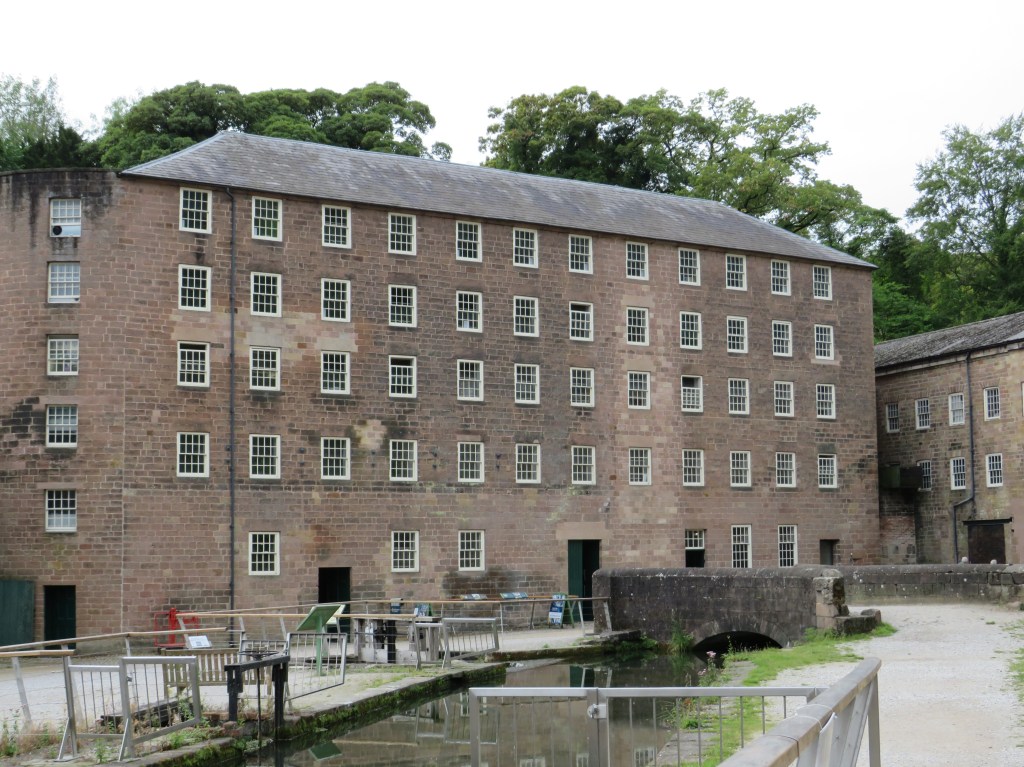
Our final day saw us return to Cromford Mill, which, fortuitously, was open this time. No plays on offer but a chance to view the industrial heritage of the area. We arrived just in time to join tour guide, David, who showed a small group of us round.

Cromford Mills forms part of the World Heritage Site that stretches for fifteen miles along the Derwent Valley. Today’s trip brought to mind long ago schooldays learning about the industrial revolution. In 1768, Richard Arkwright, a barber and wig-maker, patented his water-powered spinning frame, invented in conjunction with John Kay. Arkwright was described as ‘a man of copious free digestion’; that sounds like a phrase worth dropping into a conversation at an appropriate moment. Working with the Nottinghamshire hosiery Industry, Arkwright looked for a suitable site to set up his mill in order to produce cotton thread. Cromford had the necessary water supply from the Bonsall Brook and Cromford Sough was diverted to increase the flow. The site was on a turnpike route, vital for transporting raw cotton and the spun thread. Raw cotton arrived in Liverpool from the Caribbean and would be taken by pack horse to the mill. Arkwright used builders from the local lead mines to construct his mill. The building was tall and thin to optimise the light and this became the blueprint for other mills in the area. Initially, the water wheel was constructed using wooden peg gears. The idea was to be ready for production as swiftly as possible.

The frame was designed to be simple to operate, so unskilled workers could be used. Cheap labour was obviously an attraction, so Arkwright largely employed the wives and children of local lead miners. At its peak, over 1000 workers were employed in two shifts. The employees were better paid than farm workers and lead miners. Arkwright supplied toilets in the factory for his workers and there was barrack-like accommodation on site for the male apprentices. He also had workers’ cottages constructed in the village. A second mill was built at Cromford, as well as others in the surrounding area.

Concerns about possible attacks by machine wreckers led to keeping pikes and small arms on site, which the workers were expected to use against saboteurs if the occasion arose. In fact, there were few problems. Until 1775, carding was done manually, which proved inadequate to meet the demand. A carding engine was invented in 1775. The invention of Cartwright’s mechanised loom in the 1780s, increased the demand for spun cotton. Arkwright is regarded as the father of the factory system and it was interesting to explore the site. I was still not feeling up to too much standing or walking but we finished off our visit with a walk along the canal.

Then it was time to head for home. We left early on a beautiful misty morning. I think this may not be our last visit to the area.

Dallying in Derbyshire 1

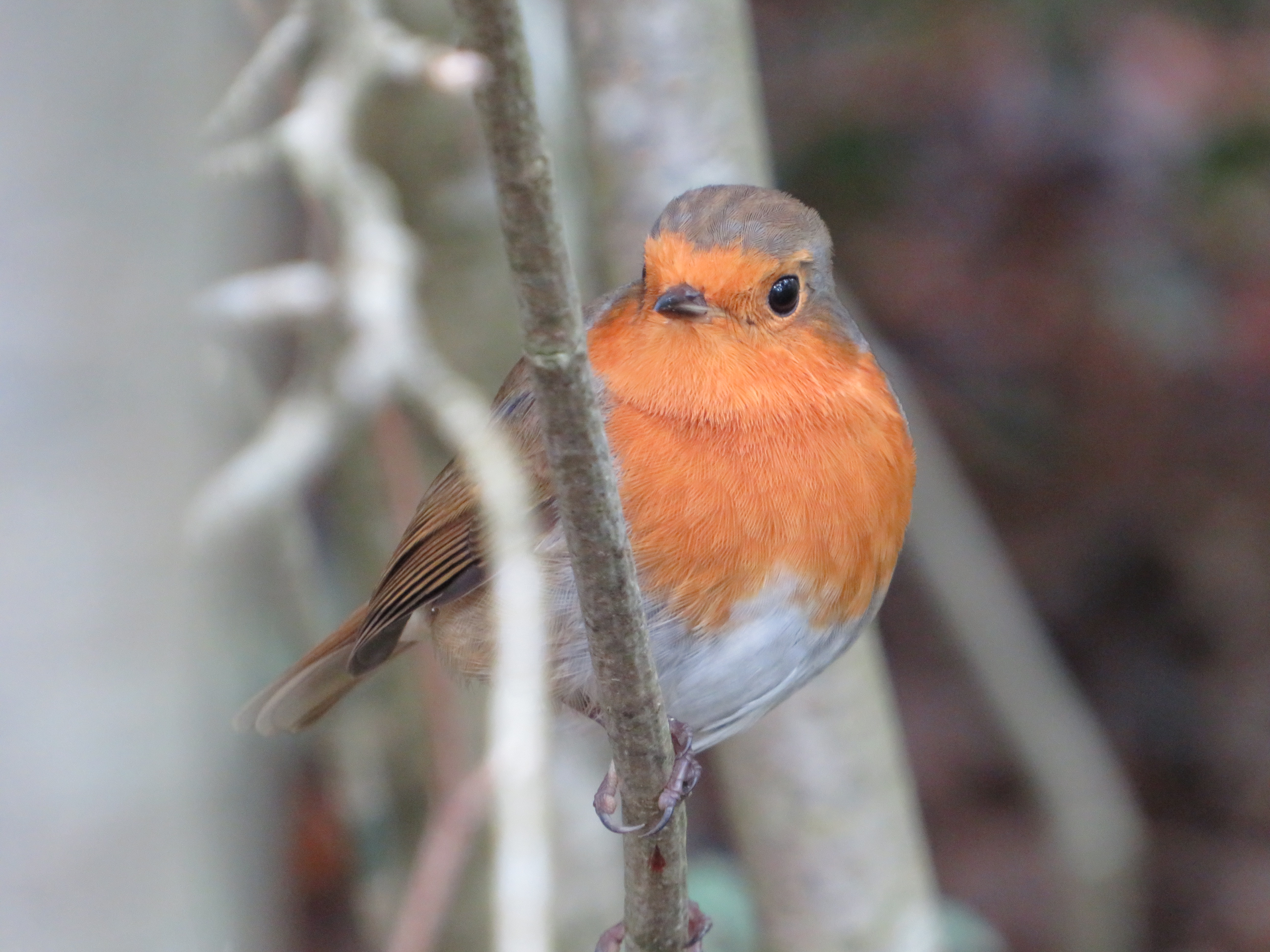
Preparing to leave our caravan site in the Lakes, the robin called to bid us farewell, bringing some of his friends, including a nuthatch. We had an uneventful drive south-eastward to Buxton. The landscape is notably different on the Peak District, with hills, open fields and mellow stone.

The Derbyshire site was adjacent to a country park so, once settled, we walked up to Solomon’s Temple, so named for local landowner Solomon Mycock and built in 1894 to replace a former building that was thought to have been commissioned by the Duke of Devonshire, to provide employment for unemployed lime workers in the 1820s. Archaeological finds suggest that this was the site of a Bronze Age burial mound, as artefacts dating from c. 3500 BCE have been found.

We had an early evening meal and left for Cromford where we had booked to see an open-air play. In fact we’d altered our holiday to arrive earlier in Buxton so we could do this. On arrival everything seemed shut and we could see no sign of an imminent performance. Having wandered around for half an hour and asked several people, I manage to find some mobile signal, rare since leaving home and checked the website to discover that the performance had been cancelled. As the play was about the gunpowder plot, I could understand that, in the aftermath of the Queen’s death, it might not be the most tactful time for a performance about trying to blow up a monarch but apparently the decision to cancel was only taken six days later. I was decidedly annoyed that no one seemed to think that it was a good idea to email those who had booked, to save them a round trip of forty miles, or indeed to put a notice of the cancellation on the firmly locked doors but hey ho. After five emails our not inconsequential entrance money was refunded.

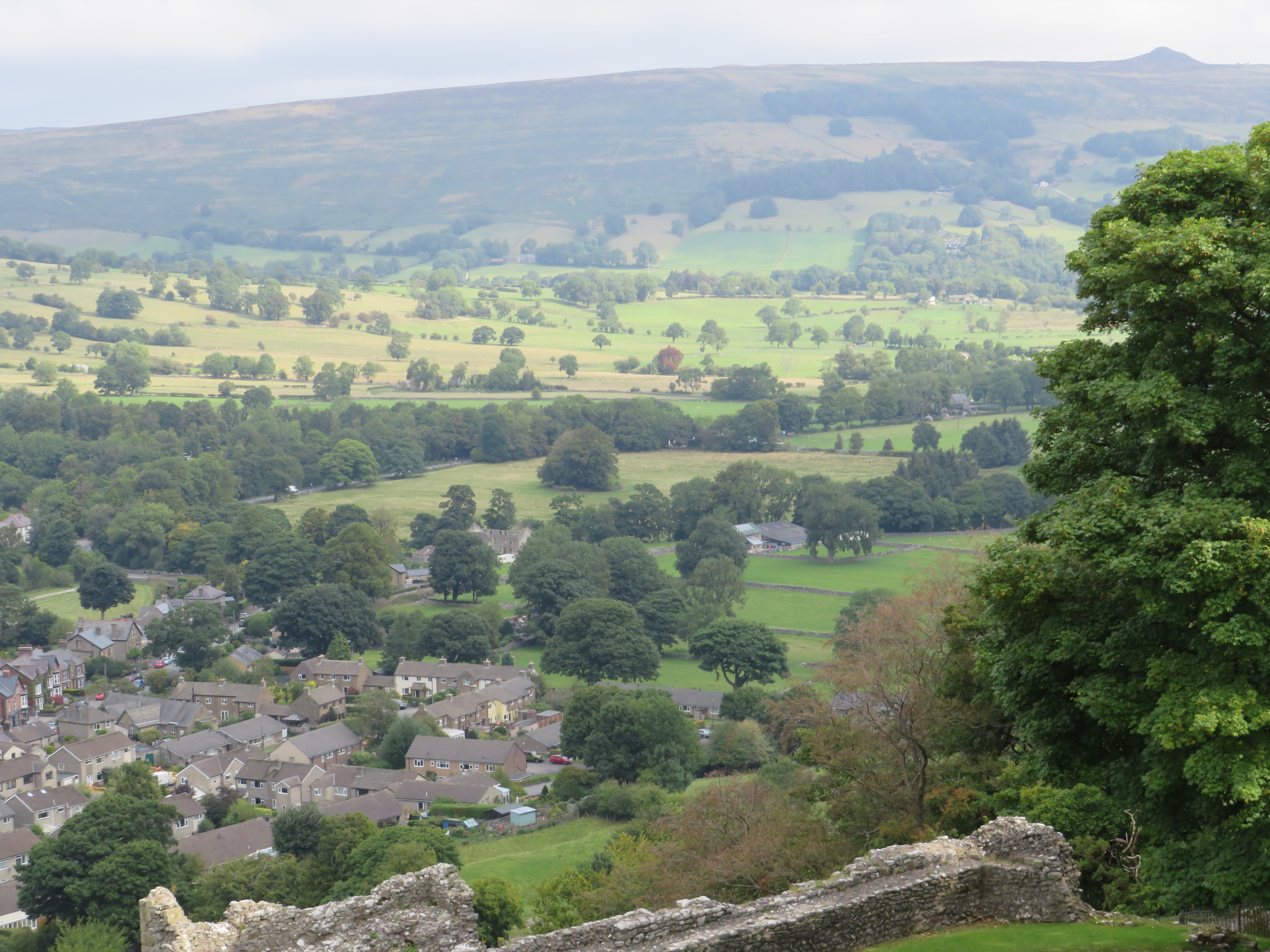
The next day we drove to Hope Valley and along Winnats Pass, with its impressive views across to Mam Tor, the site of a Hill Fort. The Hope Valley is the boundary between the millstone grit of the  ‘Dark Peak’ and the differing geology of the ‘White Peak’, an area of carboniferous limestone, with its elaborate cave system. Our destination was Castleton and Peveril Castle, one of many castles established after the conquest in the Forest of the Peak to establish Norman control. Originally called the Castle of the High Peak, the castle was later named for William Peveril, an early keeper of the royal forest. The castle’s purpose was more administrative than defensive, being a base for the Keepers of the Forest of the Peak from the eleventh to sixteenth centuries. Their role was to ensure that the punitive Forest Laws were adhered to; fines were paid and rents were collected. The value of the area to the crown lay in its use as a royal hunting ground and also the local lead and silver mines. Castleton grew up in the late twelfth century, its houses and mills providing an income for the castle’s estate. It was a stop on the packhorse route.

Although the castle was owned by the monarch or a member of the royal family, they rarely visited. Henry III, who was almost certainly responsible for constructing the New Hall at Peveril, only stayed once. Even after the building fell into disrepair, the castle continued to be used as a courthouse, prison and the local pound until the sixteenth century, after which much of the castle was demolished and the dressed building stone was plundered.

We looked at various gift shops selling the local Blue John or Fluorspar and read about John Tym’s Blue John workshop. We had excellent cakes and drinks in Dolly’s tea room, really good value too and highly recommended. Allegedly this premises, in a former incarnation, was billed the worst café in the country; definitely not the case now. A Buxton shopping trip yielded not only food but the adaptor required to download my photographs.

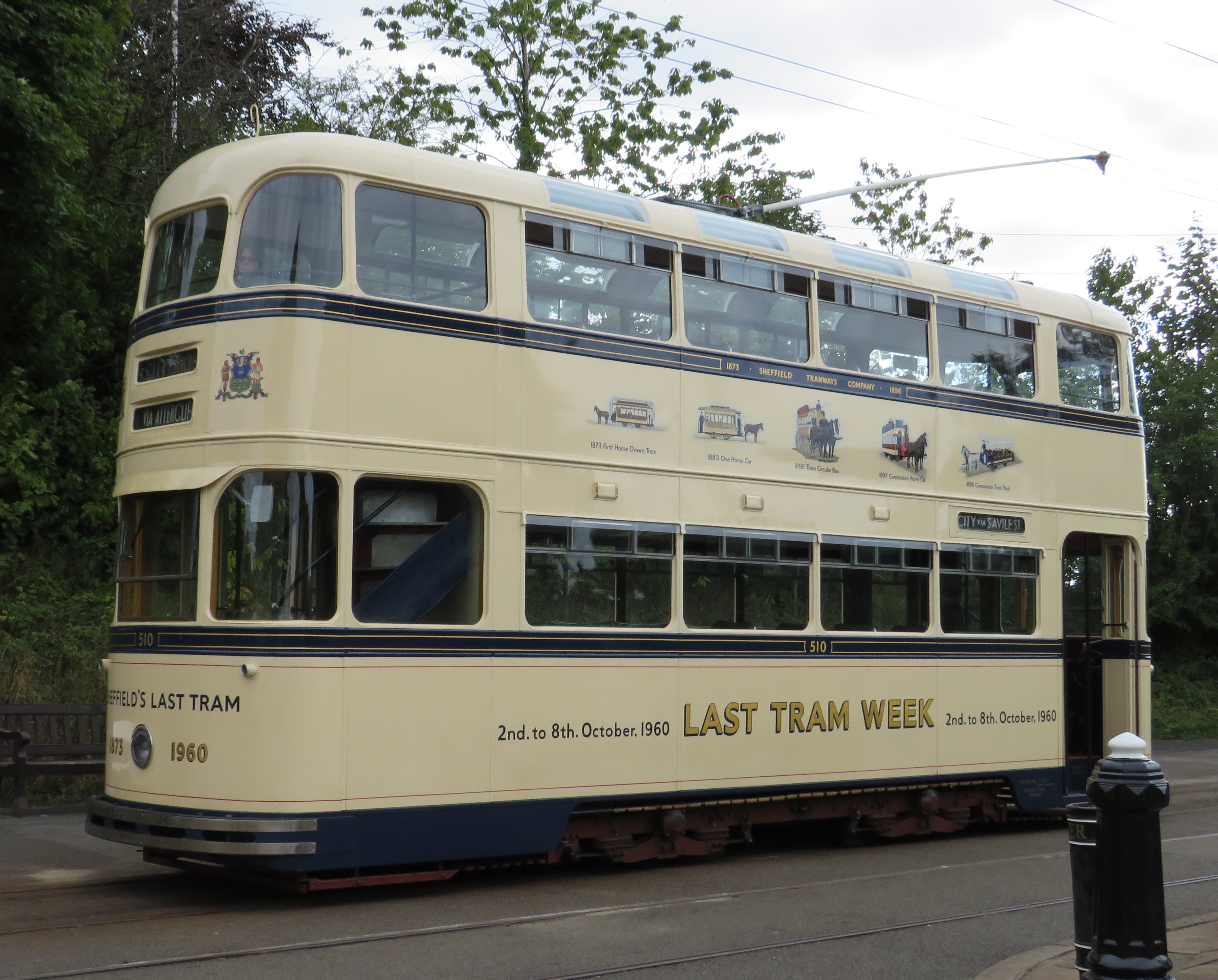
On Martha’s recommendation, we headed off to Crich Tramway Village without too much trouble despite a road closure. This haven for preserved trams was opened in 1959 after the former limestone quarry closed. This attraction is well presented and a credit to the largely volunteer workforce. The enthusiastic Ken showed us round. A random collection of items of architectural heritage have found their way on site but blend together. These include what remained of the Derby Assembly Rooms, which was built in 1765 and caught fire in 1963. Its brick by brick demolition and re-erection took three years. There are two 1897 gas lamps, from Ashton-under-Lyne, originally cast to commemorate Queen Victoria’s diamond jubilee. The gates came from Marylebone station, there’s a tramway shelter from Matlock and a Hendon police phone box. The Red Lion pub from Stoke on Trent was particularly notable, as was one of the last twenty ‘Penfold’ hexagonal Victorian post boxes in the country. One of the more bizarre artefacts was the ventilation pipe from an underground Birmingham toilet.

We road on two trams, one a 1928 from Porto, Portugal. There were many more trams to view and a huge exhibition area. We took our second tram on a one way journey so we could walk back through the woods and view the wooden sculpture trail. We could see the Sherwood Foresters’ War Memorial, which marks the highest point in Derbyshire. There is a view of eight counties from here but access is restricted at the moment so we couldn’t walk up to it. The road closure was a little more impactful on our return journey but we made it back without too much of a detour.

Lake District Lingerings Part 2

We made a return visit to Stott Park Bobbin Mill, a fascinating insight into the industrial heritage of the area. The factory was built in 1835 to provide bobbins for the Lancashire cotton industry and was ideally situated for water power and the necessary supply of birch, sycamore and ash. We arrived just in time for a guided tour by Ann. The mill produced bobbins in 260 different styles. Many of the workforce were young boys for the Ulverston workhouse. There was little regard for health and safety. Apart from the dust from the sawdust and shavings, the unguarded machinery would have been a hazard for any workers whose concentration lapsed; circular saws were driven at 3000 rpm. The workshops were well ventilated to reduce fire risks but this made them very cold. Shavings might be waist high to help keep the workers warm but this was of course a fire hazard. Nineteenth century workers were on piecework and were paid by the gross. The tally man would mark their sticks when each gross was completed.

Many workers were laid off when the supply of cotton was disrupted during the American Civil War in the 1860s and the ensuing ‘Lancashire Cotton Famine’ led to a drop in the demand for bobbins. About 1870, W A Fell introduced a semi-automatic boring machine, which simplified the task of boring holes in the bobbins, reducing it to loading new blocks and removing bored bobbins. In 1880, a steam engine replaced the water mill as a source of power. Once plastic began to replace wood the mill went into decline and it finally closed in 1971.

Rain stopped play as regards walking but we did stop off at the Esthwaite Water Café for some very acceptable cake and decent sized mugs of tea and coffee, which we consumed overlooking the lake.

We came home to the news of the Queen’s death.

The weather forecast was uncertain, so we decided on an early walk, whilst it was dry and headed anti-clockwise around the lake for a mile or so and then returned in order to head off to Acorn Bank, an interesting National Trust property. Acorn Bank is situated at Temple Sowerby, which takes its name from its association with the Knights Templar, who were gifted the manor by Henry II in 1185. The next owners, in the mid-fourteenth century, were the Knights of the Hospital of St. John. After the dissolution of the monasteries, Acorn Bank was in the hands Thomas Dalston and his descendants for almost four hundred years. The writer Dorothy Una Ratcliffe purchased Acorn Bank in 1934 and was it given to the National Trust in 1950. The house was tenanted until the 1990s and spent time as a nursing home.

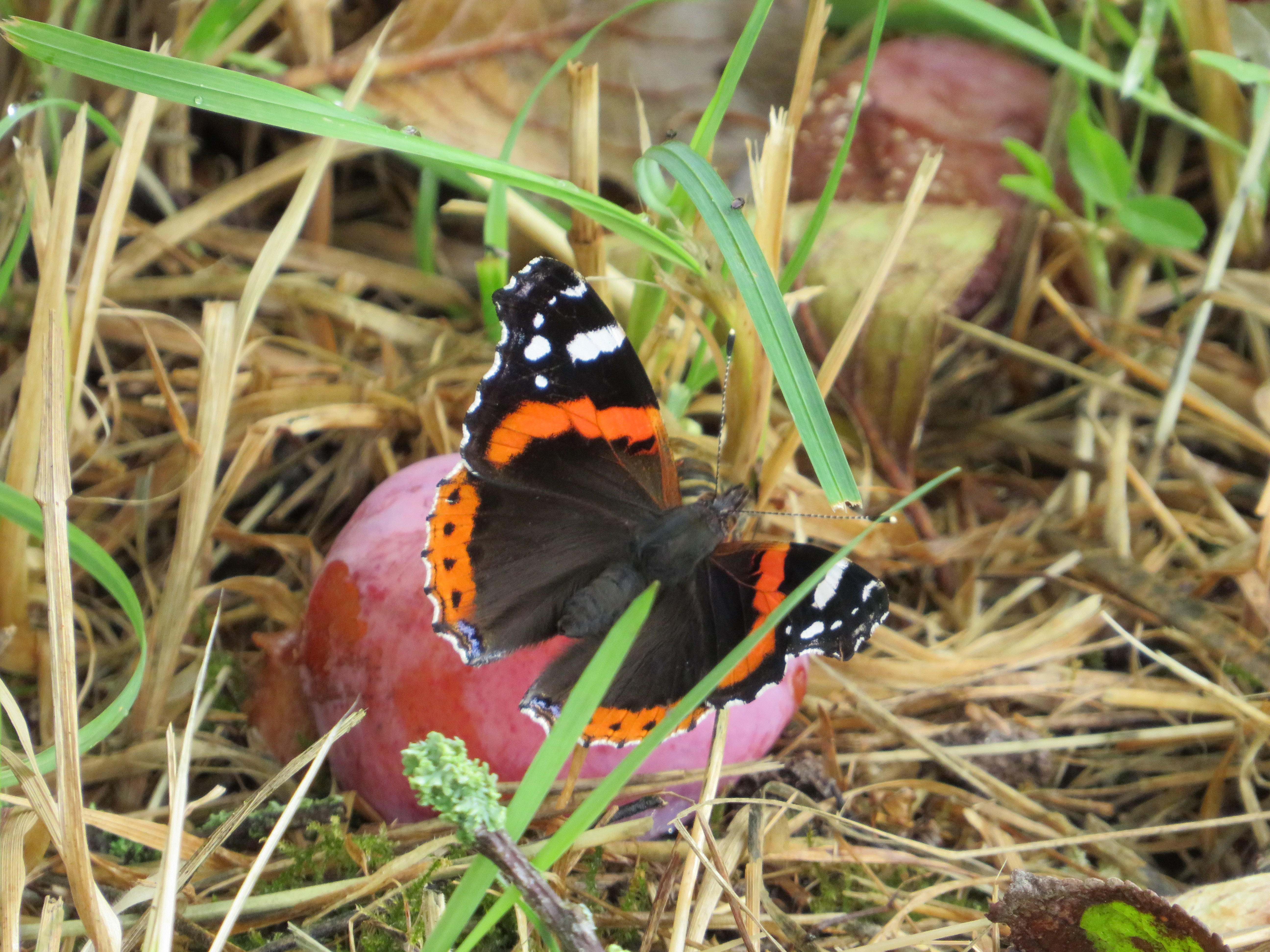
Parts of the current house are sixteenth century but there were later alterations and the façade is eighteenth century.  It is the gardens and orchards that are notable at Acorn Bank. The orchards are home to over a hundred varieties of apple, some of which were grown in cordons, in other words, trained diagonally to save space. This year’s crop looked to be prolific. Here also is the largest herb garden in National Trust ownership. There were bee hives to aid pollination and we spotted a large number of red admiral butterflies feasting on fallen plums. Although the surrounding woodland, with its streams and ponds, are a haven for wildlife, the fauna was, as so often on our holidays, conspicuous by its absence. Within the woods are the remains of gypsum mines. This was produced on the estate from 1880-1938 and sold as fertiliser or for plaster. We also walked down to the watermill.

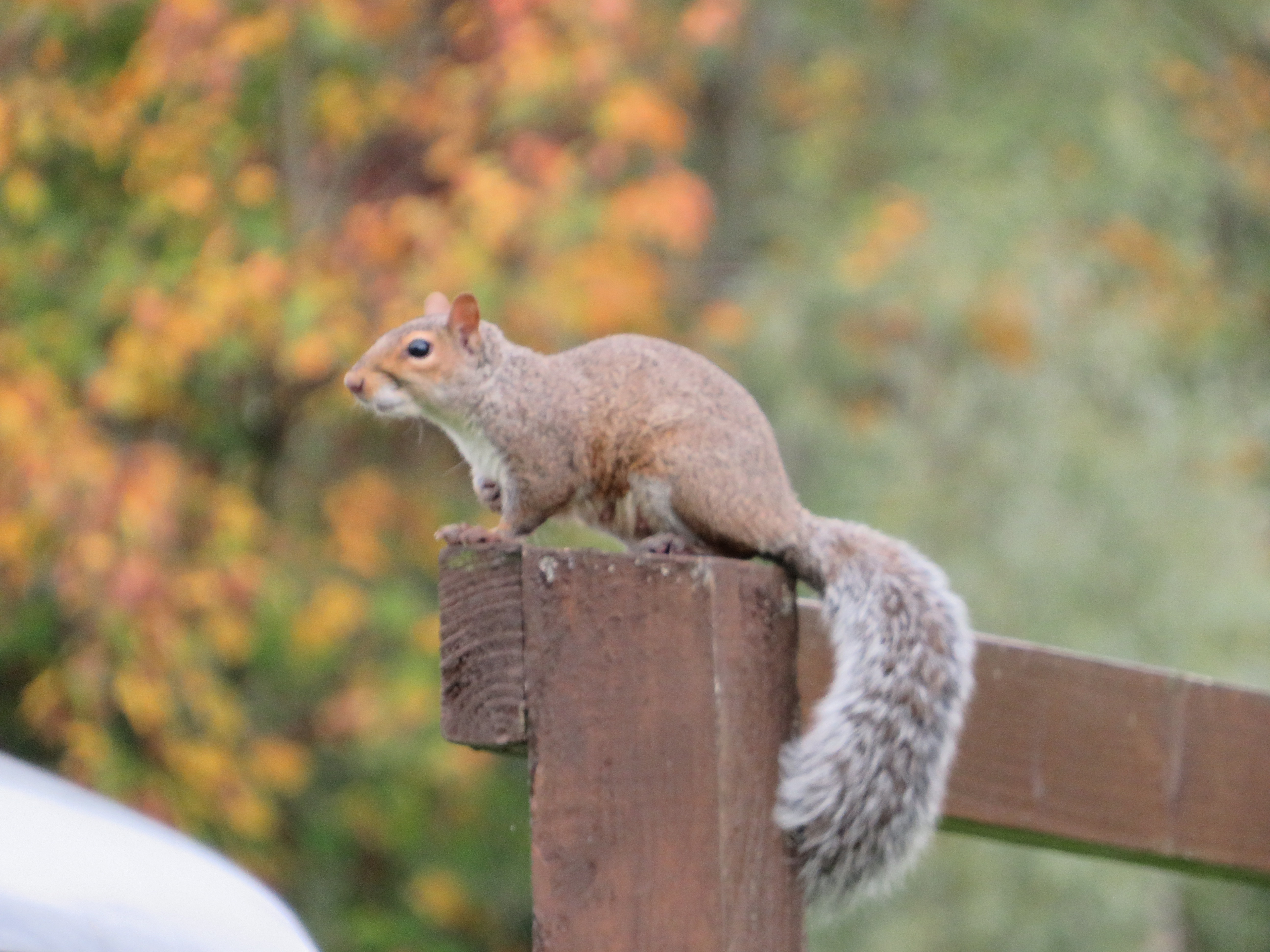
To make up for the lack of wildlife at Acorn Bank, the red squirrels came out to play once back on the site but hasty scampering made them difficult to photograph. They seem to make a habit of opening the top of one of the bird boxes to investigate the contents. The late afternoon was spent watching the accession speech of Charles III.

We set off early to go to Hill Top, a seventeenth century cottage owned by Beatrix Potter from 1905 but used as a writing retreat, rather than her home. She was responsible for extending the property but no mains water or sanitation system was installed until 1928, when her nephew came to live at Hill Top. It was fascinating to see some of Beatrix Potter’s books lying open to show illustrations that mirrored the part of the house or garden that we were in. A bed was covered by a reproduction of the wedding quilt made for her parents in 1863; the original quilt is in the V & A. The main living room had a rather strange wallpapered ceiling . Some knowledgeable guides told us the story of the house and Beatrix’s life. She was constrained by the mores of her time and regretted being known for ‘bunny books’ rather than her other accomplishments, such as botanical drawings. The first book she wrote after her marriage is now seen as a treatise in support of women’s suffrage and was turned down by Warne’s, her publishers. Her published works after this date tended to be re-presentations of earlier works. The cottage garden was beautiful and you expected to spot Peter Rabbit and friends hiding in the foliage.

On the way home, we stopped off to view the standing stones at Castlerigg, visited by William and Dorothy Wordsworth in 1799. We also called in at Keswick for some food. Finally, a short walk to the lake in the afternoon.

We drove out to St. Bees, which was an opportunity to see the sea but on the whole not very inspiring. We climbed the cliffs and rewarded ourselves with an ice cream. We returned via Threlkeld Mining Museum. The quarry opened in the 1870s to provide ballast for the newly opened Penrith-Keswick line and closed in 1982. There were plenty of construction vehicles in varying states of decay, some of which are being restored. We had mistimed our arrival to miss the 1pm train ride, so waited for the 3pm trip before heading home as the rain began. This is an interesting museum, which is clearly a hobby for construction vehicle enthusiasts. Don’t expect professional presentation of exhibits but worth a visit.

It was rainy on our last day in the Lakes, so we went for a drive towards Bassenthwaite. We had planned to go to the post office in Keswick but missed the turning and couldn’t find the free parking. When we finally found it there was no space, so we returned to the van and tried again later with more success. It finally stopped raining in the late afternoon so we could walk by the lake without getting soaked.

Amidst all this touristy activity working/volunteering life went on. Conducting a Zoom meeting was not without difficulty. Great signal in the hotspot but I couldn’t face standing up and waving my arms about for two hours to keep the light on in the hut. Plan B was driving the car to beside the hut and sitting in the car. Thankfully it was a new laptop so had plenty of battery. Of course nights are drawing in so by the middle of the meeting, not wanting to drain the car battery by using the courtesy light, I was in the dark in any case!

Lake District Lingerings Part 1

We’ve been back from our latest excursion for several days but the ‘interesting’ connectivity issues whilst away meant that I am posting news of these adventures retrospectively. So cast your mind back a few weeks, we are now in early September )although in my head we have surely only just got to June). Day one, other commitments meant that we left home at lunchtime and had an uneventful run to our ‘breaking the journey’ stop in Tewkesbury. Van pitched, we took a short walk into town to acquire some very tasty fish and chips. Tewkesbury makes the most of its heritage. There are several historic buildings and plaques explaining their significance.  Heraldic banners along the main street also give a unique flavour.

As it was raining the next day, we forewent another walk round Tewkesbury and drove straight to Keswick amidst delays on the M6, due to an overturned lorry. The satnav was counter-intuitive but we didn’t get lost. The campsite at Borrowdale is in a beautiful wooded setting near Cat Bells and a short walk from Lake Derwentwater, where Swallows and Amazons and Star Wars were filmed. Access to the site is a little challenging but nothing that fifty years’ experience of towing caravans couldn’t handle. A friendly robin greeted us and even popped in the van to say hello. As a bonus, the sun came out, allowing us to walk round the lake. We passed a shed that is home to ‘Teddy in the Window’, who collects money for charity. The outside of the shed is decorated with letters and postcards to Teddy from all over the world. The downside of the site is that wifi access is limited. To be fair, the hot spot includes the information shed, which is one up on huddling under a tree. It does however necessitate standing up and moving continually, as the light in the hut works on a sensor. With two evening meetings due this week, at least for as long as my battery lasts, I anticipated an interesting time.

On our first full day in the Lakes, we set off for Allen Bank in Grasmere. I had neglected to note the postcode and had no phone signal but the helpful site warden found it for me, saving me repairing to the shed hotspot. There is blue badge parking only at Allen Bank, so we parked in Grasmere Village and walked up to the house. It was built in 1805, an era when many industrialists from Manchester and Liverpool were settling in the Lake District. This house was rented to Wordsworth for three years. There is a definite twist to this National Trust property, which suffered from fire damage. It is set up for interaction, with opportunities to sit and read, borrow an art pack and draw, play board games, or just admire the impressive views. An added touch is the provision of explorer rucksacks that children can borrow as they explore the grounds. Some of the fire damaged walls have been painted with interesting murals by a local artist. A nearby, detached billiard room, which resembles a chapel, complete with stained glass, is being renovated and is due to open on Friday. It doesn’t take long to view the house but it is definitely worth investigating the surrounding gardens and woodland. The gardens have been designed with biodiversity in mind and Herdwick Fleeces are used as mulch. There is an uphill walk through the woods to a viewpoint. This did involve climbing wet granite steps, made additionally slippery by fallen leaves but we survived. This despite my not having my non-varifocal glasses with me, making clambering more difficult, as I am unable to see my feet clearly.

Next, a look round Grasmere and a stop to consume cake and a drink. I was tempted by the many sales in the outdoor clothing outlets and acquired what is allegedly a waterproof jacket with a 70% discount. Just as well as I would never spend £90 on a jacket. It will be interesting to see if the claims of breathability and waterproofing are valid.

We stopped off in Keswick on the way home. This was partly to try to purchase an SD card to USB convertor to download my photographs as the new laptop is lacking an SD card slot. In both Grasmere and Keswick there are plenty of cafes, upmarket tourist shops and outdoor clothing outlets but a distinct lack of a camera or computer shop. We managed to secure roadside parking in Keswick and having drawn a blank amongst the shops, went down to the lake. There were people feeding the geese and ducks, providing photographing opportunities. Apparently the views of the lake were revealed in 1747 when the Crow Bank oak plantation was felled. From then on Keswick became a magnet for artists, writers and travellers.

And the Holiday Ends

A chance remark from fellow tourists who we encountered at the Vale of Avalon induced us to visit a tourist attraction that we have to pay for. We duly set of for the Hidden Valley, near Launceston. Despite many trips to Cornwall, this was a new one on us. It is a glorified, mostly outdoor, escape room and there were plenty of earnest adults taking it extremely seriously. I am not sure we are the target demographic but it was great fun, even though the puzzles were a bit beyond us. We started indoors in the Forbidden Mansion where the puzzle involved quick reactions and flashing lights. The tricky part was working out exactly what you were supposed to do. We didn’t realise that we were only going to get one attempt at this. In fact, we were entitled to a card each but had gone for sharing. I think I accomplished three of the tasks. There were also twenty things to spot as you went round. These were well hidden and it took us two circuits to get nineteen of them.

Outside next and the beech maze was a fail; we ended up coming out the way we went in. We decided we’d set the bar low and followed the rope trail to find ten labels, each with a number to add and a letter to create an anagram to unscramble; an activity that was aimed at the pre-school children. Even this took two attempts and I failed to identify some of the more modern cartoon characters. We kept encountering the same families looking equally confused. The twenty-something childfree couples rushed round, heads-down doing hugely complicated things, aided by phone apps, which I think were ‘cheats’, on the ‘Big Blimp’ challenge. We did have a go at ‘Little Blimp’, where the puzzles were at least intelligible and achieved 13/15 of these.

This was all set in very attractive and well maintained grounds and we were surprised to find that the attraction had been open since the 1990s, as it didn’t look in the least bit tired. There was the opportunity to ride on a mini-train but this was very popular so we allowed smaller persons to take up the few available seats. There was also a model train running round part of the gardens. The site is still being developed and an impressive looking adventure playground-type feature was being constructed, with plans for this to be open by the summer. Despite the feeling of total inadequacy that the visit engendered, we had an enjoyable day.

We drove to Padstow, now commercialised by the Rick Stein effect. It is still a working harbour, so boats for the fisherman of my acquaintance to look at. We walked up the hill towards the lower beach. Deciding not to pay inflated Padstow refreshment prices, we repaired to a garden centre that we’d spotted on the way, intending to have a drink. They were still serving carvery lunches and although they were quite willing for us just to have a drink, we could hardly pass up the opportunity. So a lovely, expansive carvery lunch for only twice what it would have cost to have a coffee and cake in Padstow. Sizeable desserts were on offer too. Consuming massive portions of Eton Mess, on top of a carvery where you could have as much veg as you liked is always one of those seems like a good idea at the time things and it was lovely but it did mean that we didn’t want to do much afterwards.

So the end of the holiday and we managed to only get wet once – result! Slightly fuzzy photo as the light was poor.

Cornish Castles

If you ever decide to visit Launceston Castle, there are a few things to be aware of. The English Heritage website says you don’t need to book, we didn’t, that wasn’t a problem. The site also says that booking ‘does not guarantee a car parking space’. This is on a webpage headed ‘Launceston Castle’. If you saw this, dear reader, would you or would you not assume that there was a car park for the castle? Hindsight, which as we all know is a wonderful thing, reveals that this is generic wording and that, contrary to popular belief, there is no castle car park but before we arrived at this momentous revelation, we fruitlessly tried to follow the sat-nav to what we fondly believed would be the car park. With shades of Fowey, this involved some narrowish twisting and turning and one-way systems and not a little going round in circles as we missed what appeared to be the vital turning. ‘It is no through road’, observes the trusty chauffeur’. ‘Well’, says I, ‘if it leads to a car park, it will be.’ Except it didn’t lead to a car park. Cue the need for a great deal of skilful reversing then more circuitous routes round Launceston to find an actual carpark. Then of course it was find the castle time. If you’ve ever been to Launceston, the castle is on a massive hill, looming over the town. You’d think it would be visible from anywhere. Another rash assumption. We parked the car began to walk towards the castle and then totally lost sight of it.

After all this, the castle needed to be good to make it worthwhile. To be honest, as castles go, it was a little underwhelming. It consists of a round stone tower on top of a very steep mound. The stone tower inside a shell keep was built by Richard, Earl of Cornwall, or rather by hapless local peasants, for Richard Earl of Cornwall, in the thirteenth century. I am also not sure what a great idea it was to climb up an extremely steep hill to look at the, albeit impressive, views from a great height, when I am not even keen on standing on a chair. I made it up and I made it down nonetheless.

A quick sit in the sun and then we strolled along the coastal path towards Boscastle, which was less steep and less wet than our foray in the opposite direction. There were also a pair of stonechats posing almost long enough for the camera.

The next day we drove to nearby Tintagel and walked up to the castle. They have built a notorious bridge since our last visit but I decide that could be a bridge (ha) too far so we ask to approach the castle by an alternative route. This alternative appeared to involve going in the official exit and at each stage of the contra-flow we had to explain to staff why I am too much of a woose to cross the bridge. Actually having seen it in the flesh, I think it would have been wide enough for me to walk across without being able to see the dizzying depths below, so perhaps another time I might brave it. The alternative is no walk in the park either, with precarious steps up the side of the wind-blown cliffs.

The castle was another possession of Richard, the thirteenth century Earl of Cornwall but is also the site of remains of much older dwellings. It is likely that there was a settlement here more than 1500 years ago. Until the twentieth century, Tintagel referred to the castle only and the hamlet was called Trevena, meaning ‘farmstead on the hillside’. It was Tennyson who drew attention to the castle, with its Arthurian associations and it became a focus for visitors. Having sampled yet more ice cream, honeycomb this time, we struggled through the wind, down the hill and then back up to the village.

We had limited time in the car park but managed to fit in a quick trip to Tintagel Old Post Office as well. Although this was a little rushed, it turns out that this was just the amount of time allowed to us before it began to rain. The Post Office was the previous commercial use for this six hundred year old former farmhouse. Originally a through-passage, single-story dwelling, there were modifications in the sixteenth and seventeenth centuries and there is a lovely collection of samplers on the wall, as well as an attractive cottage garden.

More Belated Cornish News

Sorry to leave you in Cornish limbo but the wifi went from bad to ridiculous and the chances of posting were less than. So, from the comfort of my home wifi, here is what happened next.

We waited for the rain to pass over and then drove in to Portreath. The town looked a bit dilapidated and seemed to have escaped the overwhelming second-home incursion of other coastal communities. There is an interesting industrial heritage. Copper was exported from the harbour and Welsh coal was brought in. It was also centre for shipbuilding. A tramway was constructed in 1809. After a ‘bracing’ walk across the headland, we drove back to Chapel Porth. More obligatory ice cream sampling, chocolate fudge for me and a Chapel Porth speciality ‘Hedgehog’ for my companion. No small mammals are harmed in the construction of this ice cream. It includes vanilla ice cream, clotted cream and plenty of nuts and proves quite difficult to consume. Hedgehogs dispatched, we stroll along the beach past numerous caves, interesting rock formations and thousands of mussels clinging to the rocks.

The next day was the day for moving sites and heading back towards home. It was only about an hour’s drive to the site near Tintagel. In theory, there should have been more lovely views through the driving rain. Having set up the van we took advantage of the sun coming out to admire said views and set off to walk a short way along the coastal path which runs by the site. The wind was on the invigorating side and the path typically ‘undulating’ aka lots of steep clambering up and down. Not shingle this time just slate. ‘Good job it isn’t raining or this would be very slippery’, I occasioned to remark. One thing with invigorating wind is that it blows the clouds away swiftly. Sadly, it also works in reverse and twenty minutes into the walk we were caught by lashing rain. I wasn’t wrong about the slippery slate. We were now clinging to ice-like narrow ledges on the side of towering cliffs, with a sheer drop to one side, in a howling gale. I normally have issues with walking in varifocals on rough ground. I need not have bothered about the usual difficultly, judging how steep steps are, as the rain meant I couldn’t see the steps anyway. Add to that a no-longer waterproof poncho flapping all over the place and we decided we needed to squelch back to the van. Fun it was not. We could not have been wetter if we’d jumped in a swimming pool.

Still feeling the after-effects of the previous day’s expedition, we opted for a gentler day. Annoyingly, two of the places we wanted to go were temporarily closed so we chose the nearby Vale of Avalon at the gruesomely named Slaughter Bridge, held out to be the site of King Arthur’s last battle against Mordred; well, spearheads have been found locally. Allegedly, Arthur was the first leader in Western Britain to use cavalry, which gave him an advantage over the Saxons. It is also one of the longest-standing tourist attractions in the country, as John Leland visited in 1534. Another battle is record in the Anglo-Saxon Chronicle as having taken place here in 823, when the Saxons, led by Egbert, beat the Celts, many of whom fled to Brittany.

We weren’t sure what to expect but for the princely sum of £3 for ancient types, it seemed a bargain. This was a lovely wooded site that exploits the local Arthurian connections. It is also a site of both archaeological and special scientific interest. It did look a little tired in places but definitely worth a visit and the refreshments were highly recommended with coffee in sensible shaped cups; why is coffee always served in ridiculous wide cups so that it loses its heat quickly? ‘A coffee’ was a cafetiere that filled the cup three times and ‘a tea’ was a large pot containing four cups; the cake was good too.

We tied a thread to the cloughtie (rag) tree and made a wish. We were able to see the remains of the thirteenth century longhouse, part of the abandoned Melorn Village, which has been excavated, along with a cider press that may be a similar age. There were some trees growing though the decking, reminiscent of New Zealand. Lady Charlotte Falmouth, whose dower house was neighbouring Worthyvale Manor, laid out a garden here in the 1740s and this has been reconstructed, although I think Lady F is sorely in need of a gardener, as it was very overgrown. The nine foot long, moss-covered, ‘Arthur’s stone’ can be viewed from above; it has been dated to 540. It is just possible to see signs of the inscription, which is in Latin. There are several interpretations of what the inscription, written in an Irish runic script known as Ogham, says. One interpretation is, ‘Latinus lies here, the son of Magarius’. Others interpret the end to read Mag Uri or Great Arthur.

Arthur’s Stone

We followed this trip up with a walk round Boscastle. The evening was spent trying to get the allegedly half-decent wifi, which so wasn’t, to allow me to start a meeting and then remain in it! Probably not helped by the site being full and everyone trying to stream the evening’s soap operas. Mission was just about accomplished.