I know, I know, I’ve been worryingly silent lately. I think this is my longest ever gap between blogs. You only have to read my previous post to know that I haven’t been sitting around doing nothing. Firstly the family have been visiting. This involves excavating the house from under its protective layer of dust, although I suspect the visitors think I could have done a better job. It also means that I’ve been cautiously out and about digging sandcastles, blowing bubbles, reading stories and other fun things.
The family history continues of course. This month, I have managed to have items in both leading UK family history magazines. My discussion on why our ancestors might have been embarrassing is in the latest issue of Family Tree Magazine and there is a short item about agricultural labourers as part of a feature about genealogy education in Who Do You Think You Are?.
One Pharos course (In Sickness and in Death: researching the ill-health and death of your ancestors) draws to a close and another, First Steps to a One-place Study, begins. I am also checking through Are you Sitting Comfortably: writing and telling your family history ready for October and working on a beginners’ course for Devon Family HIstory Society. There are talks to three countries on the horizon, I’ve done some more brick wall demolition and chatted all thing one-place for an upcoming Family History Federation podcast.
I am still working with my lovely memories group, which is really just chatting with friends. I have got to the end of 1973 in my hugely embarrassing diary read. Another ten years and it might start to get better!
If you’ve been following my ramblings for a while you will know that I am passionate about involving young people in their history and heritage. It is something that I have written about and give talks on. Finally, in no small part due to the wonderful folk at Hidden Branch, there is a real enthusiasm for moving forward in this area. Family history societies need to embrace this if they are to have a future. Down here in Devon we are looking for someone (or several someones) with Devon heritage, or a Devon address, in the 18-25 age range to help us to take our society forward in this respect. If that’s you, or if you know someone, please get in touch. It is no good a load of old people trying to decide what they think younger people want.
Following on from the great loft sort out, I’ve embarked on a bit of a book cull. This may sound like sacrilege but when you have a house as small as mine, it is hard to justify keeping books that you haven’t opened since the 1970s. This week on Twitter someone pointed out that 1980 (which as we all know must be about ten years ago surely) is the same distance from 1939 as it is from 2021 – noooooooo.
We are off on another mini jaunt soon, this time heading east to Norfolk. Time of course to revisit the Norfolk ancestry so I can plan the obligatory churchyard tour. There are images of parish registers online now, which weren’t available last time I worked on this branch and ooh look there are a few new ancestors to be discovered. Currently, I am wrestling with some Norwich woolcombers and Great Yarmouth shopkeepers and trying to negotiate my way past an ancestor who was not baptised and came from a non-will writing family who never appear in the newspapers. The use of more unusual forenames means that I am pretty sure who his parents are but evidence, there’s another thing.
The excitement is building prior to the start of my postgraduate certificate course but I have decided to chart my progress through that in a series of separate posts, so watch this space.
I always say that I work 100 hours a week, or just spend my life enjoying myself. See what you think. This was a fairly typical week in the busyness stakes.
Wednesday
Most of the day was spent hosting ‘One Place Wednesday Online’. #OnePlaceWednesday takes place each week on Twitter, when those with one-place studies ‘chat’. This was an experiment to see if we could have conversations that were more than 280 characters long. And we could! Here are the topics we covered (I was going to list just some of them but I wanted you to get the full favour of the day):
Why settlements grew up where they did
Organising heritage walks
When does a scandalous story become interesting history? How recent is too recent for the story to be told?
Studying indigenous history in ‘colonial’ one-places
Dating vernacular housing
Mapping gravestones
Places and a sense of belonging
Doing a one-place study without spending money and not using Ancestry/FindmyPast etc
War Memorials
Covid in our places
Preserving the story of the present for the future
What makes a community? – geography, religious persuasion, shared experience?
Bottom up history or top down?
Making one-place studies, history and heritage relevant to all ages
Use of family trees for one-place studies
Rural places being swallowed up by towns
Archaeological surveys
Gravestone styles
Ebay purchases
Lockdown (impact on activities, health, different people/different attitudes, changes to the way we research and things like meeting)
Railway accidents
Availability of records in different places
Interviewing “reluctant” contributors and interview techniques
Australian records
Coincidence (or too much of a coincidence) in a name change mystery
Parliamentary Archives
What a good idea the One-place Wednesday online was
1910 valuation
Multiple births
Then, if that wasn’t enough, I had to accompany Mistress Agnes to her virtual talk on seventeenth century crime and punishment at The Merchant’s House. No idea why she can’t go on her own.
Thursday
I was working on a Brick Walls presentation for Devon Family History Society. Working on the walls is a team effort, then I put them together in a presentation. My lovely memories group met to chat about school days in the evening.
Friday
This was devoted to Devon Family History Society admin, followed by a virtual talk to a local U3A about Memories of 1946-1969 and how to write your own and putting the finishing touches to the Brick Walls session.
Saturday
I went through one of the lessons, ready for my online One-place Studies course that starts next month. (There were still a few spaces last time I looked.) Every time, things need updating and links need checking. Then it was virtually off to North-west Kent Family History Society to give a presentation about agricultural labourers. In the afternoon, it was time to deliver the Brick Walls session, tackling submitted family history problems. I think we have taught people how to circumnavigate their own brick walls too well, as this year’s walls were super-solid, so our success rate was lower than usual but we did give suggestions for further research for those we couldn’t solve and there were some very happy customers.
Sunday
I sent out the second lesson to my Pharos Sickness and Death course students. Then making a start on the second Brick Walls session for August but it was mostly too hot for working. People have weekends off right? Not sure I understand this concept.
Monday
An early meeting with Australia, preparing to assist with another Brick Walls session later in the week. Then I had fun recording a podcast about young people and family history for the Family History Federation. The internet connectivity gremlins (not mine) were out in force but it was a very interesting discussion. Another Brick Wall preparation meeting in the evening.
Tuesday
Some CPD training for the job I must not mention and then that very rare thing for someone who works in the family history field, some of my own family history, prompted by a DNA match. This on a Cornish branch that I haven’t worked on for so long that it has never made it from paper on to Family Tree Maker. Given that my first version of this software was on floppy discs, you can see how long it has been neglected. It is close to forty years since I last took a serious look. The Buckinghams are finally being computerised! Not exactly breaking down my own Buckingham brick wall but some suggestions and it does look likely that they came from Devon, rather than Cornwall. Plus the joy of discovering that my 5x great grandparents were in court for fornication. I so need to get a copy of this record. The day ended with an Education sub-committee meeting for Devon Family History Society.
Wednesday
I spent a long time proofreading my article that is due to appear in the next issue of Family Tree Magazine. I am really pleased with this one but it does contain a tricky, sensitive paragraph, which has been worked and re-worked numerous times. Then I attempted to write a section for a rural history book that my local history group are compiling. This was followed by a hybrid meeting of said group. We were proud to have members from three continents, both in the room and online. We still haven’t quite cracked the sound quality coming from the room but we have plans and the speaker was online, so it wasn’t critical.
I still have the Australian brick wall session, listening to a talk, hosting a talk, hosting a coffee morning, sending for the fornication court report, an online chat for Pharos students, a committee meeting, giving a talk, oh and cleaning the house before the family descend at the weekend.
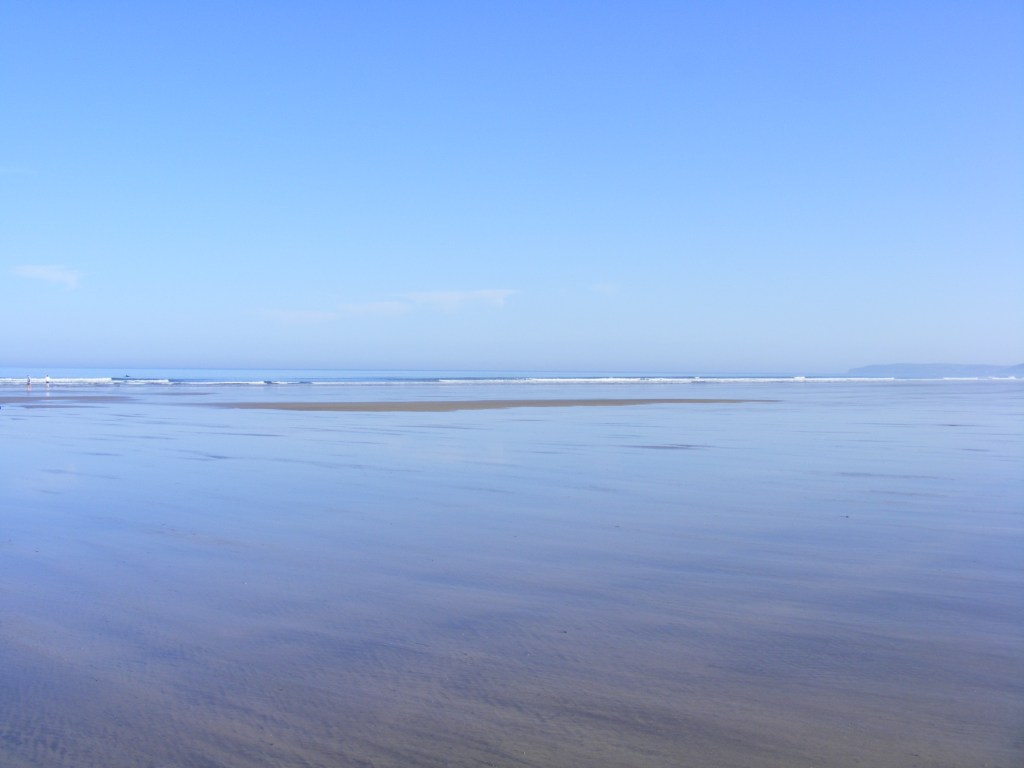
If you think I need downtime, I have been walking on the beach most days. One disastrous evening walk involved encountering far too many people in order to get from the car to the sand. I must have been in sight of getting on for 500 people only two of whom were wearing masks (apart from me). I am not counting the two with masks on their chins. Ok so it was outside but it was very crowded and it was ‘Freedom Day’. I do understand why this is a good thing for many people but equally it is anything but for others. I have friends with health conditions that not only make them extremely vulnerable but also make the vaccine less effective. There are those who are far more COVID anxious than I. Monday was imprisonment day for them. Whilst many people are being personally responsible and are aware of taking care of others, many are not. There are those whose physical or mental health means that they cannot risk being round idiots who are acting like it is all over and who have zero respect for others. I also feel for the young people who may be vulnerable themselves, have vulnerable family members, or who are just anxious and want to wear masks. Now this is not essential, bullying for mask wearing will escalate and sadly not just amongst children. Whilst lockdown anxiety was a very real problem, freedom anxiety is equally so for others, spare a thought for them. Me, I am sticking to early morning beach walks.
The last word belongs to Edward who has been fund raising for a local (to me not him) charity that helps families like his feel at ease and provides exciting activities in a safe space. He has been walking every day, when even leaving the house can be difficult for him. If you want a heatwave, get Edward to do a charity walk. His efforts always coincide with extremely hot weather. He has also been delivering ‘happy post’ to lift people’s spirits. His fundraising page (in his dad’s name) is still open.
Finally, a recent conversation about university in Edward’s household, Edward (aged 7) tells it like it is.
Edward’s mum: Granny is starting a course on archaeology in September
The final instalment chronicling our adventures in Wales and beyond.
Day 7 Blaenavon Ironworks
We set off for our pre-booked entry at Blaenavon Ironworks. This time the sat-nav, not only gets us to the right place but takes us past some stunning scenery on the way. Blaenavon Ironworks is a fascinating site. We get in free because Cadw, who run the site, have a reciprocal arrangement with English Heritage. The ironworks were established here in the 1780s and the finished products were shipped out by canal. It was at Blaenavon that Sidney Gilchrist Thomas discovered a way to remove phosphorus from iron ore, which was significant for the steel industry. An impressive digital display gave some idea of the noise and heat that was part of the working environment. It was somehow more impactful because part of the commentary was in Welsh. I am drawn to ruined industrial landscapes and this is on par with the Cornish tin mining sites. Here the jackdaws and the feral pigeons have made their home.
A series of workers’ cottages on the site have been furnished to represent different eras from the 1780s to the 1960s, the life of the ironworks. Covid restrictions mean that we can only look in these cottages, rather than enter them but they are still a highlight of the site. Instinctively, I wanted to look them up in the census returns and mentally put real people in them. This is just the sort of site that anyone with ironworking ancestors should visit. An interesting fact that I gleaned was that, in 1851, there were more industrial workers in Wales than agricultural, allowing Wales to claim to be the first industrialised nation in the world.
We went for a short uninspiring walk from close to the car park then headed off home, planning to stop to take photographs of the view on the way. We hadn’t done so on our outward journey as we were keen not to miss our entry timeslot. Strangely, the sat-nav decided to return us to Brecon via a completely different route. Although a circular route has the advantage of exposing us to more of the country, we are disappointed to miss the views. Just as we are lamenting this, the landscape opens up and the vista is amazing. Squelchy bog prevents me getting a great camera angle and views always seem less impressive in photographs, so I will have to rely on memories. The mid-Welsh landscape seems to be darker green than many areas and fields tend to be small and hedged, despite the availability of stone for walls.
On the way home we are reminded that the Brecon Beacons have their fair share of ******* drivers. We reach a bridge that it not only described as weak but is barely wider than the car. This in itself is not a problem but like many Welsh roads, it is not straight and at the point at which you join the bridge you cannot see the end of it. An illuminated sign warns us that there is a vehicle on the bridge. A vehicle emerges the sign goes out and a green light comes on. We launch into the unknown, only to find, as we turn the corner, that someone is coming in the other direction, presumably having ignored the sign at his end. My gallant chauffeur had to reverse 100 yards round corners, with unforgiving walls no more than six inches from the wing mirrors on either side.
Day 8 Thursday Brecon Canal
Today it is sunny, so we decide to walk from the caravan site, down the canal towpath to Brecon. This involves taking our lives in our hands to cross two dual carriageways first but we survive. This is a pleasant walk and we are rewarded by a grey heron allowing us to get to within five yards before flying off. There are more signs of industrial heritage here, with the remains of the limekilns that were in operation in the early nineteenth century. The canal linked Brecon with the industrialised areas in south Wales.
After a short rest we decide to explore more byways of Wales by car. We drive out to Craig-y-nos Country Park but by the time we arrive, dark clouds are looming and as we have already had our walking ration for the day, we return to the van.
Day 9 Friday To Cheltenham (yes, I know this isn’t in Wales)
It is time to move nearer to home and take up residence at the caravan site on Cheltenham Racecourse. We have stayed on racecourses before and although we have views across what is probably the Malvern Hills, I have to say that it isn’t the most picturesque site we’ve been to. Cheltenham too is unexpected, much larger than I was anticipating. In my head I was thinking smallish, Georgian grandeur, maybe a bit like Buxton but it seems not, or not in the part we travelled through.
I hadn’t planned an activity for the afternoon so time to Google for an outside space. I lied when I said that the wifi on the previous site was the slowest in the world, that honour belongs to the Cheltenham Racecourse wifi, which is not the Caravan Club system, for which I have an annual subscription but free Jockey Club wifi. I guess there isn’t much call for surfing the internet when hurtling over jumps on the back of a horse. An additional issue is that we have the ‘delights’ of a ‘Fun Weekend’ event on the racecourse this weekend – deep joy. This appears to involve a fun fair. Peaceful it may not be.
We opt for Beckford Nature Reserve. This comes very close to being another addition to our ‘nature reserves we didn’t find’ list but no, here it is, unsigned until you get to a small gateway hidden in a hedge. A path winds round an algae covered lake. There’s not much sign of wildlife apart from some baby coots, which I am surprised to see have orangy-coloured heads. Despite two perambulations of the lake, I am still 1500 steps short of my target. Time for some jogging up and down on the spot outside the van. This is followed by the Wimbledon men’s singles semi-finals.
Day 10 Forest of Dean
It wouldn’t be a holiday without some family history, so today it is off to the Forest of Dean, the haunt of some of my children’s ancestors. This lot even rate some gravestones, though many were in poor condition. Trailing from churchyard to churchyard is often circumscribed by bladder capacity, because small villages rarely rate toilets but hurrah, today two of the churches on our itinerary had toilets, so we could happily spend hours peering at semi-legible gravestones.
One of our stops is at St. Briavels. St. Briavels Castle, now run as a Youth Hostel, is closed to the public. It was built as a royal hunting lodge in the twelfth century. It became an important centre for the making of cross bows, using iron from the Forest of Dean.
Having got suitably soggy feet from traipsing through grassy graveyards, we take a short walk along a forest path to keep the step count up. Then it is back to the van, where the wifi oscillates from intermittent to non-existent. I hurriedly identify today’s photographs. In the past, I have been known to end up with numerous church photos and not be quite sure which is which.
Day 11 Slimbridge
We have saved the best until last. Today is our pre-booked visit to the Wildfowl and Wetlands Trust centre at Slimbridge, established by Sir Peter Scott seventy five years ago. Last time I visited it was in the spring so there are different things to see today and the opportunity to feed birds is confined to a small area. My favourite part is the new estuary aviary with avocets, oystercatchers, black-tailed godwits, ringed plovers and spoonbills, amongst others. I manage to get a few half-decent photos, despite every bird assiduously going into a preening frenzy at my approach, so that their head are hidden from view.
Now I am back home and no longer in the land of steam driven wifi, I can continue the story of our Welsh adventures.
Day 4 Ynys-hir Reserve
This is a day to make use of my RSPB life member status and we visit the reserve at Ynys-hir. The reserve is a pleasant setting but notable for its lack of wildlife. Tally, one robin, one thrush, a few squirrels and an unidentifiable, distant bird of prey. In the absence of my own coat, which is sitting on the peg at home, I have appropriated a waterproof coat from the caravan. One of those two words, waterproof and coat, accurately describes this garment. Half way round the second of two trails the heavens open, mostly it seems on my head. We squelch back to the car and call it a day.
Day 5 To Brecon and Llangorse Wildflower Meadows
Time to journey 60 miles down the A470, back towards home and move to a new site at Brecon. This has the advantage of us being able to access more than three TV channels and it has wifi that reaches to the van. Ok, so it is officially the slowest wifi in the world but it beats sitting in a car park. We arrive by lunchtime and decide to explore the nearby wildflower meadows at Llangorse. ‘Park by the common’, it says. First problem, identify the common. It turns out that it wasn’t the tiny, scrubby piece of grass where we leave the car. We do find the enormous common on foot but I am not convinced that we reached the wildflower meadow, unless it was an area of unmown grass with some clover growing on it, not quite the poppies, cornflowers and ox-eye daisies that I was expecting. We did find a Crannog, an ancient lake dwelling familiar from our trip to Scotland and plenty of ducks. If you are wondering why we didn’t use a map, there is a bit of a map issue for this part of the trip. As usual, I made sure I purchased an OS map before leaving home. This is the Brecon Beacons, surely I need a map called Brecon Beacons? No. It turns out that there are three that cover this area and I have chosen the wrong one. Map of the western half of the Brecon Beacons anyone?
Sad to see Emma Raducanu’s enforced retirement from her Wimbledon match on our return to the van.
Day 6 National Botanic Garden of Wales
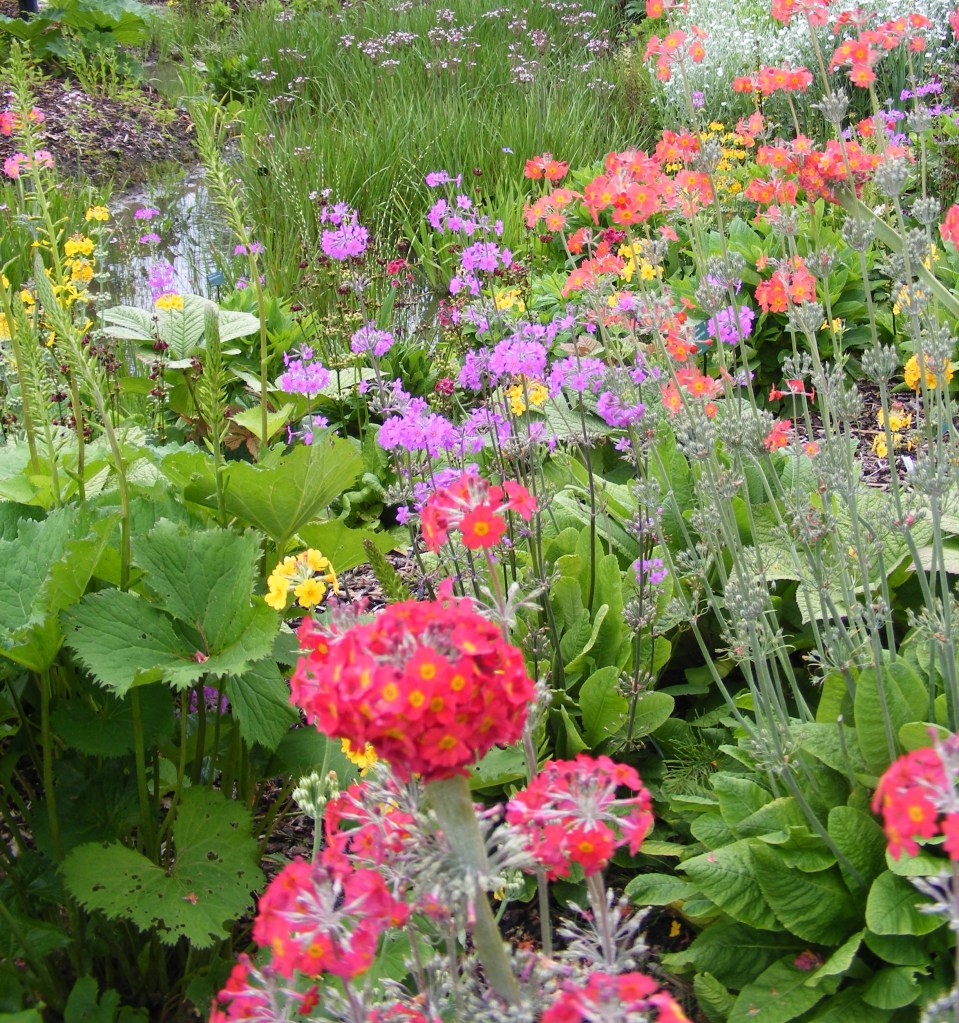
The National Botanical Garden of Wales is on the itinerary today and this is the furthest we plan to go from a site. Today we have our fair share of road re-surfacers again but all the roads that aren’t being re-surfaced are having their verges/hedges cut, so the stop-go board count rises even further. The sat-nav insists that we have reached our destination. We haven’t. We drive round the block a bit in search of helpful brown signs. After a few miles we pick these up and discover that we should have turned left when the sat-nav insisted on us going right. The gardens were definitely worth the drive and the effort. There is plenty to see, including an Eden Project style biome and a bird of prey centre. Inevitably my favourite parts were the less formal apothecary’s garden and the allotments. There is a display associated with medicinal plants and some beautiful quilt panels depicting herbs. I also learn about the physicians of Myddfai, whose story began with Rhiwallon who was the thirteenth century court physician to the Prince of Deheubarth, Rhys Grug. Their tradition continued until 1739 and the Red Book of Hergest, which records their remedies, is held out to be one of the most important Welsh manuscripts from the Medieval period. I couldn’t resist looking for an English translation.
We return via a local supermarket of our choice. This is the second time I have been in a shop since March 2020. I still have 1000 steps to hit my daily target, which I’ve maintained all year. It is now raining persistently. My options are to circle the site in the rain or to make myself look like an idiot jumping up and down by the cold counter in M********* whilst my companion loads up the yoghurt and milk. I’ve tried getting soaking wet doing laps of a caravan site before. Fun it is not. I go for surreptitious jogging as I examine tins of beans and load the bag at the checkout. Yay 1000 steps accomplished.
We leave in mist and showers and cross the Prince of Wales bridge, heading to mid-Wales. We pass Raglan Castle and encounter numerous tractors enroute as we drive into the iridescent green Welsh hills. It appears that every possible inch of Welsh road that could be being resurfaced is being resurfaced and stop-go boards abound. I am excited to see several red kites with their iconic forked tails.
We arrive at Gwern-y-Bwlch campsite. It is a pleasant site, snuggled in the forested hills. The only downside is that it has hot-spot only internet, which is why you will be reading this after our visit is over. At least this time I am prepared to be abandoned in a technological black hole. It seems that television signal is a challenge as well. Fortunately, the one side that is available is BBC, so Wimbledon watching is possible if you can accept a bit of buffering as an accompaniment. Having had a serious bout of insomnia the previous night, on arrival, I have a power nap, followed by an exploration of the site.
Day 2 The Centre for Alternative Technology
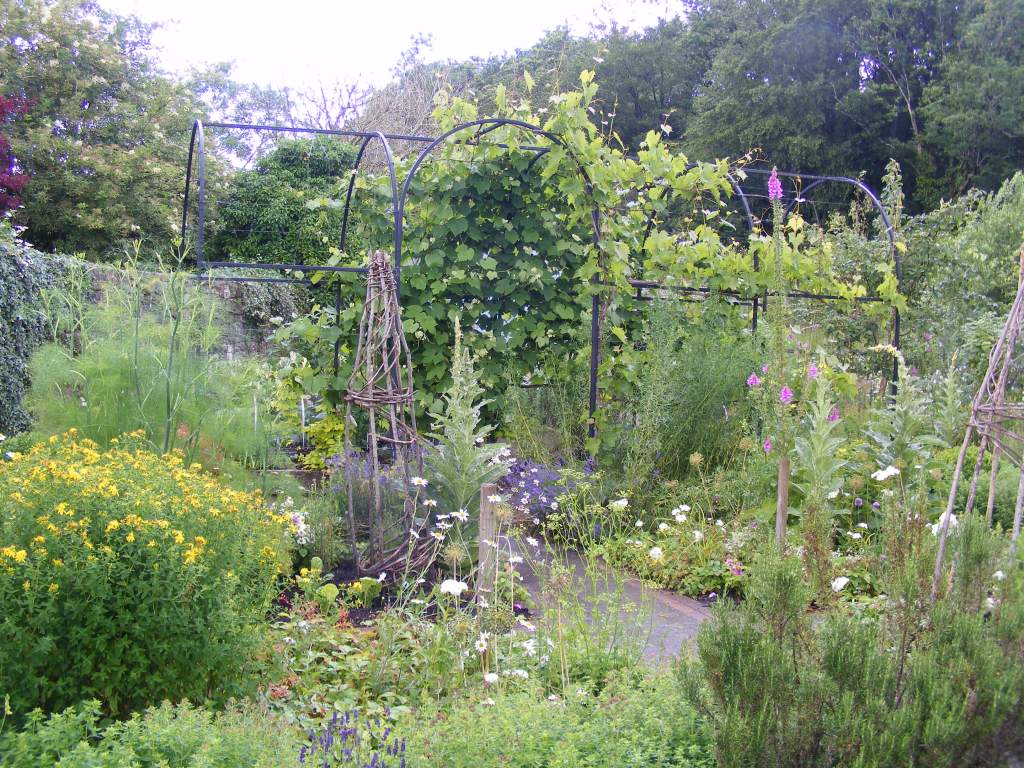
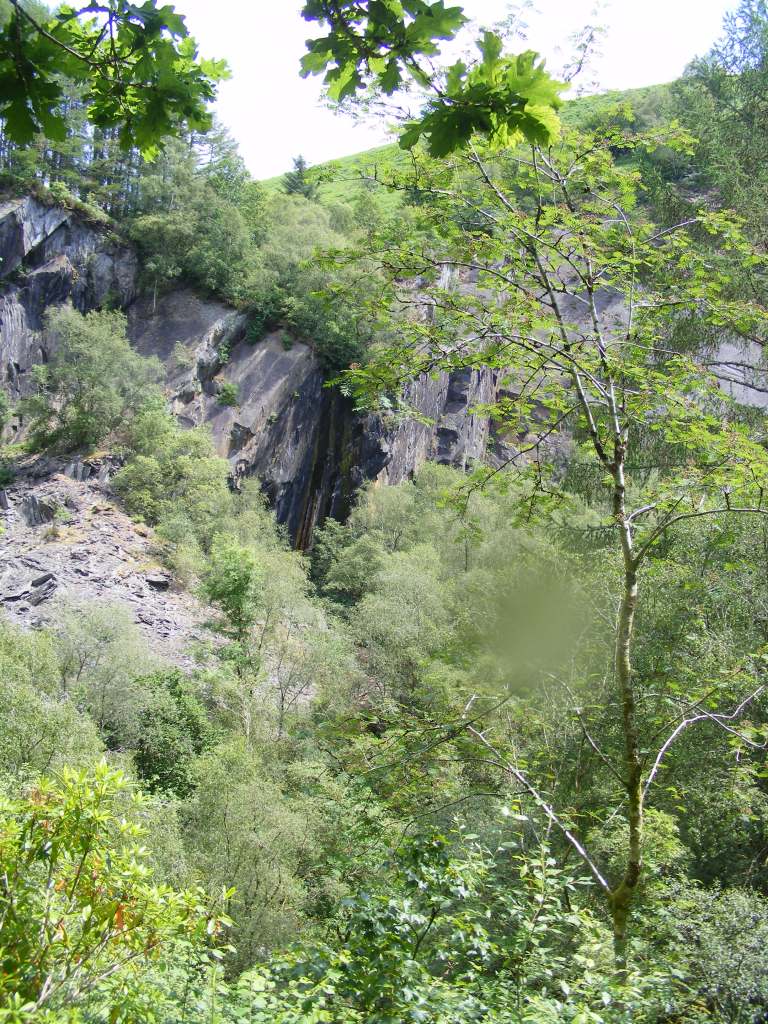
We have pre-booked entry to The Centre for Alternative Technology, which is a Unesco Biosphere, set up in a disused slate quarry near the River Dyfi. Apart from explanations of alternative energy sources and sustainable building, there are beautiful allotment-style gardens growing edible plants and wildflowers to create a diverse habitat.
Sarah takes us on a guided walk through the woodland, which is being managed as a native, broad-leafed habitat. This means that the rhododendrons have to be eradicated, as they discourage growth on the woodland floor. We call in at the café but its offerings, although delicious, are a little too ‘alternative’ for my meat and two veg loving companion.
Day 3 Coed y Brenin National Park
We are trying to avoid anywhere too peopley and to be outside as much as possible, so I have picked a National Park for today’s visit. This is of course Wales and outdoors means that we run the risk of getting wet. For some reason best known to no one at all, I haven’t brought any kind of coat with me. Fortunately, there are coats lurking in the caravan. I have a postcode for the car park for the National Park but finding it seems to be as fruitless a quest as our search for somewhere to park at the Savernake Forest last month. After driving up what almost certainly wasn’t actually a road, managing not to drive over a precipice when three-point turning and retracing our steps, we do find a locked gate to what looks like a car park. We drive on and find another car park, this time with a solid looking boulder blocking the entrance. This is definitely meant to be a car park. The clue is in the notice that says ‘do not linger in the car park’, along with ‘keep two metres apart’ etc.. This time, there is room to park on the accessible side of the boulder, even though that probably isn’t the car park, so we do.
The Coed y Brenin National Park consists of 9000 acres set in the Rhinog mountains. Allegedly, it was part of the historic Nannau Estate, founded in 1100 by Cadougan, Prince of Powys. We are encouraged to call at the state of the art, ‘green’ visitors’ centre. They must have done a good job of blending it into the landscape as it is nowhere to be seen.
This area is obviously designed for extreme off-road cycling and there are numerous cyclists hurtling down steep paths, to the detriment of brakes and tyres, if not life and limb. The routes have names like ‘The Beast’ and ‘The Minotaur’. Realistically, I accept that the seven mile ‘strenuous’ volcano walking trail is not for us. So we stroll along a wide, flattish cycle track (The Fox), alongside, dramatic, fast-running streams in a granite and slate-strewn landscape, managing to pick a dry spell between the showers to do so.
I may have left my coat at home but my travelling companion, who is chief in charge of food supplies, has neglected to put the mince beef in the caravan fridge. I am hoping he has left it in his own freezer, rather than defrosting somewhere in his kitchen. This means we need to find a shop, something, along with petrol stations, that have been conspicuous by their absence. The upside of this is that it takes us into the centre of Dolgellau, instead of bypassing it as we traverse up and down the A470. This is an attractive small town, with narrow streets and looming, grey, stone buildings. We identify a butcher as a likely source of mince. I wait in the car whilst my companion ventures forth. The time spent in making said purchase was probably long enough to lasso the animal in the field and carry out all necessary processes in between but mission accomplished. We arrive back to the van in time to see Emma Raduanou’s impressive third round Wimbledon victory.
Well, this isn’t the blog post that I was going to write. I was going to tell you about my second day at THE Genealogy Show and in part I still will but this needs saying and it needs saying now. At the show, I listened to Daniel’s presentation Genealogy from a Young Genealogist’s Perspective. In the second half, he challenges older family historians to make life easier for young genealogists, who have a number of barriers to participation. Not least of these is the attitude of some of those of more mature years in the genealogy community. Engaging younger family historians is something I have been advocating since I was just a few years older than Daniel and that’s quite a long time!
Family History and Local History is perceived as a hobby for the older generation. When I attended my first meeting in 1982, I was the youngest person there, probably by about thirty years. Sadly, here we are, forty years later and I am STILL in the younger 25% of attendees. There are certainly younger genealogists out there but family history societies have singularly failed to engage the under 40s, let alone the under 20s. Family historians are constantly bemoaning the fact that their children/grandchildren are not interested in their family history. Here is a revelation. In most cases, what family history societies and individuals have been doing to encourage younger people hasn’t worked up to now. If we carry on doing the same thing, guess what, it isn’t magically going to become engaging and relevant to younger people. Nothing is going to happen except that older family historians will die off, no one will be interested in taking over their research and it will become increasingly difficult to recruit members and officers to societies.
If we value our hobby and our own research, we have to be pro-active in order to broaden its appeal down the age range. We need to be inclusive and work to break down some of those barriers. It is our job to reach out, not the young genealogists’ task to scale those obstacles. Younger genealogists need a safe, affordable place to interact and to pursue OUR hobby, with acceptance and nurturing from more experienced genealogists. We need to understand that the GenZ genealogists (aged c.13-25) have a valuable contribution to make. They have knowledge and a thirst for more, they have energy, they have ideas. Family History Societies need to take advantage of this in a mutually beneficial relationship.
So what can you do, or what can you ask your society to do? How affordable is membership, could it be free for under 18s? The response, ‘We’ve never been asked for under 18s membership’, may be true but is not satisfactory. Free under 18 or student membership needs to be publicised loud and clear in a prominent place on the society website, perhaps with posters on display in places where young people are, or mentions in school and college newsletters. It is no good doing this until the society has something attractive to offer those young genealogists. Can you provide activities that would engage school and college goers? Could you stage events (virtual or in person), where entrance is dependent on bringing along someone under 25? Some societies have premises with access to the major data providers, can we welcome young people to take advantage of this? Not in a passive, ‘well we wouldn’t turn them away’ manner but by doing things to actively promote this in a safeguarding compliant way, at young person’s open day perhaps. Could each society seek out a young person’s advocate to join their committee, if only on an ad hoc/advisory basis? Needless to say that advocate has to be a young person.
So you have read this far and thought a) She is ranting again and b) I’m not on a committee what can I do? If you are a society member, you can make suggestions to your committee. If you are not associated with a society, you can still ensure that you make our hobby engaging and accessible to the young people around you, be that your family, youth groups, schools, or young people in your neighbourhood.
I have been saying this for so long. Young people are interested in family history, they are just not interested in doing it OUR WAY. It is up to US as individuals/societies/whatever to adapt and take our hobby to them where they are, not just carry on in the same old way and lament the absence of those young genealogist in our own milieu.
If you have the opportunity to listen to Daniel’s presentation, please do. It is worth the now reduced entrance fee to THE Genealogy Show on its own. Do something, or before long, your research, your society, our hobby, will be dust.
I had the pleasure of being interviewed by Daniel for his podcast last night but more of that another time. Do take a look at the activities of him and his Hidden Branch colleagues and let us ensure that the younger genealogists are no longer hidden.
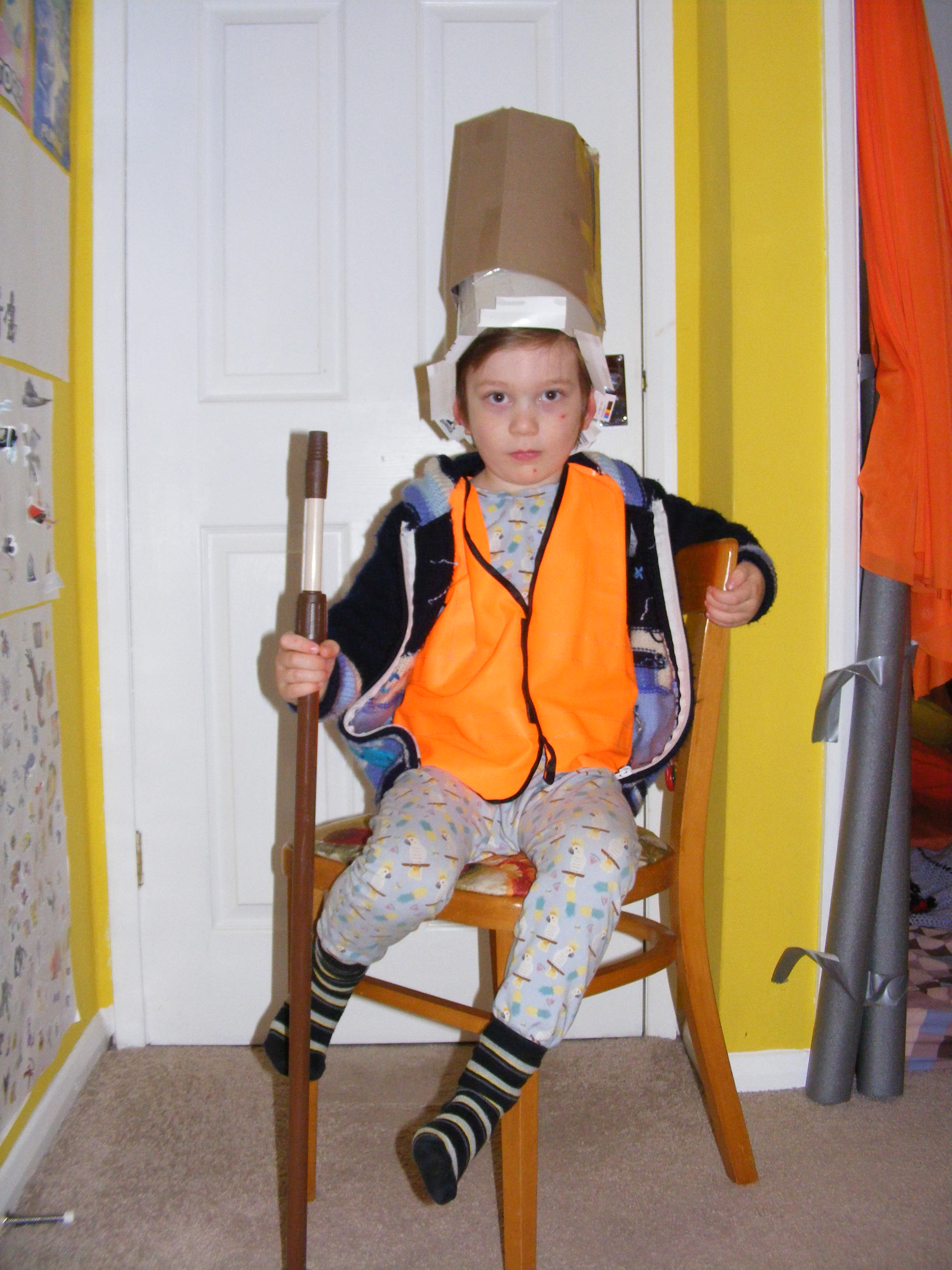
Posing as his 6 x great grandfather
This young man, now aged seven, is interested in his family history and is currently compiling a family history scrap book.
I’ve been bracing myself for a ridiculously busy couple of days. After virtually presenting in Kent and Norfolk yesterday, today was the first of two THE Genealogy Show days. Talks are being live streamed over 48 hours and my first went live at 4am my time. I was invited to listen to myself (always cringe making) and be on hand to answer questions, I decided to pass on that one. I only just missed the opportunity, so spent the early hours exploring the Show’s website and even manged to sneak in the chance to listen to three exciting young genealogists in a panel discussion about young people and genealogy. It is several decades since I was that young person and it is great to watch the baton passing on.
This was followed by my fortnightly chat with the lovely folk of Talking Family History. They are starting a new series in July, so now would be a good time to join in the fun. Then it was my turn to person the Society for One-Place Studies booth for THE Genealogy Show. Over lunch, I tuned in to Dr Sophie Kay’s Negative Spaces presentation; definitely worth a listen. Later, I had the chance to watch Andy Browning’s fascinating story Following in Family Footsteps.
Other recent feelgood family history moments. A photograph of my, now demolished, first teeny tiny infants’ school being posted on a Facebook Group, together with a picture of the headteacher, albeit about twenty years before my time. A few weeks ago, I was very excited to be offered the chance to acquire a one-name related long case clock. Even better, my nearest and dearest agreed that it could be a belated birthday present. The maker was from a different branch of the family to my own but it is still very special to have it safely ticking away in my living room. Finally, our local history group held its first hybrid meeting, with the speaker and five others in the meeting room and others Zooming in from as far afield as New Zealand and Canada. We still need to work to improve the sound quality but we are proud that a small society such as ours has been able to take a first step towards making our meetings accessible to those who are not comfortable with technology as well as our friends who are too far away to attend in person.
Tomorrow more busyness, more family history talks to give and listen to and an interview with Daniel’s Genealogy in the evening.
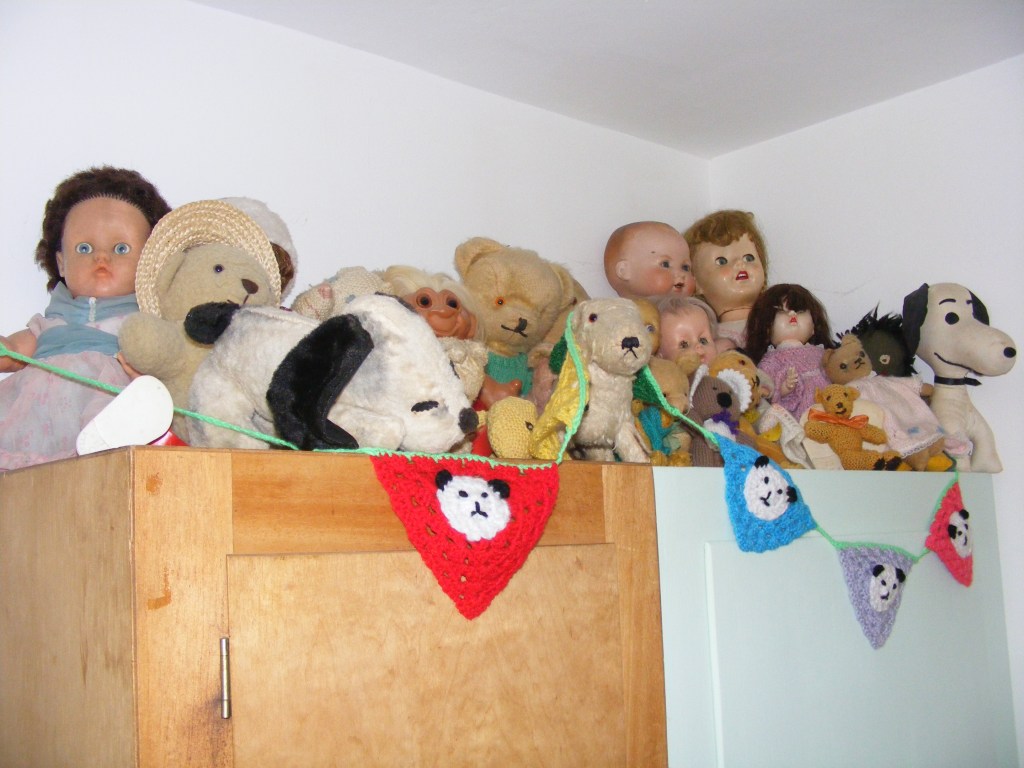
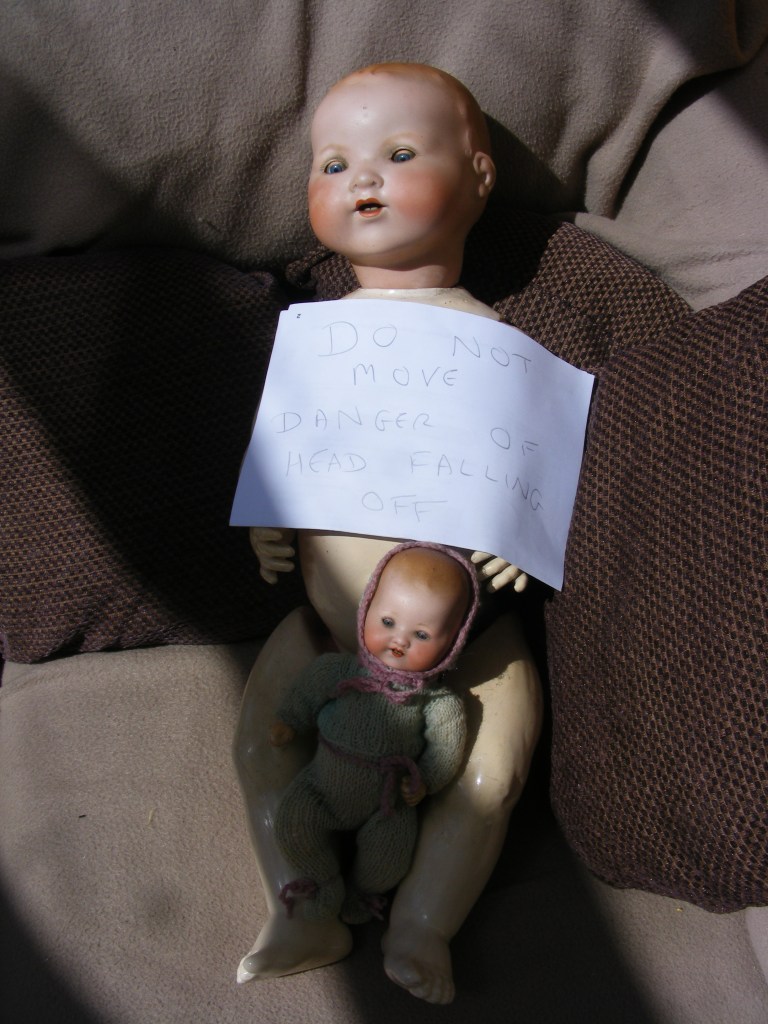
What else do you do on a summer Saturday but excavate the historic doll/stuffed toy collection from under the dust of ages and I do mean ages. I am not sure that the stuffed toys have had the dust bashed out of them for decades.
Meet the motley crew, some of who are almost centenarians.
They were removed from their cupboard-top home, stripped naked, apart from the two that my mother appeared to have sewn into their clothes and readied for the major operation.
Next, to wash the clothes, some of which needed hand washing. It might be a while since they were last washed but I know from bitter experience these are old fabrics that are far from colour fast. Sadly, since they were last laundered, it seemed that the moth had made a meal of some of the woollen items, lovingly knitted by three generations.
The shoes were scrubbed and left to drain.
Then bath time. I don’t have a real bath (I have what is officially the smallest bathroom in the world – seventeenth century cottages not being too hot on bathrooms, so I replaced the bath with a shower). No bath means no bubble bath, so I substituted washing up liquid. It turned out that I also had to use a rather rough washing up sponge to scrap the dust from grubby limbs and faces – sorry dollies.
From the left: Christine, Jilly, Mary, Jane, Betty, Sally, Big Peter – you can pin point my generation just from the names.
As you will see, the baby bath has stood the test of time. I am wondering if this will be marked up as an inappropriate image.
Mary and Jilly
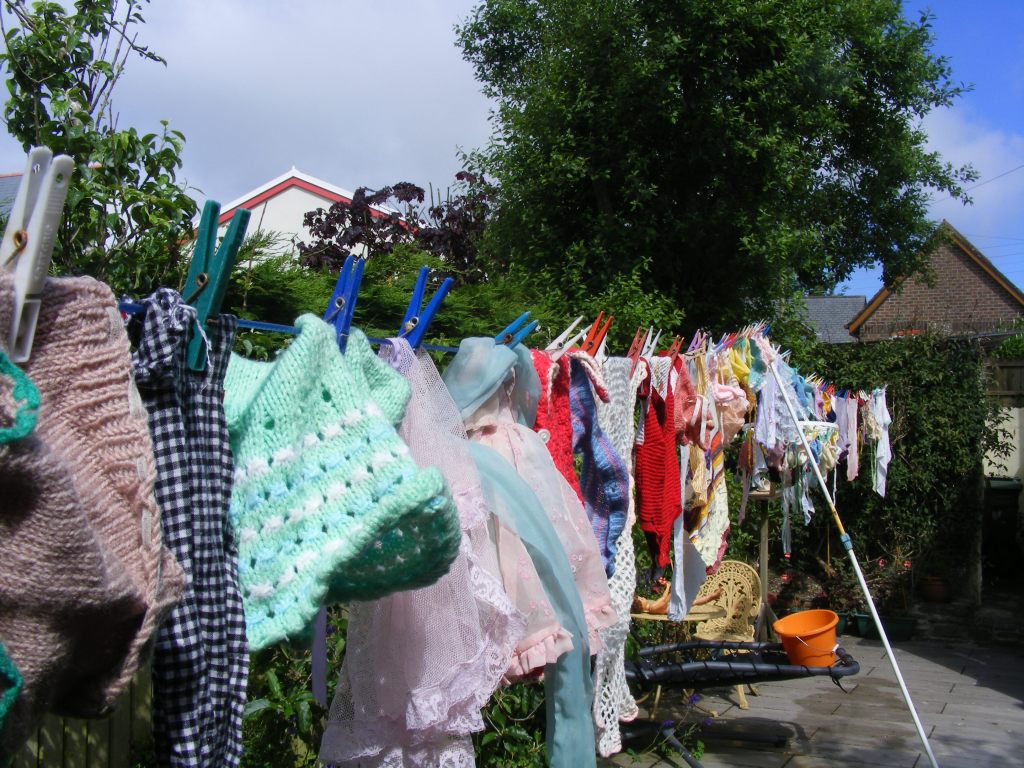
You have no idea how long it takes to peg umpteen small items on the washing line. Take it from me – a long time and it used up every inch of line and every peg I could find.
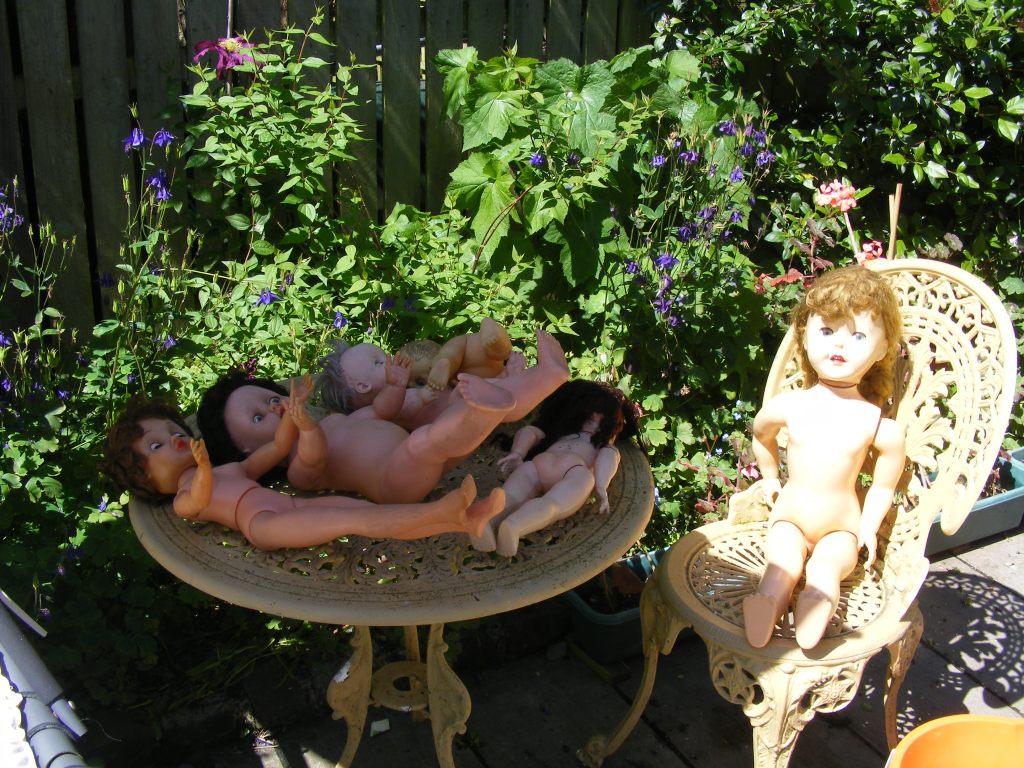
The dolls were left in the sun to dry. I did have to temporarily amputate a few limbs and even one head, in order to let the water drain out.
Big Peter and baby Peter (not a lot of imaginative naming on the part of my mother there), now in their late nineties, were spared total immersion, not least because baby Peter’s clothes don’t come off. In fact I fear for the stability of the wires attaching Big Peter’s limbs and heads, hence the warning notice.
Then it was time to bash the soft toys together and stand well back as the dust flew.
A quick bake in the sun followed. Today they will be redressed and replaced on top of the cupboard. It is a sobering thought that if they wait as long for their next washing as they did for this one, I may not be around to do it.
My lovely memories group ladies are writing about the toys and games of their childhood at the moment. I am fortunate to have many of mine still in my possession. The great loft sort has revealed a feast of goodies. They may just become the subject of a talk. In the meantime, whether you still have the contents of your toybox or not, I would encourage you to record the memories of your own particular treasures.
NB no dolls were permanently harmed in the creation of this blog – well, I am not sure I should have washed Jane’s hair (already her second lot of hair) but she will get over it.
Here I am, three decades after serving on the executive committee of the Family History Federation, having the honour of being voted in as its President. I am following some seriously big names in the genealogical community. To be considered some kind of elder stateswoman, is not only a humbling experience, it also makes me feel incredibly ancient. Perhaps I should point out that during my time on the executive I was the youngest ever serving member; though I think that record has since been passed to someone else. Family history societies are at a cross-roads. Many have seen slowly declining memberships and have struggled to fill committee and volunteer roles in recent years. Now is the time to reinvent ourselves and our function, or to fade into oblivion. We cannot keep repeating the pattern that has not been working well and expect it to suddenly become relevant and appealing. The pandemic has forced us to rethink the way in which we do many things. Societies can either put change in the ‘too hard’ basket or embrace it and perhaps use it as the first step to a resurgence. Societies can still be relevant in today’s genealogical landscape but it takes work and insight to make them so. For many years, I have come into contact with societies across the world as a member, a volunteer and a speaker. In the past year, my ‘catchment area’ has expanded exponentially and I am looking forward to ‘meeting’ many more family historians in the coming months. I am very mindful of the honour that has been entrusted to me in these challenging times.
On the family history front, I have been getting out my sledge hammer and attempting to crash through some family history brick walls for Devon researchers. Despite much of the sleuthing being done by my colleague, I ended up presenting the findings in a FindmyPast podcast, which you can view here. These may not be your personal brick walls but the techniques we used could be effective on your own problem ancestors.
I have also had what is probably classed as an old-age crisis. Before I wrote Barefoot on the Cobbles, I debated whether to write a novel or take a post-graduate course. On that occasion, the novel writing won. I am still playing with ideas for a possible third novel but nothing yet seems quite right, so I have returned to the post-graduate idea. I am excited to have been accepted by University College Dublin as a remote student on their certificate course in experimental archaeology and material culture. I am not quite sure what I have let myself in for but I am not going to be bored.
My ‘Discovering more about your Agricultural Labouring Ancestors’ online course is coming to an end and the students are now compiling case studies about their chosen farming ancestors. I have a few more submissions to read from my ‘Writing and Telling your Family History’ students, then thoughts will turn to next month’s course, ‘In Sickness and in Death – researching the ill-health and death of your ancestors’. As I said, no time to be bored.
For those of you waiting to hear about the end of our short trip to South Devon, watch this space.
To continue the tale of our recent foray to South Devon. The second day started badly. We were driving to the starting point for our walk when I realised I had left no fewer than three things in the caravan. One of these was my fitness watch. No way was I going to not count today’s steps. We retraced our steps. I wish to put on record that my companion also forgot something but didn’t realise in time to collect it during our step-retracing mission.
The plan was to start at the end of our chosen stretch of coastal footpath in Coleton Fishacre, walk to KIngswear and retrace our steps to complete the leg in the correct order and also to end up back at the car. As one of us is a National Trust life member and the other a National Trust volunteer, we hoped we could park in the car park at Coleton Fishacre, which is a National Trust Property. We duly parked. I even worked out how to scan my membership card in order to obtain a ticket. I had toyed with booking a visitors’ slot for entry to the property, which would have secured us the right to park but decided it was selfish to use up a place whilst entry is limited and we didn’t want to go further than the car park. Mission almost accomplished when the car park attendant loomed. It transpired that no, we couldn’t park there. The man was not open to persuasion, although my companion had a jolly good try. ‘There’s another car park just up the road’, we were told. We could not access the coastal path via Coleton Fishacre. This was all very well. The car park was indeed only about 500 yards away but this gave us access to a different point on the coastal path and with having to do it twice, would add another 1½ miles to a walk that was already at the limit of my likely unpracticed endurance.
Nonetheless, we set off with a spring in our step, enjoying the spectacular views. It is my habit, probably dating from my Girl Guiding days, to keep a note of the birds and wild flowers that I see en-route. My bird identification abilities are probably no better or worse than they ever were. Definitely above average but certainly not expert and I have never been able to recognise bird song. I realised though that my memory for flower names had become somewhat tarnished. When we were walking more regularly, I could identify many more. The flowers were at their best and this is my favourite time of year. Ox-eye daisies, scabious, foxgloves, thrift and ransomes and the last vestiges of bluebells in the small wooded section, which also yielded a jay and a thrush in the bird department. There were many more to add to my list and to begin with, the eight years since we last did a coastal path walk melted away. Don’t get me wrong, it isn’t eight years since we have been for a walk but those walks have been elsewhere, including local stretches of the same path.
To the fitter of my friends, a 7½ mile walk may seem like a gentle stroll. If you’ve never walked the south-west coastal path, be aware, be very aware that, with very few exceptions, gentle stroll it is not. There are hills, lots of them and the path is anything but smooth. I learned two things on this walk. I am definitely not as fit as I used to be and when the guide book says ‘strenuous’ this is not to be taken lightly.
After the first hour, every step we took away from the car was a reminder that it would be a step further in the opposite direction. This stretch of path is blessed with many seats. I sat on most of them. This was ridiculous. We had only last month done several walks of about five miles and here I was three miles in and struggling. It was also the hottest day of the year so far and we were heading towards the heat of the day. We could see our destination in the distance. It seemed, dear reader, a very distant distance. I’d been worried about blisters, well that and the lack of toilets but I always worry about that. Neither of these issues became a problem but I was conscious that I was breathing increasingly heavily. A few years ago, I would probably and possibly foolishly, have carried on regardless. Quitting is not normally in my vocabulary. At the back of my mind though was the niggle that hidden in a place on my medical records that I mostly choose to ignore are the words ‘heart condition’. Was it really sensible to keep on keeping on? We might not yet be half way to Kingswear and then we had to do all this again in reverse. The map suggested that there was a way to come off the path and return to the car by a slightly shorter and certainly less strenuous route. Common sense prevailed and that’s what we did. Altogether we probably walked five miles, although most of it was far from easy walking, this did seem pathetic. I was very annoyed with myself. Then there was the problem of how to proceed. Up to now all our walks have been in the correct order and in the right direction. We could start at KIngswear next time and walk to where we gave up but then what? Could I bring myself to compromise and count this walk as part of the challenge, despite it being in the wrong order and wrong direction? Could I face doing it again the right way round, knowing what I know now about how hard it was? If we can only notch up four miles a time, the remaining 153 miles are going to take a very long time to accomplish and our fitness is hardly going to improve. Always end on a cliff hanger. Stand by for the next instalment to find out what we decided.
Some advice for would-be coastal path walkers. Unless you are super-fit types who think nothing of notching up twenty five miles a day laden with your tent, sleeping bag and all other requisites, don’t leave it until you are of mature years to try to walk 670+ miles round the south-west peninsula. It is so worth it though, the scenery is breath taking. Even if you only walk a small part of the route, everyone should give this a try. I’d also recommend reading Raynor Winn’s The Salt Path about her walk with her husband along the whole length of the path.











 The History Interpreter - Janet Few