Another day of indifferent weather and we mop up (no pun intended) a few more ancestral locations, although sadly these churches are all locked. We also have a wander round Morpeth and manage to visit the destinations we abandoned due to the road closure two days ago. I am still working on these Northumbrian ancestors during our time back in the van and I am wondering if I should ‘ink in’ the next generation or not. At the moment I am erring on the side of caution and looking for additional evidence. They may make a blog post of their own when I am a bit more sorted.
In torrential rain we drive through floods, creating flume-like effects and make our way to Belsay. The site has been home to the Middleton family since at least 1270, when Richard de Middleton of ‘Belshou’ was Lord Chancellor to Henry III. The tour begins in the most recent home of the family on this site, Belsay Hall. This was built in 1817, using plans drawn up by the owner, Sir Charles Monck. He changed his name in order to inherit some other property; later generations reverted to Middleton. Sir Charles was obsessed with Greek architecture and the Hall reflects this. It was designed for effect, not practicality and contains some design flaws, including very steep steps to the entrance and a lack of guttering and downpipes. The latter has led to some serious water damage, which is having to be addressed by English Heritage. There are two high-ceilinged floors to the main house but the same height accommodates five floors on the north side, which were the servants’ quarters. Our tour has to omit the cellars due to flooding. Monck demolished the existing village and a chapel because he did not want the villagers too close to his home. In his defence, he did rebuild cottages further away and these too have signs of classical influences.
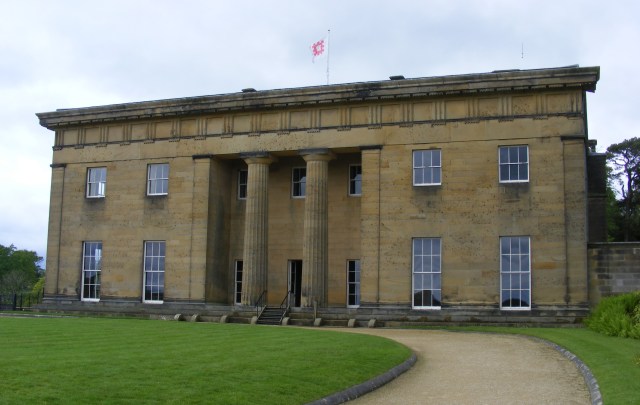
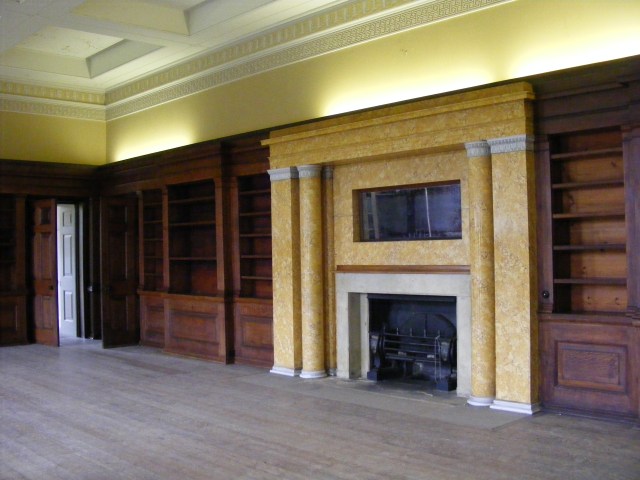
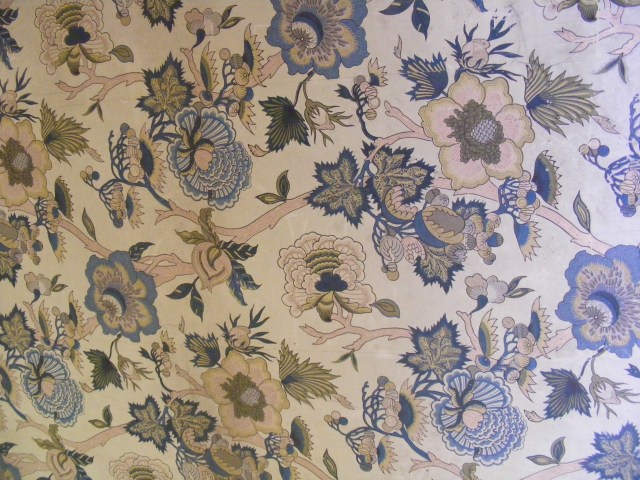
The military took over the Hall in the Second World War and the building deteriorated rapidly afterwards, with the family leaving in the 1960s. It then stood empty for a further two years. Strangely, a condition of giving custodianship to English Heritage was that it would remain unfurnished. There are still remnants of William Morris wallpaper and a large library with 19 bookcases that might just accommodate my current book collection, which was culled by 50% when I left the Isle of Wight.
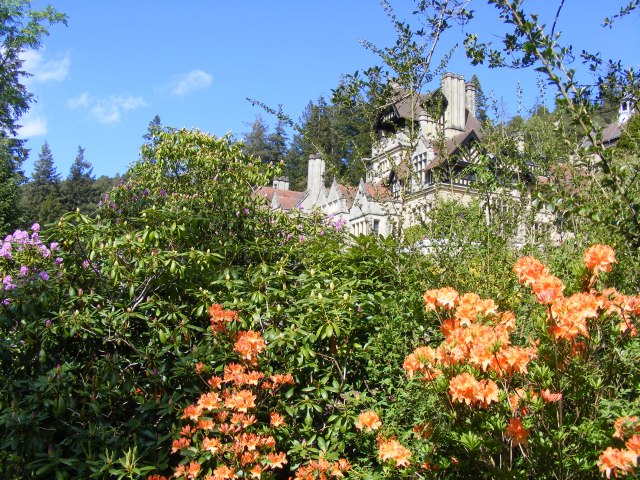
The highlight of the Hall tour was observing a sheep-related incident. Whist admiring the rhododenrons, we notice that a sheep has got its head stuck through a fence that is protecting a sapling. Our guide radios for assistance. Simon the sheep rescuer comes to the aid of the stricken sheep. We watch from the window as he leaps into the rain-soaked ha-ha. As he approaches the sheep, which has been struggling for 10-15 minutes, miraculously, the sheep frees itself. Cue resounding applause for Simon.
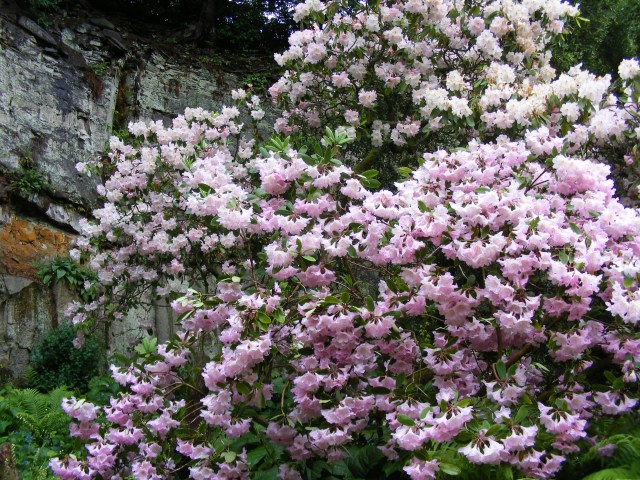
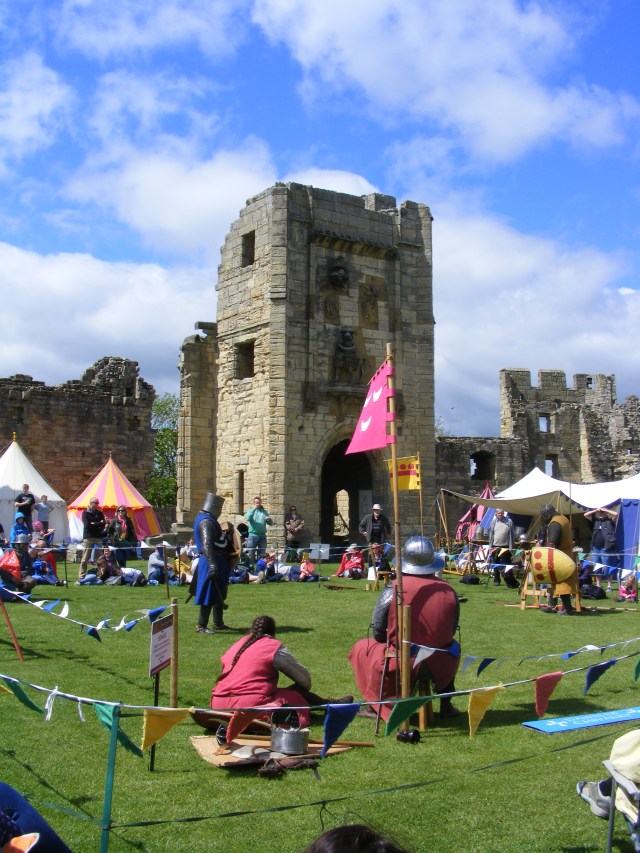
The rain eased up sufficiently to allow us to paddle through the rhododenrons in the dramatic quarry garden and reach the castle. The castle is a traditional fortified peel house, designed to repel border raiders. A Jacobean manor was attached in 1614. This was abandoned two hundred years later, when the family moved into the hall. Sir Richard and his squire are bravely conducting some living history in the officially freezing castle. I feel quite sorry that the weather has kept visitors away but a few children are listening to the legend of the Lambton Worm and we discuss armour cleaning techniques.
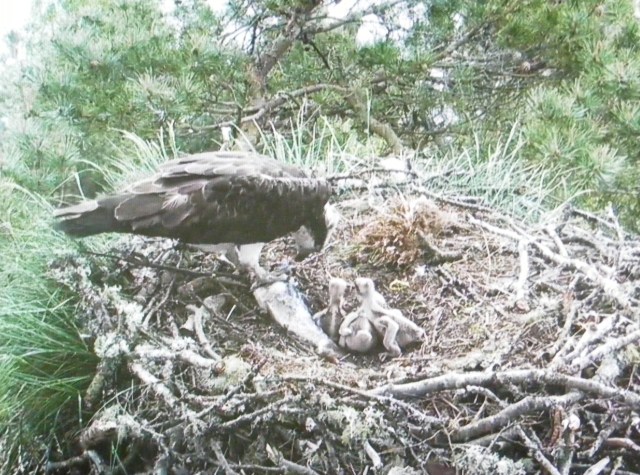
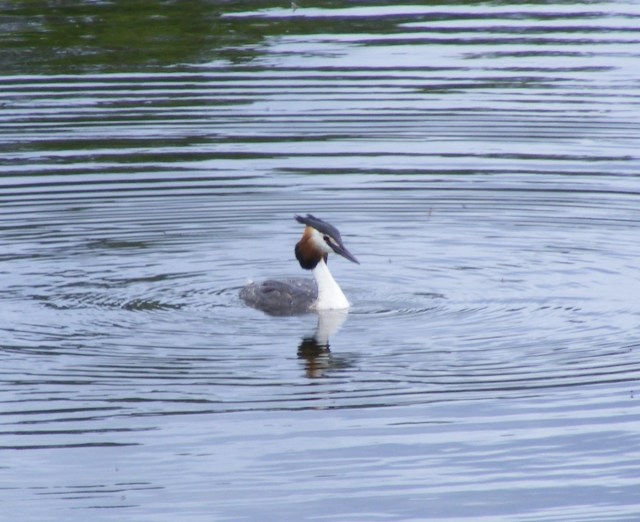
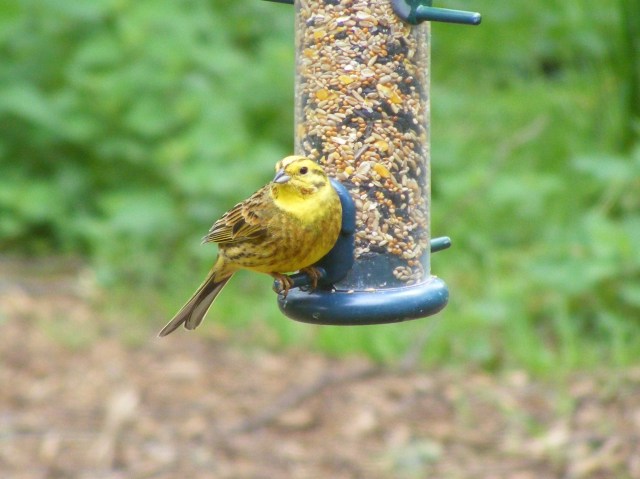
Another ancestral location stop and then it is back to the van. And so the holiday draws to its close, leaving us with memories of bluebells and birdlife, the smell of guano and of wild garlic that shrouded each time we left the campsite and some ancestral adventures. I have somehow managed to successfully conduct three chat sessions for my Pharos Writing and Telling your Family History students, each one from a different field and now it is home for a week before we will be heading north again, this time for THE Genealogy Show.


 Dave from Highland Safaris has recommended a visit to the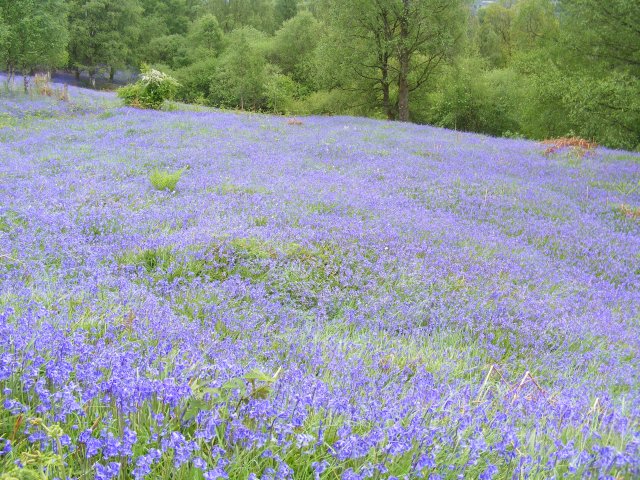

 The History Interpreter - Janet Few