Today may or may not be Black Friday. I can confirm it is a Friday for all you retired types who aren’t quite sure. Black Friday now seems to last several weeks so if it is THE Black Friday is debatable. It is something that has spread from America and in the interests of imparting some history, it seems that the term originated in September 1869, when James Fisk, a railway magnate and Jay Gould, a financier and railway speculator, together with Abel Corbin, brother in law of US President Ulysses S Grant, forced up the price of gold by cornering the market. This was followed by a slump and panic in the gold market, with many people losing money. The US economy was already under pressure following the cost of the Civil War and the gold crash led to financial chaos.
There is another, largely discredited, theory that Black Friday referred to days when enslaved people were sold for a reduced price. This clearly has nothing to do with every retailer offering us deals in the run up to Christmas, so when did that start? In the 1960s, the police in Philadelphia used the phrase ‘Black Friday’ to refer to the increase in crime and social disorder during the pre-Thanksgiving holiday shopping rush. It seems to have been the 1980s when US retailers began using ‘Black Friday’ to refer to slashing prices and the UK followed suit. Now Black Friday seems last for weeks and to morph into January sales, which of course start on Boxing Day.
I am rubbish at marketing but I thought I’d point out a few Black Friday family history related offers that I am involved in. Pharos Teaching and Tutoring are offering 15% off all their online courses this weekend. Two of mine which are very popular start in the new year, Discovering more about your Agricultural Labouring Ancestors and Putting your Female Ancestors into Context. There are others later in 2026 that you can book now and claim the discount. These include Are you Sitting Comfortably: writing and telling your family history in April; First Steps to a One-place Study in September and In Sickness and in Death; researching the ill health and death of your ancestors in October. There are a load of great offerings from my colleagues too.
Pen and Sword have 30% off their prices, again this weekend only. Here you can buy my Women’s Work book or Marginalised Ancestors. I am offering Coffers, Clysters, Comfrey and Coifs: the lives of our seventeenth century ancestors for £5 plus postage to a UK address. From now until 8 December, you can have Remember Then Women’s Memories of 1946-1969 and how to write your own for £8 plus postage. Both of these have a cover price of £12.95. If you prefer fiction, then Sins as Red as Scarlet is on offer for £8 plus postage (cover price £9.99) for the next week too. There is more about the books on my website. Contact me using the box on the home page for details if you want any of these. If you don’t fancy any of this for yourself, they are also gift giving opportunities. Advert over.
It has been a while since I did a round up of my ridiculous busyness so here is what my life has looked like since visiting four counties in four weekends in September. Take a deep breath and dive on in.
First, a lovely chat with my Few Good Women family, with one of us practicing an (excellent) talk. Next, because exercise seems to have slipped from the agenda, a bird-watching stroll on the nearby country park, organised by the rangers. Then the first zoom chat for my Pharos Putting your Female Ancestors into Context course. Away from family history, it was time for the annual flu jab. I returned at 10.30am to a series of urgent messages asking if I could fill in for a speaker in 4 1/2 hours’ time at Devon FHS after AGM talk. Fallen Women filled the void. October’s Society of Genealogists‘ Biography Club topic was toys and childhood and we had fun reminiscing. I have even done some work on my own and I am pretty much still on track to be finished in time for next year’s big birthday. Then a two talks Tuesday; Marginalised Ancestors in the morning and Barefoot on the Cobbles live in the evening. Copies of my Barefoot novel are now almost sold out.
In no particular order, there has also been another Pharos chat, a talk about prostitution (the history of) then a 6am start to speak to the Genealogical Society of Queensland on seventeenth century crime and punishment. This was International Day of the Girl but the Few Forgotten Women had already sorted their online offerings so nothing was needed for the day. Plenty of socialising and eating with visiting friends this week amidst finally doing some work on what is planned to be my next book; some excellent case studies are emerging. I took part in the Society of Genealogist’s Devon research showcase. This should be freely available on the SOG YouTube channel shortly. I’ve been virtually in Oxfordshire to talk about home industries and then in Buckinghamshire for the Impoverished and Insane. Listening to a talk for once on Wednesday then a two talks Thursday, Forgotten Women and the 1838 Fishing Disaster this time. Yesterday was Forgotten Women Friday, having fun researching women who worked in the Ulster linen industry.
Then it was now and yes things will soon start to get a little less hectic as family time beckons, though I am not entirely sure that time with my lovely family isn’t equally exhausting but in a rather different way.
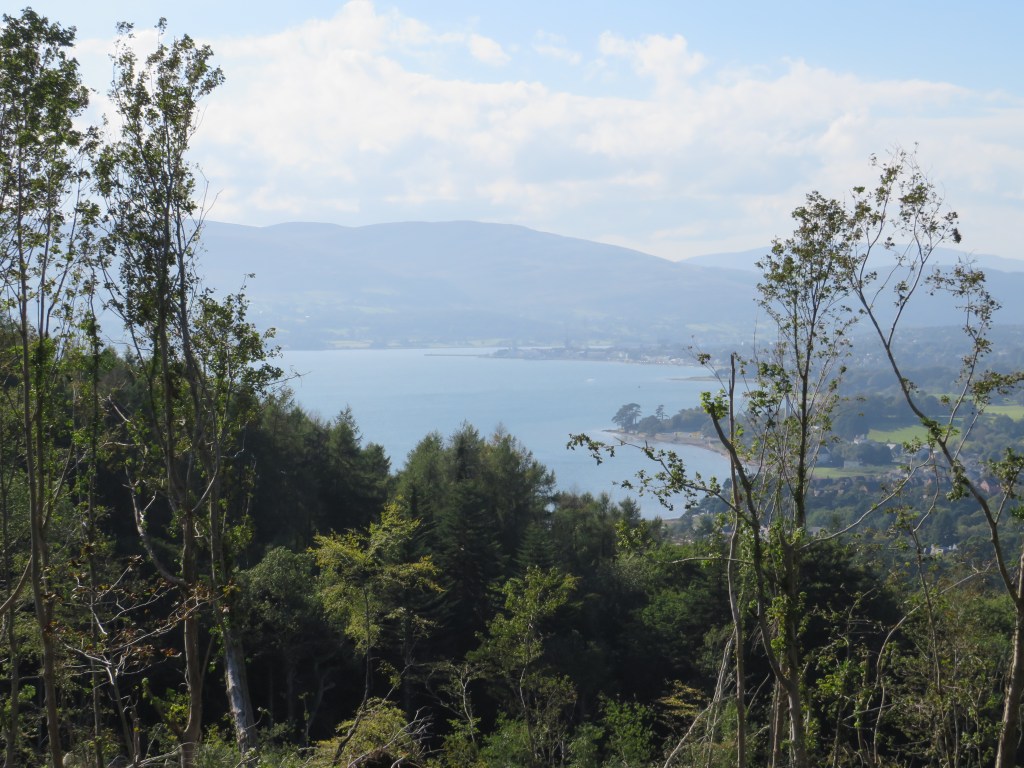
Today’s picture is of County Down, in honour of yesterday’s Forgotten Women research.
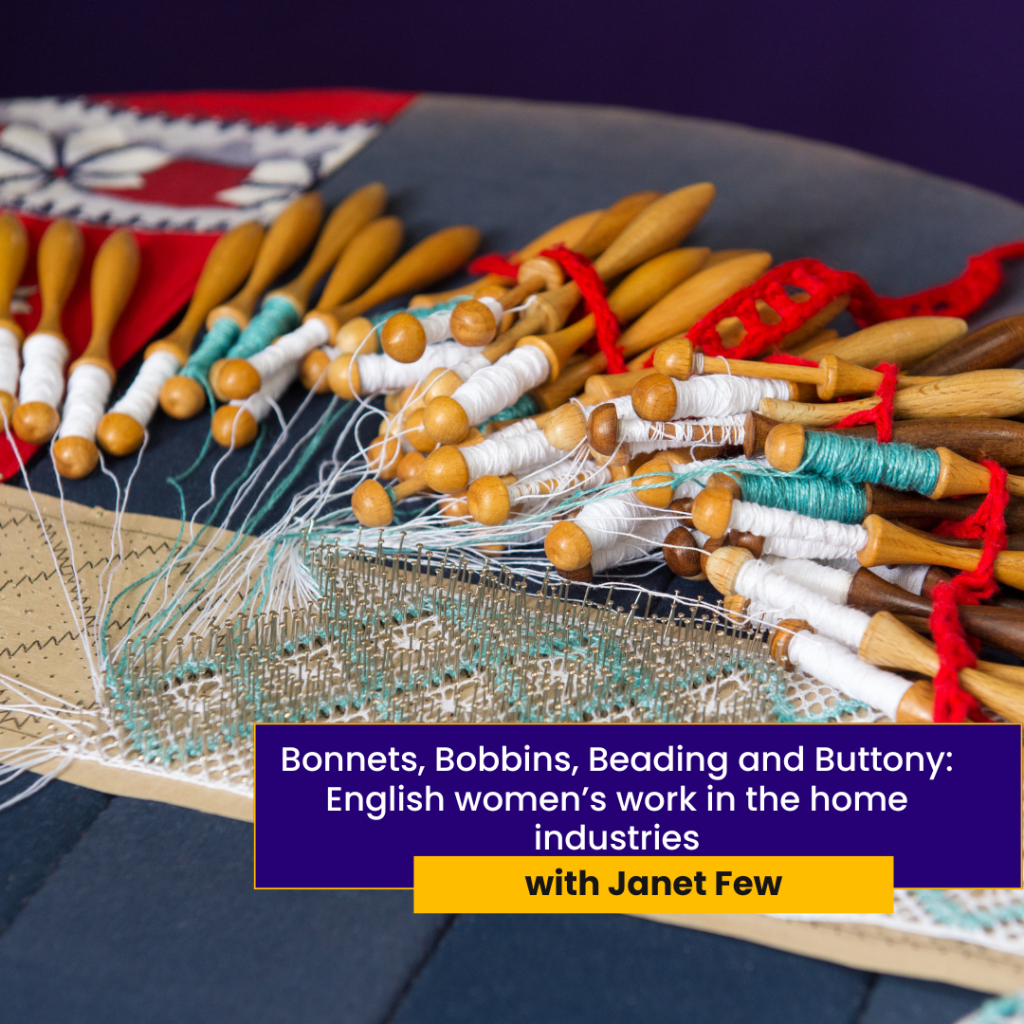
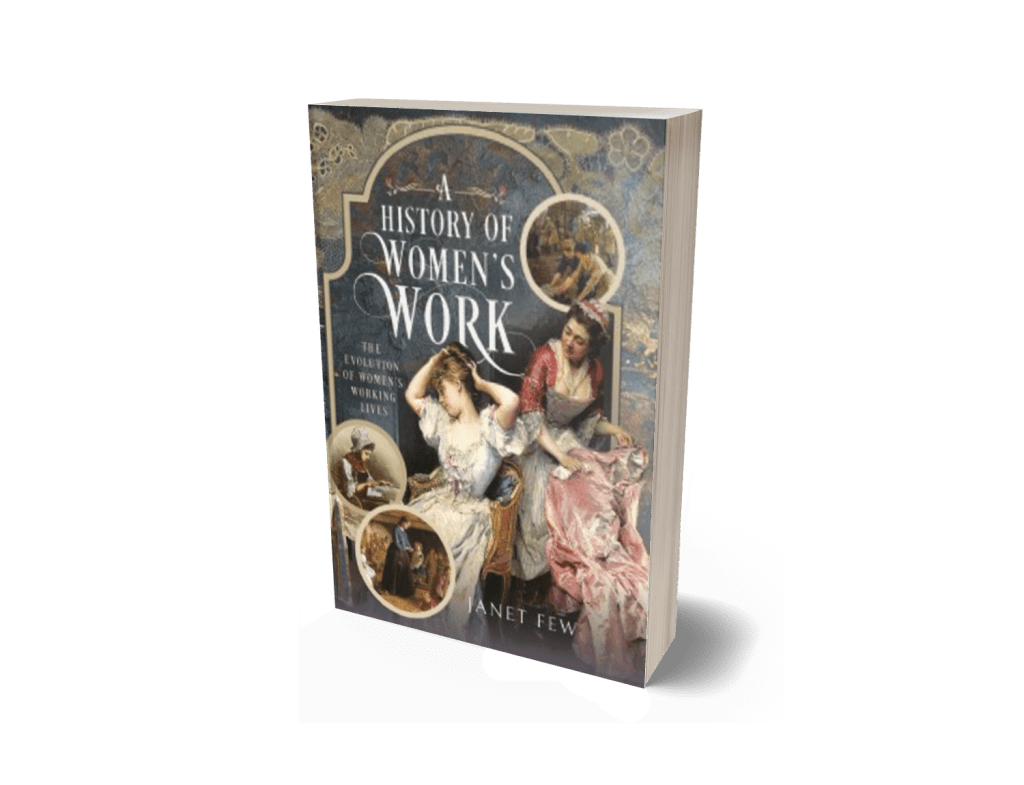
Time to take a deep breath as I launch in to the next few weeks. Not only is the job I must not mention about to hit with a vengeance but at some point long ago, I decided that it would be a good idea to cram the next few weeks full of presentations. So in the calendar for the next two weeks I have, Women’s Life on Farms, the story behind my novel Barefoot on the Cobbles, Mistress Agnes talking about life in the seventeenth century and Researching in the Twentieth Century, swiftly followed by looking at cottage industries. If you want to know more about straw-plaiting, lace-making, glove-making or button-making, as well as home working in general, you can book for that one here. All those topics get chapters of their own in my new book A History of Women’s Work and straw-plaiting and gloving are two of the sections that are accompanied by case studies. It is currently at its introductory price of 20% off, which means you can get a hardback for a paperback price and not have to wait two years for the paperback to be issue. The ebook will follow at the end of next month. I am humbled by the lovely reviews that have been coming in.
Today is also the final Zoom for my Pharos ‘Writing and Telling your Family History’ course. What a lovely cohort of students and such fascinating stories to be told. If you are sorry you missed it, it runs again in April, or you can sign up to research and tell the story of a female ancestor in September.
As this post in in danger of sounding like an advert, on to other things. In the interests of writing and telling my own family history I have been getting my pick axe out and working at my own genealogical brick walls. I have two stories to share with you when I get the time to draw breath and write them up for public consumption. Having decided that Mary Newlands is indeed my 3x great grandmother (see previous post), I am now pushing back to try to confirm that her family are of Scottish origin, as seems almost certain. So one brick wall crumbles and another looms.
News too on the second of my three ‘big’ brick walls. I’ve been working on the family of a different ‘almost certainly my 3x great grandmother’; oh wow, what a story. At the moment the ‘proof’ is based on rigorous documentary research but a missing baptism means two of the jigsaw pieces are DNA matches that are so small even I am reluctant to entertain them and hereditary large ears – yes, best not to ask. In a quest for more evidence, I launched into researching the wider family. I am back to the sixteenth century in Gloucester and Upton on Severn and have had plenty of palaeography practice. I do realise my missing link won’t be found in Tudor times but the rabbit warren (too big to be called a rabbit hole) sucked me in and there I was, head first in the throes of a virtual one-name study. It is an unusual name but beset with spelling variations and the use of contractions to add spice to my journey. There may be a connection to a seventeenth century barber surgeon. An added excitement is that my children also have paternal ancestry in Upton on Severn. I just may have to revisit that branch in search of a link. I am in the area in September. Do I wait patiently, or do I spend a small fortune ordering copies of wills? So many ancestors, so little time.
Sadly now back to the day job and three meetings Monday.
Today would have been my mum’s 100th birthday. It therefore seems very appropriate that I have just sent out the first lesson of my online course for Pharos about Putting your Female Ancestors into context. This is the first presentation of this course and I am planning to work alongside the students to tell my mother’s story. Who am I kidding? The course lasts five weeks. It took me three years to finish my grandmother’s story but at least I can have aspirations and make a start. I will get a second chance in September, as the course will be repeated then. There are still spaces on the September course, if you would like to join in.
Anyway, I have begun and today will be spent adding to a timeline, which will become the framework for my story and scanning in photographs that I haven’t yet scanned. I will keep you posted with my progress, or I fear lack of it.
The year began with family visitors, which is always very special. As a bonus, this year they didn’t include any lurgies amongst their seasonal gifts. The new year also means paying the tax bill. This wasn’t a surprise and the money was put aside but it is always a bit of a shock to see the bank balance suddenly depleted by what seems to be an eye-watering amount. Added to this, it seemed I needed to pay a different HMRC bank account, which meant setting up a new payee. I have one of those little card reader things that gives you a secret code to verify that you are not a fraudster. I’ve had the thing for ages, which is probably why it chose this moment to decide that its batteries had had enough. Before these obscure-sized and expensive batteries died a final death, they gave me a partial glimpse of the vital number. Could I guess what figures they were striving to reveal? It turns out that I could. Hurrah.
It has been full on family history on many fronts since the visitors departed. I’ve finished a magazine article. My new book is signed off and is due out in May, pre-orders should be opening up soon. I love they cover that Pen and Sword have chosen. I’ve also, rashly, signed a contract for another one. Will I ever learn? Not totally unrelated, is the work I’ve been doing towards the next Forgotten Women Friday collaborative research day for the A Few Forgotten Women project. This one is to be about women associated with Dorchester Prison.
My Pharos Agricultural Labourers online course has started again this week with a full, enthusiastic cohort. Next up on the Pharos front will be the first presentation of ‘Putting your Female Ancestors into Context’ in March. This filled up so quickly, that I agreed to take more students than usual. This means that there are still just two spaces left, if you want to come along for the ride.
I’ve have been giving talks like, well, like someone who gives an awful lot of talks I suppose. I’ve been out and about in person chatting about herbs and plague and online with the history of prostitution, marginalised ancestors and writing your family history amongst other things. This has taken me to Northern Ireland, to Surrey to Lincoln and other points in between. I have also recorded talks for future broadcasts. Rootstech is on the horizon. The pre-recorded talks have not yet been announced but there will be a short session from me in there, when I will be talking about British administrative units, do you know your townland from your wapentake, or your riding from your peculiar? If not, seek out my ten minute chat when Rootstech opens next month. Even better, online attendance is free. Legacy Family Tree Webinars have announced this year’s programme and I will be popping up there too later in the year. It is a fascinating programme, well worth the subscription.
The volume of talks in a sort space of time has obviously been getting to me, as on the night before two talks Monday I had a bizarre dream in which I had double booked myself and my mother was going to deputise for me. A couple of issues with this. She isn’t actually alive and she’d decided she was going to talk about red wine, a subject about which she knew nothing in life.
A little late to the party, I’ve been playing with Family Search’s full text search facility, which is in experimental mode and can be accessed at https://www.familysearch.org/en/labs/ once you are signed in to Family Search, which is free. This allows you to use AI generated transcriptions to search for names within the body of a document, such as the beneficiaries in a will for example. My take on this is that there is loads of good stuff on there and this has the potential to be brilliant but as yet there are still some drawbacks, which is understandable, as this is still being trialled. AI’s palaeography skills are pretty basic and mistakes are made that would not be made by a human, such as ‘Michael wears’ for Michaelmas,, rendering the sentence nonsensical. Searching is clumsy. It is very difficult to narrow down the results. You need to ignore the headings, which are often very misleading. Documents labelled Warwickshire, for example, turn out to also include many other counties. Having said that, it is definitely worth a play but make sure you have a few hours to spare first.
I’ve even found time for some of my own research and am deep down a rabbit hole following the story of a several greats uncle who was transported. It will be coming to a Granny’s Tales site near you shortly.
Time to move sites again and head north-westward into the Trossachs for a few days in Killin. The weather began fine but in typical Scottish fashion, rapidly turned to rain, nonetheless it was a pleasant drive with lovely views. We wanted to arrive at Killin promptly when it opened for new arrivals at 1pm because we planned to visit Moirlanich Longhouse, which is close to the site and which has very restricted opening hours.
We’d passed the longhouse several times on previous visits but had never been able to go inside before. It is in the care of the Scottish National Trust, so we were able to take advantage of the reciprocal arrangements with the English version. The house is a great illustration of how people would have lived in the past. This particular house was built in 1809 for tenant farmers. It is a cruck-framed house, built in a style that had probably been used for centuries. This was the time when many labourers were turned off the land and moved away but the Robertson family were granted the tenancy of Moirlanich and farmed the surrounding thirty acres, trying cattle, then sheep, before changes to growing oats. The once thatched roof was covered with corrugated tin in the 1930s. The last member of the family left in 1968 and the house remained empty until 1992, when the trust took over.
Various items were found in the house, including ragged and probably discarded clothing, which appeared to have been used to insulate the chimney. There were multiple layers of paper on the walls. Considering there were only three rooms, plus the byre at the end, it is strange that one room was largely reserved for ‘best’, such as entertaining the minister. The room did contained two box beds that were in regular use.
The next day was beautifully sunny, just right for a drive along several miles of the banks of Loch Tay towards Aberfeldy, in the centre of Scotland. We were paying a return visit to the Crannog Centre, or in this case the Crannogless Centre. We visited the earlier version of this Iron Age living history experience on a previous trip to Scotland but a couple of years ago, a fire destroyed the crannog. A crannog is a dwelling that was constructed on stilts over the water and evidence of nearly six hundred have been found across Scotland, which is probably only a tiny fraction of the number that would have been built. Several of these were on the edge of Loch Tay. Building across water is much more difficult than building on land and was done to reserve the land for food production and possibly also as a sign of status and method of protection.
Following the fire and some serious fund raising, the centre moved to its current site, which they were able to purchase for just £1. They reopened in April and have built several roundhouses using different techniques. Erecting the crannog will be a more complex task and building was due to begin the day after our visit. We arrived just in time for a tour and John showed us the museum exhibits, as well as giving us some background history.
Our first presentation was about Iron Age food. Archaeological finds provide evidence of the ingredients but how they were used is largely speculation. We were treated to flat breads made from the ancient cereals, emma and spelt. These were topped with garlic and honey cheese and optional trout. I passed on the added trout but it was very tasty. Emma no longer grows in Scotland, as the climatic conditions have changed since the Iron Age. We saw a saddle quern and it was explained how arduous and time consuming grinding flour would have been.
Next was the blacksmithy and then the woodworking presentation, some of the turning on the pole lathe was highly skilled. The textile demonstration was particularly interesting, with information about dyes, weaving and spinning. I hadn’t realised that woad required soaking in warm urine for a couple of weeks before it was an effective dye. Who first realised that this was the thing to do? It takes 7,000 metres of spun wool to weave a long sleeved tunic. Lastly, we went in the final round house, which had a basket-like woven framework, covered by stone walls and thatch on the roof. Despite the sun, it was still a little chilly and the restaurant was full with a party so we had our carrot cake and drink outside, where it was perhaps a few degrees colder than ideal. Overall, it was a fascinating trip and highly recommended.
Rootstech is round the corner and with it the option to see if I am related to any of the many lovely fellow-attendee family historians that I have got to know over the decades, both in person and online. Along with thousands of others, I am attending the mega international conference virtually, from the comfort of home and I’m looking forward to learning new things. As well as the ‘Relatives at Rootstech’ fun, there are options to see if you are related to famous people. Allegedly I have connections to a few. Most of these relationships are based on some seriously speculative genealogy. So, although I probably am Winston Churchill’s tenth cousin three times removed, I have serious doubts that the late queen is my 14th cousin, at least not in the way that is suggested. I suppose it would be mildly interesting to find that ‘Gateway Ancestor’ that leads back into royalty but even though I am about to enter my 48th year of serious research I have never found that connection. Do I care? Not in the slightest. My interest is in all those ordinary ancestors whose stories will never be told unless I tell them.
I find marginalised ancestors the most fascinating of all. What circumstances led them to become stigmatised, or to find themselves on society’s fringes? Was this down to their own actions, or society’s attitudes? I love to find the lawbreakers, the sick, the poverty stricken and the ostracised on my family tree. Not in the slightest because I want to reveal their stories in some kind of version of the sensationalist press but because their lives are so caught up in the social history and mores of their times. They become much more ‘real’ as their lives are revealed and of course they may leave traces in the documentary record.
It was this interest in those that history forgets that led me to give talks on the subject and my Rootstech presentation this year is about just that. Entitled ‘Tracing your Marginalised Ancestors in Britain’, I will be delivering this remotely but live at 8.30pm GMT (London Time) on Friday 1 March. If you register you can listen for free from anywhere in the world. I believe the session may be available afterwards too but that is still to be confirmed.
A couple of years ago, as a result of a magazine article I wrote on the subject, I was delighted to be approached by Pen and Sword to write a book to help others trace their own marginalised family members. It seems like forever since I finished writing it last March but it now exists as an actual book and those who ordered pre-publication copies should be receiving them any day now. If you have ordered a copy, please do post a photo on social media when it arrives, as I love to see where in the world my books end up. I am supposed to take a photo of me with the book for publicity purposes. This endeavour is hampered by the fact that I am the least photogenic person in the world. To detract from unphotogenic me, I decided it would be a good idea to utilise some of the spectacular landscape that is on my doorstep. This of course means it needs to be dry and ideally sunny. The first attempt was Monday. Bright, rather than sunny but unfortunately also windy. My fine, baby soft hair looks windswept when the Beaufort Scale is at zero. Let’s just say this photo shoot was not a success. It may have to be the ubiquitous, in front of the library shelves shot. You can order copies directly from Pen and Sword.
On the upside though, I have just signed a contract to write another book that may be out next year, or the one after; the writing is well underway.
The study of the marginalised ties in very well with my work with the A Few Forgotten Women Team and I am looking forward to talking about Forgotten Women, in person this time, at the Alfred Gillette Trust in Street, Somerset, to celebrate International Women’s Day on 8 March. A Few Forgotten Women will also have a small exhibition, tickets are available here.
It has been a bit of a whirlwind week. Monday began with some work on a new Migration course that I am writing for Pharos Tutoring and Teaching. This is going to be presented in May, so I need to get the Is dotted and Ts crossed. Then there was finishing off the Brick Walls presentation for Devon Family History Society. This is where we dig out our magic wands and try to solve members’ genealogical conundrums. The day was rounded off with a committee meeting. Tuesday was spent sorting some Forgotten Women biographies ready for uploading and reading through my Pharos Writing your Family History course to check for any necessary changes. This starts online in a couple of weeks and last time I looked there was room for a few more to join the fun. Next, a Cornish lesson and then chatting about Illegitimacy and Insanity etc. to the lovely Huddersfield and District FHS.
More migration course work on Wednesday and a typed chat with the students on my Discovering more about your Agricultural Labourers course. Then there was trying to master an online computer game that I have been playing with some of my descendants on an almost daily basis. Thursday was definitely Forgotten Women day, with two chats preparing for future events and the sudden realisation that International Women’s Day was almost upon us and we really needed to do something that we could prepare for quickly. Bear in mind that my fellow Few Good Women, who oversee this project, have lives that resemble mine for activity. Thursday evening found me, aided by Mistress Agnes, talking about seventeenth century gardens to a Zoom audience of 175. It was a Norfolk Family History Society meeting with Devon folk in attendance as well. Friday, I had my local history hat on and went to see the deeds of a local property. Then there was a small group meeting to run for Devon Family History Society in the evening. At these meetings we get together a couple of dozen people with an interest in a small group of Devon parishes. As usual, several attendees found common interests.
Oh good the weekend, a rest maybe? No, dear reader, you would sadly be wrong. More plans for the Forgotten Women event. This will be on 8 March and consist of three free Zoom sessions, when members of the team will share the stories of some of the women we have researched. Bookings are open and you can find details here. Then there was presenting the Brick walls session for Devon Family History Society, followed by another chat with those hunting down their agricultural labouring ancestors. Sunday, the day of not much rest. Thanks to one of our team’s efforts, our 8 March event was safely loaded on to Eventbrite. More stories were prepared for the Forgotten Women website, which also needed rearranging, as we’ve already, after just ten weeks, got more stories than we could present in the previous format.
So will this week be any calmer? Well, hardly. To begin with, there is Rootstech. I decided not to offer to speak this time but I will be attending virtually, for free and so can you. There are presentations by speakers across the globe on every subject related to family history that you could possibly imagine. My playlist of sessions I want to listen to is already ridiculously long, There is a facility called Relatives at Rootstech, which means you can see if any distant relations are amongst the attendees. Just this morning, I was excited to find that a previously unknown third cousin will be there. Third cousins are practically my closest relatives, so that was exciting. This is on the Smith side, which reminds me, I have a presentation to write about the Smiths. I need to organise my contributions for 8 March, I have more chats about agricultural labourers, I have talks to give about young people and genealogy, about twentieth century sources and about plague and so it goes on. Please don’t mention things like cleaning.
This post may explain why I have been a bit distracted of late and why posts have been more irregular than usual. This is an exciting day for the lovely group of ladies I’ve been working with for the past two years. We came together during lock-down to support each other and work on family history projects. A bit like organisations that encourage you to lose weight, if you know you will be reporting back every couple of weeks, you actually get on and do something. It has worked well and we’ve all become friends, some of us have even met in real life! We worked on our own biographies and the stories of our grandmothers, we looked at heirlooms and much more.
Several of us had an existing interest in marginalised ancestors. We realised that it was often women whose stories get overlooked, so we set out to preserve the memories of some forgotten women. After several months of work, we have today gone live with our website, introducing our first batch of forgotten women. This is just a start, we have more women’s stories in the pipeline and other ideas for further development. It is definitely a case of watch this space. I could make this a really long post and explaining the project but you might just as well head over to the A Few Forgotten Women website and discover what it is all about for yourself. It also means I can now go and eat breakfast instead of keep typing.
Please be aware that this post contains information about an historic child murder and mental distress.
I am still fighting the not-quite-working computer issues but I have paused the list of 101 things to do before September (err that would be tomorrow – oops) to share the story of Ann Palmer.
I first came across Ann when researching for a talk and book chapter about investigating the stories of our ancestors in asylums. This led me to a class of records that are at The National Archives but also online at Ancestry. The Criminal Lunatic Asylum Registers, kept by the National Lunatic Asylum and county and metropolitan asylums, are in class HO20 and cover the period 1800-1843. These contain a wealth of detail about those who had been convicted of criminal offences but were deemed to be insane. I could have spent hours looking at the detailed accounts of these tragic situations but one in particular caught my eye. This was the entry for Ann Palmer, from Dagenham, Essex, who was convicted of murder at Chelmsford Assizes in 1823. It read:
‘The jury having found that she was insane at the time of the commission of the offence declare that she was acquitted by them on account of such insanity. From Dagenham, Essex.
Previous to Commitment. About 25 years since she partially cut her throat while she lived servant at Newington. Is said to have been a good and affectionate mother. Was married to a very afflicted man who kept a small public house at Marks Gate, Padnell Corner, Dagenham and became much afflicted in her mind at her husband’s death, which happened a short time before her commitment in consequence of her being informed that his body had been stolen from the grave.
Conduct in goal since. Decidedly insane, sometimes violent, at others dull and moody but not dangerous to those about her.
Thos. Cawkivell Goaler, Jas. Hutchinson Chaplain.
The state of her bodily health varied much during the period of her confinement but more particularly since the time of her trial. She was at one time reduced to so feeble a state that considerable apprehensions were entertained of her probable dissolution but she has within the last 10 or 12 days become more tranquil and has appeared gradually to acquire a strength insomuch that I have no hesitation in pronouncing her capable of safe removal to any place which may be appointed for her. 14 August 1823 G A Gepp Surgeon.’
The record also revealed that Ann was 43 years old and died on 23February 1824.
I had a quick look for Ann in the newspaper archive but failed to find anything and Palmer was a common name, so I wasn’t getting anywhere and in any case, I had other things on the urgent list.
Every couple of weeks I get together with a lovely group of ladies to chat about family history; we enjoy encouraging each other and sharing our successes, failures and tips. I brought Ann’s case to the group. Collectively we found not one but two newspaper reports. The first, in the Public Ledger and Daily Advertiser of the 21st of July 1823 gave details of Ann’s crime.
‘Chelmsford July 17. Ann Palmer was indicted for the murder of her infant son, at Romford. This case excited considerable interest, and sensibly affected a very crowded auditory. The wretched prisoner, a poor widow with nine children, was place at the bar in a state of mental stupor, and it was with difficulty she was made to understand the arraignment. She, however, pleaded not guilty, and the trial proceeded.
Ann Savell deposed that she had known the prisoner about three months. On the 23rd of May the prisoner’s eldest daughter called witness into the prisoner’s house, when she saw the deceased, who was only eleven months old, stretched lifeless upon a bed, but the body was still warm. The prisoner was in the room, and witness said to her, “the dear baby is no more, but you must reconcile yourself to the event. The Lord’s will be done, not ours.” She replied, “the Lord had nothing to do with it; I killed my baby.” She seemed then much agitated, and witness left the house horror-struck at the circumstance.
Mary Palmer, the prisoner’s eldest daughter, deposed that her father had been dead about four months. Her mother was quite overpowered with grief at his loss. There was a rumour that his body had been disturbed in the grave, which very much increased her grief. Indeed she was quite distracted with sorrow, and at times did not know what she said or did. She was a woman of very acute feelings, and was doatingly attached to her husband and children. She had suckled the deceased baby herself, and was passionately fond of him. She had often sat whole days since her husband’s death, weeping over the baby. She had often said she would kill herself, Before this time she had frequently said, laughing wildly, that the baby was dead and gone to heaven. On the 24th May she called to witness, and told her the baby was dead. She was then crying bitterly and wringing her hands. There was a small black mark on the left temple.
A Constable of Romford deposed that he saw the prisoner some time after the child was found dead. She was then violently beating her head, weeping and wringing her hands. She said, distractedly, “Hell! Hell, hell! I have murdered my baby. I meant the blow or myself, but it fell upon the baby. The beetle with which I did it stands behind the door. I have murder in my heart, and have carried a razor about me this fortnight.” She appeared quite wild and distracted.
Mr Curruthers, a surgeon, deposed that he examined the body often child. Its death was occasioned by a blow to the back of the head. It might have been with such an instrument as a beetle or mallet.
This was the case for the prosecution; upon which Mr Baron Graham intonated, that he thought it unnecessary to call upon the prisoner for her defence. It was quite obvious that poverty and grief had overpowered the better affections of the heart, and had bereft the prisoner of her reason. If the Jury were of this opinion, they would find the prisoner not guilty upon that ground.
The Jury immediately found the prisoner Not Guilty, on the ground that she was insane at the time she committed the fatal act.
The prisoner was then ordered to be detained in custody.”
The Cambridge Chronicle and Journal of 25 July 1823 carries and almost identical report but adds that the child’s name was Thomas and the National Burial Index lists the burial of a Thomas Palmer in Romford on 27 May 1823.
Burning some midnight oil we found more entries in the online indexes to Essex parish registers, including the burial of a Joseph Palmer on 13 March 1823 ‘of Dagenham’ at Stapleford Abbotts. There are baptisms of several children of Joseph and Ann. Some of the children seem to have been baptised more than once, including in January 1824, in Dagenham, which seems odd, as Joseph would have been dead by then. The Dagenham baptisms do state that Joseph was a publican.
Next step, to persuade the member of our group who lives closest to take a look at the original records.
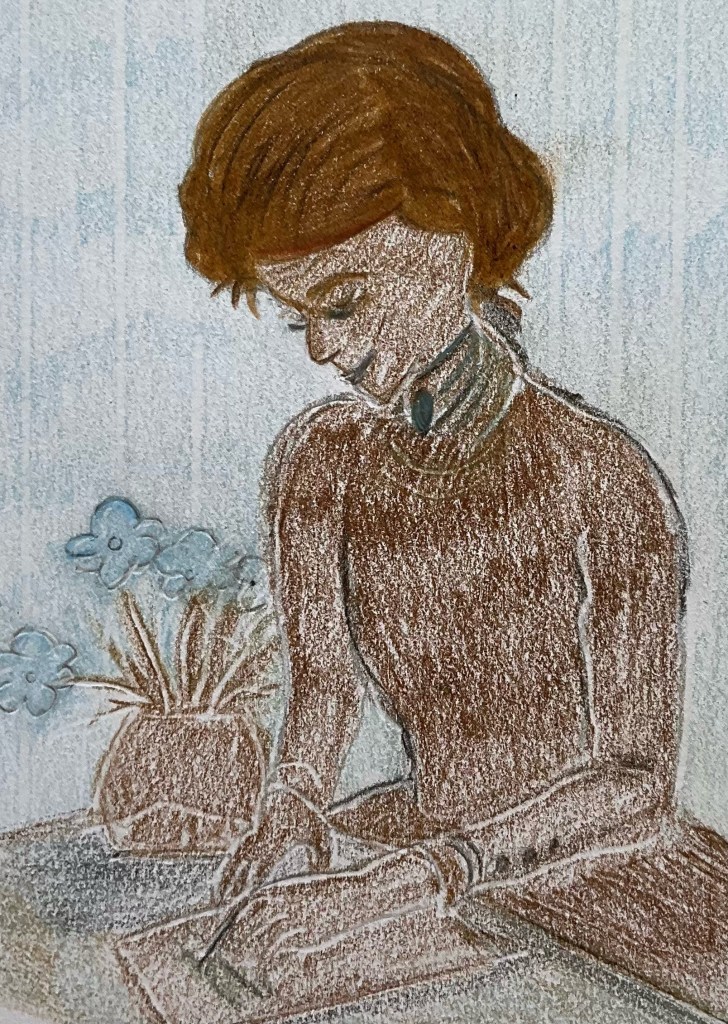
No appropriate image, so some flowers for Ann and her family.
Sources
Cambridge Chronicle and Journal 25 July 1823 p. 4 col. c.
Public Ledger and Daily Advertiser 21 of July 1823 p. 4 col. a.







 The History Interpreter - Janet Few