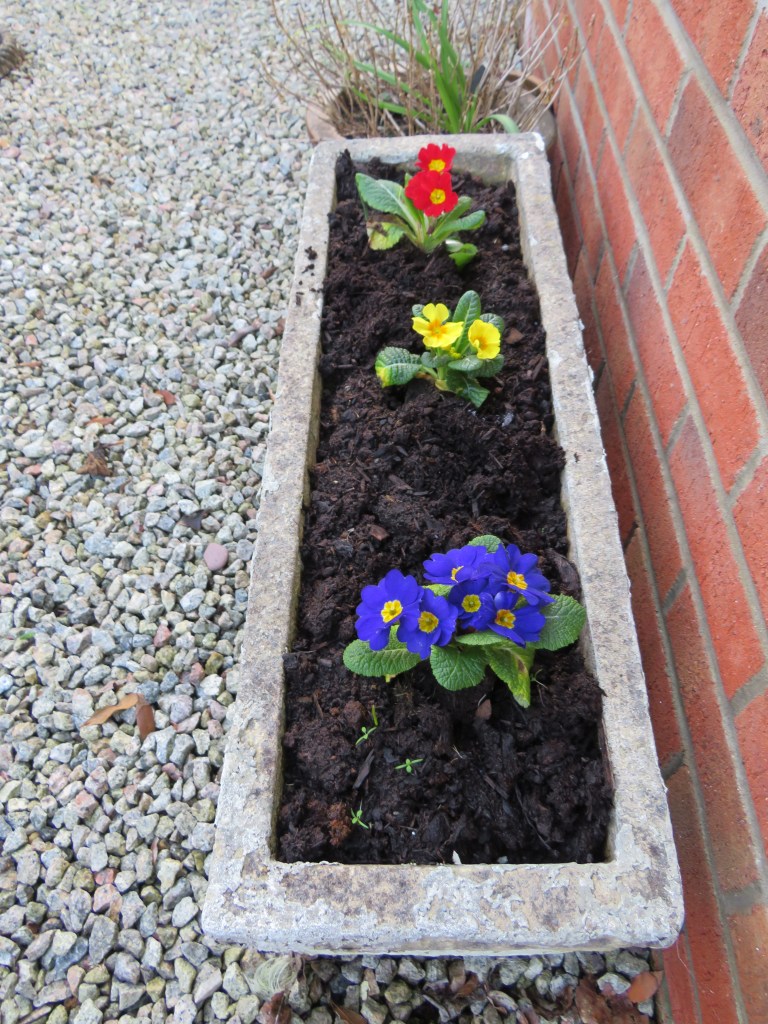
We’ve not been up the garden path for a while because it has been winter and I am not a winter gardener. There have been some minor changes. I’ve planted some bulbs in troughs. I was a bit late doing this and they aren’t showing yet, although others in the garden are coming through. I’ve tried yet again with snowdrops and ended up buying some already in flower. The jury is out on whether they will reappear next year. The bulbless troughs looked a bit bare, so I’ve popped some bright primulas in as well. Otherwise it has mostly been a case of syphoning out the ’pond’ (aka old Belfast sink) when it gets overfull and on a couple of occasions, breaking ice on the bird bath.
The birds get fed regularly and I have glimpsed blue tits again a couple of times, after an absence of several months. In the hope of enticing them back, I’ve got a new bird feeder that allows small birds in and keeps the bullies out. Sadly, the garden has its far share of large birds, with magpies, woodpigeons and jackdaws being daily visitors with herring gulls and rooks joining the party. Don’t get me wrong, I like to see any kind of birds but some more smaller ones would be lovely. Sparrows nest in the hedge and there’s been a wren bobbing about, as well as blackbirds, although I am missing the robin who hasn’t been seen for a while. As soon as temperatures reach double figures on a day when it isn’t raining, I will be out tackling the weeds. There are a great many growing in the cracks between the patio paving stones. I don’t want to repoint the gaps as then there’s nowhere for the rain to drain away.
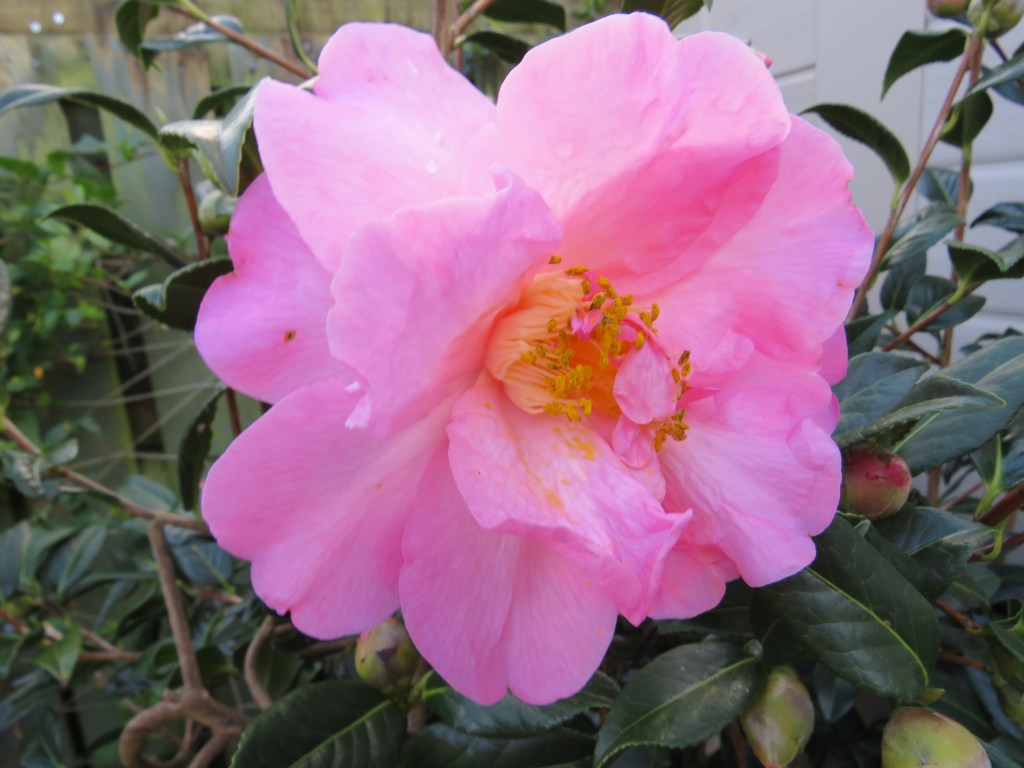
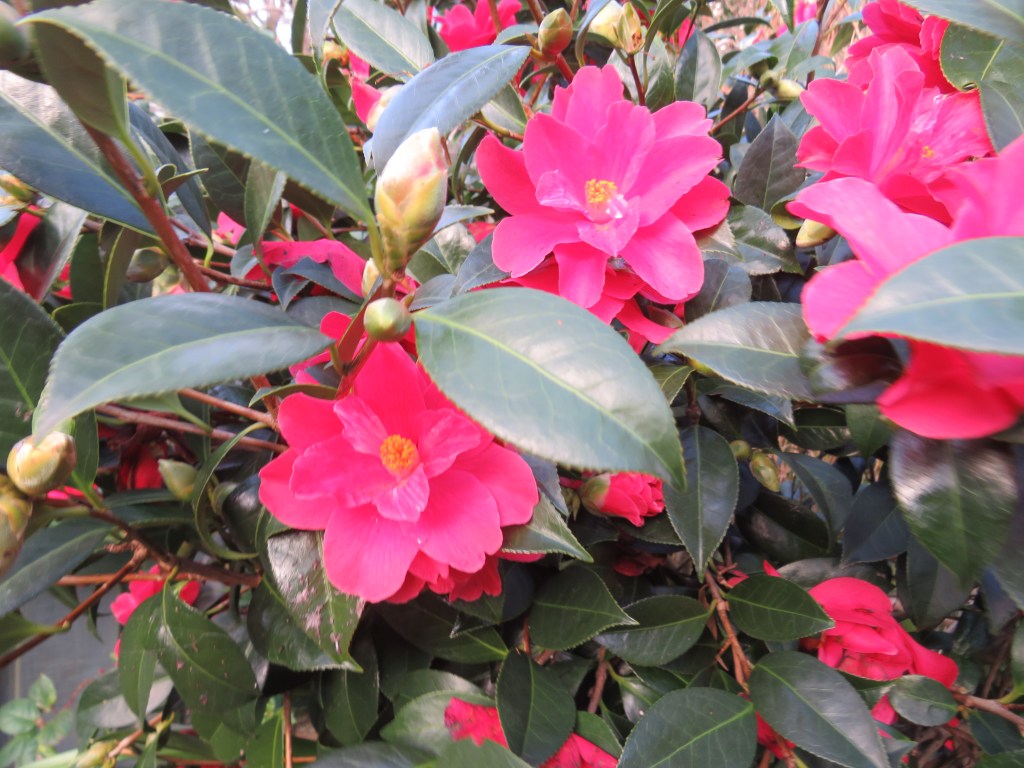
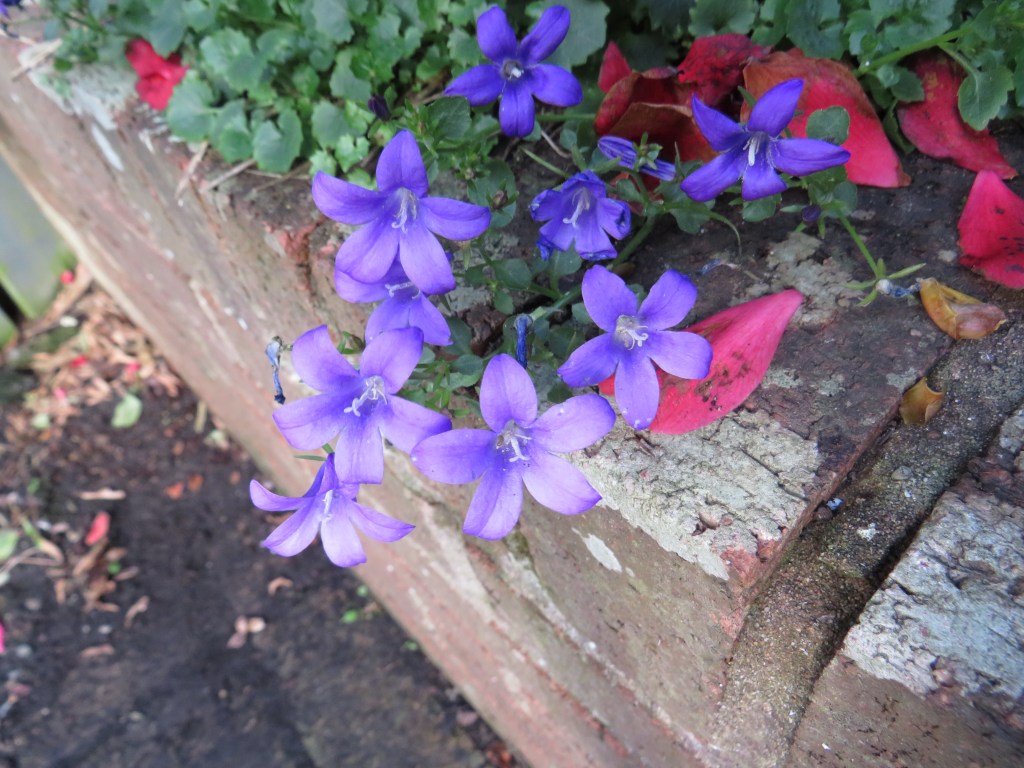
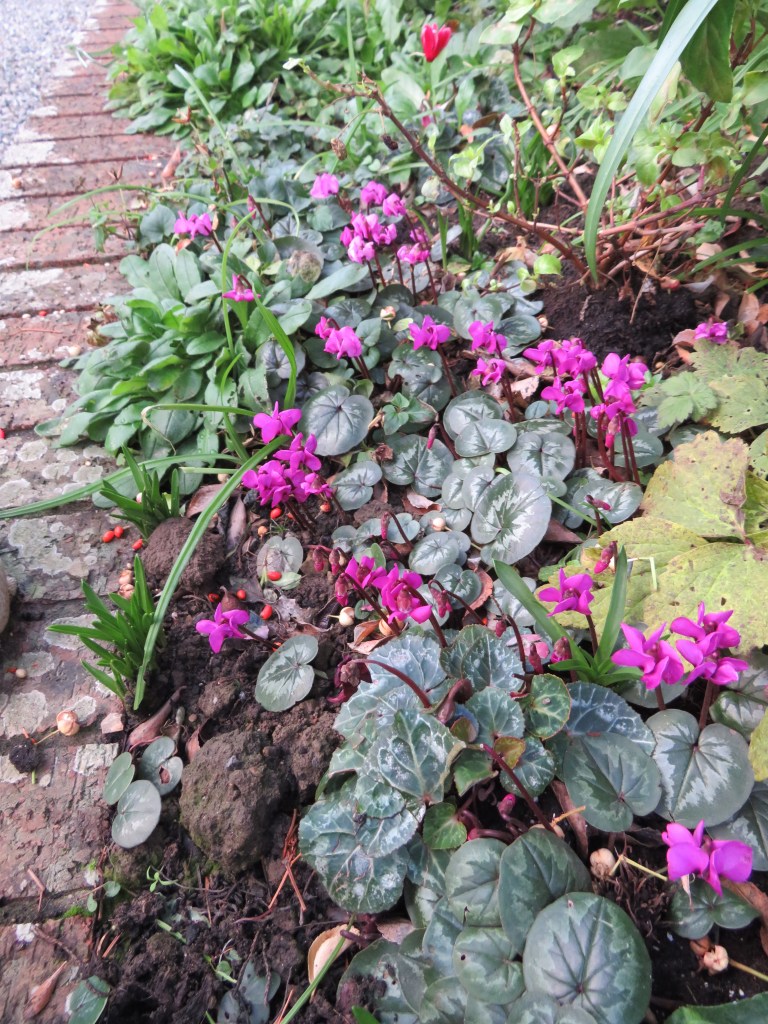
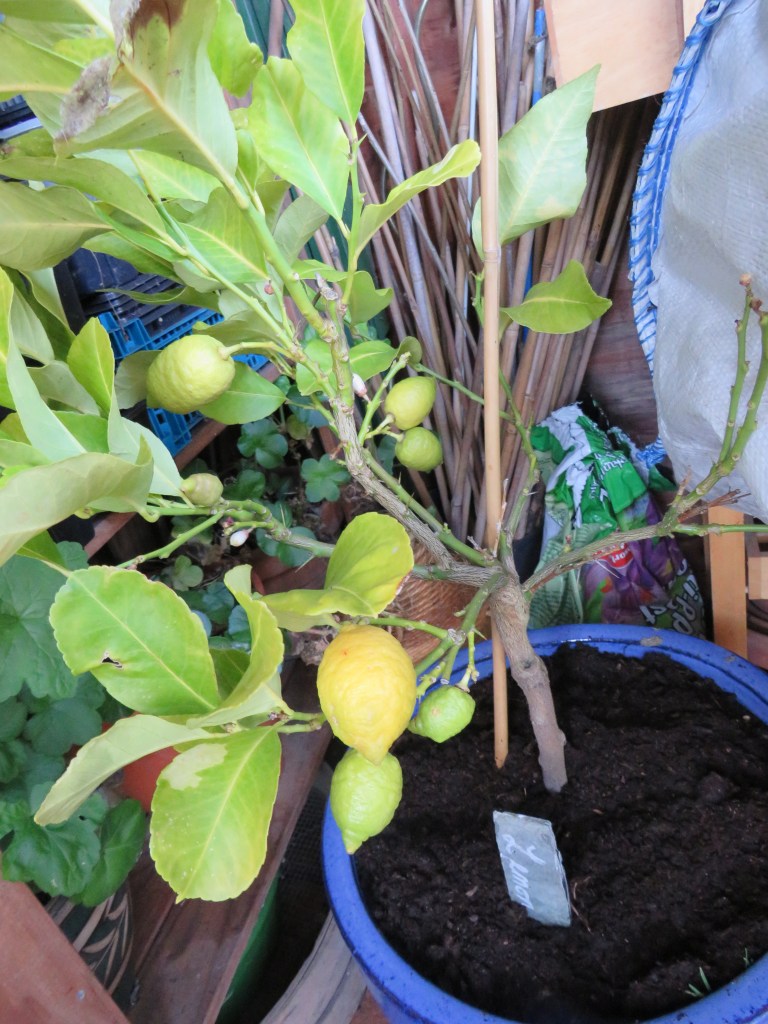
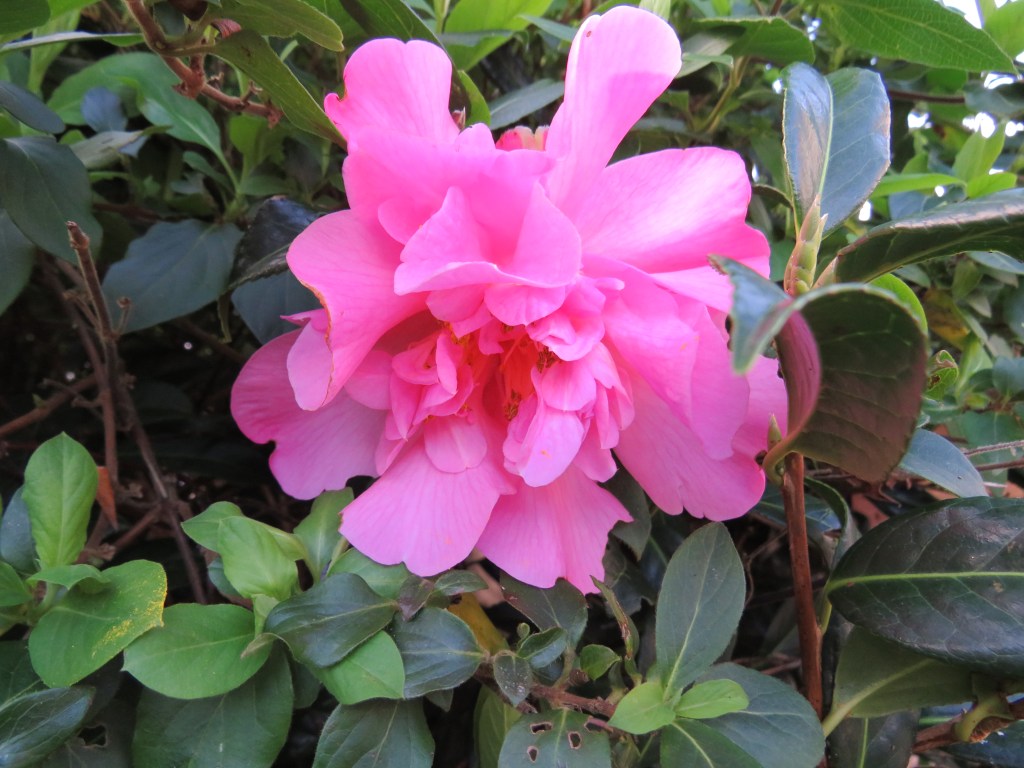
One good thing about this garden is that there is something in flower all the year round. At the moment, it is the Camellias that are the showstoppers, although there are a few other things as a supporting act. The lemon tree has been popped in the shed for the duration as advised. Roll on spring!
Another day and yet another short drive, this time to Helford, as we remembered that as being an attractive section of the coastal footpath. After a bit of a diversion down to the river ferry terminal we headed round to the tiny St. Francis’ Chapel, where St. F’s main animal of choice seems to be a German Shepherd. Then on along the path towards Frenchman’s Creek of Du Maurier fame. We got to the point where we were overlooking the creek and decided that it was quite a long way down, which would, of course, mean quite a long way back up, so we turned round and retraced our steps.
Day 5
The short walk of choice today was round Goonhilly Nature Reserve. We have come to learn what to expect from nature reserves and Goonhilly lived up to expectations – an almost total absence of wildlife. We did hear a cuckoo but not a great deal else. Here we were close to the tracking station, which sits incongruously against the Cornish landscape and occasional menhir. We may also have deviated from the waymarked route a tad. This involved climbing over gates, which fortunately held our weight and did not mean we ended up in a field with a bull. We also had a choice between being up to our ankles in water, or up to our ankles in mud. This despite it being the driest spring on record. We opted for mud. The advantage of this walk was that it was relatively flat and underlined the fact that it is hills that I have issues with, rather than walking itself. Still, we think ourselves lucky that we can walk as much as we can, as we approach our eighth and nineth decades.
We went on to Cadgwith so that the fisherman of my acquaintance could get a fishing boat fix. This also involved passing some free-range geese and observing two delivery lorries trying to escape and turn on the extremely narrow road, which, in addition, was partly blocked by a scaffolders’ lorry. We didn’t stay to see the resolution of this. From the look of the way things were going, despite some seriously skilled reversing up very narrow alleys, they may still be there.
We were visited by the site’s friendly collie, who came into the van calling for Chris. Balls were thrown and the neighbouring horses chatted to.
Day 6 Penrose and Poldu Cove
We drove to Penrose, a National Trust estate that we hadn’t visited before. This was a pleasant walk that took us to where we could overlook Loe Lake, the largest freshwater lake in the county. There was a very acceptable café where we availed ourselves of ice cream. The walled garden, designed by John Rogers when he inherited Penrose in 1772, is being restored by volunteers. We then decided to drive down to Mullion; another day another cove. We stopped off at Poldhu, a cove we remembered from our walking round the coastal footpath days. Mullion, despite the sat-nav, proved elusive, so we decided to leave that for another time.
It was not a great night for our patient but once up there were signs of improvement. Light exercise is recommended and he was keen to embark on another drive. We had left behind the dramatic Northumbrian landscape but the countryside and far reaching views were beautiful nonetheless. This area seems more suitable to arable faming, with heavy red soil and red stone houses. This week seemed to have been designated as harvesting week and there were many tractors.
The church tour of the day met with some success and took us to places other holidays don’t reach. We ended up on the coast at St Abbs. The EbbCarrs Café provided us with a kipper roll and Biscoff cheesecake. Definitely a recommended location and the bonus of fishing boats for the convalescent to look at.
Then it was time to move on again, this time to Balbirnie Park at Glenrothes. We have left behind the area of my own ancestors and potential ancestors and are now moving through territory known to the ancestors of my children and grandchildren. Some traffic hold-ups on the Edinburgh by-pass but otherwise an uneventful journey. We were now on a wifi hotspot only site but the warden kindly allowed us on a pitch where you could get wifi in the van but which is normally reserved for the staff. This meant I could do some essential work while I was there.
So that we didn’t waste the day, we went for a short walk at Loch Leven RSPB reserve in the afternoon. In the 1830s the loch water was harnessed for use in linen bleaching and in the corn, wool and paper mills. This resulted in the loch’s water level dropping, adversely impacting the wetland habitat. Recent management and restoration has provided homes for a variety of wildlife. About a thousand pink-footed geese had just arrived. More will follow, as usually fifteen thousand over-winter there. I also spotted some green-winged teal. The reserve is the site of the country’s first bee reserve but we saw no bees.
Allegedly the weather was supposed to have improved. True, the bitter wind had gone but so had the sun. We decided to visit the nearby Scottish Deer Centre. Currently, this attraction is waving its admission prices in lieu of donations because of refurbishments but we felt it was fair to pay the normal admission price and it was certainly worth it. As the name suggests, there were deer, lots of deer of different types, some of whom you could feed. We walked round by ourselves and then again under the guidance of Owen, who provided us with deer facts, which I will pass on.
Unlike horns, antlers are pure bone and are surprisingly heavy. Reindeer are the only female deer to have horns and as males shed their horns in winter Santa’s reindeer, at least in the northern hemisphere, are all female. There’s also some weird thing about reindeer being able to ensure that the frozen blood supply below their knees doesn’t reach the rest of their bodies in severe weather. In the wild, reindeer form super herds of up to half a million. As it can be hard to see each other in the snow, the use their UV vision to follow urine trails. Fallow deer, the pretty spotty bambi-like ones, are not native but were introduced by the Romans as a food source. Though, as we discovered at Belton, not all fallow deer are dappled. Sika deer, brought from Japan by the Victorians, are an invasive species as they interbreed with native red deer, making it difficult to ensure the continuance of true red deer. Elk, aka moose, like to swim and are predated on by whales. Pere David deer became extinct in their native China but are now part of a successful captive breeding programme.
Our presence normally makes any self-respecting wildlife, including those in captivity, dive for cover but we were luckier than usual this time. Apart from the deer, we saw other species including a wolf, a brown bear and a Scottish wild cat. I was particularly pleased to see the otters. The are clearly ethical issues surrounding keeping animals in captivity but on balance, anything that can encourage people to take an interest in wildlife is important and captive breeding programmes are essential to the survival of some of species kept here.
We stayed to watch the birds of prey display. You’d think ‘seen one seen them all’ but this was particularly good, with the Eagle Owl landing on the table of the picnic bench where we were sitting. For those visiting with younger family members there was plenty provided in the way of play equipment, so highly recommended as a destination. I did manage to keep the senior member of my party off the zip wire this time.
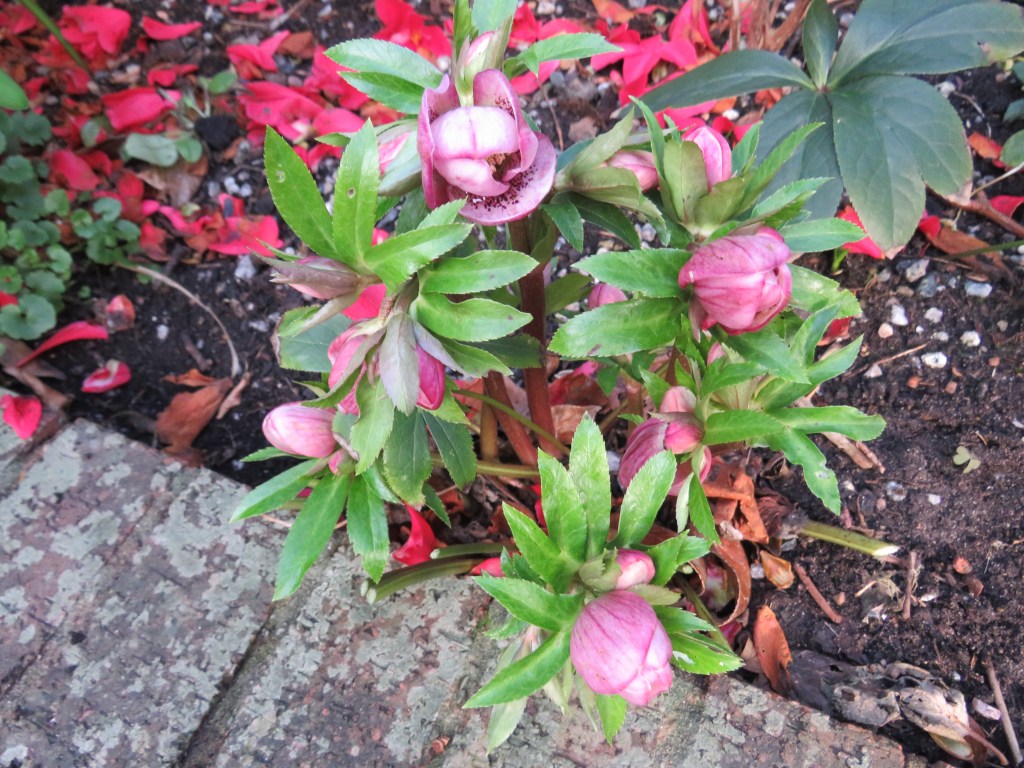
To be honest, it hasn’t really been the weather for fair-weather gardeners like me, or indeed any sort of gardener but yesterday the sun came out and the temperature was in double figures, so I ventured forth. The previous owner of my garden had left me numerous pots containing plants in various stages of liveliness and an eclectic selection of garden ornaments. I decided to triage these into ‘will keep’, ‘will humanely dispose of’ and ‘not sure yet’. Plant wise, there are more exciting finds as the year moves on; today’s included hellebores and miniature daffodils.
We began to trim back the winter jasmine, which is rapidly taking over the one flower bed. Other tasks for the afternoon were to deal with my many troughs of geranium cuttings which have been keeping warm in the summer house. Obviously not warm enough as about half are dead, or covered in what Mr Google tells me is powdery mildew. Sick plants were removed and what remained were rationalised into fewer troughs.
Next came the task of measuring the garden, in preparation for trying to draw up a plan. I decided to go for feet and inches, rather than anything metric as I still have to ‘translate’ metric measurements in my head. This was a test of my mathematical skills as my trusty assistant kept calling out the measurements in feet and inches, rather than just inches, which us what I wanted. Good job I know my twelve times table. The whole measuring thing was definitely not easy as I can’t actually reach some of my boundaries due to shrubbery and the many sheds. Added to that, the plot isn’t even remotely rectangular. Not only are there some funny angles created by the perimeter fencing but the garage and sheds are also not all set square. I have a load of scribbles and numbers but whether I will stand any chance of making it into a coherent drawing whose edges join up remains to be seen.
For those who are interested, very roughly, the plot is 35 feet wide by 22 feet deep, minus the space taken up by the conservatory and plus the extra space along the side between the bungalow and the house. One pretty much counteracts the other space wise. Note for some of my overseas readers, in the UK, a bungalow is a single story dwelling not a shack. If my maths is right, I have about 70 square yards, not, of course, at all the same as 70 yards squared! For those of you in foreign, about 58 square metres, which, unbelievably because it seems really tiny to me, is classed as a medium sized garden by the RSPB (Royal Society for Protection of Birds) when you submit your results for their great garden bird watch. By UK standards, particularly with a newer built property (mine was built in 2000), small gardens are the norm. On the subject of birds, I was concerned that this would be one thing I’d lack when I moved but I’ve seen eleven different varieties of bird in the garden (or viewed from the garden on neighbouring roofs or trees) so far in February, a similar number to the old garden, although very different regular visitors. Not bad considering the property had been empty for a fair while before I moved in, so, despite the bird table that was left behind, I doubt the birds had been fed here for over a year. The bird bath, another legacy from the previous owner, is very popular and that will definitely be staying.
This is a long-term project. Don’t expect swift progress!
I can’t pretend other than that one of the downsides of the new house is the conglomeration of concrete and sheds that constitute the ‘garden’. In estate agent speak, it is more of a courtyard than a garden, or perhaps we just term it that valuable commodity ‘outside space’. Having left behind what I felt was an attractive cottage garden, a wildlife haven, I was aware that this was a compromise but assured myself that it could be improved. Having gone through some seriously stressful battles with the technology associated with the job I must not mention last year, I steeled myself not to walk away by promising that I would earmark the earnings to be the maximum budget for improvements to the new garden. A lesser known fact about me as that I did complete a garden design course a few years ago, so I am eager to get out the tape measure and graph paper. Caveat – I am not an avid gardener, I like to potter but gardening needs to be your main hobby and it isn’t mine. I do love to be surrounded by plants though, so a garden is a must have. Now the post-plague exhaustion is abating, I can make a start. An added advantage is that, at least today, it is a little warmer and not raining, mind you that’s not set to last.
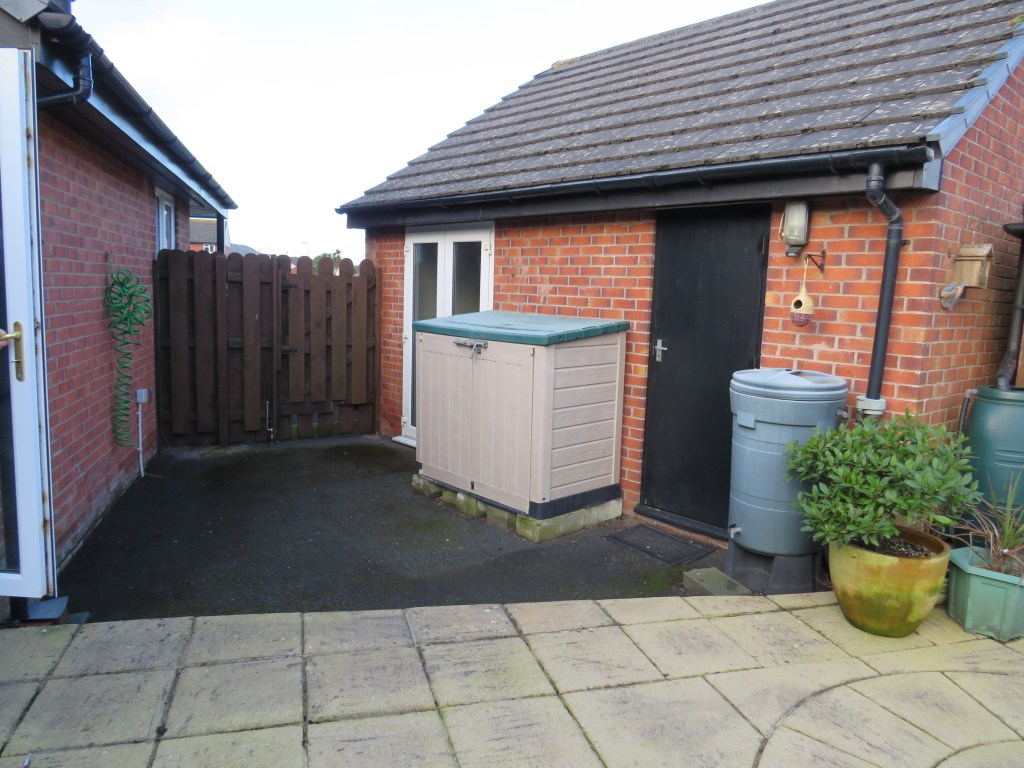
I thought you might enjoy following along with the garden make-over journey. Here are some pictures of what I am dealing with. A long overgrown shrubbery, an eclectic selection of garden ornaments provided by the previous owner, a lot of concrete, three sheds, a summerhouse in need of tlc and a garage, all set on a very tiny east-facing plot. On the plus side it isn’t overlooked.
You are in at the beginning, as all I have done so far is add a stone seat in a random place (it won’t stay there it is just where the removal men dumped it) and twenty or so pots to those already here; mine mostly contain Mistress Agnes’ herbs. Oh and I’ve planted one white lilac that I bought before Christmas and felt would be happier in the ground.
I have a list of ‘must have’ plants, the challenge will be where to put them. I am also adverse to pulling up existing plants in any great number, although a couple do look seriously deceased and I am aware that I may need to see the seasons round to know what is here already. There does seem to be colour for all seasons, with winter jasmine and three camellias, two of which are coming in to flower. Annoyingly, the sunniest corner of the garden, let’s be honest here, the only bit of garden that gets any sun at all this time of year, is currently occupied by the unsightly tin shed. I am reliably informed it is plastic not tin but it looks like tin and helps me distinguish it from the wooden shed and the blatantly obviously plastic shed. Not wishing to have to sit on the shed roof, the current thinking is that the wooden shed will be humanely disposed of and the ‘tin’ shed moved to take its place. Still not sure how two of us move a six foot square ‘tin’ shed but my unwilling partner in crime is of the opinion that it may come apart. The jury is out on whether or not it will go back together again – watch this space. This could rival the flat-pack furniture building scenario. The other debate is to reinstate some grass, or not to reinstate some grass. I am a fan of grass, both for the smell and the wildlife potential but grass has to be mown. Fine now but going forward this may mean I need help with the garden sooner that I would with a grassless plot. Does this matter? Probably not; decisions decisions.







 The History Interpreter - Janet Few