Preparing to leave our caravan site in the Lakes, the robin called to bid us farewell, bringing some of his friends, including a nuthatch. We had an uneventful drive south-eastward to Buxton. The landscape is notably different on the Peak District, with hills, open fields and mellow stone.
The Derbyshire site was adjacent to a country park so, once settled, we walked up to Solomon’s Temple, so named for local landowner Solomon Mycock and built in 1894 to replace a former building that was thought to have been commissioned by the Duke of Devonshire, to provide employment for unemployed lime workers in the 1820s. Archaeological finds suggest that this was the site of a Bronze Age burial mound, as artefacts dating from c. 3500 BCE have been found.
We had an early evening meal and left for Cromford where we had booked to see an open-air play. In fact we’d altered our holiday to arrive earlier in Buxton so we could do this. On arrival everything seemed shut and we could see no sign of an imminent performance. Having wandered around for half an hour and asked several people, I manage to find some mobile signal, rare since leaving home and checked the website to discover that the performance had been cancelled. As the play was about the gunpowder plot, I could understand that, in the aftermath of the Queen’s death, it might not be the most tactful time for a performance about trying to blow up a monarch but apparently the decision to cancel was only taken six days later. I was decidedly annoyed that no one seemed to think that it was a good idea to email those who had booked, to save them a round trip of forty miles, or indeed to put a notice of the cancellation on the firmly locked doors but hey ho. After five emails our not inconsequential entrance money was refunded.
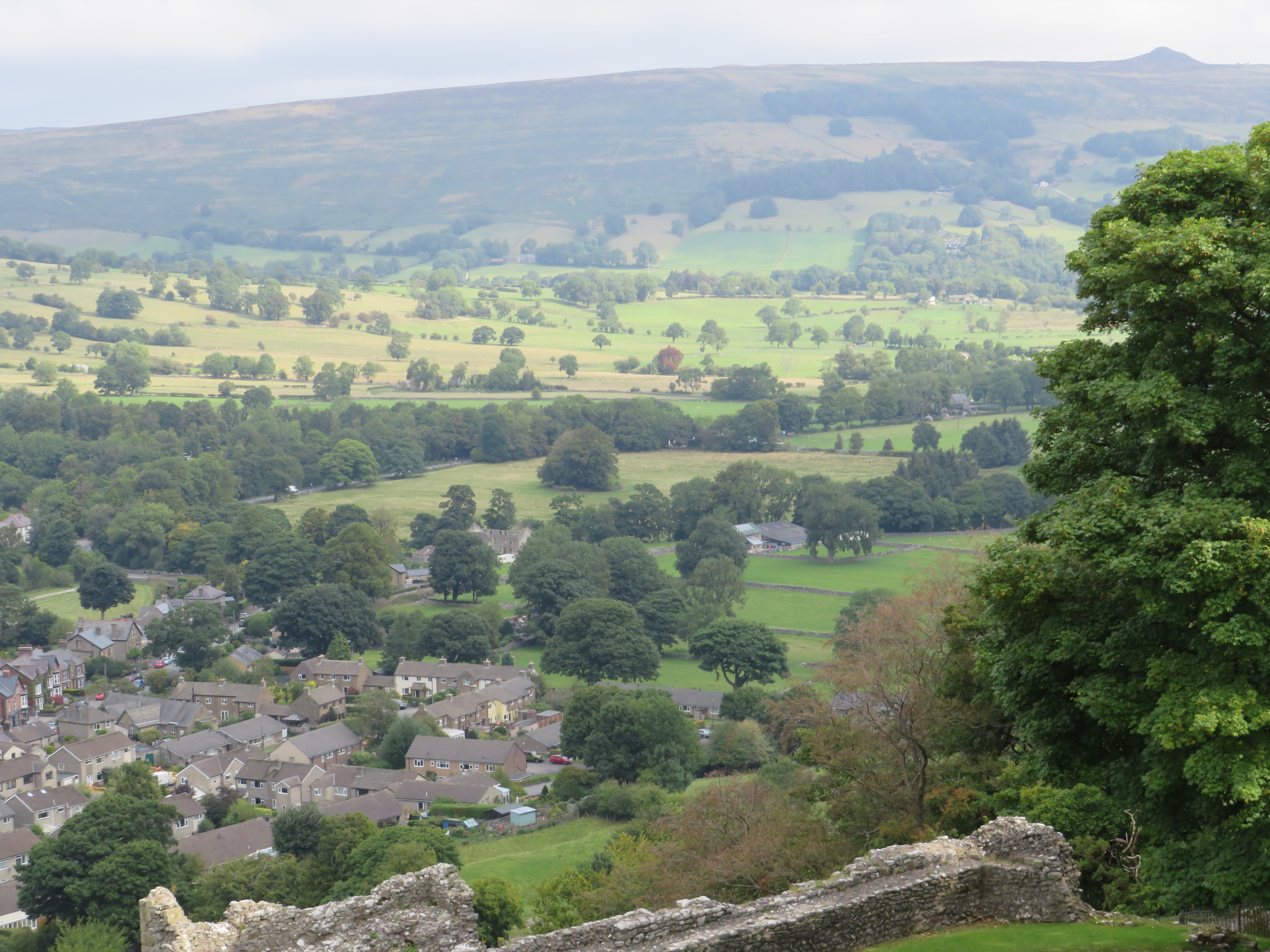
The next day we drove to Hope Valley and along Winnats Pass, with its impressive views across to Mam Tor, the site of a Hill Fort. The Hope Valley is the boundary between the millstone grit of the ‘Dark Peak’ and the differing geology of the ‘White Peak’, an area of carboniferous limestone, with its elaborate cave system. Our destination was Castleton and Peveril Castle, one of many castles established after the conquest in the Forest of the Peak to establish Norman control. Originally called the Castle of the High Peak, the castle was later named for William Peveril, an early keeper of the royal forest. The castle’s purpose was more administrative than defensive, being a base for the Keepers of the Forest of the Peak from the eleventh to sixteenth centuries. Their role was to ensure that the punitive Forest Laws were adhered to; fines were paid and rents were collected. The value of the area to the crown lay in its use as a royal hunting ground and also the local lead and silver mines. Castleton grew up in the late twelfth century, its houses and mills providing an income for the castle’s estate. It was a stop on the packhorse route.
Although the castle was owned by the monarch or a member of the royal family, they rarely visited. Henry III, who was almost certainly responsible for constructing the New Hall at Peveril, only stayed once. Even after the building fell into disrepair, the castle continued to be used as a courthouse, prison and the local pound until the sixteenth century, after which much of the castle was demolished and the dressed building stone was plundered.
We looked at various gift shops selling the local Blue John or Fluorspar and read about John Tym’s Blue John workshop. We had excellent cakes and drinks in Dolly’s tea room, really good value too and highly recommended. Allegedly this premises, in a former incarnation, was billed the worst café in the country; definitely not the case now. A Buxton shopping trip yielded not only food but the adaptor required to download my photographs.
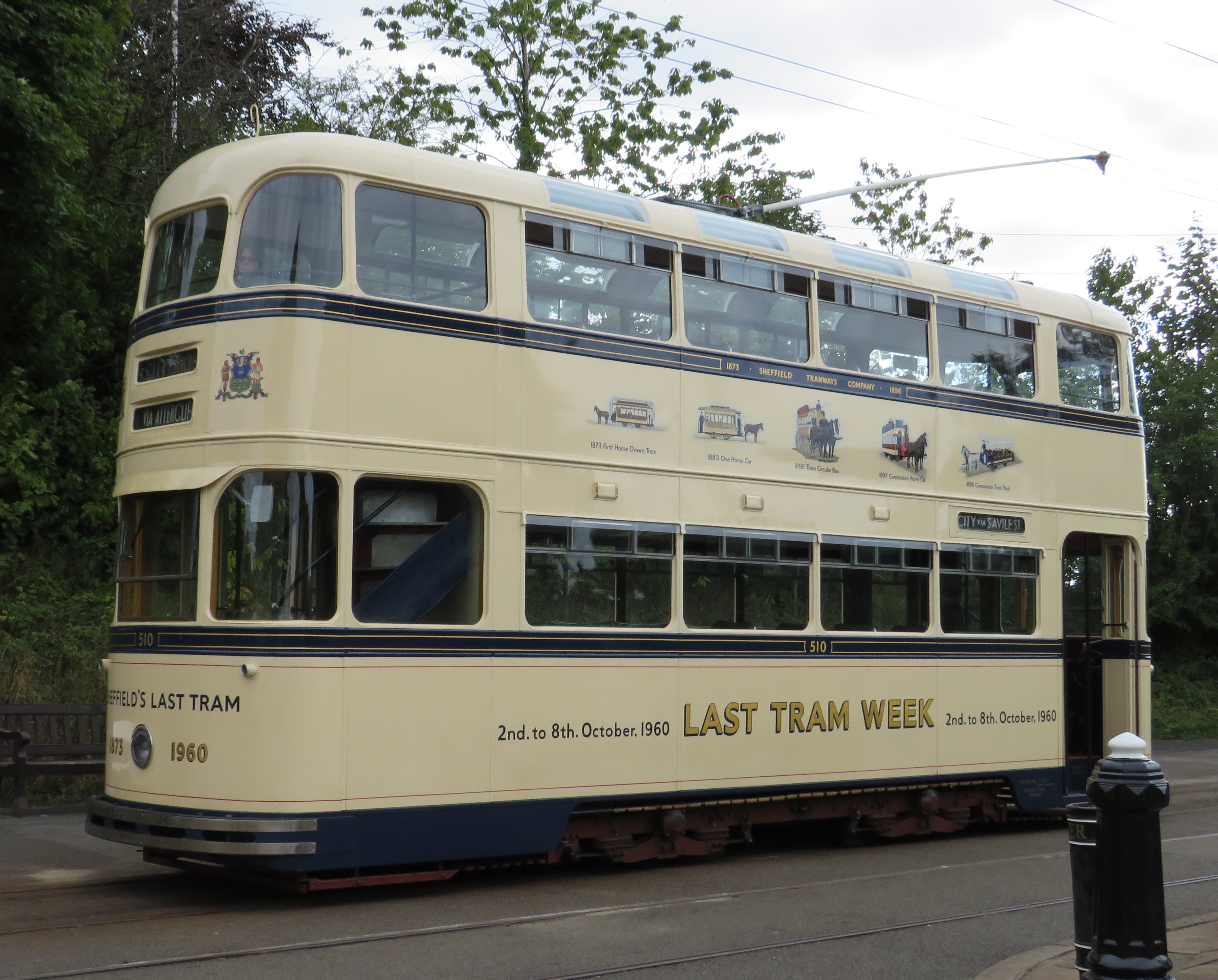
On Martha’s recommendation, we headed off to Crich Tramway Village without too much trouble despite a road closure. This haven for preserved trams was opened in 1959 after the former limestone quarry closed. This attraction is well presented and a credit to the largely volunteer workforce. The enthusiastic Ken showed us round. A random collection of items of architectural heritage have found their way on site but blend together. These include what remained of the Derby Assembly Rooms, which was built in 1765 and caught fire in 1963. Its brick by brick demolition and re-erection took three years. There are two 1897 gas lamps, from Ashton-under-Lyne, originally cast to commemorate Queen Victoria’s diamond jubilee. The gates came from Marylebone station, there’s a tramway shelter from Matlock and a Hendon police phone box. The Red Lion pub from Stoke on Trent was particularly notable, as was one of the last twenty ‘Penfold’ hexagonal Victorian post boxes in the country. One of the more bizarre artefacts was the ventilation pipe from an underground Birmingham toilet.
We road on two trams, one a 1928 from Porto, Portugal. There were many more trams to view and a huge exhibition area. We took our second tram on a one way journey so we could walk back through the woods and view the wooden sculpture trail. We could see the Sherwood Foresters’ War Memorial, which marks the highest point in Derbyshire. There is a view of eight counties from here but access is restricted at the moment so we couldn’t walk up to it. The road closure was a little more impactful on our return journey but we made it back without too much of a detour.



 The History Interpreter - Janet Few