 On the centenary of the armistice it is fitting that today’s post should belong to one of the fallen. Chapter 8 of Barefoot on the Cobbles is set on the western front. In order to reflect the early years of the twentieth century, the novel needed to include an episode that was devoted to the experiences of a combatant. The choice of Abraham, from amongst the men that Clovelly lost, was largely a random one and his life story was not typical. Incidentally, Abraham was not his first given name but in common with several other characters, his name needed to be changed to avoid confusion.
I anticipated that this would be the most difficult chapter for me to write, as I am not a young male, nor have I ever been in a combat zone. The western front was the only location in the novel that I was not able to explore in person. I immersed myself in the war diaries of Abraham’s battalion and read personal memoirs and dairies about the little-known battle in which he lost his life. I discovered that, although the Battle of Fromelles is not a household name in the UK, it is in Australia; the ANZAC troops experiences appalling losses in this campaign. I was also helped by the archivist at Abraham’s school, who responded swiftly and in detail to my enquiries, allowing me to build up a much fuller impression of Abraham’s character.
Although the chapter would not stand up to scrutiny by a military historian, I reasoned that one soldier would not have an impression of the overall tactics, so, if the account seems a little confused, that is probably an accurate reflection of a single soldier’s experiences. In the end, this is the chapter that pleases me the most.
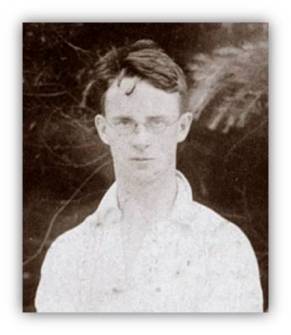
From the Archive of King’s College, Taunton
Abraham Tuke was born in Clovelly in 1894 and was baptised in the church that stood adjacent to his home. His father, Harry, was the Court’s head gardener and the family lived at Gardener’s Cottage, on the edge of the walled garden. Abraham was an only child and his childhood was very different to that of most of his peers. Although he attended Clovelly School as a young boy, he won a scholarship to the prestigious King’s College in Taunton. It must have been difficult to cope with this dislocation and I suspect that Abraham may not have fitted well into either of his worlds. Whilst at King’s, Abraham became Senior Prefect and a Corporal in the Officers’ Training Corps. He was in the debating society and appeared in school productions. He did well academically, winning prizes for History, Religious Instruction and Latin. His ambition was to become a teacher and he qualified at St. Luke’s College, where he played rugby and became editor of the college magazine. The latter made me think that he would have written poetry, so I read volumes of World War 1 poetry, including the efforts of less-known and probably less accomplished poets. In this way, Abraham was able to write a poem, which appears in the book. I consoled myself, as I write it on his behalf, with the fact that he didn’t have to be a very good poet!
Following a role in the Territorials, Abraham joined the 2nd/4th (City of Bristol) Battalion of the Gloucestershire Regiment rising to the rank of Sergeant. He perished on 19 July 1916.
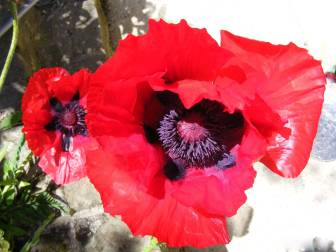
‘Barbed wire coiled across the long grass, self-seeded crops from happier years dared to grow and poppies painted the fields. Abandoned and broken, ploughs rusted where they lay. Then there were the agonising reminders of war. The wooden crosses, roughly hewn, inscribed only with a date; the names of the soldiers who fell on that spot forever forgotten.’
Barefoot on the Cobbles will be published on 17 November 2018. More information about the novel can be found here. Copies will be available at various events in the weeks following the launch or can be pre-ordered from Blue Poppy Publishing or the author. Kindle editions can be pre-ordered for the UK and also on Amazon.com.
![Fromelles 1916 by [Cobb, Paul]](https://images-eu.ssl-images-amazon.com/images/I/51aWYDTG-IL.jpg) I had chosen the character who was to be my vehicle for portraying the battlefields of the Great War. It turned out the the campaign in which he was involved was not one of the more famous ones, unless you are Australian. The Battles of Fromelles features prominently in the Australian narrative because there were huge numbers of ANZAC casualties. Most of the books are written from the Australian point of view and for a secondary account, I relied most heavily on Paul Cobb’s Fromelles 1916. I am not a miiltary historian; I was after impressions, not a minute by minute, accurate narration of the events. Nonetheless, I did need to have an overall impression of what occurred and this book provided me with that.
I had chosen the character who was to be my vehicle for portraying the battlefields of the Great War. It turned out the the campaign in which he was involved was not one of the more famous ones, unless you are Australian. The Battles of Fromelles features prominently in the Australian narrative because there were huge numbers of ANZAC casualties. Most of the books are written from the Australian point of view and for a secondary account, I relied most heavily on Paul Cobb’s Fromelles 1916. I am not a miiltary historian; I was after impressions, not a minute by minute, accurate narration of the events. Nonetheless, I did need to have an overall impression of what occurred and this book provided me with that.

 The military hospital that was set up in the Town Hall in Torquay at the beginning of the First World War was one of the largest in the country. The climate in Torquay was thought to be particularly suitable for convalescing soldiers and there were a number of other hospitals in the town. The hospital is mentioned in Chapter 10 of Barefoot on the Cobbles as Daisy’s friend Winnie has been working there as a VAD nurse. Unlikely though they may sound, Winnie’s experiences, that are described on pages 200-201, are based on the memoirs of a real volunteer at the hospital. Although family information suggests that Daisy nursed whilst she was in Torquay, there is no record of her having been attached to the Red Cross as a VAD, in the Town Hall Hospital or elsewhere. I have therefore given her a slightly different role.
 The History Interpreter - Janet Few