Is Mary Newlands My Great Grandmother? How not Having a DNA Match Helped Break Down a Brick Wall

This post should have gone live on 1 June, the 217th anniversary of the death of Mary Hogg née Newlands. It has taken four solid days to put together (much longer than I anticipated), so it is late – sorry Mary but better late than never. For nearly five decades, the earliest ancestor in my grandmother’s Northumbrian paternal line has been great great grandfather John Hogg. For almost as long, I have been fairly sure that I know who John’s parents are but I have been waiting for an additional piece of evidence before ‘inking them in’. All brick walls are annoying but this is definitely in my top three that I really want to crack, not least because I love the area where I believe they came from; so much so that I embarked on a one-place study of the parish.

Here is a brief summary of the in-depth research that I have done to try to confirm John Hogg’s parentage. I should say at the outset, that this is the only branch of the family that come from anywhere near the north of England, next best are the Bulleys from Norfolk.

The story starts with my great grandfather, also John Hogg. I have his original 1885 marriage certificate, to Caroline Howe, naming his father as John Hogg, a gardener. The marriage took place in south London but census returns for my grandmother, Elizabeth Ann Hogg and her parents, confirm that great grandfather John junior was born in Morpeth, Northumberland. Family stories linked the Hoggs to Morpeth and to Russell ‘cousins’. I have a card that Elizabeth Ann wrote but never posted, addressed to Mr B. Russell, 3 Dacre Street, Morpeth. She referred to him as ‘Bertie’ and signed herself ‘Cousin Bessie’.

From census returns, we can deduce that John Hogg knew where he was born (Morpeth) but was a little vague as to when (April 1855 – March 1858). He was 28 when he married in 1885, so that fits within that date range. John’s death certificate shows that he died, in December 1926, at 3 Dacre Street and the informant was Bertie Russell ‘nephew’. John’s age was 71 (so born between December 1854 and December 1855). The births of four John Hoggs were registered in Morpeth registration district between 1853 and 1859 inclusive. There were no ‘male’ (i.e. no forename) Hoggs registered in Morpeth in this period. I followed up all four. Only one fitted the criteria of being born in Morpeth itself, having a father called John and not having a future that precluded him from being my ancestor. In addition, this family had a daughter who was the mother of Bertie Russell of Dacre Street.

Fully satisfied with my proof argument thus far, I turned to my great great grandfather John senior. He made life difficult by providing three different birthplaces in the census returns, being vague about his age and on one occasion, calling himself George instead of John. Over many years, I obtained copies of every document that I could and built up a detailed timeline of this man’s life, his two wives and nine children. It seemed clear that he was called John; there is just one census return where he is George. He was born somewhere between 1799 and 1809, probably in Bavington or adjacent Kirkheaton, which are about twenty miles west of Morpeth; although one census says Kirknewton, which is on the Scottish borders. He was an agricultural labourer, for the most part specifically a shepherd and he made many short-distance moves in the area during his life.

John’s first wife was buried in 1849, although no death certificate has been found. His first, apparently legitimate, child by his second wife Elizabeth Pearson, my great great grandmother, was in 1854. I could find no marriage either side of the English/Scottish border, within or outwith that date span, using every spelling variant of the names. This was particularly frustrating as a certificate would hopefully have included a father’s name. Comparatively recently, a newspaper announcement came to light, which revealed that they married, in 1853,  at Lamberton Toll, a venue for clandestine marriages that is less well-known than Gretna Green. No records survive for this date.

I followed up all John and George Hoggs born 1797-1808 in Northumberland who appear in the 1851 census and looked for them in both the 1841 and succeeding censuses, to see which one could be the ‘George’ Hogg in Newgate Street, Morpeth in 1861 and John Hogg of Well Way, Morpeth in 1871. It was clear by the family members that these two were one and the same. After a great deal of careful research, I came to the conclusion that my great great grandfather John Hogg was almost certainly the son of Robert and Mary Hogg of Hallington, St. John’s Lee and that he was born in 1804 and baptised in Thockrington, which was adjacent to St. John’s Lee. This was the only baptism in the area around the birthplaces that John/George gave in the census and I could find no plausible alternative future for the John baptised at Thockrington, unless he became my great great grandfather.

I was so nearly there but still I hesitated to add Robert and Mary to my family tree. I was after that elusive ‘one more piece of evidence’. I investigated Robert and Mary’s families to see if this might support my hypothesis. Initially, the Hogg family were not very forthcoming. Robert and Mary only had three children and two died without issue, so there was no hope of tracing descendants for a possible DNA match. Going back yet one more generation, was a bit of a stretch but I tried anyway. This didn’t seem helpful. This family were rural agricultural labourers. They do not appear in the newspapers (as per the British Newspaper Library index). There are no surviving poor law records for the relevant parishes at the appropriate times. They do not appear to have owned land or left wills (Northumberland Archives, Prerogative Court of York and The National Archives indexes checked, as well as the excellent North East Inheritance Database). They do not feature in electoral rolls, nor did they serve in the army or navy. There is nothing in the catalogue at Northumberland Archives that relates to the family, leaving me with very little to go on.

I turned to the brides. Robert’s wife had been Mary Newlands; was she my 3x great grandmother?

The Newlands family, despite their reluctance to baptise children in churches or chapels whose records survive, had more potential. Robert Hogg died in 1805 and his wife Mary née Newlands, just three years later. This would have left John and his surviving sister, Mary, orphaned at a very young age, which might account for John’s later confusion regarding his place and date of birth. There is no age at burial for Robert or Mary Hogg ‘relict of Robt’. Mary and Robert were married in 1799, in Chollerton about five miles west of where their children were baptised. A family of Newlands emerged in Elsdon, some ten miles to the north. In 1773, a Mary Newlins had been baptised in Falstone, the daughter of John Newlins, or Newlands, whose wife was an Ann, or Nanny, née Corbitt. The Corbitts were a little more obliging, with a couple of useful wills and some gravestones. I began to build up a picture of the Corbett and Newlands families but were they my ancestors?

I was contacted by a descendant of Sarah Milburn née Newlands, believed to be Mary’s sister. I’ll call the contact SS. If our trees were right we would be fifth cousins once removed. I am used to playing with very small DNA matches. Yes, I know all the caveats but to put this in perspective, I only have a total of thirty matches that are 40cM or higher and anything over 20cM is ‘high’ by my standards. I do treat these with extreme caution but it is all I have. As fifth cousins once removed there was no certainty that SS and I would match and we don’t. This led me to look again at the matches that I do have. It turned out that, although we don’t match each other, SS and I had at least four shared, albeit very tiny, matches, all of whom descended from Sarah Milburn née Newlands. Two were my fifth cousins once removed, one a fifth cousin three times removed and I am unsure of the exact relationship of the fourth. The largest of these is a new match that arrived this week, leading to more delay in getting this posted.

Twenty year old Mary Hogg, almost certainly Robert and Mary’s daughter, died at Smiddywell Ridge, in the parish of Bellingham. in 1827. This was the home of SS’s ancestor, Sarah Milburn née Newlands. My John Hogg married in Netherwitton, the home of another Newlands sister. Were John and Mary each brought up by a different aunt?

In addition, I have an almost respectable 22cM match to a Corbitt descendant. She would be my sixth cousin once removed and yes I have checked that we don’t appear to share any other ancestry.

I am now going to claim Mary Newlands as my 3x great  grandmother. To be clear, the weight of the evidence lies in my 48 years of exhaustive research. What I have outlined here barely scratches the surface. I am not basing this on DNA connections that all the DNA experts would tell me are too small to be significant. Every genealogist has to make decisions about how much evidence is enough. For me, I was 97% there with the documentary evidence, the DNA was just a final pieces of a very large jigsaw. If you want to read a fifteen page proof argument, describing in detail why I believe Mary Newlands is my three time great grandmother, you can access it through my Granny’s Tales page. All serious family historians should be setting out why x is the parent of y for all generations of their family tree (and no of course I haven’t done this for all lines yet but I can aim – how long do I have?).

Next step, who were the parents of John Newlands? This is particularly exciting as it will take my direct ancestry out of England for the first time and yes there is one of those tiny DNA matches to the Newlands of Kelso, who are almost certainly John’s family – the question is which John is which?
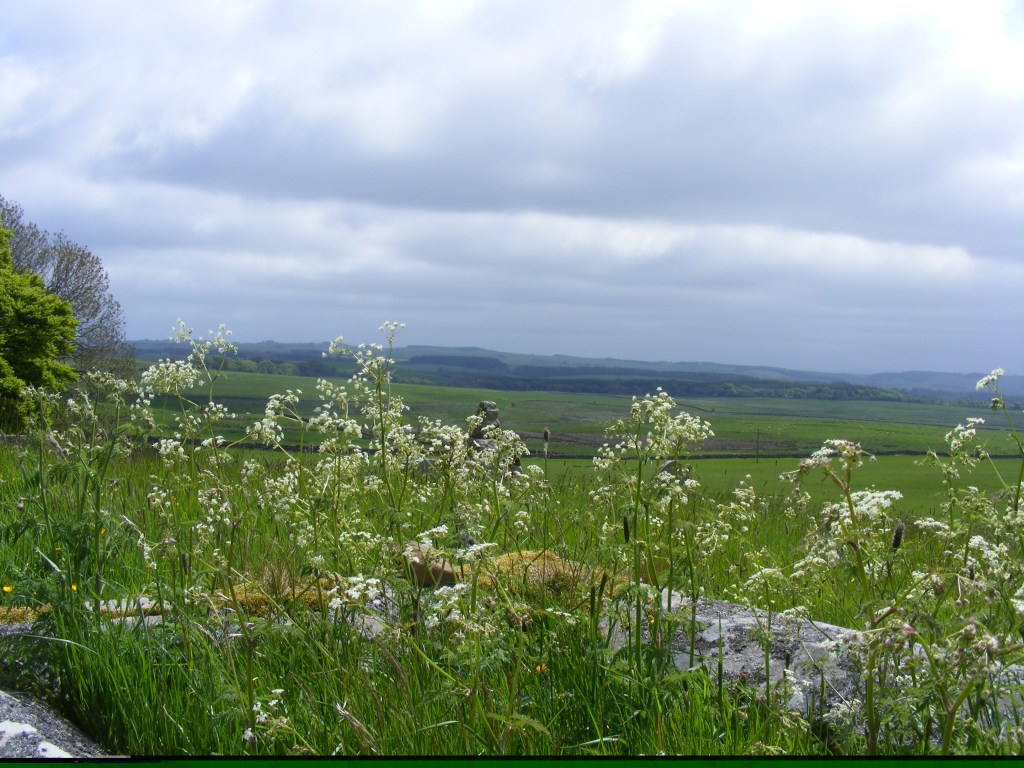
The view from the churchyard where Mary is buried and one of my favourite places in the world

People and Places of the Past

Most of the month has been taken up with family visits and being weirdly unwell, with a return of the mystery allergic reaction I had three years ago. Maybe I am just allergic to August, who knows? Anyway that is receding now and I am trying to take my mind off the fact that no one who wants to buy my house can sell theirs. There’s been plenty to keep me busy. As two Pharos courses draw to a close, I am already preparing for the next one: Discovering Your British Family and Local Community in the early 20th Century. I particularly like leading this course, as it combines both family history and one-place studies. It starts in October if you want to come along for the five week online ride. Following my own advice and immersing myself in early twentieth century family history, my granny’s biography has now reached the outbreak of the Second World War. The story so far is available here.

The recent Forgotten Women Friday also led to investigating women who reached adulthood in the early twentieth century. More than fifty volunteers have been looking at the lives of the first cohort of women to train as teachers at Cheshire County Training College in Crewe. The finished stories are starting to be uploaded to our website. It is hard to believe that in less than nine months we have preserved the memories of more than two hundred women.

On the one-place front, the revisions for the second edition of Putting Your Ancestors in Their Place are done and that should be available in the new year. So many URLs have changed and I have added some more suggested sources for one-placers. More one-place news; I am excited to be joining a stellar cast for the All About the Place event. My ten minute slot is recorded and I have also done three short readings about places. This promises to be a great collaboration.

Family History and our Pets

Until recently, I was a columnist for the In-depth Genealogist Magazine and also wrote for their blog. Now the magazine is sadly no more, contributors have been invited to re-post their blog material elsewhere, so that it is preserved. This is another post that I wrote for the magazine.

It started with a Tweet. Academics from Royal Holloway and the University of Manchester were investigating how we interacted with our pets between 1837 and 1939. As part of the project they were asking for pre-second world war photographs of family pets. I am fortunate to have a large number of photographs from my mother’s family and yes there were pets. Some of these animals I remember, although these were too recent for the purposes of the project but others lived on in family stories. Apart from the labels on the photographs, had I actually recorded the pet stories in any way? In some respects, pets are a little like those on our family tree who left no descendants, the maiden great-aunts whose stories will not be preserved unless we, the family historians, ensure that they are.

age 6.JPG

It occurred to me that we have a very special relationship with our animals but rarely do they feature in our family histories. We may have no idea about the animals that featured in the lives of our more distant family members but perhaps we should be acknowledging the existence of our own pets and those that belonged to our immediate ancestors.

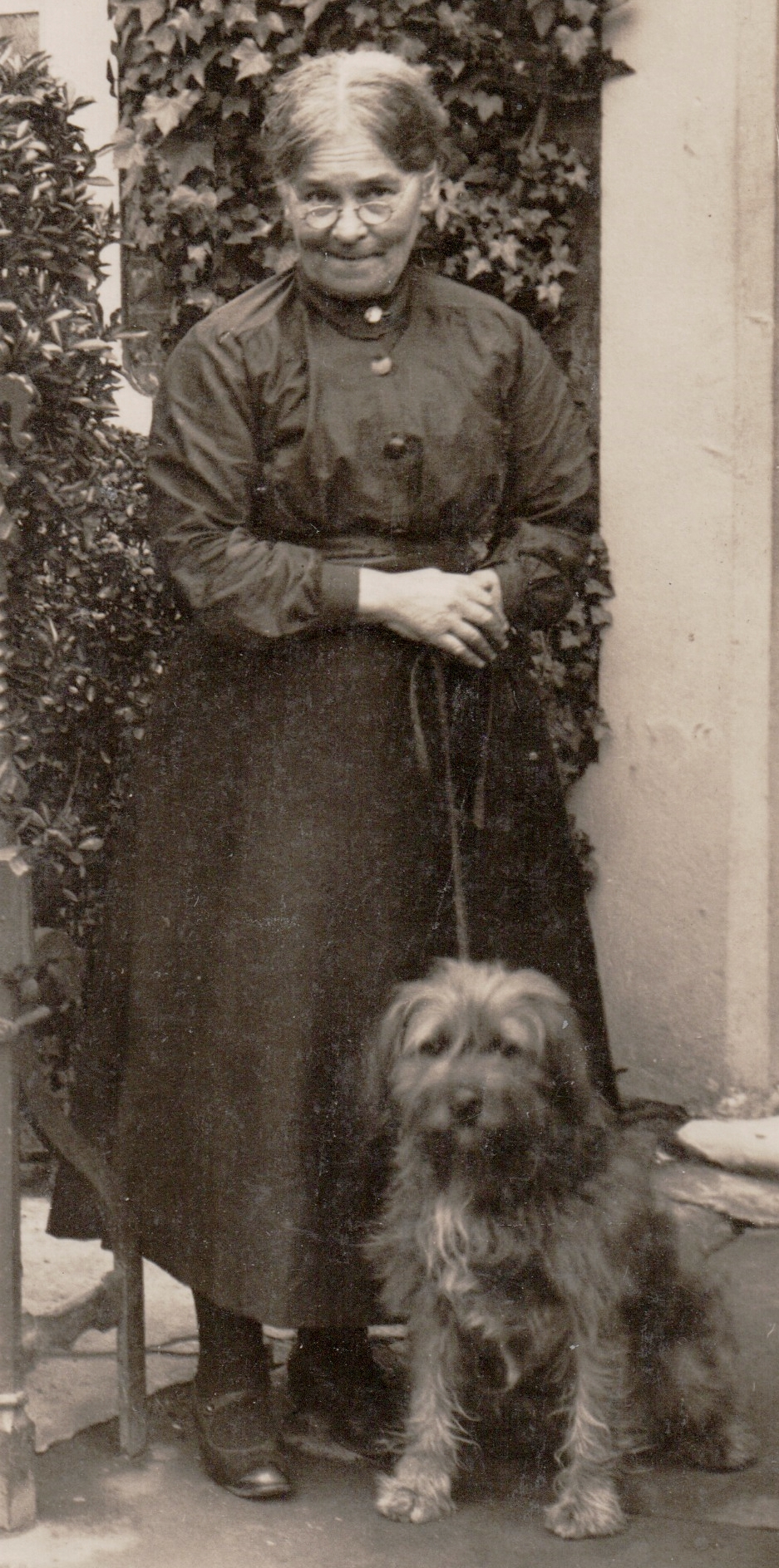
Clara Woolgar nee Dawson 1858-1949 with Mephistopholes 1927.JPG

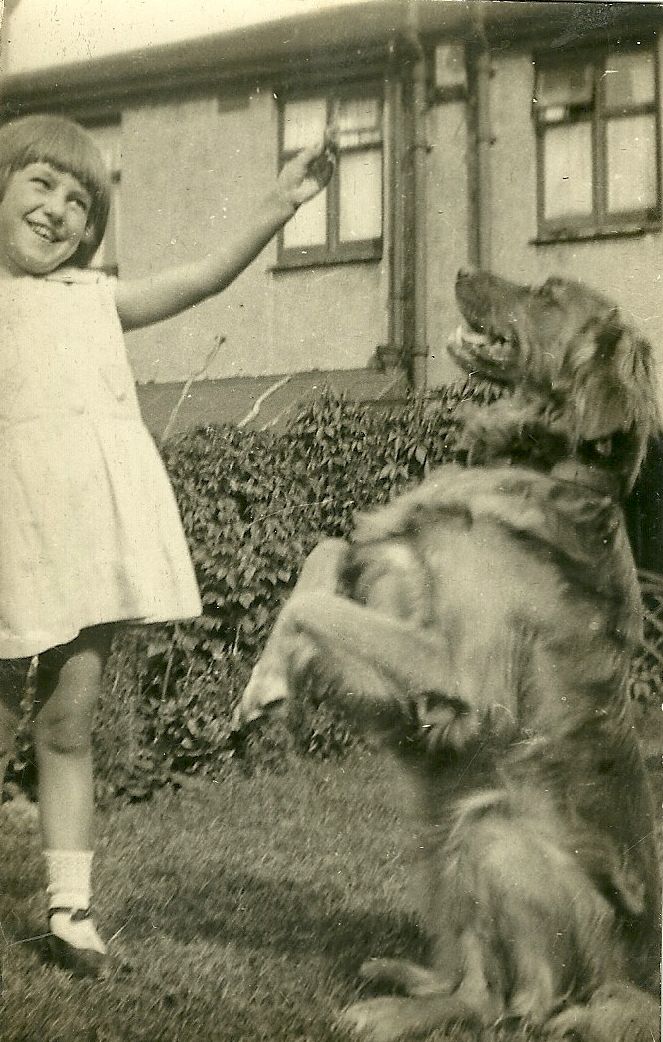
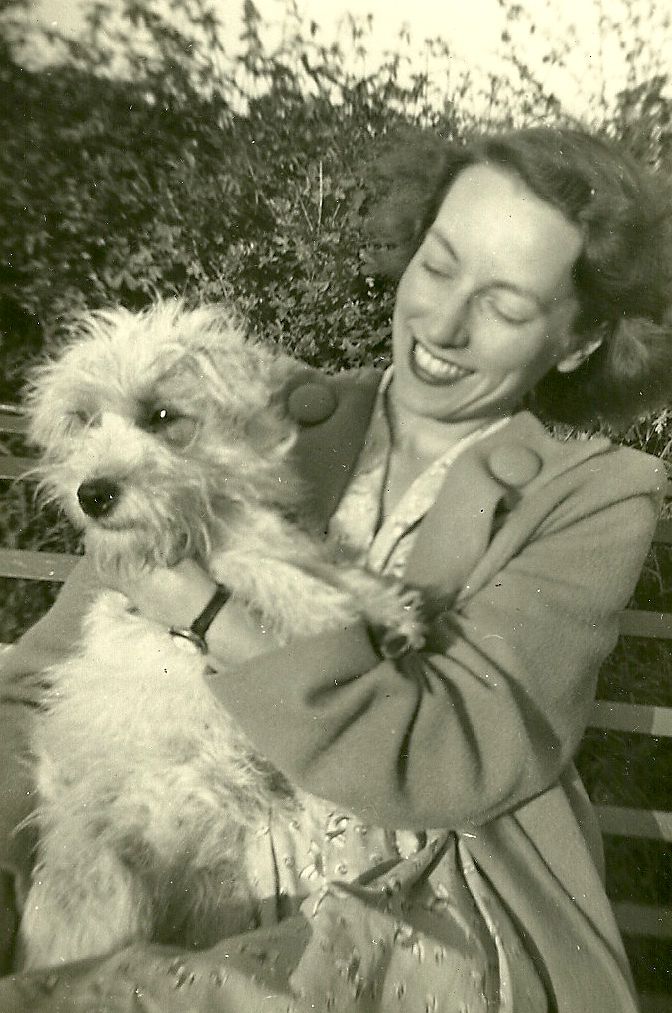
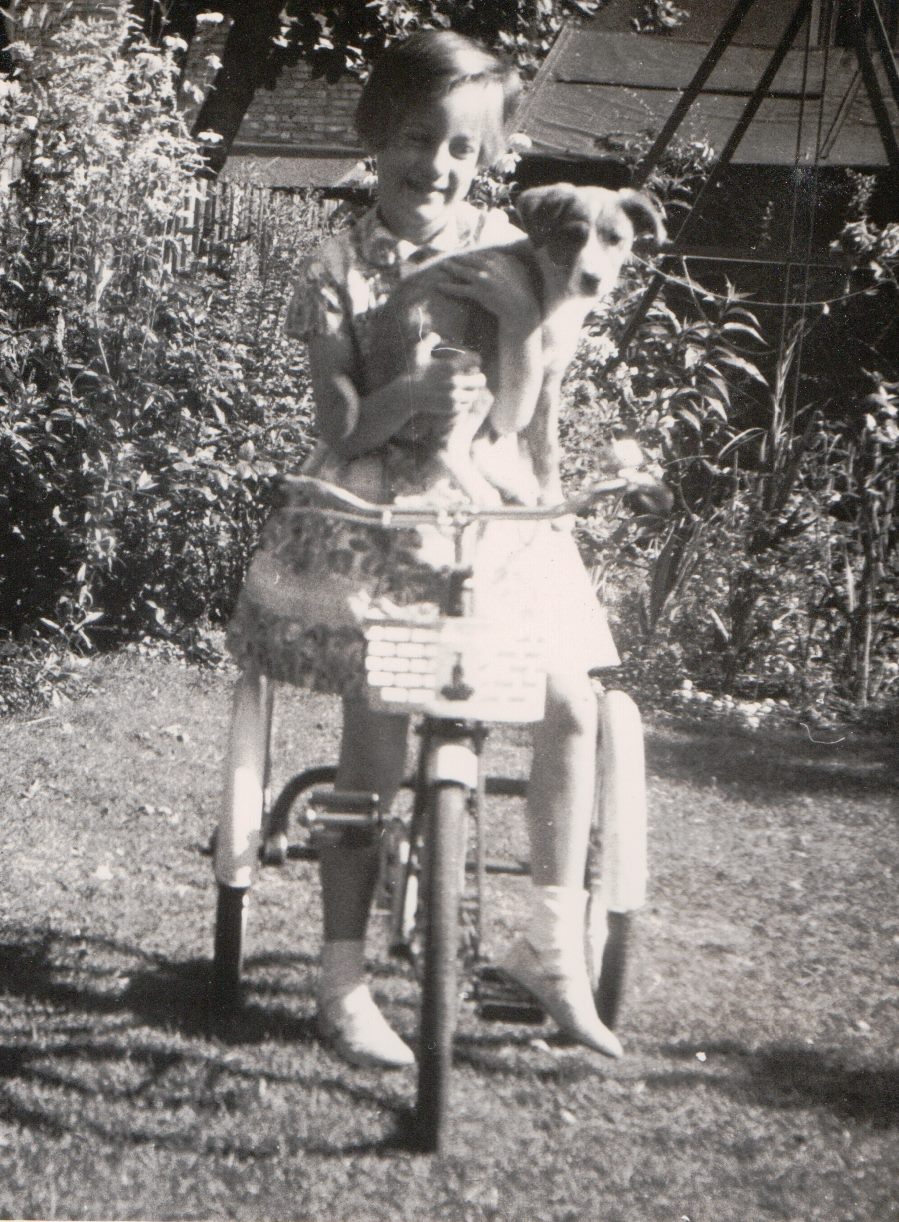
My great uncle was a serial pet owner. I have photographs of his dog Mephistopheles, so called because my uncle was performing in a choral piece of the same name at the time the dog was acquired. Like family stories that relate to people, things had become garbled in my memory. I was convinced that ‘Mef’ (imagine shouting ‘Mephistopheles’ across a park) was an Irish Setter but pictures show that he was anything but. Sadly Mef died of a heart attack when the coalman’s horse reared up suddenly and broke the front windows of the house with his hooves. Mef was replaced by a Red Setter, Dep, so called because he deputised for Mef. As a late teenager my mother had Judy the Cairn and Squibs the West Highland White Terrier. Throughout my own childhood my constant companion was Sparky the mongrel. So many memories but here is just one, we would hide under the bed together when Christmas balloons were being blown up.

Gwen and Dep c. 1933.jpg

There were occasions when we had to transport budgerigars from granny’s to home. We may only have actually done this once but it seems as if it was several times. Nor can I be sure why we were doing this, as we holidayed together. Initially granny had two budgies, Comfy and Cosy, one blue and one green, although I cannot remember which was which. To these was added the plain yellow Romeo, so called I think, because he had been found ‘roaming’. We seemed to make a habit of catching lost budgies, sneaking up behind them and rescuing them from the dangers of the wild with judicious use of a net curtain. The bird cage was put on my, by then outgrown, pushchair and covered with a blanket. I stood on the push chair step and leant forward holding the handle to stop the cage sliding off in the event of any emergency stops.

scan0015.jpg

I could go on with stories of how Nora the hamster escaped and lived in the back of the sofa for three days before recapture, or how we had to take the side panel off the bath when my daughter’s hamster made a similar bid for freedom some thirty years later. By now you have the idea, add your pet stories to other family reminiscences; man’s best friends deserve to be remembered. If you do have any pre 1939 pet photographs then get in touch with Pet Histories.

Day 2 #bfotc sources and how not to write trip advisor reviews

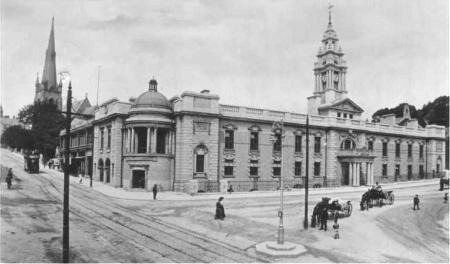
Torquay Town Hall Hospital

Torquay Town Hospital

Day two of the ‘advent calendar’ focusing on some of the historical/genealogical sources that I used in the writing of Barefoot on the Cobbles. When it came to the chapters set in Torquay, I needed a Voluntary Aid Detachment (VAD) nurse to befriend one of my main characters. I was able to use the excellent Red Cross website in order to choose my named character who nursed at the hospital in Torquay. This database contains details of 90,000 individuals who volunteered with the Red Cross during World War I. Normally, searches would be by name but it is also possible to search by location or hospital, which is what I needed to do in order to find those who were working in Torquay. In addition, the site provided me with valuable background information about the role of VADs. The index is also available on FindMyPast but as the Red Cross site is free to search and leads to images of the record cards, it seems sensible to start there.

And trip advisor? I hear you ask (mild gory details alert). What I was trying to write was ‘Our party of eight had six menu choices ……’. Inadvertently, one of the vowels changed, giving my post a very different meaning. I am still trying to live this down, although I am predicting that the venue will now be packed! I am blaming auto-correct. That and the fact that there was a contact lens related incident last week. On Monday, I removed a lens to find that only half had come away. I was in the car in the dark at the time and judicious poking about in my eye failed to reveal the other half of the lens. My house doesn’t do bright lights but in marginally better light and with the aid of a mirror, once home, I tried again, to no avail. The next day, with a fair amount of gunk emanating from my eye and the distinct impression that I had at least half a barrel of grit in it, it was off to minor injuries clinic. Yellow stuff was squirted in my eye and I was examined under special lights. Cotton bud-like implements rolled back my eyelids. The verdict was that there was no half lens in there but that I may have scratched my eye in an attempt to find it. Five days of ointment squirting pass with no discernible improvement. I write said trip advisor review one-eyed and shortly afterwards notice a ridge across my pupil – ah ha there is the rolled up lens that had officially been proclaimed to be no longer in my eye. I successfully remove it and instant relief!

More information about Barefoot on the Cobbles can be found here. Copies are available at various events and at all my presentations. You can order from Blue Poppy Publishing or directly from me. Kindle editions are available for those in the UK, USA, Australasia and Canada.

Researching, Writing, Speaking and Making Lemonade

It has been a week of giving and preparing presentations and there are two more forays into the seventeenth century still to come. It began last Saturday, with a webinar for the Surname Society on tracing emigrants and immigrants, which, apart from the inability of participants to ask questions, appeared to be hitch free. Thanks to the organisers, this will be available on the Legacy platform before too long. Then final preparations for my session on coastal communities ready for The Guild of One-Name Studies’ conference. A certain degree of smugness because my session for Who Do You Think You Are? Live on finding elusive ancestors is already done. So that I am not elusive, I will tell you that will find me on the Thursday, April 6th, at 3.00pm. You can book for this one you know – I am in the big hall, I don’t want to have to resort to rent a crowd! Seriously, some sessions are selling out, so don’t hesitate to book for your favourites.

I have had the opportunity to put my elusive ancestor finding techniques into practice this week, whilst helping a friend. I really enjoy going back to the early stages of a research journey. Part of this hunt involved a possible change of surname and an individual, with a rather too common surname, who grew up in care but find them we did. One satisfied customer.

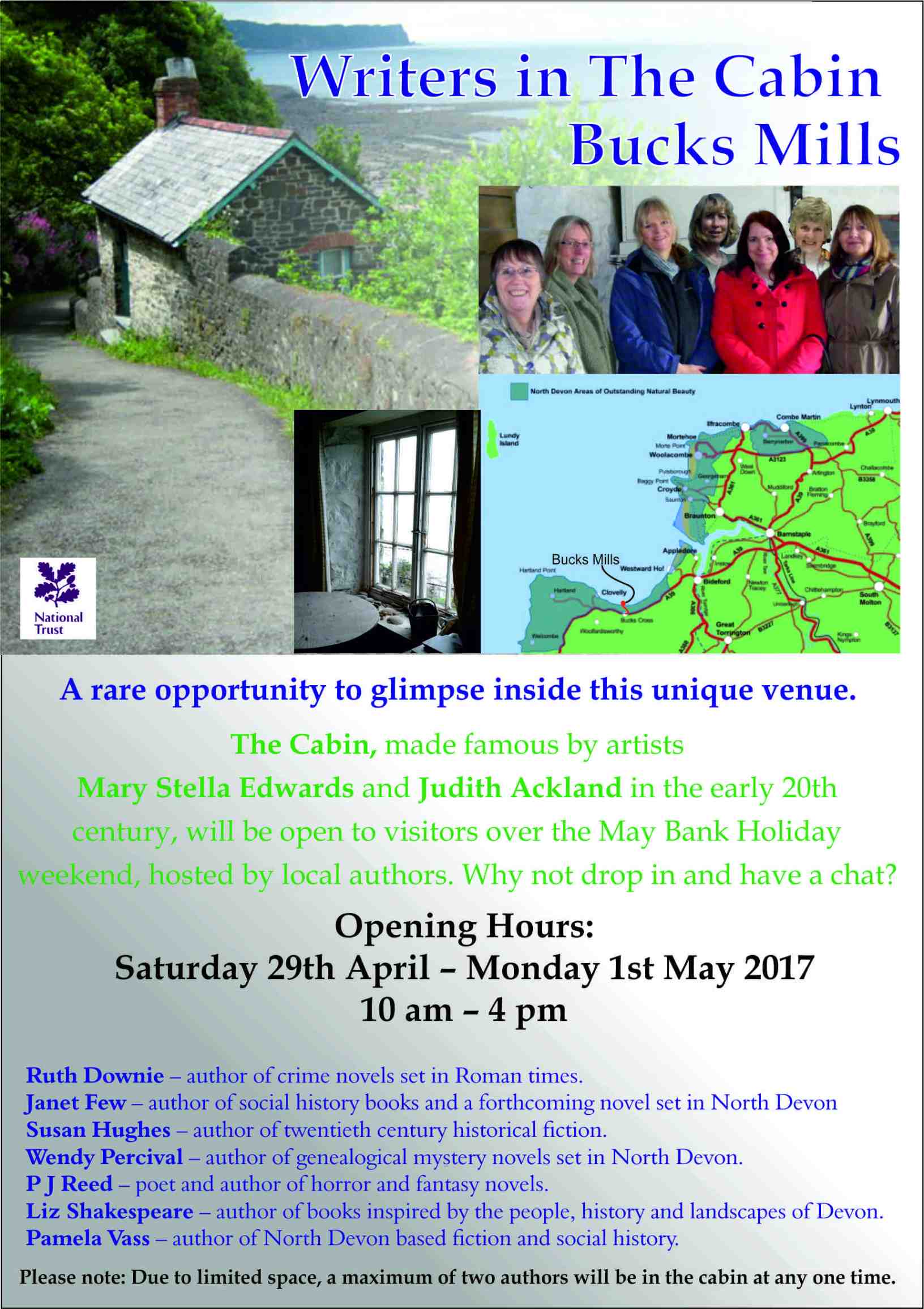
Writers in Cabin flyerI have done some #Daisy writing, honestly, I really have. Whisper it quietly, one chapter even got finished. For reasons best known to myself I decided that I wanted to insert an anchor symbol into the text. This was not as easy as I feel it should have been and in the process of attempting to use the ‘special characters’ function, my screen turned on its side. Not wishing to adopt a permanent crick in the neck, I had to work out how to undo whatever I had just done. Let’s just say it took a while and at one point I was standing on my head but normality has returned to the screen of my laptop. The publicity flyers have arrived to advertise our Writers in a Cabin weekend. Do come and say hello. If you want to chat to a particular one of us, watch out on individual writers’ websites for when they are ‘on duty’, as there isn’t space for us all to be there all weekend.
The lottery that is good health once you reach a certain age has handed me a few lemons lately. Whilst I am busy making lemonade, it has meant that various appointments with medical personnel have been required. To make sense of this story you need to know that it is a cardio-thoracic issue (probably) – I watch Holby City, I can do technical terms. Two letters arrived on my doormat, with different phone numbers to ring for appointments 1. Cardiology 2 Diagnostics (a scan think I). It would be just too simple for the two things to be on the same day. Cardiology booked no problem. I ring Diagnostics ‘Where would you like to go for your hearing test?’ I just restrained myself from saying ‘Pardon?’ Last I heard that was the one bit of me that was still working! Turns out it was a clerical error.

It’s Only Words – more about writing

178-9-august-2014-sunset-at-north-ledaigAs the Bee Gees’ lyric continues ‘and words are all I have’. In a week when many around the world are feeling impotent, frustrated, angry, riddled with hatred – so many emotions – I feel the need to adjust the focus. I put my faith in the ripple effect, if I can change the fragment of the universe that surrounds me perhaps it will, by osmosis, have a wider impact. In the interests of realignment, this is not going to be one of my rare political posts, I have said all there is to say before. My post that I wrote during the aftermath of the EU referendum is equally appropriate to the debacle that is the US election.

Today’s post is about progress and positivity but about conflict nonetheless. What weapons do I have to take into battle? What am I able to do and hopefully do well? I write, I stand up and talk to large audiences without a qualm. Sometimes I dress in strange outfits so to do. Mostly, I talk and write about history; how is that relevant to the present, let alone the future? How can I be a warrior for change when I am so rooted in the past? When I applied for college, part of the interview process was to write an essay entitled ‘Why Study History?’ I have largely forgotten the words I used then but they obviously struck home as I was accepted. It was the 1970s, I know that the Irish Troubles and their echoes and reflections of earlier events were part of my response; the details no longer matter. The value of history has not changed. Those who study history are not slightly strange individuals whose work is mere self-indulgence. An understanding of what has gone before is essential to our current well being. That is why those particularly personal branches of history, family and local history are so relevant. By learning where we have come from we become more firmly grounded, we have a sense of belonging, of well-being, we can better comprehend where we are going. We really do need to take heed of George Santayana’s telling statement that heads the home page of my website: “Those who cannot remember the past are condemned to fulfil it”. An understanding of the past informs our actions in the future. It teaches us to analyse, to think critically, to be aware of the need for proof and to be wary of propaganda. The universal lack of these skills has been blatantly self-evident this year.

Well crafted words provoke reactions, emotions, they are powerful weapons for good or evil, they need to be well chosen. So, what have I been writing lately? Most of my output has not been of national import, although I like to think that the way in which I expressed my opinion in a letter to BBC’s Newswatch, was one of the reasons that an extract from it was read. My first two articles for The In-Depth Genealogist’s Magazine have been submitted. The column is about women’s work and will be an eclectic mix of descriptions of household tasks and paid work. So far I have written about making clothes and munutionettes; next stop laundry.

I have been encouraging others to write too. My ‘Writing and Telling your Family’s Story’ course for Pharos has come to an end and I was privileged to have an enthusiastic band of students. The course is being repeated in February; bear this in mind if your New Year’s Resolution is to finally put fingers to keyboard. I have also been writing another course for Pharos, this one is about researching families and communities in the first part of the twentieth century. It starts in January and you can sign up now. These are online courses so can be taken from any location.

Oh and words also have to be accurate. I am pleased to have been chosen as a speaker at Who Do You Think You Are? Live again in 2017. Tickets for workshops (including mine on Tracing your Elusive English Ancestors) can now be booked. Currently, the description of my session does not match the title! I am trying to work out if this is better or worse than two years ago when my ‘Creating your Family’s Story’ was billed as ‘Creating Your Family’ – it did sell out though!

What else have I let myself in for? Our little group of North Devon authors are trialing ‘writers in residence’ sessions in a local café and I’ve volunteered to be the first victim. So I will be in Latte and Lunch café on Bideford Quay on Wednesday 16 November between 10.30 and 12.00 chatting about what I have written and what I am creating now. I will also have details of the output of others from our group. I really don’t want to look like Billy no mates so, if you are local, do come and grab a coffee and make it look like a crowd. As an incentive, the cake is yummy too!

And finally….. The news has just broken that one of my all time favourite artists, Leonard Cohen, has died. There was a man who knew how to weave magic with his words. Even if his musical style is not to your taste his compelling lyrics need to be read as the poetry that they are. Halleluya may be the most well known and it one of my favourites but for today, The Guests seems appropriate.

Maps, Surveys, Displays and Other Historical Randomness

I’ve been here, there and almost everywhere over the last few weeks. Trying to find various far flung places is not always easy and sometimes our not so trusty sat-nav fails us (see below for some of the gory details). Mapping our ancestors and the communities of the past is just as important as knowing where we are going in the present. Although it is not a course of my own devising, I am pleased to be tutoring the ‘Maps and Surveys – Locating your Ancestors’ course for Pharos Tutors, starting on 9th August. There may still be spaces, so please do book. The course is primarily about British sources but it is all online, so those of you with British ancestors can study it wherever you are in the world. Apart from a general overview, we shall be looking in detail at one of my favourite sources – the 1910 Valuation Office Survey, as well as the tithe maps and apportionments and enclosure maps. Do join me!

I certainly needed a map on several occasions recently. When we go out swording and spindling, which we’ve been doing a great deal lately, we take a vehicle of suitable dimensions – you try getting eighteen pikes (no not the fish) into a Nissan Micra. So not in the Nissan Micra then but for reasons we won’t go in to, in a vehicle with no way of charging the sat-nav. This means that, in fear of the battery running out, we delay turning on the sat-nav until we get to the point where we are almost lost. Sat-nav set for a school in south east Devon, via Crediton, to avoid as much rush hour traffic as possible and we are on our way. We get well beyond Crediton before we feel the need to turn on the sat-nav for advice. We follow Sally sat-nav’s exhortations to go right, left and ‘turn around where possible’ with only a few slight hiccups when we reach roads that have been built since she was last updated. Suddenly we appear to be miles away from where we should be. I resort to a map (once a girl guide …..) and we arrive with minutes to spare – good job I am genetically programmed to leave what is normally ridiculously early for any event. Later we realise the problem. Even though we were well past Crediton, we had asked to go via Crediton and that is what the sat–nav was trying to make us do – lesson learned.

Amongst all the school bookings have been talks to grown-ups. One was at Devon Rural Archive. We needed a map to find that one too but what a gem. A really great set up, a full house and a very appreciative audience for my seventeenth century gardens presentation. A visit is definitely recommended. Then there was a talk to a Somerset WI who were celebrating their 85th birthday, a yummy birthday tea as well on this occasion! We decided to combine this trip with picking up a ‘collection only’ chest of drawers that I had purchased on eBay. Again we have the large pike-carrying non sat-nav charging vehicle. First finding the industrial estate where the chest of drawers is hiding, comparatively straight forward. Next, getting the chest of drawers into said vehicle – Ah. I had sensibly measured the space at home where it was to go and it fitted. Had I measured the vehicle. Err…. that would be a No. Well, in the end, with much manouvering, we inserted said chest of drawers into said vehicle. Had it been a centimetre larger in any direction we would have been in trouble.

Our local history society has been on display at various events in the village and beyond lately. A few days ago we were part of an open day at a nearby iron age hill fort. Actually getting to the display area by the fort was a logistical nightmare. We needed to get a table, display boards and various books and papers to what was effectively the middle of nowhere. You will note also that this was a hill fort, the clue is in the name. Our Iron Age forebears liked to have a commanding view. We did find the nearest point on the road with the aid of maps, directions and signs erected by the organisers. Sat-navs are no use for hill forts surrounded by woods. We then had to get our equipment along the footpaths to the hill fort. Chris manfully agreed to risk life and vehicle by driving along a bridleway but it was still a jolly long way to transport our belongings. I can verify that I am just too short to comfortably carry a pasting table half a mile without it banging on the uneven ground. Having been blown away at the recent Buckland fete, on this occasion, we were adamant that our display needed to be under cover and out of the wind. Sure enough, we were provided with a large tent, with jolly, retro curtains. Unfortunately, this was a hot day with no sign of wind or rain, so any perusal of our display was limited by how long the public could endure the heat and humidity in the tent! Luckily, we were helped by landrover transport on the way back to civilisation.

We now seem to have summer at last, just as I planned to do things to the house and garden that require temperatures of under 30 degrees, not that I am complaining. I also have visits from small persons to look forward to over the next couple of weeks – hurrah!

Harnessing the Facebook Generation: ideas for involving young people in family history and heritage and other news

Busy, busy, busy. What with the job I must not mention, now almost completed and Swording and Spindling like mad it has all been very hectic. It is especially satisfying to have spent five days in schools in the last fortnight and to have been so well received by staff and students (they all asked us back next year – what more could we ask for?). In the same fortnight, two talks for adults as well, so much for ‘retirement’.

TDSCF3191hings have taken a bit of an Australian turn lately. I spoke to the Society of Australian Genealogists about causes of death. Sadly this was not an all expenses paid trip; my presence was merely virtual. In addition, the Australian company Unlock the Past have published another of my booklets Harnessing the Facebook Generation: ideas for involving young people in family history and heritage, something I feel very strongly about. It can be purchased from the publishers.  It is also available as an ebook and it should soon be on sale in print form from UK and Canadian outlets. It is always exciting to hold the actual copies in your hand, even though you know what is inside! Australia are going to have their own Family History Expo in October; the down under equivalent of RootsTech or Who Do You Think You Are? Live. Unfortunately I won’t be going but if you are in the right hemisphere, do give it some thought.
I have also been ‘Racing’ for Life in aid of Cancer Research. Despite the temperature suddenly soaring to 10 degrees above anything I had encountered so far in what has laughingly passed for our summer, I survived. I was under strict instructions not to ‘race’; really difficult when you are as competitive as I am. So no trying to come in under 40 minutes as I usually do. Still I did get round the 5km in under three-quarters of an hour, so I guess I just have to grow old gracefully and be content with that. There is still time to sponsor me.

Rubbing Shoulders with Authors and some Technological Challenges

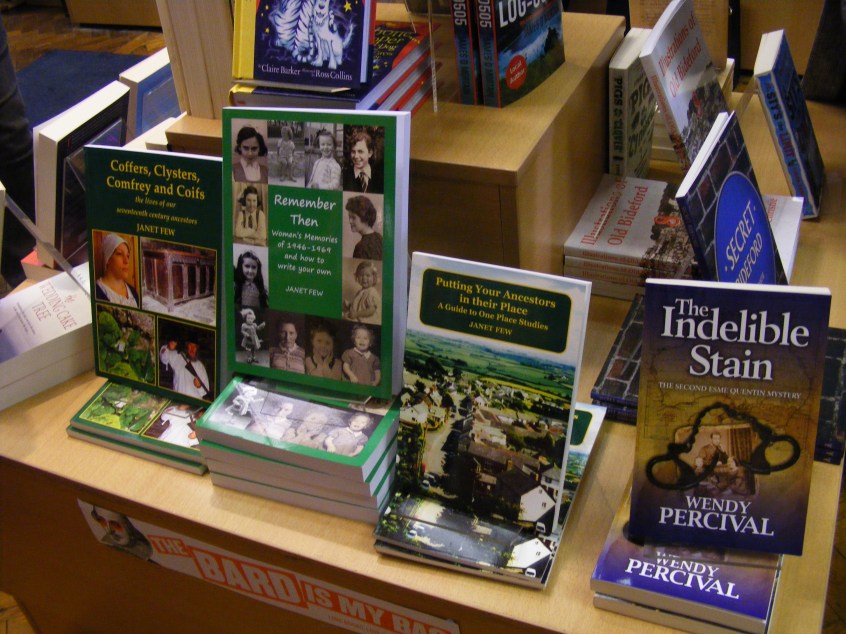
DSCF2644.JPGTo commemorate the 400th anniversary of Shakespeare’s death (allegedly) and also World Book Day, I spent an afternoon in our local independent book shop, Walter Henry’s of Bideford, in the company of other local authors. Putting an author in a bookshop really does need some kind of government health warning, especially as they also sell rather lovely wooden toys. I just wanted to rush out and buy copies of everything all the other authors had written. You can see the one I did buy in the picture alongside some of my own but there are several more on my wanted list.  It was lovely to see our books on display. Thanks to fellow author Ruth Downie for the honourable mention in her blog about the afternoon. This week I have been in author mode, working on my forthcoming online ‘writing up your family history’ course for Pharos Tutors and putting the finishing touches to my booklet about how to inspire young people to get involved in family and local history. You would not believe how many historical novels there are for children and I could only include a selection.

I have also, possibly, been inspired by my fiction writing colleagues to branch into the world of novel writing. It was either write a book or do an MA in experimental archaeology. I decided the latter may have to wait as it a) costs money and b) might be too restricting a time commitment. So research has begun, watch this space but probably not for a very long time.

Then there have been some technological challenges. I was invited to make a short video for World Book Day and to mark the launch of Libraries Unlimited. This was a bit of a performance, not least because I was in seventeenth century clothing and wanted a background that lacked things like light switches. I was born in the wrong decade for video taking to be an everyday occurrence and I don’t have a mobile phone. That’s a lie, I have an ‘emergency phone’ that does just that, makes phone calls and inevitably is never about my person in an emergency. It is pay as you go and I think I have put £15 of credit on it since I moved 10 years ago. Anyway lacking a phone or tablet, I enlisted my partner in crime to take the video using my camera. The first take was quite good but we had turned the camera sideways and I had no idea how to turn the resulting video back the right way round (I later learned that this can be done). Not wanting to give my adoring public cricks in the neck we did take 2. Not quite a good as take 1 but take 2 it had to be as by then I was near the deadline and I still had to work out how to send it to the person who was collating them. That took two attempts too.

Then finally finding the frustration of my internet dropping out at vital moments (which it has been doing for the past few months) I telephoned my provider and spent half an hour allegedly ‘fixing’ this. This involved a great deal of turning the router on and off, watching for lights on the router and reporting back to the person on the other end of the phone. Imagine the scenario, no mobile phone remember so I am on the landline in bedroom one. ‘Please turn off your router’, I am asked. I leap off the bed run along the landing corridor, launch myself at the spare bed in bedroom three. Stand on my head to get under the bed (which is heavily populated by my book stock), turn off said router, rush back down the corridor to report that mission is accomplished. ‘Have the lights gone out?’. Back down the corridor, launch self at bed, stand on head, etc. etc. This scenario was repeated numerous time over the course of the next half hour. At the end, some improvement in internet consistency but it has been decided that I need a new ‘super fast’ (that will be a relative term) router so the whole procedure was a waste of time.