Of Procrastination and Potash Makers

Where have you been? I hear you cry. Actually, I suspect that you never noticed that this is probably my longest gap between posts ever. My recent adventures have included a lovely week on the Isle of Wight with some of my descendants, frantically trying to keep up with the grandchildren on Pokémon Go and some uplifting walks along the beach in the early morning. I have also been able to meet more than one set of old friends who have been holidaying in the area. It is a wonderful feeling when you get together with people you haven’t seen for twenty years and you can’t believe that you didn’t last chat a few weeks ago. There was also the chance to meet much newer online friends in person.

Mistress Agnes has ventured into a school for the first time since lockdown, you really can’t keep that good woman down. She is now frantically concocting herbal cures for some aggressive bites, acquired when standing in a field whilst her colleague shot a few people. There have been talks to give to audiences across the world, sadly only a virtual trip to Australia this time and courses to prepare. Next up is my five week online course for Pharos Tutoring and Teaching that focuses on researching family and local history in the first half of the twentieth century, with a whole new section to write on the 1921 census. Still space for you to enrol if you want to join in the fun on this one. As I was reviewing the course, I decided to go through it myself and add to the biography of my grandmother, which is making very slow progress.

The next non-fiction book now has nearly three chapters done, the latest has seen me researching a fascinating family from the Romani community, which includes the notorious ‘Gypsy King’, Wisdom Smith. The final term of my post-grad course has begun and with it the incentive to focus on a great great grandmother’s story but more of that in a separate post.

I have also done a fair bit of procrastinating and doing things that aren’t even on the frighteningly long to do list. I can’t even remember why I thought I’d do this but I took a look at how many direct ancestors I have discovered in 45 years of research. To save you the maths, if you go back to your 6x great grandparents, who, if you are my generation, were probably born in the first half of the eighteenth century, there are a potential 510 direct ancestors. I have full names for 203 of them, approximately 40%. I don’t count the ones where I don’t have the woman’s maiden name. I do have the names of more distant ancestors but after the 6x great grandparents the numbers are frightening and the success rate dwindles significantly, so I stopped at this point. My percentage found is probably not bad for someone with English ancestry; these ancestors come from nine English counties. One quarter of my ancestry suffers from pedigree collapse, as first cousins marry in two successive generations. This probably explains a lot but also means that one set of 4x great grandparents appear in my direct ancestry three times.

I decided I would put off doing what I should be doing and see how evenly spread these ancestors were across different branches of my family. To explain what I mean: I looked at each of my eight great grandparents in turn and calculated how many of their direct ancestors I had found in the preceding five generations; there are potentially 62 for each great grandparent. The greatest success is with my direct paternal, west country, line. I can identify 40/62 of great grandfather William James Braund’s ancestors, closely followed by 35/62 ancestors for his wife Fanny Thomasine Bishop. In fact, my father’s family holds third place too, with 33/62 ancestors of Caroline Howe on the tree. We will draw a veil over the 9/62 for great grandfather John Hogg. In my defence I am 95% sure of some of the missing ones. I just feel that I need one more piece of supporting evidence to ink in several generations of John Hogg’s Northumbrian ancestry. The statistics on my mother’s side are hampered by those pesky repeated 4x great grandparents who create a brick wall in three places, although again, I have my suspicions of who fits in the gaps.

The upshot of all this is that I tried to boost the numbers by looking again at a brick wall that I hadn’t investigated much before. Oh boy this looked interesting, potash makers, gentlemen, a chap who endorsed a quack doctor, claiming to have his hearing restored, in a newspaper advert of 1785 – great stuff. Slight side-track while I check exactly what potash makers did and add the newspaper advert to my history of medicine course. This branch was not a straightforward family to trace, due to their use of a very limited range of Christian names and the fact that they come from a county whose parish registers are only online in indexed form. Ooh look though, they left wills and I could obtain these from a very efficient record office within twenty four hours. This would be just the final confirmatory piece of the jigsaw I needed, then I too could follow the lead of the umpteen online trees who joined the potash maker (he of the miracle cure) and the gentleman to my tree. Except I can’t. A great will, mentioning five generations of the testator’s family, which clearly none of those online tree compilers have read. Back to the drawing board and I feel a mini one-name study coming on, when I should of course be doing something else entirely. Is the potash maker mine or not? Watch this space.

To add to the fun, the job I must not mention has now arrived with a vengeance but I may post here as light relief.

Reflections on the Young Genealogists’ Conference

Now that the dust is settling after the Young Genealogists’ conference, it is time for some reflections. What hasn’t settled is the buzz on social media, where #GenieYouthCon comments are still coming in. Firstly, a huge thank you to all who contributed in any way. The Society of Genealogists and the Family History Federation, who came together to get this off the ground, the hosts, everyone, of all ages, who came along to listen, those who responded so readily when I asked for door prizes: Pharos Tutoring and Teaching, the Society for One-Place Studies and Devon Family History Society, My Heritage and the Society of Genealogists who offered membership discounts, I will be casting my net wider next time! Those who spread the word on social media, the list goes on. Most of all, thank you to the ten speakers, who came from across the English-speaking world to enthuse, inspire and educate us.

The day exceeded my expectations; I must admit to a couple of sleepless nights with three weeks to go, when bookings were coming in very slowly. Obviously, I could be said to be biased, so here are some comments from other people (these were taken at random – I haven’t cherry-picked the 5* reviews): ‘It was a wonderful day of talks, and note taking of new ideas. Thank you jointly, for getting this conversation going.’ ‘It was a great event! Thank you to everyone involved. I missed a couple of speakers but hoping they crop up again in some other events. I didn’t apply to talk this year as the anxiety was just too real!! But..maybe next year?!’ ‘Echoing those calling for the #GenieYouthCon to be a fixture in the Genie calendar. I was there to share the benefits of @AGRAGenealogy membership but came away with my whole perspective change. It was a real education and left me excited for the future of the profession.’

We didn’t ask the attendees their age but I estimate that perhaps 40% of those who took part were under forty. The majority of the audience were from the UK, understandable in view of the time zones but there were attendees from Australia, New Zealand, Canada, Ireland and the USA. I was expecting people to drop in for one or two sessions and depart. A few did do that but a hard core stayed all day, even a couple for whom ‘all day’ was 2am-2pm.

To me, the most positive parts of the event were the discussions; not just those that took place in the time-tabled discussion slots but also the conversations that were had during what were meant to be breaks but when people couldn’t bear to tear themselves away.

Was it perfect in every way? Of course not. It was an inaugural event and there are inevitably things that would be tweaked another time. In any case, one person’s ‘perfect’ is another person’s ‘falling short’. In retrospect, maybe it was a shame that it wasn’t set up to make it possible for at least some of the presentations to be available for people to watch later. That decision was taken from a safeguarding standpoint; we were mindful that we were encouraging young people to take part, including those under the age of 18. In fact, some of the presenters are now putting their own presentations in a public forum and others are repeating their sessions elsewhere. I do feel that the conference succeeded in showcasing some exciting young presenters and I am sure many of them have already been booked to talk elsewhere. We’ve had discussions about what younger family historians want from the wider genealogy community and I really feel that we have moved the debate forward in a positive way. Roll on next time.

What will Family History look like in the Future?

As someone who is now in their forty sixth year of serious family history research, I have watched the family history movement grow and change (not always for the better) over many years. That growth and development will continue and so it should. We should not be content with doing things the way that they have always been done. Neither, of course, should we look to make changes just for change’s sake. The pandemic has forced changes on many aspects of our lives and the way that genealogical societies function is no exception. The past few years has, finally, seen the door to the family history community open a little wider. There is still a long way to go along the road to inclusivity but those first small steps are being taken, even if the difference may seem imperceptible.

Genealogy has, with some justification, long been perceived as a pursuit for middle-aged (ok let’s be honest here – old), middle-class, white people. This needs to change. There are ways of enabling all to engage in the hobby/obsession that many of us enjoy but it is not up to those who currently feel excluded to break down the barriers. There are things that we should all do to be more welcoming and to make the family history world more accessible and inclusive. Everyone has a heritage and no one should feel excluded from exploring their own story. It is clear that one group who have felt that the some aspects of the genealogy community have not been welcoming or accessible, are younger family historians. I know they are not the only group who have felt this but for now, let us focus on the young because without them, before long, there will be no genealogy community.

Understandably, as part of the evolutionary process of the family history movement, many young people want to pursue the search for their heritage in a different way to those of us whose journey began in the 1970s, or 1990s, or 2010s. There is an increasing focus on identity, in its many forms, on story-telling and on understanding the past as a vehicle towards well-being in the present. The genealogical world is evolving and there is the prospect of a fascinating future emerging. It won’t look like the family history world that some of us older genealogists have become comfortable with but there is room for all. Please, don’t think I am suggesting that everything needs to change. I know many were quite content with the status quo. New ways of approaching research, of running genealogical societies, of opening up the community, can sit alongside what is already in place, not necessarily replace provision that is already there.

I hope that everyone who takes family history seriously will be interested in this intriguing ‘what next?’. Your chance to glimpse the future is here. You can attend the online youth conference, organised jointly by the Society of Genealogists and the Family History Federation, on 7 May. This event showcases young presenters. There are some interesting new perspectives on family history being shared by some extremely knowledgeable speakers. The presenters are young but the conference is for everyone. There are more than twelve hours of presentations for the token amount of £1.50. It would be unbearably patronising of me to suggest that attendance was about supporting the next generation of family historians, although they would welcome that support. You will enjoy what is on offer and learn from those who are making their mark in the genealogy community. Come to hear one presentation, come to hear them all but please do register for the day. These are real-time only presentations, so no recordings but even if you can only pop in to listen to one or two, it is a bargain. I know that we will be hearing more from these young people in the future. The day is also an opportunity for programme organisers to find new speakers for meetings and conferences. There are ten presenters, all under the age of thirty, from five countries and everyone, of all ages, is encouraged to come along. It is going to be a great day. The programme is here and bookings can be made here.

The Experimental Archaeology Adventure Part 9: from a thing to things

I am now, sadly, halfway through this course. It really does come highly recommended if you are interested in the objects of the past. It is wonderful that it has been made available as an option for distance learning. You have until 3 June to apply for a place on next year’s course. Ideal if you are a traditional craftsperson, historical interpreter or family historian. Although ‘archaeology’ conjures up visions of ancient artefacts and there is, understandably, a good dollop of input about fascinating older ‘stuff’ the flexibility of the course has meant that I can concentrate on a much more recent era. I was sad to miss the opportunity to be in-person at the amazing Centre for Experimental Archaeology and Material Culture (CEAMAC) but it wasn’t to be for me – maybe another time.

The assignment about Jessie’s Locket has been and gone. I created a wonderful powerpoint plus soundtrack before realising that the time limit was ten minutes. I decided that I might not get away with sixteen minutes, so editing was needed. I was in a better position than some of my colleagues whose efforts topped forty minutes but still an issue. I reluctantly axed some of the material and then gabbled away in an unprofessionally speedy fashion to cram what was left into ten minutes and fourteen seconds. I now await the results with trepidation.

Attention has turned to a lengthier assignment, focussing on bringing an archaeological perspective to the examination of a collection of objects. Again, it was difficult to choose but I have decided on the collection of family photographs that pre-date my birth. These photographs are currently housed in a single album. Part one of the assignment is to describe the collection, so I have begun by categorising the images, which are almost all of people, rather than places or events. Having counted them, I was surprised to find that there are 554! They will take a while to catalogue and yes, I do know that I have many still to scan but that is not part of the assignment. The next and most interesting, stage is to write about their significance, their meaning and to think about how I react to these images. I have a horrible feeling that this may become uncharacteristically sentimental if I am not careful. Finally, I have to consider the ongoing future of the collection and look at comparative studies. That’s going to be the difficult bit. If anyone can point me in the direction of papers about the curation and conservation of specific photographic collections, I’d be grateful. So far, I’ve found a book for £198.02 that I might have to give a miss.

I have free rein regarding how I present this assignment and I have decided that one can have too much of chatting to your computer, so this will be an extended, illustrated essay, with plans to put the results on this, or possibly another, website. Watch this (or another) space.

I sometimes think that I have learned as much about social media on this course as I have about Experimental Archaeology. I have scaled the learning curves that are WhatsApp, Discord and now it seems I have found myself on ‘Insta’ (see I am learning the lingo). I did accidentally follow Adele by mistake but I think I am getting the hang. Not yet decided how I might use it but if you want to follow me feel free JanetFewHistory.

Old photograph of a mother and child with a doll's pram
A favourite from my collection 1926

Family History in Springtime and a Decorating Debacle

It is Women’s History month. I really should be getting on with granny’s biography but that seems to have slipped to the bottom of the very long to do list. I was chuffed to see that The National Archives were recommending my book Remember Then for Women’s History week. There are still copies hiding under the spare bed of a fisherman of my acquaintance, if you’d like you cross my palm with silver. I have no idea why it is on sale on Amazon for £19.90. You can get it from me for the proper price of £12.95, just get in touch. In anticipation of a visit to the area where they originated, I have taken a look at granny’s deeper ancestry. I even managed to find a couple of new 5th and 6th x great grandparents but the mystery of which of two Johns is my 4x great grandfather remains. Fortunately, the Johns are first cousins, so, after what I call a wiring diagram, indicating the either/or, the line can be continued back to the sixteenth century.

Having decided, reluctantly, not to go to Ireland this month, in theory my diary should have been clear. Explain to me then how I have had something on, on thirteen evenings out of the last fifteen. It would have been fourteen but one was cancelled. On the strength of a nominally ‘free’ month. I decided it was time to decorate the hall and landing. The above-mentioned fisherman offered to do the death-defying balancing ladders on the stairs stuff. I was a bit reluctant to agree to this but was persuaded. Fortunately, that part was accomplished without incident. I couldn’t watch. The idea was that I would do most of the rest but in the end my role was limited to affixing miles of masking tape round door frames. This wasn’t as easy as it sounds as the reel of tape had been lying around for a while and peeled off the roll in three inch lengths. After a couple of hours I had completed the task. Halls and landing have so many doors. I sat down to some computer work, smugly content that the job was done. Leaving the room shortly afterwards, I was dismayed to see streamers of masking tape dangling from every point. A new reel of tape was purchased and I did it all again. I should say that my hall and landing could not be smaller. The hall is three foot square and the landing is a narrow corridor. There is nothing in the space. How then, has this decorating endeavour meant that there is evidence of its undertaking in every other room?

I still have a mile long playlist of Rootstech sessions to watch. In the meantime, on the horizon, there are three other key events to highlight. In chronological order:- Do check out the Historians for Ukraine event on 26 and 27 March.  I had hoped to be involved in this but I will be in a field and I don’t know how reliable my internet will be, so I will be cheering from the sidelines and hope to take part in a spin off event. An event that I am actively involved in is a Free 24 Hour Genealogy Marathon, run by Legacy on 7 and 8 April. You can register for that here.

Then on 7 May is the Youth Genealogy Conference. I get a sneak peak at the speakers’ submissions and I’ve been excited by the response. This is going to be a great day, with some thought provoking and interesting talks from some knowledgeable younger presenters. Don’t worry, I will make sure everyone knows how to attend. There is no age limit on the audience!

The website creation for the Braund family continues. I was advised that there were accessibility issues. For example, not all of the many images had alternative text, which is necessary to enable those with a screen reader to know what is in them. A bit of poking about in the bowels of Wix and I discovered a button to press to identify accessibility problems on the site. Button duly pressed, the whole site ground to a halt. After this had happened several times, I started going through the images individually and checking that they had alternate text. I tried the button again and 99 issues remained. It seems that we had had so many issues that we’d broken the system. All sorted now on the accessibility front, so it is back to the exciting job of continuing to add content.

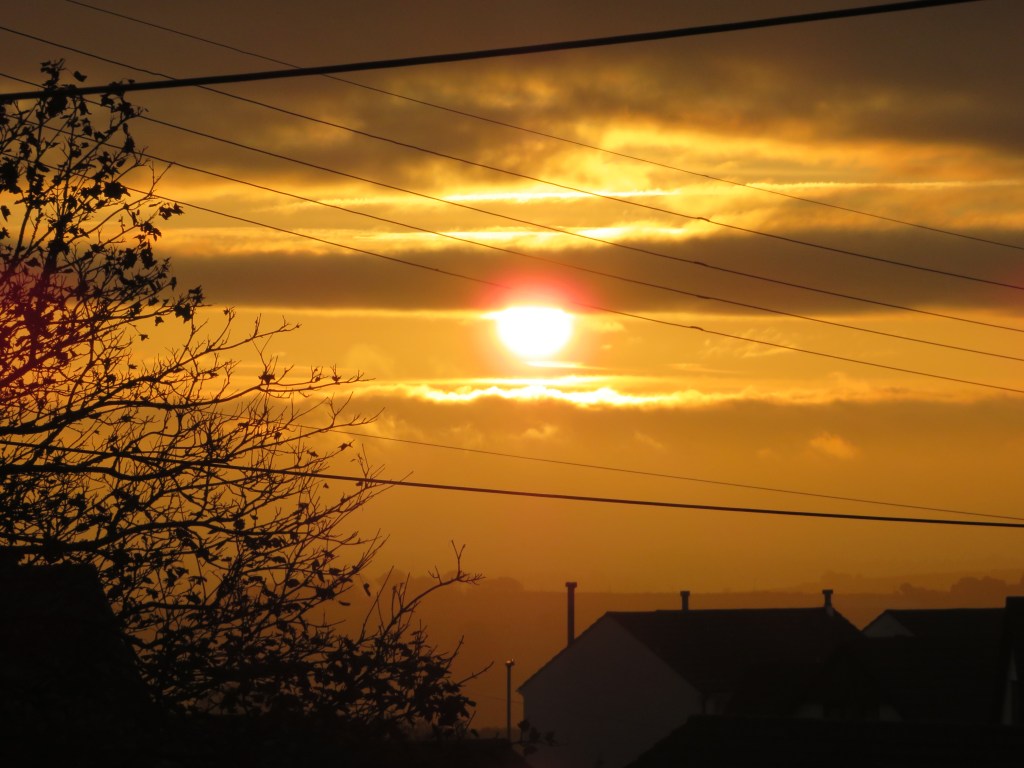
To accentuate the positive, in my hemisphere there are wonderful signs of spring in the air. I am writing this at 5.30 am, watching the sky lighten and it is warm enough to open the window and listen to the symphony that is the birds’ wake up call.

Sunrise

Rootstech Roundup

Well, one week on and I really thought it was time for a RootsTech round up. I have to say that I haven’t yet had time to sample many sessions. That’s the advantage of knowing that these will still be there for me to watch gradually over the coming months. It does also mean that I have been a little lazy about working my way through my playlist. I must admit that, with 1222 presenters, many offering multiple sessions, navigating my way to what might interest or intrigue me is a bit of a challenge. I tend to rely on the recommendations of others and looking for speakers that I know, first of all. Next, I look at topics of interest and I did find it a little difficult to locate these. Finally, I always try to add something that is out of my comfort zone and/or by speakers I don’t know. I’ll be honest I usually avoid the keynote sessions, although I know others enjoy these. This year there was an international line-up but in the absence of anyone I’d heard of, I have given these a miss so far.

I started off very early on the Friday morning, joining in with Michelle Patient and Fiona Brooker of Talking Family History, who were solving brick walls. This was really enjoyable and Fiona and Michelle coped admirably with some technological challenges and the absence of their third panellist due to illness.

I had one other live session high on my list of must watches and that was the discussion led by Lynn Broderick and Jill Ball on ‘Dealing with Ethical Dilemmas in an Online World’. This should be essential watching for all family historians who engage online. Sadly, a prior commitment meant that I couldn’t listen live and it took a few days for it to become available. I was particularly pleased to hear Jill’s opening tribute to the indigenous settlers of their lands and their contribution to the history of the past. Lynn and Jill had assembled an all-star panel to tackle some crucial issues, each of which really deserved a whole session on its own. It was great to have Daniel of The Hidden Branch as part of the team. Again, there were some minor technical gremlins as the presenters tried to share their polls but these did not distract from the discussion. As a viewer of the recording, we couldn’t see the questions, maybe something that presenters should be warned of in advance so they can include a slide with the questions. A shame too that there was no access to the chat after time.

Judy Russell’s contribution to this panel on copyright is also something that many people in the genealogy community need to hear. It is alarming but sadly unsurprising, how many people aren’t adhering to the ethical or even the legal issues in this regard. Just because we can, does not mean we should. Equally unsurprising and worrying was the level of ignorance about which DNA companies use their database for law-enforcement purposes.

For some light relief, I listened to Caroline Gurney on the folk traditions of Maypole and Morris dancing. Next up was ‘Around the World with the 1921 Census’ with Jen Baldwin; great to hear one-place studies getting a mention. An excellent case-study session was Michelle Patient’s ‘Finding Frank’. I have so many more sessions to work through; I’ll comment on these when I get to them. Oh, and I am having great fun with Relatives at Rootstech – of which more another time.

It has also been great to to get positive feedback on my own sessions, which you can find here.

What Janet did Next: a bit about website creating, piano playing and childbirth et. al.

It has been a very long time since I wrote about the day-to-day mayhem that is my life. So, what have I been up to?

The Braund family one-name society is 40 today. In 1982, 200 people who were Braunds, or related to Braunds, gathered in North Devon and formed the Braund Society – and they said it would never last. I was heavily pregnant so didn’t attend but I was a founder member. Over the years, the society has tried to evolve with the times. We’ve had a website for some years but it was looking very tired. Much as I knew that we needed a new website, I’ll be honest, my heart sank as plans for the re-vamp progressed. I knew that the generating of content would take many hours and would be largely down to me. I was wrong, it took twice as long as that. I have to confess that, although I had a quiet (some would say not so quiet) moan about having to take this on, once I started, I really enjoyed doing it and it certainly gave my enthusiasm a boost. I climbed huge learning curves in the process. I have created and run three websites for years and have helped with others but they have all been on the WordPress platform. This was going to use Wix. I had had one brief, unhappy association with Wix in the past. It did not go well. Nonetheless, I gritted my teeth and began. I should add that I had no spare time to take this on. I don’t even burn 8pm oil, let alone midnight oil but I can do getting up early; starting work at 5.30am or 6am isn’t a hardship. By pushing this to 4.30am, gradually the website took shape. It became an obsession. I had to tear myself away from it to do all the other many things I should be doing, like a post-graduate course, writing two books, practicing for my first ever piano exam (it was a bucket list/lockdown thing and I passed—just) and the small matter of earning a living. Don’t even mention housework.

I created a website that I was really pleased with. Then it was pointed out, very nicely, by a beta tester that it looked awful on a mobile phone. As part of the aim was to bring in those who use phones for internet access, this needed addressing. Every page, yes, every flipping page, had to be re-set for a phone. I barely use a phone for making phone calls, let along scrolling webpages. I am not sure I’d even know how to get to a webpage on my phone. I only got the phone because things like banks insist on texting you security codes. I will confess to a recent foray into Pokémon Go to interact with the grandchildren but that’s it. I spent two days adding a whole series of ‘Contact us’ and ‘Read More’ buttons, they were a fiddle but looked great on a laptop. If I’d known then what I know now, I’d have set up the pages differently, with much smaller blocks of text, which would have made getting these buttons in place on the phone version easier. Hindsight and all that ……. . I persevered. Then it appeared that those wretched buttons just wouldn’t stay where they were put. I spent another whole day taking them out again.

But ’tis done and its ‘soft launch’ is today. Please do take a look and feed back on any glitches so I can iron them out. So far, the only issue seems to be that the search box doesn’t. It will search the solitary blog post but not the website itself, sigh. I am also giving a talk about the 40 years of the Braund Society on 3 May, if you are interested. You can register to listen to this here.

Then I have been endlessly playing the same four piano pieces over and over again for months, I was sitting the exam virtually, which meant that I had to record my ‘performance’. Not only did this involve the use of a dreaded mobile phone but there was the slight issue of the absence of a piano. I practice on an electric organ, not the same sound at all. Ah but Martha has a piano. Could I manage to record during a brief stay with her? Added advantage, she also knows one end of a mobile phone from another. I had several attempts at playing my pieces straight through as required. Inevitably, each time a different bit went wrong. I finally lost the will to play Down by the Salley Gardens etc anymore. The whole submitting process was a bit of a challenge but within a week, back came my indifferent result. I try to convince myself that passing was an achievement but once a perfectionist……. .

Whilst on the subject of recording, I have two presentations hidden away in the Rootstech conference that were recorded before Christmas. Living in a very dark house and doing this in December meant that I had to pick a sunny day, which were few and far between. A sunny day dawned. A day that was accompanied by incessant and very loud drilling in the neighbourhood. By the time the drilling ceased, my laptop had been recording and re-recording so long that it started to overheat and the fan came on argghhh. Despite the challenges, there’s a session on our relationship with family photographs and one on uncomfortable family history for you to listen to. Do check them out, along with hundreds of other sessions. It is all free.

I am also doing some writing. Firstly, helping to produce a history of my home parish. This has involved forays into the 1921 census, which has been fun. Then there’s been a chapter on the history of prostitution. That led to an interesting internet search history. As I also have to access images, I have now seen things I can’t unsee. A tip don’t Google ‘Victorian Prostitutes’. Just don’t, well unless you want the address of every street worker in Victoria, Australia, Victoria, Canada etc.. It is ‘nineteenth century prostitutes’ every time.

Along with my lovely group of ladies, I am still working on the biography of my grandmother. I am nine pages in and she is still being born. Plenty of opportunities for context. More ’interesting’ internet searches surrounding child-bearing practices in the 1890s – Call the Midwife it was not. Oh and Call the Midwife. Discussing Family Search’s compare a face app in the post presentation chat with Devon FHS, it was pointed out that I looked like sister Hilda (I can’t see it myself but 50% according to Family Search). The actress has an unusual name and a surname that is on my family tree. While the chat was progressing, I managed to establish that we are 4th cousins twice removed. Sometimes I feel like I have a magic wand 😊.

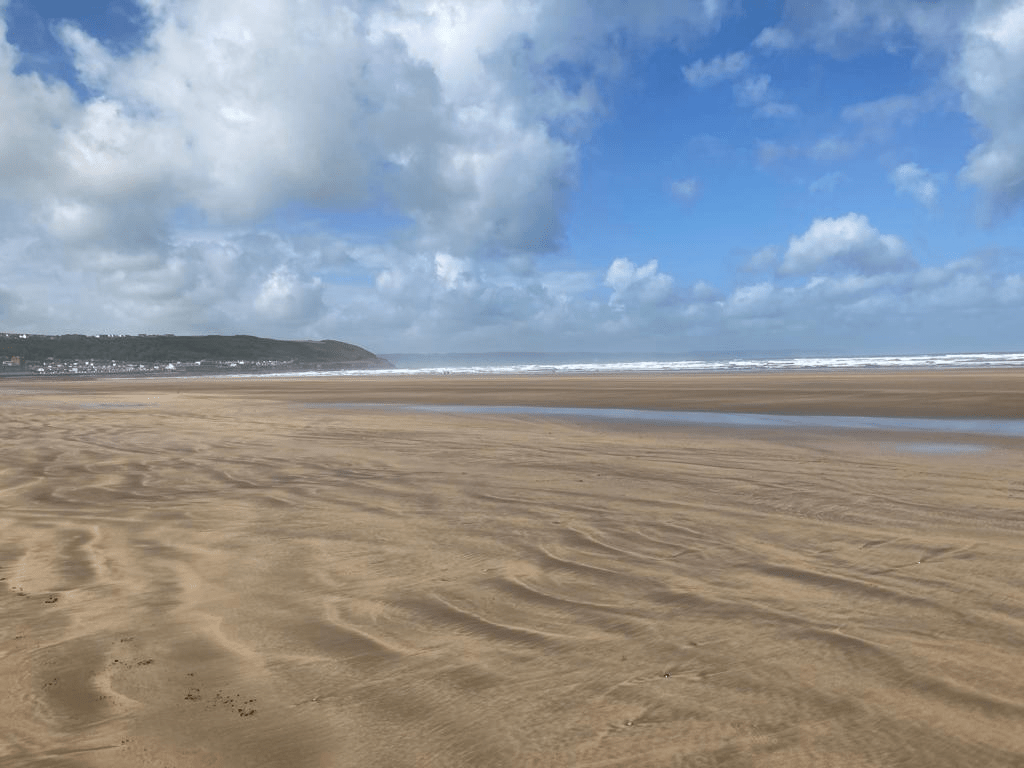
Despite all the appalling international news, there are things to celebrate. So here is an image from the first seaside walk of the year yesterday in wonderful sunshine. You are welcome.

Young Genealogists at the Helm and some Words about Being Kind

Over the past few months, there has been much discussion about making the genealogical community a more all-embracing space. This covers many groups who are currently not feeling fully included, for a variety of reasons. I have been championing the cause of younger genealogists since I was one myself, a very long time ago. After all the talking and the nodding in the right places, something is finally happening. The Family History Federation have got together with the Society of Genealogists to provide the infrastructure for an online event that will be led by young genealogists across the world and showcase their undeniable talents and expertise.

The idea is to provide a platform for genealogists under the age of thirty to come together, exchange ideas and support each other. This is intended to be an international event enabling young people to contribute to shaping the future of the community. There will be a variety of sessions led by young people. These will include traditional presentations, panels, interviews, discussions and anything else that the contributors like to suggest. Sessions can be live or pre-recorded. Many young genealogists are skilled presenters but it is hoped that this will also be an opportunity for those with less experience to be involved and mentoring is being offered for anyone who is hesitant about stepping forward.

Some of the stakeholders in the genealogy community are coming along to listen to how they can play a part in creating a more inclusive environment. There are hints of possible special offers in the pipeline. We already have some interesting submissions and suggestions. The call for papers is open until 15 March, so if you have something to offer click here. Please spread the word amongst younger family historians in your circles and if you are a younger genealogist yourself, please do put forward ideas for contributions; we are excited to see what you have to offer and are happy to help if needed.

If your days as a younger genealogist, or indeed a younger anything, have passed, please do mark 7 May in the calendar and try to come along to all or part of the event, to encourage this generation of genealogists. We need to create an atmosphere of being amongst supportive friends. Booking details will be available later, don’t worry I will be sure to tell you how you can join in.

I can’t ignore another aspect of this. Incredibly, it seems that, partly due to the announcement of this event, there has been some totally inappropriate activity on social media and some young genealogists have found themselves the victims of online bullying. This is absolutely unacceptable in every way. To begin with, I cannot comprehend why anyone with any human decency and empathy would not welcome the concept of inclusivity and support. That aside, if you can’t see that this is a positive step, why not keep your thoughts to yourself instead of targeting others? Unfortunately, I was a little out of the loop when this was happening but be assured that I will not be standing on the side-lines if I see any evidence of bullying. On the one hand, I hope those responsible are reading this, so I can tell them how much I despise their deplorable behaviour (I edited out stronger comments as I don’t want to sink to their level) on the other hand I don’t want them invading my space, so if you can’t be a decent human being, please unfollow my blog. I am making no excuses for this paragraph, it is not a rant, it is far more important that that. Now back to interacting with the lovely friendly, supportive members of the genealogical community, who fortunately make up the vast majority.

The Experimental Archaeology Adventure Part 8: Choosing a ‘Thing’

Semester two is now well underway and the focus has turned from incomprehensible reading to the first assignment of this module. Writing an essay was so last term; now we are creating presentations. I have to choose a ‘thing’ and tell its story. There’s a bit more to it than that but broadly that’s it. Given that I can pick absolutely anything, the choice is not easy. It was always going to be something of family significance but I am fortunate that I have several things to choose from, so decisions had to be made.

Should it be the patchwork quilt begun by my great grand-mother in the 1880s and worked on by three further generations since? Given that each patch has its own story that would be too complex. I have a slide limit of five for this and one of those has to be the title. What about one of two Victorian christening gowns, or my mother’s wedding dress, made by hand from a parachute? As I write this, I am so tempted to change my mind! Then there’s my grandfather’s long service watch, great granny’s christening mug or one of the artefacts brought back by my great-grandfather from a tea-buying trip to China and India. Maybe once the assignment is done, I will tell all these stories too.

For now though, I have decided to tell the story of Caroline Jessie’s locket. I met Caroline Jessie, possibly only once but I can clearly remember her sitting in a chair in her parlour, alongside two of her sisters. I would have been seven or eight at the time. I have several reasons for finally opting for this particular heirloom. To begin with, Caroline Jessie has no descendants. Her closest living relatives* are seven first cousins twice removed, of which I am one. If one of us doesn’t tell her story who will? This particular item didn’t just belong to a family member, it was made by one. Caroline Jessie’s father was a silversmith and made each of his five daughters a similar locket. The fact that this is one of a collection of five, is another fascinating part of its story.

So far, I have learnt how to tell if something is silver. In this case there is no hallmark to help as it wasn’t sold on the open market, or indeed at all. One suggestion involves putting ice cubes on it, which seems a little bizarre. I am glossing over the fact that I don’t know where the silver was mined, or what processes are involved turning what comes out of the ground into the object I now have. I have got gloriously side-tracked researching the silversmiths’ company for whom Caroline Jessie’s father worked. It seems it was very well-known and co-incidentally, the founder shares a name with one of my grandsons.

I shall now be encouraging people to tell their own stories, tell the stories of their ancestors AND to tell the stories of family heirlooms. I will need several lifetimes.

* In the interests of genealogical accuracy, I should add that there could be great great half nieces and nephews in America, who might be regarded as being closer living relatives but I am not in contact with any of them and the English and American branches of the family seem to have lost contact in the 1920s.

Some Thoughts about Genealogical Conferences for All #GenealogyForAll

The #GenealogyForAll debate has turned to genealogical conferences and the fact that there are barriers to accessing most of these. Although the primary obstacle is deemed to be financial, this is not the only issue. Let us look first at cost. I have been instrumental in organising many family history events, both day conferences and residential conferences. I have also been heavily involved in the provision of online events. None of the events that I have helped to put on have intended to make a profit, merely to break even. Having been in circumstances where my ability to fund my family history research was severely limited, I have always been an advocate of keeping costs to participants as low as possible.

So what costs money? Let’s look at a weekend face-to-face conference. Accommodation is the biggest outlay. Cost is impacted on by the geographical convenience of the location and the facilities provided. A reasonable standard of food and accommodation is expected and the conference facilities need to be suitable, with good AV and wifi connections. A more recent consideration might be the ability to live stream the proceedings. All this is extremely costly and these charges are set to increase as inflation seems to be rapidly spiralling ever upwards at the moment. It would certainly not be unusual to be charged a four-figure daily sum for the hire of conference facilities in a central location and food and accommodation would be on top of that. More minor items on the conference organisers’ budget might include the printing of conference programmes, advertising and perhaps the provision of conference give-aways. Even the cost of conference badges has to be considered. If the conference is a commercial undertaking, which is rare in the genealogical world, there a profit margin will be added.

You may notice that the major omission in the previous paragraph is the cost of speakers. I declare an interest here. I am a speaker. When I first started teaching family history in the 1980s, when money was extremely limited in my household, I planned that what I earned would pay for the cost of my own research. I speak because I enjoy it and because I want to share my expertise but it is also a major part of the way in which I support myself. I consider that I give a professional service and that I and others like me, should receive financial recompense for this. It is a job. The fact that I happen to enjoy my job and that it overlaps with my hobby is irrelevant. For more than forty years I have done and continue to do, a great deal for the genealogical community on a voluntary basis but if I am asked to give a talk I would normally and justifiably, expect to be paid. I do occasionally speak for free for charities that I support, or for causes that I believe in and of course any talks I give for societies of which I am a trustee have to be delivered without payment.

I once organised a residential conference and a potential attendee asked if they could attend for free if they didn’t stay and didn’t want any meals; all they wanted was to listen to the talks. I gently explained that meals and accommodation were not the only costs and that speakers’ fees and travelling expenses were a significant part of the conference fee that we were charging. On that occasion, we were offering anyone who volunteered to help chair or steward a session, free attendance at that particular lecture and this is what I offered. I absolutely believe that speakers should be properly paid and not just because I am one. Like many aspects of the creative industries, working for ‘the exposure’ is not something that should be expected or tolerated. I cannot pay my bills with exposures. Some speakers, myself included, will occasionally offer to be paid in kind, giving a talk in exchange for free attendance at the remaining lectures that form the event but this should not be expected nor regarded as the norm.

Sometimes, people look at a speaker’s charges and the reaction is, ‘that’s a lot for an hour’s work’.  Giving a talk of an hour’s duration is absolutely not an hour’s work. The talk has to be researched and the presentation put together, which could easily take several days. A good speaker will always run through a talk beforehand, every time that they give it. Handouts have to be checked to ensure that information is current and links are not broken. There is also the time taken to travel to a conference to be taken into consideration.

Most genealogy speakers are in fact quite poorly paid compared to speakers in other fields. I was once invited to join a list of public speakers who covered a full range of topics. I was told that I was charging far too little, I wouldn’t be taken seriously if that was all I asked for and that I needed to make my fee at least twice as much. I explained that I knew my market and the sum suggested would be prohibitive for my potential audience. I was put on that list (now discontinued) at my requested rate and only ever got one speaker request as a result.

Online conferences can often be staged with fewer overheads. Here an element of the cost is the platform through which the conference is delivered. This can be achieved via something like Zoom, relatively cheaply but if you require anything more sophisticated, such as you might expect at major events, then the web-development charges are significant. Even at a simple online event, there are still speaker fees to be paid, although you save on travel costs.

I know that the costs of conference attendance are prohibitive for many. By the time you add on travel to a venue, the cost of a weekend face-to-face conference is approaching that of a week’s package holiday to a foreign destination for a UK resident. One way to help to make these events more affordable, is to offer a day delegate rate. This is an option that I often go for, staying in a touring caravan to reduce the expense. It does mean that I miss out on some of the social experience but at least I can attend. I am fortunate, this is affordable for me but it won’t be for others. The ‘going’ day attendee rate at genealogy conferences seems to be about £75. Yes, this includes lunch but it is still far more than many can justify.

Of course, we should accept that having a hobby costs money and that little in life is free but that doesn’t mean that we shouldn’t take steps to mitigate matters for those whose participation is limited by the cost of events.

So what is the solution? I am not sure that I know. Some organisations have the wherewithal to provide free virtual conferences, of which RootsTech in March is a prime example and incidentally well worth registering for. Anyone who has ever complained that conferences are too expensive should take the opportunity to attend this one. You have access to the presentations long after the duration of the event. In general though, this is not a viable economic model. Although many genealogical societies are charities, it does not mean that they can afford to stage major events at no charge to participants. What most societies do do, is offer a comprehensive programme of lectures to members, many of which are now presented online. A year’s membership fee of £20 or less might be much less prohibitive than a conference fee and of course society membership offers far more benefits than just the lecture programme. Some societies allow non-members to attend their lectures without charge. It is definitely worth looking at the societies that cover your areas of interest to see if this is the case.

Perhaps an option might be sponsorship, although sponsorship is harder to come by than it used to be and securing it is a time-consuming and thankless task. This could be sponsorship of a whole conference, a lecture, or perhaps sponsorship of an attendee. Maybe local societies could offer a number of free places at an otherwise paid for event, to those who find cost a barrier. How those free places were allocated would be up to the event organiser.

Cost is not the only impediment. Geographical access to face-to-face events is an issue. Caring responsibilities also prevent people from attending, as does disability access. On balance, it seems that there are fewer barriers to participating in an online event but for some the availability of adequate wifi, or the lack of a device will prevent them joining in. Another barrier, which is a whole topic in itself, is how welcoming these events are. There are those who find attending such events a social challenge, for a variety of reasons. We need to make potential attendees feel comfortable about being part of an event.

It will never be perfect. Nothing can ever be fully accessible to all in every respect. There will always be events that are inaccessible. Nonetheless, we can and should do what we can to be more inclusive, to offer a variety, so that there may be something that suits and to open up the opportunity to attend genealogy events to as many people as possible.