More Writing, Nature’s Wonders and Family History Events

dscf3381So what has this week brought? A hedgehog joining the two frogs who are crazy enough to inhabit the scummy indentation that passes for a pond in my garden. Luckily this hedgehog was not actually in the pond, though others of its species passed that way, with unfortunate results, before I inserted an escape route. The garden revamp is progressing slowly. I have (that would be the royal I) reclaimed three foot of garden by decimating the privet hedge. I have also had fun creating a nature book for my descendants. I seem to have photographs of quite a number of unidentifiable plants and birds. The latter are mostly waterfowl that do not feature in my not-so-comprehensive ‘Birds of Britain and Europe’ book. Do the authors not know how inconvenient this is?

Writing, of various kinds, has been featuring highly on the agenda. I have been introduced as a forthcoming columnist for the In-Depth Genealogist. Do take a look at what they have to offer. I’ve drafted the first article for my column, which will focus on the work (paid and unpaid) of women. The plan is to alternate between household tasks, home-working and work outside the home; I’m looking forward to it. My Telling Your Family’s Story course for Pharos is into its second week and I’ve already had one online ‘chat’ with an enthusiastic band of participants. Just wish I had time to write up more of my own family history! The course is being re-run in February and Pharos are already taking bookings. They have also begun to advertise another of my courses Discovering Your British Family and Local Community in the Early Twentieth Century. You can sign up for this from anywhere in the world, although the focus will be on British research. If you are local there are still places on Devon History Society’s Nineteenth and Twentieth Century One-place Studies course that I am leading on 18th October. What else can I get you to sign up for? Oh yes, a trip back in time to the 1600s on October 24th. This is ideal for family historians wanting to know more about seventeenth century social history and for families. It will be a great chance to encourage your descendants to engage with history and heritage – there will be armour to try on, pikes to wield, Master Christopher’s treatments to avoid…… A number of you out there (unbelievably, more than one person and a dog read this blog) have said you’d like to come but you do need to register or the organisers will think no one is interested.

Thanks to Exeter Authors’ Association pointing out that my books are available on Amazon.com, as well as Amazon.co.uk, I decided that I needed to create an Amazon.com author profile. Annoyingly you can’t just transfer the one from .co.uk. More technological challenges, especially trying to make my RSS feed (had to look that one up) appear on .com, which you can’t do on .co.uk. By the time I’d done this there was little time left for actually writing anything. #Daisy is expanding but I will give details of that another time.

I must also mention the excellent Devon Family History Society conference last weekend. There was music, there was cake – always a good combination – there were chances to meet friends and browse the many displays. The speakers, Nick Barrett and Dick Eastman, were excellent and really made us think about the future of family history. The future is bringing your family to our event on 24th October!

Clipboards, Cruises and Challenges of the Technological Kind (yes again) and books – always books!

A variety of activities this week. Firstly, I was lucky enough to win a free electronic copy of  Saving Sophie by Sam Carrington. This had to be emailed to me for me to email to my Kindle errr ummmm. This sounded like a technical challenge too far. After diligent research (I Googled for instructions) I was ridiculously pleased to discover that my Kindle does indeed have an email address – well who knew? Not me, obviously. Mission accomplished and I am looking forward to reading my prize.

More peculiarities on the telephone. During a boring car journey I decided to have a conversation with someone who wanted me to change my electricity supplier. Actually he wanted the phone’s owner to change their electricity supplier but was happy to talk to me when I explained that said owner was driving. After moments of incredulity on his part when I confirmed that there really was no gas supply to the property, the next question was ‘do you have your latest bill with you?’ Hands up who carries their electricity bill with them in the car at all times. Then not an unsolicited call but an attempt on my part to find out who could verify my identity for prevention of money laundering purposes, not many people apparently. This needed to be done in a hurry during the day, when those of my neighbours who might qualify were at work. I telephoned to enquire whether a retired accountant/doctor/teacher etc. might be acceptable (the village is stuffed full of those of a certain age). It seemed it had to be someone in office, presumably so that their identity could be checked on a professional register. The person on the other end suggested I popped in to the local bank. I had already explained that I lived in a small rural village. ‘Popping’ involves a six mile drive, many circuits of the block in search of a parking place and a six mile drive home. Oh of course, I could get a bus but not on a Wednesday. Did he have any other ideas? I could use my ‘local’ post office’s checking service. Ah my local post office was, thanks to the wisdom of someone who has never lived here, closed. The man is now sounding desperate, ‘Did I have a church?’ Oh yes, I have one of those just over there, a vicar though is a different matter. One and a half vicars for seven parishes and neither lives here. At this point I gave up, planning to  accost a teacher outside a school, or wait until later in the day. The urban/rural divide never seemed so wide, the chap on the phone clearly had no clue how the other half lived.

Want to know how to arouse fear and suspicion amongst your neighbours? Wander round in pairs carrying a clipboard, pausing now and again to stare meaningfully at a property. In fact, my friend and I were preparing a village trail but I am sure there are now rumours of extensive development or criminal activity.

UTP0263-2TMy Harnessing the Facebook Generation booklet, with ideas for inspiring young people with a love of history and heritage, is finally available in Canada (as well as the UK, Australia and as an ebook). Unlock the Past, for whom the booklet was written, have announced their genealogical cruising plan for 2017-18. If you are thinking about booking, don’t hesitate, you’ll love it.

The season of evening presentations is well and truly upon me. Quite apart from any school Swording and Spindling, did I really agree to do seven presentations to adults (I put ‘adult presentations’ there at first but it sounded a bit dodgy) in one month (one down six to go)? In addition, that is to finishing tutoring one Pharos course and starting another. Incidentally, there is still time to book for the online course  Writing and Telling your Family History, which starts on 28th September. It is lovely to see some familiar names amongst those who are signed up already. One day I will get time to write up more of my own family history!

Fame at Last – shame about the fortune

What a couple of weeks it has been. Firstly, frantically preparing for our trip to Canada, when I still haven’t quite got my head round not being at sea on the Baltic Cruise. I polished off my school-girl French (never a strong point) in order to book camp sites in Quebec – only to get the replies in English! Be fair, I tried.

Before that I have my talk at Cambridgeshire Family History Society Fair to look forward to. This involved creating a Swords and Spindles display. Thanks to Jo Rutherford and her Alter Ego project, I had some great material to work with. I also have a school day in the seventeenth century coming up – a great start to their (and our) school year.

And the fame? Well, in the space of a couple of days, my Canadian presentations were mentioned on the Anglo-Celtic Connections blog, a blog post that I wrote was referred to by Dear Myrt and then this is picked up in Randy Seaver’s blog. To add to this, today I find that my cruise presentations and Coffers, Clysters book have been mention in Jennyology’s August podcast. For non-genealogy readers, who are now totally bemused and going, ‘So?’, these are some of the big names in the world (and I do mean world) of family history. What am I doing being mentioned in the same breath?

I have also been struggling to finish ‘editing’ the Braund Society journal. Why is it that sometimes ‘editing’ just means ‘write the whole darned thing yourself’? That is a little unfair but I did seem to have to do the lion’s share this time. In the course of this though I found an interesting and comparatively recent, murder accusation that did not seem to come down in family or local gossip and was all over the newspapers in 1919. Such are the excitements of an historian’s life.

Trumpton Bonfire August 2015 (8)Then there was the spectacular Torrington Bonfire last night. These extravaganzas take place every few years and are truly bonfires like no other. This year they were setting fire to a life sized model of Trumpton – as you do. It was amazing but also a chilling reminder of how fire would have spread through, predominantly wooden, towns in the past.

Trumpton Bonfire August 2015 (14)Trumpton Bonfire August 2015 (15)Trumpton Bonfire August 2015 (3)

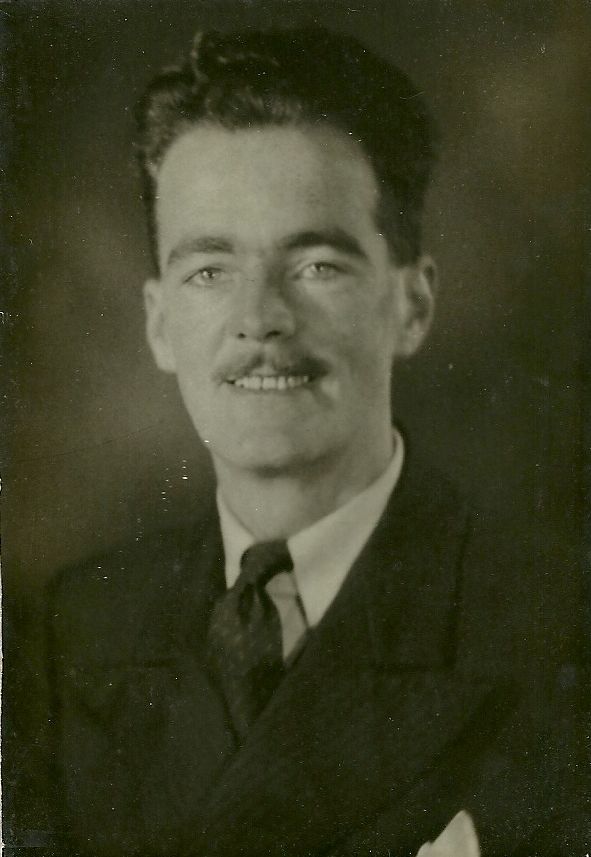
Cyril Albany Braund 1915-1965 #1ancestor

A number of family historian bloggers take part in the #52 ancestors project, where they write about one ancestor each week. I don’t have time to participate but today would have been my father’s 100th birthday, so I thought that I would devote today’s blog post to him. This then is my #1ancestor.

My father died when I was nine. When I decided to write the story of his branch of my family, in the late 1990s, I realised that I had spent many hours tracing more distant ancestors but that I had neglected to document my grandfather and father, whom I had known. So I decided to research their lives and published their story in In the Shadow of the Iron Horse.

Although I have very good recall of my early childhood, my own memories of my father are fleeting; probably because he worked long and unsocial hours, so our time together was limited. I was able to talk to my mother but inevitably, now she is no longer here to be questioned, I realise that there is still so much I don’t know. I have some facts. Dad, Cyril Albany Braund, was the middle of the three sons of Albany and Elizabeth Ann [Bessie] Braund née Hogg. All three boys were born within three and a half years so times were hard for the family, who were not well off. My grandfather, Albany, was a cleaner and later a porter for London South Western Railway.

Dad went to infants’ school at St. Mark’s in Battersea; a one room school attached to the church. The story in the family is that Dad and his brothers often had to take it in turns to attend school, so that they could share a single pair of boots. Another story relates that Dad, who was very keen on drawing, had to swap his teddy bear in order to obtain a pencil, because the family were so poor. Drawing and painting was a lifelong hobby, as was music. He taught himself to play the piano in the pub owned by the parents of his great friend Eric John Golding. Dad was eighteen and earning before he could afford piano lessons.

At the age of eight, Dad transferred to St Peter’s School, in Plough Lane, Battersea, an enormous, seven story, building, where he remained until leaving school when he was fourteen. He had been punctual and regular in his attendance and exemplary in his behaviour. Like his older brother, he began working in the exciting new world of the cinema as a ‘page boy’, employed in the foyer under the supervision of the doorman. This was the ‘dream job’ for boys of the time; perhaps akin to being a computer games developer today. He joined The Majestic, Clapham in an era when silent films were giving way to the talkies’, eventually working his way up to become a projectionist.
Cyril Albany Braund 1945In 1939, Dad was employed by the Granada Group, who owned several London cinemas, at their Wandsworth Road branch. Thanks to a wonderful history of Granada Cinemas (Morgan, Guy Red Roses Every Night: an account of London cinemas under fire Quality Press 1948), I know many details of life in this cinema chain during the second world war. For example, on the 28th of August 1939, the staff were read the following memo from the managers of the Granada Group. A priority air-raid warning will be given to cinema managers when enemy aircraft are sighted over the North Sea. You will not on any account pass on this priority warning to your audience. You will merely give the warning RED ROSES to your staff so that they will be prepared. Today, this conjures up rather farcical images of staff rushing round whispering behind their hands and it seems unlikely that regular patrons would have remained ignorant of the password for long.

Nearly half the men Dads age were in uniform and with the extension of the call-up, in May 1940, he enlisted, together with Eric Golding. They joined the Royal Air Force Volunteer Reserve on the 4th of July; thus losing their independence on Independence Day. Dad became Gunner 1351715 and was described as being five foot eleven inches tall, with a thirty two inch chest, black hair, hazel eyes and a fresh complexion. I have used service records and family memorabilia to follow Dad’s second world war career, part of which was spent on Sicily and in southern Italy. He was actively involved in the entertainment of the army camp. By the spring of 1945, the end of the war was in sight and Dad was effected by the War Cabinets move to draft naval and air force personnel into army. On the 13th of March 1945 he was officially discharged from 2859 squadron on enlistment in the army. His air force report read, A very good type Airman though not a good J.N.C.O. He could be well employed in his civilian trade. General Conduct excellent.

In the spring of 1945, he met my mother and despite the RAF report, he spent time as a gunnery instructor in Ireland. Once the war was over, Dad remained in the army, as a sergeant with the Department of National Service Entertainment, resuming his civilian trade as a cinema projectionist. He returned to Naples and helped to set up a cinema at Pomigliano. Dad was formally transferred to the army reserve on the 23rd of August 1946, with effect from the 6th of November. His reference reads This N.C.O. has proved himself a capable worker and given consistently good service in the Cinema Division. He is a qualified projectionist and is keen hardworking and reliable. An efficient and valued N.C.O..

He went back to his work as a projectionist and my parents married in 1947. During the first months of their marriage, they lived with their respective parents, staying with each other only on Dads days off. In June 1948 they found a flat, 65 Mallinson Road, just round the corner from Cyrils family. During the first years of their marriage my parents often went on outings and holidays with Eric Golding and his wife, Eileen. In 1951, this time with mums school friend Joyce Chaplin and her husband Peter, they took their first holiday on the Isle of Wight. They stayed at Norton Grange holiday camp in Yarmouth where, fifty years later, their granddaughters performed regularly with the Shanklin Town Brass Band.

Dad was never really satisfied with his working life and changed jobs fairly frequently to try to find something more congenial. One of my particular memories is of being aware of how much he hated his short spell of employment at Cinerama cinemas. His dream had been to set up his own business with Eric Golding but this never transpired. He left for work on the first day of the school holidays in 1965 and died of a heart attack on his journey.

So I have managed to document quite a few facts. When my mother died, I found ‘Forces War Record’, recorded for her by my father in 1946. I had no real recollection of how he sounded. I was able to get this recording put on to disc, just before it deteriorated beyond saving. He was sending my mother birthday greetings. He had got the date wrong but they hadn’t know each other long at this point! I was amazed to hear that his Battersea roots were not noticeable in his accent, which was distinctly BBC – probably a legacy of his career as a cinema projectionist – all those clipped tones of the film stars of the 1930s! So I have his voice.

What I strive to recapture however is some sense of his personality. I know he always felt inadequate in the shadow of mum’s more middle class family and certainly was of the opinion that he had to make up for her ‘marrying beneath her’. I do have a few diaries of the 1960s, which record notes of appointments and events. Just occasionally Dads personality shines through the bald statements of fact in these diaries. One such entry is Beat Bob at Chess!!, accompanied by a doodle of a flag. Family pets also get a mention in the diaries, for example, the birth of the family dog, Sparky. Even the death of the remarkably long-lived hamster, Nora, is recorded, in the same way as the many deaths of family members, with her name surrounded by a black box. I do have the chance to learn more, as I inherited all Dad’s letters to mum, written whilst they were apart in 1945 and 1946. So far, I have only had time to skim through these but I have promised myself I will study them in detail to try to recapture more of the essence of the man behind the facts that I have gleaned.

More details of Dad’s life and that of his father, can be found in my book In the Shadow of the Iron Horse which is available from me.

Is the Twentieth Century History?

The obvious answer is ‘of course it is’; yesterday is already history. Certainly anyone who knows anything about current UK secondary school history teaching would be forgiven for thinking that the twentieth century is the only history. Students seem to leap from conflict to conflict – the second world war, the cold war, the Arab-Israeli conflict, the Irish troubles and if they are really lucky, that dim and distant event, the first world war. For community historians, the twentieth century has an appeal because it is within living memory; oral history projects abound. Why then do family historians seem reluctant to venture further forward than the 1911 census? Some adhere to the concept that the twentieth century is somehow ‘too recent’ and therefore not worthy of investigation. Perhaps this is partly because we often already know the names of our twentieth century ancestors, without the need for research. Are some put off by the difficulties of researching in the twentieth century? Records are subject to closure, people migrate or emigrate more frequently, there are just more people. Then what do you do with any information that you might find? Plastering the names of living second cousins twice removed, whom you have never met, all over family trees is, for most, an unacceptable invasion of privacy.

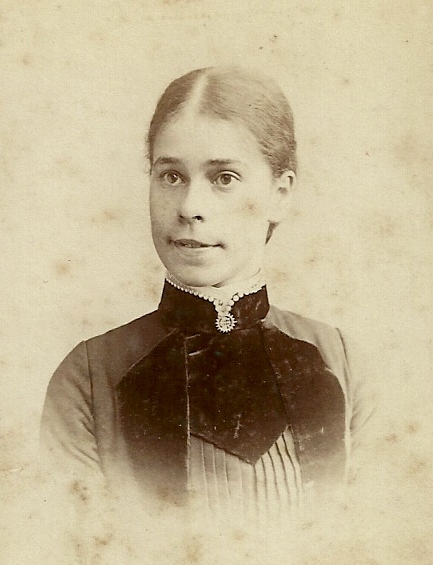
So do we just go back to the comfort of the nineteenth century and beyond? No; your twentieth century ancestors are every bit as much part of your family tree. Perhaps begin with your direct ancestors who are no longer living. Try this exercise:- Make a list of all parents, grandparents, great-grandparents and so on, who were alive between 1900 and 1940 but who have since died. If they were born during this period, make a note of when, otherwise write their age in 1900 next to their name, so you can appreciate their life stage at the time. You will probably be surprised by how many names are on this list. If you have photographs of any of these ancestors you may like to create a montage, otherwise keep the list of names handy. These are important links in your chain of ancestry. You owe it to them to find out more about their lives, their communities and what they experienced.

So here are my direct ancestors who were alive between 1900 and 1940 – no great aunts, great great uncles or cousins – just my direct line.

Cyril Albany Braund 1915

Gwendoline Catherine Smith 1925

Albany Braund 12

Clara Dawson 1858-1949 possibly taken 1886

Clara Dawson

Elizabeth Ann Hogg 14

Frederick Herbert Smith 6

Ivy Gertrude Woolgar 7

Fanny Thomasine Bishop 31

John Hogg 45

Herbert Havet Smith 34

Catherine Seear 34

Philip James Woolgar 45

Clara Dawson 42

Elizabeth Buckingham 67

Elizabeth Pearson 72

William Howe 69

Anne Stratford 66

Mary Archer Bowyer 69

Eliza Seear 77 – she only just makes it, Eliza died on 1 January 1900

Anne Balls Bulley 65

Writing that felt a little like reading the Roll of Honour on Remembrance Day. Perhaps that is how it should be. These nineteen individuals are my personal role of honour, as are all those who died before 1900. I shall be holding them in my mind as I begin my online course on Tuesday ‘Discovering Your Ancestors’ Communities in the early Twentieth Century’. I still have a couple more spaces in the ‘room’ if you would like to join in and feel you can cope with Google+.


The United Kingdom and our Ancestors

Ok, so I am almost as far away from Scotland as I could be, given that I am in the UK. Nonetheless I have taken quite an interest in the history-making Scottish independence referendum; fuelled perhaps by my recent visit to Scotland. Media of all kinds have brought this campaign to a world-wide audience and anyone who considered this issue realised that the impact of the result, whatever the result might have been, would stretch way beyond Scotland itself.

Of course being an historian, especially one with an interest in the seventeenth century, I can’t help wondering how the bringing together of England and Scotland might have affected our ancestors. It was of course a two stage process. The accession of James I/VI in 1603 created the Union of the Crowns of England and Scotland; from then on we shared a monarch, almost by default. On that occasion it was England who were reluctant for their parliament to be subsumed in that of Scotland, rather than vice versa. Had, as King James no doubt expected, the union of the crowns been also an immediate union of parliaments, would Edinburgh rather than London have been the seat of the united government?

Despite abortive attempts during the seventeenth century (1606, 1610, 1667 after the Restoration and 1689 under William and Mary), it was to be a century down the line before the parliaments of the two countries were united. An Act for a Union of the Two Kingdoms of England and Scotland was finally passed in 1706 and came into effect on 1 May the following year. This was in part prompted by the potential constitutional crisis that was on the horizon, as a less then healthy Queen Anne, who had singularly failed to provide an unequivocal heir, neared the end of her life. In 1706 the decision was in the hands of a few. In 2014 a huge majority of the population of Scotland, male and female, of all income brackets had their say.

113 4 August 2014 Wallace Monument from Stirling Castle

View of the monument to William Wallace, hero of an earlier attempt at Scottish independence

I think of the ancestors that I can name, who would have been alive at the time. A young John Braund, living in Devon (wish I knew where). His future wife Florence (I am not even sure of her surname). The Madicks and the Elfords, also of Devon and the Oughs of Cornwall. How would the new regime have affected them? Well I strongly suspect that they were blissfully unaware of what was going on. It may have been days before they were aware of a change of monarch, let alone a change of regime. Would the Act of Union eventually have been announced from the pulpit or on a news sheet? John Braund and Peter Elford may have been able to read, the latter was an overseer of the poor but I think it is unlikely that they had much understanding of the workings of parliament, united or otherwise. I doubt that any of my ancestors had the vote until 1832 at the earliest.

I do also have ancestors from Northumberland. I don’t know the names of those who lived there in the seventeenth and early eighteenth century but they are every bit as much my ancestors as those who I can name. I feel that this may have had more of an impact on their lives. To me, putting our ancestors in the context of the national events of their time is an integral part of being a family historian. So how did the Union of the Crowns or Parliaments effect my ancestors? I don’t know but it is right that those questions should be asked.


Of Diaries, Domestic Issues and a little about Rock Stars

DSCF1701I am still playing catch up after my summer away, hence the lack of blog posts. Things have been taking off on the local history front and it has been very satisfying to unite more than one set of distant relatives who have origins in my village. I also now have on loan, just over there, a diary written by a farmer from my parish between 1830 and 1864. I am hugely grateful to the owner for entrusting me, a complete stranger, with such a treasure. I can’t wait to examine it in more detail. There are one line entries for each day commenting on farming duties, the weather, local funeral, emigrations and chapel activities. Some girls like diamonds, me I would chose this over jewels any day. Happy smiley one-place studier here! Similarly, yesterday my inbox offered me two invitations for Saturday, one a free pampering day at the local outlet village and two, a change to survey a local hill fort – no contest!

The society for one-place studies has been shortlisted for a grant to develop a community mapping project and we would be really grateful for your votes. More details can be found here and voting takes place via this link.

While you have your voting fingers at the ready, there are still twenty four hours or so in which to vote for your favourite genealogical rockstars. This is an annual opportunity to acknowledge those from the English speaking genealogical world whom you think deserve recognition. I was amazed and flattered to find my name included as one of 150 nominees who were considered worthy of consideration. There are some seriously big names on there, so I am humbled to be listed in the same breath as some of these genealogical heavyweights; do vote for your favourites. First of course you have to decide what you think warrants rock-stardom, there are some hints on the voting instructions. Is it someone who delivers inspiring, entertaining and informative presentations? Someone who works tirelessly and often inconspicuously, to further the cause of family history? Maybe your rockstar has written a ‘must have’ book or maintains an informative web-presence. Often more than one of these criteria will apply. I voted for those who I feel help to enthuse others about matters historical. It is all quite light-hearted, at least as far as I am concerned but it is a chance to show your support for anyone who you think has made a noteworthy contributing to the genealogical world over the past year.

Now to matters domestic. There have been some strange household incidents lately. Firstly a new item of furniture is to be ‘delivered to my kerbside’. ‘Good luck with that one’ I thought – living where I do behind another house and up a footpath, I do not have a kerbside. Then there was trying to track down the dongle that was, according to the instruction ‘supplied’ with the not yet smart enabled TV. The conversation went something like:-

Representative of a well known electrical retailer: ‘we don’t supply those’

Us: ‘but it says ‘insert dongle open bracket, supplied, close bracket’ in the instructions’.

Representative of a well known electrical retailer ‘but we don’t supply them. You will have to pop into your local store’

All very well representative of a well known electrical retailer but ‘popping’ involves a 32 mile round trip. Still not resolved this one.

Then there are the spam emails that have been arriving at a local history archive alias that re routes to me. Am I gullible enough to think that a local history archive will have purchased nine tickets to see Peter Pan in Bournemouth?


Solving a C20th Historical Mystery

Regular readers will know that I am being ably assisted by a group of lovely ladies who are writing about their experiences of the period 1946-1969. This month’s topic is schooling and as I can’t expect them to do something that I wouldn’t do myself, I have been waxing lyrical about ‘the best days of my life’. This has been made easier by membership of Facebook groups for my cohorts at both primary and secondary school. One of my lasting primary school memories was of being chosen to read part of the commentary for a film that we were making about our school and its surroundings. My portion was about the local lollipop man and the resulting 35mm film was being sent to a school in New Zealand. Wouldn’t it be great, I thought, to trace the film fifty one years later. None of my contemporaries recalled this at all and I began to think I had imagined it. In any case New Zealand has many school and I had no idea which one.

Then, as part of my writing, I raided the souvenirs’ box. Something that I had retained was a letter to parents from the headmaster, written three years after the film was made. Amongst other things, it referred to Mr Head who had taught at my school for a year in 1961 before returning to New Zealand. Now I at least had a teacher’s name. It also mentioned that Mr Head was then in the Pacific Island of Niue. Googling ‘Mr Head teacher New Zealand’ and the like is not awfully successful as up come all the head teachers in the world, or at least in New Zealand. Niue however is a different matter and it turned out that Mr Head was not only a teacher but an active campaigner against landmines and had been awarded for his work. Wikipedia even provided me with a list of schools at which he’d served, of which there were a great many. Unfortunately no dates were mentioned and I needed to know where he was in 1963. None of the schools’ websites had a ‘past staff’ section or indeed any kind of ‘history of the school’ page. I was close but not close enough.

By this time I had identified some of Mr Head’s descendants on Facebook but I was unable to send them a message as they weren’t my friends. Next I sent out a plea to family historian friends in New Zealand. Amongst other information, one was able to use the New Zealand equivalent of ‘Friends Reunited’ and find that a profile had been created for the late Mr Head. This time I was able to identify the appropriate school. It just shows where the right contacts and a little detective work can get you. I would like to be able to say that a copy of the film is now on its way to me but things aren’t that good. I have used the school’s website to send a message asking if they have a reel of 35mm film lurking in the back of a cupboard. No response so far but maybe it will depend on whether on not the person who sees the message is history minded. Watch this space.

And on the subject of school I am now off to a school reunion. I am going via a talk about seventeenth century witchcraft (best not to enquire) at The Society of Genealogist. More of this later.


X his mark

How often do we think about levels of literacy in the past? And what indeed is ‘literate’? Before compulsory schooling, which incidentally arrived on the Isles of Scilly some 50 year before the rest of England (don’t say you don’t learn anything useful reading my ramblings), there was far greater emphasis on the ability to read. Writing was dangerous. Give the hoi polloi the ability to write and they may write something subversive. You are giving them the power to spread sedition. Reading on the other hand enables them to read the Bible and thus improve themselves. There have been many academic studies on literacy levels at different points in time. Often these are based on the ability to sign one’s name in a marriage register. There is of course a very large gap between making an approximation of one’s name and fully functioning literacy but it is difficult to find a better measure. There are instances of those who are perfectly capable of writing signing with an X instead – who knows why? We could use other lists of signatures, such as tax lists as an indicator of literacy levels. Some records specifically mention whether or not an individual can read or write. For example, I have seen this on some lists of prisoners and emigrants.

DSCF1597Just because the measures of literacy are crude, it does not mean that it is not worthy of examination. For local historians it can be fascinating to study how literacy levels appear to change over the decades. If you are interested in a rural area, how does this compare to a town, or to another village in a different part of the country? Family historians too may like to consider how recently different branches of the family were able to read and write. What about book ownership in your family? Do you come from a long line of bibliophiles? Do you still have any books owned by your ancestors? These are often useful if they are inscribed as prizes or gifts. Books gained in this way may not however be representative of their literary taste! Have you made a list of books you enjoy? Have your favourites changed over the years? This is part of the life story that you starting writing yesterday having read my ‘W is for Writing it up’ blog (you did start didn’t you?).

A final thought on ‘X’ as a signature substitute – have you considered why people’s marks may be other than an ‘X’? I have an ancestor called William whose ‘mark’ was an ‘M’. This makes perfect sense when you think of situations in which this individual may have seen his name written down. He would be the opposite side of a desk from an ‘official’ writing ‘William’, The first character William therefore saw, from his side of the desk, looked like an ‘M’.

W is for Writing it up – get that history recorded

We all plan to do it don’t we – write our memories, write that local history book, write up our family history. It is all so easy to put it off, ‘I will do it when I retire’, ‘I will just finish the research first’. Well, don’t be deluded, you will never ‘finish’ and as for more time in retirement – any retiree will tell you it just doesn’t work that way.

Writing up your research into a coherent narrative helps it to become appealing to your nearest and dearest. You know, those close to you who adopt a glazed visage when you enthuse about great great grandad’s first cousin once removed. Writing up aspects of local history enables you to share with others who are also interested. You may know it is a ‘good thing’ but the mechanics worry you. ‘I was never any good at writing’, ‘I don’t know where to start’. There is help out there. Take a creative writing course, or better still a writing up your history course – I run face to face courses for local and family historians and others do the same in different regions. There are also similar online courses available. There are books on how to write family and local history (see below). There are groups that can help and encourage you. Read what others have done to get ideas of what you do and do not, want to emulate. Use the spelling and grammar checkers on your computer, use the Thesaurus.

You are not writing a three volume novel – start small. Begin with the history of your house, not the whole town. Write about granddad’s war experiences, not the history of the whole family since Tudor times. Don’t just think in terms of writing a ‘book’. You could create a blog, a short article, a video, a presentation or an exhibition instead. Give yourself a deadline, maybe an anniversary that needs to be celebrated. Do it, not next year not next month but NOW. Make a start – you don’t even have to start at the beginning. Once you put fingers to keyboard you will be surprised how easy it is.

Beckett, John Writing Local History (Manchester University Press 2007)
Curthoys, Ann and McGrath, Ann How to Write History that People Want to Read (Palgrave Macmillan 2011)
Dymond, David (ed.) Researching and Writing History: a guide for local historians (Carnegie Publishing Ltd 2009)
Titford, John Writing up your Family History: a do-it-yourself guide (Countryside Books 2011)