 This comprehensive account was first published in 1919 and was written by Alice Clark, of the Quaker shoemaking family. Clark (1874-1934) herself is an interesting character, rising to become a director of the family firm in an era when this would have been very unusual. Her Working Life of Women in the Seventeenth Century is, justifiably, still regarded as a key work on this topic. Sadly it is not currently in print, although the publishers, Routledge, do offer a Kindle edition. You can get copies on online auction sites and various facsimile reprints are available.
The book considers the vital role of women in the family economy, in a century when we tend to imagine that all women were downtrodden housewives. Women’s roles in business, in agriculture, textiles, crafts and the professions are all considered. Clark’s stance is that seventeenth century women enjoyed an equality with men, that their role was complementary, rather than identical and that they played an invaluable part in the family economy. She has used account books, diaries, letters and other sources to illustrate the central role that some women played. She goes on to argue that women began to lose their place in the economic world with the rise of capitalism. By the end of the seventeenth century, she feels, women were increasingly constrained by household duties. The author’s feminist stance and her interest in economics and I suspect socialism, is in evidence but does not detract from the narrative. My Routledge edition has an valuable introduction and bibliography, contributed by Amy Louise Erickson. These enhance Clark’s own list of contemporary and secondary sources.
I enjoyed this book because it provides information about my favourite (well one of my favourites) century. Although this book is about the seventeenth century, it does also give us an understanding of aspects of the early twentieth century too. Clark was actively involved in the women’s suffrage movement and unusually, was a mature student at the London School of Economics. That a woman could write a book like this at this time is insightful.
A couple of things about the early twentieth century while I am here. First of all, it seem likes a long way away because of the seasonal celebrations in between but it is just five weeks before my online course about researching your family and/or locality in the early twentieth century begins. To save you clicking through to the blurb I will copy it here (see how I look after you). “Family historians often neglect the twentieth century as being ‘not really history’ but there is plenty to be discovered about individuals and the communities in which they lived between 1900 and 1945. Twentieth century research brings with it the difficulties of larger and more mobile populations as well as records that are closed to view. This course sets out to provide advice for finding out about our more recent ancestors and the context for their lives. This course would be of interest to those undertaking one-place studies as well as family historians.” It may surprise you how much there is still to be found about a comparatively recent period and the course contains plenty of hints for investigating the social history of the time. What ever time period you choose, focusing on just a few years really pays dividends, whether you are a family historian or a local historian. Sign up, you know you want to. Put a course on your Christmas list.
The early twentieth century is of course when Barefoot on the Cobbles is set. In between writing these blogs, which take more time than you might think, I am of course writing further chapters (I put that in in case my publisher is reading this). No, I really am writing. This week it is the harrowing death scene of one of the main characters. I am also trying to compose something that I can add to my Barefoot page on this website, to give you more information about what you can expect. The first attempt may even be there by the time you read this.
![Henry Stephens's Book of the Farm: concise and revised edition by [Langlands, Alex]](https://images-eu.ssl-images-amazon.com/images/I/51ZqC-0IwZL.jpg) This one is for all those family historians with agricultural labouring ancestors and for writers of historical fiction who are using a nineteenth century rural setting. The lavish production and copious illustrations also make it ideal for history lovers in general to browse. Henry Stephens’
This one is for all those family historians with agricultural labouring ancestors and for writers of historical fiction who are using a nineteenth century rural setting. The lavish production and copious illustrations also make it ideal for history lovers in general to browse. Henry Stephens’  A much more recently written offering behind today’s advent window: Rebecca Ridal’s
  With some technical wizardry, this post should appear at a time when I am languishing in a local shopping centre hoping to sell my books to unsuspecting passers-by. I have a small share in a stall, along with other local authors. No idea how successful it will be but I will try anything once.
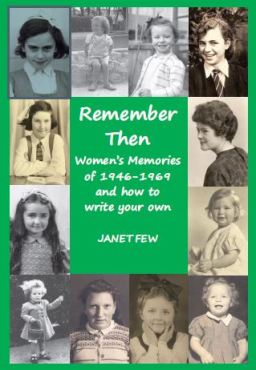 Remember Then: women’s memories of 1946-1969 and how to write your own
  I did have some problems. The cards, are printed on paper and laminated as my printer won’t take card. This is not ideal and you can see through the backs of the cards but this doesn’t matter because of the way that the game is played. The cards are also a bit of a strange shape and it was incredibly difficult to get them all exactly the same size. It probably took me best part of a day to produce two sets. Yes, I could have gone to a pound shop and bought sets of Top Trumps but that would not be the same on so many levels.
![Maids, Wives, Widows: Exploring Early Modern Woman's Lives 1540-1714 by [Read, Dr. Sara]](https://images-eu.ssl-images-amazon.com/images/I/51jZFVeiHGL.jpg) From my bookshelf today I offer you Sara Read’s
From my bookshelf today I offer you Sara Read’s ![Food In England: A complete guide to the food that makes us who we are by [Hartley, Dorothy]](https://images-eu.ssl-images-amazon.com/images/I/5117KWdpwQL.jpg) Today’s offering is Dorothy Hartley’s
Today’s offering is Dorothy Hartley’s  Yes, geese are signing up for Weight-watchers in flocks as I type. I kid you not, the ‘Back to School’ shelves have not yet been cleared and the Christmas cards are on sale. For those of us in the northern hemisphere, with the dark evenings on the horizon, this means our thoughts turn to digging out our virtual or literal family history files and promising ourselves that this year we really will create some order out of the chaos that is the fruits of years/decades of research. Maybe we would like to tempt our dearest and not so nearest to take an interest in our obsession with a yuletide gift of a family history, or we would like to share family stories over turkey and tinsel. Now let’s be honest here, ‘would you like to see my spreadsheet of baptisms?’ just isn’t going to cut it. I can feel the glazed over looks from 100 paces. That fascinating story of great uncle Fred’s bigamy, or auntie Alice’s spell in jail, though, that could just raise a flicker of excitement. Even if your family is devoid of all black sheep, set their lives in the local and social historical context of their time and you could be on to a winner. ‘Did you know great-granddad was the local rat-catcher?’ ‘Granny served tripe twice a week’ or ‘Great great grandma died of cholera, did you know she would have passed 20 litres of diahorrea a day?’ (good one for the gore hungry children that) – so much more engaging than a list of names and dates. If you want some motivation then can I humbly recommend that you take a look at my five week online ‘Are you Sitting Comfortably: writing and telling your family story’ course that starts on 17 October. Details are on the
  #Daisy has been making progress and is currently requiring me to research the poetry of World War I and the Bideford shops of the 1890s. I have just realised that #Daisy is about anorexia, shell shock, death, menopausal women, depression and war – just wondering if that might be a tad dark! Still it is enlivened by depictions of the beautiful Devon landscape.
 The History Interpreter - Janet Few