#100daysofbfotc Day 6: The Rechabites

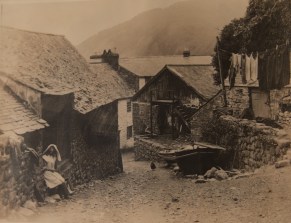
RechabitesThe Independent Order of Rechabites is a friendly society, founded in 1835. These societies provided a form of health insurance and death benefits to members in the era before the welfare state. The village inn was often the focus for friendly societies, who might have a dedicated Club Room in the local hostelry. By contrast, the Rechabites upheld the values of the Temperance Movement. It does seem however that the Clovelly branch did have an association with the New Inn.

In Chapter 14 of Barefoot on the Cobbles, the Rechabites are on parade through the streets of Clovelly to the parish church, for the annual New Year’s Day Club Service. This was always followed by a meal. In an effort to fulfill their vow to abstain from alcohol, many of the Rechabites ate in the local tea rooms. In order to accommodate all the members however, they were also hosted by the New Inn, who were happy to serve non-drinkers.

‘Leonard, his father and brothers were to march with the Rechabites from the New Inn, up the back road through the Court gardens to the church. As they assembled in the street outside the inn, persistent drizzle curtailed conviviality and the men were keen to be on their way before their best clothes were spoiled. The heavy cloth flag of the Rechabites, proudly borne by young Billy Harding, was becoming sodden.’

Barefoot on the Cobbles will be published on 17 November 2018. More information about the novel can be found here. Copies will be available at various events in the weeks following the launch or can be pre-ordered from Blue Poppy Publishing or the author.

#100daysofbfotc Day 5: ‘Crumplefoot Tommy’

Crumplefoot Tommy‘Crumplefoot’ Tommy is referred to in the first chapter of Barefoot on the Cobbles. Although we do not actually get to meet him, we form an impression of his character through his wife and daughter. The ‘Crumplefoot’ nickname is supposed to refer to an injury to his foot, that he sustained whilst at sea. I have probably used this nickname anachronistically, as I suspect he was not injured until later in life but it was too evocative to ignore. Thomas is in his late thirties at the point at which he appears in the story. His wife, who was also his first cousin, has just given birth to the eighth of their nine children. Tommy was in the merchant service and also worked a fishing boat from Bucks Mills. His injury was obviously not life-limiting, as he lived to the age of eighty nine.

‘ ‘Why tears maid?’ asked Albert, moved by the plight of one of Crumplefoot Tommy’s ever-increasing brood.

‘Me da fetched me one.’ The tone was philosophical but she scarcely stifled a rising sob. ‘He said I woke the bebby but I niver.’ ’

Barefoot on the Cobbles will be published on 17 November 2018. More information about the novel can be found here. Copies will be available at various events in the weeks following the launch or can be pre-ordered from Blue Poppy Publishing or the author.

#100daysofbfotc Day 4: East-the-Water, Bideford

DSCF0566

Looking across the River to East-the-Water

As the name suggests, East-the-Water refers to the part of Bideford that lies on the eastern bank of the River Torridge. One of the principal characters of Barefoot on the Cobbles arrives in East-the-Water in Chapter 2 and the following Chapter is centred on this part of the town. Although East-the-Water has never been the principal part of the town, at the time of the novel, the riverside’s wharves swarmed with activity. Higher up the hill were the prestigious villas of the Chudleigh Estate, built in the lee of the seventeenth century Chudleigh Fort. The Way of the Wharves, community history project explores the history of this area in more detail. There is also an account of East-the-Water’s history on the community website.

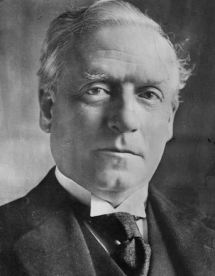
#100daysofbfotc Day 3: Herbert Henry Asquith

H H Asquith Prime Minister via Wikipedia This work is from the George Grantham Bain collection at the Library of Congress.

Image from the George Grantham Bain collection at the Library of Congress, in the public domain.

The Asquith family were closely associated with Clovelly Court and the current owner of Clovelly is Asquith’s great-grandson. At the time of his appearance in Chapter 5 of Barefoot on the Cobbles, Herbert Henry Asquith was the Prime Minister. A staunch Liberal, he was a barrister by profession. He is hailed as the founder of the modern welfare state; a number of significant reforms were introduced under his leadership. He was however a noted adversary of the woman’s suffrage movement and it is in this context that he crosses the pages of Barefoot. His inclusion in the novel relates to a well-known local incident and almost all the words that he uses in the book are taken directly from newspaper reports.

‘Instead of closing his eyes in prayer, the Prime Minister was scanning the note. He looked towards the pew a couple of rows in front of him, where the three young women were seated and then to the side door of the church. His jaw-line, with its cleft chin, was set firm and hastily he put the scrap of paper into his pocket.’

Barefoot on the Cobbles will be published on 17 November 2018. More information about the novel can be found here. Copies will be available at various events in the weeks following the launch or can be pre-ordered from Blue Poppy Publishing or the author.

#100daysofbfotc Day 1: Clovelly Cobbles

New InnMuch of Barefoot on the Cobbles is set in the unique village of Clovelly. Clovelly is a privately-owned fishing village on the rugged North Devon coast and many of the cottages that are lived in by the novel’s characters are 400 years old. The steep, cobbled street, that is reflected in Barefoot’s title, means that motorised transport is prohibited. Modern-day residents walk up and down the main street just as Polly, Albert, Daisy and other inhabitants of Barefoot would have done. Although, in the early twentieth century, donkeys, as well as sledges, were used to transport goods, nowadays the donkeys are merely there to recreate the atmosphere of the past. In Barefoot’s time, tourism was secondary to the fishing fleet, whose small boats sought herring, lobster, prawns and mackerel on the uncertain waves. Now, the fishing fleet has dwindled to a handful of boats and Clovelly is dedicated to catering for visitors.

‘Daisy was a child of the season, delighting in the heat and the chance to discard her boots in favour of skipping over the cobbles in her bare feet. She loved the feel of the hard stones as she curled her toes round each pebble, like a bird poised for flight.(Chapter 4)

Barefoot on the Cobbles will be published on 17 November 2018. More information about the novel can be found here. Copies will be available at various events in the weeks following the launch or can be pre-ordered from Blue Poppy Publishing or the author.

Introducing 100 Days of Barefoot on the Cobbles

0U9A3415On 9 August it will be 100 days until Barefoot on the Cobbles is launched. Each day, from 9 August onwards, I will be posting a short item about one of the characters you will meet in the novel, or one of the locations that is mentioned. This will give readers an opportunity to learn more about some of the people and places that grace its pages. These will be accompanied by lines from the book. I will continue to bore you with other elements of my rather eccentric existence but these posts will be separate. I hope you will enjoy getting to know the people who have been part of my life for the last couple of years.

Writers in the Cabin

The seven authors in our writers’ group are eagerly anticipating our forthcoming ‘Writers in a Cabin’ residence. Will we cope with the lack of electricity, phone signal and sanitation? How will we interact with the resident insect life? Will anyone want to come and say hello? As yet, all great imponderables, although some of us have already made up their minds about the spiders. In the hope of persuading you to spend time in a very special place and of course increasing the footfall for us, may I encourage you to read on?

Writers in Cabin flyerNestled at the bottom of the hill in the little fishing hamlet of Bucks Mills, lies The Cabin. This two-roomed hut began life as a fisherman’s store before being acquired by Judith Ackland’s family. Together with her friend Mary Stella Edwards, Judith used the building as an artists’ retreat for half a century. The solitude and spectacular views across the rugged North Devon coastline make it ideal for those seeking inspiration. Now in the care of the National Trust, the Cabin is almost exactly as the artists left it in 1971.

From 29 April – 1 May, it will once again be a setting that encourages creative talents to flourish. Between 10.00 and 4.00, the seven members of the North Devon authors’ group will take it in turns to use the cabin and its wonderful surroundings as their muse. The work of all these writers is rooted the past, in the local landscape, or both. They look forward to discussing their work, both past and forthcoming and signing copies of their books. This will be a unique opportunity, not only to view inside The Cabin, which is rarely open to the public but also to talk to enthusiastic and friendly authors about their writing.

The Writers in the Cabin will be:

Ruth Downie writes crime novels set in Roman times. Ruth’s book Medicus has recently attracted a ‘Discovered Diamond’ award for historical fiction.

Susan Hughes writes books set in the first half of the twentieth century. Her debut novel A Kiss from France was long-listed for the Historical Novel Society Indie Award 2017. She is now writing her second book.

Wendy Percival is the author of mystery novels featuring genealogy sleuth Esme Quentin, which include The Indelible Stain, set on the North Devon coast, near Hartland.

P J Reed is a poet and author who writes of the beauty and ethereal nature of the changing countryside. Her latest anthology Flicker was published last month.

Liz Shakespeare’s books are inspired by the people, history and landscapes of Devon. Her latest novel The Postman Poet, which was launched last month, is based on the true story of Edward Capern who composed poems and songs whilst delivering letters in Victorian North Devon.

Pamela Vass writes North Devon based fiction and social history. Her novel Seeds of Doubt debates whether the Lynmouth floods of 1952 were an Act of God or the Act of Man.

and Me!

A Chance to Meet Devon Authors in a Beautiful Setting

coast-27-april-09

The View from The Cabin

It is time to announce an exciting weekend for our authors’ group. Seven Devon writers will be taking it in turns to spend time in the idyllic setting of Bucks Mills, being inspired and talking about our work to those who pass by. Our venue is The Cabin, the quirky retreat that used to be owned by the artists Mary Stella Edwards and Judith Ackland. The Cabin is now administered by the National Trust and has been unchanged since the early decades of the twentieth century. It is rarely open to the public, so this will be a  opportunity to see inside. The Cabin lacks electricity, running water or sanitation, obstacles that we are womanfully willing to overcome in pursuit of our art!

Do come along if you like chatting about books and writing, if you want to immerse yourself in beautiful scenery or if you want to see a relic of days gone by (that’s The Cabin by the way – though more than one of our authors may recognise the description). We will be in-residence on Saturday 29 April, Sunday 30 April and Monday 1 May. Only one or two of us will be there at a time, so watch the individual authors’ websites for who will be on duty when. Those taking part at some point over the three days are:-

Ruth Downie – author of crime novels set in Roman times.

Susan Hughes – author of twentieth century historical fiction.

Wendy Percival – author of genealogical mystery novels set in North Devon.

P J Reed – poet and author of horror and fantasy novels.

Liz Shakespeare – author of books inspired by the people, history and landscapes of Devon.

Pamela Vass – author of North Devon based fiction and social history.

Oh and me! How did I end up in such illustrious company? Hopefully I might use the opportunity to work on the chapters of #Daisy that are set in Bucks Mills.