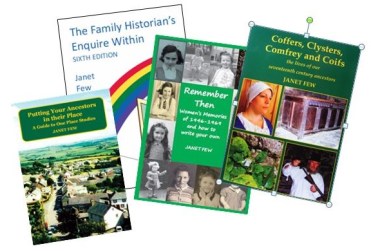
As part of my seventeenth century life, I give presentations on the history of witchcraft. When I was researching the topic for Coffers, Clysters, Comfrey and Coifs: the lives of our seventeenth century ancestors, I read a number of excellent books on the subject. For the purposes of this advent calendar, I have chosen just one of them to share with you, Alan MacFarlane’s Witchcraft in Tudor and Stuart England: a regional and comparative study. If you are a family historian who has not a single example of a witch or a bewitched in your family tree, please don’t think this would not be relevant to you. This was the atmosphere of the time and it is important to understand this. Another author on the subject, Malcolm Gaskill, wrote ‘Witch-hunts involved not just savage persecutors tormenting innocent scapegoats, but ordinary neighbours with a close affinity to one another who also happened to believe in witchcraft powerfully enough to act out their most violent fantasies.’ (Witchfinders: a seventeenth century English tragedy) – see it is buy one get one free day today!
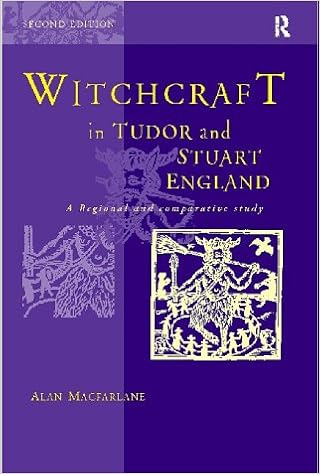 Today though belongs to MacFarlane’s work. This is not just an account of the witchcraft trials of the period. He discusses the sources that can be used, the social background and the conditions that contributed to an increase in accusations. He also looks at the various ways in which people attempted to counter-act witchcraft. The emphasis is on the notorious trials in Essex but these are set in a wider context and the background is applicable elsewhere. I am fascinated by the psychology behind witchcraft accusations and its similarities to today’s culture of bullying. I strive to understand what made people of the past act in a particular way under certain circumstances, so I found the section on the ideology of witchcraft and the anthropological interpretations a particularly valuable addition. There are maps, tables and black and white illustrations throughout the book.
As part of the talk that I give, I include a list of the known indictments for the county in which I am speaking. It was as I was preparing the Devon list, when I first gave this talk, that I spotted a name on the list that also appeared on my family tree. Joanna Elford was baptised in Mary Tavy, Devon in 1612. She was the sister of my 9 x great grandfather. Last week I took the opportunity to try to find out more. In 1671 Johanna or Joan Elford was accused of ‘laming and pining’ Alice Paynter (I presume that Alice was claiming that some form of paralysis and a sensation of being pricked were a result of being bewitched by Johanna). I have to admit that I was a little disappointed that Johanna got off, as this means less documentation. I still can’t be positive that it is the same Johanna/Joan Elford but it is a very unusual name. I am waiting to see if there is any further detail at The National Archives but it may be a long wait as I have no plans to visit in the immediate future. I could be tempted to base a novel round witchcraft accusations but I had better finish the current novel first!
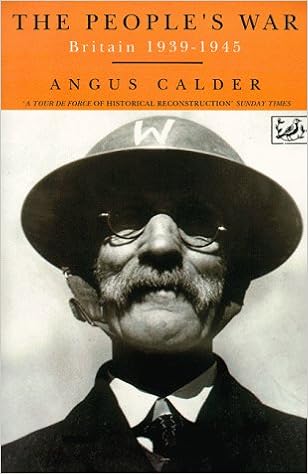 Today I would like to reveal a book that I found especially useful when I was writing up the more recent part of my family history. Angus Calder’s
  I did have some problems. The cards, are printed on paper and laminated as my printer won’t take card. This is not ideal and you can see through the backs of the cards but this doesn’t matter because of the way that the game is played. The cards are also a bit of a strange shape and it was incredibly difficult to get them all exactly the same size. It probably took me best part of a day to produce two sets. Yes, I could have gone to a pound shop and bought sets of Top Trumps but that would not be the same on so many levels.
![Maids, Wives, Widows: Exploring Early Modern Woman's Lives 1540-1714 by [Read, Dr. Sara]](https://images-eu.ssl-images-amazon.com/images/I/51jZFVeiHGL.jpg) From my bookshelf today I offer you Sara Read’s
From my bookshelf today I offer you Sara Read’s ![Food In England: A complete guide to the food that makes us who we are by [Hartley, Dorothy]](https://images-eu.ssl-images-amazon.com/images/I/5117KWdpwQL.jpg) Today’s offering is Dorothy Hartley’s
Today’s offering is Dorothy Hartley’s  Then it was the village garden and produce show. I always try to get involved in community events. The cooking classes were clearly a non-starter. I hadn’t had time to create something crafty. As my garden is a wasteland, being as it is mid re-vamp, plant and vegetable classes were challenging. Fortunately I could fall back on my herb garden, which was made-over last year. So second prize for a posy of herbs, or Tuzzy-Muzzy as we say, I’ll take that. I am sure I should be Daisy writing rather than blog writing so that’s it for today. I wonder if I can get another chapter finished amongst two talks to present in two days and the return of the job we must not mention.
 Nestled at the bottom of the hill in the little fishing hamlet of Bucks Mills, lies The Cabin. This two-roomed hut began life as a fisherman’s store before being acquired by Judith Ackland’s family. Together with her friend Mary Stella Edwards, Judith used the building as an artists’ retreat for half a century. The solitude and spectacular views across the rugged North Devon coastline make it ideal for those seeking inspiration. Now in the care of the National Trust, the Cabin is almost exactly as the artists left it in 1971.
 We are in Devon again for today’s historical novelist and the final genealogical sleuth of the advent calendar (there are others but there weren’t enough days).
  Next week I am being interviewed for
 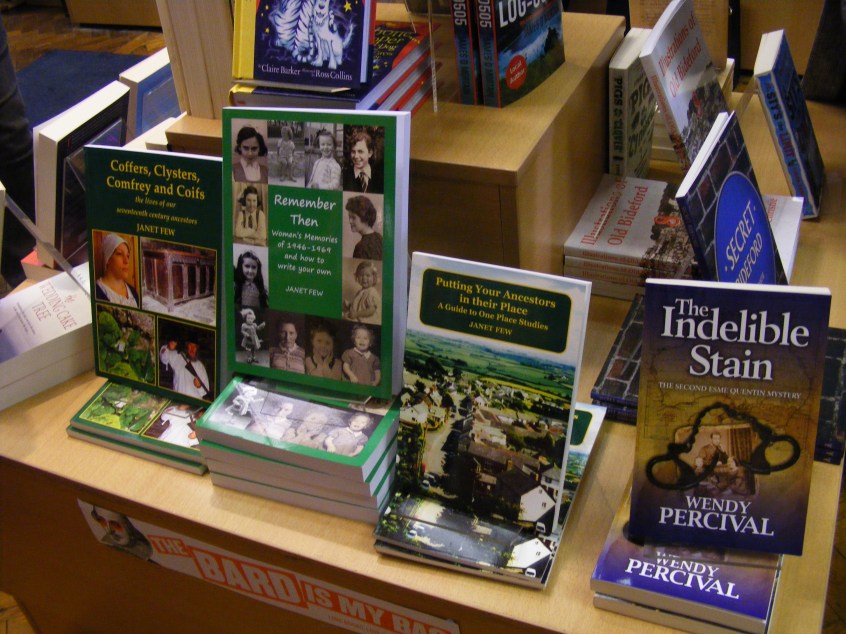 To commemorate the 400th anniversary of Shakespeare’s death (allegedly) and also World Book Day, I spent an afternoon in our local independent book shop,
  The History Interpreter - Janet Few