Faint Passports Never Won – well, anything really – Isolation Day 65

One of the downsides of lockdown for me has been that I am unable to get out and about to share my love of all things historical with many wonderful people. It has been inevitable but sad, to watch one speaking engagement after another tumble like a domino rally. Fortunately, I am starting to replace some of these talks with online versions. A consequence of not meeting audiences in person is that I have lost one of my main book-selling opportunities. This is not just financially significant. In a couple of months, a pallet containing a very large number of boxes of novel number two will hopefully be landing on my driveway. I need to shift existing stock to make space. Oh, you want another clue? Happy to oblige, novel two includes little known facts about what is a fairly well-known local incident. Very soon there will be a title/cover reveal. The cover is amazing – thank you Robin of The Branch Line.

Now, where was I? Oh yes, selling books, or in this case, not selling as many books as I need to in the next three months in order to have any room whatsoever in my tiny cottage. In the past, I have added myself as a potential book seller on Amazon. I stopped doing this because it was a pain removing myself again on the many occasions when I was away from home. You can’t just leave the items up for sale as you have to be able to send out purchases within 48 hours. As it doesn’t look as if I will be going anywhere anytime soon, I thought I’d reactive my Amazon seller status. Well dear reader, how long have you got?

I suspect because the dreaded GDPR has loomed its ugly head since I was last a seller, I am required to jump through the hoop of proving I am a person and that I am actually me. I assure you I am me, although when I look in the mirror, I do wonder why I am my mother. ‘Send a copy of your passport’. Thankfully, I do have one. I photograph my passport. Maybe I didn’t get its best side or something but back comes the message ‘your details do not match, change your surname to FEWB’. Well the whole deed poll thing seems a bit unnecessary, especially as FEWB is not my name. Was three letters too short or something? My passport didn’t have a superfluous B on it. I heave myself off the chair and go to scan the passport instead, on the highest possible resolution. It takes ages, whirring merrily away. I now have a jpg (acceptable format) of two pages of passport when I require only one. It is also 11MB and the maximum I can upload is 10MB. Fine, I will edit it. I edit jpgs all the time. For some reason, which ever programme I choose, it will not let me edit the file. Eventually, I use my snipping tool to take a screen shot. Ok so the instructions do say ‘we cannot accept a screen shot’ but how will they know? I send it off. Back comes the message ‘your passport is too faint’. Too faint? Well that’s hardly my fault. I haven’t irresponsibly been leaving it to fade in high sunlight or anything. I click on the link for ‘if you are having trouble’ and compose a message expressing my frustration and seeking advice.

Time passes. The process has already been spread over two days and taken me a couple of hours to not sort. An email arrives. It sets out a carbon copy of what to do, exactly as it appears on the webpage where you upload faint passports. ‘Does this answer your question?’ they jovially ask. Well, errr, no. Then it occurs to a fisherman of my acquaintance that, although passports are mentioned, my driving licence contains similar information. Worth a shot. By this time, I really can’t face another journey upstairs to the scanner. In my defence, this is not the height of lockdown laziness (well not entirely) but my back does still prefer it if I don’t move from sitting to standing too often. No immediate rejection message. I cross my fingers. No ‘this has worked’ email either though. I wait. Finally, when lamenting my plight to a friend, she checks and discovers that there my books are there, happily listed, so it must have worked! Now all I need is people to buy them in droves and if that happens, people to donate recycled bubble wrap! Actually, if you are reading this, please don’t buy my books on Amazon at all, just contact me. It will cost you the same but it saves me a few pennies (actually quite a lot of pennies). A thousand sales before the end of July isn’t too much to hope for is it? Ok, so it is but I can dream.

What with this and the shopping order that mysteriously disappeared (long and really not very interesting story – even less interesting than the one you’ve just read), I am reluctant to face the next learning curve, which is finally giving in to entreaties to do my tax return online. I have no problem at all with completing it on paper and it would normally be done by now. This year however I have had a letter saying they are not going to send me a paper form. I do know, that if I ring up and wait on hold for a couple of hours (because my call is important to them), they will send a form but I am fairly proficient with online, I should be able to do it. Shouldn’t I?

DSCF0578

Day 11 Fruit and Veg, Toilet Rolls, Genealogy and other Isolation Issues

Today is day 11 for us. I am rapidly going to lose track of how many days it is and I certainly have to stop and think about the day of the week. The last few days have brought some highs and lows.

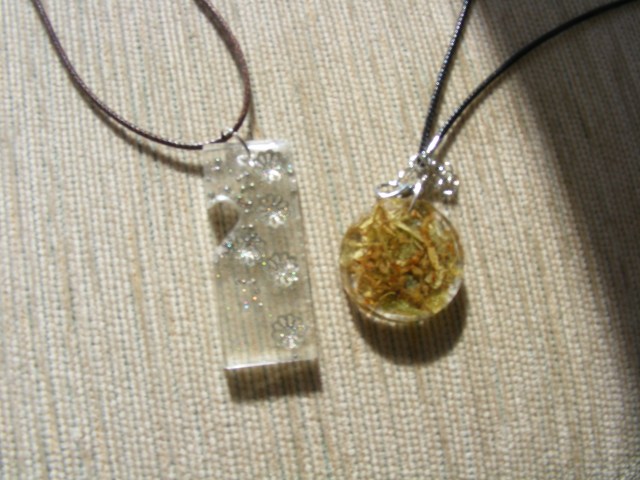
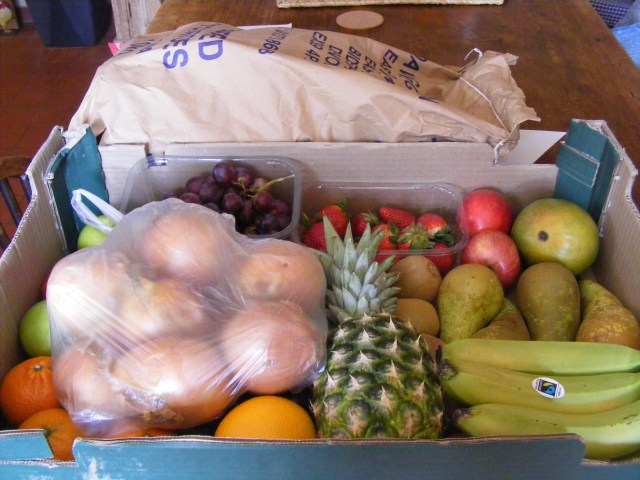
First positive was the discovery of one and a half toilet rolls. Ok, so they were in the almost never used outside toilet and covered in cobwebs but someone in the household is willing to use them. Actually, we have sufficient toilet rolls but the absence of any online shopping slots in the next three weeks is worrying. I do have a slot booked for two weeks’ time but very little of my potential order is currently available. I was feeling quite down about this yesterday morning but first our wonderful community shop, run by volunteers, delivered a few essentials such as bread and milk and then a massive box of fruit and veg arrived, ordered by Rebecca in lieu of Mother’s Day flowers. Under current circumstances, better than any flowers, there might have been a tear or two. A parcel arrived from BeingEdward for Mother’s Day. I Skyped to say thank you. He has been making resin jewellery with his mum. He had given me a necklace with half a heart shape and was very excited to show me that he was wearing the matching other half, cue more emotion.

DSCF0492

DSCF0493.JPGI am eternally grateful for ‘online’. I’ve helped Edward lay out a family tree. I managed to access Zoom for the first time to chat with other genealogy types and used Skype to meet with my authors’ group. I think Martha, Lucy and I are planning a family music recital later in the week. On the downside, I have a totally unintelligible communication from the US tax people, or possibly from Amazon, relating to my meagre Amazon sales to the US. I fill in my own UK self-assessment forms with ease. This is unintelligible, as is the website it directs you to. It seems I am a ‘non-resident alien’ (that may explain a lot) and I may need to visit my US Embassy for a tax form – like that’s going to happen. Or I can write to Illinois, ditto at present – not going to make a non-essential Post Office visit. So now I am worrying about being hauled off to some federal prison for non-payment of taxes.

Thanks to my co-isolatee, my lawn has been mown and even the shed is looking tidier. We planted some seeds. They are pretty antique but archaeologists have got Roman seeds to grow right? I spent an hour cancelling various aspects of our planned holiday to Ireland – hopefully we will be able to go next year instead.

I dropped in on #AncestryHour on Twitter. The lovely Daniel of Daniel’s Genealogy has interviewed me. Ah there’s another new novel clue for you – it does mention #Ancestryhour. I am still finding it very difficult to concentrate on anything, particularly writing and everything is taking longer than usual. Nonetheless my new One Place Study booklet is finished and with beta readers. You cannot imagine how long it took me to get Word to behave so that the pages that I wanted to have numbers did and that they were the correct numbers.

I am starting to get to know my next batch of students for my Writing and Telling Your Family History Course. I feel some of them may have more time than usual to devote to this. Still time to sign up if you want to join the merry throng – it starts on Tuesday – providing any of us can actually remember when Tuesday is!

Of all Things New: presentations, courses, books and more

New year, new things on the horizon. Here is just a selection. Last week I spent a very interesting day at the headquarters of Family Tree Magazine, filming two presentations for their downloadable content. Despite the fact that I am used to presenting, it is actually very difficult to talk for nearly an hour (x2) with no audience participation, no hesitation, deviation, umms and ahhs, coughs, pauses to swig gin etc.. The presentations will be available in a month or two. One is on tracing twentieth century English ancestry and the other on pauper ancestors.

Whilst on the subject of Twentieth Century ancestry, my online course for Pharos begins in a couple of weeks and is filling up fast, book now to avoid disappointment and all that. I am also preparing two new online courses, which will be available through Pharos. There will be an introductory one-place studies course, which will begin in September (ok, so that isn’t written yet either). The previous course, run by Celia Heritage, is no longer available, as Celia has other commitments. This one will be a brand new; I have deliberately not looked at Celia’s version. A course to help those tracing Agricultural Labouring Ancestors is planned for 2021. I also have a new presentation on the same topic, Sons of the Soil, which will premiere at Dorset Family History Day  in March. Err, no, that isn’t written yet either.

Back to one-place studies for a minute. Putting your Ancestors in their Place is now very nearly out of print. I am preparing a new booklet, which will have a rather different approach and a more international feel. It will also be available for Kindle, which I hope will be popular. With luck, that may be ready for THE Genealogy Show in June and yes, you’ve guessed it, not actually written yet. Add to this the book that I may need to write in connection with the job I must not mention and there are no prizes for guessing what I shall be doing over the next few months.

Deepest Darkest Devon

And now for something completely different, something that is actually written! Hurrah! Exeter Authors Association of which I am very much an inactive member, have produced an anthology of short stories with a Devonian slant, Tales of Deepest Darkest Devon. I am not by nature a short story writer but one of mine (ok the only one of mine) Brought to Book is in that collection. If you enjoyed Barefoot it is similar in style and based on a true story that took place in Devon in the 1820s and 1830s. You also get to read all the varied and fascinating contributions by other local authors. Priced at £4.99, it is due for publication on 31 March and is currently available in Kindle format only. It can be pre-ordered now here. Part of the proceeds will be donated to Devon Air Ambulance Trust.

My next novel is due to be launched on 29th August, ok, so there is the small matter of a third of it still to be written (have you spotted a theme here?) – that’s a mere detail. Advance notice that I will not be creating a millstone round my neck and writing 100 blog entries about the characters and locations as I did for Barefoot but I will be drip-feeding some hints and teasers in my blog posts in the meantime. #1 It is, like Barefoot, based on a true story. So, stand by, there will be more and a title reveal is imminent (when I have decided what it is to be that is!).

Whilst I look forward to these excitements, my thoughts are with my many Australian friends and the appalling fires that are currently threatening their homes and families. On a more positive note, it is exciting to see that several of my favourite genealogy presenters will be participating in Family History Down-under in March 2021. I think that it is very unlikely that I will be able to attend but if you live nearer than half a world away (or even if you don’t) this is going to be a major event on the genealogy calendar.

Genealogical Sleuths – Fiction for you to Enjoy

Until recently, I was a columnist for the In-depth Genealogist Magazine and also wrote for their blog. Now the magazine is sadly no more, contributors have been invited to re-post their blog material elsewhere, so that it is preserved. This is another post that I wrote for the magazine; it has been updated since it first appeared in January 2018.

In recent years, several authors of fiction have chosen genealogical sleuths as their main characters. In general, these are crime novels but frequently they have a ‘time-slip’ facet, so that they also contain elements of historical fiction. I have to say that if genealogy was as dangerous a career as some of these books imply, no one would be advised to take it up. The mundane might be more realistic but would not make for very exciting fiction. I thought that I would introduce you to a few of my favourite exponents of this genre. There are others and I hope that readers will share details of those that they have enjoyed. In an effort to be fair, I have listed the authors in alphabetical order.

Nathan Dylan Goodwin writes about ‘forensic genealogist’ Morton Farrier. Two threads run throughout the books that have been published so far. The first relates to Morton’s quest for his own ancestry and the other is his developing relationship with his police officer partner, Juliette. There are five full length novels, plus four shorter adventures in the series. One of the latter, The Asylum, is currently available as free download. In these, Goodwin writes of such things as Edwardian Britain, Suffragettes, the Western Front, The Battle of Britain and his hometown of Hastings. In addition, Ghost Swifts, Blue Poppies and the Red Star is the first in a new series about Harriet McDougall and is set in 1919 as Harriet investigates the story behind the loss of her son in the First World War.

M J Lee introduces us to former detective Jayne Sinclair. So far, there are six books in the series including The Irish Inheritance, which is a case that centres on the Easter Rising, whilst The Somme Legacy covers both the first world war and the suffragette movement. The American Candidate sees Jayne investigate the background of a potential candidate for the American Presidency and takes us back to the 1940s.

The Irish Inheritance Cover LARGE EBOOK.jpg

John Nixon’s genealogist is also female, in the shape of Madeleine Porter. So far, there are eight books in the series and her adventures include, The Cuckoo Clock, Stolen Futures, Family Shadows and Another Summer, which revolves around a First World War mystery. The Cost of Silence begins with the murder of a genealogist. Have they been silenced before they could uncover something inconvenient?

Another Summer (A Madeleine Porter Mystery) by [Nixon, John]


Wendy Percival has also created a female genealogist, in the shape of Esme Quentin. The first book, Blood Tied, begins with the murder of an unidentified victim and unravels a sixty year old family mystery. The Indelible Stain takes us from a dying woman on a North Devon beach, to the story of a young girl’s transportation to Australia. The third book, The Malice of Angels , focuses on the Special Operations Executive in the Second World War. The most recent offering, Legacy of Guilt, is available for free download on Wendy’s website. There is also an Esme novella, Death of a Cuckoo.

BLOOD-TIED  RGB cover image (updated).jp

Steve Robinson’s anti-hero is American genealogist Jefferson Tayte. Many of his cases take him to the UK and his bumbling attempts at relationships echo throughout the seven books. In this series, we have another genealogist who is seeking out his own birth family. The first book, In the Blood, is set in Cornwall; a centuries old murder is solved thanks to his efforts. To the Grave sees Tayte unravelling a secret that has been kept since the days of World War Two. Kindred is also set in the Second World War. In The Last Queen of England, fact and fiction are intertwined as Tayte races against time to solve a puzzle, set by members of The Royal Society, relating to the rightful heir to the throne. The Lost Empress focuses on a 1914 shipwreck that has remained relatively unknown in the shadow of the Titanic and Lusitania.

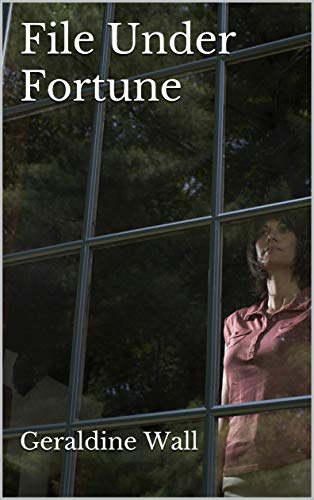
Geraldine Wall’s series of five books feature Anna Ames, a probate genealogist. The continuing thread concerning Anna’s own family, including, in the earlier books, her husband’s developing early onset dementia, is a positive addition to her ‘File under ……’ series. Although there is perhaps a little less genealogy and more family relationships in this series they are deserving of inclusion. The latest in the series, File under Fortune, follows Anna’s research into her own Traveller heritage.

book cover of File Under Fortune

Happy Reading!

Ancestral Ill-health and a bit about Books

It has been a busy week, with some fascinating family history discoveries. As some of you will know, I have been publicly somewhat scathing about the works of fiction that are strewn across the internet, purporting to be someone’s family tree. Not wishing to delve too deeply into people who die before they are born, have children at the age of two, or are allegedly living in three different countries at one and the same time, I attempt to avoid these. Occasionally there may be a nugget of usefulness of course and my recent foray on to Ancestry.co.uk did lead to a photograph of my great great grandfather’s brother. I have a picture of g-g-grandfather and there is a likeness. I also found two people whose online trees bore some resemblance to reality and I was able to offer the owners copies of family photographs. One even replied, so I guess that is a bonus.


John and Thomas Dawson

My Ancestry DNA test is currently languishing in the lab waiting to be processed. Yes, I am going to join the ranks of those irritating testees who do not have a tree on Ancestry. I have however added my ancestral surnames to my profile back sufficiently far for any fourth cousins to look for a common ancestor.

I am, as anticipated, making use of some of the original documents that can be accessed via Ancestry, notably collections from London Metropolitan Archives. It was via some workhouse admissions’ and discharge registers that I discovered that my great great aunt had been in the county asylum. Coincidentally, my ‘In Sickness and in Death: researching the ill-health and deaths of your ancestors’ students were discussing asylum records this very week and even better, one has kindly volunteered to look up some potential records about great great aunt that are not online – aren’t people lovely? Now, if any kind soul is at the London Metropolitan Archives with a spare five minutes to investigate her stay in another asylum………

The great thing about running online courses is that you learn so much from your students. You may have spotted a Facebook post from me that referred to the list of 1832 cholera epidemic victims in Manchester. The transcription of this dataset is cunningly hidden away on FindmyPast and what a gem! For the benefit of those not on Facebook, here is the entry for 16 year old Elizabeth Aspin ‘No. 177, Elizabeth Aspin, commonly called Crazy Bess, aged 16. Residence Back Parliament-street. Employment: woman of the town. Constitution: stoutish. Natural susceptibility: subject to diarrhoea after drinking. Predisposing cause: alternately starved and drunk, often sleeping in the street. Exciting cause: drunk on the Reform celebration day the day before her attack, cried passionately when Laurence was taken to the hospital. Locality, crowding, filth &c. for the locality see case 181. Dates of attack and event: seized Friday, August 10th, at 11 pm, recovered August 30th. Communication or non-communication: no known communication with Laurence nor any body else.’ Further research suggests that she was baptised in Manchester in 1817, daughter of Thomas and Ellen and that she survived the epidemic, marrying George Townley in Radcliffe, Manchester in 1836 and moving to Salford.

Advance notice of a couple of book signing/buying opportunities. I will be giving a talk about Barefoot on the Cobbles as well as selling and signing books at The Wine Box in Torquay at 2.00pm on Friday 8th November – wine and books – how can you resist? I am especially pleased about this, as part of the novel is set in Torquay. I will also be at Torrington Craft Fair on 7 December with copies of all my books. A few people have asked if they can get copies of my books at RootsTechLondon. I will have a limited number copies of Remember Then, as that is the subject of my talk but I am travelling in on public transport so will only have other titles if you ask in advance. I need to know by 9 October. I could mention that the festive season is only however many weeks away but I won’t.

News from the Cobbles for fans of Barefoot

I hope no one is reading this expecting Coronation Street spoilers. There have been some lovely communications regarding Barefoot on the Cobbles lately. Firstly, two lovely readers, without internet access, took the trouble to write me letters saying how much they had enjoyed it. I also had an email from a reader from New Zealand who not only praised the book but said I had inspired her to write the story of her own family history tragedy. I have also been contacted by two relatives of the minor characters in the novel. One leading to ongoing research into the family, which may turn out to be intriguing.

This has been interspersed with precious time spent with my descendants; there may be more about that later. I have also started another run of my In Sickness and in Death course and the students are wonderfully active, sharing stories of the ailments of their ancestors. One of the best parts about Pharos courses is the interactions between the students. This has all taken my mind off a few recent technical hitches. Yesterday a very forbearing audience sat through a presentation that really did need the accompanying slides, when my laptop (and a backup laptop) failed to communicate with the projector. I am also juggling external hard drives, in an attempt to recover files that have been damaged due to a corrupted memory stick. Fortunately they were backed up and I realised before I overwrote the complete files for another back up. A salutary lesson not to rely on memory sticks/data sticks/flash drives, call them what you will.

In the course of checking files to see if they were damaged, I came across I passage that I wrote for part of Chapter 1 of Barefoot but which was left on the cutting-room floor. I thought you might like to read a little about Polly as a young girl.

1884

Polly Wakely leaned back on the Devon bank that edged the lane leading from Horns Cross to Peppercombe. Her two younger sisters, tired of gathering bluebells, sat beside her. All had severely plaited hair and identical rough, linen smocks. Polly, on the brink of womanhood, had abandoned her bonnet in an act of defiance. She was meant to be shepherding her sisters home from school but the temptation to linger in the spring sunshine, to stretch the time between the agonies of the classroom and the drudgery of chores at home, had got the better of her. Polly did not begrudge having to mind Ada and Ethel, in fact she quite enjoyed it. She hoped that she might have children of her own one day, in an unfathomable future that seemed impossibly far ahead. The role of chaperone to the younger members of the family had, until recently, been the task of her older sister, Jane. Jane, shy and retiring had found it difficult to discipline the two youngest girls but Polly was firmer. Despite their very different personalities, the Wakely sisters had always been self-sufficient, content with each other’s company and united against the taunts of their classmates.

            A small group of children turned the corner and spotted the Wakelys. Here was an easy target.

            ‘Yer ma tellin’ fortunes today then?’

            Polly was not as feisty as her eldest sister, Lydia, now working away in service but she had had years of practice standing up to bullies and defending her own. She knew that the comment was intended to provoke a reaction, perhaps to initiate a fight. She had succumbed to this when she was younger, arrived home with hair pulled, face scratched and pinafore torn. She considered herself too old for such scraps now and she had learned that there was nothing the tormentors hated more than to be ignored. She turned her back and pretended that she had not heard, putting a warning hand on Ada’s arm, to indicate that she should do the same.

            The oldest boy picked up Ethel’s discarded bouquet.

            ‘What’s these ole flowers for then?’ he mocked, tossing the drooping blooms over the hedge. ‘Going to pop them in the pot and make a spell?’

            Polly groaned inwardly, would this stupid tale never cease to dog their lives. Ethel was less resilient than her sisters and was distressed at the loss of her flowers but she knew that she must not give this big boy the satisfaction of seeing her cry.

            One of the girls in the group was regarding them with sympathy but her companions quelled any attempts at compassion.

            ‘Them’s nought better than gypos, don’t you go frettin’ over them. Turn you into a toad as soon as, they would.’

            Polly knew she had to be brave, that her ma would be cross if Ada or Ethel went home in tears and told tales of what was responsible for their distress. As each of her children left toddlerhood behind, Eliza Wakely had urged them to ignore such taunts. She understood their pain, she had suffered the same in her turn. In fact, thought Polly, although there had been no school to endure in those days, it had been worse for ma and her sisters. Their very surname, Found, had marked the family as out of the ordinary. It had all been ages ago, before even ma’s grafer’s time but still the rumours swirled. Going back some, the original Found had been just that, found in the church porch over Morwenstow way and Polly and her sisters were suffering for it still.

Peppercombe

Pillories and Preparations

In the brief week at home, idleness has not been an option. Firstly, my home village staged a re-enactment to commemorate the 200th anniversary of the arrival of Methodism in the village. William Reed and Samuel Thorne chose the day of the revels to preach on the village green, were duly arrested and fined. I have to admit that being part of the action, exactly 200 years later, was a ‘hairs standing up on the neck’ moment. Mistress Agnes was present in Victorian guise and a few reprobates were pilloried in the newly acquired community pillory – every home should have one. There was also a truly spectacular flower festival. As someone whose idea of successful flower arranging is remembering to put water in the vase, I was in awe.

1 June 2019 William Reed Commemorations (4)1 June 2019 William Reed Commemorations (6)

I did briefly get back to writing novel number two, after a gap of a few weeks. This has necessitated me buying a book. Thanks to Martha’s research, I did get it half price but it is still the most expensive book I have ever purchased. Then, with assistance, I tried to rediscover my garden. The grass had to be scythed and the weeds still have to be tamed.

Then it was onward and upwards and back ‘up north’ to THE Genealogy Show. Yesterday was spent setting up and greeting friends from across the world, some of whom I have only previously ‘met’ online. My two (well one and a third) presentations are tomorrow so today will be more relaxing. A talk to hear, some brick-wall bashing for attendees who have booked appointments with an expert (a few of them have got me – oh well) and helping out on the Society for One-place Studies stall in between. It is going to be a good day.

TheGenShow

Come and Meet Mistress Agnes at #FamilyTreeLive – a chance to buy my books at reduced prices on stand 167

Just to say that I will be on duty at Family Tree Live as Mistress Agnes, in company with various disreputable characters, on stand 167 – so do come and experience the lives of your C17th ancestors. See Swords and Spindles website for more details of what is in store. All my books will be on sale on that stand. I don’t want to fiddle with 1ps and 5ps so there will be an opportunity to save a few pennies. Coffers, Clysters, Comfrey and Coifs: the lives of your seventeenth century ancestors will be 15% off with the voucher that will be in your Goody Bag.

CCCC front coverThere is a limit to what you can get in a Landrover (there really is – I was surprised too), so what with armour, instruments of torture, costumes of various sizes, toys and a multitude of household items, I will not have an infinite number of every book title – so if you were hoping to relieve me of one of my publications, let me know and I will save you a copy. I would advertise my workshop and presentation but I am afraid (well, afraid for you, glad for me) that they are fully booked.

Looking forward to seeing you all.

Of Oven Cleaner, Ancestor Chasing, Genealogy Courses and Procrastinating

Well I guess this is where I say Happy New Year. New starts, new resolutions new things to look forward to. For those of you for whom life can be a struggle, I wish an easier time for you in 2019. I hope it can be a year when the world is more compassionate and more tolerant of others’ differences. We can be polite and forbearing, even if we do not always agree.

I was lucky enough to do some wonderful things in 2018 and there are some excitements on my 2019 horizon, although I am hoping to find time to relax more and actually see my house occasionally. So what’s been happening chez moi? Firstly, the inevitable seasonal lurgy has left me lacking in energy and sounding very deep and interesting, or as we say, croaky. Notwithstanding, I have begun the spring cleaning. Ok, so this is probably spring cleaning 2010 but spring cleaning nonetheless. With the assistance of the fisherman of my acquaintance, to whom grateful thanks are extended, I have embarked on the kitchen. The lack of energy thing (and I’ll be honest, the fact that cleaning isn’t exactly my number one favourite activity) means that it has taken several days but the end is in sight. Cupboards have been emptied and de-cobwebbed – I live in a house made of mud, of course there are cobwebs. I have unpacked two boxes that hadn’t seen the light of day since I moved in in 2006. These have now been rationalised into one box. Said box is probably still full of stuff I neither need nor am likely to use but hey, it is one less box for my descendants to dispose of when I go to meet the ancestors. I have discovered that I have a lifetime’s supply of oven cleaner. Who am I kidding? At the frequency that my oven gets cleaned it will probably last until 2130.

martha regional breakdwon from documentary evidenceAfter a lovely time with two fifths of my descendants, I used the lacunae between Christmas and New Year to cough a great deal and revisit some family history. This was partly inspired by a recent meeting with the full range of my second cousins at the funeral of the last of my mother’s cousins. This officially makes me the oldest generation now, that is a sobering thought. I was also motivated to look at my daughters’ ancestors, in preparation for LivingDNA results for one of them. I found my own regional profile that I received from LivingDNA closely matched the documentary evidence and I have already written about this. This is the prediction for my daughter and we will see how that compares with the actual results in a few months’ time.

numbers of ancestorsIn the course of working out what I was expecting, I also calculated how many of my direct ancestors I have discovered in forty two years of research. Not a bad haul for someone whose grandparents were born in the 1880s and 1890s, especially as I am 95% sure who the missing 3 3x great-grandparents are, which has a knock on effect on the totals in earlier generations. Whether I shall ever be confident enough to ‘ink these in’ is another matter.
I’ve had fun revising a couple of courses. Firstly, the next presentation of my five week online course for Pharos Teaching and TutoringDiscovering your British Family and the Local Community in the early C20th’, which begins in a couple of weeks. There are still a few places left. What a great start to your family history new year, to revisit your more recent ancestry and look at their lives in context. I am also going to be leading an ‘Introduction to Family History’ day course at Crediton Library on January. It has been a few years since I last did this and plenty has changed, underlining how fast-moving our hobby is. Contact the library directly if you are interested in this one.

And what of the writing? I hear you ask. Well, if you aren’t asking, why not? Firstly, I have made a significant dent in my pile of Barefoot in the Cobbles boxes and sales online are going well. Please can I reiterate my plea for you to buy paper copies directly from me, from my lovely publisher or from an independent bookshop near you, rather than pressing that tempting little ‘buy it now’ button. Obviously, if you are outside the UK, or want a copy for your e-reader, please do press away. Some lovely reviews are coming in – more are always welcome  and I have been re-energised to get back to work on book two. This was abandoned during the frenetic Barefoot marketing phase but I have picked up the threads of this work-in-progress. The researching is proving fascinating. I don’t want to give too much away at present but I’ve been delving into the records of Westminster School and looking at seventeenth century licenses to pass beyond the seas amongst other things. Actual writing though has stalled. I have sharpened my pencils in preparation (I don’t write text in pencil – although I do use pencil for my notes). I have put a pile of reference books in a box but procrastination abounds. I am even tempted to spring-clean another room to put off the moment when I have to produce something that resembles narrative – maybe next week.

#100daysofbfotc Day 95: Abraham Tuke

PoppiesOn the centenary of the armistice it is fitting that today’s post should belong to one of the fallen. Chapter 8 of Barefoot on the Cobbles is set on the western front. In order to reflect the early years of the twentieth century, the novel needed to include an episode that was devoted to the experiences of a combatant. The choice of Abraham, from amongst the men that Clovelly lost, was largely a random one and his life story was not typical. Incidentally, Abraham was not his first given name but in common with several other characters, his name needed to be changed to avoid confusion.
I anticipated that this would be the most difficult chapter for me to write, as I am not a young male, nor have I ever been in a combat zone. The western front was the only location in the novel that I was not able to explore in person. I immersed myself in the war diaries of Abraham’s battalion and read personal memoirs and dairies about the little-known battle in which he lost his life. I discovered that, although the Battle of Fromelles is not a household name in the UK, it is in Australia; the ANZAC troops experiences appalling losses in this campaign. I was also helped by the archivist at Abraham’s school, who responded swiftly and in detail to my enquiries, allowing me to build up a much fuller impression of Abraham’s character.

Although the chapter would not stand up to scrutiny by a military historian, I reasoned that one soldier would not have an impression of the overall tactics, so, if the account seems a little confused, that is probably an accurate reflection of a single soldier’s experiences. In the end, this is the chapter that pleases me the most.

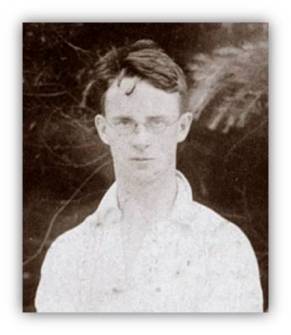
W A B Tuke

From the Archive of King’s College, Taunton

Abraham Tuke was born in Clovelly in 1894 and was baptised in the church that stood adjacent to his home. His father, Harry, was the Court’s head gardener and the family lived at Gardener’s Cottage, on the edge of the walled garden. Abraham was an only child and his childhood was very different to that of most of his peers. Although he attended Clovelly School as a young boy, he won a scholarship to the prestigious King’s College in Taunton. It must have been difficult to cope with this dislocation and I suspect that Abraham may not have fitted well into either of his worlds. Whilst at King’s, Abraham became Senior Prefect and a Corporal in the Officers’ Training Corps. He was in the debating society and appeared in school productions. He did well academically, winning prizes for History, Religious Instruction and Latin. His ambition was to become a teacher and he qualified at St. Luke’s College, where he played rugby and became editor of the college magazine. The latter made me think that he would have written poetry, so I read volumes of World War 1 poetry, including the efforts of less-known and probably less accomplished poets. In this way, Abraham was able to write a poem, which appears in the book. I consoled myself, as I write it on his behalf, with the fact that he didn’t have to be a very good poet!

Following a role in the Territorials, Abraham joined the 2nd/4th (City of Bristol) Battalion of the Gloucestershire Regiment rising to the rank of Sergeant. He perished on 19 July 1916.

‘Barbed wire coiled across the long grass, self-seeded crops from happier years dared to grow and poppies painted the fields. Abandoned and broken, ploughs rusted where they lay. Then there were the agonising reminders of war. The wooden crosses, roughly hewn, inscribed only with a date; the names of the soldiers who fell on that spot forever forgotten.’

Barefoot on the Cobbles will be published on 17 November 2018. More information about the novel can be found here. Copies will be available at various events in the weeks following the launch or can be pre-ordered from Blue Poppy Publishing or the author. Kindle editions can be pre-ordered for the UK and also on Amazon.com.