All Things Mayflower

Saturday was the all-day Mayflower 400 International conference. The eagle-eyed mathematicians amongst you will note that it is in fact 401 years since the Mayflower sailed in 1620. The conference was originally scheduled for last year and was to be a live event. It was delayed by a year and finally converted to an online format. This meant that there were attendees from across the globe, many of them watching at hours when most self-respecting folk were asleep.

After a very interesting and relevant introduction from Charlie Courtenay, Earl of Devon, Master Christopher and Mistress Agnes chatted about their lives in Devon in the fifty years since the Mayflower sailed. For various logistical reasons we had pre-recorded this, amidst a certain amount of issues, such as very loud, large tractors driving past, or the phone ringing at inopportune moments. Cue take 3, or 4, or 10.

After us, Cor de Graaf gave the Leiden perspective. I am so in awe of people who can present in a second language. After some friendly lunchtime chat, that is characteristic of Devon Family History Society meetings, Phil Revell told the story of the More children from Shropshire, who were dispatched across the Atlantic on the Mayflower, having been taken from their mother.

This was followed by Debbie Kennett, explaining the uses of genetic genealogy. Then a thought-provoking session from UK based, American TV journalist, Jim Boulden. He was analysing why lineage societies, such as that for Mayflower descendants, are so popular in the US.

Jo Loosemore told us about the problems of curating the Mayflower Exhibition at The Box in Plymouth, during a pandemic. Hearing about the ethos behind the exhibition, which incorporated heavy involvement from the Wampanoag, was fascinating. Unfortunately, now the day was virtual and therefore extended into the evening, I didn’t get to stay for Nick Barrett’s closing session, a real shame as Nick is always an excellent speaker.

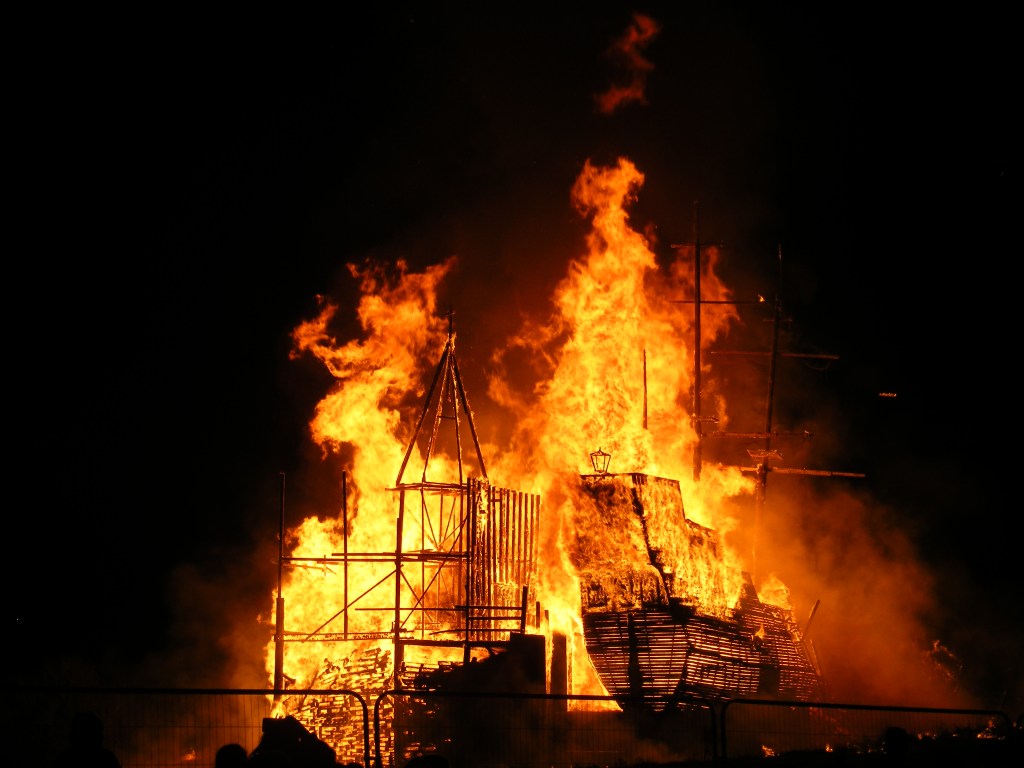
Two years ago, I purchased tickets for the Torrington Bonfire. If you are thinking, pile of sticks, add a match, you couldn’t be further from the truth. I have been to three previous bonfires and these are truly spectacular events. They are organised by Torrington Cavaliers who spend two or three years building elaborate constructions, which are then burned, raising thousands of pounds for charity. Previous models have included the Victory, a Medieval castle, Trumpton and London’s Pudding Lane. So convincing was this last construction that a local estate agent was approached by someone trying to purchase one of the new houses that were being built on the common. This time, in another delayed event, it was the Mayflower that was to be consigned to the flames. The first thing of note was that this was a full-scale model and it really brought home just how small the Mayflower was and how hazardous that transatlantic journey would have been.

I am now going to get a bit ranty, so you may want to stop reading here. First, some context. In the past week Devon and Cornwall have been declared an area requiring enhanced response measures, due to levels of COVID that are twice the national average. In my immediate area, nearly half of all recorded COVID cases have been in the past month. Our major hospitals are on red alert. Although nothing is mandatory, extra caution, including continued mask-wearing, reducing social contact and regular self-testing is being advised. I have been doing all this as a matter of course anyway.

We debated whether it was sensible to attend a large scale event (the actual attendance was 9000). This would be the first time in eighteen months that I had intentionally put myself in a situation where there would be more than half a dozen people together. We reasoned that it was outside and we could remain on the outskirts, or even come home if we wanted to. We also decided to miss much of the preliminary activity and go later than we otherwise might have. Stupidly, we also thought that the recently announced need for particular caution might mean that people would be more considerate. Naturally, we resolved to wear masks.

We did indeed station ourselves on the periphery, in a place where we could see many of the other 9000 or so attendees passing by. We were several metres from anyone else until the very end when a raucous, large family pushed in front of us, despite there being plenty of space elsewhere. I passed the time waiting for the fireworks people watching and then with incredulity, counting the mask wearers. You might expect older people at least to be more cautious (nope – not one person who appeared to be over fifty, apart from us, with a mask). The first aiders then, they’d need to wear masks, wouldn’t they? No again, one out of the four that I saw. Out of 9000 people, of whom I estimate I saw well over 2000, sixteen, just sixteen were wearing masks, most of them children. I know we were outside but closer to the centre of activity, people were crammed in. Then, in what I thought was the height of irresponsibility, one of the live bands encouraged the audience to sing along. Bear in mind that most of the non mask-wearing audience were shoulder to shoulder with strangers.

I know I am over cautious, I know people are desperate for things to be ‘normal’ but I was shocked at the total lack of awareness and concern. I also know that mask wearing isn’t pleasant. It was the first time I had worn mine outside for several hours and as the night grew colder, I was either viewing the spectacular fireworks through a fog or wiping my glasses every ten seconds. No it wasn’t pleasant, yes it was a pain but I did it and willingly. Not only because I want to reduce my risk of being seriously ill, requiring hospitalisation or dying but I also want to reduce risks for others. I too want to go back to ‘normal’. I want going out to be safer for those with vulnerable, as yet unvaccinated, children and my immune-compromised friends for whom vaccines are unlikely to be effective and for whom COVID would be extremely damaging or fatal. I guess others who feel like me chose to stay away from Saturday’s event and attending was certainly out of character with my behaviour over the past eighteen months. I am still not sure if I regret going. I felt that for the most part, we minimised risk but it shouldn’t just have been up to us. This is a community issue and everyone should be playing their part. Vaccination helps but is not immunity. Outside helps but is no guarantee that infection won’t spread. Take care of yourselves people, take care of each other. So, a great event; the fireworks were particularly impressive, shame about the audience. I am sure if each one of those people was asked what they would do to save the lives of their children, grandparents, loved-ones, they’d say ‘anything’. We are not being asked to donate our kidneys, to do ‘anything’, we are being asked to be careful, considerate, human. I am not ‘living in fear’ or being dictated to, I am making informed personal choices and taking reasonable precautions to keep myself safe, in the same way that I wear a seatbelt, or exercise and eat reasonably sensibly. I can’t understand the thinking behind the behaviour I witnessed on Saturday night. I can only assume they think the risk is minimal that the odds are ‘it won’t happen to me’. I hope for their sakes their gamble with those odds pays off.

About Family and Family History

I know, I know, I’ve been worryingly silent lately. I think this is my longest ever gap between blogs. You only have to read my previous post to know that I haven’t been sitting around doing nothing. Firstly the family have been visiting. This involves excavating the house from under its protective layer of dust, although I suspect the visitors think I could have done a better job. It also means that I’ve been cautiously out and about digging sandcastles, blowing bubbles, reading stories and other fun things.

The family history continues of course. This month, I have managed to have items in both leading UK family history magazines. My discussion on why our ancestors might have been embarrassing is in the latest issue of Family Tree Magazine and there is a short item about agricultural labourers as part of a feature about genealogy education in Who Do You Think You Are?.

One Pharos course (In Sickness and in Death: researching the ill-health and death of your ancestors) draws to a close and another, First Steps to a One-place Study, begins. I am also checking through Are you Sitting Comfortably: writing and telling your family history ready for October and working on a beginners’ course for Devon Family HIstory Society. There are talks to three countries on the horizon, I’ve done some more brick wall demolition and chatted all thing one-place for an upcoming Family History Federation podcast.

I am still working with my lovely memories group, which is really just chatting with friends. I have got to the end of 1973 in my hugely embarrassing diary read. Another ten years and it might start to get better!

If you’ve been following my ramblings for a while you will know that I am passionate about involving young people in their history and heritage. It is something that I have written about and give talks on. Finally, in no small part due to the wonderful folk at Hidden Branch, there is a real enthusiasm for moving forward in this area. Family history societies need to embrace this if they are to have a future. Down here in Devon we are looking for someone (or several someones) with Devon heritage, or a Devon address, in the 18-25 age range to help us to take our society forward in this respect. If that’s you, or if you know someone, please get in touch. It is no good a load of old people trying to decide what they think younger people want.

Following on from the great loft sort out, I’ve embarked on a bit of a book cull. This may sound like sacrilege but when you have a house as small as mine, it is hard to justify keeping books that you haven’t opened since the 1970s. This week on Twitter someone pointed out that 1980 (which as we all know must be about ten years ago surely) is the same distance from 1939 as it is from 2021 – noooooooo.

We are off on another mini jaunt soon, this time heading east to Norfolk. Time of course to revisit the Norfolk ancestry so I can plan the obligatory churchyard tour. There are images of parish registers online now, which weren’t available last time I worked on this branch and ooh look there are a few new ancestors to be discovered. Currently, I am wrestling with some Norwich woolcombers and Great Yarmouth shopkeepers and trying to negotiate my way past an ancestor who was not baptised and came from a non-will writing family who never appear in the newspapers. The use of more unusual forenames means that I am pretty sure who his parents are but evidence, there’s another thing.

The excitement is building prior to the start of my postgraduate certificate course but I have decided to chart my progress through that in a series of separate posts, so watch this space.

Young Genealogists: what can YOU do to nurture the next generation of family historians?

Well, this isn’t the blog post that I was going to write. I was going to tell you about my second day at THE Genealogy Show and in part I still will but this needs saying and it needs saying now. At the show, I listened to Daniel’s presentation Genealogy from a Young Genealogist’s Perspective. In the second half, he challenges older family historians to make life easier for young genealogists, who have a number of barriers to participation. Not least of these is the attitude of some of those of more mature years in the genealogy community. Engaging younger family historians is something I have been advocating since I was just a few years older than Daniel and that’s quite a long time!

Family History and Local History is perceived as a hobby for the older generation. When I attended my first meeting in 1982, I was the youngest person there, probably by about thirty years. Sadly, here we are, forty years later and I am STILL in the younger 25% of attendees. There are certainly younger genealogists out there but family history societies have singularly failed to engage the under 40s, let alone the under 20s. Family historians are constantly bemoaning the fact that their children/grandchildren are not interested in their family history. Here is a revelation. In most cases, what family history societies and individuals have been doing to encourage younger people hasn’t worked up to now. If we carry on doing the same thing, guess what, it isn’t magically going to become engaging and relevant to younger people. Nothing is going to happen except that older family historians will die off, no one will be interested in taking over their research and it will become increasingly difficult to recruit members and officers to societies.

If we value our hobby and our own research, we have to be pro-active in order to broaden its appeal down the age range. We need to be inclusive and work to break down some of those barriers. It is our job to reach out, not the young genealogists’ task to scale those obstacles. Younger genealogists need a safe, affordable place to interact and to pursue OUR hobby, with acceptance and nurturing from more experienced genealogists. We need to understand that the GenZ genealogists (aged c.13-25) have a valuable contribution to make. They have knowledge and a thirst for more, they have energy, they have ideas. Family History Societies need to take advantage of this in a mutually beneficial relationship.

So what can you do, or what can you ask your society to do? How affordable is membership, could it be free for under 18s? The response, ‘We’ve never been asked for under 18s membership’, may be true but is not satisfactory. Free under 18 or student membership needs to be publicised loud and clear in a prominent place on the society website, perhaps with posters on display in places where young people are, or mentions in school and college newsletters. It is no good doing this until the society has something attractive to offer those young genealogists. Can you provide activities that would engage school and college goers? Could you stage events (virtual or in person), where entrance is dependent on bringing along someone under 25? Some societies have premises with access to the major data providers, can we welcome young people to take advantage of this? Not in a passive, ‘well we wouldn’t turn them away’ manner but by doing things to actively promote this in a safeguarding compliant way, at young person’s open day perhaps. Could each society seek out a young person’s advocate to join their committee, if only on an ad hoc/advisory basis? Needless to say that advocate has to be a young person.

So you have read this far and thought a) She is ranting again and b) I’m not on a committee what can I do? If you are a society member, you can make suggestions to your committee. If you are not associated with a society, you can still ensure that you make our hobby engaging and accessible to the young people around you, be that your family, youth groups, schools, or young people in your neighbourhood.

I have been saying this for so long. Young people are interested in family history, they are just not interested in doing it OUR WAY. It is up to US as individuals/societies/whatever to adapt and take our hobby to them where they are, not just carry on in the same old way and lament the absence of those young genealogist in our own milieu.

If you have the opportunity to listen to Daniel’s presentation, please do. It is worth the now reduced entrance fee to THE Genealogy Show on its own. Do something, or before long, your research, your society, our hobby, will be dust.

I had the pleasure of being interviewed by Daniel for his podcast last night but more of that another time. Do take a look at the activities of him and his Hidden Branch colleagues and let us ensure that the younger genealogists are no longer hidden.

429 1 Nov 2019
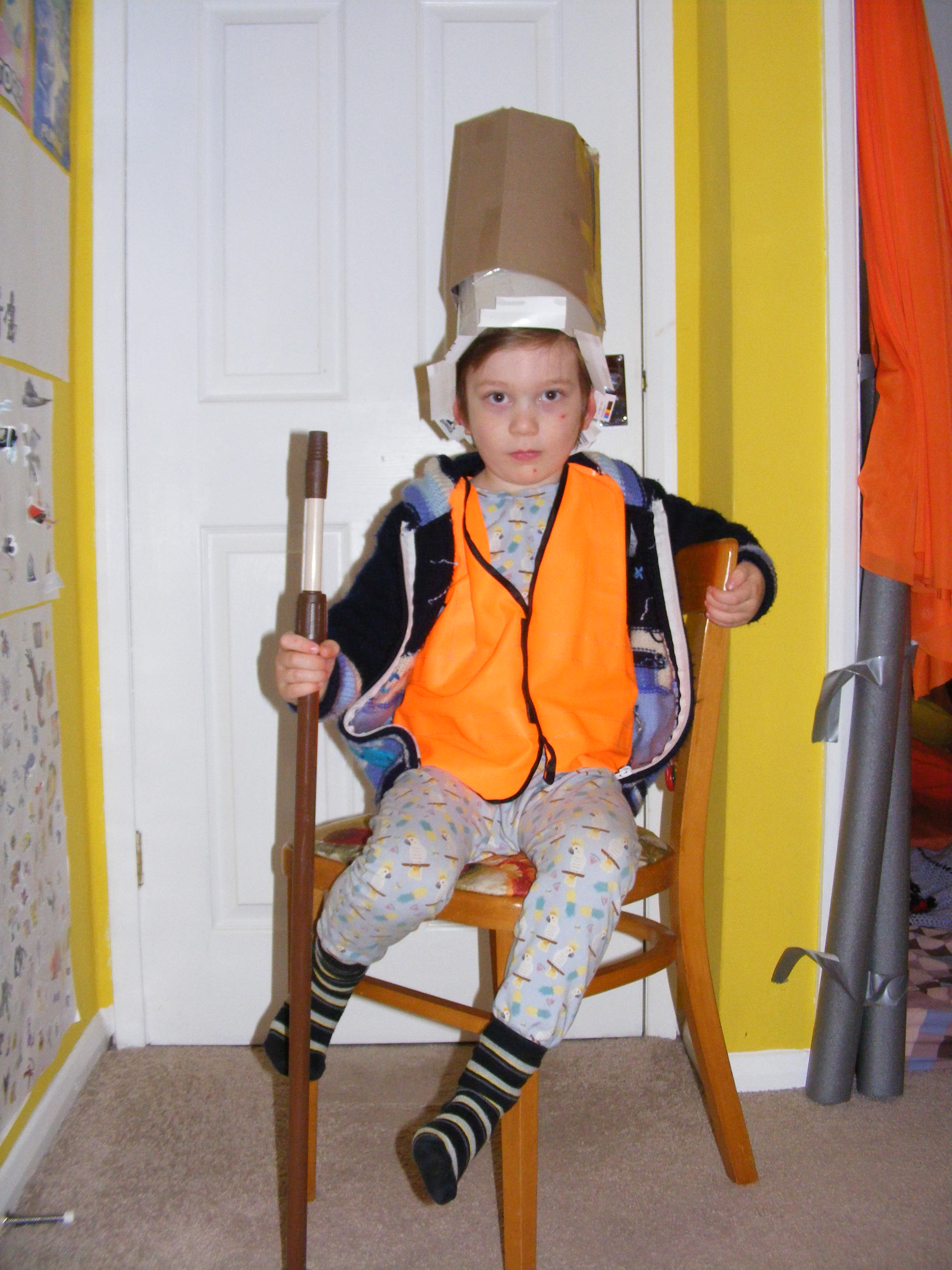
Posing as his 6 x great grandfather

This young man, now aged seven, is interested in his family history and is currently compiling a family history scrap book.

Family History Busyness – THE Genealogy Show Day 1 and other excitements

I’ve been bracing myself for a ridiculously busy couple of days. After virtually presenting in Kent and Norfolk yesterday, today was the first of two THE Genealogy Show days. Talks are being live streamed over 48 hours and my first went live at 4am my time. I was invited to listen to myself (always cringe making) and be on hand to answer questions, I decided to pass on that one. I only just missed the opportunity, so spent the early hours exploring the Show’s website and even manged to sneak in the chance to listen to three exciting young genealogists in a panel discussion about young people and genealogy. It is several decades since I was that young person and it is great to watch the baton passing on.

This was followed by my fortnightly chat with the lovely folk of Talking Family History. They are starting a new series in July, so now would be a good time to join in the fun. Then it was my turn to person the Society for One-Place Studies booth for THE Genealogy Show. Over lunch, I tuned in to Dr Sophie Kay’s Negative Spaces presentation; definitely worth a listen. Later, I had the chance to watch Andy Browning’s fascinating story Following in Family Footsteps.

Other recent feelgood family history moments. A photograph of my, now demolished, first teeny tiny infants’ school being posted on a Facebook Group, together with a picture of the headteacher, albeit about twenty years before my time. A few weeks ago, I was very excited to be offered the chance to acquire a one-name related long case clock. Even better, my nearest and dearest agreed that it could be a belated birthday present. The maker was from a different branch of the family to my own but it is still very special to have it safely ticking away in my living room. Finally, our local history group held its first hybrid meeting, with the speaker and five others in the meeting room and others Zooming in from as far afield as New Zealand and Canada. We still need to work to improve the sound quality but we are proud that a small society such as ours has been able to take a first step towards making our meetings accessible to those who are not comfortable with technology as well as our friends who are too far away to attend in person.

Tomorrow more busyness, more family history talks to give and listen to and an interview with Daniel’s Genealogy in the evening.

Days 3 and 4 What Happened Next

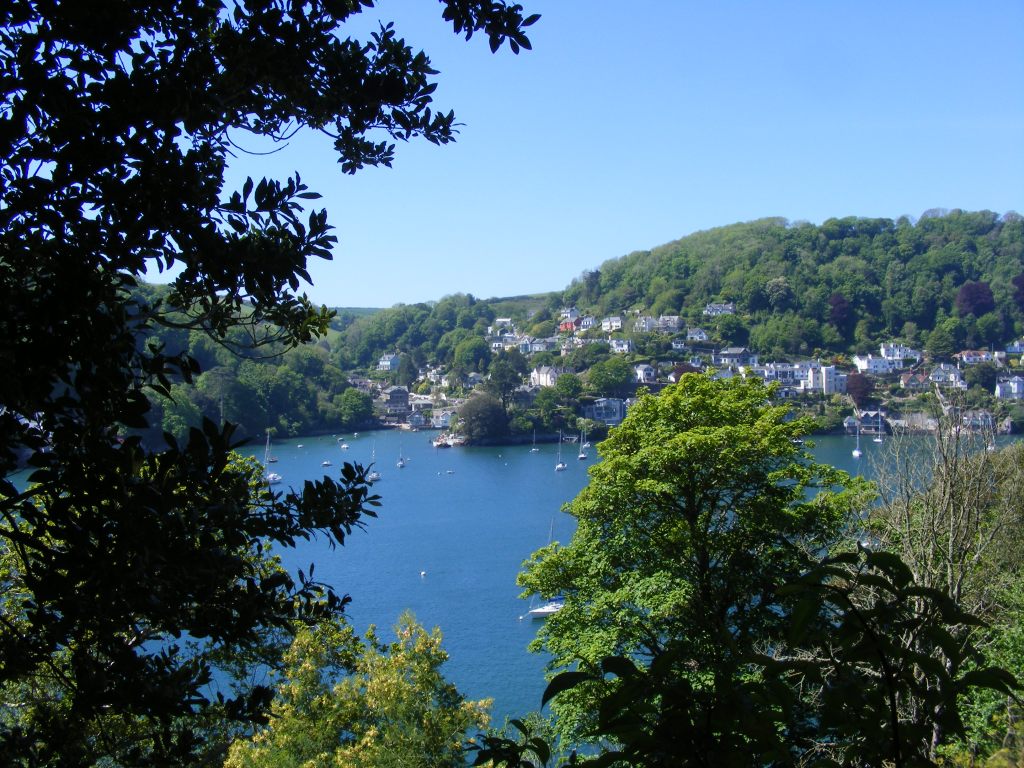
Undaunted, well fairly undaunted, we drove to Kingswear to try to tackle the coastal footpath in the right order from that end. It would be a mere two miles from where we finished the previous day (and then another two miles back to the car). We would then decide if we wanted to repeat the bit we’d done in the wrong order to ‘do it properly’. Kingwear has a very attractive harbour, even though it is sad to see the fishing fleet of the past has been replaced with pleasure yachts. The first part of the walk from Kingswear in the Brixham direction is on pavements out of the town. The gradient is, shall we say, challenging, even if it is smooth underfoot. I just about managed this and then the route took us through a wooded section. I was very thankful for the shade as it was another very hot day.  After half an hour, there was an encouraging sign that told us it was only 1¼ miles to where we had abandoned the walk the previous day. Yay! 1¼ miles is but nothing. Except that it was.

We descended into the valley via a flight of steps and a rough path to Mill Bay Cove. I am used to reading Ordnance Survey maps. Perhaps I should have taken better note of quite how close together the contour lines were – that would be practically on top of each other. I started to climb the steps cut into the path as we left the cove. I stopped for a rest. I climbed some more. I rested some more. I climbed a little further. My body really wasn’t playing ball. Reluctantly, I decided that a walk was a walk and I ought to be proud of how far we have come since Minehead, rather than how much we didn’t complete. Even though my future walks will need to be on flatter terrain, I guess I should be grateful that I am still able to go for a walk, albeit a flattish one.

We returned to the safety of the car; its thermometer told us that the outside air temperature was thirty degrees. That seemed to escape the weather station statistics. An afternoon of rest, if not full recouperation, followed.

Taking it easyish seemed to be the best plan for the next few days. Day four was showery and cooler but humid. In search of places that wouldn’t be too peopley, we drove out beyond Buckfastleigh, on the edge of Dartmoor. Venturing down some byways that were, at least in theory, roads, we reached Hembury Woods. Lacking a map, we were keen not to get lost on our woodland wander. Our first attempt was unadventurous and based on keeping left but we ended up back at the car after about three hundred yards. We would need to be more daring and try to remember lefts and rights. One woodland path does look very much like another. We tried leaving field signs – once a Girl Guide …….. – although I was concerned that a passer by might move our carefully laid twig arrows. In the end, it seemed we were following a pre-laid trail, as small piles of sawdust were laid at intervals along our way. The woodland was strewn with a wildflower, later identified courtesy of the flowers book as Small Cow-wheat. Not heard of it? No, me neither.

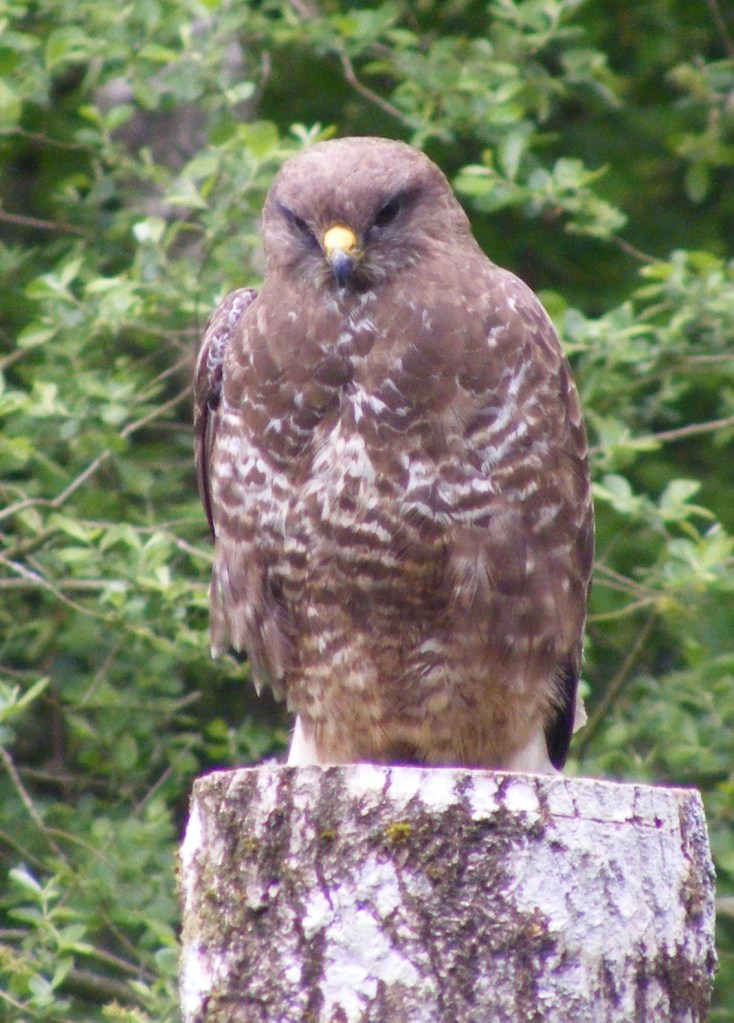
Having reached what I felt was a suitable half way point if we were to have a not too strenuous walk, I was keen to retrace our steps but my companion was confident we could make a circular route. I was less convinced but we soldiered on. Behold and lo! There was the car. In order to keep the step count up, we also returned to the country park next to the site and were rewarded by the site of a roosting buzzard. Small birds and squirrels were feeding heedlessly nearby but perhaps the buzzard had had its lunch.

Day 2 Coastal Walking or finding out that I am not as young and fit as I hoped I was

To continue the tale of our recent foray to South Devon. The second day started badly. We were driving to the starting point for our walk when I realised I had left no fewer than three things in the caravan. One of these was my fitness watch. No way was I going to not count today’s steps. We retraced our steps. I wish to put on record that my companion also forgot something but didn’t realise in time to collect it during our step-retracing mission.

The plan was to start at the end of our chosen stretch of coastal footpath in Coleton Fishacre, walk to KIngswear and retrace our steps to complete the leg in the correct order and also to end up back at the car. As one of us is a National Trust life member and the other a National Trust volunteer, we hoped we could park in the car park at Coleton Fishacre, which is a National Trust Property. We duly parked. I even worked out how to scan my membership card in order to obtain a ticket.  I had toyed with booking a visitors’ slot for entry to the property, which would have secured us the right to park but decided it was selfish to use up a place whilst entry is limited and we didn’t want to go further than the car park. Mission almost accomplished when the car park attendant loomed. It transpired that no, we couldn’t park there. The man was not open to persuasion, although my companion had a jolly good try. ‘There’s another car park just up the road’, we were told. We could not access the coastal path via Coleton Fishacre. This was all very well. The car park was indeed only about 500 yards away but this gave us access to a different point on the coastal path and with having to do it twice, would add another 1½ miles to a walk that was already at the limit of my likely unpracticed endurance.

Nonetheless, we set off with a spring in our step, enjoying the spectacular views. It is my habit, probably dating from my Girl Guiding days, to keep a note of the birds and wild flowers that I see en-route. My bird identification abilities are probably no better or worse than they ever were. Definitely above average but certainly not expert and I have never been able to recognise bird song. I realised though that my memory for flower names had become somewhat tarnished. When we were walking more regularly, I could identify many more. The flowers were at their best and this is my favourite time of year. Ox-eye daisies, scabious, foxgloves, thrift and ransomes and the last vestiges of bluebells in the small wooded section, which also yielded a jay and a thrush in the bird department. There were many more to add to my list and to begin with, the eight years since we last did a coastal path walk melted away. Don’t get me wrong, it isn’t eight years since we have been for a walk but those walks have been elsewhere, including local stretches of the same path.

To the fitter of my friends, a 7½ mile walk may seem like a gentle stroll. If you’ve never walked the south-west coastal path, be aware, be very aware that, with very few exceptions, gentle stroll it is not. There are hills, lots of them and the path is anything but smooth. I learned two things on this walk. I am definitely not as fit as I used to be and when the guide book says ‘strenuous’ this is not to be taken lightly.

After the first hour, every step we took away from the car was a reminder that it would be a step further in the opposite direction. This stretch of path is blessed with many seats. I sat on most of them. This was ridiculous. We had only last month done several walks of about five miles and here I was three miles in and struggling. It was also the hottest day of the year so far and we were heading towards the heat of the day. We could see our destination in the distance. It seemed, dear reader, a very distant distance. I’d been worried about blisters, well that and the lack of toilets but I always worry about that. Neither of these issues became a problem but I was conscious that I was breathing increasingly heavily. A few years ago, I would probably and possibly foolishly, have carried on regardless. Quitting is not normally in my vocabulary. At the back of my mind though was the niggle that hidden in a place on my medical records that I mostly choose to ignore are the words ‘heart condition’. Was it really sensible to keep on keeping on? We might not yet be half way to Kingswear and then we had to do all this again in reverse. The map suggested that there was a way to come off the path and return to the car by a slightly shorter and certainly less strenuous route. Common sense prevailed and that’s what we did. Altogether we probably walked five miles, although most of it was far from easy walking, this did seem pathetic. I was very annoyed with myself. Then there was the problem of how to proceed. Up to now all our walks have been in the correct order and in the right direction. We could start at KIngswear next time and walk to where we gave up but then what? Could I bring myself to compromise and count this walk as part of the challenge, despite it being in the wrong order and wrong direction? Could I face doing it again the right way round, knowing what I know now about how hard it was? If we can only notch up four miles a time, the remaining 153 miles are going to take a very long time to accomplish and our fitness is hardly going to improve. Always end on a cliff hanger. Stand by for the next instalment to find out what we decided.

Some advice for would-be coastal path walkers. Unless you are super-fit types who think nothing of notching up twenty five miles a day laden with your tent, sleeping bag and all other requisites, don’t leave it until you are of mature years to try to walk 670+ miles round the south-west peninsula. It is so worth it though, the scenery is breath taking. Even if you only walk a small part of the route, everyone should give this a try. I’d also recommend reading Raynor Winn’s The Salt Path about her walk with her husband along the whole length of the path.

Heading South

A last minute change of plan meant that we were left with a few free days. I wonder what they are? The weather had finally decided that it was no longer winter, could we find the one caravan site in the country with vacancies? It turned out that we could, so we decided to head south to recommence our walk round the South West Coastal Path. We began this seventeen years ago when we were a lot younger and fitter. Even then, not for us the twenty-five mile a day stretches, complete with tents to our backs. No, this is supposed to be pleasure. Over the course of ten years, we completed the Somerset coast, north Devon, the whole of Cornwall and got as far as Dartmouth. It took us 73 walking sessions to cover 477½ (don’t forget the half) miles. Then the grandchildren arrived and we found better places to go when we have days to spare. We had also reached an off putting stretch where there is no public transport to get us back to the start. The options being, walk 10½ miles described as ‘strenuous’ and get an expensive taxi back. Or cover this in three sections walking about 3½ miles in both directions in order to get back to the car. It really is very dispiriting to have to walk twenty miles to end up only ten miles further on. If we were ever going to finish the remaining 153 miles however now was the time. 10½ ‘strenuous’ miles is probably just within our capabilities but given that I have spent a year barely walking further than the front gate, it didn’t seem sensible. So the bullet needed to be bitten, three lots of there and back it was to be.

Day 1 consisted of arriving at the caravan site and completing a warm up stroll round the beautiful neighbouring country park, when the wildlife actually played ball. There was also a lengthy conversation with the caravan site wifi help line. I wasn’t going to be caught in an internet black hole again. It turns out that it was a ‘no help at all’ line but I solved the problem by reregistering with another of my many email addresses. I just have to remember who they now think I am.

The Expedition Continues

Two more days of shower dodging and ancestral parish visiting were planned. Firstly, I returned to the hotspot for the next deluge of emails. Ah the hotspot was no longer hot. I failed to connect to the internet. Fortunately, during the previous day’s foray online I thought I had better send the next  lesson to my online students whilst I could, even though it was a few days early. That would have worked well except I had inadvertently sent lesson five masquerading as lesson four. There was nothing for it but to try to do things on my fairly new to me phone, beyond making a phone call. This, dear reader, was a learning curve. I managed to use up my miniscule data allowance (miniscule because this is not how I normally use my phone) and work out how to access some of my emails. I even manage to send replies and an s.o.s to my boss who could send my poor students the correct lesson on my behalf. I tried again to book our National Trust tickets. Still no email confirmation but a booking number appears on the website so I was hopeful that that it was indicative of a booking.

The parish visiting took us through several picturesque villages on the Hampshire/Wiltshire borders and I discovered that, in the 1840s, the family lived on a farm that had been targeted by 300 Swing Rioters, ten years earlier. Driving from parish to parish, punctuated by shower-dodging photography, is not very conducive to accomplishing my three miles a day of walking, that I have managed to keep up all year so far. My solution at home is to jog up and down on the spot to make up the steps. My travelling companion doubts that the caravan floor will cope with this. Walking round the caravan site proved to be the only option. On day three the weather did not play fair and although I set off in the dry to complete an estimated ten circuits of the site, before I got to the end of circuit two, it began to rain. By circuit three it was torrential and as I was wearing wellies, I had developed blisters. Did I give up? Well it was very tempting, especially as I kept passing the warm and dry van but no, I soldiered on.

No family history for our last day. Instead a drive out past Stonehenge to Stourhead Gardens. These are beautifully landscaped grounds that were laid out in the eighteenth century, complete with numerous classical follies. It turns out that my initial booking had gone through, as had my attempt to book using the phone, so we could in theory have gone twice!

My only previous visit to Stourhead was forty years ago. We walked round the path that meanders round the lake, amongst mature trees and rhododenrons that were at their best. There were swans, coots, mallards and Canada geese on the lake. A double bonus. This was the best day weather-wise so we stayed dry and the designated, strictly one-way only, walk round the grounds was more than enough for my daily step-count, so no circulations of the campsite were required.

All in all this wasn’t quite the relaxing break we had planned but better luck next time. I am not looking forward to catching up with 600 or so emails on a borrowed computer. I am hoping that my own was curable and will be ready soon, although I am aware that I may have to bite the new machine bullet before too long.

A ‘Restful’ Break

Things started so well for our planned few days away. My second vaccination appointment was potentially due to coincide with the dates that we had chosen but fortuitously, the call came through for day 77 and not days 79-84. We even managed to finally get Chris’ second vaccination, which was nearly three weeks overdue, for the same day. Beyond that, matters began to go downhill a little. On the morning of departure, my laptop developed a probably terminal blue screen of death. Bother (or similar sentiment). I had things I needed to do both before leaving and while I was away. Frantic appeals went out for Chris to pack his, which uses different software making it less than ideal. I also looked out my ancient ‘on-its-last-legs’ net book, which has the right programmes but an irritatingly tiny typo-engendering keyboard. It also experiences periodic blue screen of deathness but fortunately it limps on.

Having left just a little later than planned in order to take the laptop to computer hospital we set off in torrential rain for the caravan site. On arrival, whilst enjoying a welcome cup of coffee, I struggled with the teeny tiny laptop and discovered, to my alarm, that I had booked a site that doesn’t have wifi. That’s not strictly true, wifi is advertised; it is just that to access it you have to stand on one leg under a tree in the rain by the car park. This means that all the map checking and itinerary planning I was intending to do on arrival had to be achieved by guesswork. We contented ourselves with a wander along a local footpath. The beech trees were sporting their new-minted leaves and there were bluebells, cowslips and wild strawberries in flower.

The next day dawned and the forecast rain was not in evidence. I investigated the hotspot from the safety of the car. This was not without its challenges. The worn out teeny tiny laptop has a battery life of several milliseconds, it also has a ‘battery-saving,’ almost unreadably dull, screen when not plugged in. Seventy odd emails, that had been sent in the preceding twenty four hours, came hurtling in. We attempted to book tickets to visit a National Trust property, which only became available today. Despite it appearing to be successful, no confirmatory email arrived.

Next, we set off to investigate some villages once inhabited by the Fews and associated families. A combination of pandemic restrictions and the ‘blink and you’ll miss it’ nature of the places on the itinerary, meant that the duration of our explorations had to be directly related to bladder capacity. We were in the chalk vales of Wiltshire, a land of ancient earthworks and army camps. There were some very picturesque and probably incredibly expensive, houses, with many more retaining their thatched roofs than you find further west. There were also several thatched cob walls.

We took a look at the fields in the area, where an ancestress was working at harvest-time when she was taken ill and died, then moved on to the small village of Wootton Rivers. Next up was the Savernake Forest, allegedly a nature reserve with potential for a walk. We spectacularly failed to find any car park or way in that was not accompanied by signs reading ‘private’. We decided that we might try again another day. We drove through Marlborough. By co-incidence, I was there virtually just two days previously. Then a quick look at Devizes, a much larger settlement, before heading back to the van via the spread out village of Woodborough. Just time to stop off at Woodhenge as we passed by. Although this was once a prehistoric site, with large wooden uprights arranged in concentric circles, it is now concrete henge as the wood, unsurprisingly, does not survive, so short concrete bollards indicate where the pillars once stood.

Back at the van and footpath walk done, I returned on foot to the ‘hotspot’ to send the replies to the morning’s emails. Ironically, the sun put in a weak appearance at this point. Without the shelter of the car, the screen was completely illegible. My helpful companion suggested that I put my coat over my head and the computer. I will own that this did solve the problem but I looked like a total idiot in a public place. I was reassured that ‘there’s nobody about’ but the sound of footsteps belied this. I suppose at least hiding under my coat meant I was anonymous. For reasons that will become apparent, you will be reading this once I have returned to the comfort of my internet enabled home.

Freedom

As many will know, I have been content to stay at home over the past months, only passing through the front gate four or five times since October. In April, I decided that if I didn’t leave home soon it would become increasingly difficult. The sun was shining, I was getting fed up with trying to walk three miles a day (something I have kept up all year) in a tiny house so, dear reader, I WENT OUT. We had a few lovely walks along the coastal footpath, enjoying the beautiful scenery and getting the required step count up in a painless way.

Obviously seeing the family after six/seven months was a priority. Finding a gap in my ridiculous talk schedule and more to the point a caravan site with vacancies, was a problem. Eventually we managed to book into a site fifty miles from where we wanted to be and not on the ideal weekend. The plan was to see each of my descendants’ families in turn, as there are too many of us to meet altogether. We did the ‘risk assessment’. It seemed low risk, even to my ridiculously risk adverse brain. Virus rates were very low in the area we were coming from and those we were going to. All three bubbles had been minimising social contact. Three of the six adults had had a first vaccine. The news was saying ‘this may be as good as it gets for the foreseeable future’. If I was ever going to see my family in person again now was a good time. We took lateral flow tests – negative. We were socially distantish. With the sort of bad luck that explains why I am so risk adverse, one family member tested positive the day after we saw him. Not, I hasten to add, because he had been rashly heading maskless into crowded places but because he works in a school; the only contact he has had outside his own family. Ironically, his call to be vaccinated came on the same day as his confirmation of his positive status.

Chris and I broke our bubble in order to self-isolate apart, in case one of us had been infected and not the other but our ten days are now up, we’ve both tested negative and we can re-bubble. I have spent the past days cooking for myself. I am genetically programmed to be a non-cook. In my defence I have only burnt two saucepans this week, that’s probably a win with my level of ‘skill’. Who enjoys watching a saucepan to see if there is still water in it? Yes, I do I have a timer on the oven. I might even have been able to dig out the instructions in order to see if I could make it work but saucepans don’t always reach the point of no return at the same rate. I can do the science and realise that it will depend on the temperature on the dial and the amount of water – kind of makes the timer thing a bit hit and miss – in my case usually miss. I must admit that I did resort to salad yesterday – no danger of burning that. So un-carbonised proper cooked food tonight – hurrah!

I decided yesterday that I would resume the near impossible task of seeing what I could find out about the family of my mum’s world war 2 fiancé, an American airman who was killed in action. I have seen and can picture, a photograph of this man, although said photo is no longer in the family album. I have had some wonderful helpers from across the globe but no real results so far. I have very little to go on. He was known as Jimmy Kirby but Jimmy was probably short for James, which could have been his first name, a middle name or Jimmy might have been a nickname. He was likely to have been stationed in south-east England, possibly Warminster. He had an identical twin brother Curtis, or Curt and Jimmy was killed in I think 1944. You have no idea how many potential James Kirby’s there are to choose from. To say nothing of the Kirbys with J as a middle initial. One promising looking Curtis was identified, who had a younger brother James but a photograph of James was enough for me to know that this was not the one I wanted. If there is anyone out there that thinks this rings a bell please get in touch, stranger things have happened.

Mistress Agnes is off to entertain merchants next week, she needs to mind her manners. Guests are welcome if you want to learn about her times.

The great loft clearance has been on hold because crawling around lofts when you live alone and no one is likely to find you for a week if things go horribly wrong is not a great idea (risk adverse see) but it has reached the old toys stage. There are toys from the 1930s, the 1960s and the 1990s to be enjoyed. I may be some time.