Cream Crackers and Sat-navs: self isolation day #9

So yesterday we decided to clean out the larder. Partly because it needed doing and partly to see what weird assortment of food we might be eating in coming weeks. Excavating the larder’s recesses is always an interesting exercise and an opportunity to jettison anything that is seriously out of date or capable of meaningful independent life. I am pleased to report that nothing older than ‘best before 2006’ was found. That was an achievement. I admit a few things like the six year old cream crackers (tasted and edible) which would normally have been fed to the birds have gone back in the cupboard, ‘We might be glad of those in a few weeks.’ For one non-drinker and one very occasional (like about once a year) drinker, there is a surprising amount of alcohol, mostly raffle prizes waiting to be recycled. We are hanging on to that in the hope that we can use it as hand sanitiser, barter it for toilet paper when ours runs out, or for potatoes and onions, both of which are unlikely to last until our supermarket delivery is due in two weeks’ time (and judging by others’ comments they may not come then).

The virtual piano lesson went well. I am currently stumbling my way through Streets of London, Hallelujah and Let it Be. Encouragingly, my playing is showing slight signs of improvement but I was starting from a very low base. Martha and I have had a Skype recital between us. My author’s group will still be meeting, via Skype but whilst attempting to establish contact with each other, some of us have been waving at a random stranger who happens to have the same name as one of our group, oops!

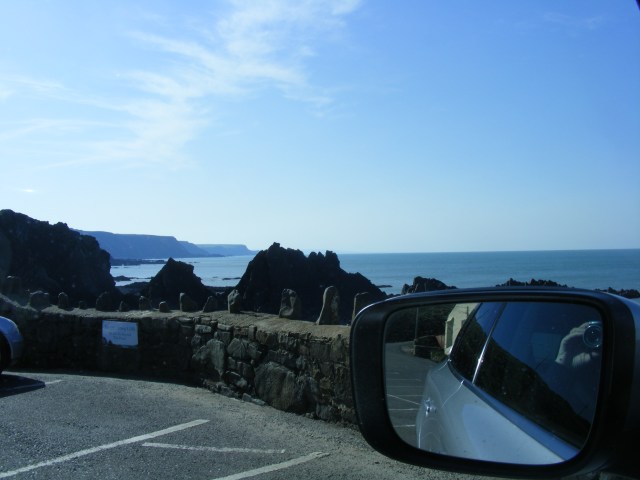
Today it is beautifully sunny, so we went for a car ride to see the sea. Strictly not getting out of the car and actually (and thankfully) we saw few people in cars or on foot. Mind you, I think there may be more folk out and about this afternoon. STAY AWAY FROM EACH OTHER OR STAY AT HOME – no compromise however young/invincible you think you are. It is not only your own health that you are risking. We went in a ‘new to Chris’ car, which has an inbuilt voice-activated Sat Nav. Well, that was a challenge. Let’s just say we were nearly forced to drive to Hartland Road in Camden, instead of Hartland. I think we’ve sussed it now and it seems it does recognise a Devonshire accent.

DSCF0491

Self -isolation: a view from day 4

Well, it seems our decision to self-isolate was only a day in advance of the government advice. Today came the inevitable but sad news that Family Tree Live is cancelled. My ‘Forthcoming Talks’ list is diminishing by the day. I have abandoned the hope of being able to sell enough books before August, in order to make room for the new novel. Most of my copies are sold at talks. The August launch is assuming printers are still working, which they may well not be and I do still have to finish it. I am opting for a slightly alternative 2020 within its pages! Oh, you want another hint – it is about intolerance.

So, what has been going on in isolation land? No more gardening; I am a fair-weather gardener and its raining. Tip one for passing the time:- If you’ve never shopped online before, try setting up an online shopping account; that should while away an afternoon. Although we are well stocked for food, I thought I’d better schedule a delivery, ready for when things begin to run out. Normally, I have my own personal shopper, when the fisherman of my acquaintance brings things in from the town, so online shopping is a whole new learning curve. No matter how often I tried, I could not get ******’s registration system to recognise my decades old loyalty card number, so I ignored that. After much frustration, I finally cracked the system. The next available slot in my area – 6th of April, no wonder people feel obliged to stockpile. Who knows how many things will be unavailable by then? About half the things I might have ordered are currently out of stock.

I understand Amazon are limiting deliveries to essential items. I can understand why but it is the ‘non-essentials’ that are vital to the mental well-being of those in lock down. I am really hoping the printer cartridges I ordered a few days ago make it through. I am not sure how those working from home or home educating will manage without this sort of thing.

Have I been washing my hands with Lady Macbeth-like vigour? Well, actually not, as we haven’t been anywhere. It is very odd. I have the one small bottle of hand-sanitizer and one packet of anti-bacterial wipes that we managed to buy. They sit on the shelf like talismans, as if just having them will keep the evil at bay. I am terrified to start using them in case I can’t get any more. We have broken the duck with the anti-bacterial soap and are using that but it is disappearing frighteningly quickly.

I’ve been trying to support friends online and on the phone. It is frustrating not to be able to be of more practical assistance. I have been following the news but not obsessively. I must admit, that I found seeing the BBC breakfast news presenters sitting apart on the red sofa chilling. For me personally, my routine hasn’t changed very much, as I often have a few days when I don’t go out. I am sure that prolonged hibernation will get more difficult as days go by.

My piano teacher offered to conduct my lesson by Facetime – errr yes, well, maybe. It turns out that I don’t have the technology for this, so we are going for Facebook calling instead – I’ll let you know how it goes. With all this time to practice I will be a virtuoso by the time this is over.

024 15 May 2019 Wisteria at Falkland Palace.JPG

Self-isolation Day 1 and why you shouldn’t feel guilty

So yesterday I came out as a voluntary self-isolater, pre-empting the likely government restrictions for the over 70s and those with pre-existing conditions. It was not an easy decision. I was hesitant because I had several commitments this week and going forward. I am really not comfortable with letting people down, particularly when my absence puts additional work on others. Equally though, I was becoming very anxious about the prospect of mixing with others. After a sleepless night, anguishing over what I should do, I decided, for the sake of my mental and physical health, to self-isolate. I was prepared to do this on my own but the fisherman of my acquaintance, bless him, agreed to join me. This is particularly noble as he will find staying in very difficult. I am much more content sitting around at home. Left to his own devices, he would be rushing about doing everyone’s shopping and putting himself at risk. Mind you, I think our ideas of self-isolation do not exactly align. He’s of the ‘I’ll just pop to (insert your large supermarket of choice here) once a week’ mindset. I am more ‘I’ll just disinfect all those tins that have arrived in the online shop’.

Having begun to cancel my commitments, the sense of relief was overwhelming. I knew then that I had made the right decision. We are in this for the long haul. We know it won’t be easy but we think we can manage. So far we have twenty four hours under our belts. Yesterday we did pretty much what we would normally do on a Sunday afternoon. Today we did some gardening and the fisherman of my acquaintance power-washed the patio and the conservatory windows; we will be seeing a great deal of this area in the coming months. I would like to place on record that deciding to self-isolate is not a crafty way of getting all those ‘ten minute’ DIY jobs done!

So potential problems so far:- This is a great opportunity to tidy the garden but what will we do with the mowings and cuttings that we would normally take to be recycled? I could sign up for the paid council collection service but will this continue to run? Or we could build a compost heap that will end up being larger than my tiny garden. The jury’s out.

I have had nothing but support for my own decision. From many ‘me too’s, to kind remarks from those who I have had to let down. This is not universal however. I am hearing of more and more cases where people’s personal decisions are not being respected and they are being bullied into making social contact when they are not happy to do so. Nobody has the right to question the actions of someone else, unless their choices put other people at risk. I’d be the first to call out someone who says, ‘well I’ve been told to stay home but I think it’s an over-reaction so I’m going out anyway’. Yes, I have seen the equivalent and yes, I did comment. If people are withdrawing from events, it may be that they have a pre-existing condition, or someone in their household might be particularly vulnerable. Alternatively, they may just be s*** scared and are protecting their mental health. The reason is immaterial; it is their business and theirs alone. Let’s not make them feel guilty or, worse still, make them do things that could be harmful, or are against their better judgement.

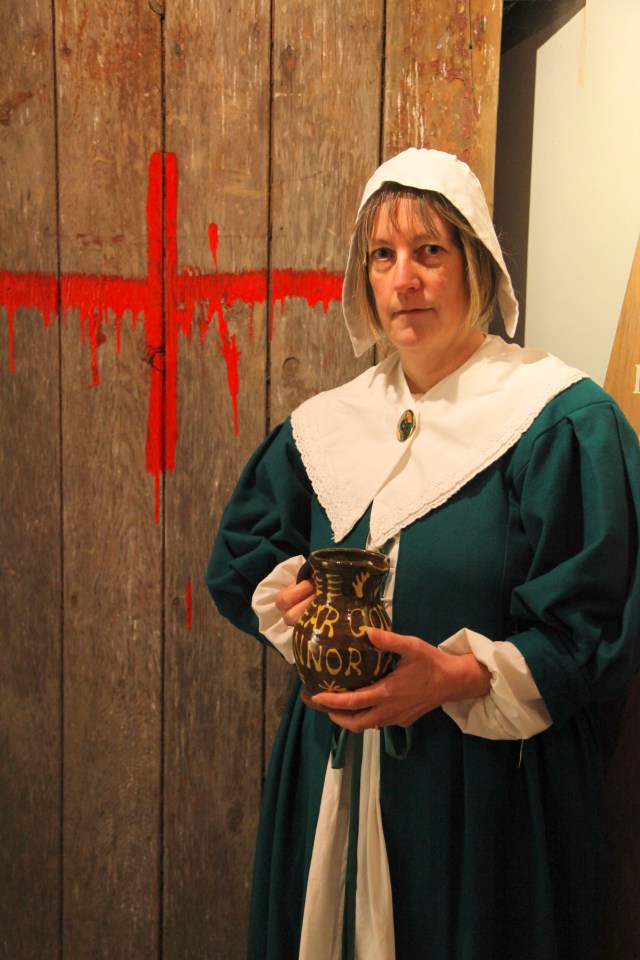
Plague Door Jayne Poole Characters

Photograph by Jayne Poole

Another Day, Another Set of Living DNA Results

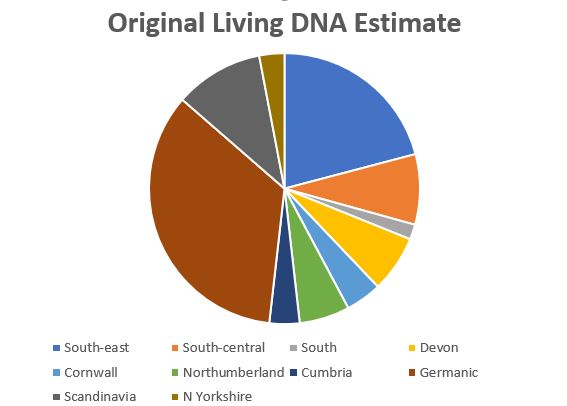
So today the second set of DNA results that I look after at Living DNA have received their update. These are Martha’s ethnicity estimate. Although I was very pleased with my own initial Living DNA results and their close resemblance to my documentary tree, Martha’s original results were, not to put too fine a point on it, pretty rubbish. Here are the comments that I made at the time. I do appreciate that our documentary trees do not always mirror our genetic trees and that ethnicity estimates are just that but Martha’s original results had us wondering if she had been swapped at birth, or, less dramatically, if she had been given someone else’s results altogether. As she matched both me and her maternal aunt, it seemed that neither scenario was the case.

Martha original Living DNA estimate

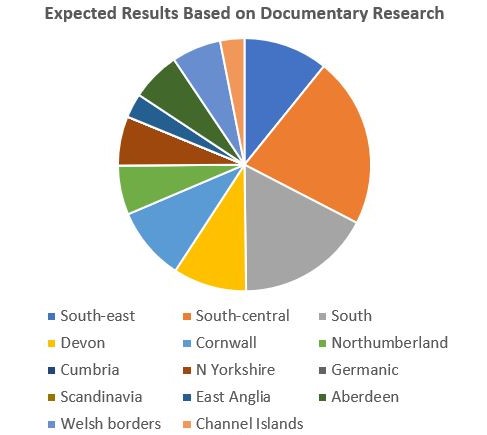
Martha expected results

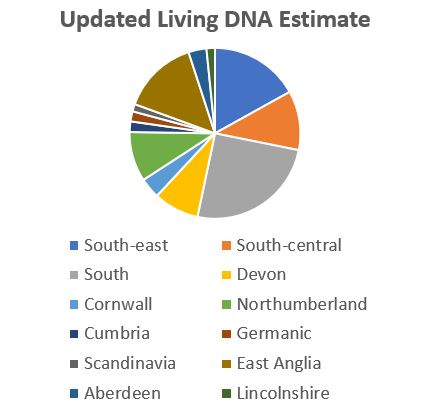
It was a lovely surprise therefore to find that the updated results were much closer to what forty years worth of documentary research might have led me to expect. Previously, 45% of Martha’s DNA was designated to be Germanic or Scandinavian. Migrations from Europe to the east coast notwithstanding, this was a ridiculously high amount. This has now diminished to a much more likely 3.3%. Last time there was no trace of her paternal Scottish ancestry, a significant proportion from the Forest of Dean, her Welsh borders roots, or the small amount from the Channel Islands. Now, the Forest of Dean shows up, as does Aberdeenshire, although there is still no sign of Worcestershire, which is included in the Welsh borders region. What is notable is the complete lack of Yorkshire ancestry this time. I have 6.7% from Yorkshire in my revised estimate and I have not yet found any ancestors from Yorkshire. Martha, on the other hand, who now has zero Yorkshire DNA, has a Yorkshire great great grandparent.

Martha Feb 2020 Living DNA estimate

So then how close is Martha’s new estimate to what I might expect? As I did for my results yesterday, let’s look at this one region at a time.

Devon and Cornwall first. If Martha had inherited equally from all her 3 x great grandparents (which I know she will not have), her profile should show 9.4% each from both Devon and Cornwall. Last time, this was slightly under represented with 6.8% from Devon and 4.3% from Cornwall. The new results reveal similar amounts: 8.6% for Devon and 3.9% for Cornwall. This swing from Cornwall to Devon, small in Martha’s case, is more marked in my revised estimate.

Northumberland was about right last time at 6%. This has increased to 9.4%. Scotland now appears with 3.4%, as opposed to an anticipated 6.3%. Taken together, these regions are as expected.

The south and south-east of the country is where the highest percentages lie, according to the documentary evidence, with 53% having origins in these regions. Last time, only 30% showed up but now it is a much more realistic 68%. It is difficult to comment on the distribution between the south, south-central, south-eastern and east Anglia regions, partly because Living DNA include Essex in both the south-east and East Anglia.

So the verdict so far, with two out of three updates in, mine has gone from good to still good and  Martha’s, has gone from poor to good. Overall, I am very satisfied. Let us see what the third update will bring.

Christmas Memories

Until recently, I was a columnist for the In-depth Genealogist Magazine and also wrote for their blog. Now the magazine is sadly no more, contributors have been invited to re-post their blog material elsewhere, so that it is preserved. This is another post that I wrote for the magazine, which I have edited to bring it up to date.

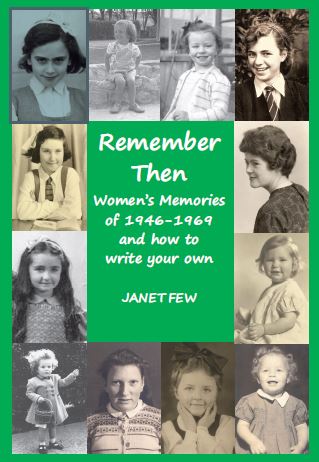
This four years ago I was taking delivery of my latest creation; a whole pallet full of poorly wrapped books were deposited near my driveway in the rain. I say my creation but that wasn’t really true. Eighty ladies had spent the preceding eighteen months writing their memories of various aspects of their lives in the decades following the second world war. I then wove these together into what was to become the book Remember Then: women’s memories of 1946-1969 and how to write your own. These ladies wanted copies of the book to give as seasonal gifts and I had very few days in which to package and post numerous copies. So that is a memory of 2015 but what about earlier December memories?

The previous year, my ladies had been writing the section of the book that related to celebrations. We wrote about food, gifts, gatherings, religious ceremonies, decorations and family rituals and traditions. Along with them, I too recorded what I remembered of this special time of year. These memories appeared on a blog post at the time. Many of the traditions of my childhood have been perpetuated by my descendants, other have been lost over the decades, making it important for me to preserve them for posterity. Are your descendants aware of how the holiday season was spent in your youth? Do you have older relatives who you could question about the customs of past decades? These memories are part of your family’s history and should be recorded.

Remember Then cover

To give you a flavour, what follows are just a few of the memories that my ladies shared. I would encourage you to preserve similar recollections for your own family.

“There was one year when the roast potatoes found themselves on the floor. I don’t think the five second rule had been heard of then but the potatoes were eaten, we survived and none the wiser. Then there was catering for Uncle Percy, who emphatically didn’t eat turkey – except of course when we convinced him that it was chicken! Christmas mornings meant cheeselets and ginger ale, later replaced by Benedictine or Southern Comfort.”

“When we were young, we always tried to give my parents a hand-made gift, made and wrapped in great secrecy. I remember string pot cloths, drawn-thread tray cloths, embroidered hankies, frilled aprons, home produced bath salts in decorated bottles, knitted tea cosies, gloves and ties.”

Many of our decorations were hand-made and we spent hours cutting coloured paper into strips and gluing them into chains. We also bought home Chinese paper lanterns made at school and made crepe paper streamers to decorate the ceilings. In later years, I made Christmas bells out of Teacher’s whisky bottle tops, painting them white and dipping the bottom edges in silver or gold glitter, then drilling a hole in the top to hang a bead clapper and a loop to put them on the tree.”

““We always went to the pantomime shortly after Christmas. We usually had good seats at the front on the left as you faced the stage. I have no idea how early mum had to book, or how much she had to pay, to get these premium seats. Being at the front was very important as, at some point, children would be invited to go up on stage and it was whoever could get there quickest. I don’t remember being disappointed. The lucky children would then help with the audience participation song and I think, were given a small gift.”

Glimpses then of past celebrations. Now is the time to grasp your own memories and commit them to paper before they fade into oblivion. By the way should you want a copy of the book, please contact me for details (still on a mission to reduce the book stock 🙂 )


Fanny Amelia’s (family history) Story

Strictly of course it is only part of her story, as there is more to be found but if I wait until it is ‘finished’ I may wait forever. So here is my attempt to preserve the memory of a lady who has no living descendants and for whom we have no photograph (yet). She is someone who could so easily be lost to history. In fact, in the past, family members did a very good job of expunging her from the oral record. As her closest living relative (jointly with my six second cousins), I felt it was up to me to investigate her life and record what I discovered, warts and all.

Fanny Amelia was the third daughter of Philip and Mary Woolgar née Cardell and was born at 6.30pm on 5th February 1848.[1] The time of birth on the certificate should indicate that this was a multiple birth but there are no other registrations for the quarter and district who could be the other sibling.[2] The address is indistinct but appears to be Cockers Haven, Finchley.[3] This almost certainly refers to a small settlement on the southern edge of Finchley Common, near the Red Lion, which was formerly named Cuckold’s Haven.[4] Finchley is now considered to be part of north London but in the mid-nineteenth century, was a small, newly-developing, settlement, distinct from the metropolis.

Fanny Amelia was baptised at St. Michael’s, Highgate on the 5th of March 1848. Her father, Philip, was described as a gardener.[5] Fanny was a surprise when I discovered her existence in the 1980s, as part of my investigations into my family history. Tales of this family were woven into my earliest memories. Why had Fanny not taken her place alongside her siblings on the first family tree I devised at the age of seven? My great-aunt, from whom I gained most of my family stories of this branch, would have been an adult when Fanny died. The families lived in close proximity, surely they would have known each other. There were photographs and recollections of Fanny’s parents, her siblings and their families but nothing of Fanny remained. Although Fanny outlived all her brother and sisters, there was no mention of her. The only acknowledgement that there may have been an additional child was the vague suggestion that Philip and Mary might have had a daughter called Sophie, so even Fanny’s name was lost to the family history. Until that is, I began my adventures in the world of archives and microfilms, of ledgers and registers, long before the advent of the internet.

The whole family appear to have escaped enumeration in the 1851 census but there was Fanny, with her parents, in 1861[7] and 1871.[8] Fanny cannot be found in 1881.[9] It has been established that she is not the Amelia Woolgar who, in 1881, was working as the cook in the Alleyn Park,[10] household of hop merchant, Stanford Mountain.[11]

On 15th November 1884, Fanny Amelia married widower, William Ellington, at St. Clement’s, Hastings, Sussex. The witnesses were Maude and H Bedwell and Thomas Covell. At the time of the marriage, William Ellington was a coachman.[12] He is inconsistent about his age and place of birth but the consensus seems to be that he was born about 1823 in Peterborough, Northamptonshire,[13] so he was considerably older than Fanny. William and his first wife, Helen, had been in service in Herne Hill for many years[14] and this is presumably how he and Fanny met.

William and Fanny Ellington’s son, George Frederick, was born in Hastings a year after they married.[15] There was another short-lived child, Richard Collings Stanley Ellington, who was born in 1891 and died the following year.[16] In 1891, the family were living in two rooms in part of 19 Cornfield Terrace, Hastings and William was working as a bath-chair man. Ten years later, the family had gained a room and were living at 100 Bohemia Road; William was still running his bath-chair business in Hastings and George was working as a compositor.[17] Although no death registration has been found for William Ellington,[18] by 1911 Fanny was a widow and can be found in the census visiting the Pierpoint family in Dulwich.[19] By this time, her son George was a boarder in the household of Harriet Blackmar, at 15 Duke Street, Eastbourne, Sussex and was still working as a compositor. [20]

On 2 May 1911, just weeks after the census was taken, Fanny was admitted to the workhouse in Constance Road, East Dulwich[21] because she was ‘temporarily disabled’ and ‘allegedly insane’. She was discharged a week letter, to Horton Asylum and described as being destitute and temporarily disabled.[22] Horton Asylum, in Epsom, Surrey, was to become noted for pyrotheraphy, an experimental treatment for the general paralysis of the insane, which was a manifestation of syphilis. This treatment involved infecting the sufferers with malaria. It was thought that the resulting high fever would destroy the spirochetes involved in syphilis. Horton was deemed suitable as it had an isolation unit, which would prevent the malaria spreading to other patients. It seems that this was pioneered in 1917, so Fanny, had she been suffering from general paralysis of the insane, would have escaped this treatment.[23]

I don’t know how long Fanny spent at Horton but on 30 December 1915, she was readmitted to the workhouse from 18 Hindmans Road. In 1911, this was the home of a younger generation of the Pierpoint family.[24] I can find no family connection with the Pierpoints, so perhaps they were just friends. Once again Fanny was regarded as ‘temporarily disabled’ and ‘allegedly insane’.[25] After just six days she was removed to Cane Hill Pauper Lunatic Asylum in Coulsdon, Surrey.[26] By this time, Horton had been requisitioned for military use.[27]

Fanny Ellington died in the asylum on 12 January 1922 from valvular disease of the heart and congestion of the lungs, both of an indefinite duration, hours after suffering a small cerebral haemorrhage. The death was registered by her son, George, who was then of 2 Grove Road, Chertsey, Surrey.[28] There was no mention of her mental state.

George Ellington married Lily Wade in 1932 in Islington district,[29] she was in her fifties so there were no children. In 1939 they were living in a tobacconist’s shop at 67 Guildford Street, Chertsey, which Lily ran; she was also a hairdresser.[30] George was still working as a compositor. They both died in 1960.[31]

The generosity of the genealogical world is outstanding. With the help of a friend, I have attempted to access the records of Cane Hill Asylum, which were allegedly in Croydon Museum. All they have is the bald statement of her admission. The quest is on for the medical records, which I understand from another helpful family historian, may be with the relevant NHS Trust. There is still the possibility of records for Horton Asylum, which are at the London Metropolitan Archives. I may have to call in another favour here. I also want to find out where she was buried; I have established that it was not at Cane Hill. The asylum was closed in 1992.[32]

So this is Fanny’s story. I do hope that more research will mean that I can add to it. Watch this space! In the absence of a picture of Fanny, I offer you her sisters, Caroline and Mary Ann [Polly], sadly, although Caroline had five daughters, she has no living descendants either. P.S. I am quite glad that I didn’t inherit the ears!
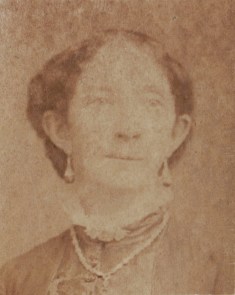
Caroline Leighton née Woolgar 1842-1919.JPGMary Ann (Polly) Hicks née Woolgar 1845-1907.JPG

[1]    The birth certificate of Fanny Amelia Woolgar 1848, from the General Register Office.

[2]    General Registrar’s indexes of birth.

[3]    The birth certificate of Fanny Amelia Woolgar 1848, from the General Register Office.

[4]     A History of the County of Middlesex: Volume 6, Friern Barnet, Finchley, Hornsey With Highgate. Originally published by Victoria County History, London, 1980. Via www.british-history.ac.uk/vch/middx/vol6/pp38-55  accessed 4 September 2019.

[5]    The baptism registers of Highgate, Middlesex, via www.ancestry.co.uk.

[6]    Oral evidence from Gwendoline Catherine Braund née Smith and Ella Mary Bird née Woolgar.

[7]    1861 census for Rosendale Road, Norwood, Surrey RG9 367 folio 56.

[8]    1871 census for 1 Rosendale Road, Norwood, Surrey RG10 692 folio 59.

[9]    Indexes to the 1881 census of England and Wales via www.findmypast.co.uk and www.ancestry.co.uk.

[10]  Alleyn Park is in Dulwich.

[11]  1881 census for Alleyn Park, Westbrook, Camberwell, Surrey RG11 669 folios 35 & 36. General Registrar’s indexes of birth and marriage. 1871 census for Warrior Road, Lambeth, Surrey RG10 679 folio 110.

[12]  The marriage certificate of Fanny Amelia Woolgar and William Ellington 1884, from the local Register Office.

[13]  1871 census for Herne Hill, Lambeth, Surrey RG10 686 folio 43.

[14]  1871 census for Herne Hill, Lambeth, Surrey RG10 686 folio 43.

[15]  General Registrar’s indexes of birth; 1891 census for 19 Cornfield Terrace, Hastings, Sussex RG12 764 folio 83.

[16]  General Registrar’s indexes of birth and death; 1911 census for 2 Upland Road, Dulwich, Surrey RG14 2469 folio 481.

[17]  1901 census for 100 Bohemia Road, Hastings Sussex RG13 869 folio 68.

[18]  General Registrar’s indexes of death.

[19]  1911 census for 2 Upland Road, Dulwich, Surrey RG14 2469 folio 481.

[20]   1911 census for 15 Duke Street, Eastbourne, Sussex RG14 4822 folio 162.

[21]   Constance Road Workhouse http://www.workhouses.org.uk/Camberwell/ accessed 4 September 2019.

[22]   1911 Admissions Register for Workhouse, Constance Road, East Dulwich, Surrey via www.ancestry.co.uk. Originals at London Metropolitan Archives CABG/185/31.

[23]  Horton Asylum www.countyasylums.co.uk/horton-asylum-epsom accessed 3 September 2019. Julius Wagner-Jauregg (1857-1940): Introducing fever therapy in the treatment of neurosyphilis www.ncbi.nlm.nih.gov/pubmed/24185088 accessed 4 September 2019.

[24] 1911 census for 18 Hindmans Road, East Dulwich RG14 2466 folio 401.

[25]  1915-16 Admissions Register for Workhouse, Constance Road, East Dulwich, Surrey via www.ancestry.co.uk.  Originals at London Metropolitan Archives CABG/185/40.

[26]  1915-16 Admissions Register for Workhouse, Constance Road, East Dulwich, Surrey via www.ancestry.co.uk.  Originals at London Metropolitan Archives CABG/185/40.

[27]  Cane Hill Asylum, Coulsdon, Surrey www.countyasylums.co.uk/cane-hill-coulsdon accessed 4 September 2019.

[28] Death certificate (pdf) of Fanny Amelia Ellington, from the General Registrar.

[29] General Registrar’s indexes of marriage.

[30] 1939 Register for 67 Guildford Road Chertsey, Surrey RG101/1876C/006/30 Letter Code: DMCC.

[31] General Registrar’s indexes of death.

[32] https://www.countyasylums.co.uk/cane-hill-coulsdon/ accessed 4 September 2019.

A Riverside Walk

We return to the south coast to revisit one of our favourite stretches of the south-west coast path. I picked up a ‘where to park for free if you are a National Trust member’ card at Bedruthan and this is proving handy. We head for Bosveal, which is pretty much a car park and nothing else. Following the coastal footpath westwards to Durgan takes us to the back entrance of Glendurgan Gardens. Thinking it would rude not to take a look, we enter. Let’s be clear, this is a legitimate entrance and the notice on the gate instructs us to pay, or in our case show our membership cards, at the main entrance. Main entrance? We walked up, we walked down, we declined the option to walk round the maze, which is in any case full of a school party. We seem to be in a maze of our own. We think we can see where we need to go but that pathway is marked private.

The garden is beautiful by the way, nestled in a valley which gives it a near sub-tropical climate. The weather has turned quite humid today, which adds to the atmosphere. In the end we give up the fruitless hunt for the main entrance and continue along the path to Helford Passage with the Helford River estuary on our left. We are decidedly out of walking practice and it really is very hot. Conscious that every step we go forward, means another step to go back, we return to Bosveal, with a short stop for an ice-cream on the way.

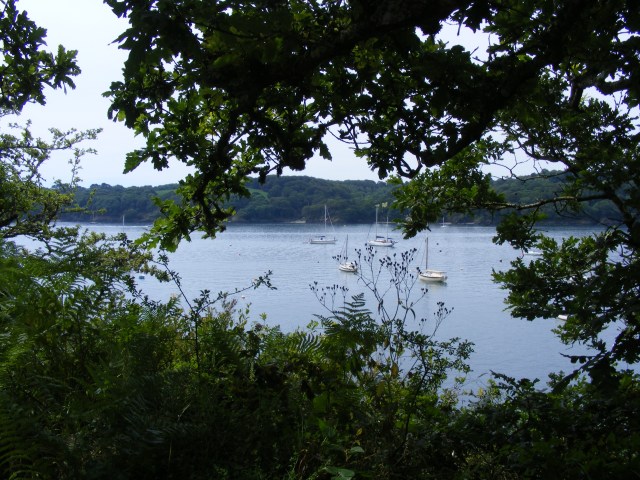
043 10 July 2019 Helford River

A quick supermarket visit before driving north once again The good thing about Cornwall is that is a long narrow county, so it is never very far from north to south. Fortunately, our evening meal was cooking before I noticed that a mobile pizza van, whose owner has enhanced grammatical skills in comparison to that of the fish and chip van proprietor, is due to visit the site tonight.

Heading Westward

So, having spent some time in the most north-easterly county of England, we headed instead for the most south-westerly. Both are in my top three English counties. It seemed everyone else had the same idea and traffic was heavy in western Cornwall. I realised that I had inadvertently booked a site with only ‘hot-spot’ internet. Last time we were lucky enough to pitch on one of only three spaces where there was signal. Will we be as lucky again? If not I am going to spend much of my time balancing on one leg in a field trying to log on, as the job we must not mention requires wi-fi and is not yet over.

On arrival, we chose a pleasant, shady pitch (which had wi-fi – yay!) and sited the caravan, skilfully lining up with the marker peg as required. Pleasant and shady it may have been, flat it was not, even our super-dooper, self-levelling legs (that’s the caravan’s legs not our own) couldn’t cope with the incline. It was clear from the marks on the grass that a previous resident of this pitch had parked considerably to the left of the marker, so we did the same. The legs could cope with this so the van was no longer reminiscent of the Crooked House (Blackgang Chine aficionados will understand what I mean). In order to comply with the ‘park with the back corner to the peg’ regulation we judiciously moved the peg.

The next issue was the water pump, or lack of the same. There are two operative words here – ‘water’ – yes, ‘pump’ – no. The helpful warden took a look. We dismantled bits of the van. We summoned a mobile caravan water pump fixing person. Hurrah! We had running water once again – probably just as well as the temperatures are soaring.

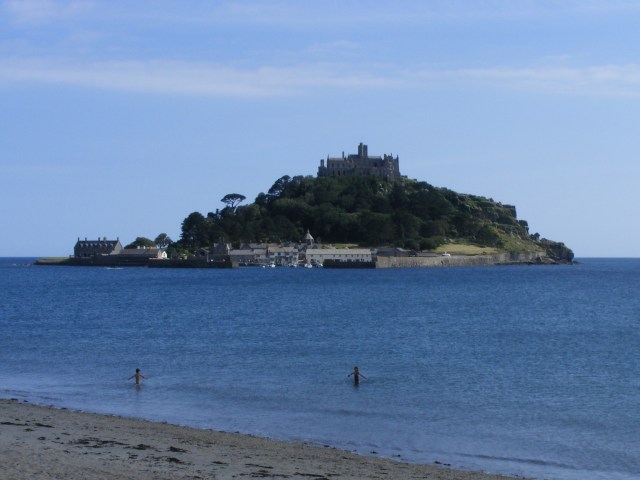
In between all the pump fixing we drove a couple of miles to Marazion. We passed a horse rider who commented that the road was melting. She was not wrong, as there were clear impressions of horseshoes on the tarmac. We wandered through Marazion’s narrow street in beautiful sunshine. Mount’s Bay was looking glorious. Marazion’s name was once thought to originate from ‘Market Jew’ and there is a Market Jew Street in the town. It is now thought that the name comes from ‘Marghas Yow’ or Thursday Market. Until Medieval times, when Penzance became dominant, Marazion was the principal town in the area. It is an ancient settlement, whose economic activity was centred on tin smelting. It is held out to be one of the oldest charter towns in England, having been granted a charter by Henry III in 1257. It is forty years since my first visit to Mount’s Bay, when I stayed in a Penzance guest house. The abiding memory of that trip is the whitebait that was served for breakfast each day; I have not eaten whitebait since.

001 3 July 2019 St Michael's Mount

Highs, Lows and Hingin Lums

After our busy day yesterday, we take a short walk into the village to take a look at Dochart Falls. Then we drive up to the nearby Ben Lawers nature reserve. There is a car park but no visitors’ centre. Do we pay to park? No. Do we turn round and retrace our steps? Again no. Do we press upwards and onwards along a single-track road with a precipitous drop on the passenger side; a road that we are not convinced actually leads anywhere? Yep. That would be the one. Ben Lawers is 1214 metres above sea level and the tenth highest Munro in Scotland. We drive pretty near to the top and I can tell it is higher than I should be venturing, as I experience some of the effects of altitude that curtailed our Peru trip. Fortunately, this time we can get ourselves back down to lower levels without too much trouble. Well eventually we can. All the sat-nav can offer is ‘turn round where possible’. Turning around on a road barely wider than the car is not going to work. I take a look at our not very detailed map. Reassuringly, this does indicate that there is a way out and indeed, eventually, this proves to be so. The scenery is ruggedly spectacular and we are certainly seeing parts of Scotland other holidays might not reach.

On the way back we take a look at the outside of the Moirlanich Longhouse, which is very close to the site and which we have failed to investigate on previous visits. It is open twice a week but not today, so we shall just have to pay a return visit to Killin, no hardship there then. An interpretation board tells me that the longhouse was inhabited by the Robertson family. Were we able to get inside, we would be able to see a  hanging lum, also knows as a hingin lum, which is, the board says, a paper lined wooden canopy to funnel smoke away from fireplace. This sounds a bit of a fire hazard to me but here is some more about them from a website that I use and recommend often.

077 21 May 2019 Moirlanich Longhouse, Killin


It is time for us to return to England and we pass the Kelpies at Falkirk, 30 metre high, steel horse-head sculptures. Or possibly 60 metres high, if some websites are to be believed – big anyway. They are very impressive but difficult to detour with a caravan on the back and I was not ready with the camera.

We wend our way to one of our favourite sites near Alnwick via a supermarket stop. A quick walk round the site’s nature trail and then a lazy afternoon.

Elusive Ferries and other adventures

Today we were meant to be going to Inchcolm island. The clue is in the name really; ‘island’ involves a boat. I thought I had correctly identified the location of the ferry boarding point but lack of time to prepare for this trip meant that I didn’t have my usual beautifully printed out itinerary. We set off. I plug the postcode into the sat-nav. It doesn’t seem to exist. Instead of returning to the van and firing up the computer to check the proper address, I try to remember it. We try Queensferry. The sat-nav insists this is in Wales.  Even we know we don’t need to go 288 miles. I know, I know, we should be able to Google this on the mobile phone that we have that is less than thirteen years old. Phone fine, operator not so. We could have and perhaps should have, made a call on said mobile phone (we can actually accomplish that, or at least one of us can) and summoned assistance. We didn’t. I look at a map (remember those?). Unfortunately, it is a very small-scale map but it does suggest I might need to be looking at North Queensferry. We go to North Queensferry. We get nice views of the Forth Road Bridges (which no one is painting) but no sign of a ferry. I try the postcode again. I’ll own up here, I have scribbled this down and can’t actually quite read my writing; this is not an unusual occurrence. The postcode I put in takes us somewhere called Aberdour. (It turns out this was the correct postcode for the island but not for the ferry). By this time, we have missed the ferry, which doesn’t go from here anyway. (I later discover we needed South Queensferry – ah well, hindsight and all that). Aberdour is a satisfactory plan B and after a wander along the coast path enjoying the wildflowers and bird song, we walk inland to Aberdour Castle.

It is likely that a stone tower was constructed here in the twelfth century by Sir William de Mortimer, making it one of the oldest castles in Scotland. Additions and improvements were made and by the sixteenth century, James Douglas, the Earl of Morton, regent to the under-age James VI, had created a residence with a lavish Renaissance garden on this spot. His doocot, with room for 600 pigeons, was designed as a status symbol. It includes ‘rat courses’, ridges to impede rats trying to get inside. Douglas was beheaded in 1581 when he was accused of murdering Henry, Lord Darnley, the king’s father and husband of Mary Queen of Scots. The property was owned by William Douglas, the 8th Earl of Morton in the seventeenth century and suffered from a severe fire in 1688. Troops were billeted here during the Jacobite Rebellion of 1715 and another fire led to the gradual decay of the building, with major collapses in 1844 and 1919. The gardens have now largely been laid to lawns, which is a shame. We can however recommend the café’s produce. Aberdour’s claim to fame is that it featured in Outlander. I have never watched Outlander; is this sacrilege?

028 16 May 2019 Aberdour

We take a look at neighbouring St Fillan’s Church, which dates from 1123, or earlier. In 1790, the Countess of Morton got fed up with the great unwashed attending a church so close to the castle and had the roof removed, forcing the congregation to meet in town instead! It was restored in 1926. The stained glass is beautiful and I am also taken with the leper’s squint, allowing sufferers from leprosy to witness the service whilst limiting the danger of contagion (although leprosy is actually a great deal less easily transmitted than was believed). Allegedly, Robert the Bruce, a leprosy sufferer, used this squint.

On the way home, we see signs to ‘Scotland’s secret bunker’; spot the irony!