We drove northwards, passing a large field full of pig arcs and hundreds of pigs. We also passed Sandringham estate but decided not to call in. It was interesting to see several sunflower fields. As we travelled along roads in the middle of nowhere much, I was reminded how much I enjoy following along on an OS map. We began our series of stops along the north Norfolk coast at Shepherd’s Port, near Snettisham. Here we found an RSPB reserve that had been created from a former gravel pit. Accessing the obligatory parking ticket was a challenge. Parking was free for RSPB members. I pressed the appropriate button, expecting to have to input my membership number or perhaps scan my card. I was hoping it wouldn’t be the latter as I have a ten year old life membership card, which doesn’t have any kind of scanability function. After much button pressing and card waving, it turned out that it was sufficient just to say you were a member; there was no necessity to prove it. I wonder how many people abuse that system?
This stop was the opportunity for a pleasant walk but not a great deal of wildlife. There were definite signs of autumn. Not only are the leaves and bracken tinged with rust but rosehips, elderberries and blackberries dot the hedgerows. We worked our way through Heacham, Hunstanton and Holme to Brancaster. Not on foot I hasten to add; our days of longer distance walking are over. On the way we passed a sign to another RSPB reserve, complete with car park full notices. Having turned round at Brancaster we decided to ignore the car park full signs and see if this was indeed so. It wasn’t. We availed ourselves of one of several free parking spaces and set off to explore Titchwell Marshes. Here we found birds a-plenty and an opportunity to try the 50x Zoom on my new camera. I discovered just how many photographs of a far distant, swimming avocet with his head underwater it is possible to take before getting one with his beak showing. The answer is a lot. My camera does have a rapid-fire function somewhere, which might have helped, I just need time to read the 186 page manual.
The next day it was off to another RSPB reserve, this time at Lakenheath. After taking the ‘pretty route’ – ok we got slightly lost – we set off to explore. A lovely four or five mile walk round the reserve was worth every step when we found a kingfisher posing so I could photography it. Less success seeing bitterns, cranes and otters, all of which frequent the reserve but I’ll settle for the kingfisher and a quick fly past by the bearded tits.
We returned to the van early so I could attend the first lecture of my experimental archaeology course, now I am really excited, definitely worth missing half a day of the holiday! More of that in its own post.
Some more recent travel adventures for you, this time to Norfolk. We left home slightly later than we might have, as I began the day by chatting to the lovely Helen Tovey of Family Tree Magazine, making a recording that will be available on their website. Then the inevitable lengthy, cross-country drive. We arrived at our caravan site in Thetford Forest about 5pm and had time for a quick walk in the forest.
A holiday isn’t a holiday without some family history so, the following day, we set off westwards across the county to Aylsham, the birthplace of my great great grandmother. The landscape was what you would expect from Norfolk, flat, large fields and the vernacular brick and flint cottages; there seem to be plenty of new housing developments on the edge of settlements. Having parked somewhere that probably wasn’t a parking space we looked at Aylsham church, then investigated the marketplace, where my ancestor had a grocer’s and draper’s shop in the 1830s.
Next to Felbrigg Hall, a National Trust property, built in the 1620s by John Wyndham, on the site of an earlier house. It was subsequently added to by later generations. The house passed to a step-son, who changed his name to Windham but the estate was lost by the profligate William Frederick Windham, who married a woman of dubious reputation and then lavished thousands of pounds worth of jewellery on her. His uncle’s attempt to have him declared a lunatic failed. The property was sold, complete with contents, in 1863 and coincidentally found its way back to a Wyndham descendant through marriage.
Our first port of call was the church, to try to identify John’s memorial trees that were planted nearly thirty years ago. At the time, it was easy to spot them, as they were the only young oaks in the vicinity. Now it is a little more tricky. Just how large should a thirty year old oak tree be?
We walked round the extensive walled garden. I thought it was a shame that there were so many more recently introduced non-native plants on show but it was impressive. In order to sit down, we forced ourselves to eat cake (me) and a bacon butty (my comrade in arms). There was a handy undercover outside space for this purpose. It had been drizzling all day and it seemed that everyone wanted to be undercover, so there were large queues, both for the café and the house itself. Although we had avoided indoor public spaces up until now, we decided we would go round the house, especially as almost everyone was wearing masks. As a glasses wearer, this does actually mean I can’t see where I am going, as despite purchasing masks described as ‘anti-fog’, I still steam up. I did discover that I could alleviate this by walking round holding my nose. Holding my breath also works but clearly this is not sustainable for more than a few seconds. Holding my nose not only makes me looks slightly ridiculous but comes with its own issues. I am contemplating purchasing one of those nose clips, as worn by synchronised swimmers.
The highlights of the house for me were, of course, the library, with thousands of volumes, including many travel books, brought back by a Windham after an extended Grand Tour. I did wonder how many had ever been read. The ‘enlightened’ family provided a library of twenty five books for their servants. This did seem a bit underwhelming, given the size of their own library. The eighteenth century Chinese wallpaper was also interesting. Apparently it was peeled off the walls and sent to Cambridge for cleaning, before being reapplied. There was also some floor-covering on a bathroom, that had what appeared to be a nursery rhyme theme. As usual, the servants’ quarters had their appeal. A quick look round the second-hand book shop led to the obligatory purchases, including a book by a friend of mine.
With a months’ rainfall forecast for the late afternoon, we decided walking round Cromer might be best left for another day. We did drive in to see where the sea would have been if it wasn’t masked by heavy cloud. Cromer was gridlocked with those who had taken to their cars to escape the rain, so we resolved to return later in the week if we have time. The evening saw the first of a series of planned, how easy is it to Zoom using pretty ropey caravan site wifi? experiments. Possible it seems, as long as you don’t want to say anything or be seen.
The final instalment chronicling our adventures in Wales and beyond.
Day 7 Blaenavon Ironworks
We set off for our pre-booked entry at Blaenavon Ironworks. This time the sat-nav, not only gets us to the right place but takes us past some stunning scenery on the way. Blaenavon Ironworks is a fascinating site. We get in free because Cadw, who run the site, have a reciprocal arrangement with English Heritage. The ironworks were established here in the 1780s and the finished products were shipped out by canal. It was at Blaenavon that Sidney Gilchrist Thomas discovered a way to remove phosphorus from iron ore, which was significant for the steel industry. An impressive digital display gave some idea of the noise and heat that was part of the working environment. It was somehow more impactful because part of the commentary was in Welsh. I am drawn to ruined industrial landscapes and this is on par with the Cornish tin mining sites. Here the jackdaws and the feral pigeons have made their home.
A series of workers’ cottages on the site have been furnished to represent different eras from the 1780s to the 1960s, the life of the ironworks. Covid restrictions mean that we can only look in these cottages, rather than enter them but they are still a highlight of the site. Instinctively, I wanted to look them up in the census returns and mentally put real people in them. This is just the sort of site that anyone with ironworking ancestors should visit. An interesting fact that I gleaned was that, in 1851, there were more industrial workers in Wales than agricultural, allowing Wales to claim to be the first industrialised nation in the world.
We went for a short uninspiring walk from close to the car park then headed off home, planning to stop to take photographs of the view on the way. We hadn’t done so on our outward journey as we were keen not to miss our entry timeslot. Strangely, the sat-nav decided to return us to Brecon via a completely different route. Although a circular route has the advantage of exposing us to more of the country, we are disappointed to miss the views. Just as we are lamenting this, the landscape opens up and the vista is amazing. Squelchy bog prevents me getting a great camera angle and views always seem less impressive in photographs, so I will have to rely on memories. The mid-Welsh landscape seems to be darker green than many areas and fields tend to be small and hedged, despite the availability of stone for walls.
On the way home we are reminded that the Brecon Beacons have their fair share of ******* drivers. We reach a bridge that it not only described as weak but is barely wider than the car. This in itself is not a problem but like many Welsh roads, it is not straight and at the point at which you join the bridge you cannot see the end of it. An illuminated sign warns us that there is a vehicle on the bridge. A vehicle emerges the sign goes out and a green light comes on. We launch into the unknown, only to find, as we turn the corner, that someone is coming in the other direction, presumably having ignored the sign at his end. My gallant chauffeur had to reverse 100 yards round corners, with unforgiving walls no more than six inches from the wing mirrors on either side.
Day 8 Thursday Brecon Canal
Today it is sunny, so we decide to walk from the caravan site, down the canal towpath to Brecon. This involves taking our lives in our hands to cross two dual carriageways first but we survive. This is a pleasant walk and we are rewarded by a grey heron allowing us to get to within five yards before flying off. There are more signs of industrial heritage here, with the remains of the limekilns that were in operation in the early nineteenth century. The canal linked Brecon with the industrialised areas in south Wales.
After a short rest we decide to explore more byways of Wales by car. We drive out to Craig-y-nos Country Park but by the time we arrive, dark clouds are looming and as we have already had our walking ration for the day, we return to the van.
Day 9 Friday To Cheltenham (yes, I know this isn’t in Wales)
It is time to move nearer to home and take up residence at the caravan site on Cheltenham Racecourse. We have stayed on racecourses before and although we have views across what is probably the Malvern Hills, I have to say that it isn’t the most picturesque site we’ve been to. Cheltenham too is unexpected, much larger than I was anticipating. In my head I was thinking smallish, Georgian grandeur, maybe a bit like Buxton but it seems not, or not in the part we travelled through.
I hadn’t planned an activity for the afternoon so time to Google for an outside space. I lied when I said that the wifi on the previous site was the slowest in the world, that honour belongs to the Cheltenham Racecourse wifi, which is not the Caravan Club system, for which I have an annual subscription but free Jockey Club wifi. I guess there isn’t much call for surfing the internet when hurtling over jumps on the back of a horse. An additional issue is that we have the ‘delights’ of a ‘Fun Weekend’ event on the racecourse this weekend – deep joy. This appears to involve a fun fair. Peaceful it may not be.
We opt for Beckford Nature Reserve. This comes very close to being another addition to our ‘nature reserves we didn’t find’ list but no, here it is, unsigned until you get to a small gateway hidden in a hedge. A path winds round an algae covered lake. There’s not much sign of wildlife apart from some baby coots, which I am surprised to see have orangy-coloured heads. Despite two perambulations of the lake, I am still 1500 steps short of my target. Time for some jogging up and down on the spot outside the van. This is followed by the Wimbledon men’s singles semi-finals.
Day 10 Forest of Dean
It wouldn’t be a holiday without some family history, so today it is off to the Forest of Dean, the haunt of some of my children’s ancestors. This lot even rate some gravestones, though many were in poor condition. Trailing from churchyard to churchyard is often circumscribed by bladder capacity, because small villages rarely rate toilets but hurrah, today two of the churches on our itinerary had toilets, so we could happily spend hours peering at semi-legible gravestones.
One of our stops is at St. Briavels. St. Briavels Castle, now run as a Youth Hostel, is closed to the public. It was built as a royal hunting lodge in the twelfth century. It became an important centre for the making of cross bows, using iron from the Forest of Dean.
Having got suitably soggy feet from traipsing through grassy graveyards, we take a short walk along a forest path to keep the step count up. Then it is back to the van, where the wifi oscillates from intermittent to non-existent. I hurriedly identify today’s photographs. In the past, I have been known to end up with numerous church photos and not be quite sure which is which.
Day 11 Slimbridge
We have saved the best until last. Today is our pre-booked visit to the Wildfowl and Wetlands Trust centre at Slimbridge, established by Sir Peter Scott seventy five years ago. Last time I visited it was in the spring so there are different things to see today and the opportunity to feed birds is confined to a small area. My favourite part is the new estuary aviary with avocets, oystercatchers, black-tailed godwits, ringed plovers and spoonbills, amongst others. I manage to get a few half-decent photos, despite every bird assiduously going into a preening frenzy at my approach, so that their head are hidden from view.
Now I am back home and no longer in the land of steam driven wifi, I can continue the story of our Welsh adventures.
Day 4 Ynys-hir Reserve
This is a day to make use of my RSPB life member status and we visit the reserve at Ynys-hir. The reserve is a pleasant setting but notable for its lack of wildlife. Tally, one robin, one thrush, a few squirrels and an unidentifiable, distant bird of prey. In the absence of my own coat, which is sitting on the peg at home, I have appropriated a waterproof coat from the caravan. One of those two words, waterproof and coat, accurately describes this garment. Half way round the second of two trails the heavens open, mostly it seems on my head. We squelch back to the car and call it a day.
Day 5 To Brecon and Llangorse Wildflower Meadows
Time to journey 60 miles down the A470, back towards home and move to a new site at Brecon. This has the advantage of us being able to access more than three TV channels and it has wifi that reaches to the van. Ok, so it is officially the slowest wifi in the world but it beats sitting in a car park. We arrive by lunchtime and decide to explore the nearby wildflower meadows at Llangorse. ‘Park by the common’, it says. First problem, identify the common. It turns out that it wasn’t the tiny, scrubby piece of grass where we leave the car. We do find the enormous common on foot but I am not convinced that we reached the wildflower meadow, unless it was an area of unmown grass with some clover growing on it, not quite the poppies, cornflowers and ox-eye daisies that I was expecting. We did find a Crannog, an ancient lake dwelling familiar from our trip to Scotland and plenty of ducks. If you are wondering why we didn’t use a map, there is a bit of a map issue for this part of the trip. As usual, I made sure I purchased an OS map before leaving home. This is the Brecon Beacons, surely I need a map called Brecon Beacons? No. It turns out that there are three that cover this area and I have chosen the wrong one. Map of the western half of the Brecon Beacons anyone?
Sad to see Emma Raducanu’s enforced retirement from her Wimbledon match on our return to the van.
Day 6 National Botanic Garden of Wales
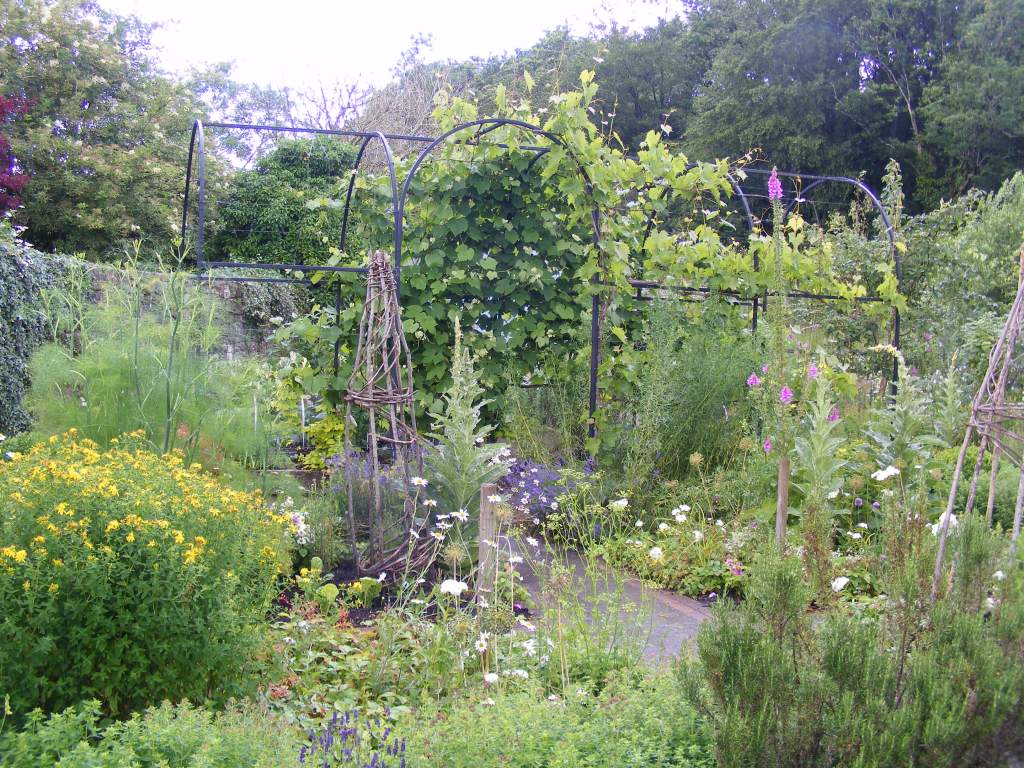
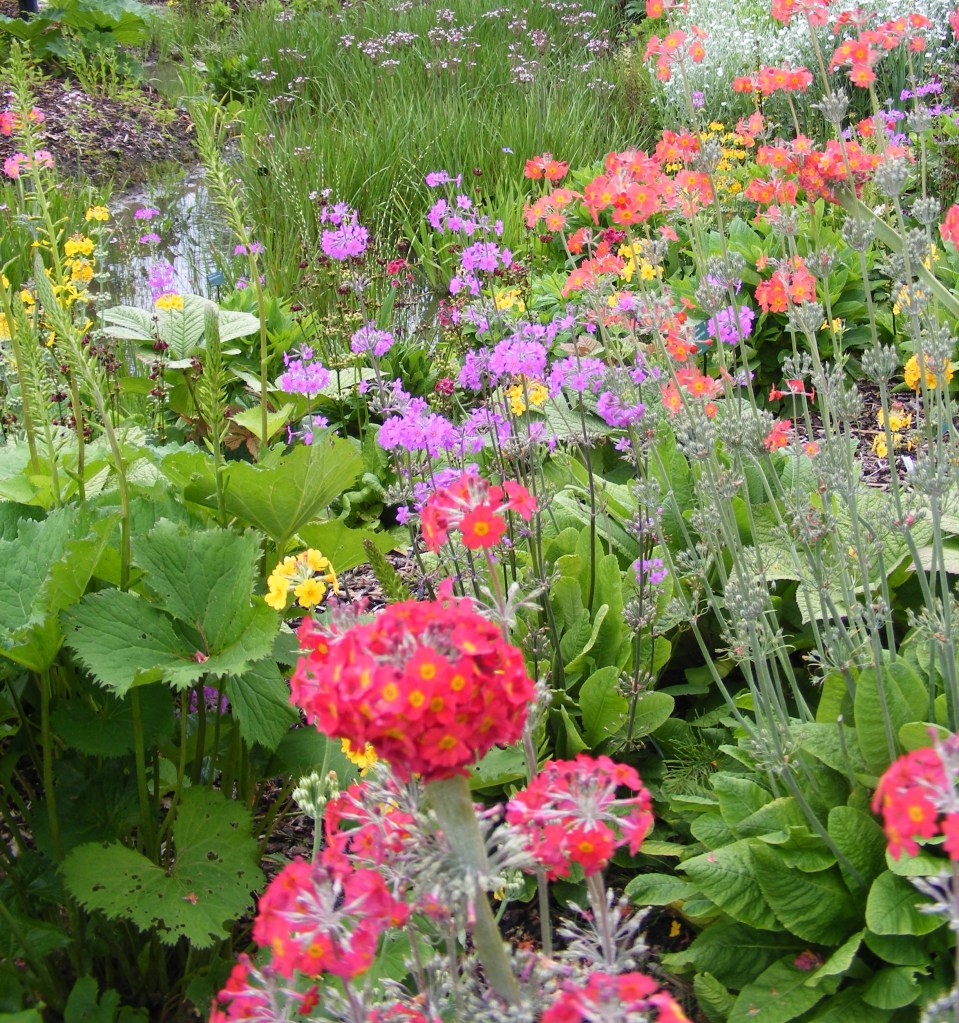
The National Botanical Garden of Wales is on the itinerary today and this is the furthest we plan to go from a site. Today we have our fair share of road re-surfacers again but all the roads that aren’t being re-surfaced are having their verges/hedges cut, so the stop-go board count rises even further. The sat-nav insists that we have reached our destination. We haven’t. We drive round the block a bit in search of helpful brown signs. After a few miles we pick these up and discover that we should have turned left when the sat-nav insisted on us going right. The gardens were definitely worth the drive and the effort. There is plenty to see, including an Eden Project style biome and a bird of prey centre. Inevitably my favourite parts were the less formal apothecary’s garden and the allotments. There is a display associated with medicinal plants and some beautiful quilt panels depicting herbs. I also learn about the physicians of Myddfai, whose story began with Rhiwallon who was the thirteenth century court physician to the Prince of Deheubarth, Rhys Grug. Their tradition continued until 1739 and the Red Book of Hergest, which records their remedies, is held out to be one of the most important Welsh manuscripts from the Medieval period. I couldn’t resist looking for an English translation.
We return via a local supermarket of our choice. This is the second time I have been in a shop since March 2020. I still have 1000 steps to hit my daily target, which I’ve maintained all year. It is now raining persistently. My options are to circle the site in the rain or to make myself look like an idiot jumping up and down by the cold counter in M********* whilst my companion loads up the yoghurt and milk. I’ve tried getting soaking wet doing laps of a caravan site before. Fun it is not. I go for surreptitious jogging as I examine tins of beans and load the bag at the checkout. Yay 1000 steps accomplished.
We leave in mist and showers and cross the Prince of Wales bridge, heading to mid-Wales. We pass Raglan Castle and encounter numerous tractors enroute as we drive into the iridescent green Welsh hills. It appears that every possible inch of Welsh road that could be being resurfaced is being resurfaced and stop-go boards abound. I am excited to see several red kites with their iconic forked tails.
We arrive at Gwern-y-Bwlch campsite. It is a pleasant site, snuggled in the forested hills. The only downside is that it has hot-spot only internet, which is why you will be reading this after our visit is over. At least this time I am prepared to be abandoned in a technological black hole. It seems that television signal is a challenge as well. Fortunately, the one side that is available is BBC, so Wimbledon watching is possible if you can accept a bit of buffering as an accompaniment. Having had a serious bout of insomnia the previous night, on arrival, I have a power nap, followed by an exploration of the site.
Day 2 The Centre for Alternative Technology
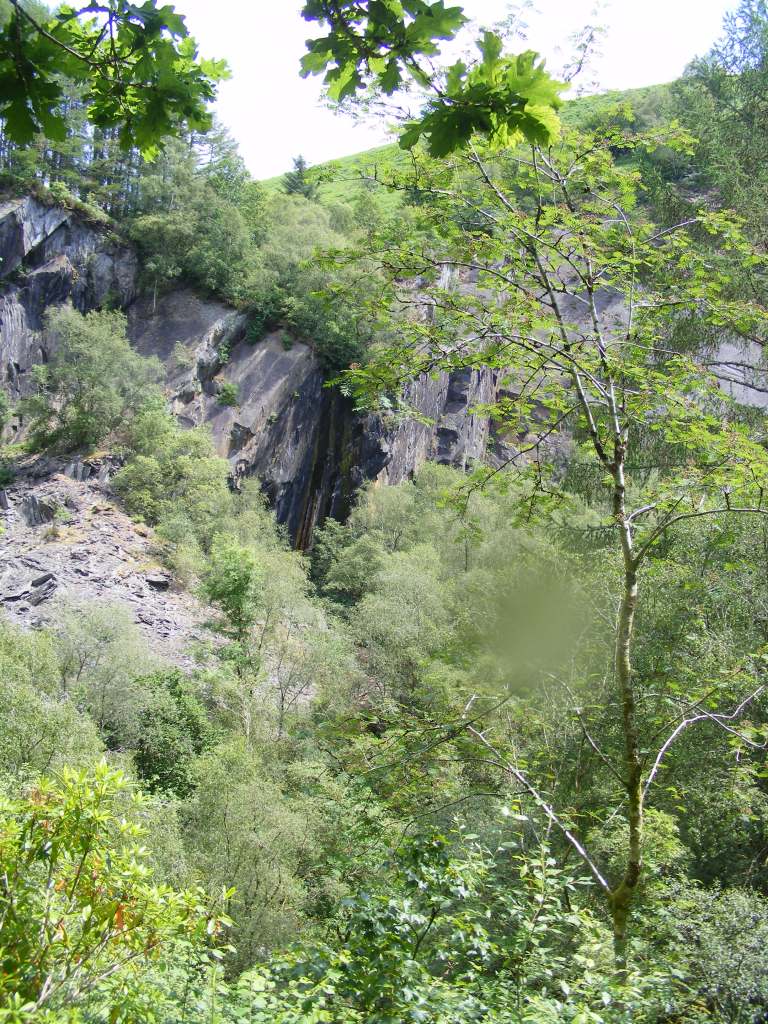
We have pre-booked entry to The Centre for Alternative Technology, which is a Unesco Biosphere, set up in a disused slate quarry near the River Dyfi. Apart from explanations of alternative energy sources and sustainable building, there are beautiful allotment-style gardens growing edible plants and wildflowers to create a diverse habitat.
Sarah takes us on a guided walk through the woodland, which is being managed as a native, broad-leafed habitat. This means that the rhododendrons have to be eradicated, as they discourage growth on the woodland floor. We call in at the café but its offerings, although delicious, are a little too ‘alternative’ for my meat and two veg loving companion.
Day 3 Coed y Brenin National Park
We are trying to avoid anywhere too peopley and to be outside as much as possible, so I have picked a National Park for today’s visit. This is of course Wales and outdoors means that we run the risk of getting wet. For some reason best known to no one at all, I haven’t brought any kind of coat with me. Fortunately, there are coats lurking in the caravan. I have a postcode for the car park for the National Park but finding it seems to be as fruitless a quest as our search for somewhere to park at the Savernake Forest last month. After driving up what almost certainly wasn’t actually a road, managing not to drive over a precipice when three-point turning and retracing our steps, we do find a locked gate to what looks like a car park. We drive on and find another car park, this time with a solid looking boulder blocking the entrance. This is definitely meant to be a car park. The clue is in the notice that says ‘do not linger in the car park’, along with ‘keep two metres apart’ etc.. This time, there is room to park on the accessible side of the boulder, even though that probably isn’t the car park, so we do.
The Coed y Brenin National Park consists of 9000 acres set in the Rhinog mountains. Allegedly, it was part of the historic Nannau Estate, founded in 1100 by Cadougan, Prince of Powys. We are encouraged to call at the state of the art, ‘green’ visitors’ centre. They must have done a good job of blending it into the landscape as it is nowhere to be seen.
This area is obviously designed for extreme off-road cycling and there are numerous cyclists hurtling down steep paths, to the detriment of brakes and tyres, if not life and limb. The routes have names like ‘The Beast’ and ‘The Minotaur’. Realistically, I accept that the seven mile ‘strenuous’ volcano walking trail is not for us. So we stroll along a wide, flattish cycle track (The Fox), alongside, dramatic, fast-running streams in a granite and slate-strewn landscape, managing to pick a dry spell between the showers to do so.
I may have left my coat at home but my travelling companion, who is chief in charge of food supplies, has neglected to put the mince beef in the caravan fridge. I am hoping he has left it in his own freezer, rather than defrosting somewhere in his kitchen. This means we need to find a shop, something, along with petrol stations, that have been conspicuous by their absence. The upside of this is that it takes us into the centre of Dolgellau, instead of bypassing it as we traverse up and down the A470. This is an attractive small town, with narrow streets and looming, grey, stone buildings. We identify a butcher as a likely source of mince. I wait in the car whilst my companion ventures forth. The time spent in making said purchase was probably long enough to lasso the animal in the field and carry out all necessary processes in between but mission accomplished. We arrive back to the van in time to see Emma Raduanou’s impressive third round Wimbledon victory.
We leave the ship early, down a very steep gangplank, for our trip to Rouen. Hurricane Lorenzo is creating a pretty stiffish wind. Again, we drive across the enormous port of Le Havre, which was destroyed by the allied forces in 1944. There were three phases of destruction in France, the Viking invasions, the French Revolution and the Second World War. From today’s guide, Lana, we learn that Le Havre football club is the oldest premier division club in France. We drive to the beautiful city of Rouen, founded in the first century, although nothing Roman survives. Rouen an important harbour, became the capital of Normandy in 2016. Haropa is a new name for the combined harbour of Le Havre, Rouen and the Seine hinterland to Paris. We are told that the only bridge across the Seine in the Middle Ages was at Rouen. I find it hard to believe that this refers to the whole length of the river.
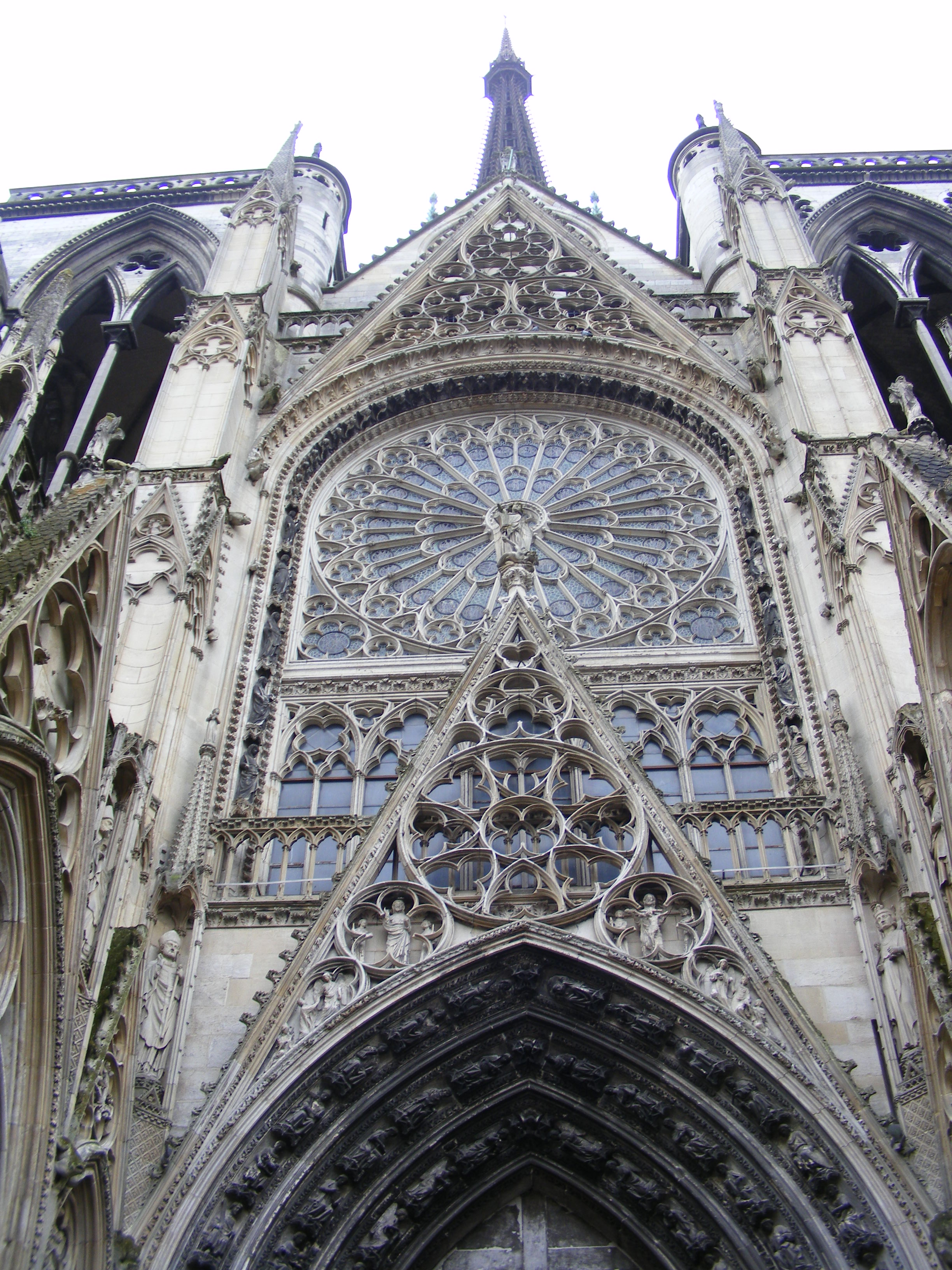
Capitalising on French internal conflict, the English waged the Hundred Years War against France, a misnomer as it actually lasted 114 years. This conflict saw Joan of Arc become the heroine of the French; she was captured and burned at the stake in Rouen market place on 30 May 1431. We see her memorial and the nearby, modern, fish-shaped church. Rouen contains eighty buildings that date from the Middle Ages. It made its wealth from the wool trade. The cathedral is breath-taking. Here are the snippets of information that we acquired. Its nineteenth century spire weighs 7000 tons. There are eighty statues on the façade, many of which are replacements from the acid rain-damaged originals; some of these are now on display inside the cathedral. There is a twelfth century tower and a fifteenth century ‘Butter’ Tower on the right, the latter financed by the profits from the butter trade. In 1999 the copper on the towers was replaced with a material that was less subject to corrosion. The nave is 136 metres long and the roof is 28 metres high. The cathedral has sixty-four bells. Much of the older stained glass was removed during the Second World War, so survived and could be replaced, whereas the nineteenth century glass was lost. Ever hopeful that I will one day find my ‘gateway’ ancestor, I photograph Rollo’s tomb. When he becomes my nth great grandfather, I will need that for my family history.
We walk through the city and see the Grand Horloge (Big Clock), which only has an hour hand. There are all the usual suspect chain shops as well as more individual ones. Sixteenth century blue and white pottery introduced from China, is popular. I manage to use my limited French to purchase two badges.
Back on board, we gather in the conference centre for an informal demonstration by Michelle, demonstrating some DNA tools. More good news as a result of one of my cruise talks. I have a request for a copy of the Fry family tree that featured in my Darlington to Wellington talk, as it relates to a member of the audience’s genealogy. In the evening, Carole Becker gives the final conference presentation, So you Think you are Married to a Genealogist, which is a great end to our programme. It is sad to think that our time aboard is at an end, as we are unlikely to see many of our fellow cruisers again. We have met some lovely people during our Unlock the Past adventures. This will be our final cruise with them; there is another to Tasmania in 2020 without us but that is, sadly, to be the last.
Chris has neglected to put one of his cases outside for collection He does so in a state of undress but is fortunately not spotted. He has also left his large trunk containing his medical equipment outside. Our stateroom attendant is under the impression that this contains family ashes! Given that the box is 24x18x10 inches, we must have brought the entire family tree with us. Chris doesn’t seem to have understood him when he queries this, I merely smile enigmatically and do not correct his misapprehension. So this is the end. Tomorrow we go home. The trip will take us via a family history conference but that will be another story.
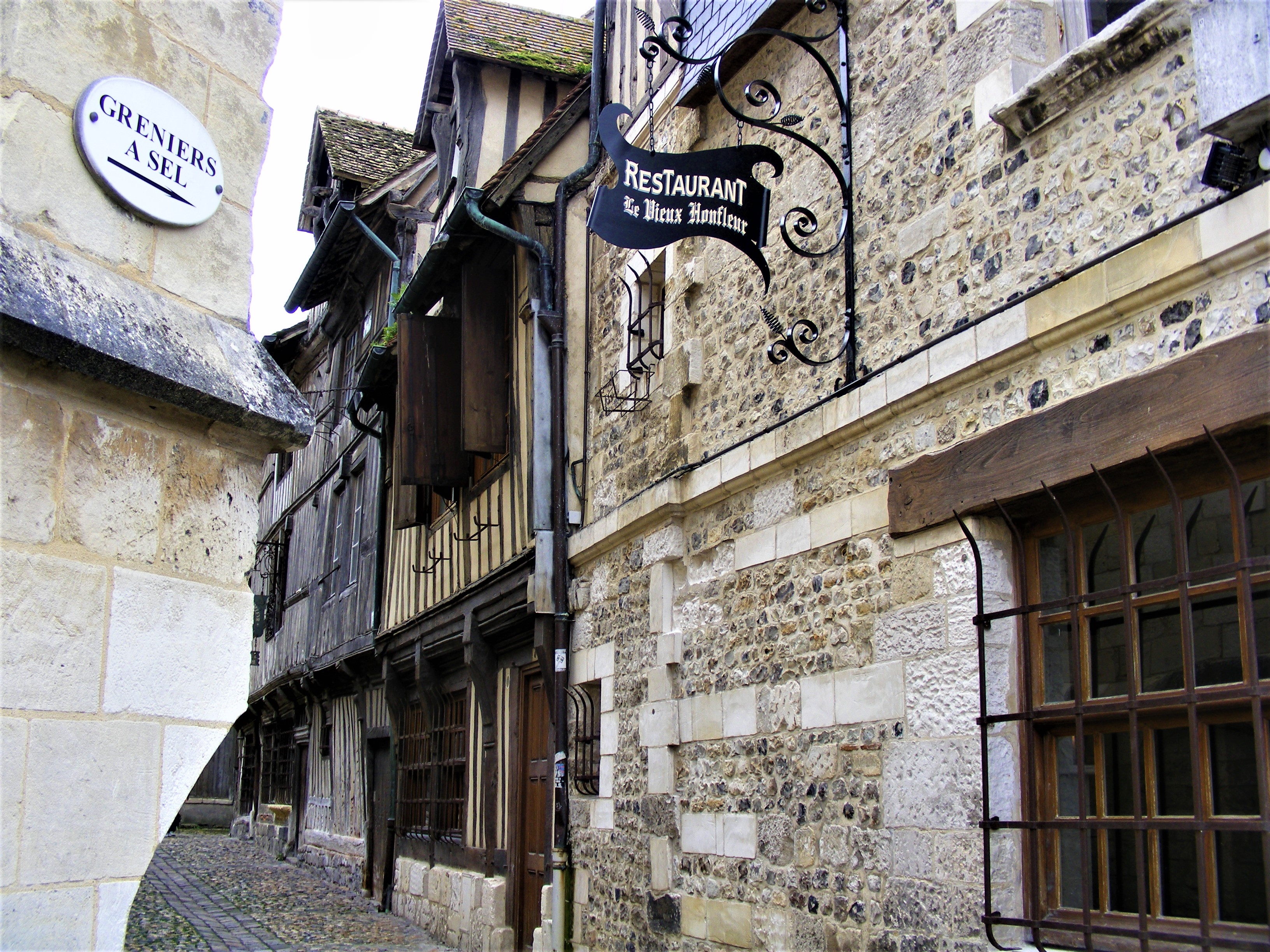
A really interesting brickwall-busting workshop with Mia to start the day. I am pleased to be able to contribute to the demolition. Then at lunchtime we are off to Honfleur. We are now in temperatures that are 15 degrees cooler than three days ago. Some sort of happy medium would be good. Our tour guide today is Amilee. Normandy, where we are, is of course the country of the Vikings (North/Norse men). They were in this part of the world from the eighth century. In 911 Robert I, from Scandinavia, became the first Duke of Normandy. The area is also the home of impressionist art, noted for the move away from aristocratic portraits, in favour of landscapes and movement, with accurate interpretations of changing light. We cross the Seine, named for its snake-like sinuous turns. Normandy is noted for its beef and dairy cattle, cider making and calvados.
From Amilee we learn that Honfleur means ‘house on top of the hill’ and unusually, the port was not damaged during the Second World War. Honfleur was the major harbour until it began silting up, so Le Havre was built 500 years ago on the north bank of the Seine. Le Havre is now the biggest port in Europe and it certainly takes us a long time to drive across it. It is not however the busiest, that honour goes to Rotterdam. Honfleur was the site of many battles during the 100 Years’ War against the English. Amilee mentions fourteenth century English Protestants, which makes me doubt her historical knowledge. Like parts of the south-west of England, Honfleur had links with the Newfoundland cod-fishing grounds. Salt for the fishing industry came from La Rochelle. The French don’t call the English Channel the English Channel, to them it is just The Channel. Honfleur is a focus for artists and the go-to seaside for Parisians.
In Medieval times, tax was based on the size of the ground floor of buildings, hence the practice of jutting out the upper floors. This was stopped when the tax was placed on windows instead. Wooden shingles on the facades are typical of the area. St Catherine’s Church is all wooden and is famous for having two naves. We see the ‘road of the little butchers’ aka the Shambles and hear about Frederic Sauvage, the inventor of propeller, which was first demonstrated in Honfleur in 1832. In my tour of the souvenir shops, I have an unfortunate incident with some fridge magnets. I may just have spun the carousel upon which they were displayed a trifle vigorously and some found themselves on the floor. I promise I picked them all up. I am not prepared to comment on whether or not they all survived unscathed.
We move on to Deauville, a town that was developed as the holiday playground of the rich in the nineteenth century. The popularity of sea bathing amongst the well-to-do meant that other attractions, such as the casino and race track were also built. The town is mostly shut up for the winter. Deauville is now full of expensive Parisian holiday homes and it really wasn’t our sort of place; it clearly caters for the luxury end of the market. No opportunities to buy tourist tat here. We wander around the town and along the beach where many of the beach huts are named for film stars.
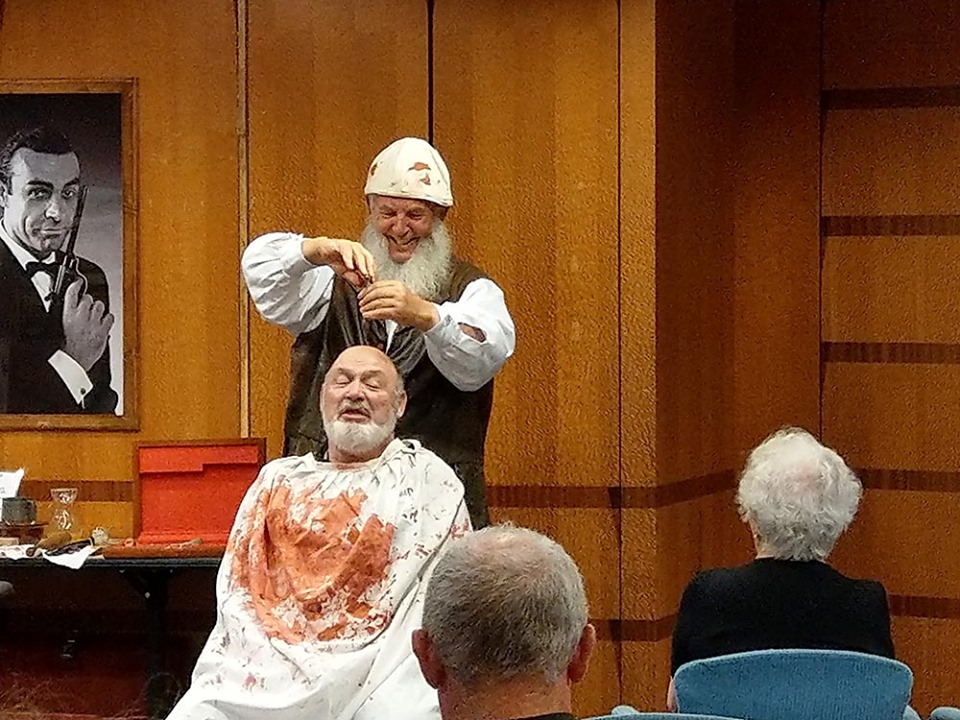
The evening is Master Christopher’s opportunity to cure a few ailing passengers. He has an excellent turn out and the appreciative audience watch as he performs enemas and amputations with aplomb.
I play truant from the first two lectures and persuade my companion to rise from his sick-bed to get some air. We go up on deck where I am the sole occupant of the hot tub. Ok so I am sharing it with some slices of lime left over from last night’s revels but hey! I am frantically trying to keep up with photograph labelling and the holiday diary but it is a losing battle. Already I have numerous unidentified pictures that will have to be generically designated ‘Rome’ or ‘Florence’. We also rearrange our excursions in the light of Hurricane Lorenzo. Much as I feel that I ought to see Paris, having not been, I can’t face a three hour trip each way in order to spend four hours there, so we opt for shorter trips to Rouen and Honfleur. We also have a walk booked in Spain for tomorrow.
Michelle provides us with more tips and tools for DNA, advising us to create broad and deep online trees covering six generations and including siblings. Shared matches are the key to interpreting our DNA results. I just need several free hours a week that I don’t have. Sue shares another Swalwell case study, this time about a Georgian lady who was declared bankrupt. I don’t think that I was aware that there was an important distinction between debtors and bankrupts. Mia then outlines some online sources that are often overlooked, extolling the virtues of the Online Parish Clerks,of which I am proud to be one (or three actually).
I finish the day with the new and improved version of Remember Then, encouraging people to tell their own stories. This was the practice run for Rootstech and something decidedly weird has happened to the formatting of my presentation, which I need to fix. Nonetheless, the content is very well received and people are still fired up and chatting 45 minutes after I finish.
We are up in time to hear Eric Kopittke’s interesting presentation, ‘In the Steps of my Ancestors’, about genealogical journeys. Michelle kindly helps me look at my DNA matches; I am more eager than ever to get home to work on them some more. We dock in Malaga and our rearranged, afternoon trip, due to the reduced time in port, is to the village of Mijas. We are instructed to meet at the end of the pier and I am a little concerned that we may be in the wrong place but no. Sergio is in charge of trip number twelve and he tells us how fortunate we are to not have opted for Malaga as it is siesta time and all the shops will be closed. The Spanish are not stupid. It is 31 degrees; a siesta seems eminently sensible but here we are, mad dogs and English tourists, out in the heat of the day. Apparently temperatures are higher than average for the time of year. There is no sign of the forecast cloud. Malaga was founded in 830BC by the Phoenicians. It is the capital of the Costa del Sol in the Andalusian region. It typically has 300-320 days of sun a year and 21-22 days with rain. There is a drought at present and limitations on water usage are expected.
We drive past Malaga Cathedral, nicknamed the One-armed Lady, as only one of two proposed towers was built. An artificial beach near the port was constructed in 1990 and looks to be popular. We get stuck behind a bin lorry for a while but are soon able to recommence our journey. We see the botanical gardens that were to have been part of our destination on the trip that we chose originally.
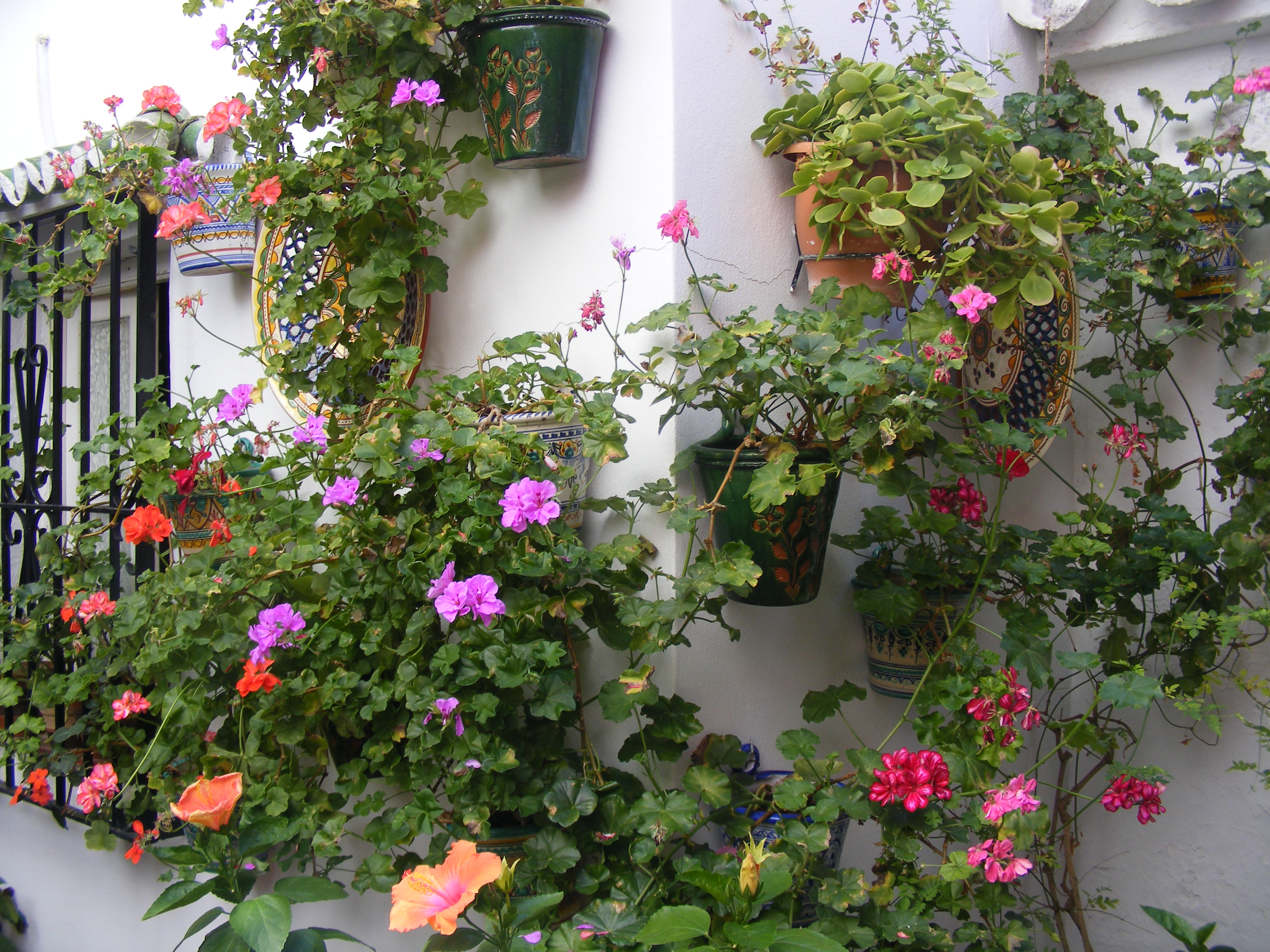
Mijas is a typical Andalusian village that is famous for its donkeys, or burros, which are available for riding or to pull carts. They were the typical form of transport until the 1960s. There are also a number of horse-drawn vehicles for hire. Especially given the heat, I would not part with money to put animals through this, quite apart from the fact that one of the donkeys is aiming vicious kicks at its neighbour. Car parking in Mijas is set a €1 a day to encourage tourism. Beginning at the Plaza Virgen de la Pena, we walk up past the shopping area, where leather goods and Moorish influenced ceramics predominate. We can hear crickets chirruping as we climb the steep streets. We are also taken into a typical courtyard at the back of a shop. This is very attractive but fails in its undoubted aim of guilt-tripping us into making purchases. Courtyard living is the norm for most of the year and in the winter, fires are fuelled by olive wood. There are more than 420,000 olive trees in Spain. They also grow avocadoes but these trees need 100 litres of water each per day in summer and the current drought has caused severe problems.
We see Constitution Square, which is attractively laid out with a fountain and benches that were carved from the marble rocks that were left by the landslide following a flood in 1884. Despite the lack of rain in the area, this flood reached upper-storey windows. The Medieval fortress was built on top of a former defensive building that dates back to Phoenician times. The Church of Immaculate Conception was completed in 1631 and incorporates a Moorish bell-tower. We cannot escape from genealogy, as our guide tells us that 30% of Spanish DNA is Berber.
The Bullring was built in 1990 and is unique because it is oval. It has a capacity for 600, so is small by Spanish standards. Seats in the shade are more expensive than those in the sun. Animal fights only take place in early September.
We look at the Virgin of the Rock chapel that was hewn out of the rock by a Carmelite monk in the seventeenth century. Allegedly, the image of the Virgin inside the chapel was found by two child shepherds in 1586, having been led to the spot by a dove. It was a slightly less strenuous excursion than others we have been on and very enjoyable.
A group of Guild on One-name Studies’ members foregather in the Windjammer in the evening and we consume yet more copious amounts of food.
Today we are docked in Liverno in Tuscany. By dint of swift walking, we secure seats in the front of the coach. Our guide is Sara as we head for Florence. We see plenty of umbrella pines. Pine nuts are grown and used for pesto. They also give their name to Pinocchio, who was presumably made from pine wood and there are Pinocchioian representations everywhere. Sunflowers and olives are grown for their oil and the vineyards produce Chianti. Leather and gold goods predominate. The area has been famous for gold since the time of the Medici. The gold comes in a variety of colours including black and chocolate.
There is a layer of mist across the plains and we pass villages that are famous for truffles and strawberries. Firenze, or Florence, is the ‘city of flowers’. It has a population of half a million and was briefly the Italian capital in the nineteenth century. It is sited on the River Arno, which also flows through Pisa. The city was under the rule of the powerful Medici family from the fifteenth to eighteenth centuries. Once on our walking tour, which Sara delegates to a local guide, I am run into by a lycra-clad, Italian runner, who smiles sweetly and takes me by the arm. Sadly I am not being abducted.
The Cathedral is white, red and green, colours that represent the trinity. The cathedral was built from the 1290s onwards and Brunelessci’s baptistry dates from 1401. Coincidentally, of the fourteen people on today’s ‘small group’ tour, we have encountered eight on previous tours and two of the others are us! Considering that there are about 3500 passengers on Explorer of the Seas, that is some feat. Many of the Renaissance works on view are replicas including one of Michelangelo’s David. It is possible to see the real thing, just not where we are going. We do see the Medieval Medici Tower, an equestrian statue of Cosimo de Medici from the 1580s and the Ponte Vecchio. The Ponte Vecchio (old bridge) was built in 1345 and is the only Medieval bridge (in Florence presumably) to have survived World War 2 bombing. By doing some reverse picture searching, it turns out that we have seen the Palazzo Vecchio, the Basilica of Santa Croce and the outside of the Uffizi Gallery, possibly not in that order. The quality of my photographs are severely affected by the cords and the fact that most of them were taken whilst hurrying after our guide in order not to be lost.
Even though we are suffering somewhat from information overload, I do like Florence and we have the advantage of cloud cover, so the heat is less of a problem. Today’s included lunch is yet more salad and lasagne, with a strange vanilla concoction for dessert. In the leather and gold shop, where Sara is probably on commission, we are treated to a sales pitch by Anthony (with a H) from Melbourne. We do not succumb. Whilst waiting for our group we are accosted by a Kenyan street seller. He cunningly hands us some bracelets as a ‘gift’. He then shows us a picture of his children and asks for money for the babies. We claim to be penniless and return the bracelets.
We pass Michelangelo square with its panoramic views of the city but there is no time for a photo opportunity. We are on our way to Pisa. Our driver has a unique driving style, which involves a third of the bus being across the white line and periodically he has no hands in the wheel. We survive.
We spend some time in Miracle Square in Pisa. It seems obligatory to take a photo with hand outstretched, so that it appears that you are holding the leaning tower; we don’t bother. The tower was built as the campanile (bell tower) for Pisa Cathedral and leaned from the start due to subsidence. It is between 183 and 186 feet high, depending on which side you measure. It was built between the twelfth and fourteenth centuries and stabilisation work in the 1990s reduced the lean slightly. The Carrera marble was also cleaned at this time. Galileo, who was born in Pisa, allegedly dropped cannon balls from the tower to demonstrate how mass affected the speed of descent.
Also in the square is the Baptistry, begun in 1152 and competed in 1363. It replaced an older building and is the largest Italian baptistry. It combines Romanesque style at the bottom with Gothic on the higher levels. Next to this is Buscheto’s Romanesque cathedral, begun in 1063 and consecrated in 1118. Allegedly it was financed by the spoils of a Sicilian war again the Muslims. Twelfth century enlargements were designed by Rainaldo.
In Pisa we learn that there is a €500 euro penalty for street selling and it is the purchasers as well as the vendors who are fined; a good job we resisted our Kenyan friend. Mind you, despite circulating police cars, there seem to be plenty who are willing to take the risk and their tactics are quite aggressive. There is obviously a secret signal, probably in the form of a text message, as periodically there is a Mexican wave of sellers rapidly gathering their wares into large blue bin bags. I can’t help feeling that having a bin bag over your shoulder is somewhat of a giveaway but perhaps the police turn a bit of a blind eye.
As Sara leads us back to the coach, we have to cross a level crossing. The barriers are down. Several Americans of mature years, not from our group, decide that the train is ‘a long way away’ and duck under the barrier to cross the line. I think some more law-abiding onlookers were hoping the line would be electrified.
Back on board we learn that Hurricane Lorenzo is looming. This is not the hurricane that was causing difficulty earlier in the cruise. This is a new and more serious hurricane that is going to necessitate a change in our itinerary. Sadly, we will lose our stops in Santa Marguerita and Lisbon; I am particularly disappointed about missing Portugal. My travelling companion is suffering from the lurgy that seems common on cruises, so I leave him to nurse his ills whilst I listen to Paul Milner speaking about nineteenth and twentieth century sources.
Another early start. Having collected our stickers, we sit and wait for dispatch. The chap is mentioning a dress code for those visiting the Vatican. Dress code? I booked our tour so long ago that I can’t even remember if it includes the Vatican. Knees must be covered. My companion is wearing shorts. There is no time to go back to remedy this. We resolve to wait and see what happens. I may have to abandon him by the side of the road. On leaving the ship, I get caught by the ever-present cruise photographers and end up forcibly posed with a Roman soldier. A waste of time as there is no way I am going to pay the ridiculous prices charged for cruise photos.
We are moored at Civitavecchia, which means ‘old town’ and is the port that serves Rome. It consists of a Medieval fortress commissioned by Pope Julius II and for which Michelangelo (he gets everywhere) was partly responsible. Today’s guide is Sabina. We point out our failure to be aware of a dress code. Our tickets warn us we need to be able to walk on cobbles, you’d think there would have been some kind of reminder about appropriate attire but no. Apparently it was in the small print in the cruise brochure that I had uncharacteristically failed to read. I was expecting to have to have my head covered in Catholic churches but this no longer seems to be a requirement. I had not factored in the possible offence caused by my companion’s knees. We briefly consider and dismiss, the idea of swapping trousers. By dint of lowering the waistband of his shorts to mid-buttock level, in a manner much beloved of today’s youth, the knees are hidden. Sabina thinks we will pass muster.
We drive towards Rome. They have a problem with graffiti and like any other major city, there are rough sleepers and beggars. The twelve mile long city wall contains fourteen gates; 80% of the walls remain. Once on foot, Sabina sets off at a cracking pace towards the Circus Maximus and the Constantine Arch, erected in 315 following the battle of Milvain Bridge to commemorate the slaying of 5000 enemies; one wonders who counted. We see the Colosseum, which is a nickname for the Flavian amphitheatre and which originally consisted of three concentric rings. There are many holes in the stonework, where, over the centuries, metal supports have been removed for ‘recycling’. Spectators were assigned a tier according to their social class, with women often being relegated to the top tier, unless they were accompanying their senator husbands. The entrance arches or fornix, were where ladies of the night lingered, seeking customers, giving us our word fornication.
Entertainments, or ‘munera’ were an all-day affair with parades, the public execution of criminals, games and finally gladiatorial combat. These spectacles were free, with the intention of securing the support of the population for the current emperor and to emphasise his status. The working life of a gladiator was about five years, during which time they might only perform ten times. After this, successful fighters could gain their liberty. The idea that the audience put their thumbs up or down, to indicate whether a losing combatant should be saved, is a myth. The fist is raised, either with the thumb hidden, or the thumb stuck out to the side, the latter indicating the executioner’s knife blade. The last human combat was in 401 and the final animal fight in 521.
We hurtle off to the Basilica di San Pietro in Vinocoli – St Peter in Chains, where what purport to be the original chains that held St. Peter are kept. Also known as Basilica Eudoxiana, it was built in the fifth century. It had many restorations, Pope Julius II again. Michelangelo’s Illumination of Moses is here. There are a number of buskers. I am taken with the accordion player who switches from Funiculi Funicula (a tune reminiscent of my childhood as it featured on an oft-played LP) to Jingle Bells as we pass, possibly in honour of Chris. There is also someone with a three stringed double-bass and a didgeridoo player, which is impressive, if culturally incongruous.
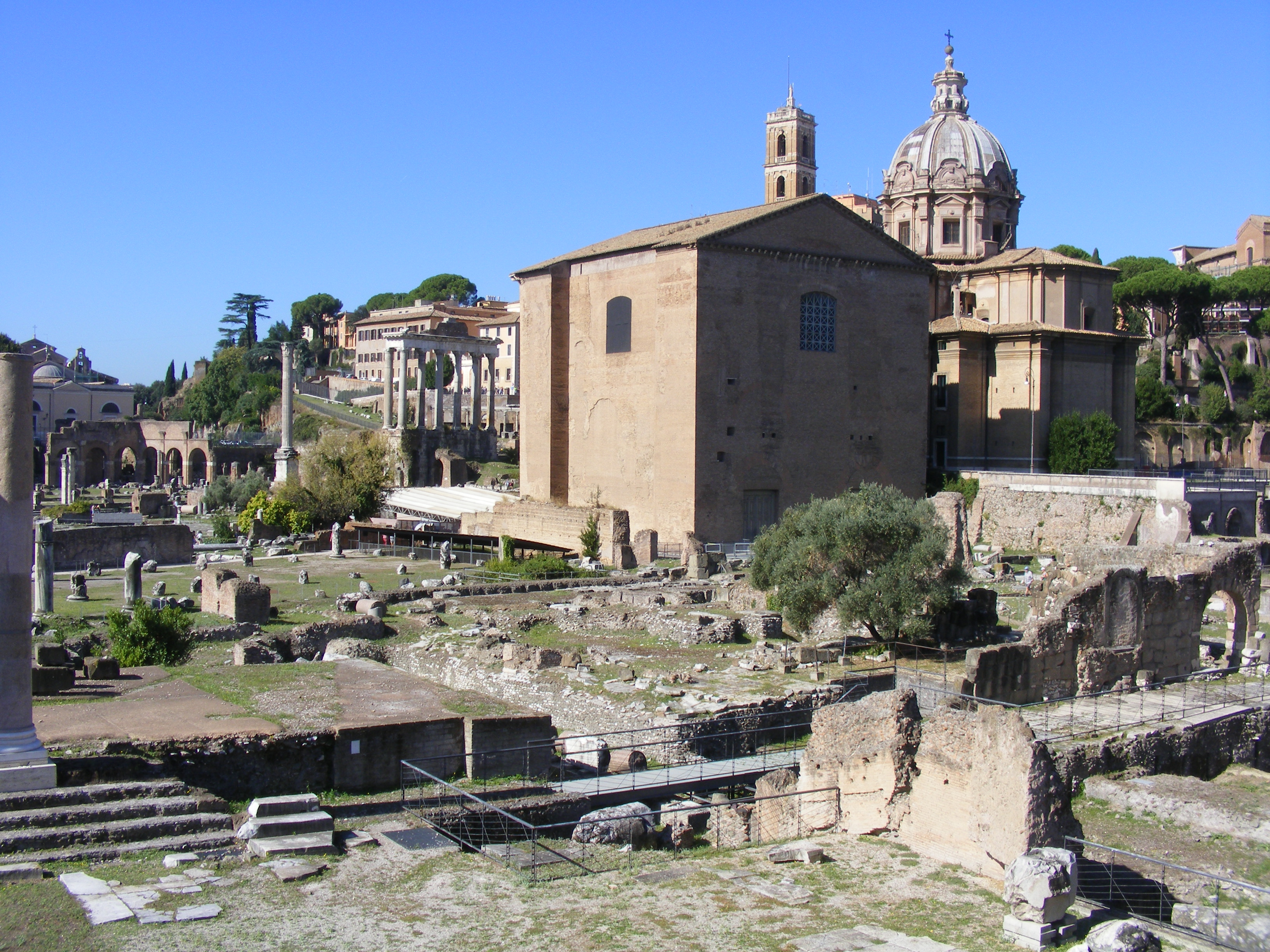
Our next stop is the Forum, where we encounter many young climate change protestors. They don’t get the best of press but personally, I am grateful that so many young people are passionate and engaged. The six vestal virgins were tasked to keep the eternal flame burning in the Temple of Vesta, which is part of the Forum. We see the Temple of Saturn and the Red or Burnished Palace where Mussolini gave his famous speech. On this tour, lunch is provided, which has the advantage that we also get free toilet facilities. We are given salad, lasagne and a filo pastry dessert.
The afternoon is spent in the Vatican and no problems are created by the shorts-length of my travelling companion. The Vatican covers 120 acres, making it the smallest independent state in the world. Its sixteenth century walls were constructed to withstand gunpowder. It was given the status of a separate state in 1929. The Vatican is home to the Pope and 400 cardinals and the official language is Latin. Even the instructions on the ATM are in Latin. Unfortunately I could not find this in order to photograph it. The Vatican Museum, with 2000 rooms, is the second largest in Europe and gets 30,000 visitors a day. They are not wrong; it is certainly hot and crowded. We are whisked round some of the Museum at break-neck speed, in the tourist sausage machine that is characteristic of cruise ship excursions. Unbelievably, we are walking on original Roman mosaics on occasion. There are wonderful painted ceilings and plenty of statuary, as well as fifteenth century Flemish tapestries that were completed at a speed of one square metre per person per year. How does anyone know this?
The world-famous Sistine Chapel was commissioned by Pope Sixtus IV in 1278. It underwent extensive repairs when the walls began to crumble shortly afterwards. The walls were painted to show the story of Moses and of Jesus in 1481-3. It took Mr Buonarroti aka Michelangelo four years, working alone, to paint the frescos on the ceiling. No photographs are allowed because, in return for the funds for the recent cleaning, using distilled water, of Michelangelo’s work, Fuji required the copyright on the images. Nevertheless I observe at least four people shamelessly photographing. Even more astoundingly, a family are handing round chocolate bars to their offspring. The renovation took fourteen years and was finished in 1994. The discolouration over the centuries was largely due to candle smoke. A few squares have been left uncleaned and you can certainly see the contrast. Interestingly, his panel of the Fall of Man shows Eve tempting Adam not with an apple but with a fig. We learn about the use of the Sistine Chapel for the papal enclave, when a new pope is being elected.
There is a general press of the great unwashed as we tour the Vatican. There are also plenty of illegal street sellers and manic moped riders. We visit St. Peter’s Basilica, which took 122 years to build, being completed in 1626. All churches in Italy are free to enter, unlike our English Cathedrals. Only the Pope can celebrate mass at the High Altar. Here we see Michelangelo’s Pieta, his only signed work. It is protected by bullet-proof glass following damage in a hammer attack in the 1970s. There is also a fourteenth century statue of St Peter and the last Stuart tomb. There are no paintings but instead 10,000 square metres of mosaics. The Swiss Guard, in rather flamboyant uniforms, are responsible for guarding the Vatican as they have no army of their own.
Our evening talk is Michelle on the exodus to the Southern seas, which I have heard before but which is just as good at second hearing.


 A group of Guild on One-name Studies’ members foregather in the Windjammer in the evening and we consume yet more copious amounts of food.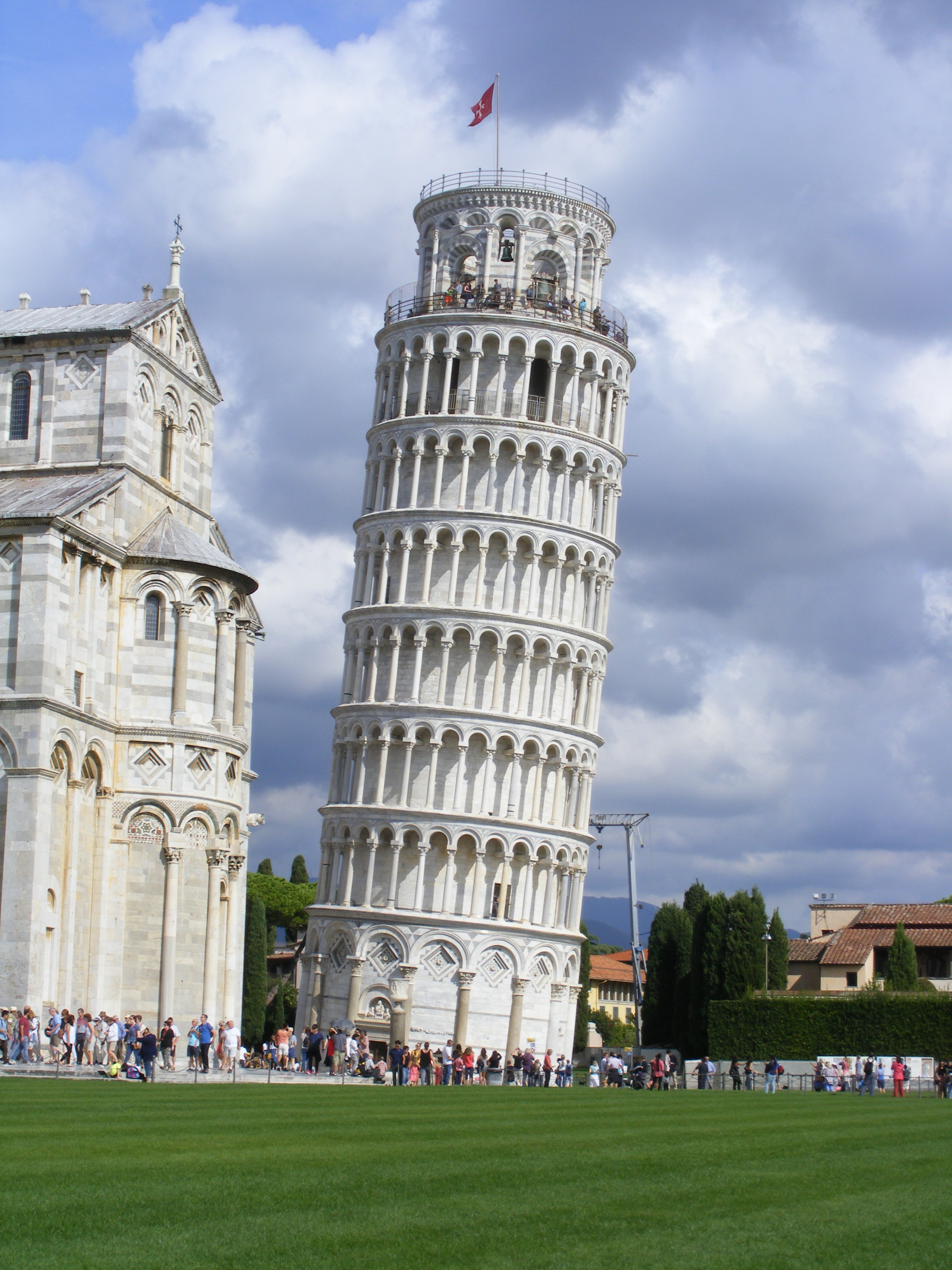
 The History Interpreter - Janet Few