A Deep Breath and Another Brick Wall with Structural Damage

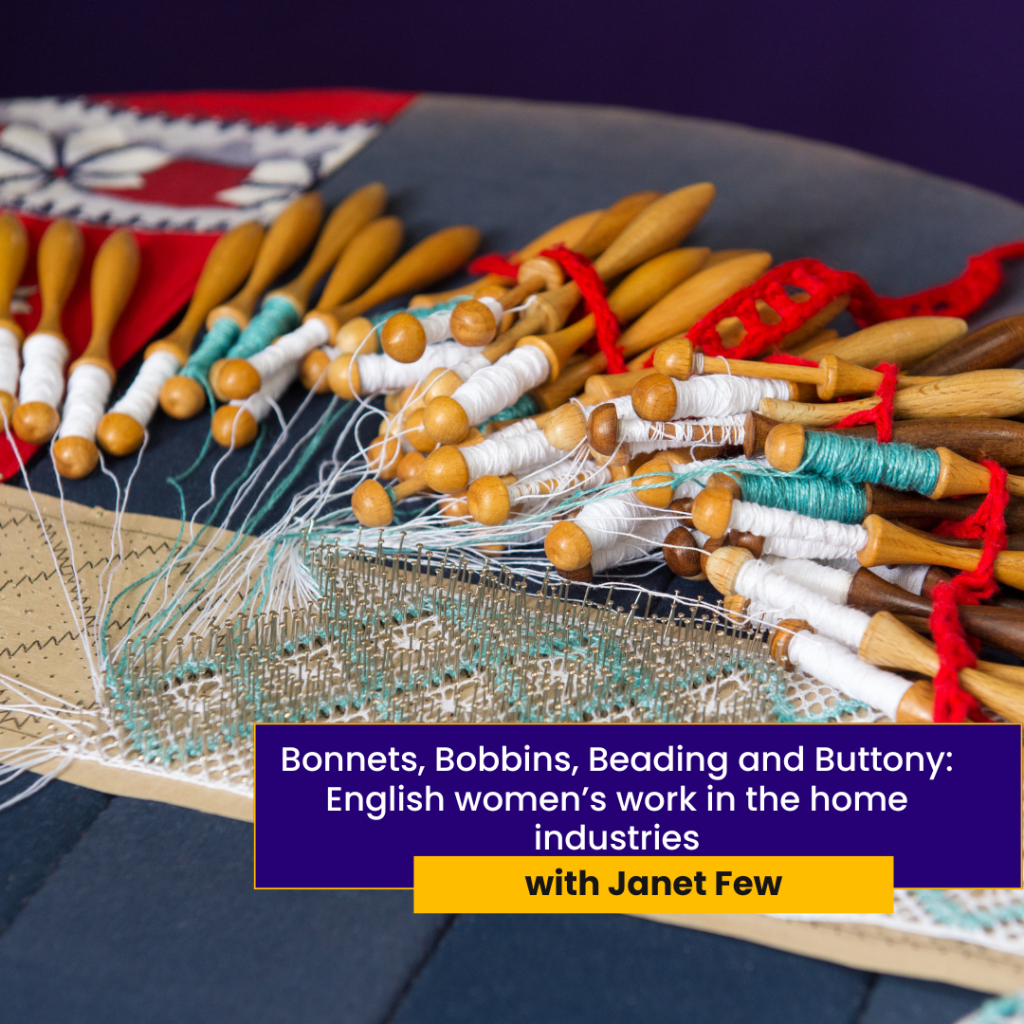
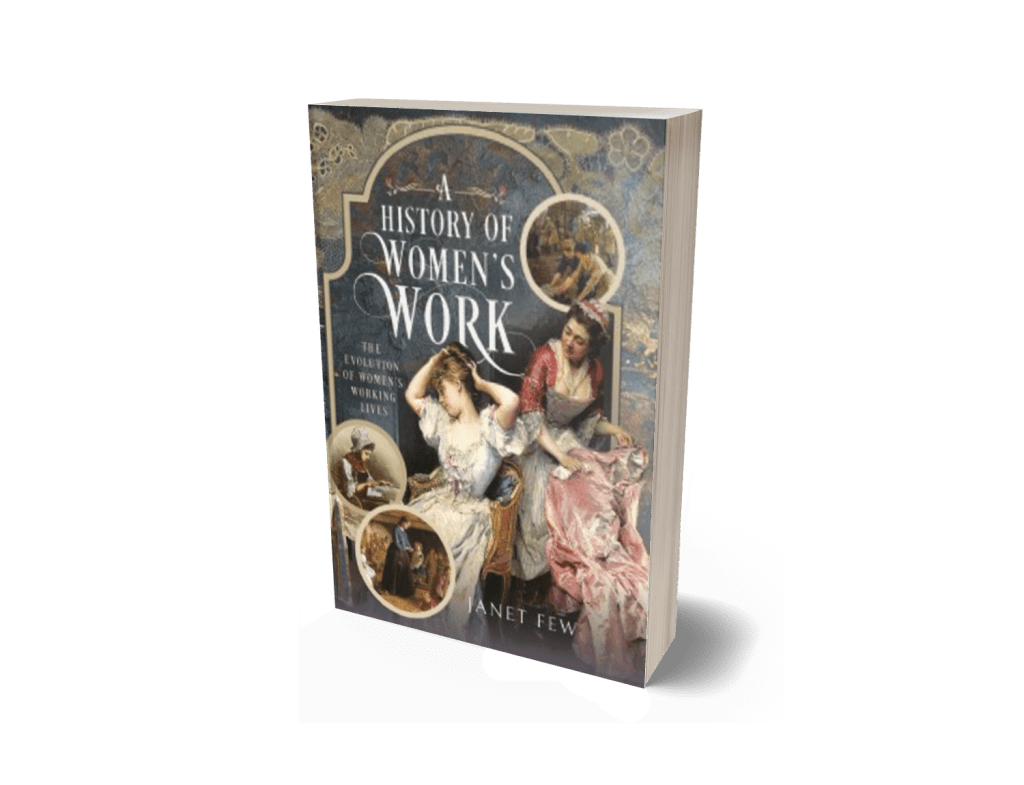
Time to take a deep breath as I launch in to the next few weeks. Not only is the job I must not mention about to hit with a vengeance but at some point long ago, I decided that it would be a good idea to cram the next few weeks full of presentations. So in the calendar for the next two weeks I have, Women’s Life  on Farms, the story behind my novel Barefoot on the Cobbles, Mistress Agnes talking about life in the seventeenth century and Researching in the Twentieth Century, swiftly followed by looking at cottage industries. If you want to know more about straw-plaiting, lace-making, glove-making or button-making, as well as home working in general, you can book for that one here. All those topics get chapters of their own in my new book A History of Women’s Work and straw-plaiting and gloving are two of the sections that are accompanied by case studies. It is currently at its introductory price of 20% off, which means you can get a hardback for a paperback price and not have to wait two years for the paperback to be issue. The ebook will follow at the end of next month. I am humbled by the lovely reviews that have been coming in.

Today is also the final Zoom for my Pharos ‘Writing and Telling your Family History’ course. What a lovely cohort of students and such fascinating stories to be told. If you are sorry you missed it, it runs again in April, or you can sign up to research and tell the story of a female ancestor in September.

As this post in in danger of sounding like an advert, on to other things. In the interests of writing and telling my own family history I have been getting my pick axe out and working at my own genealogical brick walls. I have two stories to share with you when I get the time to draw breath and write them up for public consumption. Having decided that Mary Newlands is indeed my 3x great grandmother (see previous post), I am now pushing back to try to confirm that her family are of Scottish origin, as seems almost certain. So one brick wall crumbles and another looms.

News too on the second of my three ‘big’ brick walls. I’ve been working on the family of a different ‘almost certainly my 3x great grandmother’; oh wow, what a story. At the moment the ‘proof’ is based on rigorous documentary research but a missing baptism means two of the jigsaw pieces are DNA matches that are so small even I am reluctant to entertain them and hereditary large ears – yes, best not to ask. In a quest for more evidence, I launched into researching the wider family. I am back to the sixteenth century in Gloucester and Upton on Severn and have had plenty of palaeography practice. I do realise my missing link won’t be found in Tudor times but the rabbit warren (too big to be called a rabbit hole) sucked me in and there I was, head first in the throes of a virtual one-name study. It is an unusual name but beset with spelling variations and the use of contractions to add spice to my journey. There may be a connection to a seventeenth century barber surgeon. An added excitement is that my children also have paternal ancestry in Upton on Severn. I just may have to revisit that branch in search of a link. I am in the area in September. Do I wait patiently, or do I spend a small fortune ordering copies of wills? So many ancestors, so little time.

Sadly now back to the day job and three meetings Monday.

A Week in the Life of an Everyday Historian

Lots of family history bits and pieces on the agenda lately. My article on Surviving the Seventeenth Century has appeared in Who Do You Think You Are? Magazine – full of handy tips about how not to die from the various hazards that beset our seventeenth century ancestors. I’ve chatted to Radio Devon about family history. You can catch this here at about one hour ten minutes in. I’ve helped to set up a VE Day commemorations exhibition. I’ve written up and published the story of my father’s wartime experiences, which you could read here. It is a bit of a different account as he started the war by continuing in his civilian job as a cinema operator. He worked for the small south London Granada chain and as luck would have it, Guy Morgan wrote a history of that chain in 1948. This book now retails for silly money but I borrowed it from the library twenty five years ago and it was just what I needed to understand what my dad was up to. Then he joined the RAF Regiment, serving in southern Italy and Sicily. Towards the end of the war he was one of the RAF personnel who was transferred to the army and he peeled a lot of potatoes in Ireland. Then he agreed to sign on for a further term of service, this time attached to ENSA (Entertainments National Service Association). In this capacity, he returned to Italy as a cinema operator. If you are interested in writing family stories my Are you Sitting Comfortably?: writing and telling your family history course starts this month. It is online so you can join in from anywhere.

I’ve got ready for this weekend’s one-name family reunion, as the Braund clan make their annual pilgrimage to North Devon. I’ve done lots of behind the scenes preparation for next year’s residential family history conference in North Devon, with a few more speakers announced and more lined up to reveal. It is going to be a great weekend in such a beautiful part of the world. I’ve taken advantage of said beautiful part of the world with early morning walks. Now I really do need to unearth the hoover.

The Year so Far – a Family History Whirlwind

The year began with family visitors, which is always very special. As a bonus, this year they didn’t include any lurgies amongst their seasonal gifts. The new year also means paying the tax bill. This wasn’t a surprise and the money was put aside but it is always a bit of a shock to see the bank balance suddenly depleted by what seems to be an eye-watering amount. Added to this, it seemed I needed to pay a different HMRC bank account, which meant setting up a new payee. I have one of those little card reader things that gives you a secret code to verify that you are not a fraudster. I’ve had the thing for ages, which is probably why it chose this moment to decide that its batteries had had enough. Before these obscure-sized and expensive batteries died a final death, they gave me a partial glimpse of the vital number. Could I guess what figures they were striving to reveal? It turns out that I could. Hurrah.

It has been full on family history on many fronts since the visitors departed. I’ve finished a magazine article. My new book is signed off and is due out in May, pre-orders should be opening up soon. I love they cover that Pen and Sword have chosen. I’ve also, rashly, signed a contract for another one. Will I ever learn? Not totally unrelated, is the work I’ve been doing towards the next Forgotten Women Friday collaborative research day for the A Few Forgotten Women project. This one is to be about women associated with Dorchester Prison.

My Pharos Agricultural Labourers online course has started again this week with a full, enthusiastic cohort. Next up on the Pharos front will be the first presentation of ‘Putting your Female Ancestors into Context’ in March. This filled up so quickly, that I agreed to take more students than usual. This means that there are still just two spaces left, if you want to come along for the ride.

I’ve have been giving talks like, well, like someone who gives an awful lot of talks I suppose. I’ve been out and about in person chatting about herbs and plague and online with the history of prostitution, marginalised ancestors and writing your family history amongst other things. This has taken me to Northern Ireland, to Surrey to Lincoln and other points in between. I have also recorded talks for future broadcasts. Rootstech is on the horizon. The pre-recorded talks have not yet been announced but there will be a short session from me in there, when I will be talking about British administrative units, do you know your townland from your wapentake, or your riding from your peculiar? If not, seek out my ten minute chat when Rootstech opens next month. Even better, online attendance is free. Legacy Family Tree Webinars have announced this year’s programme and I will be popping up there too later in the year. It is a fascinating programme, well worth the subscription.

The volume of talks in a sort space of time has obviously been getting to me, as on the night before two talks Monday I had a bizarre dream in which I had double booked myself and my mother was going to deputise for me. A couple of issues with this. She isn’t actually alive and she’d decided she was going to talk about red wine, a subject about which she knew nothing in life.

A little late to the party, I’ve been playing with Family Search’s full text search facility, which is in experimental mode and can be accessed at https://www.familysearch.org/en/labs/ once you are signed in to Family Search, which is free. This allows you to use AI generated transcriptions to search for names within the body of a document, such as the beneficiaries in a will for example. My take on this is that there is loads of good stuff on there and this has the potential to be brilliant but as yet there are still some drawbacks, which is understandable, as this is still being trialled. AI’s palaeography skills are pretty basic and mistakes are made that would not be made by a human, such as ‘Michael wears’ for Michaelmas,, rendering the sentence nonsensical. Searching is clumsy. It is very difficult to narrow down the results. You need to ignore the headings, which are often very misleading. Documents labelled Warwickshire, for example, turn out to also include many other counties. Having said that, it is definitely worth a play but make sure you have a few hours to spare first.

I’ve even found time for some of my own research and am deep down a rabbit hole following the story of a several greats uncle who was transported. It will be coming to a Granny’s Tales site near you shortly.

Family History Round Up

Life has been busy busy as usual and not just because of the season. Here is a quick round up of various family and local history related activities. I’ve just finished leading my Pharos course on the illnesses of our ancestors. It was only a small group this time but they were very keen and have done plenty of research to share with the rest of the group. Next up will be Agricultural Labourers in January. I am also very excited about my Female Ancestors course, which is, thankfully, now written. It did take me down some rabbit holes, as I decided that I should provide some sample answers, which basically meant me doing the course myself. I spent a lovely couple of days looking at my great grandmother’s life as a housemaid and I am very grateful to Mrs Beeton for providing such a comprehensive guide. I’d have been worn out before breakfast. To top it off, “On leisure days, the housemaid should be able to do some needlework for her mistress,—such as turning and mending sheets and darning the house linen, or assist her in anything she may think fit to give her to do. For this reason it is almost essential that a housemaid, in a small family, should be an expert needlewoman; as, if she be a good manager and an active girl, she will have time on her hands to get through plenty of work.” You can read Clara’s story on my Granny’s Tales website, which also has a few more additions and tweaks.

We had a lovely time playing Victorian parlour games at my no longer quite so local history group. The power cuts in the aftermath of Storm Darragh added verisimilitude but we soldiered on by candlelight. The game of large scale Nine Men’s Morris was taken very seriously. Charades, using carol titles led to some hilarity. Ok, maybe including We Three Kings was a mistake.

There have been talks to give, both in person and online and Mistress Agnes has had a couple of outings. The good thing about in person talks at this time of year is that they come with seasonal refreshments. Best not the imbibe the mulled wine before the talk, I’ve learned. I’ve also chatted to the Society of Genealogist’s Book Club about Sins as Red as Scarlet. Not the lightest of holiday reading but I am glad that most realised what I was aiming at with this book.

On the subject of books, I have some proofs to read and have just signed a contract for what will be my third non-fiction book for Pen and Sword. I am really looking forward to the research for that one. A not totally unrelated activity is some preparation for the next collaborative research day with A Few Forgotten Women. This one is looking at inmates and staff from Dorchester Prison. There’s potential for some good stories there.

There’s plenty going on next year too, with nine talks in January alone. Why does this always seem like a good idea at the time? I am also looking forward to helping a new cohort to write their life stories with the Society of Genealogists in the spring.

I’ll finish with a non-historical incident, which may well be illustrative of me having too much on my mind. My breakfast of choice is granola, fruit and yoghurt. The fruit is usually frozen berries, which I take out each morning, ready to defrost for the next day. To be honest, I am surprised this is the first time this has happened but this week, I poured the granola in the wrong bowl, so that I had a mixture of frozen berries and granola. I know I could have just thrown it away but waste not want not, so I tried to separate a bowl full of granola and berries. Not just large lumpy berries oh no, some were blueberries and teeny tiny cranberries. It felt like some kind of reality TV challenge, not one at which I would excel.

This may be the last post before the holiday season, so I will leave you with Season’s Greetings from the family postcard collection.

What Janet did Next

Time for a bit of a round-up of recent events, both in the family history world and beyond. Let’s start with the beyond stuff. It was time for one of my infrequent trips to the hairdressers. I engender despair in all those who attempt to do things to my hair. “It is HOW long since you last had your hair cut?” I am asked in incredulous tones. Then having established that I just ‘wash and go’ she asked if I blow-dried my fringe to give it more volume. Lady, you are talking to someone who hasn’t owned a hairdryer for fifty years!

As a non-cook Christmas cake and pudding and occasionally chutney are pretty much my only forays into cooking (beyond shoving things in the oven and taking them out again) but it was time to undertake the annual challenge. Goodness, this actually involves weighing stuff and mixing stuff together. No longer having a Rayburn to assist, I decided, for the first time ever, to cook puddings in the slow cooker. My recipe makes three puddings. Realistically, even accounting for visitors, I really don’t want more than two but three it always has been, so three it is. The slow cooked ones did need finishing off on the hob but they were looking really good. The cakes, yes two of those too because well because there always are two, not so much, well, more of a disaster actually. In my defence, I have a new-to-me oven, although I really can’t blame the results on that. I cooked them for the prescribed time. I cooked them some more and then for several more hours but they remained in an oily uncooked state. I risked taking them out of the tins and they slumped gracefully into a heap. I fear mixed peel was to blame. I am quite a fan of mixed peel so for the last 45 or so years that I’ve been cooking these, I always add extra mixed peel. Ok, so I’ll concede that four times what was required by the recipe was an expensive mistake but we live and learn. The end product is edible but cake it is not, not by any stretch of the imagination. A fisherman of my acquaintance is manfully working his way through two cakes worth of fruity blob, heating portions in the microwave and adding ice cream.

Next, the saga that was trying to renew my house insurance. There’s a ‘new system’, requiring answers to questions that haven’t been asked before. This means that, on the renewal notice, they have basically made up a load of ‘average’ answers to fill in the blanks. Having got over the issue of nothing on the system even vaguely resembling my occupation, I corrected a few things. These included “When did you move in?” – their answer 1900; must say, I feel pretty good for 124. “How many storeys do you have? 2 (yes it says it is a bungalow etc etc). New killer question, “Are you less than 400m from the sea, a river, or a water course?” I had the devil’s own job trying to work this out. Point 1, where do you count the sea from? High tide? Low tide? and then high tides vary. Point 2, even if you know where the sea starts how the ***** do you measure because they obviously want the answer as the crow flies and even the most detailed map really isn’t going to give me an accurate enough measurement. If the distance was 200m or 600m I’d know the answer but 400m is pretty much exactly how far I am from the sea, sometimes. In the end I had to say I was nearer, as I could just imagine them refusing to pay out on a burglary because I’d said I was further away and it turned out that I was 398m away. After a load of faffing and trying to find out on useless websites it turned out not to make a difference to the premium anyway. Half an hour of my life I won’t get back. At least I have no longer lived in a two story bungalow for 124 years with a mythical husband.

I’ve also spent a wonderful eighteen hours in an idyllic location, eating good food and trying to solve a murder mystery set on the French Riviera. It was exceptionally well done and although we didn’t identify ’im wot dun it, we came very close, largely because the people on our table spent ten years living in the location where the story was set.

On the family history front, The A Few Forgotten Women Team, of which I am a proud member, have held another very successful collaborative research day, this time looking at women who can be found in refuges for fallen women in a census return. I did the example biography for this, a lady called Lucy Adderley; she certainly had a story to tell. Then my allocated lady for the day, Fanny Sophia Austen, who was a staff member in the institution, turned out to be a niece of THE Jane Austen.

I’ve recorded and uploaded my presentation for Rootstech 2025. Just a short recorded session from me this year about UK places, distinguishing your lathes from your hundreds and your tithings from your townlands. I, deliberately, haven’t taken on any paid research for quite some time but this week, I was tasked with untangling two people of the same name and establishing how they were related. It turned out that there were actually several more people with the same, unusual, name, all related and the inevitable total nonsense on a plethora of online family trees, which I studiously avoided. It was great fun and I was able to confirm for the client that the two individuals were first cousins.

My online Pharos course about twentieth century research is drawing to a close and a new course about the ill health of our ancestors has just begun. You’ve barely missed anything if you want to join in with In Sickness and and Death. The course last five weeks and the lessons are sent to you as pdfs that you can follow when it is convenient to you. There’s an optional weekly online chat and a student forum.

Time I think for a comment about FindMyPast’s (FMP) new subscription structure. This has created a cheaper, tier of subscription, where you can’t search for anything but you are dependent on hints that their algorithm suggests may be the person that you want. In general, I am a fan of FMP and have used it continuously since before it was even called FMP. I much prefer it to their main competitor. I am also in favour of making genealogy more accessible, which some would argue cheaper subscription can do. Having said that, I can’t see that this is going to do anything but encourage shoddy research. Maybe it is meant to be a carrot to encourage full subscriptions but so many will just do what a prominent family historian (pretty sure it was Dave Annal) called ‘click and collect’. For me, the fun is in the research in any case. I’d rather have my properly researched tree of about 3700 (and that has taken nearly fifty years to amass and includes my grandchildren’s families too) than 70,000 people in five minutes that I know nothing about, many of whom will not actually be my relatives at all. I guess it is a hobby and each to their own but I have to say that, in my opinion, this is not FMP’s brightest idea. If it encourages more subscribers I suppose the silver lining is that there will be funds for the digitisation of more records for those of us who want to do it properly.

It occurs to me that I haven’t blogged about family history since the excellent All About That Place event. If you want to hear me chatting about my straw plaiting ancestors in Buckinghamshire, or the General View of Agriculture, just click on the links.

Finally, because I have gone on for far too long, I have joined the eXodus, as it is being called and am enjoying the unpolluted social media waters over on BlueSky, where a rapidly increasing number of my friends and colleagues can be found.

and Back in Northumberland

This is now nearly a month ago but here is what happened next.

It was lovely and sunny but a with a bitingly cold wind as we revisited Great Bavington Presbyterian Chapel then a detour via Hallington and on to one of my favourite places in the world, Thockrington, subject of one of my One-Place Studies and home of the Hogg family who I am ‘that’ close to ‘inking in’ as my ancestors. I haven’t done so because I am super cautious and am hoping for just one more piece of supporting evidence that probably doesn’t exist. Next to Chollerton and then, a new destination for us, Simonburn. I am busy trying to reach many parishes that ‘probably’ have ancestral connections so that, by the time I decide they are definitely ‘mine’ (if I ever do), I am prepared with photographs and impressions of the area,

We stopped off at Wallington, a National Trust property that we’ve visited before, the former home of the Trevelyan family. This was just a brief visit to avail ourselves of the café and facilities.

We did have a quick look at the house, which the guide described as having a Cluedo board layout.  It was good to see that sensory bags were available. My favourite finds were a Meissen tea set depicting insects, a dolls’ house display and several photographs of the servants. Around the central courtyard, which now has a roof, are impressive murals depicting scenes from Northumbrian history, famous local people and flowers found in the area.  Given the artic wind (that refers to the weather not the state of our digestion) and my companion’s delicate state we gave the gardens a miss.

As said companion’s ailments didn’t seem to be improving it seemed prudent to seek medical advice, This was to be more complicated than you’d think. First stop at 10am the not so local pharmacy. He needs anti-biotics but they can’t prescribe, he’ll need to phone 111 or his own doctor. He opts for 111. ‘What is the postcode of where you are now?’ Errr no clue. The 111 person speaks to the pharmacist. Still no one is keen to do anything, they will ring back. Five hours later they haven’t, so he tries his own surgery, who will ring back. The signal is dodgy here so they text. They won’t prescribe without seeing him. We find details of the nearest surgery (twelve miles from where we are staying). We ring. He will have to go to the pharmacy. Oh wait, we’ve been there. Doctor’s receptionist expresses amazement that the pharmacy was no help. He will have to wait for a call from their doctor. We explain the lack of signal issues and reluctantly they agree we can come in and he can register as a temporary resident. We arrive at just after 3pm. We see just one other person in the waiting room the whole time we are there. We are told we will definitely have to wait until after 5pm, possibly until 6.30pm. We wait and wait some more in the now deserted waiting room. To be fair, perhaps the doctor was dealing with telephone appointments. At 4.45pm my ailing companion was summoned. Turns out he has pneumonia and the vital anti-biotics are issued. The patient insists that he doesn’t want to abandon our trip and to be honest, he is more likely to rest here than at home, so we will be taking it easy. [Progress report, once home a second dose of, stronger, antibiotics was prescribed and seem to be helping].

The next day, first some taking it easy for the patient this morning. We were due to move to another site just thirty miles away and couldn’t arrive before 1pm so an ideal opportunity to do not a lot before we moved on.

We arrived in Berwick on Tweed, overlooking the river. The patient decided he was up for a drive round. This was not a spectacular success as I usually head for a church but any kind of church was conspicuous by its absence. As we left Powburn, I had been informed that we had sufficient fuel for 250 miles. We got to the middle of nowhere, having travelled about fifty miles and it appeared that fuel was low, so finding a garage became a priority. Fortunately, one was located with the bonus of the cheapest diesel that we’d seen since we left home. We drove through Kelso and Jedburgh. The latter looked interesting but we didn’t have much time and in any case it probably wasn’t a good idea for the invalid to walk round in what was still a very cold wind. This time last year we were in Ireland where the temperature was over thirty degrees. Here there was frost forecast overnight.

We did manage to locate Oxnam Kirk, a low-lying seventeenth century building with an unusual T-shaped footprint. Outside is a miniature stell (circular, stone sheep enclosure), erected to remember the 2001 foot and mouth outbreak. The centre stone came from the farm with the greatest losses and twenty six surrounding coping stones represent all the local farms where a total of 4,732 cattle and 21,319 sheep were slaughtered. In this way, the epidemic was contained within the parish and did not spread to surrounding farms.

Back to the van via the supermarket for more convalescing.

Wallington

A Diversion to the Home Counties

I know, I know, I was last seen in the wilds of the Northumbrian-Scottish borders and the stories of those adventures will be back but while it is almost current news, I thought I’d divert to last weekend’s foray to the Home Counties instead.

Having barely recovered from the holiday we spent a weekend staying on the Buckinghamshire-Oxfordshire borders. When I say ‘barely recovered’ on the health front my coughing companion was coughing a good deal less but I, recovering from a summer cold, was carrying the vestiges of an ‘interesting’ voice and the occasional coughing fit. Just what was needed to do two talks in two days.

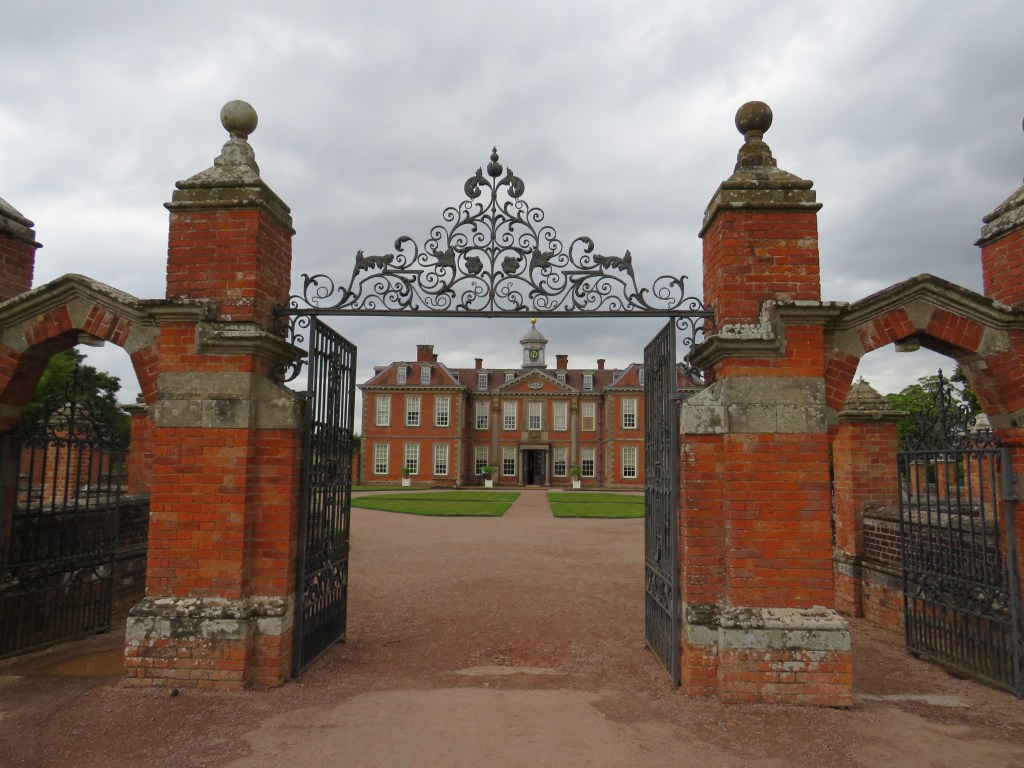
There were ancestral parishes from two branches of the family within reach, so having set up the van on a farm site, we popped to Ambrosden, home of the Verney family, distant ancestors of my paternal grandmother. The church was interesting but unfortunately locked and much of the areas was built close on 300 years after my ancestors set their feet on Ambrosden soil. The soft yellow Cotswold stone is characteristic of the area and only goes to underline how different vernacular architecture is in different parts of the country.

On Friday, I was due to attend day one of the Families in British India Society conference. Having organised several residential conferences, I know how difficult this can be and the organisers had done a very good job. In the morning, I was one of several designated ‘experts’. I fielded some interesting enquires that ranged from what to do with a cache of nineteenth century letters, written from India, to the son of a circus acrobat, whose circus appeared to have been sent to India in the 1880s to entertain the expats. The afternoon brought my talk on Writing your Family History, which is an exercise in trying to get about five hours’ worth of material into a very short talk but it seemed to be very well received. I then listened to Else Churchill talk about sources for British India at the Society of Genealogists’ Library.

It had been raining a great deal in this area and I do mean a great deal, with more than a month’s rain falling in twenty four hours and this on already saturated ground. On our way back to the van, on the only road to the site there is a strategically placed ‘road closed’ sign. We pause. We have no idea how to circumvent this, if indeed we can. A helpful local coming from the allegedly closed road, slowed and asked where we needed to get to. On hearing the answer, he appraises the car and judges that we will be ok if we keep to the right. Fortunately, this proved to be true as the farm entrance was in a dip and there was flood water either side of the only access. Thank goodness for a large car. I suppose the fact that the adjacent village is called Water Stratford, should have rung alarm bells.

With no rain overnight, we were fortunately not stranded on our campsite, so were able to travel to Northamptonshire Family History Society’s conference. We were meeting at the beautiful Delapre Abbey, originally a nunnery, then a stately home and for decades after the Second World War the County Record Office. It then fell into disrepair and was eventually saved from demolition and restored to create an events centre. This first session was from the local archivist, about family history resources in the archives. I don’t know about you but I usually find this kind of talk pretty dull, especially when I have zero family interest in the county concerned. Boy, was this different. Definitely the best talk of its kind I’ve heard for decades. It was delivered with re-enacted incidents from various parish chest documents and an unbounded enthusiasm that would surely send anyone rushing to the archives. Next up was Dave Annal whose talks are always good. This one was called Lying B*st*rds and was about the impact of illegitimacy. It was lovely to catch up with long-standing family history friends over lunch. I was up next and managed to get through my Marginalised Ancestors talk without coughing. This is another exercise in getting several quarts into a pint pot. Colin Chapman, on ‘Sin, Sex and Probate’, provided the end to a day of talks that dovetailed beautifully together.

We decided to stay in the area for an additional day to do more ancestral parish visiting; as if we hadn’t had enough of this on our Northumbrian/Scottish adventures. This part of the family are ancestors of my maternal grandfather and Oxfordshire arrives in my ancestry in the shape of three x great grandmother (twice over – best not to ask) Ann Lamaball. I have written previously about the ridiculous number of Josiah Lamballs dotted around, so the plan was to visit as many home parishes of Josiah Lamballs as possible, pending my working out which the heck is the one I want. I have a theory but in the absence of a baptism record, or indeed any other helpful documentation, I am not sure I will ever be able to satisfactorily confirm the link.

We began the day with a walk round the gardens at what is now Stowe School. The current house at Stowe was built by Viscount Cobham in 1717 but we decided not to tour the house as well. The Georgian landscape gardens were the work of Charles Bridgeman and Sir John Vanbrugh and are pretty hot on vistas and follies. ‘Pretty hot’ did not describe the weather, so we didn’t linger too long. Then the game of hunt the church, six out of seven wasn’t a bad haul, although the tour was enlivened by the additional activity known as ‘dodge the flood’. It is so important to get a real ‘on the ground’ feel for areas where your ancestors lived.

A dry day, so the flood at the site entrance had subsided. The caravan is on grass, so I had some concerns about it getting stuck in the mud but we judiciously parked at the top of the hill and my companion who has been getting caravans out of tricky situations for nearly fifty years was confident. Rain overnight made me wonder if we would be marooned but I needn’t have worried and I am now trying to play catch up with all kinds of things that have been neglected whilst I’ve been gadding about. Not least of these is listening to All About That Place talks by friends, colleagues and others. My own two contributions are due for transmission today and you can listen for free.

Ancestral Ramblings in Northumberland

With visibility as bad as ever, this time accompanied by rain, it was a day to choose a largely indoor activity. We opted for a return visit to nearby Cragside, so my still ailing travelling companion didn’t have far to drive. Little did he suspect that I was softening him up for tours of ancestral parishes, which often involve traversing routes that many might consider do not rate the status of a road. Miraculously, the rain had stopped by the time we arrived so we had a quick look at the Pinetum and a scramble through the perilously steep rock garden. Probably not recommended after rain and when wearing varifocals, so you can’t focus on which slippery rock you are placing your feet.

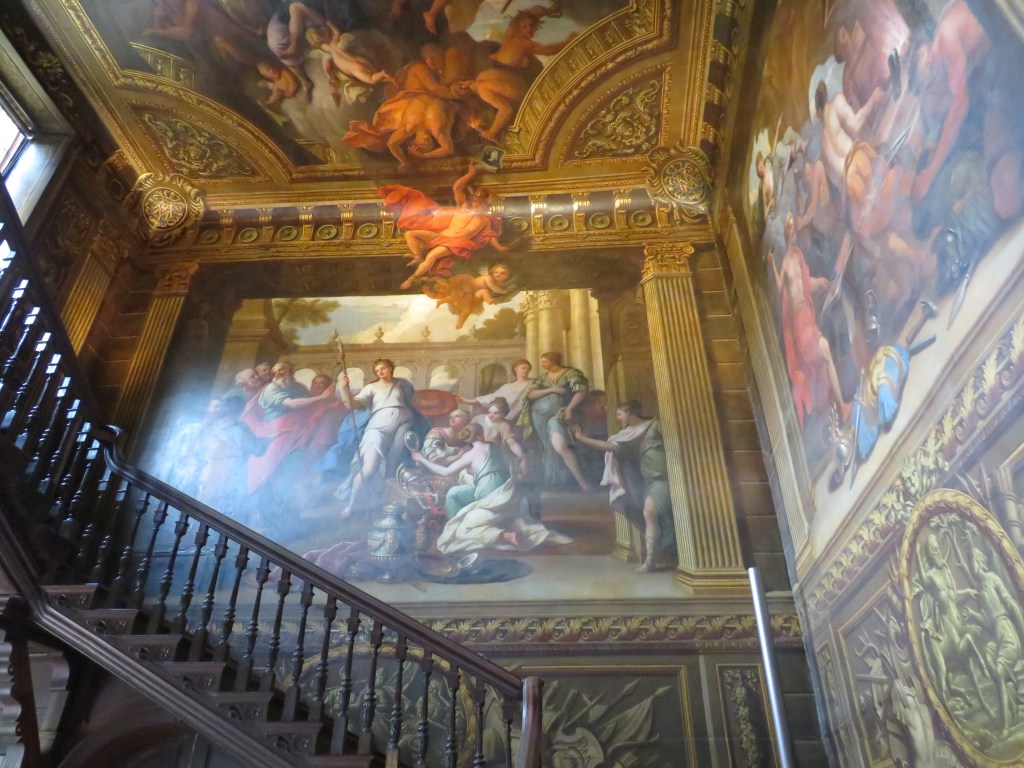
Cragside was built in 1863 by arms manufacturer William Armstrong and it became known for its many innovative feats of engineering; it was the first house in the country to be lit by hydro-electricity. Other attractions for Victorian and Edwardian visitors included central heating, a hydraulic lift and a water-powered roasting spit. I quite liked the heated seats in the billiard room. When Edward VII and Queen Alexandra were due to visit, an impressive extension was built, complete with a massive marble fireplace that stretched from floor to ceiling. Some of the rock face had to be blasted away to make space for the additional rooms. William Watson Armstrong, great nephew of the original William Armstrong, lived in the house in the 1890s and conducted all kinds of experiments with electricity.

It was refreshing to see that there was a quiet room set aside for those who were finding the visit overwhelming.

We opted for honeycomb ice-cream as our midday treat, then set off round the six mile carriage drive. This is at its best when the many rhododendrons are out but was still a diversion on a wet afternoon. We did make the obligatory trip to the antiques centre near to the site before calling it a day.

Finally, a day when there was some visibility, so we set off to visit some ancestral parishes. The issue with ancestral parish visiting, particularly in what is officially the middle of nowhere, is the potential lack of toilet facilities. Undaunted, away we went. First on the list was Alwinton, home of ‘almost certainly my ancestors’ the Newlands and Corbitt families. We were fortunate to be able to actually see the spectacular scenery on the way. On to nearby Elsdon, where the village hall open up to provide toilet facilities, tick. On through Rochester to the little chapel at Byrness. I’ve been here before and was hoping that my some miracle a gravestone that was illegible in vital places four years ago, would now magically be readable.

First problem find the gravestone. The churchyard is on a steep slope and had been ‘rewilded’ with wet grass higher than the gravestones. Unsurprisingly, I failed to find the stone. I looked inside the chapel and discovered a grave plan and gravestone inscriptions that were done more than fifty years ago! Result. Gravestone found and a little more that was readable when the transcription was done in 1973 suggests the ‘almost certainly my ancestor’ must have had an additional marriage. Annoyingly the absence of online registers, or indeed I think any surviving registers, means I am none the wiser. His previous wife certainly isn’t the one eleventy billion people on Ancestry claim as his. At least unless he was a bigamist. The eleventy billion conveniently kill off the ‘almost certainly my ancestress’ in order to make sense of these two marriages. Here is her gravestone, she had several children after this so called second marriages. In any case, this gravestone suggests that he had children before he married my potential ancestress. Did he come from Jedburgh as some evidence suggests, or had the family lived in this area for generation but no records have survived?

Not my ancestor’s gravestone

Family History Round-up

I have been hidden down so many rabbit warrens with family history research this week that I may have grown long ears and a fluffy tail. I’m definitely in full on family history mode. I’ve attacked three major brick walls with a wrecking ball but still they stand, although in one case, I am tempted to climb over the rubble and add the ‘almost certainly my 3x great grandfather’ to my tree.

Problem one, Josiah Lamball, great unusual name you’d think wouldn’t you but no. Every last cousin for generations in and around Bampton, Oxfordshire called their child Josiah. Forget being called Lamball, let’s just throw in a Lambert or Lambeth for good measure. Definitely let’s ignore eleventy billion online trees who are convinced my Josiah descended from another specific Josiah. He didn’t. Look at the original records guys. This Josiah witnesses his father’s will with a totally different signature to the one on my Josiah’s marriage. I am pretty sure I know who his grandfather was and teeny tiny DNA matches agree but as they are all related anyway ………..

Leaving Oxfordshire (virtually) I travel to Northumberland, where I will shortly be literally, hence revisiting these branches now in case I want to add any places to my must visit list. Here, I am still frantically trying confirm my hypotheses that will take me back to my first non-English ancestor. The Elliotts first, who, lovely people, help by leaving wills. Sadly though, these rule out the strongest candidate for the father of Mary Elliott of Chollerton. I am now pinning my hopes on two wills that are not online via the wonderful North East Inheritance Database. I have taken out a second mortgage to order these from the Borthwick.

Don’t get me started on John Newlands who married Ann (Nanny) Corbit in Alwinton. Helpfully, this marriage is also recorded in the register for Oxnam in Roxburghshire, where it seems banns were called. Mortgage for Scotland’s People alert. I’ll give you that this entry says he married Bettie Corbit (Ann’s mother’s name) but it also gives the name of the farm where she lived in Alwinton, so it is the same couple. No burial record for John but I do have a photograph that I took of his gravestone. It has his age and date of death but despite all the photo manipulation in the world I can’t read it. Can I hope that it will have miraculously become legible five years further down the line when I visit? There’s even a highly likely looking baptism, naming a patterns fit etc. etc.. Those eleventy billion people with online trees of epic proportions would agree that this is the one. Except, there’s a much more plausible marriage for this John Newlands. No problem, say the eleventy billion, we will kill off wife number one so he can marry twice. Except, she is still alive, well and bearing children for the next ten years. There are no alternative likely baptisms. Could he have been ‘married’ to two women, one either side of the border at the same time? I suppose so but pretty unlikely. Firmly stuck here.

Aside from all this, I’ve been giving my ‘Researching your British Ancestors and their Communities in the early Twentieth Century’ online course a revamp ready for its next presentation. Unlike Paddy McGuinness in this week’s episode of Who Do You Think You Are? I expect you know the names of your grandparents but how much do you actually know about their lives and the communities in which they grew up? This course is a great springboard for telling the stories of those ancestors. Yes, I know my granny’s biography has been stuck in 1939 for far too long. It is on the to do list I promise. Read the story so far here. Why not join me on the course and find out more about your own grandparents? It is also a great chance for all those One-place studiers out there to focus on their places in the years 1900-1945.

Then I’ve been working on the background to Homes for ‘Fallen Women’ for A Few Forgotten Women, who will be looking at this in November. Next Friday, we are researching pupils from schools for the deaf but that’s another story. Anyway, fallen women. I was seeking a suitable case study, whose story I could record for International Day of the Girl in October. I spent literally a whole day false starting numerous girls before I found one that involves accusations of murder and four generations of illegitimacy. She’s the one!

The All About That Place excitement is hotting up and they now have a website. I have a list as long as my to do list of talks I want to listen to. Many are by friends, others will be new to me speakers with fascinating topics. My own two contributions are an Introduction to the General View of Agriculture, which I try to drag into every talk I give and Over One Under Two – the story of my straw plaiting great great grandmother Anne Stratford from Aston Clinton in Buckinghamshire. She is always up there among my favourite ancestors since I discovered that she grew up in the road where I lived for three years, although I didn’t know I had any connections to Buckinghamshire at the time. This was over forty years ago, I was still being fooled by my uncle saying they were from Cumberland! Ann will also get a mention in the online talk I am giving Women’s Lives on the Farm which is part of the Society of Genealogists ‘Was your Ancestor an Agricultural Labourer? Day There’s still time to sign up for that one.

In other matters. I now almost have shelves so I can unpack the last two post move boxes (not counting the things that live in boxes). I don’t know who needs to know this but if you move a heavy dresser there’s the likelihood that the doors won’t shut when you move it back. I have been risking fingers trying to shove bits of cardboard under one corner whilst the trusty assistant manfully lifts one corner. Dear reader, my fingers survived.

Fun and Games with Family History: encouraging young family historians

On Saturday, I am due to give an online talk to the Society of Genealogists. The brief was to provide family history related ideas, suggestions and activities for young people, with the rapidly approaching school holidays in mind. This is something that I always enjoy and it is vital if we want to encourage the next generation to engage with their history and heritage. ‘Young’ is a bit of a moveable feast in a family history context. If you look at the stereotypical demographic amongst genealogists, ‘young’ could mean anyone under retirement age. For the purposes of my talk, I am aiming slightly lower, at 0-16 year olds, though some of the activities will be fun for adults too. This might also be an opportunity for Family History Societies interested in involving younger people to gather a few ideas.

These days, history is hanging on to its place in the school curriculum by its fingernails. You only have to watch general knowledge quiz shows to realise how woeful the general public’s knowledge of history is and it seems that the reduction of time devoted to history in schools means that the younger people are the worse this gets. Don’t get me wrong, I am well aware how over-full school timetables are and that other subjects, some of which didn’t exist forty years ago, are equally important. It does mean however that history doesn’t get much of a look in and we can be starting with a pretty low knowledge base in some cases.

This has a knock-on effect for older family historians too. I loved history at school but many more senior family historians I talk to did not. In addition, the kind of school history that was taught in the 1950s, 1960s and 1970s was rarely the sort that was the most relevant for us as family historians seeking context for our ancestors’ lives. This means that the dedicated family historian who seeks to extend their genealogical education needs to acquire not just knowledge of research techniques and sources but broader history, most notably social history, as well.

So my talk will be about things that are fun, things that are, for the most part, nothing like school but activities that will encourage a curiosity about the past, remembering of course that, in this context, the past could be the 2010s! Having said ‘nothing like school’, I spent seven years teaching in a school that was not hampered by the National Curriculum and my lessons were often ‘nothing like school’ either!

There is still some space to book on the talk and it will be recorded for watching later if you aren’t free to join the live broadcast. You can book here.

If you are interested in books, videos and games for children relating to the sixteenth and seventeenth centuries (as well as resources for adults) you can find some lists on my Swords and Spindles site. There is also a list of Children’s Historical fiction, across all time periods and age ranges, on the Braund Society website.

I can’t leave the subject of young people without putting in a word for the Next GENeration online Family History Conference on 5 October. This showcases younger speakers and it would be great to show them some support, as well as being informed and entertained. This is a ‘pay what you can afford’ event, so please do just that. You can book here.