This week I have discovered that it is not only possible to waste time counting how many words you have, or perhaps that should be have not, written; there is a refinement to this. There are some nifty websites that will tell you how many unique words you have used. In other words (there’s a pun in there somewhere) how many of your words are different from any other. It also counts the number of times you have used a particular word. So, I have already used ‘words’ four times in this post, not that I needed a website to tell me that. So now I know that my 75,394 words contain 9273 different ones and that 7% of my book is ‘the’ – only 1563 ‘and’s though but I do have a weird writing style that tends to dispense with ‘and’.
I have also been doing some market research aka wasting time on writers’ forums (fora ?). This is encouraging and depressing in equal measure. Having spent my infant years in a decidedly antiquated educational establishment, the words ‘lots’, ‘nice’ and ‘got’ were frowned upon. Now it seems that ‘just’ and ‘seems’ are equally taboo. Cue a swift search through my manuscript to identify these gremlins and decide if they need an equally swift eradication. Then there are adverbs, the gratuitous use of which is high up there on the list of cardinal sins. Now, I am a great fan of the adverb; blame the antiquated educational establishment. Don’t get me wrong, I get the ‘lazy verb’ school of thought. Yes, it is preferable to write ‘he hurried’, rather than ‘he walked quickly’ but there are cases when the more descriptive verb is not enough. What is wrong with ‘he hurried anxiously’? (Not the best example perhaps but give me a break, it’s 6am). Again, I can see that the anxiety can and in many cases should, be conveyed by the context but I do believe adverbs have their role. If you don’t like adverbs please don’t read my work in progress, it won’t be for you.
As part of my one woman mission to eradicate anachronisms (now their use really is a cardinal sin) I have been checking on my use of idiom. Are the phrases I’ve used, often through the mouths of my characters, appropriate to the period I am writing about? It turns out they are and for example, I can tell you that the expression ‘good riddance’ was used in the late eighteenth century and to ‘lord it over’ someone is fine for the late sixteenth century onwards.
 Just as I thought my confidence in my own ability could not get any lower, I go spinning. This is not the extreme gym activity, that really would be depressing but the crafting variety. I manage a business called Swords and Spindles for heaven’s sake (sorry can’t find a date for that one). I live in the seventeenth century. I need to be able to spin. So, having been given a spinning wheel for Christmas, off I go to an unbelievably friendly and helpful local group to learn how to use it. I should at this point explain that the kind of co-ordination that spinning requires, is not really my thing. I can’t even control an electric sewing machine. Then there is the perennial problem with my feet, which are square. This means my shoes are at least two sizes larger than my foot. Add to this my double-jointed toes and the point at which I have any control over what I am pressing on, is relegated to half way down my shoe. This makes controlling the pedal difficult. If you’ve tried patting your head and rubbing your stomach, spinning is more complicated. You have two hands and one leg all doing different things at the same time. Well, I don’t but that’s the principle. My very patient instructor made minor adjustments to my wheel and coped admirably with my incompetence. Despite going too fast, serious over-spinning and trouble with my backward drawing, I did manage to complete a whole bobbin of what is kindly described as ‘designer’ single ply. For ‘designer’ read full of lumps. I even started a second bobbin and did seem to actually be sort of getting the hang of it (mid nineteenth century) a bit by that point. I was already suffering from wool carders’ arms in preparation for the spinning. It is incredibly hard work, now I have added ‘spinners’ back’. Appropriate then that I am off to deliver a talk on ‘occupational hazards’ tonight.
 On the subject of self-doubt, as
  This retreating writers thing seems to be a good idea. At 5am on day one I wrote a fair draft of the end of
  Shortly, I am off for what I am laughingly calling a ‘writer’s retreat’ aka three days in a caravan in the soft south of the county. Part of Daisy’s story takes place in Torquay, which is not a town I know very well, hence the need for a field visit. I spent yesterday researching the back stories of some of the minor characters she encounters during this part of her life and needless to say, found others I would like to include. A newspaper article mentioned that Daisy shared a house with six others whilst in Torquay. The identity of three of these was obvious. I had the task of pinpointing plausible candidates for the other three. I am happy to report that I have positively identified one and have come up with two others who are consistent with the information I have. Google earth suggests that the house they lived in was a three bedroom Victorian terrace and I cannot work out who might realistically have shared a bedroom with whom but perhaps, when I see the property in reality, it may look larger. A servants’ attic would be handy! I’ve also immersed myself in stories of VAD nurses and located routes I need to retrace. Hopefully this visit will enable me to write two middle chapters of the book then I really am on the home straight – yippee!
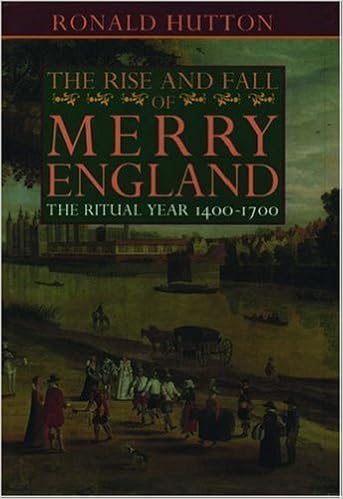 So we open the final ‘window’ in our social history book advent calendar. Given that this time of year is stuffed full of ritual and tradition, it seemed fitting to save Ronald Hutton’s
 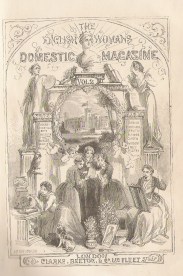 Today’s advent offering sits on my bookshelves but is not actually a book. If that sounds like a Christmas riddle, I will explain. It is a bound volume of the twelve issues of The English Woman’s Domestic Magazine from 1854. It was given to me many years ago by a family history friend (thank you Peggy) and is a real gem. There is no better way to investigate social history than through contemporary writing. There are some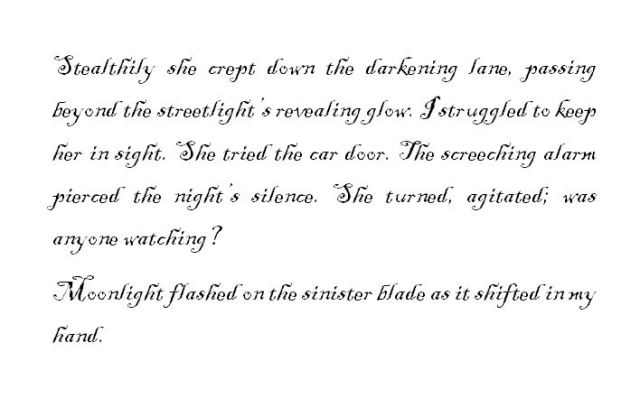
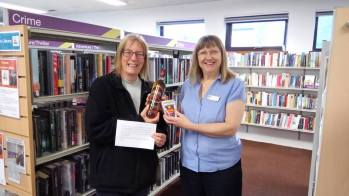 A few weeks ago, I responded to the challenge, issued by a Devon library, to write a fifty word crime story. I am usually accused of using at least four words where one will do, so this was well out of my comfort zone. I do enjoy reading crime novels, primarily those that are set in the past but it is not something I would consider writing.
 I’ll be honest, today’s offering has just arrived on my book shelf, so I have only had time to skim through it but it looks like a gem.
  If anyone is still reading these, congratulations and I refuse to be responsible if you have succumbed to my suggestions and blown your book buying budget. Today I would like to introduce you to Pamela Horn’s
 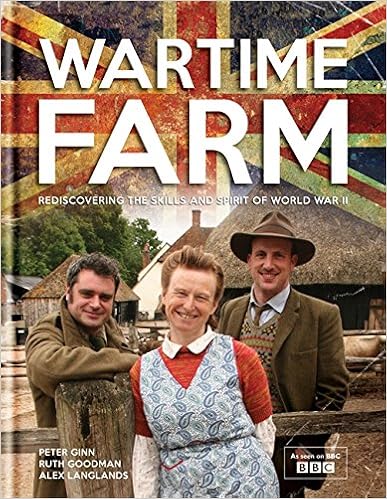 I could not compile a list of social history books and omit the ‘Farm’ series. They have already warranted a couple of passing references in other posts but today’s belongs solely to them. Many people, especially in Britain, are family with BBC TV’s living history series Victorian Farm/Edwardian Farm/Tudor Monastery Farm/Wartime Farm. All of these are now available on DVD and are a wonderful insight into rural life in the period specified. What is less well known is that each series also has an accompanying book; I have them all. These are ‘coffee table’ books: beautifully produced hardbacks with lavish coloured illustrations. There are contemporary illustrations as well as scenes from the programme. I have no idea how well this translates to the e-reader editions. The books are nonetheless well researched and the insight into the experimental archaeology carried out by the authors, Peter Ginn, Ruth Goodman and Alex Langlands, is invaluable. For those who are unfamiliar with the series, three historians/archaeologists spent a year recreating life in a farm of a particular period. The books describe the highs and lows of their experiences.
 The History Interpreter - Janet Few