Up the Garden Path 10

What has been going on in the garden over the past few weeks? you ask. Well, you probably don’t but I will tell you anyway. The most noticeable difference is that we’ve cleared the bed down one side of the garden. This isn’t quite the undertaking you might think as my garden is tiny and much wider than it is deep. The whole of this side was occupied by a very dead bush. It did have the advantages of being a home for birds and the support for some pretty honeysuckle-like climber but it really did have to go. We unearthed a ridiculously leggy hydrangea that had been struggling to reach the light. The bonus is that the soil is good, or it is now we have removed a ton of dead bush roots. What remains is a camellia, that was severely pruned to make room for the shed, a random hollyhock, which seems to be in a very odd place as that bed gets virtually no sun. Mind you, said hollyhock is only about nine inches high and has no flowers. We’ve left the remnants of the honeysuckle-like thing and another climber that may revive and so far planted a Michaelmas Daisy and some white daisies that were donated following their role as a wedding decoration in a local church. The fence behind the bed has been painted to match the one on the other side.

The new water butt is on hold as I may be going to do something with the tarmac in that bit of the garden and don’t want to move a full water butt. The pond now holds water but I haven’t had the chance to acquire any plants for it yet so the water is pretty murky. Despite this, there is evidence of insect life. The vegetable harvest has been unspectacular, although it is always fun to grow them. The pea harvest was minimal, the strawberries even more so, with most of the strawberries being smaller than the peas. The bean succumbed to black fly but I still have garlic and potatoes to harvest. There is a solitary apple on the newly planted apple tree and excitingly, some mini olives on the olive tree. No one actually likes olives but that isn’t the point.

We bumped up the electricity and water bills by power washing the patio. It does look good but there is little grout (if grout is the right term) between the slabs, so plenty of weed growing opportunity. I don’t want to fill the gaps as they prevent the garden turning into a swimming pool when we get heavy rain.

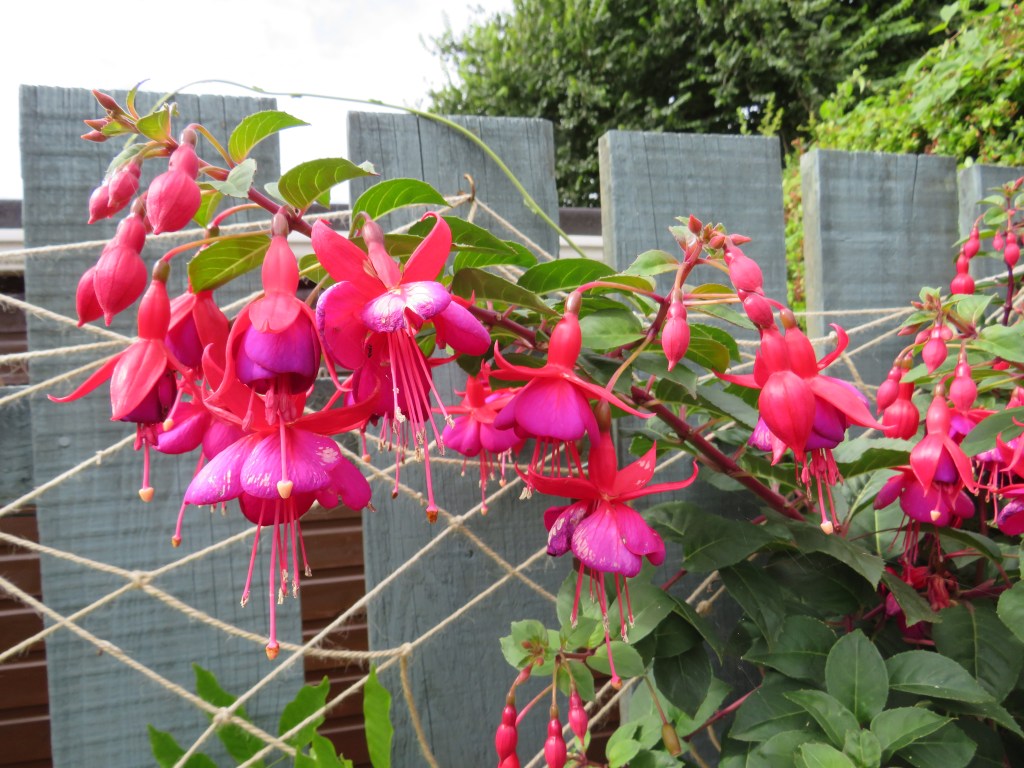
I have been a bit ruthless and taken out the cape fuchsia, which was spreading all over the place. I have shoved some in a pot but that’s its lot. Some of the garden is looking a little tatty as things start to die back, I am leaving some things to go to seed deliberately. I am a bit worried by the white lilac, which looks less than healthy. I have also realised that I have put some things in in the wrong places. I have a massive rudbeckia growing in the planter, which I might attempt to move when it has finished flowering.

I have finally hung the pretty solar lights that were a Christmas present. Now all I have to do is stay up late enough to admire the effect. Mind you, with the nights drawing in (sorry to point that out) it will soon cease to be a problem. Convolvulus wars continue. How can something grow so fast? Hopefully off to buy plants for the newly cleared bed this week. I must practice practicing restraint – hmmm.

All About Places – well mostly

What with the job I must not mention and visiting family, I have been a little quiet lately but behind the scenes things have been as hectic as usual. Firstly, I have been writing and recording my contributions to All About That Place. This is a free online extravaganza of short presentations, all loosely associated with family history places. It runs from 27 September to 6 October. You can find out more and sign up here. There is an international line-up of speakers and there will be so much to learn and enjoy.

Both of my presentations are on 1 October, which is the day dedicated to Town and Country. I chose to record my sessions and you will be able to access them after the event if you can’t make it live. If you do want to watch live, 11am (UK time) is my first slot, when I will be telling the story of my great great grandmother, Anne Stratford. Anne counts as an ancestor that I am particularly attached to. After I had moved away, having spent three years living in Buckinghamshire, I discovered that the road I’d been living in was the road where Anne lived as a child. Until that time, I had no idea that I had any connections to Buckinghamshire. If that doesn’t make the hairs stand up on the back of your neck, nothing will.

The talk is about Victorian life in rural Buckinghamshire and the dependence of the community on the straw plait trade, with a bit of Swing rioting thrown in for good measure. Inevitably, the original talk was far too long, despite my talking very fast. I will also be mentioning Anne when I am talking about the role of women in farming communities for the Society of Genealogists on 30 August. You can join this day, which includes other excellent presentations about researching agricultural labouring ancestors, online, though this one is a paid event.

What is lovely about All About that Place is that so many of my friends are also presenting. Seven of the A Few Forgotten Women team applied to speak and all were accepted, so we have nine talks on the programme between us, most of which are Forgotten Women based. We are also frantically getting ready for the next Forgotten Women communal research day, known as Forgotten Women Friday, on 24 August, which focusses on pupils from two schools for the deaf.

Talk two for All About that Place is at 2.00pm and is an introduction to The General View of Agriculture, an invaluable series of books that don’t get anything like enough prominence. Come along, or listen after the event, to find out what you might learn about your rural ancestors from these volumes.

There are various hazards when recording talks. Now that I have no landline, I can at least turn the phone off but I am left with the seagulls, which are fine in winter when you can shut doors and windows but in summer you have to hope they are elsewhere or boil.

More online fun starting next week with another run of my course for Pharos Teaching, which helps set folk on the right path to writing and interesting family history. This comes with the (optional) opportunity to have a short family history story critiqued. The prospect of this always engenders mild panic but basically I just comment on particular strengths and make constructive (I hope!) suggestions for improvement. Last time I looked there were still spaces, so why not decide that now if the time to put fingers to keyboard and make some sort of coherent end product from all those research notes.

I also have edits of my next book about the history of women at work to work through – busy times.

A Few Days in Malvern Part 3

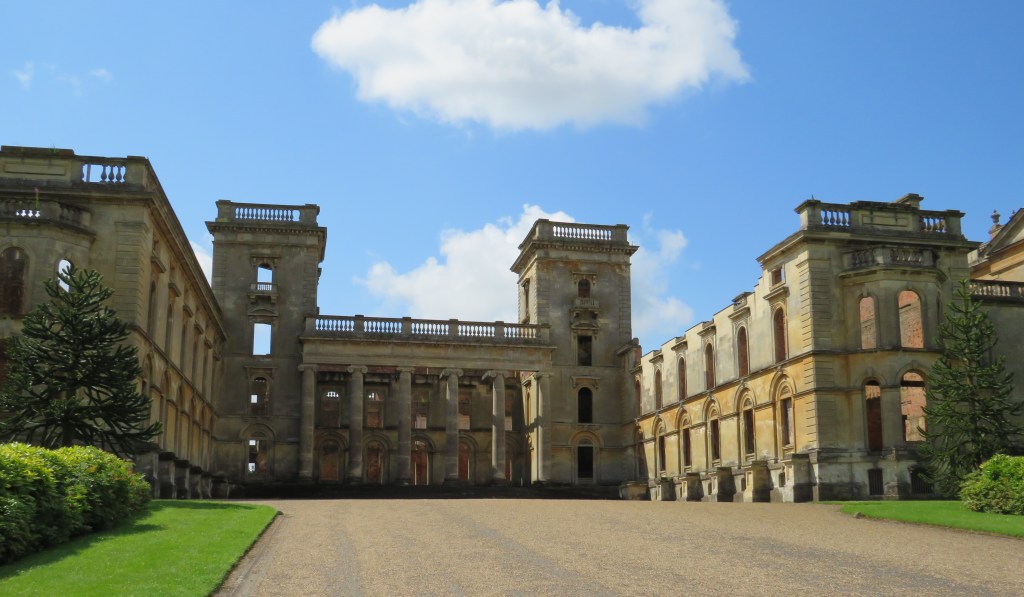
We ventured north again and after a minor satnav fail we arrived at Witley Court, this time exploiting our English Heritage life membership. After a walk up through the woods to the house we were just in time for a short talk about the history of the house by Stephen. Built on the site of a Medieval Manor owned by the Cooksey family, who married into the Russells, the current Witley Court began life in the 1630s as a redbrick Jacobean manor house. The Russells supported the king in the English Civil War and Witley was sold in 1655, probably to pay the price for being on the wrong side.

Eight generations of Thomas Foleys then owned the house. Their money came from iron works and as such they had to strive to become accepted as landed gentry. To this end, they purchased a great deal of land, as well as making substantial additions to the house. In order to be fashionable, the red brick was covered with stucco. In the early nineteenth century, an advantageous marriage provided funds to employ John Nash to design a huge portico and make other changes.

In 1833, the estate was sold to William Ward. The owner of more than 200 coal mines, William was one of the richest men in the country, due in part to the enslavement of others. He was knighted to become the 1st Earl of Dudley. In the 1850s, Ward employed the architect Samuel Daukes to make further alterations in the then popular Italianate  style. This include a new curved wing and a large conservatory. At the same time, the stucco was replaced by a facing of Bath stone. Lavish entertainments were held, with the Prince of Wales (later Edward VII) and his entourage visiting. Guests would stroll round the gardens between banquet courses and find that whilst they were eating one course, the gardeners had replanted the beds with different plants.

In 1920, Sir Herbert Smith a carpet manufacturer bought the court. He had been knighted for chairing the little known carpet rationing committee in World War One. The house was only partly used and a devasting fire in 1937 destroyed half the house. Lacking the funds to repair the building, the contents of the remaining half were sold off and some of the building materials, including the lead from the roofs, were sold for scrap. Neglect took a further toll and eventually, in 1972, the forerunner of English Heritage acquired the site and began a programme of preservation.

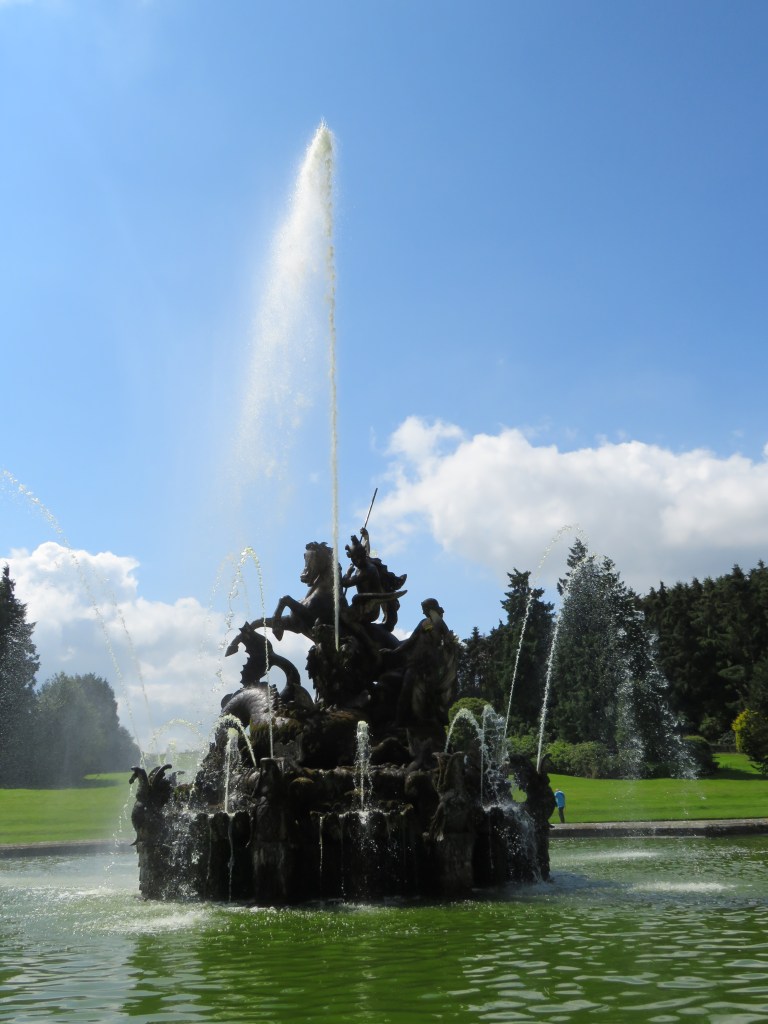
We had a long chat with the head gardener who told us that the elaborate formal garden is an exact copy of that designed in the 1850s by William Andrews Nesfield. This included replicating the mistakes in the elaborate swirling box hedges that were planted in the nineteenth century. Nesfield’s enormous Baroque fountain is quite a feature. The sculpture is based on the story of Perseus and Andromeda and on the hour each hour the fountain plays for about ten minutes. The main jet reaches more than thirty five metres high.  The pumps were originally steam driven but since restoration in 2002, they are electric. Witley village was in the area where the fountain now stands but not wanting to be too close to the villagers, the family had the occupants moved out and the cottages demolished.

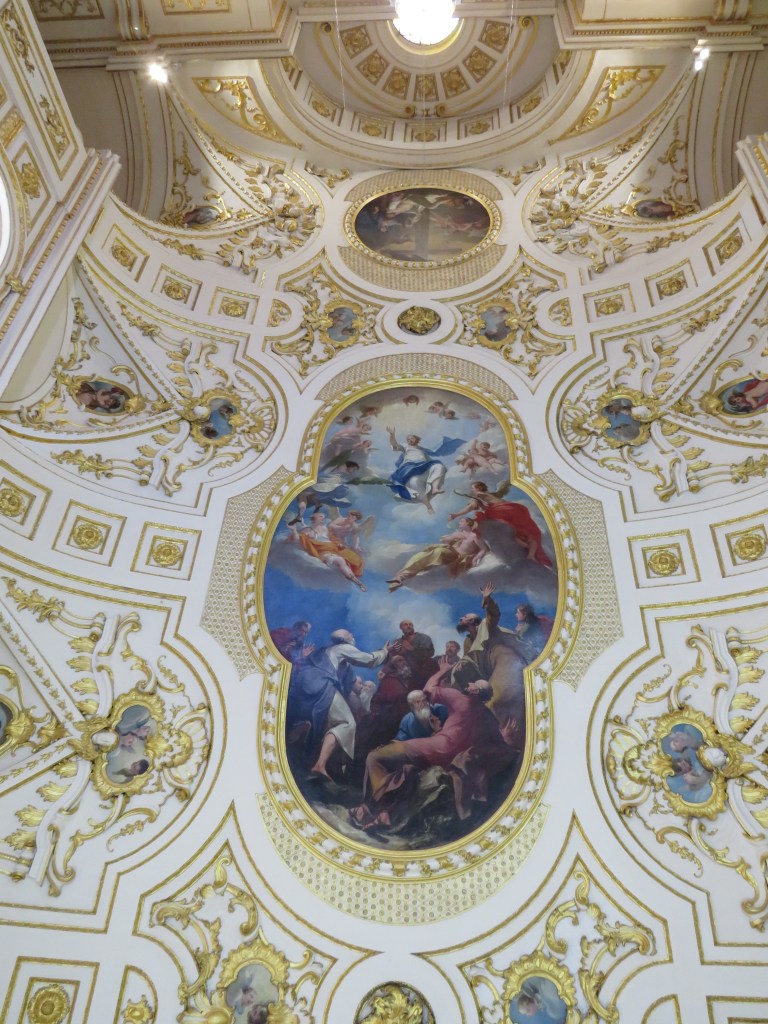
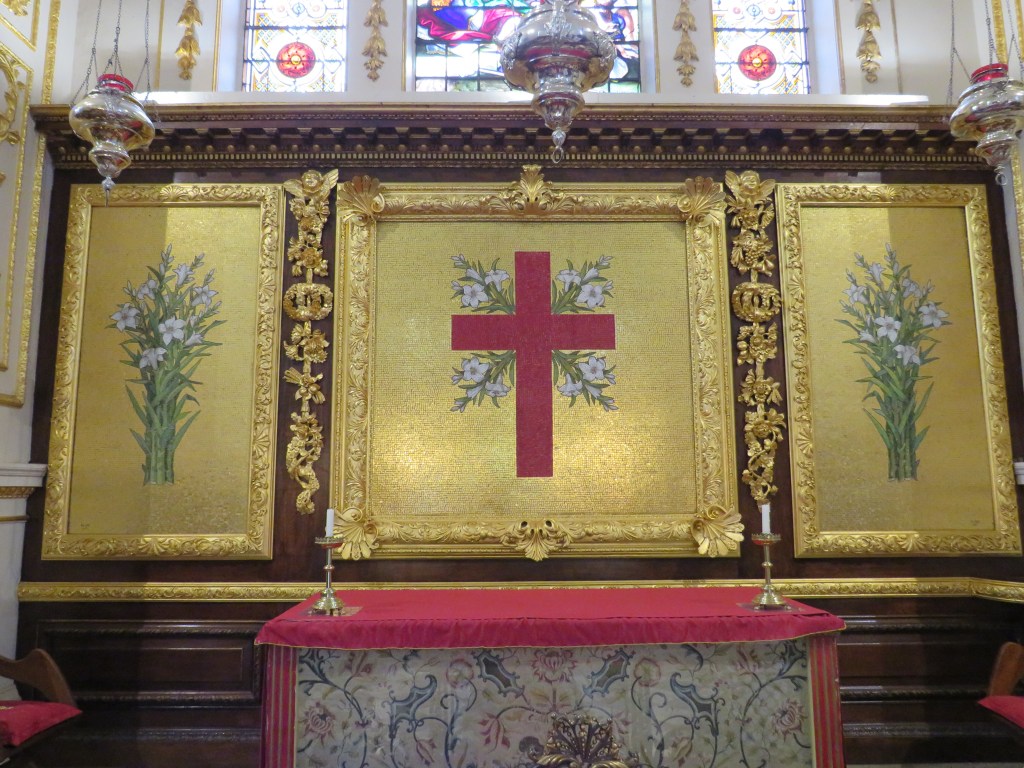
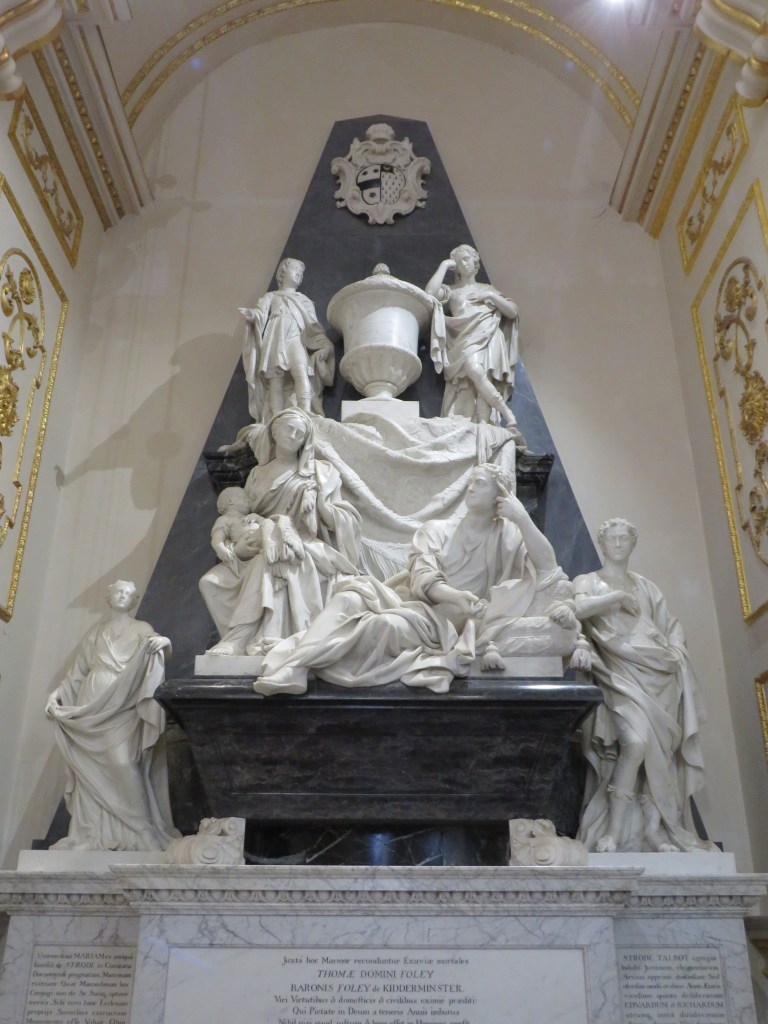
We were told that the neighbouring church, which is still a functioning parish church, was ‘not like other churches’ and Stephen was not wrong. Built by the Foleys in 1735, to replace the previous church, many of the fittings were purchased twelve years later from a private chapel at Cannons Park in London. Billed as ‘the finest Baroque church in the country’ this is probably not an extravagant claim. If we thought the church at Brockhampton was ornate, it had nothing on this. With painted ceilings by Antonio Bellucci, and copious amounts of gilding, it was to be seen to be believed. The church is now designated as a Major Church, one of the 320 most significant in the country.

Then the obligatory cake sampling trip to the tea rooms. Today’s toffee cake rated highly.

We started our last day by travelling westward to St Wulstan’s RSPB Reserve where we had a brief walk amidst a distinct lack of wildlife. We drove up to the base of the Malvern Hills and arrived a little early to  visit Picton Garden. We were allowed in anyway. This small garden is home to the national collection of Michaelmas Daisies. To me a Michaelmas Daisy is a Michaelmas Daisy but no. The nursery cultivates 430 different varieties. Michaelmas Daisy was on my plants wanted list so I chose one. A bit more of a drive through the Malvern Hills. The clue is in the name and we felt that hill walking might be a little strenuous for us. In addition, the weather was a bit uncertain, so it was off to visit a final family history related parish before returning to the van. Then home the following day.

A Few Days in Malvern Part 2

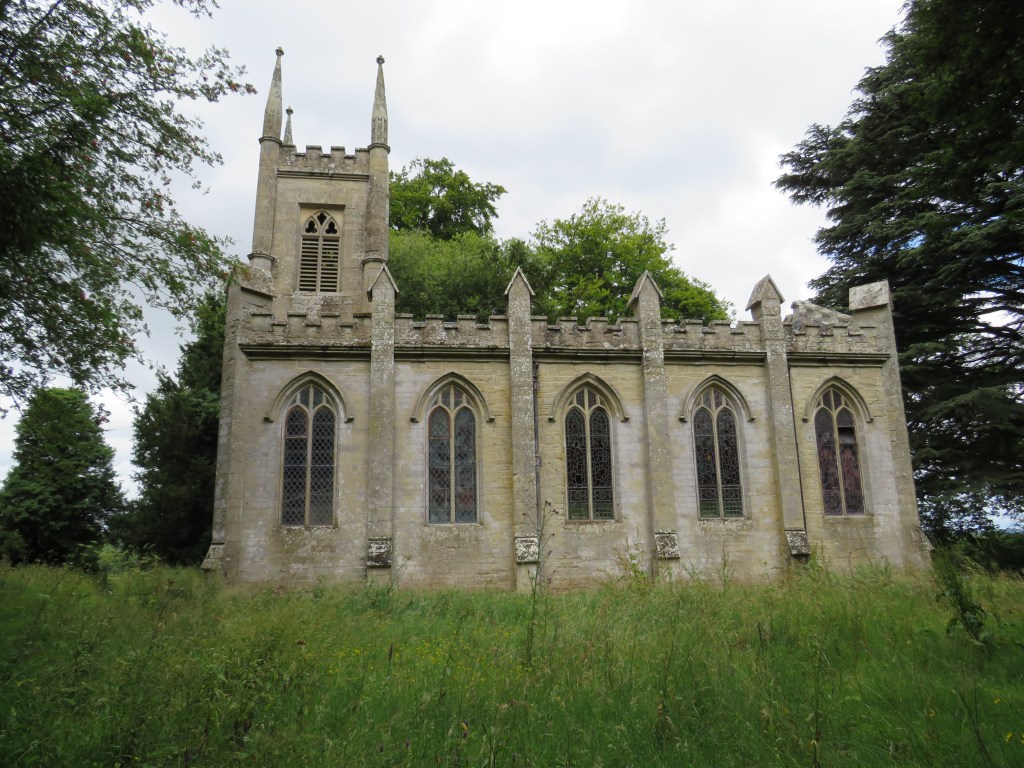
You’d think I would remember that it isn’t a great idea to tour churches on a Sunday but no. With my children’s family history in mind, we went for drive and walk round Hanley Swan and Hanley Castle. Sadly, most of the buildings are too late to have been family residences but we were able to get an overview of the area. We arrived at the church at 10.15am. Good news, the service wasn’t until 11am and the church allegedly was open from 10am daily, except that today it wasn’t. I was able to photograph the outside though.

On to Upton on Severn. This was Blues Festival weekend so roads were closed and the streets were crammed with street food vans, buskers, festival outlets and people. It made for a lively vibe but not ideal for photographing churches, one of which was a gig venue so I couldn’t even get near to it.

After an afternoon back in the van we headed to Llanthony Secunda Priory in Gloucester for an outdoor Fisherman’s Friends Concert. A very quick stop off to look at Ashleworth Tithe Barn on the way and we reached Gloucester. There was a slight issue accessing a car park that didn’t require us to do something complicated online on our phones but that overcome we took a short walk through the docks to the venue. The Augustinian Priory was established in 1136 as a second house to Llanthony Prima in Wales.

We were carrying our own chairs and I decided I could get away without encumbering myself with the umbrella or a coat in addition to my fleecy zip up top. As black clouds loomed I doubted this ‘wisdom’ but the umbrella was not needed. By the end, I did wish I had brought my coat but my noble companion sacrificed his. What is it about open air venues that makes people think it is ok to talk loudly throughout? We were probably the only audience members not to avail ourselves of the bar and food offerings at inflated prices. The concert was excellent of course but there was a teeny difficulty locating the car park for our homeward journey. We found a car park easily enough, just not the right one. It wasn’t helped by the fact that places looked familiar because we’d driven past them in the quest for a car park in the first place. I am sure we could have done something clever with our phones when we got out of the car but ‘clever with our phones’ is not us. After what I will describe as a ‘slight detour’ round Gloucester Docks thankfully the car hove into sight.

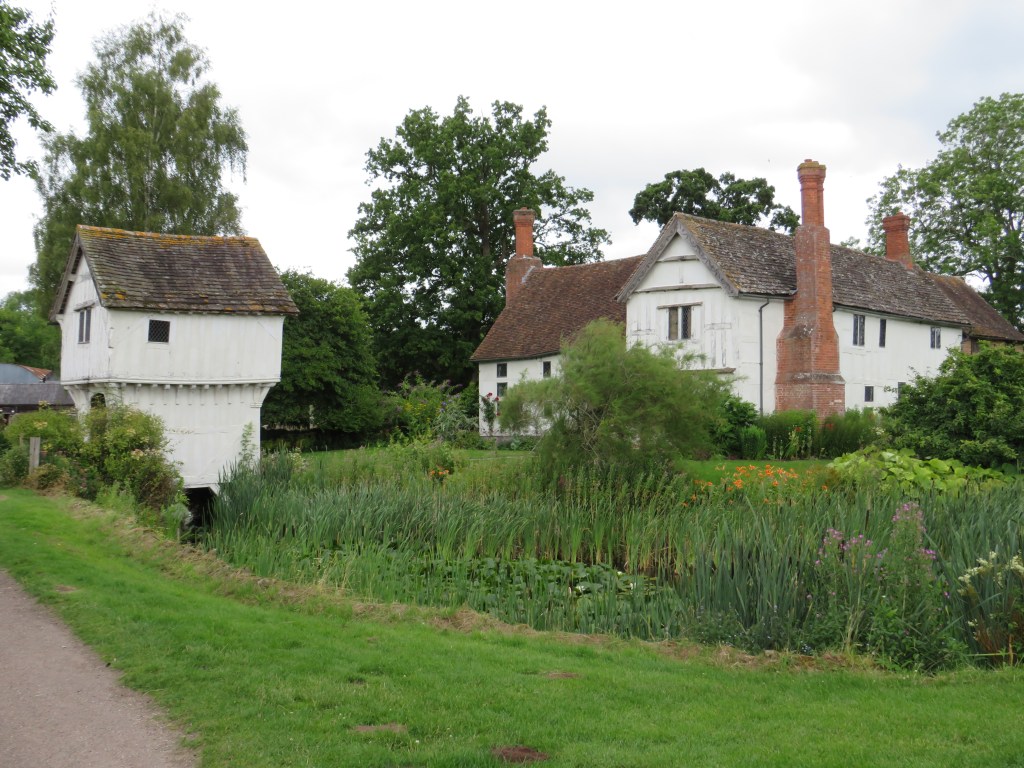
The next day, we headed north into Herefordshire to visit the Brockhampton Estate, definitely highly recommended. First up was the fifteenth century house with its sixteenth century gatehouse. The archetypal Tudor timber-framed home sports white wood and not the traditional black but apparently this is historically accurate, Black and white was not popularised until the Victorian era, when tar replaced limewash on the wood. Tar however was later found to trap moisture and cause rot. Brockhampton house’s wood has been limewashed and was therefore white. The original, cruck-framed building was constructed in the 1420s for John Domulton and his wife Emma Brockhampton. Later owners were the Barneby and then the related Lutley families. Renovations in the 1870s were overseen by John Chessell Buckler. Buckler was known for his work on Lincoln Cathedral. He was also the runner up for the design of the new Houses of Parliament when they were rebuilt after a fire in 1834. By the nineteenth century the house, was the home of estate workers. The whole estate was given to the National Trust in 1946.

The rooms in the house have been furnished to show different eras of occupation from the 1400s to the 1950s. The table in the main hall was set with square wooden trenchers. Each one contained a mini biography of a different inhabitant of the house from its earliest times until the twentieth century. There were plenty of interactive opportunities and items that could be handled. The house should be commended for its efforts to be disabled friendly, with captions in braille, and typed descriptions of each room, that are suitable for those who can turn text into audio. You could also borrow noise cancelling headphones and fidget toys.

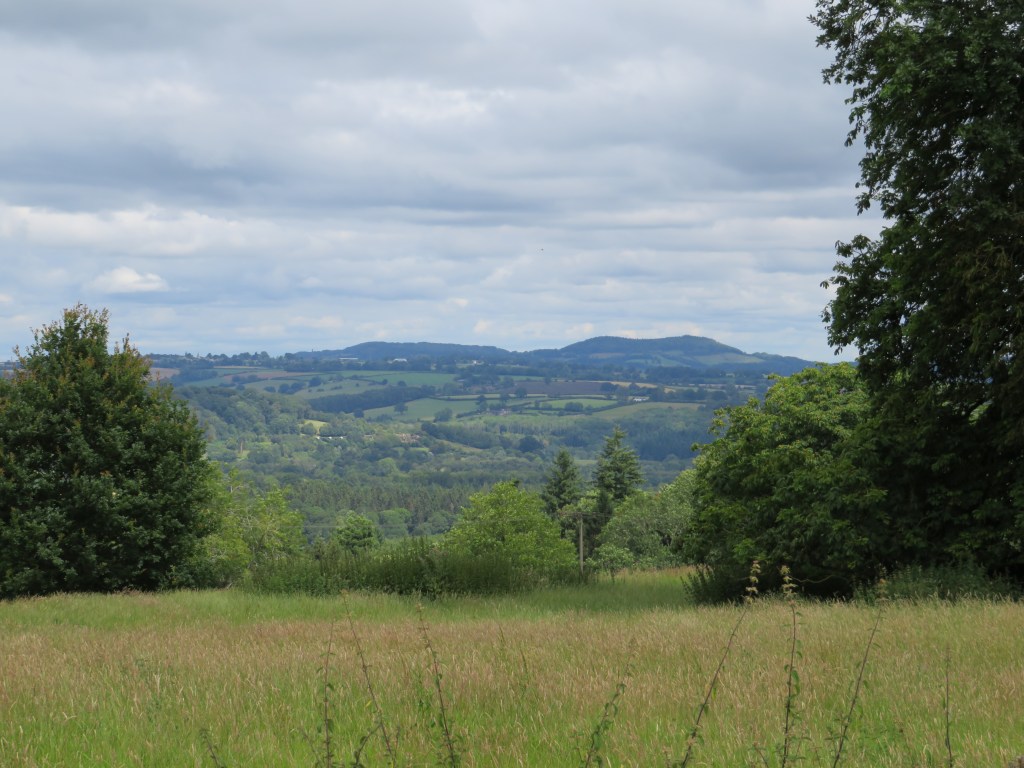
Armed with a map of the estate, we decided to embark on the yellow route walk. To be fair, this was flagged as being ‘hard’ but we have cut our walking legs on ‘strenuous’ sections of the coastal footpath and we rashly decided that National Trust’s ‘hard’ might not be too bad. It was more difficult than we anticipated, mainly because it was uphill, at least on the way out. Once at the top of the hill, we swapped to the red route to see the advertised views. The views were good but perhaps not worth the mile and a half uphill walk to get there, especially as we could have driven up there and parked in an auxiliary car park.

We looked round the chapel, built in the late eighteenth century in a very ornate in style, with perhaps a Russian influence in the panel behind the altar.

Next, to another parish church with family history connections before returning to the van via a supermarket shop.

A Few Days in Malvern

As the rigors of the job I must not mention were abating, last week, we embarked on a short trip to Worcestershire. Years ago, we began a campaign to spend a few days in every county and although this has somewhat fallen by the wayside, Worcestershire was not one we had ticked off, so this was an opportunity to remedy that.

After a slight pause, because we set off without the extending mirrors that allow the driver to see round the caravan, we were on our way to Malvern. The journey was smooth and uneventful but true to form, we found ourselves travelling on the hottest day of the year so far. This was designed to be an opportunity to relax and twenty eight degrees was too hot for us to want to do much beyond rest in the van, so apart from a wander round the site once it began to cool a little, that was it for the day.

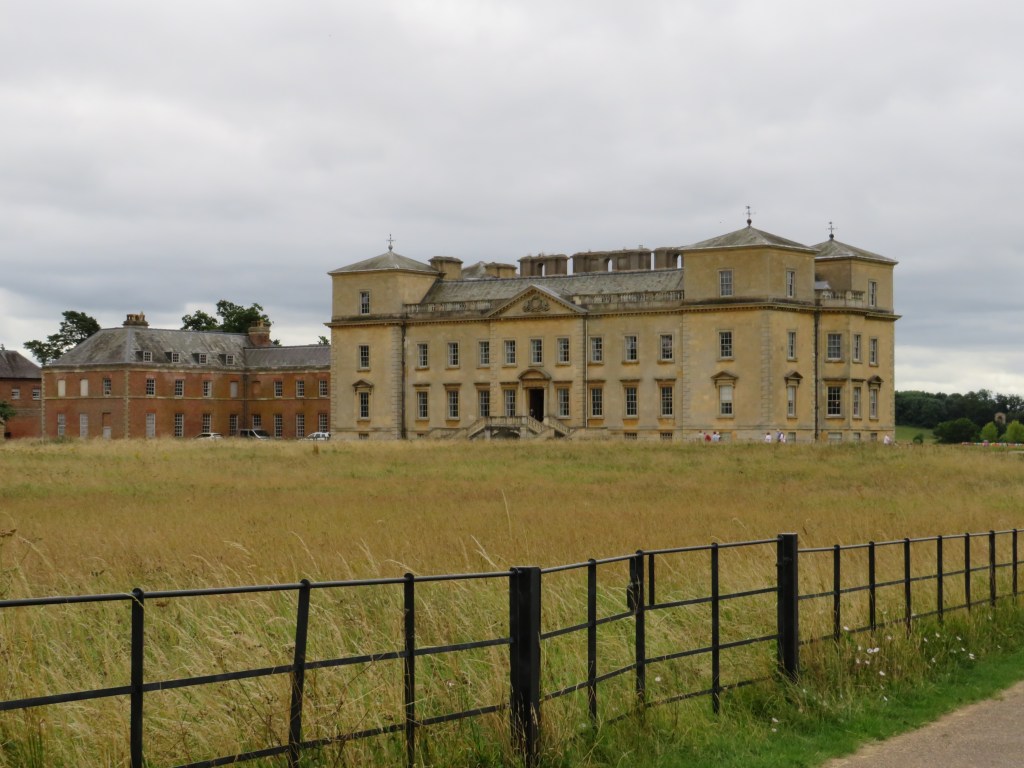
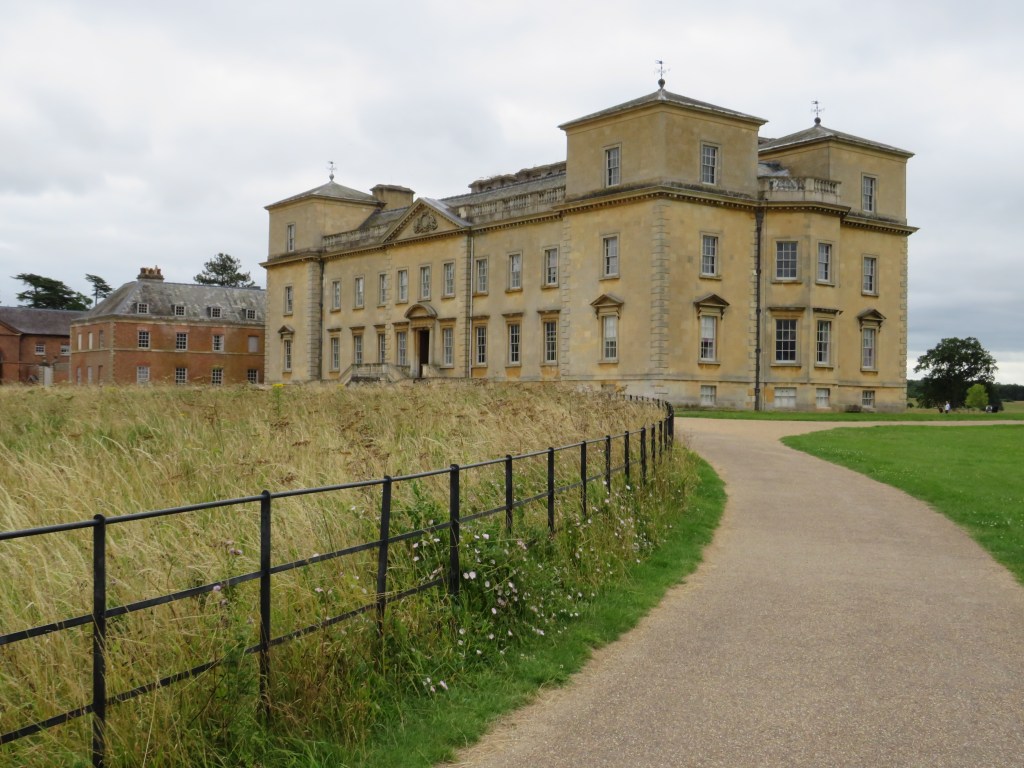
The next day was forecast to be the rainiest day of our trip, so we decide to visit somewhere with some indoor opportunities. Croome House was our destination of choice. It turned out that today Croome was the location for the start of a bike race so, although we arrived as it opened, the car park was almost full. It was a bit of a walk through the park to the house but the views were impressive. Guides were allegedly thin on the ground and Mike seemed to pop up in every room. We learned a little of the history from a rather whimsical video.

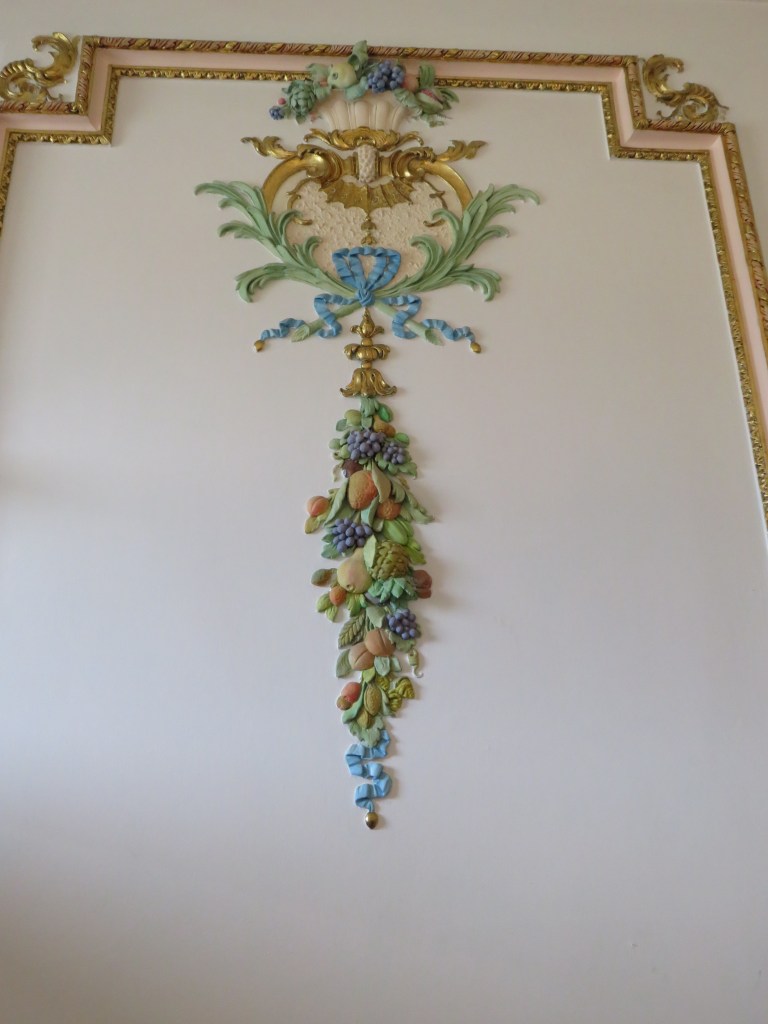
Originally the home of the Earls of Coventry, George William, the 6th Earl, inherited Croome on the death of his brother in 1744. He had a utopian vision to create the perfect home, in an idyllic setting. He gathered like-minded visionaries to bring his dream to fruition, including Robert Adam, James Wyatt and Lancelot (later ‘Capability’) Brown. The red brick house was transformed into a Bath stone-faced Palladian mansion set in parkland. The gardens contained imported plants from across the world. When the 8th Earl died, in 1843, many plants were sold off. The National Trust, who own Croome, are gradually replanting shrubberies and trees to Brown’s design but we seemed to miss the evidence of this.

The 9th Earl was noted for his racehorses and also for his herd of Herefordshire cattle, some of which were sold to Australia. Croome was requisitioned during the Second World War and RAF Defford was built in the parkland. After the war, Croome was used as a Catholic Boarding School, then a centre for Hari Krishna and finally a private home, before the National Trust took over in the early twenty-first century. The house has been stripped of almost all its furniture and artefacts and is now used more as a museum space, home to some art installations. One of these was an ‘archive’, a spiral bookcase full of box files, some of which contain information or artefacts relating to the house at various stages of its history.

We were fortunate to have visited on a day when Peter was on duty. Peter does fortnightly tours telling the story of the house’s time as a school. He kept us entertained for nearly two hours with his account of the punitive regime that he endured before he moved to the senior school at the age of thirteen.

We also looked at the RAF Defford museum, which is in the grounds. The airfield was the home of radar testing and the site of the world’s first fully automated aircraft landing. Most of the buildings were demolished, leaving just the runway and a handful of buildings beyond the wood as a reminder of the site’s time as an airfield.

We timed our visit well as the rain began just as we were leaving. We did make a very quick detour to photograph a church of potential family history interest at Pirton.

Things that go Wrong

It has been a bit of a week regarding things that should work. Firstly, the car. I don’t use my car a great deal so a planned solo trip some thirty miles over the border into Cornwall was a big event for it and me. Off I set. About twenty miles in, a little orange light showed up ABS. I was aware that this was something to do with brakes, a tad essential but I thought I’d keep going and hope it went away. Next a red light that looked like someone with a ball on their lap. I guessed (correctly as it turned out) that this was something to do with the airbag. I have been in a car when the airbag goes off; it definitely hadn’t but this now looked more serious so I pulled into a layby to summon assistance. Said trusty assistant, who was some forty minutes away, said ‘you are nearly there, keep going slowly and I’ll come along and have a look when you get there’.

I hang up and turn the ignition. Nothing, zilch, not even the strangled cow coughing noise. Another call to the trusty assistant who is on his way. I am now in a layby, in full sun, on the hottest day of the year with nothing at all to do for forty minutes. I am really bad at ‘nothing to do’. I am reluctant to use my phone whose battery drains like something that drains very quickly. The only blessing was I had opened the windows, which of course are electric, before everything died. I run through Cornish vocabulary in my head. This is frustrating as I have no means of looking things up when I can’t remember. The large lorry in front of me pulls out leaving a blessed patch of shade. More in desperation than hope, I try the ignition, ta dah! All working, I pull forward.

Trusty assistant and I have tracking things on our phones, not because we are obsessed with what the other is doing but in case I go for a walk on my own and fall in a ditch. I can see he is only ten minutes away. He arrives and agrees to follow me the remaining miles to my destination. We set off. A few minutes later the yellow light reappears, then the red light. I persevere. Just as I reach the outskirts of a town the CD player stops, then a few seconds later so does the car, with a gentle sort of ‘I’ve had enough’, it grinds to a halt. Good job I was only going slowly. I am now on the main road through north Cornwall, stationary, just as there are bollards to aid crossing the road on my right. My trusty assistant is behind me. We are totally blocking very a busy road. He rushes to my aid. I am not sure that a man of his advancing years should be pushing a car when the temperature is in the high twenties but needs must. Two slightly more appropriate car-pushers come to assist. My steering has locked, I am now stuck on a high kerb. We rectify this and I am able to pull on to a grass verge outside a vets, with my assistant behind me. A very long queue of traffic escapes. By now it is a good two hours since I left home. A big shout out to Penbode Vets in Bude. When I went to explain why I was parked on their verge, they offered refreshment, toilet facilities (hurrah) and the use of their air conditioned waiting room. I availed myself of one of these.

We ring the recovery service; I am covered under the breakdown cover of the trusty assistant. Oh. It turns out I am not, that’s new. The lovely vets have also provided the phone number of the garage. They can recover me in about an hour for an eye-watering sum (the garage is less than half a mile away) but can’t look at my car for a fortnight. Alternatively, they can recover me to a garage near home for very little extra. We opt for that. Trusty assistant meanwhile delivers me to where I was heading, only an hour late and returns to guard the car. In the end he was there two hours, then bless him, he waited to collect me from my day out. I did leave early but at least it wasn’t a totally wasted trip, even if it was an expensive one.

Then the dishwasher. I am new to dishwashers; this one came with the house. Apart from commercial dishwashers in places of work, I had never had anything to do with dishwashers before. I’ve been using this one a couple of times a week since I moved. I’ve run ‘cleaning washes’. I’ve even taken out the filter thingy and given it a bit of a wash, Increasingly though, things have come out of the dishwasher covered in stuck on gritty mank. I sought advice from dishwasher owning friends (pretty much everyone I know). ‘Maybe you’ve run out of salt’. Salt? Dishwashers need salt? ‘Or rinse aid’. This was getting more complicated by the minute. Sure enough I have red lights that indicate that I need both rinse aid and salt, who knew? ‘Oh and clean out the blades’. With a bit of tugging I remove the blades and they are best described as pretty unsavoury. With the aid of a needle and tweezers I even removed a piece of tape that ties up bread bags from those tiny holes. Some more expensive ‘three in one’ tablets were purchased. To be fair, the ones I inherited were also three in one but were probably a couple of years old. Do dishwasher tablets go out of date? The first wash went like a dream, the second one not quite so much – no mank but not everything was clean. Maybe I still need salt and rinse aid.

I am still not convinced I ‘get’ dishwashers. Mine is meant to take ten place settings – goodness knows how. My plates are too large for the underneath section and surely what you really want to wash is pots and pans. I can’t fit in all our roast dinner for two pots and pans without piling them up, which I understand is a no no. So my understanding is, you have to rinse stuff off (probably more than I have been) before you put it in and some stuff doesn’t always get clean, so you need to wash it afterwards, so really you might just as well wash it properly by hand in the first place. At the moment it just seems like a way to use electricity and a lot more water for not great results. It is however still a bit of a novelty, so I may buy the salt and rinse aid and persevere for a bit. The jury is definitely out.

Oh and good news about the car. It was a faulty alternator. This was new only a couple of months ago, so they replaced it totally free of charge, not even charging for the labour. Good job I went to my own garage and not the one near to where I ground to a spectacular halt.

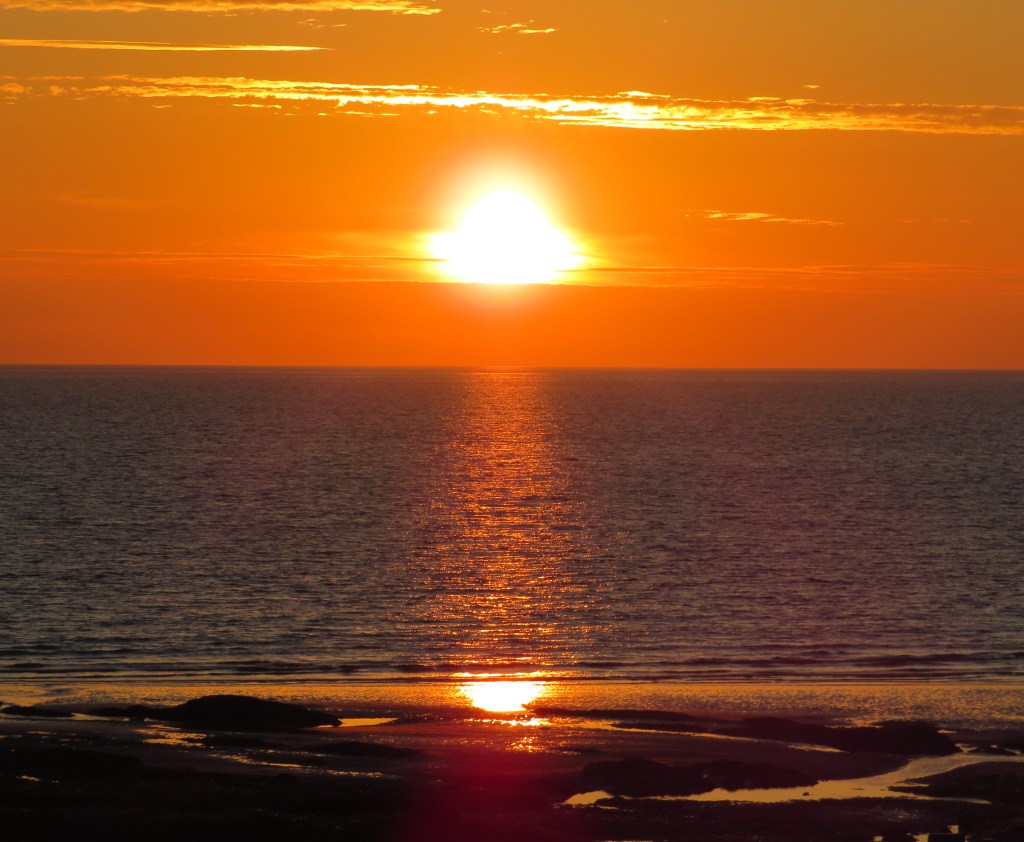
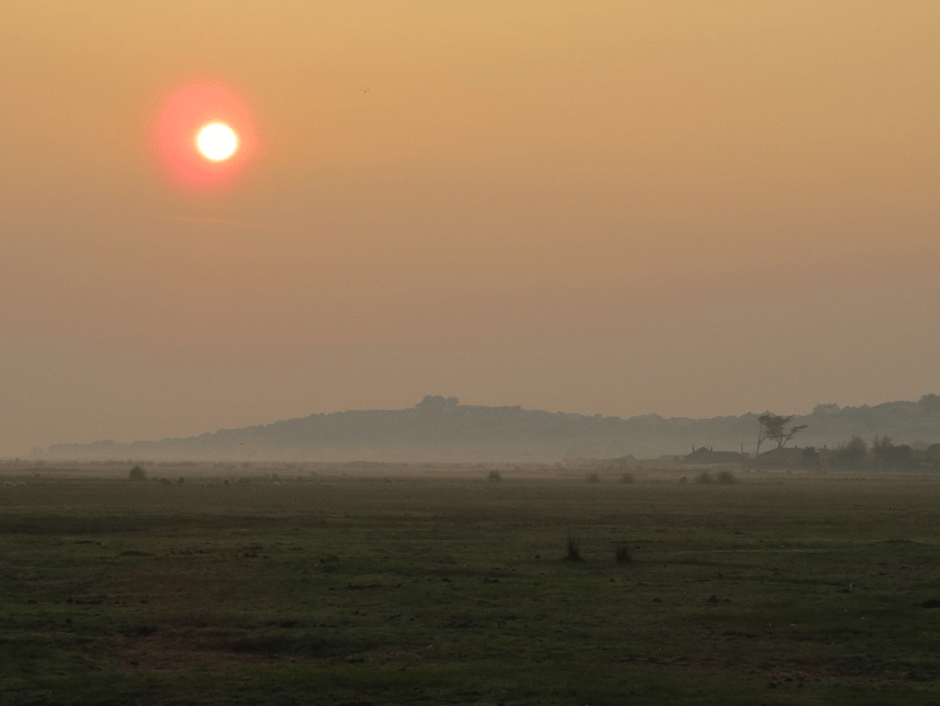
Just because things are good, here is last week’s sunset, minutes from home.

Up the Garden Path 9

I am pleased to report that the summerhouse now has a roof. It was a tad concerning watching my trusty assistant climb on a wooden roof whose strength was an unknown quantity but this passed without incident. Now if I could find a way of getting baked on masking tape glue off the windows all would be well (I’ve tried white spirit).

The pond/sink is causing a few issues as sinks by definition have a plug hole. This isn’t the sort that you could just put a plug in, (supposing I had one) as it is flush with the bottom of the sink. First attempt was fibre glass, which didn’t work, strange this as this is how the fisherman of my acquaintance fixes holes in his boat. I can only hope, for his sake, it works better on boats. Next attempt was to try to seal some spare shed roofing felt over the hole. I was never very convinced by that one and it failed miserably. Now we’ve emptied half a tube of the sealant you put round baths into what remains unsealed of the fibre-glassed plug hole. We are waiting to see if that works.

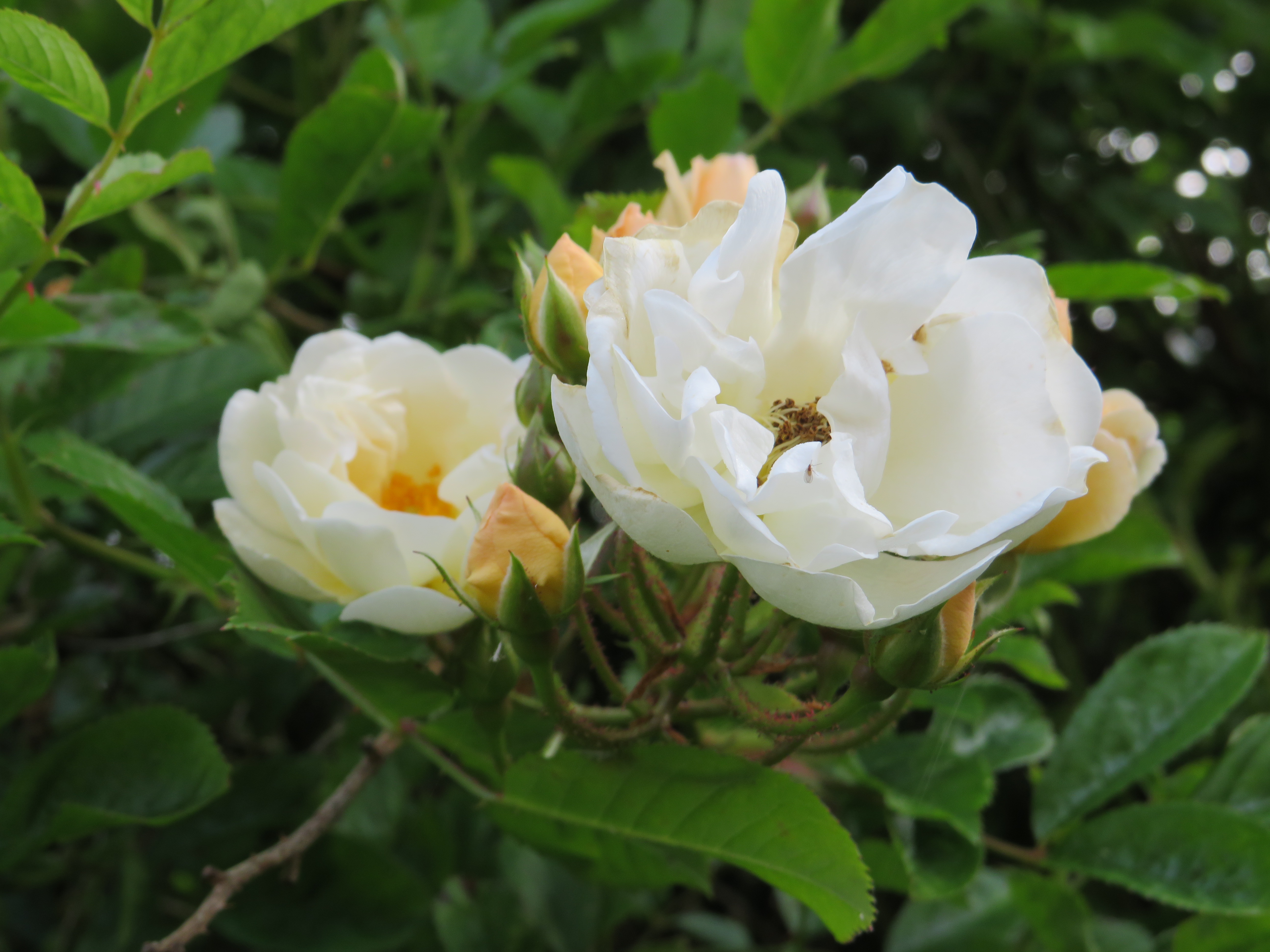
Flowers are flowering bravely, with a rose, a fuchsia and a hydrangea coming to light. The convolvulus is still convoluting away. Annoyingly, much of it is coming from the other side of the fence so can’t be dug up. I’ve harvested the first three tiny tomatoes from my solitary tomato plant. The remaining  tomatoes look like they may be pea sized.

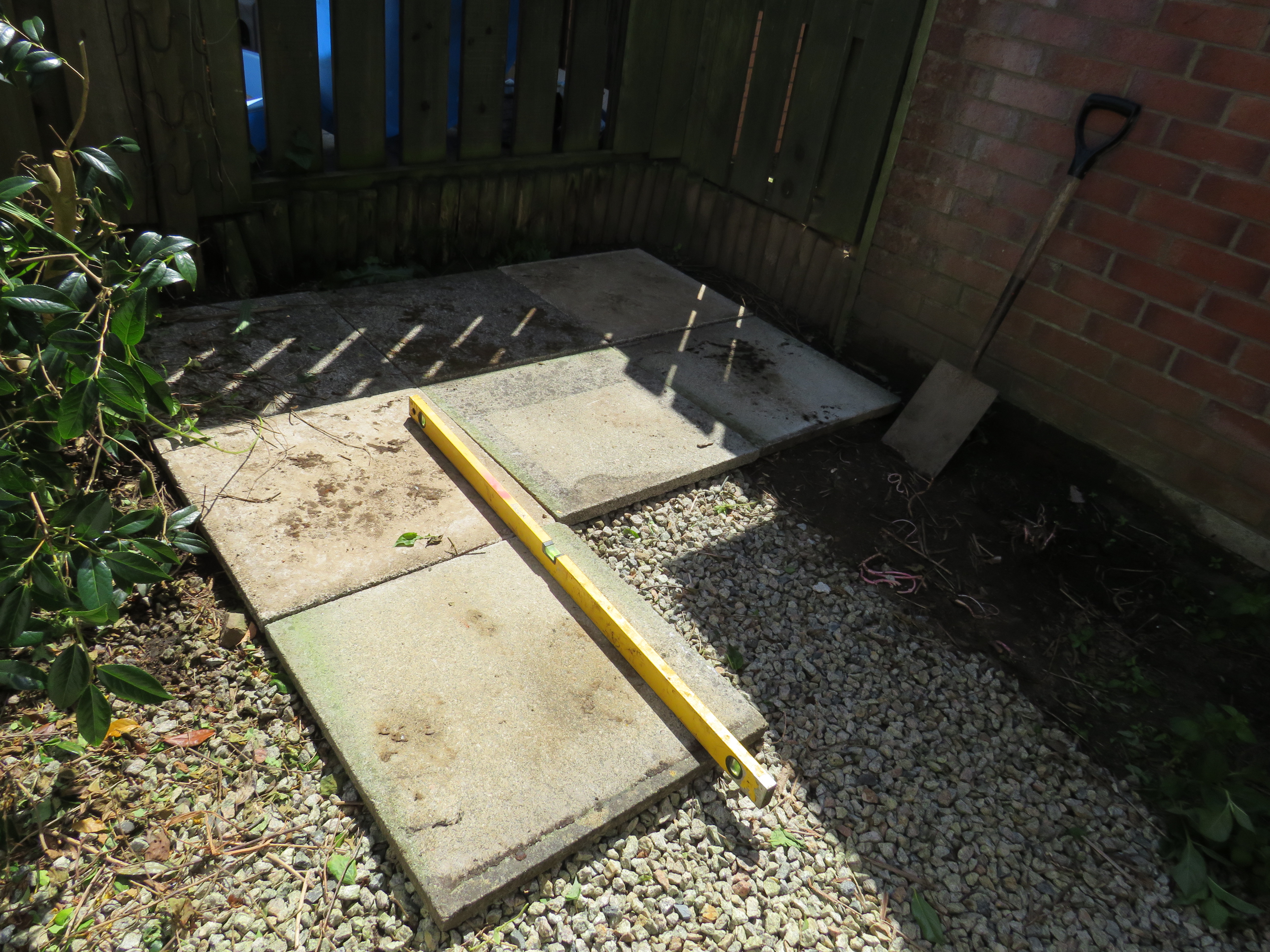
The other ‘big task’ – moving the once moved shed again, is also accomplished. This was necessary because it really was too wobbly. So it was back with the plastic rollers to pull it out of the corner in order to put down some large paving slabs before rolling it back. This all makes it sound remarkably simple. It wasn’t. The shed had to come forward and be shoved/rolled round a corner and back, ideally without one of use getting stuck behind it. While the corner was clear I took the opportunity to cut back whatever is going all along the side fence. This is a bed that is untouched so far. It seems to be something in the honeysuckle family but with much smaller flowers. The ends are leafy and flowery but underneath is a whole load of dead looking bush. Hacking away at it was not easy and my arms are tastefully decorated with scratches. Much as I hate digging up living things, I think the only way to deal with this bed will be to dig it all out. I will wait until the what ever it is has stopped flowering and then hope that it wasn’t holding the fence up. Reinstating the shed in the desired position has meant that I could at last put away things that have been lying around in the garden because it ‘wasn’t worth putting them away as the shed would need to me emptied’.

What’s next on the agenda? Well if the sink holds water, planting the pond. Much as I don’t want to fill the tiny garden with sheds and water butts, I am debating a new water butt; I fancy one of those that double as a planter. I’m sure I’ll find more jobs to add to the list

.

Fun and Games with Family History: encouraging young family historians

On Saturday, I am due to give an online talk to the Society of Genealogists. The brief was to provide family history related ideas, suggestions and activities for young people, with the rapidly approaching school holidays in mind. This is something that I always enjoy and it is vital if we want to encourage the next generation to engage with their history and heritage. ‘Young’ is a bit of a moveable feast in a family history context. If you look at the stereotypical demographic amongst genealogists, ‘young’ could mean anyone under retirement age. For the purposes of my talk, I am aiming slightly lower, at 0-16 year olds, though some of the activities will be fun for adults too. This might also be an opportunity for Family History Societies interested in involving younger people to gather a few ideas.

These days, history is hanging on to its place in the school curriculum by its fingernails. You only have to watch general knowledge quiz shows to realise how woeful the general public’s knowledge of history is and it seems that the reduction of time devoted to history in schools means that the younger people are the worse this gets. Don’t get me wrong, I am well aware how over-full school timetables are and that other subjects, some of which didn’t exist forty years ago, are equally important. It does mean however that history doesn’t get much of a look in and we can be starting with a pretty low knowledge base in some cases.

This has a knock-on effect for older family historians too. I loved history at school but many more senior family historians I talk to did not. In addition, the kind of school history that was taught in the 1950s, 1960s and 1970s was rarely the sort that was the most relevant for us as family historians seeking context for our ancestors’ lives. This means that the dedicated family historian who seeks to extend their genealogical education needs to acquire not just knowledge of research techniques and sources but broader history, most notably social history, as well.

So my talk will be about things that are fun, things that are, for the most part, nothing like school but activities that will encourage a curiosity about the past, remembering of course that, in this context, the past could be the 2010s! Having said ‘nothing like school’, I spent seven years teaching in a school that was not hampered by the National Curriculum and my lessons were often ‘nothing like school’ either!

There is still some space to book on the talk and it will be recorded for watching later if you aren’t free to join the live broadcast. You can book here.

If you are interested in books, videos and games for children relating to the sixteenth and seventeenth centuries (as well as resources for adults) you can find some lists on my Swords and Spindles site. There is also a list of Children’s Historical fiction, across all time periods and age ranges, on the Braund Society website.

I can’t leave the subject of young people without putting in a word for the Next GENeration online Family History Conference on 5 October. This showcases younger speakers and it would be great to show them some support, as well as being informed and entertained. This is a ‘pay what you can afford’ event, so please do just that. You can book here.

Forays into the Sixteenth Century and other news

There’s not much to report but I thought I should mark the fact that it is exactly six months since I moved house. The time has flown by, not helped by losing a month to Covid. The house is pretty well settled. There are things I want to do but nothing urgent. Everything has a place and I am just awaiting some shelves to unpack the last two boxes of ornaments. I am loving being able to see the sea almost every day, although I am ashamed to say that I have not yet co-ordinated time, tide and temperature to dip my toe in. I’ll leave gardening progress to a post of its own. Much of my local walking takes place in the early hours of the morning. This photo was taken at 6am less than ten minutes from home.

Recent excitements have included a few days seeing family and walking on the Isle of Wight. ’Walking’ makes it sound like we going on ten mile hikes; sadly those days have passed. We did manage a couple of five milers but it was mostly strolling along the cliff path. Then there was a trip on PS Waverley in full OAP mode, using my bus pass to get to the pick-up point. There have been meals out with friends and more to come. Mistress Agnes may also have been spotted at an event commemorating the 475th anniversary of the Prayer Book Rebellion, trying armour on unsuspecting passers by and killing people off sixteenth century style. This was quite fun as members of the audience succumbed to plague, warfare and accusations of witchcraft amongst other things.

It hasn’t all been fun and games and I have yet to comprehend what ‘retirement’ might mean. The job I must not mention is now in full flow, so other things will take a back seat for the next couple of months. I do still have some talks to give and my online One-Place Studies course for Pharos Tutors starts on Monday. That will be swiftly followed by another run of Writing your Family History. There’s a new course in preparation for next year but more of that another time. It won’t go public until I’ve actually written it! I have managed to get another non-fiction book off to the publishers but that won’t see the light of day until well in to next year.

Up the Garden Path 8

One month on and the summerhouse roof is still unfixed and the shed is still baseless but in my defence, I have been away. In my absence, things have been growing apace, not least the pesky convolvulus. I am particularly please with the progress of the ‘veg patch’.

I however can relate the saga of the pond. Daughter and son-in-law have recently moved house and inherited an enormous garden. In amongst the weeds wild area was an old butler sink. Having established that it was surplus to requirements, I decided that I would acquire it to create a mini pond. As we were in the area a few weeks ago, with sufficient room in the copious boot, it was time for mission pond to commence. Said sink was a long way down a very long garden. These sinks, although small are dear reader, not light. Never fear, with the aid of son-in-law’s muscle and a wheelbarrow, the soon-to-be-a-pond was stowed neatly in the boot.

Part two of the saga relates to how to get the sink out of the boot minus any muscular assistance and is a clear illustration that I did not think this through. I am actually quite good at lifting and carrying stuff, sheds for example but lifting up and over is not my thing. This is the point at which we became acutely aware that we are pretty much devoid of local friends and acquaintances who are fit enough for heavy lifting. To add to the difficulty, it needed to be done quickly, as we were about to set off on holiday and didn’t want to take a heavy sink with us. Fortunately, inspiration struck and a kind, not quite so local friend, who happened to be in the area helped us and the sink out. It now reclines in roughly the right place waiting to be cleaned and to have its plug hole fibre glassed up. This task is firmly in the queue behind summerhouse roof fixing and shed moving. Cue putting ‘how to create a tiny pond’ in my web browser.