After overnight rain, it is a beautiful day so we decide to tick off one of our guide book’s ‘must see’ sights and visit Moulin Huet Bay. We drive to Jerbourg and start walking eastward so we can say we have been to the easternmost point of the island – St, Martin’s Point. Today we are better equipped for walking, although I still have the wrong glasses and the new boots are digging into my ankles, or rather one ankle, in a weird way. Easternmost point reached, we turn round and head off along the coast path in a westward direction. I was of the opinion that Moulin Huet meant windmill and Google Translate agrees (must be right then) but not a one in sight. What we do have is spectacular scenery and all the clichés about white sands and azure seas really do apply, although the photographs do not do them justice. Everything is newly washed from last night’s rain and again the butterflies are out in force. We also see birds of prey wheeling that we think are peregrine falcons.
The terrain and the many inlets make this a rather longer walk than I and my new boots had anticipated but we make it to Moulin Huet bay and stop at a very welcome café there. We scramble down the cliff path and across the rocks to the bay below. Apparently Renoir walked two miles from St Peter Port each day to paint here during his stay in 1883. Apart from a solitary swimmer, the bay is deserted and we rest on the rocks and ease our feet in the sea. In a similar way to Scotland, the weather changes quickly here and I am soon sheltering from a very short shower under my handy saved-from-the-Victoria-Falls plastic poncho. At this moment, a bride and groom are attempting to get atmospheric beach photos. The bride has taken the precaution of changing into flat shoes but she is still trying to surmount the rocks with a train and bouquet, whilst holding the wedding shoes. It is a shame that the rain, which lasted no more than five minutes, coincided with the photo call, especially as the wedding dress was silk. The rain and an incoming tide prompt us to start to retrace our steps. To the relief of my ankle, we find a short cut along the road and return to the car.
There were glimpses of fishing boats in the distance when we decided our feet needed us to turn round. This is a great temptation for a fisherman of my acquaintance and I attempt to navigate to the distant bay by road. At this point I should point out that the antiquated sat-nav we have in this car does not cover the Channel Islands so we have me instead. I was a girl guide. I am actually quite good at map reading, even though I do have the annoying habit of turning the map round the ‘right’ way. There are a couple of drawbacks. Even with the varifocals I am unable to read the map easily with my glasses on, so I take them off. This means that a) I can’t see where I am going and b) I can’t read the road signs. In addition, the most detailed map we have is forty years old and anyway I have left it in the apartment. We do make it to Saint’s Bay. It is a good job that we are used to very narrow, steep roads. There is allegedly no parking at Saint’s Bay but this is obviously to fool the tourists. There were a few local cars parked there. Obediently though, we just go down to the harbour in order to turn round. With a very quick glance at the boats, we drive back towards St Peter Port.
 We stop at Sausmarez Manor and yes it really is spelt differently from where we went yesterday. The guide book tells us the manor house is open. It isn’t. The lovely wooded trail through the sculpture gardens is however. There are huge, impressive stands of bamboo and the trail reminds us of New Zealand. We are a bit ambivalent about the sculpture. Are we admitting to being Philistines when we say we don’t really ‘get’ some of it, despite it being worth, according to the catalogue, thousands of pounds a piece? Although there were some ‘organic’ (technical term alert – to try to sound like I know what I am talking about) pieces that I quite liked, in general, I preferred the pieces that actually looked like something. Randomly, one path labelled ‘Way out for Wheelchairs’ is barred by a pole stretched right across the path, some two foot six from the ground. Clearly all those pushing wheelchairs have to be limbo dancers.
Also onsite is a copper smith and we spend some time chatting about his trade. Like most people we have met, he is very friendly. He did a traditional apprenticeship in the 1970s, primarily to make traditional Guernsey cans. These originated in Normandy a thousand years ago and the cows were milked directly in to the larger sized ones. The design allows for the most efficient use of the metal, giving a maximum capacity per square foot. The shape also reduces the likelihood of loss by slopping. Sizes vary from half a pint to ten pints but the standard ‘pot’ contains four pints. The craftsman we were speaking to is now the only person on Guernsey who knows how to make these cans. He is passing the technique on to his sons. They will not be taking up the craft professionally but at least the knowledge will not die out.
There was a minor incident involving an invisible tree as we left the car park. I probably won’t get thanked for mentioning this but I wish to report that no back bumpers or trees were harmed in the process.
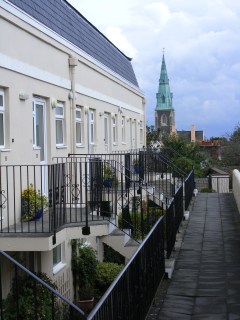
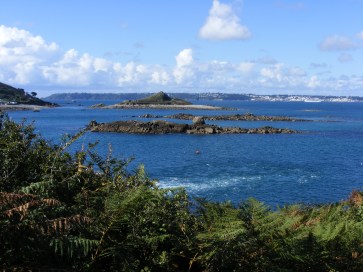 Herm is beautiful and very peaceful. Cars and cycles are forbidden; motorised transport is limited to tractors and quad bikes. We see the remains of some Neolithic burials. There are plenty of butterflies and the sun continues to shine as we reach the white shell beach, which allegedly has fifty different kinds of shells. It is as well I am not visiting with my grandchildren. If they knew that, we would be unable to leave until we had found all fifty. We pause for an ice-cream and the obligatory paddle, in what is pretty jolly chilly water.
 The next installment in my quest to discover why I am not in full health took place yesterday. Just a shame nobody warned me. I am gradually working my way through a long list of hospital departments and the latest referral letter was due no later than today. With a holiday looming, I was concerned that the letter might arrive after I left, with an appointment for before I returned, so, in the absence of a letter, I planned to ring today to see what was going on. It was 1.20pm yesterday, in a break between exciting #Daisy episodes, when, for no particular reason, I decided I would make that call a day early. ‘Yes Madam, your appointment is today. Did you not get the letter?’ Well that would be a no – if I’d got the letter would I be ringing? No wonder they get so many no shows. ‘What time is it? Have I missed it?’ I ask. ‘I’ll have to find out and ring you back.’ At 1.30pm I am told that the appointment is for 2.30pm. ‘Can you get here?’ I do a quick calculation. I am 16 miles from the hospital and I’d rather not drive myself. ‘Are you coming by public transport?’ Probably not – the next bus is tomorrow. She agrees that they will understand if I am late. I ring the fisherman of my acquaintance, now doubling as the chauffeur of my acquaintance, hoping that this isn’t one of those occasions when he has his mobile on divert because he is out of signal and I end up talking to myself. Things continue to go my way as he is home. 1.45pm and he is at my house and we are on our way. We arrive at the hospital with ten minutes to spare. I muse at the irony of those sat smoking under the very large signs explaining that the whole hospital site is a no smoking zone.
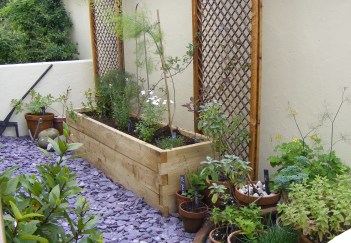
 Then it was the village garden and produce show. I always try to get involved in community events. The cooking classes were clearly a non-starter. I hadn’t had time to create something crafty. As my garden is a wasteland, being as it is mid re-vamp, plant and vegetable classes were challenging. Fortunately I could fall back on my herb garden, which was made-over last year. So second prize for a posy of herbs, or Tuzzy-Muzzy as we say, I’ll take that. I am sure I should be Daisy writing rather than blog writing so that’s it for today. I wonder if I can get another chapter finished amongst two talks to present in two days and the return of the job we must not mention.
 Yes, geese are signing up for Weight-watchers in flocks as I type. I kid you not, the ‘Back to School’ shelves have not yet been cleared and the Christmas cards are on sale. For those of us in the northern hemisphere, with the dark evenings on the horizon, this means our thoughts turn to digging out our virtual or literal family history files and promising ourselves that this year we really will create some order out of the chaos that is the fruits of years/decades of research. Maybe we would like to tempt our dearest and not so nearest to take an interest in our obsession with a yuletide gift of a family history, or we would like to share family stories over turkey and tinsel. Now let’s be honest here, ‘would you like to see my spreadsheet of baptisms?’ just isn’t going to cut it. I can feel the glazed over looks from 100 paces. That fascinating story of great uncle Fred’s bigamy, or auntie Alice’s spell in jail, though, that could just raise a flicker of excitement. Even if your family is devoid of all black sheep, set their lives in the local and social historical context of their time and you could be on to a winner. ‘Did you know great-granddad was the local rat-catcher?’ ‘Granny served tripe twice a week’ or ‘Great great grandma died of cholera, did you know she would have passed 20 litres of diahorrea a day?’ (good one for the gore hungry children that) – so much more engaging than a list of names and dates. If you want some motivation then can I humbly recommend that you take a look at my five week online ‘Are you Sitting Comfortably: writing and telling your family story’ course that starts on 17 October. Details are on the
  #Daisy has been making progress and is currently requiring me to research the poetry of World War I and the Bideford shops of the 1890s. I have just realised that #Daisy is about anorexia, shell shock, death, menopausal women, depression and war – just wondering if that might be a tad dark! Still it is enlivened by depictions of the beautiful Devon landscape.
 Field finals are heralded by random trumpet fanfares but we are spared this for the track finals. We get three GB athletes into the men’s 200 metres finals: Danny Talbot, Nethaneel Mitchell-Blake and Zharnel Hughes as a fastest loser. Sophie Hitchon can only manage 7th place in the hammer but we have two women through to the semi-finals of the 400 metres hurdles, Elidih Doyle and Meghan Beasely. We are amazed that a noticeable number of spectators can spend a not inconsiderable sum on tickets only to arrive half way through the proceedings. Even if you are just there to support a particular person, why would you not arrive until after 8.00pm? Two in our row arrived at 9.00pm! The women’s triple jump final, just below us, is an exciting tussle between the Columbian Olympic champion and the Venezualan, who triumphs in the end. My new favourite volunteer job is plasticine smoother on the jumping strips. It seems that Chris is unlikely to get his own remote controlled javelin retrieving car as they cost £4500 each. We are told that they travel at 40mph, faster than Usain Bolt. Laura Muir fought hard in the 1500 metres final but was just driven in to 4th place on the back straight by Caster Semenya.
 The History Interpreter - Janet Few