![How to be a Tudor: A Dawn-to-Dusk Guide to Everyday Life by [Goodman, Ruth]](https://images-eu.ssl-images-amazon.com/images/I/61blmkkyi%2BL.jpg) Behind today’s advent ‘window’ is a true social history by Ruth Goodman, of Victorian/Edwardian/Wartime etc. Farm fame. In How to be a Tudor: a dawn to dusk guide to everyday life, the author takes us through an average day for sixteenth century ordinary folk. From waking in the morning and washing – or not – Ruth moves on to getting dressed, eating meals, working life, for men and women and leisure before putting her Tudor folk to bed. The author’s experiences as an experimental historian mean that she has a personal, practical, knowledge of the processes that she describes. Her attempts at cooking, cleaning and living in Tudor times are described and it is clear that her insight into the period is far greater than that of most non-contemporaries. This book is grounded in serious historical study but it is written in a very accessible style. There are coloured plates but I don’t feel that these are really necessary, as inevitably, most of them portray life for a social strata that deviates from the focus of the book. The black and white illustrations are more relevant. The bibliography is also useful and will lead to yet more book purchases. This volume should be required reading for anyone setting a novel in this period. If your interests lie in a different era, then there is a companion ‘Victorian’ volume. Probably the greatest compliment I can pay this book is to say that I wish I had written it.
Behind today’s advent ‘window’ is a true social history by Ruth Goodman, of Victorian/Edwardian/Wartime etc. Farm fame. In How to be a Tudor: a dawn to dusk guide to everyday life, the author takes us through an average day for sixteenth century ordinary folk. From waking in the morning and washing – or not – Ruth moves on to getting dressed, eating meals, working life, for men and women and leisure before putting her Tudor folk to bed. The author’s experiences as an experimental historian mean that she has a personal, practical, knowledge of the processes that she describes. Her attempts at cooking, cleaning and living in Tudor times are described and it is clear that her insight into the period is far greater than that of most non-contemporaries. This book is grounded in serious historical study but it is written in a very accessible style. There are coloured plates but I don’t feel that these are really necessary, as inevitably, most of them portray life for a social strata that deviates from the focus of the book. The black and white illustrations are more relevant. The bibliography is also useful and will lead to yet more book purchases. This volume should be required reading for anyone setting a novel in this period. If your interests lie in a different era, then there is a companion ‘Victorian’ volume. Probably the greatest compliment I can pay this book is to say that I wish I had written it.
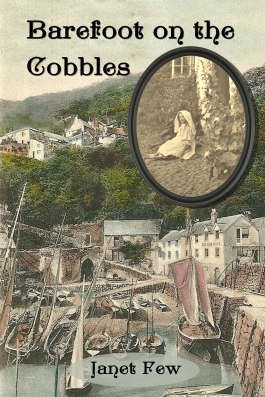 Yesterday I managed to complete a very harrowing chapter of Barefoot on the Cobbles. Elation was short-lived with the realisation that there is still a long way to go. Then there was the thorny issue of the cover. I am well aware of how important this is and because Barefoot is so difficult to pigeonhole, conveying what is inside in a single image is particularly tricky. After a few preliminary attempts the publisher and I had a version we were pretty pleased with – for five minutes. I should point out that to get to this stage there had been plenty of ‘up a bit’, ‘down a bit,’ ‘make it bigger/smaller/darker’ moments. Then we threw the suggested design to the wolves of Facebook. Even though they don’t always make east reading, I am really grateful for all the comments. The fact that they weren’t all complementary, is exactly what we wanted. I was pleased that some of the themes were picked up by those looking at the cover. The consensus was though that these initial ideas were over complicated and that we need a slightly different font, which actually I was pleased with until someone pointed out that a key capital letter was ambiguous.
The rethink will be rather different and will incorporate the general feeling of those who expressed an opinion. It is incredibly difficult to come up with a design that will tempt the right readers (i.e. ones who will actually enjoy the book) to turn it over and read the blurb. It is all about managing expectations. I need the cover to be suggestive of the content. It is no surprise to me but if anyone thinks that being an author just means writing a book, you are oh so wrong!
 Another one for those interested in agricultural history today and it is a whole series of books, rather than just one. Most family historians I speak to have agricultural labourers hidden somewhere in the boughs of their family tree. What we need to realise is that these are not some amorphous group whose experiences were all very similar. Farming practices differ according to soil, terrain and climate. The
  As I sit down, having just finished the washing up and sticking what may well turn out to be onion-flavoured marzipan on my Christmas cakes (short but sad story), what better than to introduce you to a book about housework. Caroline Davidson’s
 This comprehensive account was first published in 1919 and was written by Alice Clark, of the Quaker shoemaking family. Clark (1874-1934) herself is an interesting character, rising to become a director of the family firm in an era when this would have been very unusual. Her
 ![Henry Stephens's Book of the Farm: concise and revised edition by [Langlands, Alex]](https://images-eu.ssl-images-amazon.com/images/I/51ZqC-0IwZL.jpg) This one is for all those family historians with agricultural labouring ancestors and for writers of historical fiction who are using a nineteenth century rural setting. The lavish production and copious illustrations also make it ideal for history lovers in general to browse. Henry Stephens’
This one is for all those family historians with agricultural labouring ancestors and for writers of historical fiction who are using a nineteenth century rural setting. The lavish production and copious illustrations also make it ideal for history lovers in general to browse. Henry Stephens’  A much more recently written offering behind today’s advent window: Rebecca Ridal’s
  With some technical wizardry, this post should appear at a time when I am languishing in a local shopping centre hoping to sell my books to unsuspecting passers-by. I have a small share in a stall, along with other local authors. No idea how successful it will be but I will try anything once.
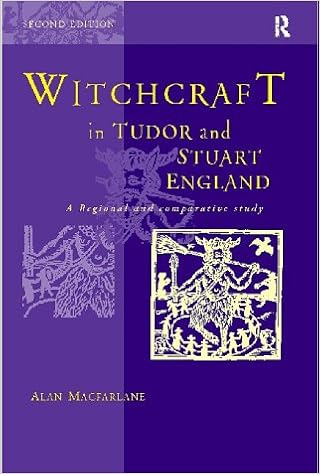 Today though belongs to MacFarlane’s work. This is not just an account of the witchcraft trials of the period. He discusses the sources that can be used, the social background and the conditions that contributed to an increase in accusations. He also looks at the various ways in which people attempted to counter-act witchcraft. The emphasis is on the notorious trials in Essex but these are set in a wider context and the background is applicable elsewhere. I am fascinated by the psychology behind witchcraft accusations and its similarities to today’s culture of bullying. I strive to understand what made people of the past act in a particular way under certain circumstances, so I found the section on the ideology of witchcraft and the anthropological interpretations a particularly valuable addition. There are maps, tables and black and white illustrations throughout the book.
 The History Interpreter - Janet Few