Well I guess this is where I say Happy New Year. New starts, new resolutions new things to look forward to. For those of you for whom life can be a struggle, I wish an easier time for you in 2019. I hope it can be a year when the world is more compassionate and more tolerant of others’ differences. We can be polite and forbearing, even if we do not always agree.
I was lucky enough to do some wonderful things in 2018 and there are some excitements on my 2019 horizon, although I am hoping to find time to relax more and actually see my house occasionally. So what’s been happening chez moi? Firstly, the inevitable seasonal lurgy has left me lacking in energy and sounding very deep and interesting, or as we say, croaky. Notwithstanding, I have begun the spring cleaning. Ok, so this is probably spring cleaning 2010 but spring cleaning nonetheless. With the assistance of the fisherman of my acquaintance, to whom grateful thanks are extended, I have embarked on the kitchen. The lack of energy thing (and I’ll be honest, the fact that cleaning isn’t exactly my number one favourite activity) means that it has taken several days but the end is in sight. Cupboards have been emptied and de-cobwebbed – I live in a house made of mud, of course there are cobwebs. I have unpacked two boxes that hadn’t seen the light of day since I moved in in 2006. These have now been rationalised into one box. Said box is probably still full of stuff I neither need nor am likely to use but hey, it is one less box for my descendants to dispose of when I go to meet the ancestors. I have discovered that I have a lifetime’s supply of oven cleaner. Who am I kidding? At the frequency that my oven gets cleaned it will probably last until 2130.
 After a lovely time with two fifths of my descendants, I used the lacunae between Christmas and New Year to cough a great deal and revisit some family history. This was partly inspired by a recent meeting with the full range of my second cousins at the funeral of the last of my mother’s cousins. This officially makes me the oldest generation now, that is a sobering thought. I was also motivated to look at my daughters’ ancestors, in preparation for LivingDNA results for one of them. I found my own regional profile that I received from LivingDNA closely matched the documentary evidence and I have already written about this. This is the prediction for my daughter and we will see how that compares with the actual results in a few months’ time.
 In the course of working out what I was expecting, I also calculated how many of my direct ancestors I have discovered in forty two years of research. Not a bad haul for someone whose grandparents were born in the 1880s and 1890s, especially as I am 95% sure who the missing 3 3x great-grandparents are, which has a knock on effect on the totals in earlier generations. Whether I shall ever be confident enough to ‘ink these in’ is another matter.
I’ve had fun revising a couple of courses. Firstly, the next presentation of my five week online course for Pharos Teaching and Tutoring ‘Discovering your British Family and the Local Community in the early C20th’, which begins in a couple of weeks. There are still a few places left. What a great start to your family history new year, to revisit your more recent ancestry and look at their lives in context. I am also going to be leading an ‘Introduction to Family History’ day course at Crediton Library on January. It has been a few years since I last did this and plenty has changed, underlining how fast-moving our hobby is. Contact the library directly if you are interested in this one.
And what of the writing? I hear you ask. Well, if you aren’t asking, why not? Firstly, I have made a significant dent in my pile of Barefoot in the Cobbles boxes and sales online are going well. Please can I reiterate my plea for you to buy paper copies directly from me, from my lovely publisher or from an independent bookshop near you, rather than pressing that tempting little ‘buy it now’ button. Obviously, if you are outside the UK, or want a copy for your e-reader, please do press away. Some lovely reviews are coming in – more are always welcome and I have been re-energised to get back to work on book two. This was abandoned during the frenetic Barefoot marketing phase but I have picked up the threads of this work-in-progress. The researching is proving fascinating. I don’t want to give too much away at present but I’ve been delving into the records of Westminster School and looking at seventeenth century licenses to pass beyond the seas amongst other things. Actual writing though has stalled. I have sharpened my pencils in preparation (I don’t write text in pencil – although I do use pencil for my notes). I have put a pile of reference books in a box but procrastination abounds. I am even tempted to spring-clean another room to put off the moment when I have to produce something that resembles narrative – maybe next week.

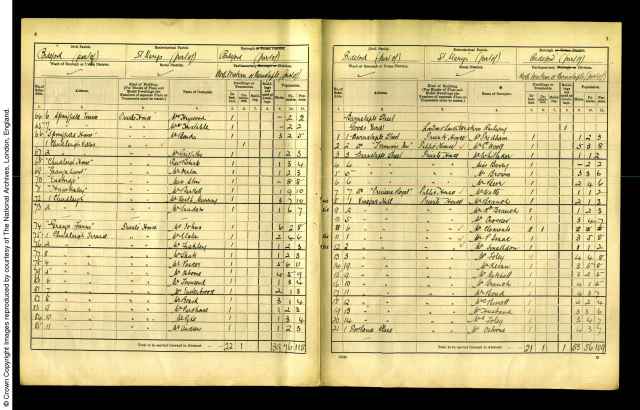
 When tackling the horrors of the Western Front, I chose Abraham Tuke as my ‘point of view’ character. Research into his background revealed that he had been the editor of his college magazine. I decided that, like others involved in the Great War, he might relieve the stress of being in a combat zone by writing poetry. I re-read the classic World War One poets, Wilfred Owen, Siegfried Sasson, Rupert Brooke, Lawrence Binyon and other well known names. I was also fortunate to have access to a collection of works by poets who are not household names and whose work is a little less polished,
  I would like to mention another local archive today:
 Previous advent posts have mentioned the importance of local archives, local history books and relevant websites, when an author is trying to recreate the geographical context for a novel that is set in the past. When my character, Polly, moved to East-the-Water, Bideford, to take up her position with the Powell family, I needed information about the area. An excellent summary of life on the eastern bank of the Torridge appears on the
 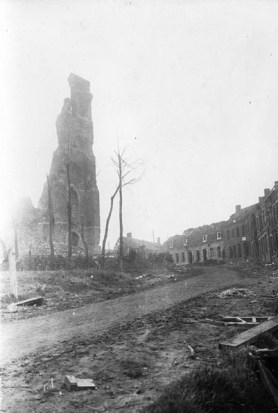 The chapter that I was most concerned about was the one set on the Western Front. It was the only location that I was unable to visit and I have no experience of being a young man, or of being in a combat zone. I read fifty or so pages of the regiment’s official
  When writing of real events in the more recent past, newspapers are invaluable. I used hundreds of local and national newspaper articles during my research. The court and inquest scenes were heavily reported in many papers. In the absence of actual court records, these were vital. The huge advantage of these was that they provided me with verbatim statements spoken by the accusers, the witnesses and the accused. As someone who was more used to writing non-fiction, I was concerned about my ability to write dialogue. By the time I had used the words reported in the newspapers, I had a real feel for how many of my characters would have spoken. Newspapers were also useful when I was researching the historical background of my minor characters. For example, it was from the local newspaper that I learned that Dr Crew was about to lead a scout camp; yes, that tiny little throw-away line was based on fact!
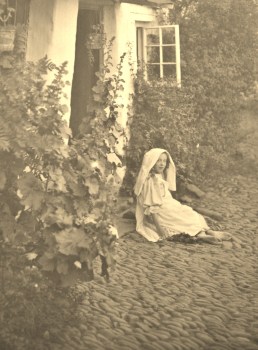 When a novel is firmly set in a recognisable geographical location, it is important to exploit the resources of the experts. By using Clovelly as the backdrop for much of the book, I was placing my characters in an iconic village that, is well-known far beyond the immediate area. I was fortunate to be able to have access to the expertise and archive material of
  The History Interpreter - Janet Few