Day sixteen of the ‘advent calendar’ focusing on some of the historical/genealogical sources that I used in the writing of Barefoot on the Cobbles.
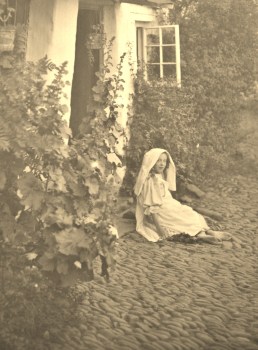 When a novel is firmly set in a recognisable geographical location, it is important to exploit the resources of the experts. By using Clovelly as the backdrop for much of the book, I was placing my characters in an iconic village that, is well-known far beyond the immediate area. I was fortunate to be able to have access to the expertise and archive material of Clovelly Archive and History Group. Their Facebook group answered an eclectic range of queries from me. It was a real benefit to be able to ask such things as ‘Who was in charge of the post office?’ and get an almost instant response. I was able to see one of the paper discs, with its political slogan, that had been left on the lawns of Clovelly Court by the militant suffragettes. I was granted permission to use one of the archive’s evocative photographs of Daisy, barefoot on the cobbles, on my cover.
I would encourage all those who are trying to recreate a real place in a past era to approach local history groups and archives. They will be your harshest critics if you get it wrong but will be generous with their time and knowledge in order to help you to get it right.
More information about Barefoot on the Cobbles can be found here. Copies are available at various events and at all my presentations. You can order from Blue Poppy Publishing or directly from me. Kindle editions are available for those in the UK, USA, Australasia and Canada.
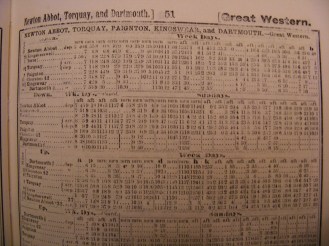 On day three I mentioned one of the ways in which I researched the railway journeys taken by my characters when traveling between Clovelly and Torquay. Not only did I need to investigate likely routes but also the timetable that might have applied at the time. Fortunately, my library includes facsimile copies of Bradshaw’s Railway Guides. My copies are for 1922, 1923 and 1938 and I suspect that there may have been an adapted timetable during the war but I felt that these were close enough and at least this gave me an indication of how long each leg of the journey may have taken. My copies were reprinted in 1985 by Guild Publishing and there are some available on the second-hand market.
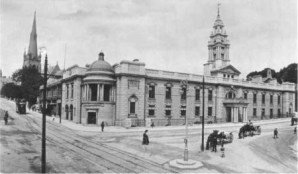 Two of the longest chapters in the novel are set in war-time Torquay. Torquay was the home-town of the crime writer Agatha Christie. She does make an appearance in the book, although you might not recognise her. Like my character, Winnie, Agatha worked at the Town Hospital in Torquay, nursing convalescent servicemen. The
 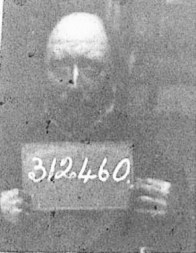 A novel about a coastal community is bound to include characters who were in the merchant service and Barefoot is no exception. I was fortunate to have access to the seaman’s log, that had been handed down in the family, for one of the characters. This gave personal details, a description, a photograph and details of the various ships on which he served. In this way, I knew exactly which ship he was on at the end of the war, where he had been, where and when he docked and the name of the captain. I also used the seaman’s records on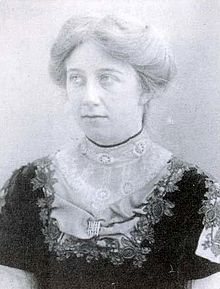
 Getting the timing correct is important when writing an historical novel. Firstly, I needed to make sure I knew the day of the week when certain events took place. There a number of perpetual calendars online but my favourite is
  When I decided that Daisy and Winnie would pay a visit to the ‘picture palace’, I was aiming to reflect the increasing popularity of the cinema at the time. Having chosen the appropriate main feature and ‘B’ film, that might have been shown, I decided to add a newsreel. These three elements would have been the norm in the early twentieth century and indeed for several decades afterwards. In order to pick the correct newsreel for the date, I turned to the
  Many of the characters in Barefoot in the Cobbles living in the countryside or earn their living from the sea. The impact of the weather was immense. I was determined to reflect the actual weather conditions of the time. Fortunately, thanks to the Met Office,
  To gain a better understanding of life as a Voluntary Aid Detachment (VAD) nurse, I re-read Vera Brittain’s Chronicle of Youth and Testament of Youth. Of course Vera is very much middle-class and Daisy and Winnie’s childhoods would have been very different. In addition, much of Vera’s service was overseas and my nurses were in Torquay but it was still useful to gain and insight into the training and duties. Unexpectedly, I was also able to make use of these books, to immerse myself in language and turns of phrase of the early twentieth century. This threw up the issue of whether or not Daisy and Winnie would have addressed each other by their christian names. In Vera Brittain’s world, the ladies waited for permission before abandoning Miss ……. . I decided that this might be different for young, working-class women, so it was ‘Daisy’ and ‘Winnie’ from the outset.
![Fromelles 1916 by [Cobb, Paul]](https://images-eu.ssl-images-amazon.com/images/I/51aWYDTG-IL.jpg) I had chosen the character who was to be my vehicle for portraying the battlefields of the Great War. It turned out the the campaign in which he was involved was not one of the more famous ones, unless you are Australian. The Battles of Fromelles features prominently in the Australian narrative because there were huge numbers of ANZAC casualties. Most of the books are written from the Australian point of view and for a secondary account, I relied most heavily on Paul Cobb’s
I had chosen the character who was to be my vehicle for portraying the battlefields of the Great War. It turned out the the campaign in which he was involved was not one of the more famous ones, unless you are Australian. The Battles of Fromelles features prominently in the Australian narrative because there were huge numbers of ANZAC casualties. Most of the books are written from the Australian point of view and for a secondary account, I relied most heavily on Paul Cobb’s  The History Interpreter - Janet Few