The Norwegian Saga Part 5

Day 6 Monday Trondheim

We arrive in Trondheim about 7.00am. This was Norway’s first capital and is its third largest city. It was founded in 997 by King Olaf Haraldson who was later sanctified. It was an ideal situation for a capital and trading station, as it is equidistant between the north and south of the country but also accessible to Sweden and Britain. The settlement was initially named Nidaros but became Trondheim during the four hundred years of Danish occupation. After independence, in 1814, the inhabitants were given the choice of which name they wanted to adopt and Trondheim narrowly won, on the understanding that signage would be in Norwegian and not Danish. Much of Trondheim was rebuilt after a fire in 1842 and tiled roofs replaced turf and planks. Trondheim was fortunate to escape World War 2 bombing.

More coffee machine struggles at breakfast and I indulge in my first cooked breakfast of the cruise. A slightly later start for us today but at 10.30am, we join Jonathan in group 4A. Jonathan is one of 45,000 students at Trondheim university, Norway’s largest, studying pure maths. He moved to Norway from the Congo some years ago. One of the marine conservationists on board is accompanying our tour as the representative of Ambassador. It turns out that she was born in Croydon, as was I.

We are guided around Trondheim on a two hour walk and learn of its history. I was concerned that this might be chilly, so have donned my thermal leggings and fluffy boots. All I can say is that it is a good job I didn’t opt for the thermal top and thick trousers as well. I am saving those for when we get above the arctic circle. For the first part of our walk, the sun was shining and I was slowly melting. At no point did I feel the need for my hat or gloves.

As parts of Norway are very inaccessible, several dialects are spoken. Now there are two main languages and ‘New Norwegian’ was developed after research into the various dialects. We pass the Stiftsgården royal residence, built in the 1770s in a baroque style. Although this is not designated as a palace, it does contain a throne room, as, traditionally, coronations take place in Nidaros Cathedral in Trondheim, after which the new monarch has to sit on a throne. With 140 rooms, it is Europe’s largest wooden royal residence. At the end of Danish occupation, Norway had no surviving royal family, so Denmark gave them their ‘spare’ who became king.

Our walk takes us along Munkegata, which leads to Munkholmen Island, the site of a former monastery that became a prison after the Reformation. The road was a direct route from the island to the cathedral. I am fascinated by the elaborate manhole covers. There is a statue of Olaf Tryggvason, the city’s founder, in the large market square; this is actually a sundial. There are spectacular carvings on the outside of Nidaros Cathedral, which was begun in 1070 and was built over King Olaf’s grave. It became a place of pilgrimage. Our arrival coincides with the lengthy chiming for midday, which holds up Jonathan’s spiel somewhat. Some of the cathedral’s builders were British and French, which accounts for the cathedral’s style. The building was deliberately never completed as legend says that the world will end when it is finished.

We cross the Red Bridge, known as the ‘portal of happiness’. You are supposed to kiss in the centre to ensure a lengthy relationship; we neglect to do this. We also see the world’s only bicycle elevator, designed to take bicycles up a very steep hill, with the rider still in the saddle; this is only operational in summer.

We the board an open, wooden boat, Freya, built in 1994 and piloted by Siri, for a trip along the River Nidelva, passing the colourful wharves, some of which date from the eighteenth century. These are now mostly luxury apartments or restaurants and survived the fire by virtue of being on the far side of the river, in an area known as Bakklandet. There are open spaces between the wharves where non-citizens were allowed to trade. The cruise ends at Ravnkloa, which is the site of an historic fish market, unfortunately there is no sign of this now.

We arrive back onboard in time for a lateish lunch and I was looking forward to another siesta. It was not to be. As I am still in port, I have email access on my phone. I am being invited to apply for an additional role in connection with the job that we must not mention. The closing date is before I return home. This means that I have to make the application, including a 500 word personal statement, using my phone. I have fat fingers and avoid typing on my phone if I can, so this is a nightmare. Added pressure is that the ship has sailed and unless I can finish this before we exit the fjord, I will lose signal and have to start again. There is no way to save a half-started application. I find this out the hard way and have already had three false starts, necessitating repeatedly answering questions about nationality, sexuality and disability. By the time I’ve composed the statement on my laptop and laboriously and one fingeredly copied it into my phone, I feel in need of a stiff gin; just a shame that I almost never drink.

I am not very inspired by the evening meal options and have ham and chips, while Chris has roast pork. We have decided to try out some evening entertainment for once. This takes place in the Purple Turtle bar, which I keep referring to as the Purple Penguin or the Purple Parrot. None of those creatures are purple anyway. First is a trivia quiz. We come joint second with 12/15, which they like to call 120/150 for some reason. I was helped by two hints from the people sharing our table and the fact that a third of the quiz was on the specialist subject of board games. One question was where did chess originate? Thanks to Edward, I am able to put India, rather than China, which is what most people have said. My failures were the name of the actor who played Ken in the Barbie movies, nope, no clue and the most popular Dickens book. I, along with most people, put A Christmas Carol but it was A Tale of Two Cities.

Next, was what was billed as a murder mystery and in the spirit of throwing myself into things, I volunteered to be a suspect. This basically meant trying to remember what various witnesses had said, until I was voted out by the murderer. This was all very much end of the pier, slapstick type stuff and although the young actors did their best, it wasn’t really our thing, especially as there was a long gap between the quiz and the murder and we’d probably both rather have been asleep. I suspect this may be our last attempt at an evening activity.

The Norwegian Saga Part 4

Day 5 Åndalsnes, Romsdalsfjord

We are travelling up Romsdalsfjord as we wake up and soon, we anchor at Åndalsnes, surrounded by mountains. In April 1940, British troops landed here and 160 buildings were destroyed during the bombing raids. Twenty-six tons of Norwegian gold were shipped out of Oslo, via Åndalsnes, during the war, to be stored in Britain and then North America. Åndalsnes was the railway terminus. Now, the significant industry is furniture and textiles.

Our tour group today is group one, with Roxanne from Michigan. While we are waiting to depart, we watch the ship’s windows being cleaned; this looks like a precarious process. We board the coach near the unusual-shaped building that houses the climbing wall museum. We drive alongside the Rauma river, noted for salmon, with towering mountains on either side. The river is still frozen in places. Mount Romsdalshorn is on our left and the Trolltindane peaks are on our right; both are over 5000 feet high. The HEP infrastructure can be seen. We stop at Slettafossen waterfall, perhaps less impressive than it might be, as it is frozen. I intended to change my shoes from my softer trainers to my more substantial trainers before leaving the ship but I have neglected to do this. It is eight degrees and a little icy underfoot but fortunately we don’t have to walk far today. Silver birch, Scot’s Pine and golden coloured grass are features of the landscape. The tree line stops at 600 metres. The area is renowned for its strawberries and farming. I drag the word transhumance from the O level geography depths of my mind. Goats in particularly are kept for their milk and cheese making.  

Having passed the Trollveggen (Troll Wall), a vertical, overhanging rock face over 3000 foot high, on the way out, we pause here for a photo stop on the way back. The legend is that the king of the trolls held a wedding party for his daughter on the top of the cliffs and so distracted were they with dancing that the dawn came up and they turned to stone, creating the peaks on the top of the cliffs. Here, we are in the Reinheimen National Park, which was created in 2006 to protect the biological diversity that is found in the area; it is the third largest national park in Norway. The name means home of the reindeer but we don’t see any. The reindeer were vital to the hunter gatherers who first settled here after the end of the last ice age, about 8000-9000 years ago.

Photographs taken, we cross the Sogge Bridge into the Isterdal Valley, viewing the King, Queen and Bishop peaks. We were supposed to view the Trollstigen (Trolls’ Path), a winding road with eleven narrow, hairpin bends carved into the mountainside. This feat of engineering won awards when it was constructed in 1901. Unfortunately, the road has been blocked by a fall of snow, so we can’t see this and the coach driver has to reverse more than a mile back up a single-track road before he is able to turn. We stop at the Trollstigen holiday complex, with its carved wooden trolls.

The area is noted for its stave churches, constructed from wood in the twelfth and thirteenth centuries, often without the use of nails and incorporating wooden staves but these are as elusive as the reindeer. Returning to the port, we have a quick look round but almost everything is shut as it is Sunday. We see the iconic Golden Train and a chapel that is an old railway carriage. Inside, the crucifix is fashioned from pieces of track and the altar is made from sleepers. The altarpiece is symbolic; a tear of blood represents sacrifice and the lifegiving force, the fountainhead of the river of life. Continuing the eating too much theme, I have something that passes for a meal at lunchtime, a rather odd vegetable patty and chips, whilst my companion has roast beef. I also have a kiwi cheesecake that I am counting as one of my five a day. The decaff coffee machine is on the blink; this was also an issue yesterday but it seems to give up its hissy fit after a while. We are thankful that we opted for a cabin with a balcony; we’ve never had so much as a window on previous cruises, mainly because we were busy on sea days and spent very little time in our cabin. This time, the balcony has definitely been worth the additional money. It is even sunny and warm enough for Chris to sit out there for a short while. I confess to having a siesta in the afternoon, followed by beef bourginon for an evening meal, as well as more wrestling with the coffee machine. This time, Chris has bream. 

The Norwegian Saga Part 3

Just as a warning to those who are following along, there were seventeen days to this holiday and you may need to hold on to your seats,

Day 4 Ålesund

We wake up in time to see us drifting into the first port, which is Ålesund. Today, we are part of group three and our designated trip takes us through Ålesund, via a series of tunnels and bridges, to the islands of Giske and Godǿy. To be honest, I am not the world’s greatest fan of tunnels and some of these are quite long but I manage. We learn that blasting tunnels proved to be cheaper than building bridges. The tunnels are seventy-four metres below the level of the fjord. When they were first built in the 1990s, tolls were payable on both bridges and tunnels but once the construction costs were paid for, they became free. Taxes are at twenty-three percent, half of which goes to central government and half is local taxes, the equivalent of council tax. Good use was made of the excess granite from creating the tunnels, including as the basis for reclaimed land.

Our guide is Rudolph, of German and South African extraction and he asks us not to mention reindeer.  Ålesund is renowned for its Art Nouveau architecture, as much of the town was rebuilt after a serious fire in 1904, which fortunately resulted in only one casualty. One house, known as ‘the miracle house’ did not burn. Kaiser Wilhelm frequently holidayed here, so sent aid after the fire. It was stipulated that rebuilding must not be of wood but there was a lack of knowledge about building with alternatives. Expertise came from other European nations, notably France, hence the adoption of the Baroque, Art Nouveau style. Carvings of fish and dragons are a testament to old Norse heritage.

Rudolph imparts various nuggets of information about Norway. The population is about 5·8 million, 43,000 of whom live on the seven islands that make up Ålesund. It is Norway’s largest fishing harbour, with fifty percent of Norwegian salt cod exports leaving from here. Salmon is also exported, mostly to Japan. You are only able to buy up to 4·5 proof beer and cider in Norwegian supermarkets; anything stronger has to come from the equivalent of an off licence and these are government owned. There is also no ‘to the door’ postal delivery; letters are collected from boxes at the end of the street and parcels from the post office. Displaying flags is common in Norway but they have to be taken down by 9pm. There is no charge for water, only for waste water, when tanks are emptied. With the benefit of hydro-electric power, much of Norway’s power and transport is electric. The country was relatively poor until the discovery of North Sea oil and gas in the 1970s. Brown cheese is popular; it is made from goat and cow milk and is caramelised, hence the colour. Here, silage is wrapped in white plastic, giving the bales the nickname Trolls’ marshmallows, or alternatively, tractor eggs.

Giske, pronounced Yishker, is known as the ‘Saga Island’ and is famous for being the birthplace of the Viking Chieftain, Rollo, who was given Normandy by Charles the Simple of France in the hope that he would protect France from incursions by other Northmen. Rollo is potentially an originator of the Braund family. Giske is very flat, with just one hill at twenty-five metres above sea level. We arrive at Giske Church, which was built about 1130. It is Norway’s only marble church. Some of the marble is local, some came from Italy. It was probably ballast when ships returned from selling fish. The marble is covered in plaster to protect it from the salt air.

Enid is waiting to tell us about the impressive wooden carvings inside the church. By the eighteenth century, the church had fallen into disrepair and restoration began in 1756. A twenty-two-year-old man carved the altarpiece depicting scenes from the crucifixion to the ascension. The same carver, Jacob, produced the pulpit in the 1790s and both these were painted in 1801, using paint mixed by ‘Altarpieces Jacob’, who also carved altars elsewhere. They were later over painted in white, as the colours were thought to be a distraction but in the 1930s, the colours were redone, using Jacob’s recipes. There is also an altar cloth that dates from 1688 but this is too fragile to display. Outside, there is one of only six of the country’s protected gravestones, thought to belong to the church’s builder. Giske was a place of pilgrimage and crosses on the outside wall are believed to have been carved by fourteenth century pilgrims. The church has been Lutheran since the Reformation in 1536. Graveyards can’t be reused in Norway but fortunately there is space to spread. Rudolph is of the opinion that the idea of Viking boat funerals is a myth.

We see a few of the historic, turf-roofed houses. Next, a brief sighting of some reindeer as we drive to the island of Godøy and the small fishing village of Alnes, site of the twenty-two-metre-high lighthouse, built in 1937. Then it was home via the island of Heissa. We go back to the ship for lunch and then walk round the town by ourselves, managing to acquire some sew on badges for my collection. There are several carved, plaster or wooden trolls on street corners.

Having sampled afternoon tea yesterday, it seemed rude not to do so again. My companion has what is billed as a cream tea, although the clotted cream isn’t quite what he is used to. Definitely more by luck than as a result of any informed choice, we have picked what for us seems to be an ideal cabin up the blunt end of deck 10, two floor down from the casual dining and three floors up from the main lecture hall. Despite no longer having stairs at home, three floors worth of stairs seems doable and helps to counteract the effects of the amount we seem to be eating. It is four floors down to the craft room, that’s when I decide that I prefer to take the lift.

The Norwegian Saga Part 2

Day 2 Thursday At Sea

For some reason, I didn’t sleep particularly well but it is lovely to watch the sunrise over the North Sea, at what was either 5.30am or 6.30am, depending whether or not one had already adjusted their watches. We are sailing with the Netherlands on our right, although the coast is too far away to be seen but we spot the occasional oil rig. There is just the slight sensation of movement, so perhaps the predicted ‘lively’ weather is still to come. The phone isn’t working but maybe I need to be on land, so we shall see.

I sample an odd looking combination of crushed biscuits, very sweet yoghurt and fruit for breakfast; I probably won’t be sampling it again. Here the butter is officially rock hard. We go to a presentation about the procedure for excursions. Apparently, you are not allowed to be early if your assembly point is on shore; I am going to struggle with that. Next, a video about our first port, Alesund; I will impart what I learned when I get to that day. Two women behind us are finding plenty to moan about.

Then a lecture from Martin Lunn aka the rambling astronomer, formerly of Yorkshire Museum, entitled The Sun and the Northern Lights. As with all my imparting of ‘facts’ that I learn along  the way, I take no responsibility for any errors in the information that I pass on. The phenomenon known as the Northern Lights was named by Galileo; Aurora being the goddess of the dawn and Borealis the wind of the north. The Chinese were recording the Northern Lights in 997-957 BCE. The Vikings thought they were the sun reflecting on the shields of the Valkyries. The different colours relate to different heights and different gases. It is caused by flares from sunspots. The amount of activity goes in cycles, peaking every eleven years; we are now experiencing a peak. In 1607, Kepler was drawing pictures of sunspots. When there are few sunspots, the temperature drops, for example during the period known as the little ice age in the second half of the seventeenth century. Solar wind also increases the likelihood of the Northern Lights, as does the equinox, which occurs whilst we are away. It does of course have to not be cloudy.

By the afternoon, it is a force 8 gale, with wind howling past our balcony door and a fair amount of rolling, hopefully, better weather is on its way. Another video tells us what to expect at Åndalsnes, on day five.

After lunch, during which I bemoan the lack of cookies, we listen to retired Detective Chief Inspector Rod Repton recounting anecdotes of his career. Next, we arrive early for a talk about whales and dolphins, not early enough it seems, as almost all the seats are taken. Some people are sitting on the floor, including those whose mobility suggests that it may be difficult for them to ever get up again. The talk is given by Alexandra Brown, an ocean conservationist from the charity Orca. There are over ninety species of cetaceans (whales, dolphins and porpoise), the largest being the blue whale, which can be thirty-three metres long. These can be divided into two types, those with teeth and those without. The ‘blows’ that are visible are not water but an expellation of air.

The possibilities of the cabin television are limited. We enjoy watching the ship’s progress and the view from the bridge. One channel is non-stop BBC news, which, especially at the moment, I would like to avoid, although my travelling companion would happily watch continually. I have to keep dissuading him from opting for that channel. There is a channel that shows the videos we’ve already seen and something called BBC Earth which is watchable but one can have too much of unremitting David Attenborough.

Our evening meal choices are roast lamb and salmon, not together I hasten to add. My travelling companion is setting out to consume his body weight in custard during the trip. The swell increases with the evening, sending glasses sliding off tables.

Day 3 Friday At Sea

The day dawns with cloud and rain, although it is considerably calmer.  There is a slight struggle with the shower, which today seems to vary between incredibly hot and boiling. I do like my showers hot but I’d like to have some skin left. I join Pam in the craft room to make an AB necklace, which is apparently an Aurora Borealis necklace and Pam is annoyed that it hasn’t been billed as such. Pam is aided by her ’glamorous’ assistant, Paul.  There are about a dozen participants. One lady on my table is from Devon and has an identical notebook to mine, another is the sister of someone I’ve come across in the family history network. We are supplied with lengths of ‘tiger tail’ (wire) and crystal roundels (oval beads) to make a choker-style necklace and Pam compliments me on my crafting prowess. We pay a nominal sum for the materials. This is my fourth cruise and this is the first time I’ve ever charged anything to a cruise card. The day brightens considerably and we are now off the south Norwegian coast, although still too far away to see it.

I’ve missed the video about Trondheim in order to join Pam but I’ve learned that, if you are patient, these appear on channel 6 on the cabin TV, so have resolved to catch up there. I do listen to the one on Tromsǿ. By staying put after this, I am able to reserve seats for the showing of the film Hamnet, which is understandably popular. A man near the front is trying to attract the attention of his other half, to direct her to the seat he is saving for her. He does this by standing up and clapping loudly; the poor woman must be mortified. To be honest, despite its many awards and nominations, I am a bit underwhelmed with Hamnet. I was aware of the story and had read the book, so I knew that it wasn’t going to be sweetness and light but there was a great deal of angst-ridden screaming. There was also quite a bit of arty, mood lighting, or rather lack of lighting, authentic for the period but a bit overdone I felt. What really jarred were anachronisms such as the use of dialogue like ‘okay’ and a shot of a very modern looking graveyard, complete with gravestones that would be unusual until the eighteenth century at the earliest. Although the cast looked realistically grubby, I wasn’t convinced by some of the costumes; I am sure I spied a zip fly for example. The heroine did seem to wear the same dress for fifteen years, probably not likely for someone of their social standing. I did warm to it a bit more with the sections from Hamlet but overall, I’d say overrated.

Then up to Borough Market for what is billed as ‘tea’ but for me was lunch, as I’d been seat-keeping over lunch. A very acceptable egg mayonnaise roll and some pound cake. Back in the cabin, we managed to catch the Trondheim video we’d missed early. Evening meal today is spaghetti for me and plaice and mash for my travelling companion. Inevitably, we are eating far too much.

It transpires that one of us now has a suitcase with only one of two working wheels. I’d like to put it on record that that isn’t me. We are debating the logistics of how we might get a one wheeled suitcase home.

The Norwegian Saga Part 1

We’ve just returned from a cruise to Norway and thought you’d like to come along for the ride, or in this case, sail.

Day 0 To Basildon

Normally, when I am going away, I always feel that, with just one more day, I would be really up together. Unusually, this time, apart from the garden, which has been abandoned due to incessant rain and a bad back which is now almost better but which I really don’t want to aggravate, I am remarkably well prepared. This probably means that I have forgotten something vital but as of now, I am blissfully ignorant of what that might be. The only thing is that, two days ago, I made a mini breakthrough on my Smith family history, which I will not be able to pursue until I emerge from a seventeen day wifi and phone black hole. I did think that £200 for internet was excessive and as my phone contract is too basic to support roaming, cold turkey it will have to be.

As usual, I am deposited at the coach stop ridiculously ahead of time, while my travelling companion drives the car to his house and walks back down the hill. Yes, we could get a taxi but as it is dry and we can still walk, we choose not to. The stop has moved since we last did this and instead of seats, there’s this odd sort of perchy bar thing to rest oneself on. It’s March, it is not yet warm and an hour on a cold metal perch is not ideal, five minutes in and despite a brief appearance from the sun, I am already wishing that I’d worn my thermal trousers but I cope womanfully, even though it probably isn’t the best thing for my recently bad back. I amuse myself by starting to read a new book and watching the road sweeper, named ‘The Grim Sweeper’, doing its work. I always panic that himself is not going to walk fast enough to arrive in time for the coach. I should be able to track his progress on what is lovingly called ‘the spooky stalking app’ but for some reason, this was temporarily not working. Nevertheless, my fears are unfounded and he arrives in record time.

Coaches have moved on since our last trip and I can keep my phone charged as we go. It also has what is described as a ‘light use’ toilet. I don’t know who needs to know this but do not attempt to use such a facility when the coach is going round a roundabout – just don’t. After three stops we are heartily sick of the safety briefing that greets all those just boarding. It is especially irritating that this includes stressing that it is the law that seat belts are used and I didn’t spot a single passenger, apart from ourselves, wearing their seatbelts. I have no problem with them putting themselves in danger but who else are they going to take out when their unsecured bodies are flung round the coach in an accident? Rant over. Another minor irritation is that the driver’s large CCTV screen isn’t working, so it flickers constantly in a headache inducing manner and it is really hard to keep it out of the field of vision. I hope that no one on board suffers from epilepsy. Six and a half hours on a coach seems like a very long time but there are plenty of spring flowers to look at, with magnolia, blackthorn and daffodils in full bloom. We consume our sandwiches to pass the time, coronation chicken for me and tuna and sweetcorn for himself. Miraculously, my travelling companion manages to stay awake for the first three hours of the journey. As we drive by Heathrow, some newly arrived tourist has clearly just collected a hire car and hasn’t worked out the right side of the road thing, cue lots of horn blowing.

By the dint of various messages, we co-ordinate our arrival at Earl’s Court with that of our lovely friends who are meeting us, so we don’t have an horrendous cross-London journey on public transport, with rather more bags than we can cope with. Fair play to National Express, they arrive exactly on time. We are whisked across London, just as dusk settles and the lights are coming on. We pass Buckingham Palace, Trafalgar Square, Number 1 London aka Apsley House and a beautifully illuminated Tower Bridge. We check in at a Premier Inn at Festival Leisure Park, an area known as Bas Vagas. Then off to eat at the nearby Harvester. Some of our party have mini desserts; do those two words belong in the same sentence?

Day 1 Sailing from Tilbury

After a comfortable night’s sleep, we investigate the workings of the shower. I aways have difficulty with strange showers as, once in the shower, I can’t see how the controls work. After my shower, my companion complains that I’ve used all the hot water. It turns out that I haven’t but I have somehow turned the setting to cold. Next, breakfast and we arrive just after the ‘rush’. As butter is often rock hard, I rest it on my toast to defrost. It turns out that the butter wasn’t rock hard at all and I am now contending with molten butter.

We are collected once again by our friends and taken to Thameside Nature Discovery Park, created on a landfill site in 2010. Although the main viewing platform is closed for repairs, there are interesting views of the estuary and plenty of birds. I managed to get a half decent photograph of a long-tailed tit. Next, we view Coalyard Fort, in Thurrock, constructed in the 1860s and 1870s to protect the Thames Estuary at a time of threat from France.

Then it is off to Tilbury Dock for first sight of Ambassador Line’s Ambience, our home for the next sixteen days. This is where the Windrush arrived and the iconic terminal building is recognisable from newsreel footage. We go through security and are ushered to the check in desk, where the staff wave a numbered Strictly Come Dancing like paddle to indicate that they can accommodate the next person in the queue. Our check in window starts at 1.20pm. It is about 1.30pm. The tannoy has announced that anyone with a time up to 1.40pm should get in line and everyone else should wait. The woman in front of us has a check in time of 3pm. This is causing consternation and hold ups. Chris bleeps when he goes through the security scanner. He has a credit card sized, metal spanner thingy in his wallet. After a pat down he is free to go and we are on board.

There’s a short wait for our cabin, so, as if we haven’t already eaten twice as much as usual in the last twenty-four hours, we go to check out the casual dining. This is not so extensive as the equivalent on previous cruises but it looks like it will suit us. We don’t do the posh clothes and eating artfully arranged meals accompanied by a bit of drizzle thing. Maybe it is having been a waitress for one summer in the very dim and distant past but I also feel quite uncomfortable being served, so casual dining it will be. We do a quick recce of the ship, as we have eight sea days but given our cabin and its balcony I think we may be spending those days relaxing and looking at the view. This is a smaller ship than those we’ve been on before, with a capacity of 1400. We attend the compulsory safety briefing. The captain says the weather is ‘lively’ for our first two sea days. I have brought assorted medication for almost all eventualities but it never occurred to me to bring sea sickness tablets. We watch the view as we travel up the Thames estuary in the dusk. Suitcases have been arriving at cabins since 2pm, 4pm and no sign of ours, which were whisked away from us on arrival at the terminal. Finally, Chris’ turns up. Unlike when we fly, we haven’t done the thing where we put one outfit in the other person’s case, just (pardon the pun) in case. At least though, the appearance of his case suggests that the trolley with our luggage on must have made it on board. Just as I am mentally assessing how much of Chris’ apparel I can utilise, mine arrives too. Then an evening meal in the Borough Market informal restaurant, vegetable curry and chips for me, slow roast belly pork for Chris.

My phone is suggesting that, for a fee of £8, I can have 37 days of European coverage. This seems worth a punt, so I part with cash. I learn later that I might not have needed to do this but either way, I will now have some phone contact, so not quite the technology black hole that I was anticipating.

#RootsTech Roundup Part 3

Ok so it was Saturday but I am still on Friday’s talks. I was relieved to reduce my watch list by three as I had put reshowing of talks that I’d already seen on my list. Wanda Wyporska’s excellent ‘Caribbean and African Enslaved People and their British Enslavers: A look at sources’, was a great  but sobering start to the day. As far as I know, I do not descend from the enslaved or enslavers but along with everyone with European heritage, I have no doubt that some of my ancestors benefitted from the trade in enslaved people.

Having swapped to Paralympic coverage for a while, I went back to Friday’s Rootstech presentations with Kelli Bergheimer’s ‘DNA Misconceptions’. I found the information about inferred matching very interesting. This was the DNA talk that was most relevant to me, that I had listened to so far, even though it extolled the undeniable benefits of sibling and first cousin matches, which I will never have. Then it was time for ‘FamilySearch Full-Text Search – Your Golden Path to Ancestral Discovery’, an amusing and informative session from David Ouimette. I have used this before but there were some suggestions to make searching more efficient. This is still not fully accurate or refined but it is definitely a game changer. ‘Avoiding Research Pitfalls’ with Jana K Greenhalgh and Mindy Taylor came next. Once again, lovely to find US speakers using UK examples. This was packed full of possible pitfalls and worked examples. Another must watch for those starting out.

After that it was time for my own live presentation about researching English Family History 1900-1952. This is important even if you don’t have any British ancestry, as you may need to trace the trees of DNA matches in Britain. I was hugely relieved to find that the technology was working, it was fun to do and the feedback was positive. It was also great to find friends and online acquaintances in the live audience. If you missed it, or indeed any of the other talks, you can access the recordings.

There was still time for Diahan Southard’s ‘DNA Swim School – Part 2: Treading Water with Your Matches’, which built on part 1, with handy tips for working with groups of DNA matches.

Eighteen sessions down (including two of my own) fourteen to go.

#RootsTech Roundup Part 2

News from yesterday. First the decision. Do I catch up on my unwatched sessions from yesterday or start today and fit in the missed ones as and when? Of course the ‘to watch’ schedule can only get longer as other people recommend things to  watch. As eleven of the twelve on my list for today were 3pm or later, I decided to start with today’s 3am one and then try to fill in, although I did have other things to do today, not least do a final run through of my own RootsTech talk for tomorrow. This then is more part 2 than day 2 as most of these were Thursday sessions.

First then it was Kathryn Moore’s ‘Good Genealogists Don’t Guess: How to Evaluate a Record in 3 Simple Steps’. This was intended for newer genealogists but I wish it was fifteen minutes of essential listening before anyone was allowed to create an Ancestry or other online tree. Then it was back to catch up on some of Thursday evenings presentations, starting with ‘Tracing Transnational Lives: Bridging Records Between Countries’  from Allison DePrey Singleton. This covered a variety of lesser-known European and North American data sets and stressed the need to investigate the historical background when working with migratory ancestors.

Crista Cowan’s ‘What’s New at Ancestry’ was next on my list. She’s such an entertaining speaker. The innovations that are being rolled out include record and document transcription for documents that you upload, the ability to compare trees and censuses, the creation of AI stories and updates to the hints and person pages. There’s also a thing called Ancestry Preserve, whereby you can buy a box to send family treasures to Ancestry who will digitise the contents, be it audio tapes, 35mm slides and so on, for a price. This will then appear on your ancestry account. I can’t help wondering who then owns the copyright of these. 10 million records are being indexed by Ancestry each day. Do listen to Crista’s entertaining and informative talk to find out more.

‘When Nothing Found Means Something: Negative Search Results vs. Negative Evidence’ was next. With Diana Elder, taking us through a brick wall research process. This was a very interesting worked example. Having found out what was new and forthcoming (I don’t actually have any of the new features yet) at Ancestry, I moved to listen to Jen Baldwin telling us what was new at FindmyPast. This was more of an overview of what had been added over the past year, rather than what was to come, so I was aware of most of it. An incredible 100 million pages of newspapers are now available.

Still working my way through my Thursday watch list, next was ‘DNA’s FAN Club: Using Shared Matches To Solve Genealogical Mysteries’ by Paula Williams. Like most DNA talks the assumption is that people are working with numerous higher matches and have relatives closer than third cousins who have tested, so the advice wasn’t applicable to my situation but would certainly be helpful for others. Finally from yesterday, I listened to Heather Haunert’s, ‘Picture This: 50+ Image Ideas to Enrich Your Family History Story’, with plenty of ideas about things we could photograph to enhance our family stories. Some of the suggestions might have copyright implications, so would not be for publishing in a public forum. At that point I was RootsTeched out for the day and now I have to combine this with paralympic coverage, as well as Crufts but there will be another round up soon.

#RootsTech Roundup Day 1

For those who don’t know (and if you don’t, you’ve not been reading my blog long enough) RootsTech is the largest genealogical event in the world, with thousands of people attending live in Salt Lake City and many more taking part virtually from all parts of the globe. Many of the sessions are recorded and you can access these for free here. These remain online after the event, so you can watch presentations from this year and previous years at your leisure. This is a brilliant opportunity to learn more about research methods, sources, genealogy related technology, DNA, social history and much more. There really is something for everyone. Including a few talks from me!

I started the day with a 5am talk from UK researcher Davina Wilcock ‘Considering Location When Researching Your Ancestors’, a great introduction to the importance of place and as a One-Place studier, who am I to argue. Then at 6.30am my own pre-recorded session ‘Timelines for Genealogy; a powerful research tool’ went live. Excruciating as it is to listen to oneself, I did, thinking that I could comment and answer any questions in the chat. I could see other people’s comments but my screen lacked the blue ‘join chat’ button that others had.

At 3pm I had a clash, so I started with ‘The GPS in Practice: Examples of Reasonably Exhaustive Research’ with Angela Packer McGhie. The speaker gave worked examples of verifying evidence and analysing the reliability of records, defining reasonably exhaustive research. I appreciated that an English example was included. A very minor niggle, the speaker did refer to Bolton le Moor as a county. British geographical jurisdictions are confusing, particularly for those overseas and getting confused about them is common. She needs my session from 2025 ‘Where am I?: Are You Searching in the Right Place?!

Then it was back to catch up with ‘Poor, Pauper, or Pragmatic? Victorian Burial and Identity: interments in Philips Park Cemetery in Manchester 1866-1900’ with Dr Micala Hulme and I finally solved the lack of a join chat button. It seemed it was because my Family Search profile lacked my date of birth. It would have been handy to have been warned of this somewhere obvious. Interestingly, my own talk is suggested as a related talk alongside Micala’s. It was an interesting overview of Victorian burial practices with Manchester as a case study.

The first part of Diahan Southard’s DNA Swim School was next on my list. The session was very well presented and interesting but not relevant to me as she was focussing on looking for a 2x great grandparent. I don’t have any missing 2x great grandparents and only have one missing 3x great grandparent. The use of ancestral journeys, which she talked us through, is also less helpful to someone with 100% English ancestry. Nontheless, Diahan is a very entertaining and knowledgeable speaker.

Then I listened to a panel discussing Guidelines for the Responsible Use of Artificial Intelligence (AI) in Genealogy in 2026. The panel members and others are part of a Coalition for Responsible AI in Genealogy, who advocate for accuracy, transparency and privacy. A very balanced discussion, with the take away ‘Don’t let AI make the final decision for you’. Definitely a must watch. There were six more evening sessions on my schedule for day 1 but I decided to swap for Crufts and watch those later, one of the great positives of RootsTech. More tomorrow!

Image created using Canva

An Elusive Great Grandmother

Fanny Thomasine Bishop was my great grandmother on my paternal grandfather’s side. I feel like I ‘know’ my maternal great grandmothers; there are photographs and my mother shared memories of these two women. In the early 1990s, I was in contact with Fanny’s granddaughter but their lives didn’t overlap and she could not contribute anything. Fanny lived until 1921 and even though the family were very much working class, it seems usual that not a single photograph has survived, or at least not one that I have been able to locate. Everything that I know about Fanny has had to come from documentary research. She does flit in and out of the records, largely through the lives and many deaths of her children but to me, she remains a shadowy figure. Yet she intrigues me and I would love to know her better. In an attempt to understand and appreciate the life of a women who experienced many tragedies, a woman who struggled with poverty, a woman who must have possessed incredible resilience and who only legacy is her descendants, I decided to try to write her story.

I can only imagine what she looked like. Although I don’t have a photograph of her, I do have photographs of two of her children and three of her grandchildren. I also have photographs of her father and his siblings, her grandfather and, incredibly, her great grandfather, who lived to be ninety two, dying the year after Fanny was born. I am ambivalent about the use of AI. I have serious concerns about its impact on the creative industries and on the environment. I do however acknowledge that it is here and here to stay and perhaps I should be trying to understand it and through that understanding, be aware of its uses, its pitfalls and the ethical connotations. I can use those photographs of Fanny’s relatives and ask an AI agent of choice to create a period photograph that, in its opinion might be consistent with what the daughter/mother/niece of the uploaded photos might look like. Confession time, I tried this. The result was unnerving. Physically I strongly resemble my mother but I could see a resemblance to me. I asked someone who they thought the AI generated image looked like (without telling them that it was potentially anything to do with me) and they immediately named one of my daughters and not the one that looks most like me. I am not going to upload the result here, not even clearly watermarked ‘created using AI’. It isn’t something that I feel comfortable doing.

As part of investigating Fanny’s life, I considered her schooling and remembered that I did have a school photo that was given to me in connection with Fanny’s husband’s family, who lived in the same village. There was no date on the image and no names but it was meant to include the grandmother of the person who sent it to me and she was two years younger than Fanny. I investigated the schoolmaster, who was in post from at least 1871-1901. In this picture he looks to be in his late thirties or early forties, making the picture about 1870-1880. Unfortunately, school photographs look fairly similar from 1870-1910 and I don’t have the original to examine photographic techniques, or to enable me to research the photographer’s name. Fanny was likely to have been at the school from 1874-1882. So I have scrutinised this photo and if she’s in this photo I know which girl I would vote for. I would bet on which ones were her younger brothers too but I could be totally wrong. The resemblances I think I am seeing and resemblance is a tricky thing, might be because members of Fanny’s husband’s family would have been at the school at this time. So, are the circled children below my great grandmother and her brothers? I wish I knew.

I did enhance the child who could be Fanny, or indeed any number of other people and compared it to a picture of my father, her grandson, at a similar age. It has made the girl very blurry but I am happy with my guess, even though the words ‘clutching at straws’ come to mind.

What Comes Next for me in the Family History Part of my World?

I often write about what I’ve been up to in the previous few weeks and sometimes get the response ‘I wish I’d known you were doing x’, so I thought I’d look ahead for a change.

Today, yes, today, I am starting a new presentation of my ‘Putting your Female Ancestors into Context course. This is five weeks of online study, almost all of which can be done in your own time. You haven’t missed anything if you want to jump in and come along for the ride. Here where to find out more. There’s a similar course about writing up your family history, starting on 20 April too.

On 26 February, I’ll be running a workshop for the Society of Genealogists that is designed for those who are interested in rural communities, or who have ancestors who were rural dwellers. We have a whole two and a half hours so, after an introduction, participants are let loose in small groups to research a specific community and its inhabitants. The techniques can then be applied to your own ancestors. I’ve done a shortened version of this before and it was great fun but we didn’t have long enough, so this is an extended version, with different geographical areas to investigate. You can book for this here.

Early March brings the annual extravaganza that is Rootstech and the online version is free to attend with hundreds of speakers from across the world, speaking on a wide variety of topics. You’ll find me speaking  live but remotely at 3pm on Saturday 7th about researching British ancestors in the Twentieth Century. I’ve also done a recorded short presentation about using Timelines for Genealogy, which should be available from 4pm on 5th March. Recordings of talks I’ve given in previous years are also available. Do register to attend, there’s so much to learn.

April is going to be busy with the Really Useful Show in St. Ives (the one near Peterborough) and the Guild of One Name Studies Conference in Portsmouth. Bookings for this are remaining open for a few more days. I have a new talk to give for this ‘Preserving the Past for the Future’, about memories, heirlooms, family stories and photographs.

Also available to book is the Society of Genealogists’ Mental Health and Family History Day on 11 May, when I am joining some very talented colleagues to explore different areas of family history and mental health. I will be sharing some case studies of those who spent time in an asylum. If you’ve heard me talk on similar subjects before, I have found some new stories to include for this one. This is how to book for that one.

Looking ahead to the end of the year, on 13 November, I’ll be giving a talk about researching in Devon for Legacy Family History Webinars. You’ll be able to join me live for free but you might like to take out a subscription and view other talks that are part of Legacy’s “Year of the Genealogy Deep Dive”, featuring over 220 talks. Check out the full 2026 schedule and register here

I also have far too many other talks to give to various groups, both in person and online. In between all this I have two exciting trips away and a ‘big’ birthday to celebrate. Apropos of that, I just had to apply to renew my driving licence. Good grief, honestly, if you are ten years away from this milestone, start now. It took forever. I made the mistake of doing it online, as I thought this would be easier and quicker than filling in the form on paper. Don’t, just don’t. Four one time pass codes to negotiate. Mid-way through I had to swap to my phone and download an app. I hate trying to do things on my phone. Then I had to answer a load of questions I’d already answered. The grumpy old woman hat was very firmly on by this point. To top it all, my application failed as they didn’t like my photo and I had to encounter yet more one time passcodes.

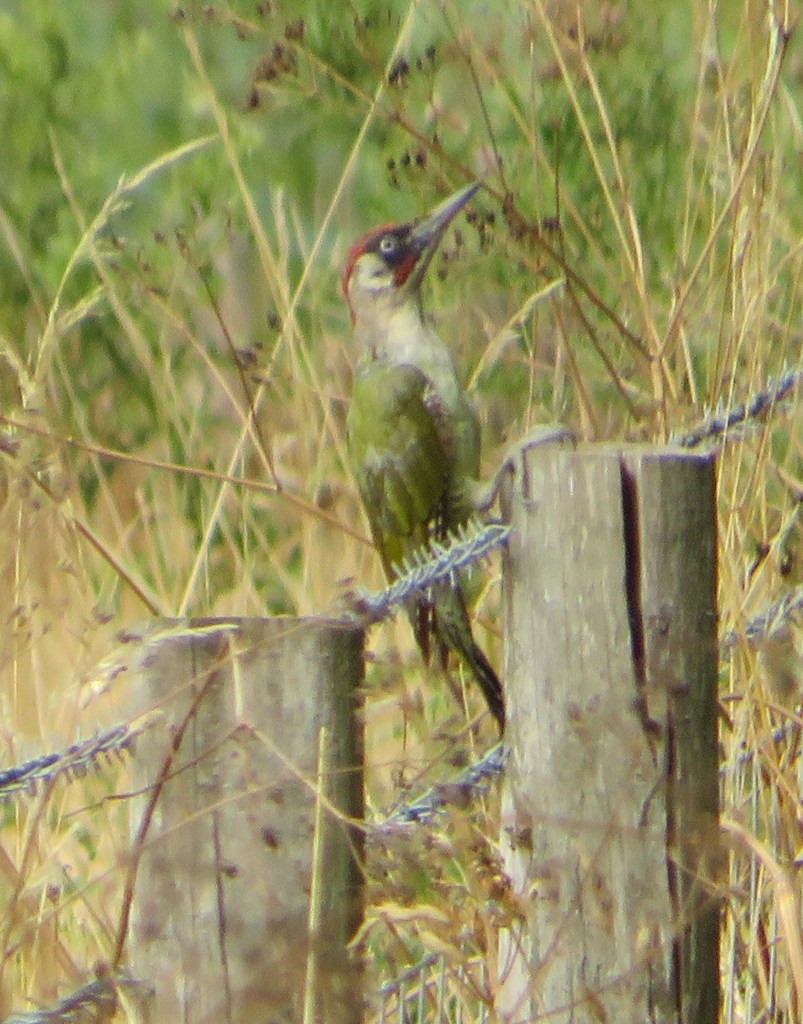
Because peace and mindfulness is needed to restore balance, I am excited to report that I have a pair of blackcaps, that have been seen several times in my tiny, concrete infested garden. Here’s a hurried, blurry photo, taken through two panes of double glazing, to prove it.