Christmas Cooking, a Little about Family History and a Bathroom Blitz

Traditionally in my house stir-up whatever day of the week it is is in October half-term. This year was no exception and I was joined on Zoom by some descendants for synchronised cake making. Said descendants don’t make pudding, so I was on my own for that one. Last year, the first attempt at cakes was a total disaster but puddings were a great success. Newly lacking a Rayburn, I decided to try cooking them in a slow cooker, which worked really well. I should explain that I always make three Christmas puddings. This year there will be five of Christmas lunch, some of whom don’t like Christmas pudding but often there’s only two; yet I’ve ‘always’ made three Christmas puddings, so three it is. The recipe makes three and although I am perfectly capable of scaling the quantities down (my cooking may be dodgy but my maths is ok), I don’t. I’d arranged to borrow another slow cooker, so that I could cook more than one at a time. Imagine my surprise, when looking in the cupboard that is really only opened once a year for my annual foray into cooking, to find not one but two slow cookers already there. Thinking I must have borrowed one from the fisherman of my acquaintance last year and not returned it and not being in the slightest surprised that he had just deposited another one for me to use this year (nothing that ‘might come in useful’ is ever thrown away), my reaction was merely – oh good I can cook all three at once. All three puddings duly spent the day in their slow cookers, although I did notice the water in one evaporated quite quickly and had to be topped up. They turned out looking good and I went to wash up the ‘slow cookers’, only to find that one had been cooked in a rarely used and clearly unrecognised, rice cooker instead! For more random Christmas memories see here.

Bathroom next. I have more bathroom space in this tiny bungalow that I had in my five bedroomed house. I use my lovely en-suite and the, similar sized, bathroom is really only used for guests. It was a not-so-delightful salmon pink, with dark mahogany and gold embellishments. For some reason the previous owner had stuck mirror tiles round the bath, which meant you really didn’t want to look in the wrong direction when sat on the loo. A year ago I decided it had to go. It has been a long wait but last week it was my turn to reach the top of the plumber’s list, either that or he was heartily sick of being phoned up to ask exactly which spring he was going to do this by. Still a way to go but he’s really cracking on now and the salmon pink is no more. Firstly, please can someone explain why, when I am having the bathroom done and said bathroom contains only one piece of furniture, why five other rooms (pretty much the whole house) have been impacted and now contain ‘stuff’? To be fair, I have moved the precious china cupboard in the hall to allow for free passage of the ex-bathroom to the van, so that accounts for some of it. Secondly, why is it that, as soon as the water is turned off (despite being warned), you need to use it. I’ve been feeding the Christmas cakes and in the absence of a working tap, I was forced to lick excess brandy off my fingers afterwards. The plumber may have wondered why the house and I, smelt of brandy at 9.30am.

I did promise you some family history and yes there’s been some. Prompted by the upcoming Forgotten Women Friday collaborative research, I remembered that I had a post office worker in my own family. I’ve therefore been writing about my grandmother’s cousin Kathleen. As she was someone with no descendants, if I don’t tell her story no one will. It seems that she was among the first women to qualify for the civil service and subsequently worked in the savings bank department. I’ve also been preparing my Timelines talk, which will be recorded for Rootstech. I’ve got a live one to do as well but that’s for another day. In order to create illustrations for the talk, I used the free version of Canva to produce a timeline for a small section of my grandmother’s life. Very fiddly and not scope for a huge amount of detail but decorative. In other news, a chapter of the next book is finally done. This is definitely a don’t hold your breath thing, as progress is a lot slower than I’d like. This part involved case studies of asylum patients and there were some fascinating but very sad stories. I am also in full-on Pharos course mode, with the one-place studies course drawing to a close – and what a lot of fascination studies are in the offing from the students. Starting on Monday is ‘Elusive Ancestor’, where we look at ancestors who can’t be found where they should be, almost certainly because they’ve changed location. I’ll be readying my sledge hammer to hopefully make some dents in a few brick walls. Feel feel to join us, there still some spaces.

Cousin Kathleen

A Few Days in Shrewsbury

We’ve just returned from a few days in Shrewsbury. We were staying on a very posh-for-us caravan site because the same complex also had ‘barns’ where caravan-less members of the family could stay. I was a fail at this kind of location from the start. We checked in and were given a card to access the site barrier, no problem, we were used to these. I was also given two ribbon like bracelets to indicate that we were paid up residents. For safe-keeping, I hurriedly put both on my wrist, one for me and one for the fisherman of my acquaintance. Caravan pitched I attempted to pass his to him. Ah. This was the problem. I had tightened the bracelets to ensure I didn’t lose them by sliding a plastic ring up each ribbon. It turned out that these were one way fastenings, a little like cable ties – hindsight and all that. I managed to wriggle my way out of one bracelet but the other was firmly affixed. Not wanting a bracelet on day and night for four days, I had to return to reception and ask to be cut out and have a new one, which I made sure was looser.

The barn, for younger members of the family, came with a firepit and hot tub, both of which had to be fully explored.

The weather was kinder to us than the forecast promised and we explored the delights of Blists Hill Victorian Village. Obtaining advance passes online was an intellectual challenge in itself but we managed it. The Ironbridge complex is due to be taken over by the National Trust, which caused a hiatus in the booking system at precisely the wrong time. It was interesting to chat to the various shopkeepers and tradespeople ad to spend the ‘old’ money that we had exchanged in the bank. Mind you, the existence of a bank seems to be something that is now consigned to history. The traditional fish and chips, fried using beef lard were probably not the best thing for our arteries but were delicious.

The next day was a Shrewsbury Trail, or at least part of it before it got too much for some of our party. The first challenge here was ensuring that both cars were parked in the same place (they weren’t) and then finding our way out of the shopping centre adjacent to the carpark we ended up in. We did manage a quick game of rockets and meteors (like snakes and ladders) in the shopping centre first.

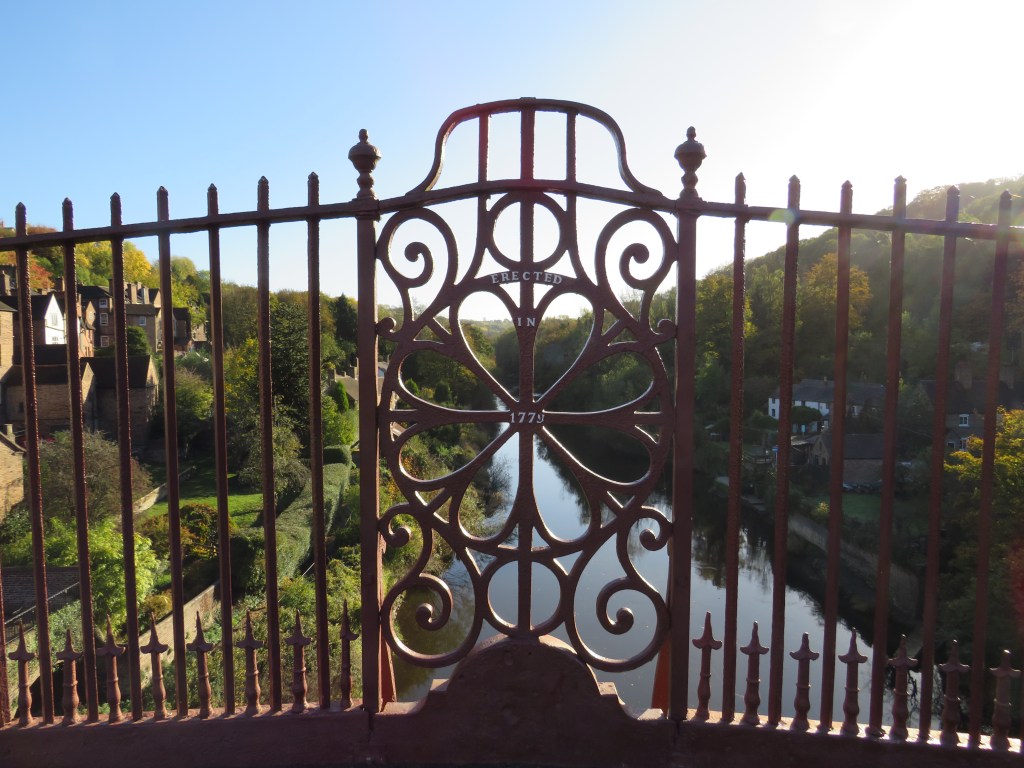
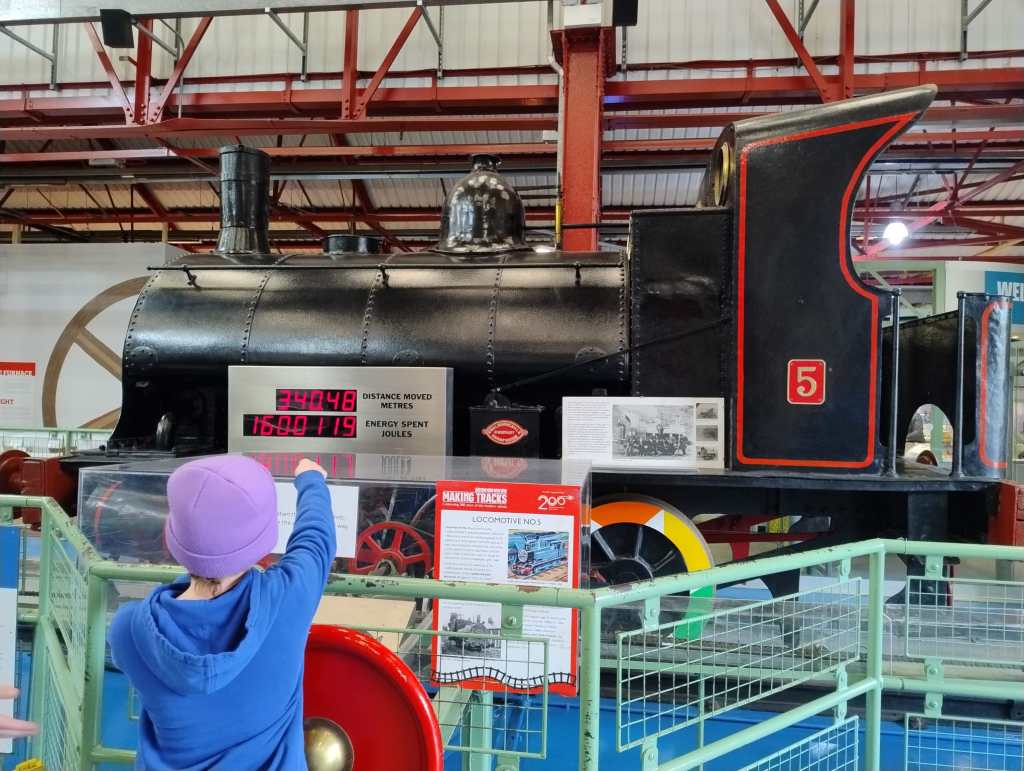
Then a visit to see the Ironbridge in glorious autumn sunshine; the first iron bridge to be constructed in the world, in 1779. This is now a world heritage site. We moved on to Enginuity Science Museum, where we virtually made pig iron, moved locomotives using levers, solved (or didn’t) puzzles and other excitements. There were plenty of other museums in the Ironbridge family for those with more stamina but we decided to quit while we were ahead,

Now we are back home for what might laughingly be called a rest.

Round up of Family History Busyness

It has been a while since I did a round up of my ridiculous busyness so here is what my life has looked like since visiting four counties in four weekends in September. Take a deep breath and dive on in.

First, a lovely chat with my Few Good Women family, with one of us practicing an (excellent) talk. Next, because exercise seems to have slipped from the agenda, a bird-watching stroll on the nearby country park, organised by the rangers. Then the first zoom chat for my Pharos Putting your Female Ancestors into Context course. Away from family history, it was time for the annual flu jab. I returned at 10.30am to a series of urgent messages asking if I could fill in for a speaker in 4 1/2  hours’ time at Devon FHS after AGM talk. Fallen Women filled the void. October’s Society of Genealogists‘ Biography Club topic was toys and childhood and we had fun reminiscing. I have even done some work on my own and I am pretty much still on track to be finished in time for next year’s big birthday. Then a two talks Tuesday; Marginalised Ancestors in the morning and Barefoot on the Cobbles live in the evening. Copies of my Barefoot novel are now almost sold out.

In no particular order, there has also been another Pharos chat, a talk about prostitution (the history of) then a 6am start to speak to the Genealogical Society of Queensland on seventeenth century crime and punishment. This was International Day of the Girl but the Few Forgotten Women had already sorted their online offerings so nothing was needed for the day. Plenty of socialising and eating with visiting friends this week amidst finally doing some work on what is planned to be my next book; some excellent case studies are emerging. I took part in the Society of Genealogist’s Devon research showcase. This should be freely available on the SOG YouTube channel shortly. I’ve been virtually in Oxfordshire to talk about home industries and then in Buckinghamshire for the Impoverished and Insane. Listening to a talk for once on Wednesday then a two talks Thursday, Forgotten Women and the 1838 Fishing Disaster this time. Yesterday was Forgotten Women Friday, having fun researching women who worked in the Ulster linen industry.

Then it was now and yes things will soon start to get a little less hectic as family time beckons, though I am not entirely sure that time with my lovely family isn’t equally exhausting but in a rather different way.

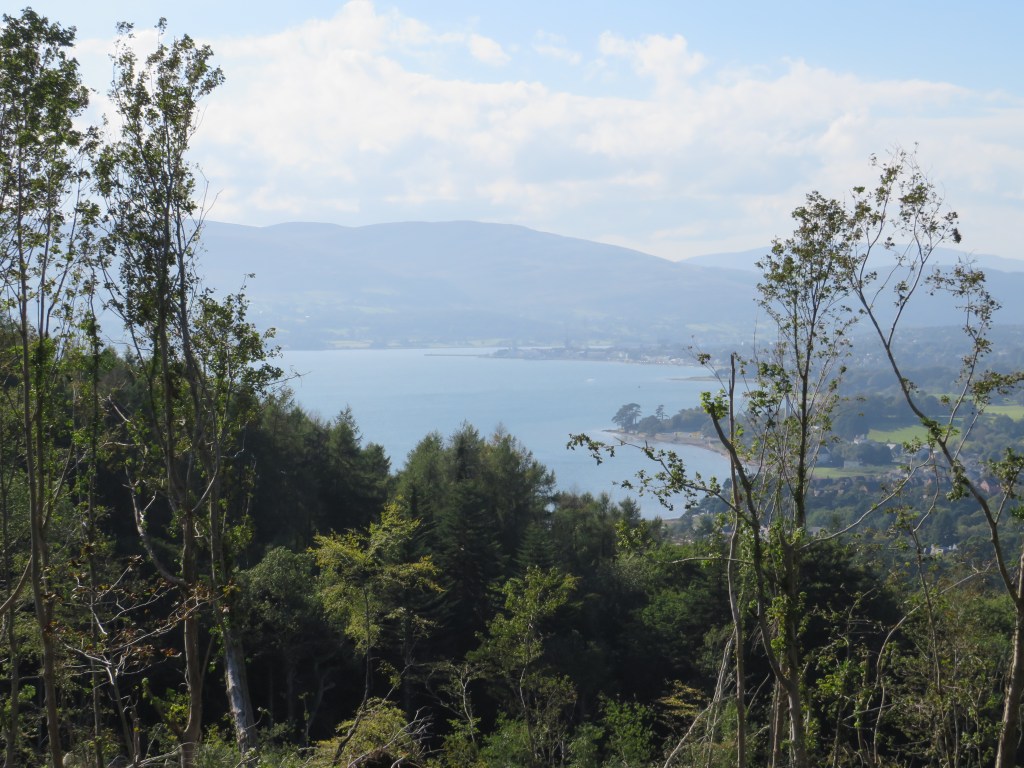
Today’s picture is of County Down, in honour of yesterday’s Forgotten Women research.

Why History Matters – the nearest I’ll come to a political post

I deliberately don’t post about politics because I don’t like confrontation but remaining completely silent makes me part of the problem. I don’t have allegiance to a particular political party, although there is currently one that I would never vote for. This is not a political post but it certainly touches on current affairs. When I was interviewed for college, part of the interview process was to write an essay on ‘why study history?’. I don’t really remember what I wrote; it was the 1970s, I know I mentioned the Irish troubles. We need to understand history because we need to learn from it. It is no coincidence that George Santayana’s quote, ‘Those who cannot remember the past are condemned to fulfil it’, is on my home page. History is getting increasingly squeezed from the school curriculum. It is seen as being more relevant in today’s world to study computing, business studies, robotics and other subjects that were unimaginable in my school days. Don’t get me wrong, that knowledge is important but so is having a world in which to utilise that knowledge.

The human race seems to be rapidly losing the critical thinking skills that come with studying history properly. We need to be able to seek out proper evidence, we need to understand the role of propaganda and the power and danger of the megalomaniac. We need to be able to sift the truth from the distortions of the truth and downright lies that abound. There has always been propaganda and misinformation but in today’s digital world, that spreads so much faster and so much further than ever before. People believe what they read in the biased popular press and on social media. They fail to realise that some news output is not balanced and impartial but is presenting a partisan and misleading view that suits a particular political purpose. Whereas, in a pre-digital age, people were only likely to pass this rhetoric on by word of mouth, now mis-information can be passed on to thousands at the click of a button.

There are unthinking family historians following the shaky green leaves and believing impossible relationships, which they graft on to their family trees. These family trees get copied and replicated and before long, the weight of ‘evidence’ is in favour of something nonsensical. This is non-evidence; where is the source of that information? In the great scheme of things, if someone gets their family tree wrong, that does not have serious consequences. Believing other kinds of mis-information is potentially much more serious and downright dangerous. Daily, I hear or read friends and acquaintances spout or write ‘facts’ that two minutes checking would prove to be false, even if their common sense has failed to ring warning bells. The keyboard warriors don’t bother to fact check, ten, a hundred, a thousand, ten thousand people believe this, so it must be so. At a time when information has never been more accessible, we are nonetheless drowning in a sea of ignorance.

The world is currently a terrifying place. I hate watching or reading the news because I, like many, am fearful, not just for myself but for my family, my friends and a world that seems to be rapidly slipping from our hands. We seem to be rapidly evolving into a society where humans are no longer humane. What has happened to that sane world, where the majority of people are kind, are caring, are empathetic. I am not a psychologist, although I did study psychology as part of my undergraduate degree. I have however spent more than fifty years studying the people of the past, trying to understand their behaviour, their motivations and why they made the life decisions that they did.  One thing that studying history has taught me is that there have always been periods of crisis or near crisis. There have always been threats to democracy and to the status quo. There have always been individuals who have risen up to take advantage of people’s fears and who have the personality to gather followers around them, largely by latching on to one or two issues that chime with certain sections of that community in fear.

By studying history, I have observed how humans behave when they are under threat. That might be a threat of conflict from an ‘enemy’ (real or perceived), a threat of poverty at a time of dwindling resources, a threat of epidemic, of famine or of natural disaster. Humans find it difficult to cope with threats and the stress that it causes, particularly if it is unremitting, ongoing stress. Studies of those who, for example, have suffered from long term domestic abuse, or who have spent prolonged periods in a combat zone, have discovered how detrimental that stress can be both physically and mentally. As a species, we cope best with stress if we can identify the cause and lay the blame for that stress with an outsider. If the threat is perceived to come from someone not like us, it is easier to cope with than a threat from within. Who the people ‘not like us’ are has varied over the centuries. We blame the people not like us even if all logic suggests it cannot be so. In 1348, in England, Jews were blamed for the plague. It was obvious that these people not like us were poisoning the water. Except of course the Jews had been expelled from this country in 1290. We are still guilty of applying such warped ‘logic’ in order to blame people not like us for the things that we fear today.

This is not a political post because I am not brave enough. I have friends and acquaintances who do not think as I do and I am not robust enough to engage in acrimonious debate. I am selfishly wanting peace and quiet in a world where there is no peace and quiet. I am cheered by the knowledge that there are those who do sift the evidence and seek the truth and many of you reading this will be amongst them but we tend to be the quiet ones. I watch people being drawn in by bombast and rhetoric and ‘information’ that has no foundation. I see people following leaders because one aspect of what that leader spouts feeds into their fears. They do not look beyond the loud headlines and the single issues to wonder about the polices that might underline those particular political stances. They do not think of the practicalities involved, of how what is being spouted might be achieved, if indeed there is a coherent, workable plan. They do not consider how what results from these viewpoints might impact on other aspects of all our daily lives.  

Many of my followers are family historians or authors who carefully research their books. Some of you are here because I occasionally post about travel, about gardening, or special needs. Whoever you are and whyever you are here, please, please for the sake of us all, try to persuade those around you to look beyond the bombast and the catch all headlines, to look beyond the appeal to their underlying fears and analyse what is being said. To look beyond the propaganda to seek the facts. Think about what some of these policies will mean, both for us and for the people not like us. If we are the strong, we need to stand up for the weak, for those who have no voice. Let us work towards returning to a world where empathy and compassion, for each other and for people not like us, are no longer derided but are seen as core human values to be sought after and lauded. If that makes me woke, or whatever the current derisory term is, then I am very proud to be so.

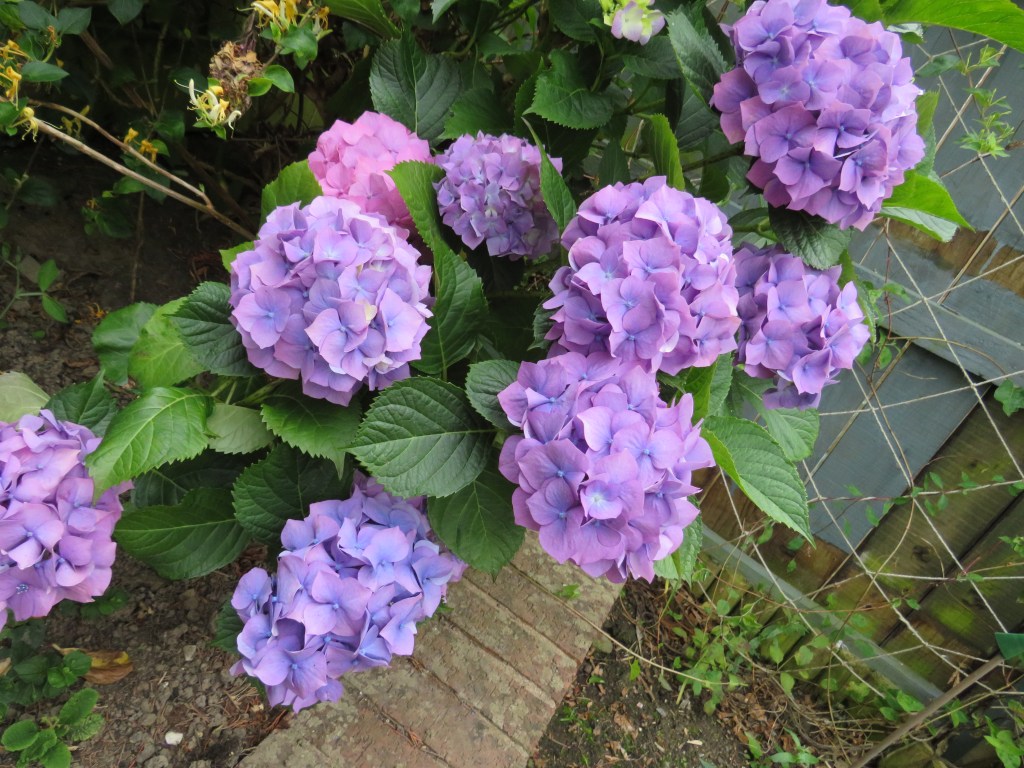
Normal service, with posts in a lighter vein, will resume shortly, as long as there’s a world that will continue to allow me to do so. I’ve included a picture to lighten your day.

The Fourth Weekend of Family History

The last of our four consecutive weekends of family history took us to the Isle of Wight, to celebrate forty years of Isle of Wight Family History Society. As two very early members (membership numbers 19 and 50), we had to be there. Apart from anything else, I was due to give a talk, so that would have been awkward if I decided not to go. The Saturday was a conference with a pubs and brewing theme, as well as a chance to promote the ongoing pubs and publicans project. I know from experience what is involved in organising these events and thanks go to those who worked hard to put the weekend together.

That same experience shows that it is the things that you can’t control that cause the issues on occasions such as this, not that any of this spoiled the day. It was a little cool in the hall but we had been forewarned to dress warmly. We had also been advised to bring cushions, another wise move. Despite careful preparations, the faulty HDMI cable, causing one or two slight technical delays could not have been foreseen, nor could the flooded toilet, necessitating very loud hoovering up of flood water during one presentation. By the time it got to my turn to speak, it was only what seemed to be a shouty protestor outside in the square to contend with; or maybe, in line with our theme, he’d been overindulging at a local licenced premises. My session was a departure from the theme. Instead, my remit was to talk about changes in the family history world over the last forty years and suggest thoughts about where we might go in the future, with some Isle of Wight anecdotes throw in. I was able to spend a self-indulgent hour reminiscing and trying not to reveal too many well kept secrets from the past.

There was a second enjoyable day on the Sunday with an anniversary lunch. It was lovely to see so many friends of longstanding once again and catch up as if we’d seen each other only yesterday.

So am I home to indulge in rest and relaxation? It seems not. I’ve already given one talk and there are five more in the diary next week. I’ve been preparing an online course for those who are new or newish to family history, which will be delivered next month. There are still a few spaces if you know anyone who’d like to embark on a family history journey. You can book here. Just a warning though, that it will take over your life and I am taking no responsibility for that.

A just because photo to cheer you up.

Peterborough Days

A few days in Peterborough allowed me to meet up with some of my descendants and see some local sites. First, a trip to Kirby Hall that nearly didn’t happen. As we neared the Hall there was a road closed sign. We followed the, very long, diversion to the other end of the closed road only to find …… a road closed sign; there was no indication that there were exceptions for access. This time there was a man sat in a works van and on enquiring he moved a few cones and we were told we could drive through to the Hall. Wondering if we might actually be able to get out again, we proceeded with our visit. The Hall were going to be in for a quiet day.

Kirby Hall is a ruin that was one of the first buildings to be acquired by the state for preservation, under the auspices of what is now known as English Heritage. It was built for Sir Humphrey Stafford in 1570; the architect was John Thorne. Five years later, Stafford was dead and four generations of Christopher Hattons went on to own the house. The first Christopher Hatton was a great favourite of Elizabeth I, allegedly first coming to her attention because of his dancing prowess. Yet, although he became her Chancellor, she never visited the Hall. What Hatton lost in prestige over this he probably made up for in the money that he saved by not having to host the Queen. James I, on the other hand, visited more than once. Christopher Hatton mark 3 was a great antiquarian and had the Hall remodelled, including the addition of a library. Inigo Jones provided plans and the appropriately named royal stonemason Nicholas Stone, was hired.

Ardently Royalist, Hatton fled to France during the Civil War and spend years trying to rebuild the family fortunes after the Restoration. His grandfather had been given land in London by Elizabeth I, which CH3 developed into Hatton Garden. Like his father, Christopher Hatton 4 was the governor of Guernsey and his wife and mother were killed when the gunpowder store at Castle Cornet blew up. Hatton himself was saved  by a black servant, John Chappell, who was left a pension of £20 a year in Hatton’s will. Between 1772 and 1831, most of the contents were sold, the owners ceased using the Hall and it was given over to estate workers. It gradually fell into disrepair.

Notable features were the bay windows and the gardens, which are believed to have been designed by George London, who name was familiar from my seventeenth century gardens talks. There were also the most enormous pears and apples I’ve ever seen in the garden, both the size of your average grapefruit.

I can report that we escaped via the ‘closed’ road and that zero work appeared to be happening, or to have happened. Disclaimer – I take no responsibility if I have confused the various Christopher Hattons.

The next day and it was a National Trust destination this time, in the shape of Lyveden Lodge. In Elizabethan times, the manor here was owned by Thomas Tresham. He was orphaned at a very young age and was brought up by and married into the Throckmorton family. Tresham was knighted by Elizabeth I but by 1580 had converted to Catholicism; thus just six years after his knighthood, Trensham was in prison for his beliefs. Trensham had his staff begin to build an impressive lodge for his guests, with plans to surround it with gardens and vistas; directing some of the proceedings from prison. The garden is held out to be one of England’s oldest garden landscapes. The lodge, manor and garden were full of Catholic symbols. Recusancy fines, a lavish lifestyle and having to provide dowries for six daughters meant that, when Trensham died in 1605, he owed the equivalent of a million pounds in today’s money. Realising that they wouldn’t be paid, the workers downed tools and the lodge was never finished. His son rebuilt the manor but abandoned the lodge. It was Thomas’ son, Francis Trensham, who became embroiled in the gunpowder plot. It is likely that it was Francis’ letter, warning his brother-in-law Mounteagle to stay away from Parliament, that led to the plot’s downfall. We planned to go to a garden after leaving Lyveden but it wasn’t open, so back to the van it was.

With a nod to my experimental archaeology course and our neolithic house-building experiences, our final visit was to Flag Fen. This is the site of a bronze age causeway, one kilometre in length, constructed when water levels were higher. The causeway was built from oaks, alder and ash, felled between 1280-920 BC. The uprights and platform required two million timbers. The causeway was in use for 1300 years and is thought to have had a religious significance as many objects found nearby appear to be offerings. There are also some prehistoric logboats being preserved on site. The staff were very informative and there were plenty of volunteers and conservationists on site. They have just been taking core samples and we were able to see wood that has been submerged since the bronze age. Having survived for thousands of years, the causeway is reaching the point where it is almost beyond further preservation due to changing conditions.

Weekend Three of Four Weekends of Family History

This was the weekend of the Secrets and Lies conference run by the Halstead Trust. I’ve been to a good many of these residential family history conferences over the years (and I do mean years, my first was over forty years ago) and this rated as one of the best. We’d travelled up to Peterborough the previous day and were ensconced in a caravan site half a mile away from the conference venue. Half a mile that is if you were prepared to cross a river and a railway line; it was actually two miles away by road. We were there for everything except bed and breakfast however so weren’t going to miss out.

Having had a quick recce in the morning, we arrived at the venue in the early afternoon to meet many friends. This was our first post-covid residential conference, so this was a first meeting in person for several years for some of us. It was also lovely to meet people who I was used to seeing in a rectangular box on a screen and discover how tall they were! There were also several of our lovely A Few Forgotten Women volunteers present; most appropriate given the conference theme of secrets and lies.

Lectures kicked off with Maggie Gaffney talking about a transportee, followed by Paul Blake illustrating just how the visual image, or our perception of that image, can lie. We were then treated to tales of bigamy and adulterine births in Scotland by Stewart Stevenson. The evening meal followed and Else Churchill rounded off the day with post watershed accounts of the bawdy courts.

Saturday dawned and I was first up, chatting about prostitution. I was glad that both my sessions were early on in the day as my capacity for being alert for a whole day at events like this is clearly waning. There was a choice of talks for Saturday’s lectures, so sadly I had to miss some I’d would have liked to hear. My first choice was Margaret’s ’Auntie Jo’s lost on the Family Tree’, which included the fascinating story of Agnes Beckwith’s life of secrets and lies, alongside a notable swimming career. After a buffet lunch of sandwiches and chips, which struck me as a rather odd but most acceptable combination I went to help Chris, who had been personning my bookstall all day. One of the advantages of in-person talks is that you do tend to sell a few books.

My choices for the afternoon were Alan Moorhouse’s tales of bigamy, Donna Rutherford’s detective story, cracking a coded message on the back of a postcard and Sarah Wise, with an account of her research into those incarcerated under the 1913 Mental Deficiency Act. Then a quick trip back to the caravan to get what passes for glammed up in our world. I was proud to receive a certificate of achievement from the Society of Genealogists. I’d actually been awarded this during Covid but this was the first opportunity for it to be handed over. Then to the food, to be frank, we aren’t a great fan of gala dinner food, preferring hearty platefuls of plainer fare over artfully arranged sprigs of not much surrounded by bits of drizzle. It is often a case of choosing the least worst menu options. This was not too bad by comparison. The soup was tasty, my aubergine something or other and Chris’ chicken something else were acceptable and puddings always go down well. A word about the dining room staff, who were just incredible in their efficiency. The woman in charge was managing them with a series of hand signals that made her look like she was a race-course bookie. She really should be in a top-class restaurant not a motel on a roundabout.

Then Sunday and by this time, I am realising that it takes stamina I am not sure I have to get through these events intact. The first talk by Calista Williams about the staff in Cottage Homes dovetailed well with the premier of my talk on Fallen Women. Judie McCourt then told us about Emma Costello’s life and divorce, including an encounter with a mystery Italian on a sofa. After more sandwiches and chips for lunch, Debbie Kennet treated us to a DNA case study, uncovering a paternity mystery.

Then it was all over. I know from experience just how difficult and exhausting these conferences are to organise and the team did a great job. I don’t know how many crises they were fielding under the surface, I am sure there were some but it didn’t show. I think I have persuaded a few people to come to our conference next year and I have a lot to live up to but I am confident of our excellent programme and beautiful location, so we do it all again then, although I have another bite of the conference cherry in between at the Guild of One-Name Studies conference in April and stand by for more family history next weekend.

Post conference, we arrived back at the van to find that it was three foot further back than we’d left it. Next door but one with huge new-to-them caravan and an automatic Volvo had been trying to move off site to go home. They’d left the motor movers on (which move the van into place a bit like a remote control car). Husband driving leaves engine running and car in drive mode and gets out to turn said motor movers off, as they are acting as a break. He turns them off – car then takes off on its own with the caravan, heading for our van. Wife in the passenger seat tries to steer car away from our van. Guy in nearby camper van tries to push their van away from ours and gets knocked down. At least this is the rather garbled story we came back to. Minor cosmetic damage to the tow hitch of our van and two broken feet where it was pushed back a metre. Site owners had been trying to ring but we had turned phones off in the conference. We were met by very apologetic damage-causers who were clearly still in shock five hours later. We ran checks to ensure we could still wind our legs up (that’s the caravan’s legs – not so sure about our own) and connect the car to the van, which were the concerns. Then to recover from the weekend.

Family History Weekend Number Two (of Four)

Before we get to weekend three of family history this month, I ought to report back on last Saturday, weekend two. We headed across the border to Bridgerule. I say across the border but the River Tamar divides Bridgerule, so some parts are in Devon and some in Cornwall. We were heading for  the church, where there was to be a local history display and we were booked to give family history advice. We had a postcode. The sat-nav didn’t recognise the postcode. Never fear thinks I, we will get to Bridgerule and if we can’t see the church, we will use What Three Words, which I also have. Bridgerule is tiny but there was no obvious church. Sadly there was no obvious phone signal either so the what three words option was out. We found the community shop and asked for directions. In fact we asked for directions twice more after that. It seems that some people can’t distinguish between a parish church and a non-conformist church. Eventually we find the church and the organisers had put on a great display, with equally great cake on offer.

I’ll be honest, in a place the size of Bridgerule, we were expecting one man and a dog if we were lucky but no. There was a steady stream of visitors and they didn’t just glance and pass by, they stayed and engaged. There was someone sat at our stall, asking for family history advice almost all day. In all, we fielded seventeen detailed enquiries. Partly I think because most of the visitors weren’t experienced family historians, we were able to help every single one. They all left with new information and delighted smiles. It is a long time since I have felt quite so much like a magician.

There was an interesting incident with Amazon in the middle of trying to record a talk ready for next month. Not sure if it was just because the order included an electrical item but I was asked for a tracking number. Unfortunately the driver’s only two words of English appeared to be ‘tracking number’. Where was this tracking number? I always delete all the emails that say ‘your order is out for delivery’ his engine is running while I look through the 200 or so delete emails of the past two or three days (searching didn’t seem to work, nothing in junk). Then he finds the third word in his English vocabulary ‘app’, nope, no app; I do all my stuff on the laptop not the phone. Finally found a teeny tiny tracking number when I went to the Amazon website. The whole palaver must have taken about fifteen minutes all told. By the time we’d finished, the noise of the pouring rain on the conservatory roof made recording tricky.

What else has been going on? A meeting with a new family member for Chris, who also has a Buckland Brewer connection and an excuse to eat cake. A talk to give and some work on a Cornish family. I’ve also been giving my talks for the coming weekend a final once-over. One was a little lacking in illustrations, as everything I wanted to use was copyright. As a consequence, I’ve been having a play with ChatGPT. I don’t have a paid account so there’s only so much you can do each day. Nonetheless, it has livened up the presentation. Really looking forward to chatting about the history of prostitution and fallen women this weekend, as you do – well, as I do anyway.

Image ChatGPT

Up the Garden Path 16

It has been a while since we’ve been up the garden path and to be honest, the garden has been a bit neglected over the summer. It has mostly been about a great deal of watering and thanks to the new wooden barrel, large capacity, water butt, I didn’t run out of water, although it came pretty close. I do worry slightly that it still smells as if I am watering things with neat whisky though. A lovely friend came and kept things alive when I was away in May, aided by me moving pots to the shady part of the garden and standing them in children’s paddling pools and the like. It turns out that I have about fifty things in pots, or rather things in fifty pots, which may be a little OTT even for a garden with very few flower beds.

A lot of time has been spent trying to weed the gravel, in which eleventy billion violets self-seeded. A few other things self-seeded as well but I allowed the marigolds and oriental poppies to stay while they flowered and there’s still a random foxglove. The patio, which makes up the majority of the garden, is another story. Anything that will grow in the cracks has and I don’t want to repoint it as otherwise there’s nowhere for the heavy rain to go. It looks, to be frank, a total mess. I do have a lethal looking implement ‘not suitable for use by under sixteens’, that is supposed to be ace for weeding gaps between paving slabs but is actually pretty useless. Much as I am not keen on the idea, I fear it will have to be weed killer. Now all I need is a dry spell to apply it, which isn’t looking like any time soon.

The large tree in a pot that was rescued and I was using to fill the one tiny gap where I am overlooked decided to die and is now no more, although the two bare twigs about nine inches long that I got from the Woodland Trust are flourishing, as is the lemon tree, which actually has lemons on, not that they look like being edible. Last year my new apple tree had one solitary apple, this year there are several, they are still a bit small, so I am hoping they get to harvestable size. A new apple tree in a pot has three apples, although the pear looks a bit sadly.

Definitely not all success stories. The Josephine Bruce rose an the new wisteria started off looking supper healthy then suddenly looked windburned, even though they are in the most sheltered bit of the garden. The rose now looks seriously poorly; too much whisky perhaps? I will prune heavily and hope for better things next year, a flower would be a start.

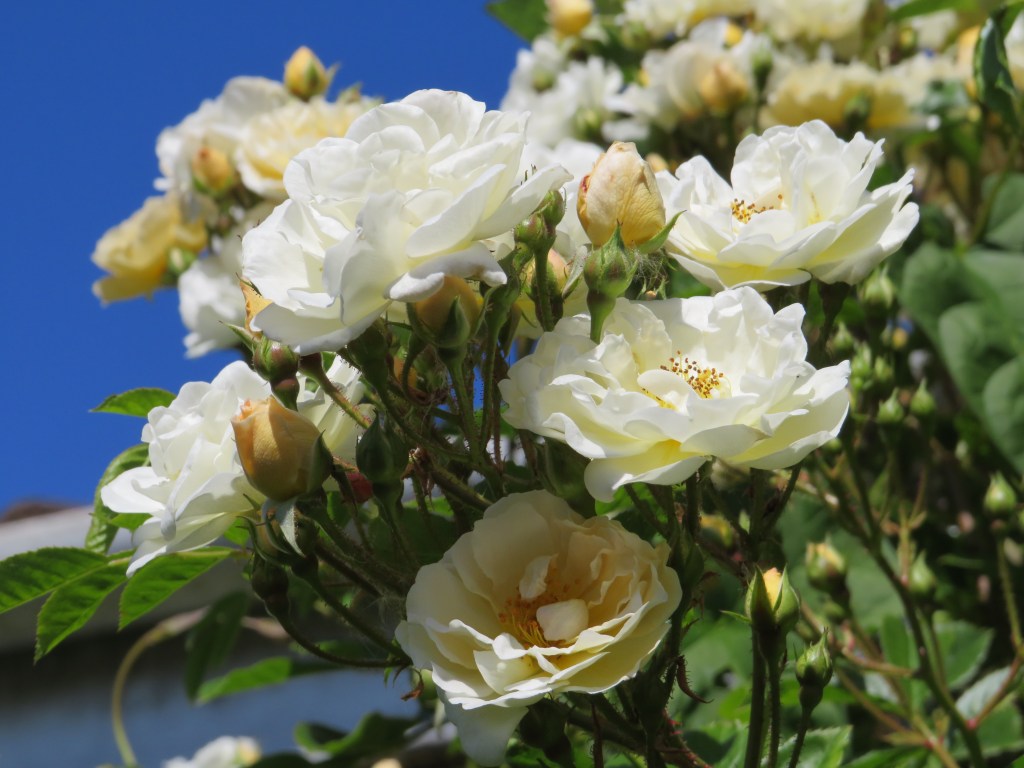
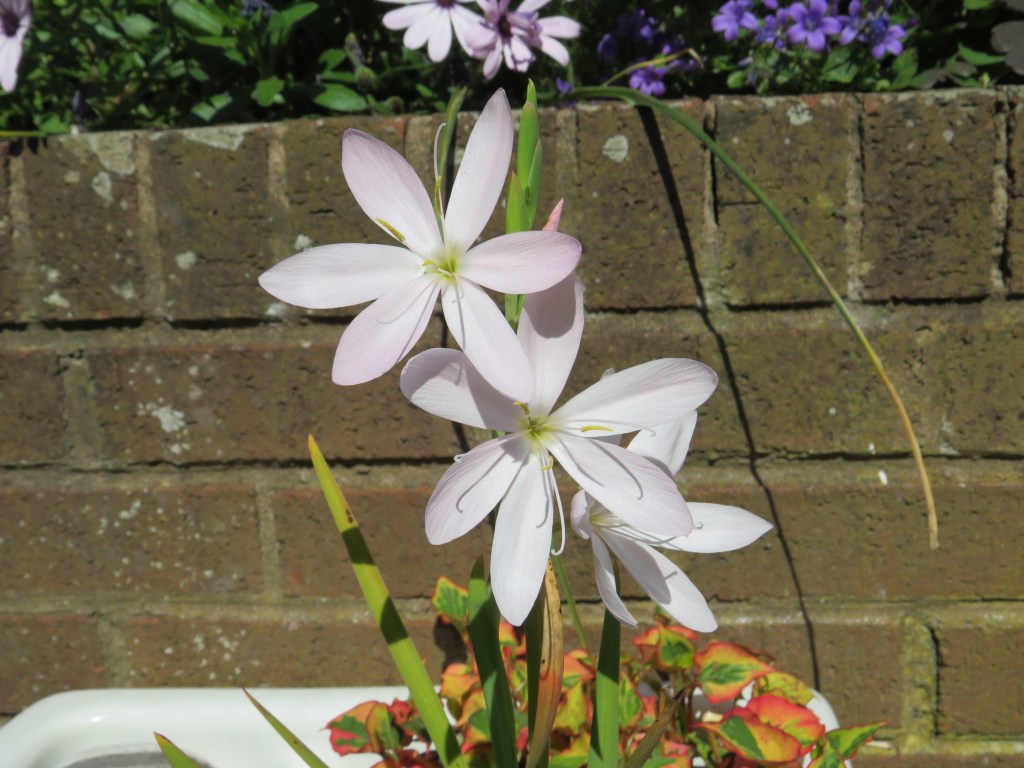
I guess having seventeen different plants in flower in September isn’t bad for a tiny garden, even though it does look a bit bare and drab in general. More work is needed! Some pictures of the last three months of flowers to cheer you up if it is wet, windy and decidedly wintery with you too.

A Family History Weekend and a Missed Opportunity

The Malvern trip continued with Gloucester Family History Society’s open day at the Heritage Hub. It was lovely to be able to see people in real life and chat about family history. I listened to Simon from WeAre.xyz, talking about his software (quick resolution to do more with my site), then gave my A to Z talk. After that, it was out for a meal and a catch up with family history friends. This is the first of four in person family history weekends in four different counties this month. A bit like buses, you wait for ever, then they all come at once,

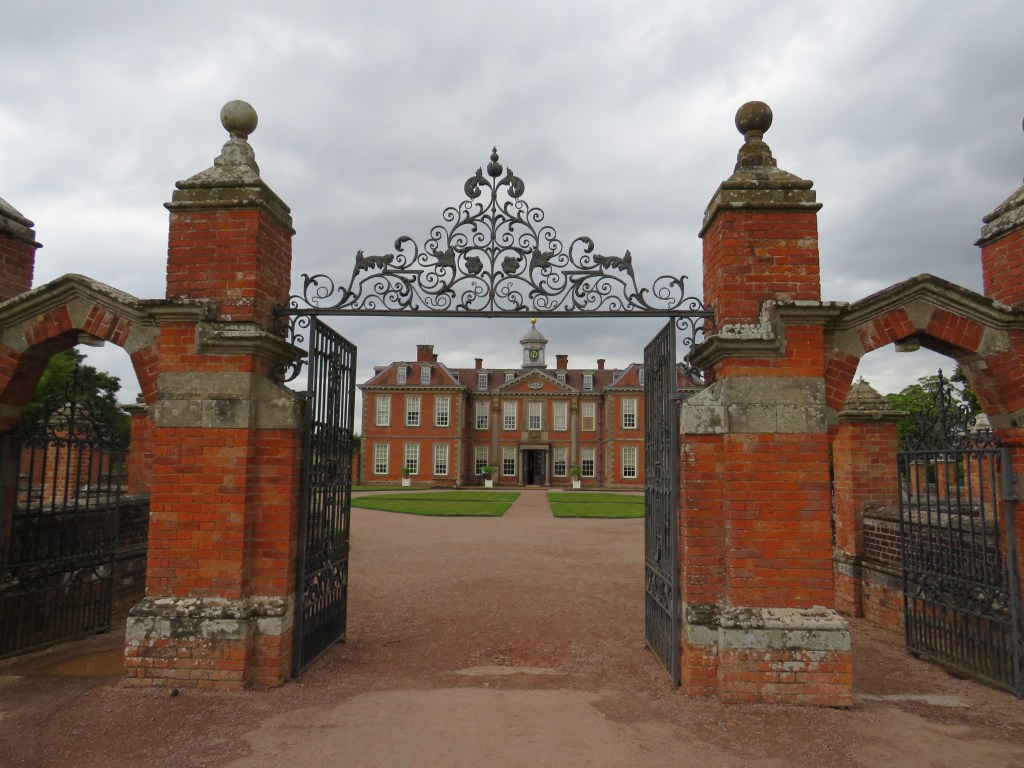
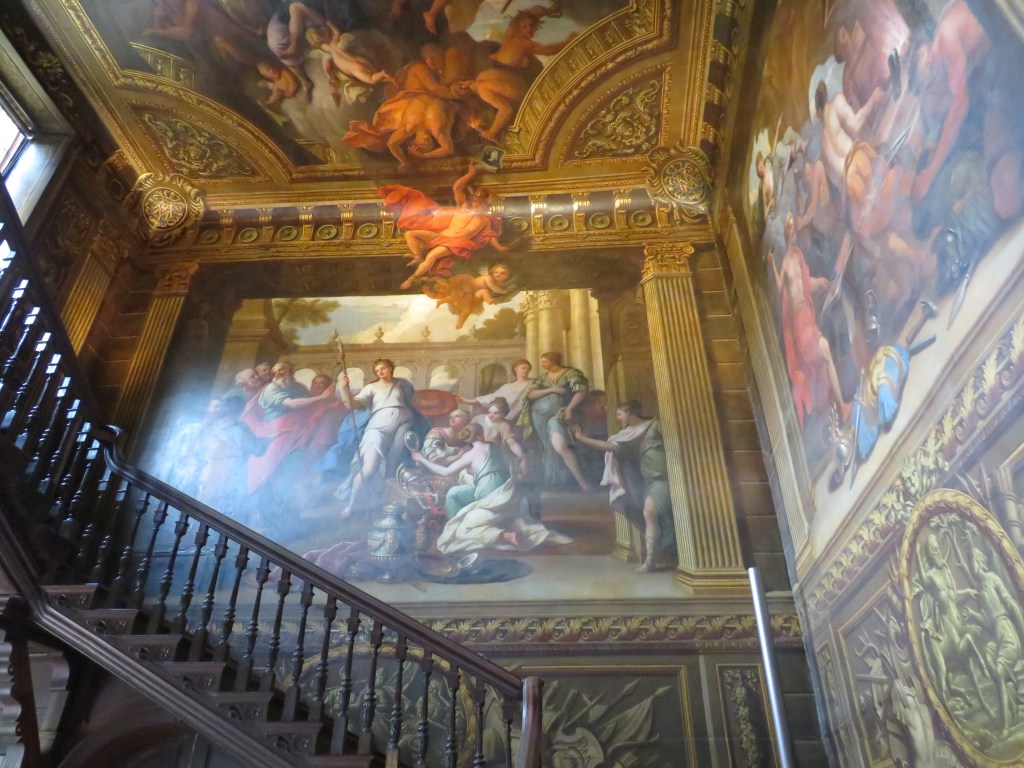
Sunday was rainy. I mean seriously rainy, so rather than  head off early, as we prefer to do, we sat it out, while I looked at the Withenbury family goodies I’d found at the Worcestershire archives. Note, I did not look back at earlier notes, a big mistake. The rain cleared up eventually, giving us just time to visit Hanbury Hall, a nearish by National Trust property and former home of the Vernon family. The most outstanding features are the wall and ceiling paintings by James Thornhill, which, unusually, were painted on dry, not wet, plaster. There are also traditional, knot-garden style gardens, with plenty of topiary, which I photographed for use in my seventeenth century gardens talk. I was also quite taken with a 1715 election ‘poster’, when Thomas Vernon was standing for the Whig cause. This, I thought was about all Hanbury Hall had to offer, how wrong I was.

We returned home. This involved me driving through storm and tempest, with torrential rain meaning that I could barely see the road. Fortunately that was just the last couple of miles, as I am chauffeured most of the way. I then continued to look at the Withenburys. Something I had noted before, when I was trying to prove that they are actually my ancestors, rather than probably my ancestors, was that a James Withenbury was an architect and sculptor. This chap is likely to be my 6x great grandfather’s brother, or maybe a half-brother. ‘That close’, I hear you cry. He is at least on the family tree of the ‘almost my ancestors’. He also, said my notes, which I was viewing from 150 miles away from Hanbury Hall, designed the frontage of the hall in 1718. It is likely that I walked past his architectural sketch while we were at the Hall! Another trip is on the cards.