Ivy’s Story Part 1

Today would have been my Granny’s 130th birthday. As I mentioned recently, for the past couple of years I have, intermittently, been trying to write her biography. It is still very much a work-in-progress but I thought it was a good day to prove to the world that I have actually done something towards this. It is probably of no interest at all to anyone but me and my direct descendants but you never know who might want to read the story of growing up in a south London suburb around the turn of the nineteenth/twentieth centuries. So here is the beginning, which takes you up to her leaving school and being about to start work and meet her future husband.

This is 20% of her life; I am hoping it is significantly more than 20% of the finished biography but who knows? I then have to concentrate on my mother (my father’s story is written but needs adding to), three more grandparents, eight great-grandparents, fifteen great great grandparents (one is done) ……. I may be some time. I do also have a commissioned book to complete first arghhh.

I’ve not done a looking back on last year/looking forward to this year post but I do hope I might achieve some of this in 2023, as well as finishing the above mentioned book of course and continuing to help develop the Forgotten Women website and work on my other family and local history interests, oh and get a personal family history site ready to reveal to the world and there’s always more Cornish to learn. Not sure life is going to get any less hectic.

A Chance to Win a Ticket to RootsTech 2023

This draw is now closed thank you for participating.

To wish you all a Happy New Year, I am announcing my free give-away of a ticket to RootsTech 2023. As a RootsTech Influencer, I have an in-person three-day pass to give to one of my readers. This pass, worth $98, includes access to all on-site classes, entrance to all keynote and general sessions, as well as the Expo Hall.

RootsTech is the biggest event in the international genealogical calendar and this year, takes place in Salt Lake City from 2-4 March. There is an exciting line-up of speakers from across the global, many of whom I am proud to call friends. Already purchased a ticket? Not to worry, the winner’s ticket price will be refunded if that is the case. Can’t get to Salt Lake? Then there is a virtual option, which will cost nothing at all.

I thought I’d make you do a little work in order to take part. This will involve you visiting some other websites that are part of my family history life.

To enter, just send me a message using the contact box on the home page with the answers to the following questions.

Using this website, tell me the title of one of my historical novels.

Visit the Forgotten Women website and name one of the ladies whose stories feature.

On the Swords and Spindles website, visit the links and resources page, scroll down and follow the link to name one book in the ‘Books for Children and Young People’ section.

Go to the website of The Braund Society and tell me when the Society was founded.

Finally, look and the website of Buckland Brewer History Group and tell me the name of the speaker we will be listening to in May 2023.

The winner will be chosen at random from all the correct responses received by midnight (London time) on Sunday 29 January.

Good luck!

Telling Ivy’s (family history) Story

A couple of years ago my lovely family history support group and I started working on the stories of our grandmothers. Some of us are still going. I am 3500 words in and have got as far as Granny leaving school; I may be some time. This week I have been looking at what the students on my Pharos Writing and Telling your Family’s History course have produced in just three months. I don’t grade their assignments, just provide constructive feedback. Incidentally, the course starts again in March if you are interested. Looking at Granny’s story, I tried to imagine what my feedback might be. I’d never say this to a student but ‘could do better’ came to mind.

So yesterday I took what I’d written so far and tried to make it ‘look pretty’. Granny’s name was Ivy, cue some pretty Ivy fronds. Not sure what I will do if I get to my other grandparents, Frederick doesn’t conjour up anything similarly artistic. Anyway, after a day’s work I am quite pleased with the first twenty pages. Now to take the story further.

My mum jotted down some notes, one of which was ‘had a boyfriend in the 1914-18 war, used to sing opera to her on the train on the way home from work’. She added a not very uncommon surname. Could I track down possible candidates?. I tried unmarried men with the right surname and right sort of age, living in a five mile radius of Granny in the 1921 census. There were fourteen. Some seemed unlikely on the grounds of occupation. Of course I had no idea if I needed to cast my net wider in terms of age or location. Equally, said boyfriend could have been married, have moved away or have died in the war.

I turned to the 1911 census and found a possibility living just round the corner. This young man became one of the first RAF pilots, stayed on after the war and was killed when flying in 1919. Have I found the right person? In 1911, aged nineteen, he was working in his father’s saw mill, presumably locally. Does this preclude a train journey home from work? He may of course have changed his job after 1911. I am basing this on a Chinese whispers kind ‘evidence’ here. Perhaps there was just one single shared train journey. It also doesn’t quite square with mum’s other note that my grandparents’ first date was in 1911. They married in 1922. Did they drift apart during the war? My grandfather joined up but remained on English soil due to his poor eyesight and clerical skills (he was an accountant), so it doesn’t fit with a ‘don’t wait for me while I am gone’ scenario. Was he actually a boyfriend, or just someone who took a shine to Granny?

Someone has the potential boyfriend on a small private ancestry tree, suggesting they are a reasonably close relative. Said someone hasn’t logged on to their account for over a year. Nothing daunted I’ve sent a message. It seems a pretty fair bet that they won’t reply. If they do will they have any anecdotal evidence about a penchant for opera singing? I know I’ve had more than my share of family history luck this year. I can only dream about the possible survival of a diary mentioning Granny, a photograph of them together and a handy opera score tucked away somewhere.

It is that time of year for resolutions. How about joining me and resolving to tell a family story of your own next year.

Cornish Adventure Aventur Kernewek (possibly) part 4 (nothing to do with travel)

The first term of Cornish lessons is now over and my vocabulary is expanding. I can make sense of Cornish, within the topics we’ve covered but constructing any kind of sentence of my own, let alone a grammatically correct one, is a different matter. This week was seasonal words, which was fun, even though I am not sure that I will need ‘reindeer’ or ‘shepherd’ much in everyday conversation, except perhaps at this time of year. Apart from populating a nativity play, in theory, I can now colour things, talk about the weather, go to the pub and describe my daily routine. I’ve learned a few Cornish place names, some animals and the words for some geographical features. If you’d asked me before I started how long it would take me to get to this stage, my estimate would have been somewhere between a year and never, so I guess that’s progress.

So what next? I have signed up for next term. In the break I am going to keep up the daily practice and try to consolidate the vocabulary that I am not so confident with. I am trying to learn the genders and plurals for all the nouns and there appears to be no logic to this. Often you add ‘ow’ to make a plural, except when you add ‘yow’, or ‘es’, or something else entirely. I am going to write more down, to check I am getting the idiosyncratic spelling correct. I may even try to sneak a few more words under my belt.

Anyway Nadelik Lowen – more Kernewek in the bledhen nowydh.

A Few Forgotten Women

This post may explain why I have been a bit distracted of late and why posts have been more irregular than usual. This is an exciting day for the lovely group of ladies I’ve been working with for the past two years. We came together during lock-down to support each other and work on family history projects. A bit like organisations that encourage you to lose weight, if you know you will be reporting back every couple of weeks, you actually get on and do something. It has worked well and we’ve all become friends, some of us have even met in real life! We worked on our own biographies and the stories of our grandmothers, we looked at heirlooms and much more.

Several of us had an existing interest in marginalised ancestors. We realised that it was often women whose stories get overlooked, so we set out to preserve the memories of some forgotten women. After several months of work, we have today gone live with our website, introducing our first batch of forgotten women. This is just a start, we have more women’s stories in the pipeline and other ideas for further development. It is definitely a case of watch this space. I could make this a really long post and explaining the project but you might just as well head over to the A Few Forgotten Women website and discover what it is all about for yourself. It also means I can now go and eat breakfast instead of keep typing.

Heirlooms and Heritage – Treasures and Things

Regular readers will know that, apart from my descendants, I am singularly lacking in relatives: no siblings, no first cousins, only six second cousins, all on the same side of the family. When I say that people often think I mean those are all the cousins I know about but no, that’s really all there are and they are very important to me. Third cousins and I have met two of those for the first time in the last couple of years, are practically my closest relatives. Actually, that’s not strictly true, one of those third cousins was in my class at school but we didn’t know we were related at the time.

The advantage of having three grandparents who had no siblings that survived babyhood is that I am the inheritor of the heirlooms. On my father’s side, there is very little but on my mother’s there are many photographs, non-valuable jewellery, documents, ornaments and textiles. They have little or no intrinsic value but they are priceless to me. I am very aware of what a privilege it is to be their custodian.

The way I look at heirlooms has been shaped by my recent material culture certificate experience. For an object to become a treasure, rather than just a thing, it needs to have a story, that’s what gives it an emotional dimension. The implications of this Open University article are that an emotional attachment to things is not healthy. The article says ‘Each object is associated with important people, places or experiences and they become incorporated into the self, so that the prospect of getting rid of a possession feels like losing part of oneself. Everyone does this but hoarders see deeper meaning and value in far more items and a much wider variety of items.’ I like to think that I haven’t reached hoarding level, I can still walk across all the rooms in my house. Yes, getting rid of some possessions would be like losing part of myself, although the lockdown clear out of the loft did see me jettison some of the collections that my mother treasured, although I still have many more. You name it, mum collected it, stamps, cheese labels, matchboxes, tea and cigarette cards, the list goes on.

I know I need to tell the stories behind the ‘things’ that are currently in my possession; that way my descendants will at least know what they are discarding, if discard they do, although of course I hope they won’t. This is as important as telling the stories of the family.

I really enjoyed running my heirlooms workshop for the recent Really Useful Show, in which I aimed to encourage others to look at heirlooms in a rather different way and to tell their stories. I don’t get the chance to spend much time with my descendants and rarely are they able to visit me, so I don’t get the opportunity to bombard them with stories of the family treasures that are in my home. I’ve begun working on a website that will ‘house’ both family stories and the meaning behind the objects that I have inherited. Sadly, some of those stories are already lost and I am left with, ‘this has been around for years not sure if it was made by my mum or granny’, or ‘this belonged to the Smith family but I don’t know much more.’ Despite having thought I had asked my mum everything there was to ask, clearly I didn’t. If you still have people in your family you can ask, do it now, Christmas is the season when we connect with family, even if it is only a Christmas card (yes people of my generation do still sometimes send those). Ask. Ask. Ask. If, like me, you are your own oldest relative then the mantra is tell, tell, tell. Don’t wait for your descendants/heirs to ask the questions, make sure you leave the answers for them to find.

For some years I have had an inventory that mentions what things around the house are, along the lines of ‘hideous pink vase on third shelf was Auntie Annie’s’. This does rely on me not moving things. The one I worry about most is, ‘All the Christmas decorations in the turkey box date from the 1960s or earlier’. What happens if I go to join the ancestors when they are on the Christmas tree? So, it is time to tell their stories. I have begin to work on a website that will do just that and I will make sure the information is in another format as well, a photobook would be good. I may be some time. I know the website will be of limited interest to outsiders but it seemed a good format to choose; it isn’t really meant for anyone except my descendants. I could keep it private but I won’t, in the hope that it encourages others to do likewise. It needs a lot more work before there’s enough to make it live but it is a work in progress.

I have also been helping to work on another website that I hope more will appreciate, that goes live next week but that, as they say, is another story.

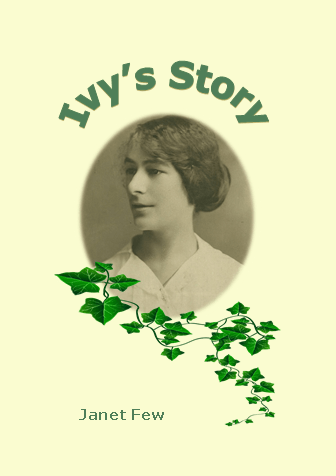
I leave you with a picture of the (unfinished) patchwork quilt. There is a reason it is unfinished but you will have to wait until I tell its story to find out why. It has been worked on by four generations of my family and now my grandchildren are big enough to hold a needle without too much collateral damage, I plan to get my children and grandchildren to work on it too, so we will have six generations who have played their part.
Cornish Adventure Aventur Kernewek (possibly) part 3 (nothing to do with travel)

I am now seven lessons in and I have got to be honest, I have got further than I ever thought I would, especially in so short a time. I expect the rest of the class just rock up every Wednesday and forget about it in between but I have to slog away daily to keep, well not exactly up but in order not to totally lose the plot. I have absorbed a fair bit of vocabulary, maybe five hundred words or so but I am struggling to put the words together into sentences in any meaningful way and I can’t yet see any logic to the grammar, perhaps there isn’t any.

I am interested in how I am learning. I am definitely relying on visual memory and I have to see the words written down in handwriting and picture these in my head. There’s a fair bit of word association going on. I did go back to the audio lesson and I got about ten minutes in before getting totally lost. Progress from three minutes I suppose.

I am looking forward to the end of the term so that I can consolidate what I’ve learned so far. It will be a relief not to be bombarded with new vocabulary each week.

I even managed to purchase some Cornish stout to add to the Christmas pudding. The stout is always a challenge as you only need a little but then in order not to waste it I feel obliged to quaff the remainder. As I rarely drink, this is sometimes entertaining. In case you are wondering, I have no idea how to translate the brand name, possibly something to do with jets.

Of Books, Toots, Discoveries and Photographs

It has been a while since my last post but I have not been idle. Buckland Brewer History Group published a book last month and I’ve been frantically wrapping and posting, watching the pile in my kitchen diminish as orders come in from hither and yon. This was a joint project, involving contributions from fifty people and we are very proud of it.

I’ve been really knuckling down to my writing project and now have nearly half the chapters completed, with several others well on their way. I don’t want to give too much away but let’s just say, in line with many of my talks, this book does concentrate in the grittier side of life. It has led me to some wonderful online sources. Following an excellent talk about the Temple Lodge Home for Inebriate Women that was given to Devon Family History Society by Liz Craig this week, I decided it was time to tackle the scheduled chapter on the inebriate. Liz had pointed us to The Birmingham Black Books, what a treasure trove. This is a record of ‘habitual drunkards’, complete with photographs, who were identified in the early years of the twentieth century. The book was issued to local publicans so that they would not serve those who were included. My work-in-progress book includes a series of case studies and I have spent most of this week following the life of one of those black-listers, Sarah Grosvenor, who chalked up over 200 drunk and disorderly charges. I am really frustrated that I can’t identify her during the first forty years of her life as I feel that might shed some light on why she ended up on this path.

There have been exciting family history discoveries of my own too. Access to the 1921 census as part of my FindmyPast subscription means I have been following up the extended family and I have discovered another relative who spent time in a mental hospital, then known as an asylum. I have been able to access the case books and – cue really exciting bit – letters survive between the sister on the patient and the institution. I am able to have copies of these letters, which I hope a lovely researcher will get for me next month – watch this space.

I have also revisited the family history of the fisherman of my acquaintance, looking at a branch that hadn’t been examined for several years. Newly available records did reveal the need for a bit of tree surgery. The branch that was lopped off were his geographically further flung ancestors – they came from a parish seventy miles from where he was born. Now I have identified the correct Elizabeth Nicholls, every one of his direct ancestors, on all lines, was baptised within fifteen miles of where he was born. Is this some kind of record? I also managed to crack a persist brick wall finding, that his 3x great-grandfather invented a surname. You can’t fool me Robert, I know who you really were.

The Cornish Adventure continues – more of that in a post of its own soon. Most of yesterday was spent biting the Mastodon bullet. As people seem to be deserting Twitter in droves, I’ve joined others in the genealogical community who have set up accounts on this social media platform that pretty much no one had heard of three weeks ago. Here one Toots rather than Tweets and it proves that there are new learning curves to be mastered and that every day is a school day. You can find me on Mastodon here.

The other bandwagon on which I have jumped is the new app from MyHeritage, which using AI to turn you into a Viking, a Green Goddess, a Punk Rocker or even a cyborg. This is free to try for a limited period. I do have a few reservations about this, particularly regarding creating ones that lead you down the path of mis-appropriation of ethnic identity and then there is the whole issue of tampering with the evidence that is original photos. I do think it might be something that would be a way of interesting young people in the past, although there is a strict ban on using this with photographs of minors. So how does it work? ‘Upload 10-25 photographs of yourself’. Do I even have 10-25 photographs of myself that don’t go back decades? I managed to scrape together ten by dint of lopping off the other people in them. Then the weird and wonderful images were created. Some are decidedly odd and distorted, probably because I only uploaded the minimum number of photos. In some I look like the late Queen but others have said the same, perhaps this is a default. I leave you with (allegedly) me as a Celt, in the 1950s, the 1970s and the 1980s. I think the 1970s one is my favourite as that does actually look like me in the 1970s. I have spared you the cyborg.

Cornish Adventure Aventur Kernewek (possibly) part 2 (nothing to do with travel)

Well, here we are, nearly three weeks and two lessons in. It took me about ten days to master seven words/phrases. Then there was a bit of an epiphany and suddenly more words began to stick. I do find it easier to remember nouns, rather than abstract concepts and phrases. I’ve got basic colours sorted. It is interesting that, despite Cornish being an ancient language, there are words for things like car, or hyperlink, that didn’t exist when Cornish was last spoken as a first language. Disclaimer – I have no idea what the Cornish for hyperlink is but it is in the dictionary. The Cornish for place names is also fascinating. For example, Falmouth becomes Aberfal, aber being ‘mouth’, as in Aberystwyth or Aberdeen.

Writing and reading, rather than listening seems to be the way to go. I am up to about sixty flash cards now and can cope with English to Cornish and Cornish to English. Simple sentences are harder. I can just about manage ‘the house is red’ (except you say ‘red is the house’), ‘the sea is blue’ and so on. All cool phrases but probably not hugely useful in the great scheme of things.

I am trying to crack the spelling by writing things out. Cornish is pretty consonant heavy and I have to remember that th is spelt dh and ch gh. I have been slightly confused by my recent few days being exposed to Welsh signage, to the extent that I started to think I was learning Welsh instead. There was however a proud moment when chatting to a National Trust guide about Welsh and Cornish, when he used a Welsh word for ‘splendid’ and I recognised it!

So, onwards and upwards. Next week is weather. Oh and I can now say duw genowgh.

Brief Wanderings in Wales

After an uneventful journey, we arrived at the caravan site in Newport in beautiful autumn sunshine. We were just in time to explore neighbouring Tredegar House. I had even remembered my National Trust passport. Unfortunately, I had forgotten my membership card. By the magic of technology, I was located on the data base and we gained entry. There was only time for a quick look round this substantial seventeenth century house, home to the Morgan family. It was built on the site of a previous house by William Morgan, with the dowry received for his first wife and cousin Blanche. William’s second wife trued to murder him. The Morgans were substantial land owners

The estate’s downfall came in the 1920s when the then owner lived an extravagant lifestyle as a ‘Bright Young Thing’. He was also involved in the occult. During the Second World War he worked for M18 using carrier pigeons to bring information from Europe. Evan was court martialled for divulging the information to some Girl Guides. The house was sold as as school in 1951 and was acquire dby the council in 1974. It has been run by the National Trust since 2012

On a beautiful autumn day, we set off for St. Fagans. There was a slight issue paying to park as the instructions were in Welsh but English instructions were accessed and entrance to St. Fagans was free. We had been before but there have been many changes since. We began to explore the reconstructed houses, everything from an iron age round house to a pre-fab. The round house was particularly superior, consisting of two circular structures.  Unfortunately, the guide was outside enjoying the sun so I could only photograph half of it. The circular pig sty was interesting, circular as pigs are more likely to escape from rectangular structures. There was a urinal, reminding patrons to adjust their clothing before leaving, several farmhouses, Pen-rhiw Unitarian Chapel and St Teilo’s Church with impressive reconstructed wall paintings. There was also a terrace of houses, each one decorated in a different period style. The civil war battle of St Fagans was the largest on Welsh soil and ended in a decisive victory for the Parliamentarians.

Before leaving Wales we popped back to Tredegar Gardens whose points of interest include a forty two foot long shovelboard in the orangery; allegedly the longest oak plank table in Britain.